Sabitlenmiş Tweet
Dr. Jok Kuol
2.5K posts

Dr. Jok Kuol
@JokMoses
Dental Surgeon, Juba🇸🇸 |Preventive Dentistry | Research-Based Dentistry | @MCFMakerere Alumnus | 89th @MakGuild GRC & Minister | Entreprenuer | ❤️Mathematics
Juba, South Sudan Katılım Eylül 2019
2.7K Takip Edilen2.8K Takipçiler
Dr. Jok Kuol retweetledi

CALL FOR APPLICATIONS: AU-YVC 2026!
Are you a young African professional (aged 18–35) ready to gain hands-on experience and contribute to #Agenda2063?
🔗 Apply: shorturl.at/jbjBm
🕒 Deadline: April 26, 2026

English

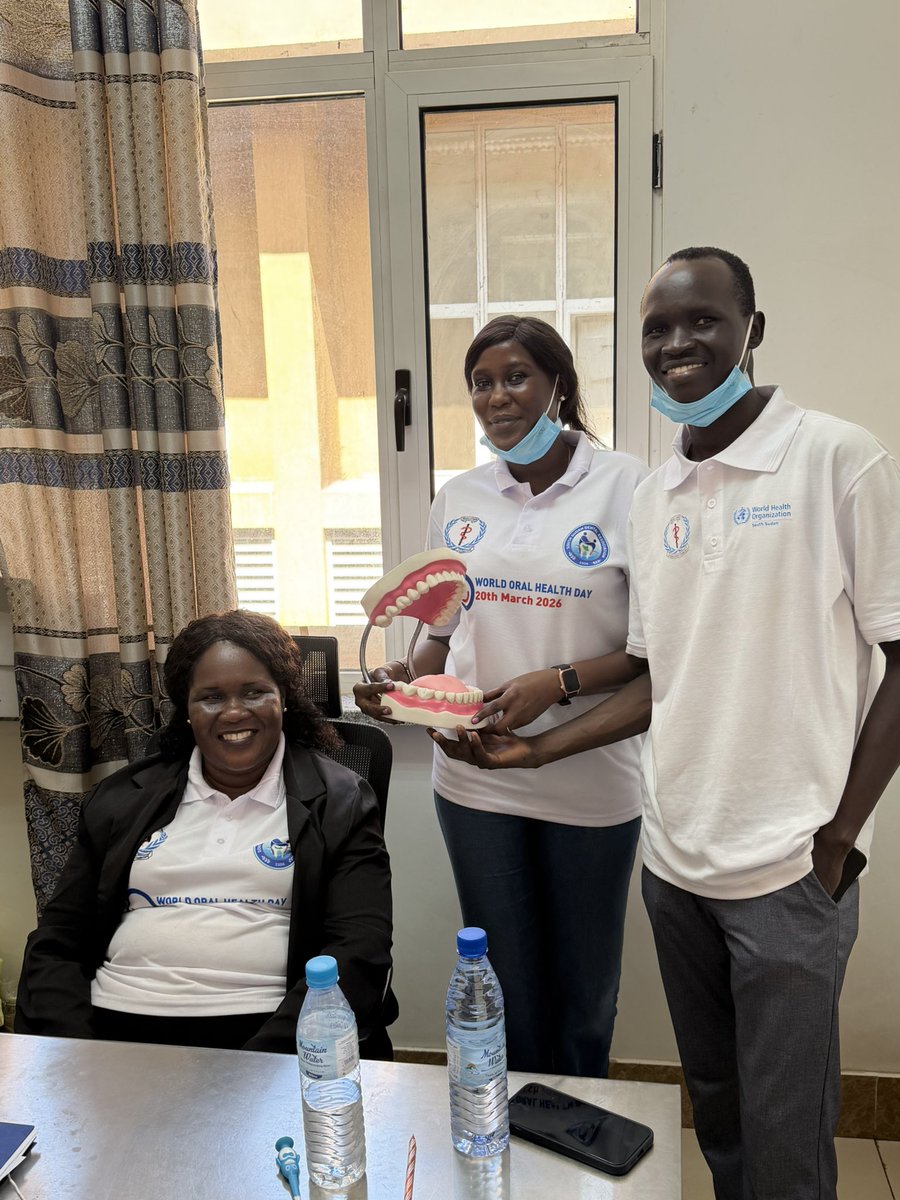
Oral health day went perfectly well at JTH.
All preventable dental issues zero down to taking a responsibility of one’s oral cavity. Maintain the perfect hygiene, and minimizing the risks.
Happy Sabbath!
#OralHealthDay
#OralHealth
#SSOX


English

@mujuni_emmy @JokMoses Surely, I have never been shy to refer my patients, never!
English
Dr. Jok Kuol retweetledi


@Dr_Pharouk Picking it is not a problem as long as I won’t use it. 😁
English

Happy oral health day Doc…….
Dr. Jok Kuol@JokMoses
S. Sudan Dental Association in partnership with the Dental Department of Juba Teaching Hospital is organizing a dental camp at Juba Teaching Hospital Tomorrow, 27/03/2026. This is in commemoration of the World Oral Health Day 20/03/2026, postponed last week due to Eid. #SSOX
English

S. Sudan Dental Association in partnership with the Dental Department of Juba Teaching Hospital is organizing a dental camp at Juba Teaching Hospital Tomorrow, 27/03/2026. This is in commemoration of the World Oral Health Day 20/03/2026, postponed last week due to Eid.
#SSOX


English
Dr. Jok Kuol retweetledi

@ssemtv This is embarassing. Hospital lacking some medicines is understandable, but horrible sanitation & infection control protocol? Zero excuse!🙇♂️
English

Juba Teaching Hospital: South Sudan’s Referral Hospital at a Crossroads of Sanitation and Safety Hazard
Juba Teaching Hospital, the Republic of South Sudan’s only referral hospital, is meant to be the pinnacle of the nation’s healthcare system—a place where patients seek expert care and doctors save lives. Yet today, it stands as a troubling testament to neglect, where basic hygiene has become a serious public health threat.
Reports from both patients and medical staff indicate that the hospital’s sanitation is so compromised that the stench from its washrooms is overwhelmingly pungent, sometimes forcing visitors and even healthcare professionals to vomit. This is not merely unpleasant—it is dangerous. Poor sanitation in healthcare facilities is a recognized breeding ground for nosocomial infections, those preventable yet often deadly diseases acquired within hospitals.
Hospitals, by design, are supposed to be safe spaces that heal, not amplify disease. When a hospital’s toilets, sinks, and waste management systems become vectors for infection, the very institution intended to preserve life turns into a potential reservoir for illness. Patients already weakened by disease face new threats from bacteria, viruses, and fungi thriving in unsanitary conditions. Healthcare workers, too, risk exposure, endangering not only their own health but also the continuity of care for patients.
The implications are clear: inaction is unacceptable. Maintaining hospital hygiene is not an optional luxury—it is a core pillar of patient safety. Every day of continued neglect at Juba Teaching Hospital risks turning preventable infections into fatalities, undermining the public trust in South Sudan’s entire healthcare system.
Urgent interventions are needed. These include immediate deep cleaning of all facilities, upgrading sewage and waste systems, training and deploying sufficient cleaning staff, and instituting strict hygiene protocols. Equally important is accountability: hospital administrators, alongside health authorities, must prioritize sanitation as a matter of national health security.
South Sudan faces enormous health challenges, from endemic diseases to the ongoing strain of limited medical infrastructure. But the crisis at Juba Teaching Hospital is self-inflicted and preventable. The government, international partners, and civil society must act decisively to restore the hospital’s basic hygiene and safety. Lives literally hang in the balance.
A referral hospital should be a sanctuary for healing. Right now, Juba Teaching Hospital is a warning: if the nation cannot secure the health of its referral hospital, it cannot claim to safeguard the health of its people. The time for action is yesterday, not tomorrow.

English
Dr. Jok Kuol retweetledi

New...New.. Scholarships for Selected Masters & PhD Programmes at Makerere University --- @Makerere under the Africa Climate Collaborative in partnership with @MastercardFdn

English