

Jon Read
479 posts
Jon Read
@JonRead15
Infectious disease epidemiologist, fascinated by networks, transmission, pathogen evolution & our responses.
Lancaster University, UK Katılım Ocak 2020
202 Takip Edilen2.7K Takipçiler

I took 1.7 million photos over 6 days to catch this photo of a commercial jet in front of the sun.
The moment it happened, TWO floating prominences were visible, making this not just my best aircraft transit photo, but one of the luckiest of my career! Videos of the transit 👇

English
@PaulNuki @AlisonTerf71r Or indeed HIV, ebola (post-mortem transmission common due to cultural practices), or anthrax in wildlife. There is no 'rule'.
English

@AlisonTerf71r No, i'm using it to illustrate that there is no rule which dictates that viruses which spread efficiently are necessarily mild.
Think smallpox, Influenza, measles, typhus, bubonic plague, and malaria to mention but a few
English
@alexcdot @GoogleDeepMind @Meta @MIT @Cambridge_Uni You can't blame peer review entirely, the principal blame lies with the supervisors and PIs that either (a) allow use of genAI in this way or (b) fail to read their own papers carefully!
English

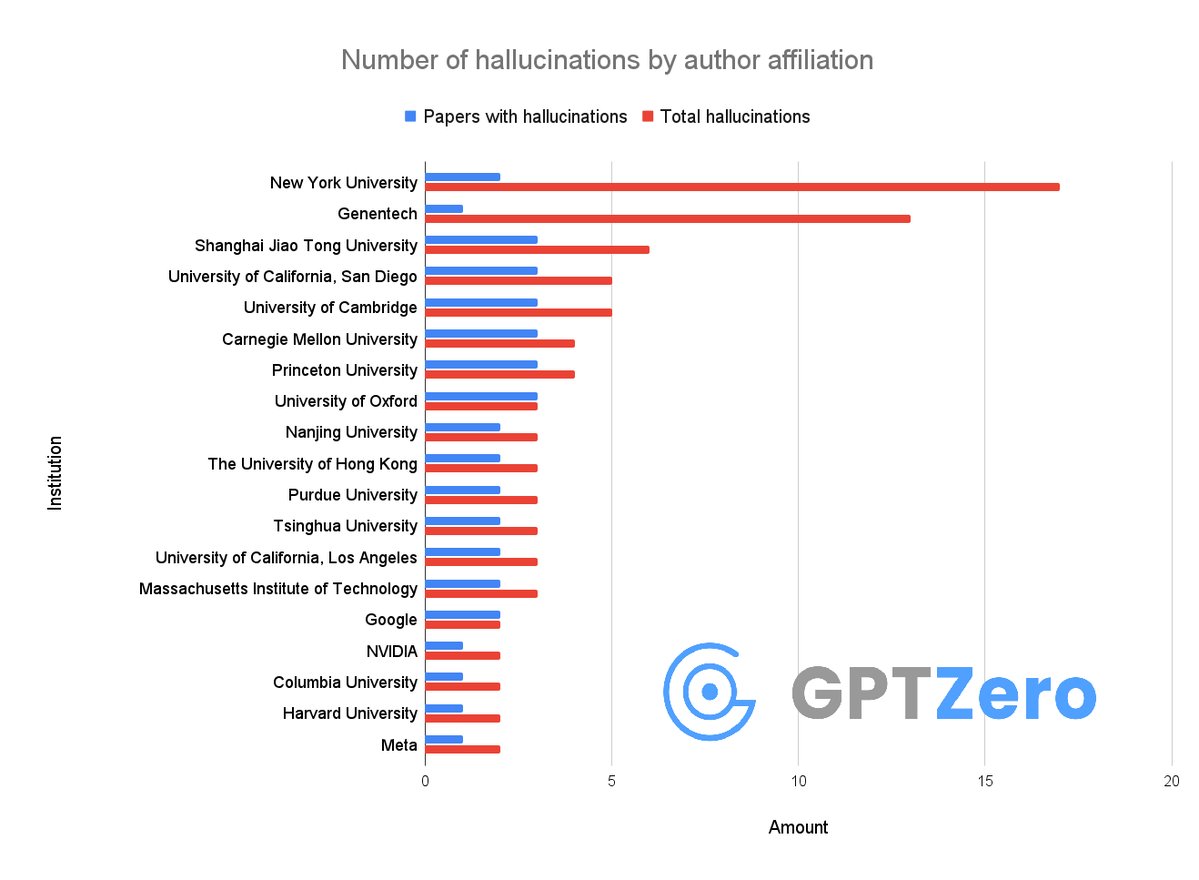
Okay so, we just found that over 50 papers published at @Neurips 2025 have AI hallucinations
I don't think people realize how bad the slop is right now
It's not just that researchers from @GoogleDeepMind, @Meta, @MIT, @Cambridge_Uni are using AI - they allowed LLMs to generate hallucinations in their papers and didn't notice at all.
It's insane that these made it through peer review👇
English
English

The @BMJMedicine was supposed to post this paper 2 hours ago but has failed to do. It is being covered by other means #google_vignette" target="_blank" rel="nofollow noopener">medicalxpress.com/news/2026-01-p…
Someday the link will be active!
dx.doi.org/10.1136/bmjmed…
English
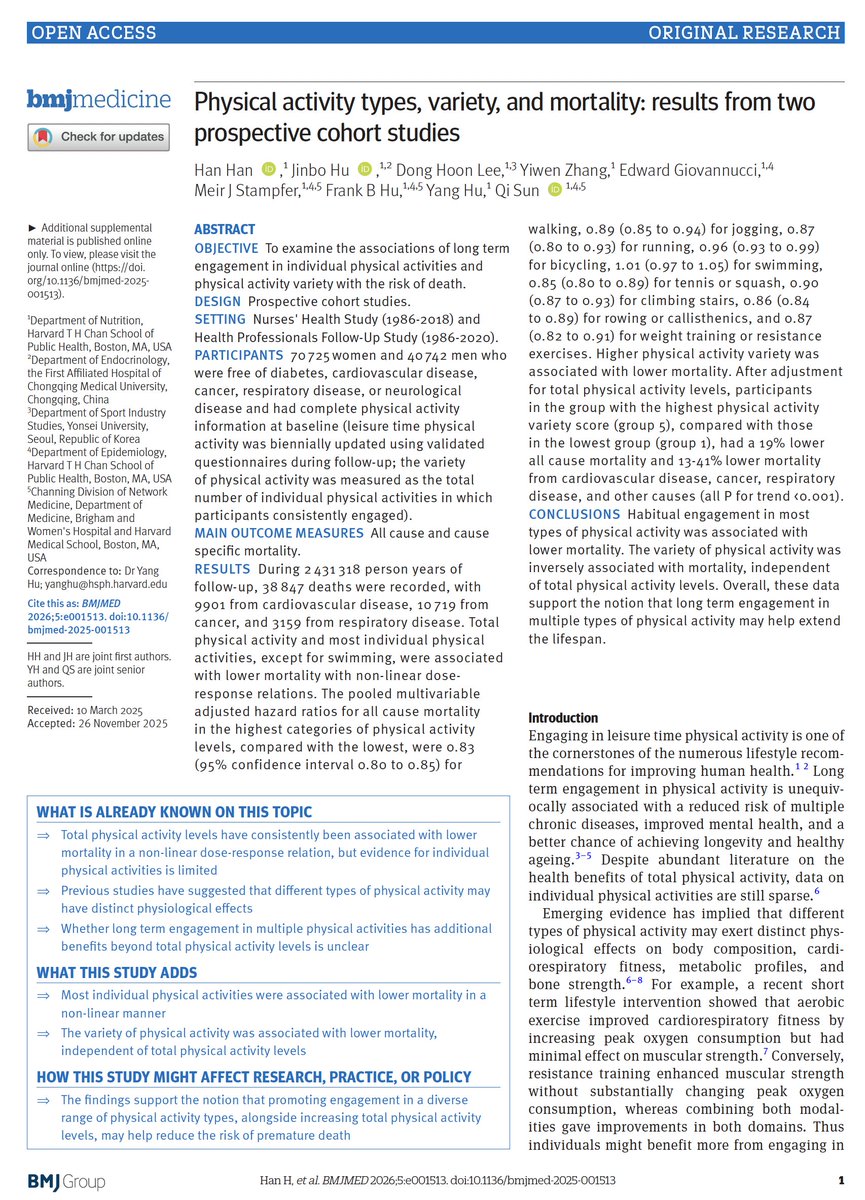
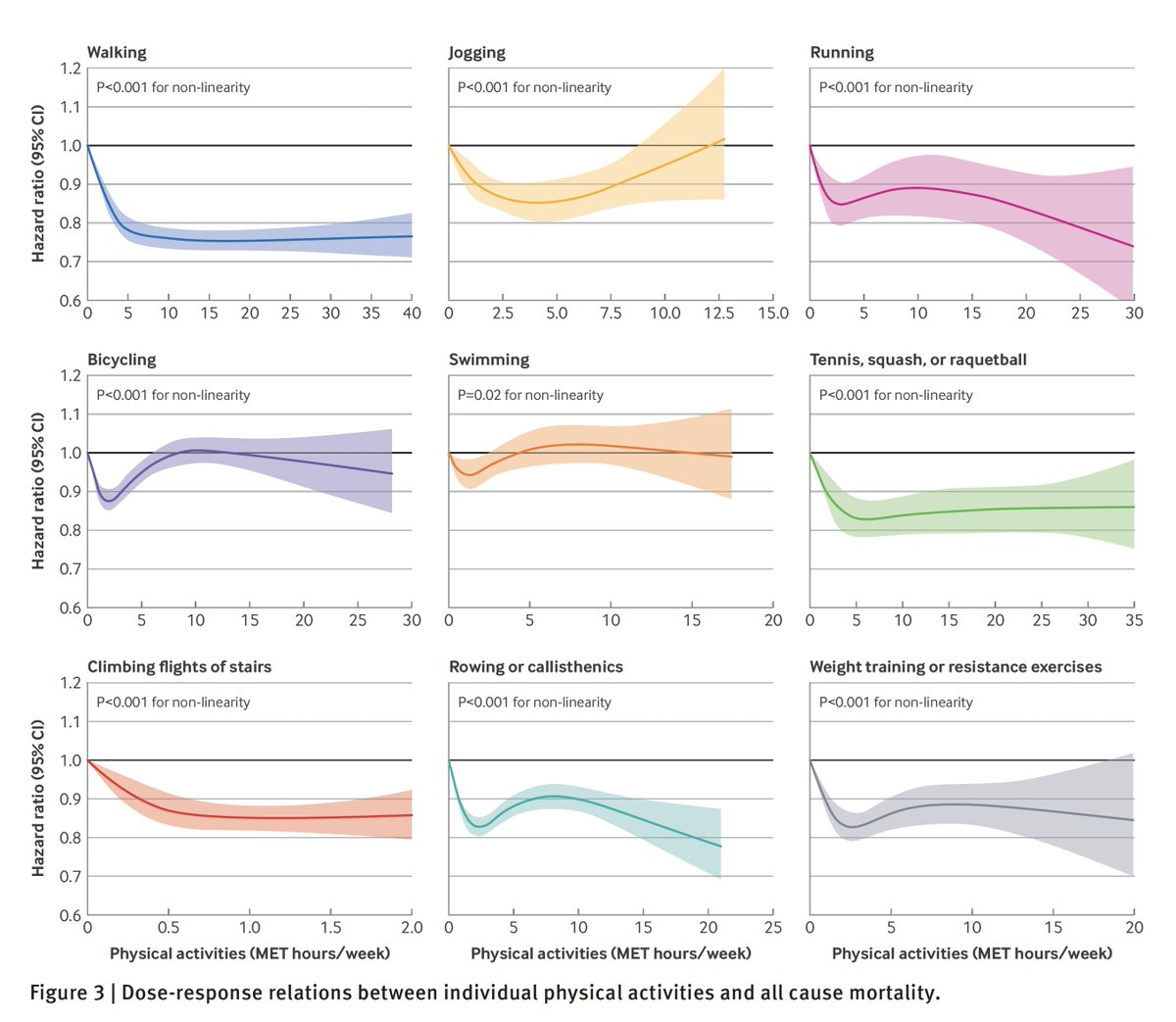
Physical activity and the reduction of all-cause mortality, from 2 very large prospective cohorts
1. The relationship is non-linear, suggesting a threshold effect for many types of exercise as seen below
English
Jon Read retweetledi

A new, long paper on evolution - natural induction - split into 2:
royalsocietypublishing.org/rsfs/article/1…
royalsocietypublishing.org/rsfs/article/1…
@RichardWatson90 and Tim Lewens
"It is conventionally assumed that all evolutionary adaptation is produced, and could only possibly be produced, by natural selection. Natural induction is a different mechanism of adaptation. It occurs in dynamical systems described by a network of interactions, where connections give way slightly under stress and the system is subject to occasional perturbations. This differential adjustment of connections causes reorganization of the system’s internal structure in a manner equivalent to associative learning familiar in neural networks. This is sufficient for storage and recall of multiple patterns, learning with generalization and solving difficult constraint problems (without any natural selection involved). Various biological systems (from gene-regulation networks to metabolic networks to ecosystems) meet these basic conditions and therefore have potential to exhibit adaptation by natural induction. Here (and in a follow-on paper), we consider various ways that natural induction and natural selection might interact in biological evolution. For example, in some cases, natural selection may act not as a source of adaptations but as a memory of adaptations discovered by natural induction. We conclude that evolution by natural induction is a viable process that expands our understanding of evolutionary adaptation."
English
@LongCovidHell It's common for most health systems to do further PCR tests to determine type/subtype of influenza (H1N1,H3N2,B), and anything that is negative for those would be investigated further particularly if causing severe disease. This is how most human avian influenza are picked up.
English

Sorry if this is a stupid question, but given how unusually severe flu is this year across the world, and they’re testing positive for influenza A… Could this be bird flu? Bird flu is A, isn’t it? Are hospitals specifically testing for avian flu or just flu?
English

Turns out interest in metaverse had about a ~9 month half life.

English
Immense planning and technical precision was required for this absolutely preposterous (but real) view: I captured my friend @BlackGryph0n transiting the sun during a skydive.
This might be the first photo of it's kind in existence. See a video of this moment in the reply 👇

English
Jon Read retweetledi

Help me out, I’ve got another wastewater virus mystery.
This one really blows my mind.
1/
English




As of 5 October, around 1 in every 111 people in England were infected, and the risk of encountering an infected person in most indoor places remains High. Unless the indoor air is fresh, or filtered/purified, good quality PPE respiratory masks are needed to protect yourself.
English
The Covid wave in England continues to grow, with infection levels up 11% in the last week. The risk level is hovering just below Very High. If you do not wish to catch Covid, please take precautions including getting boosted now.
buds.org.uk/covid-19-risk-…
English



Right. Ideas for a Scottish citizenship test?
1) Can a citizen properly throw their grandmother from a moving bus?
Mary MacCallum Sullivan@MacPsy
@overlandertheb1 @scottfitzpatr13 Design a new 'Scottish citizenship' test; only on satisfactory completion is one allowed to vote. Like the Highway Code?
English

@gina_scot Sadly golfers will become collateral damage in this culture war
English
If this government push through legislation to sell off allotments there should be a counter movement to re-wildlife golf courses. it's only fair.
English
Jon Read retweetledi

🚨 Workshop Alert at #RSS2025
📅 Tues 2 Sept, 14:00–16:00
🗺️ Model-based Geostatistics for Public Health in R
With Emauele Giorgi & myself
Learn to go from spatial data to predictions with RiskMap using real case studies.
👉 rss.org.uk/training-event…
#RStats #Geostat
English
@TheTimidToucan @vipintukur Exactly. Interesting finding, but little in the way of evidence. More studies needed.
English

@vipintukur I need to see more than 10 people in the experimental group. Show me 300 and then I’ll pay attention.
English

A common virus once thought harmless to humans might be linked to Parkinson's disease, a new study says. The germ, Human Pegivirus (HPgV), was found in half the autopsied brains of patients with Parkinson's, but not in any brains from healthy people. 1/

English
@DrCJ_Houldcroft Extremely interesting, and useful knowledge, but what a strange study. The subjects must be known to, related to, or are paper authors?
English

What a gem this paper is journals.asm.org/doi/full/10.11…
Healthy infants, breastfed, no travel, no daycare, shed enteric viruses *nearly every day* from ~100-400 days of life! Children catch enteric viruses ALL the time and often show no symptoms of infection. Hard to stop transmission.
English
This is cool. I was poking around at the Rhinovirus (common cold) data and realized that my perception about these viruses was completely wrong.
1/

English

Many thanks to @CEPHR_UCD for inviting me to give a seminar on my group’s work at @CVRinfo! 🦠🫁🧬🏥

English