Jonás Ansó

2.8K posts

Jonás Ansó

Jonás Ansó

@JonasAnso

Señor developer. He/his. Pico-influencer. Love to all 🌈

Spain Katılım Eylül 2011
599 Takip Edilen198 Takipçiler
Jonás Ansó retweetledi
Our World in Data
Our World in Data@OurWorldInData·
📢 We’re looking for a writer to join our team at Our World in Data! → ourworldindata.org/hiring-writer-… What we’re looking for is quite unique: someone who writes excellent narrative articles on large global problems, finds memorable framings to make hard ideas easier to understand, while being genuinely obsessed with technical details. They need to know which questions are important and what readers need to understand the answers. If this sounds like you (or someone you know!), you can find more details from our Deputy Editor, @_HannahRitchie, at the link here.
English

3
32
84
21.1K
Jonás Ansó retweetledi
Sí a Almaraz, Sí al futuro
⚡ “Almaraz ya opera al nivel de las centrales más avanzadas del mundo… es hoy una referencia preparada para operar a largo plazo” Patricia Rubio, portavoz de ‘Sí a Almaraz, Sí al Futuro’ e ingeniera de la central 💚 👷‍♀️ 2.100 trabajadores por recarga 🌍 Referente internacional 🔧 Mejora continua y máxima seguridad 📢 Energía firme en un contexto de incertidumbre 💚 Almaraz no se cierra #YoApoyoAlmaraz #SiAlmaraz #EnergíaNuclear #AlianzaPorAlmaraz #Sostenibilidad
Español
1
48
136
8.2K
Jonás Ansó retweetledi
Our World in Data
Our World in Data@OurWorldInData·
Hunger levels have increased across Africa over the last decade— In every region of Africa, hunger is more prevalent than a decade ago. The chart shows the increase in the share of the population that is undernourished, comparing 2014 and 2024 (the most recent year available). These estimates come from the Food and Agriculture Organization of the United Nations. The situation across Africa is dire. In Middle Africa, where hunger is most acute, almost 1 in 3 people are undernourished. In Eastern Africa, the figure is roughly 1 in 4. Across Africa as a whole, it's 1 in 5. This marks a reversal of a longer positive trend: over the preceding decades, hunger had been falling across much of the world, including parts of Africa. That progress has now stalled or gone into reverse. Conflict, extreme weather, and the economic disruption of the COVID-19 pandemic have all contributed. (This Data Insight was written by @EOrtizOspina.)
Our World in Data tweet media
English
10
55
141
29.6K
Jonás Ansó retweetledi
Prolific
Prolific@Prolific·
Prolific’s Expert Network has powered DeepMind, IBM, and PRISM alignment research. Now we're looking for more specialists across medicine, STEM, languages, and more to help shape the future of science and technology. Apply and join the waitlist → prolific.com/expert-network
Prolific tweet media
English
3
3
6
517
Jonás Ansó retweetledi
JetBrains
JetBrains@jetbrains·
We’re now hiring in Spain! 🇪🇸 Madrid is our starting point, but we’re hiring remotely across the country. Explore 70+ open roles: jb.gg/i608tt
English
34
153
1.3K
677K
Jonás Ansó retweetledi
Patrick Collison
Patrick Collison@patrickc·
There’s a lot of discussion in these parts about all the things that are degrading (public safety, disorder, architecture, institutions, …), but it is remarkable how much better food has gotten over the course of my lifetime. I was recently traveling in the UK, and even in small towns, the restaurants were consistently great. (I particularly recommend Isla in Durham.) Ireland has similarly improved by leaps and bounds. The US is very good these days. Has there ever been a better time to eat?
English
113
27
1.3K
159K
Jonás Ansó retweetledi
Our World in Data
Our World in Data@OurWorldInData·
William Foege, the physician who saved many millions from smallpox— William Foege, who sadly died this week, is one of the reasons why this map ends in the 1970s. The physician and epidemiologist is best known for his pivotal role in the global strategy to eradicate smallpox, a horrific disease estimated to have killed 300 million people. Despite the world having an effective vaccine for more than a century, smallpox was still widespread across many parts of Africa and Asia in the mid-20th century. Foege played a crucial role in developing the “ring vaccination strategy”, which focused on vaccinating people around each identified case, rather than attempting a population-wide vaccination strategy, which was difficult in countries with limited resources. This strategy, combined with increased global funding efforts and support for local health programs, paved the way: country after country declared itself free of smallpox. You can see this drop-off through the decades in the map. The disease was declared globally eradicated in 1980. William Foege and his colleagues’ contributions are credited with saving millions, if not tens of millions of lives. (This Data Insight was written by @_HannahRitchie.)
Our World in Data tweet media
English
5
47
150
10.3K
Jonás Ansó retweetledi
Adam Butler
Adam Butler@GestaltU·
Fun fact: The 1998 paper that introduced Google and PageRank to the world ends with this acknowledgment: "Supported by the National Science Foundation under Cooperative Agreement IRI-9411306. Funding also provided by DARPA and NASA." Sergey Brin was on an NSF Graduate Fellowship. Larry Page was a PhD student on the grant. Google—now worth $2 trillion—exists because American taxpayers funded "the Stanford Integrated Digital Library Project." Not a startup garage myth. A government grant. Every time someone says public research funding "picks winners and losers" or "crowds out private innovation," remember: the most dominant technology company of the 21st century was incubated entirely with public money, inside a public university, by researchers on federal fellowships and grants. The private sector didn't see it coming. VCs passed. The government funded it anyway—not because it would become Google, but because fundamental research into information retrieval seemed worth understanding. That's the point. You can't predict which grants will change the world. You fund the science and let researchers explore. The internet (DARPA). GPS (DoD). Touchscreens (CIA/NSF). mRNA vaccines (NIH). Google (NSF/DARPA/NASA). Public investment in basic research isn't wasteful spending. It's the seed corn of the entire modern economy.
English
215
3.5K
13.8K
960.4K
Jonás Ansó retweetledi
Rosie Campbell
Rosie Campbell@RosieCampbell·
Pretty sure a big part of my high baseline happiness is due to constantly marveling at the unimaginable luxury I live in compared to even the wealthiest people at any other time in history thenewatlantis.com/publications/w…
English
5
18
162
8.4K
Jonás Ansó retweetledi
Our World in Data
Our World in Data@OurWorldInData·
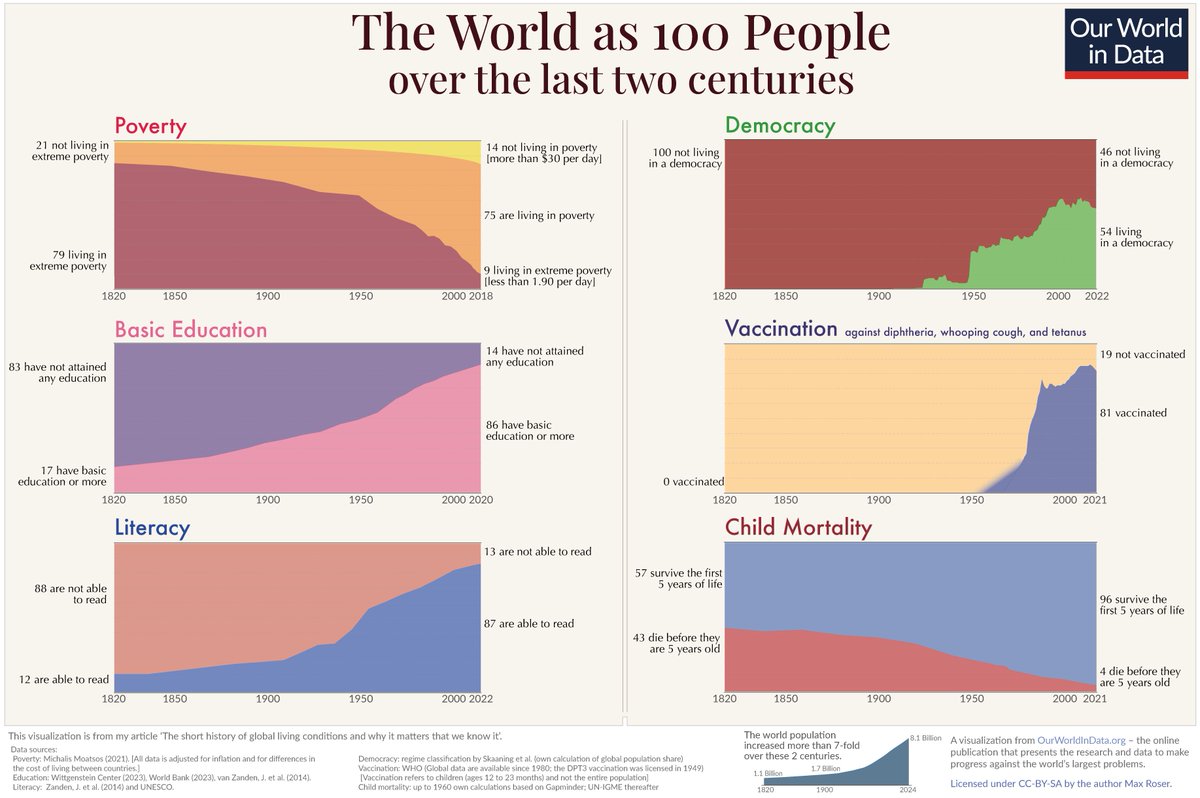
The world as 100 people over the last two centuries
Our World in Data tweet media
English
5
133
351
39.6K
Jonás Ansó retweetledi
Our World in Data
Our World in Data@OurWorldInData·
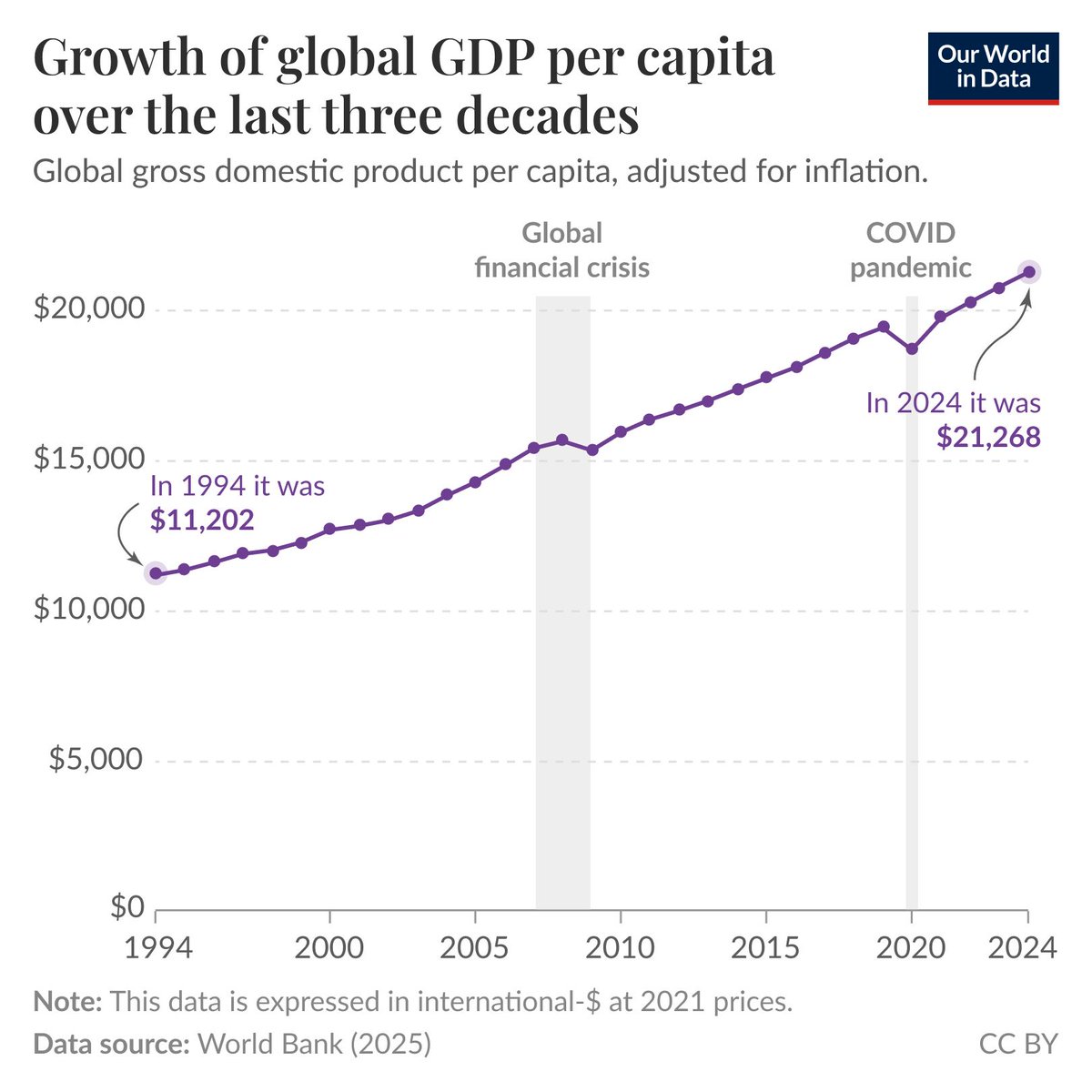
Growth of global GDP per capita has been remarkably steady over the past three decades— (This Data Insight was written by @EOrtizOspina.) This chart shows global GDP per capita, adjusted for inflation. Looking at the world economy from this perspective, it is the steadiness of this change that stands out to me. Average incomes per person have risen at a fairly constant pace of roughly 2% per year, interrupted only by the 2008–09 financial crisis and the 2020 pandemic. One reason this is noteworthy, in my view, is that national economies changed a lot during the same period. Some economies slowed, many others grew, and more generally, some major political shifts took place. Yet when all of this is aggregated, the global average followed a remarkably smooth upward track. The line in the chart ends in 2024, so it does not yet capture more recent developments. But a few recent articles look at data for 2025 and point to the same stability. Past trends may not continue in the future. But this data reminds us that global economic aggregates can develop more steadily than the headlines might make us think.
Our World in Data tweet media
English
3
54
178
21.3K
Jonás Ansó retweetledi
Steven Pinker
Steven Pinker@sapinker·
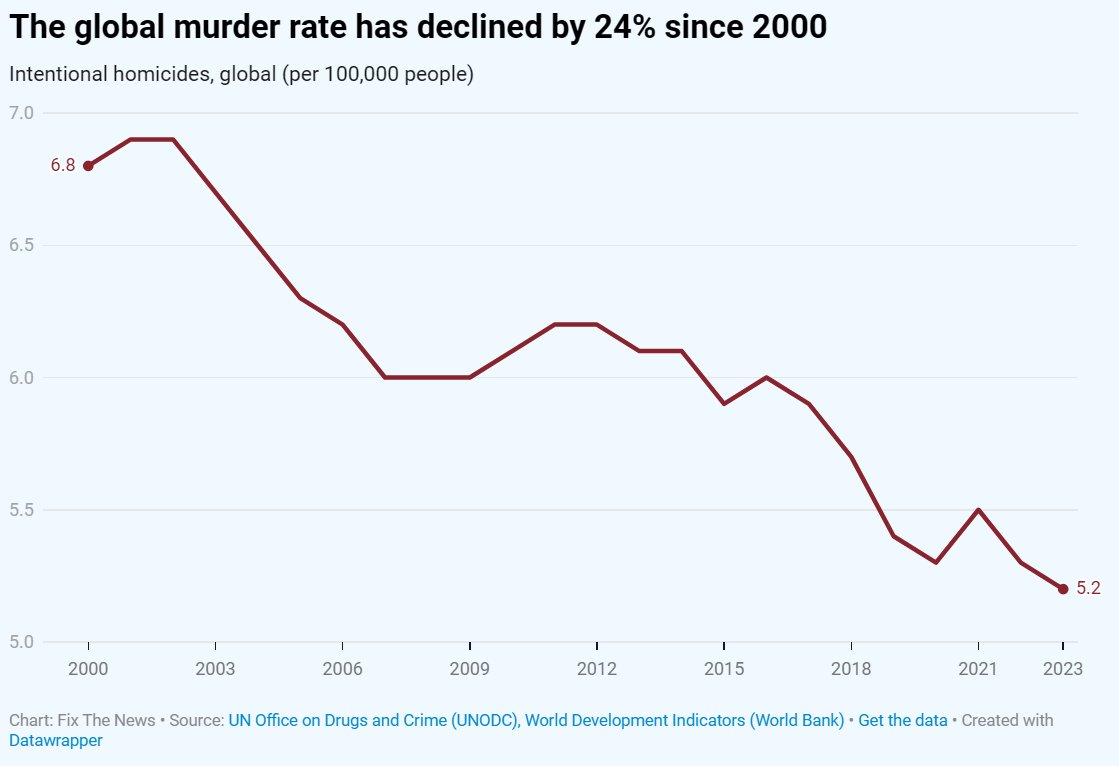
The decline of violence continues: Newly released data from the World Bank shows that the global homicide rate has fallen by around a quarter in this century. (Thanks to Fix the News for the item & graph.) data.worldbank.org/indicator/VC.I…
Steven Pinker tweet media
English
0
192
721
172.7K
Jonás Ansó retweetledi
Sam Bowman
Sam Bowman@s8mb·
A new call for articles that Works in Progress would like to commission. We’re looking for everything from Japanese pension reforms to making certain mosquito species extinct to travelogues about strange ethnic enclaves around the world. worksinprogress.news/p/more-article…
Sam Bowman tweet media
English
8
23
78
38.9K
Jonás Ansó retweetledi
Andrew Gordon
Andrew Gordon@andrew_j_gordon·
The #AmericaFirst promise appears to be failing the one group it was meant to help: @realDonaldTrump own voters. Our new, nine-month @Prolific data tracking their financial and geopolitical sentiment reveals a notable gap between campaign promises and voter experience. We call it the "double squeeze". Here are the core trends impacting Donald Trumps supporters. A 🧵
English
2
2
2
579
Jonás Ansó retweetledi
Ben Dicken
Ben Dicken@BenjDicken·
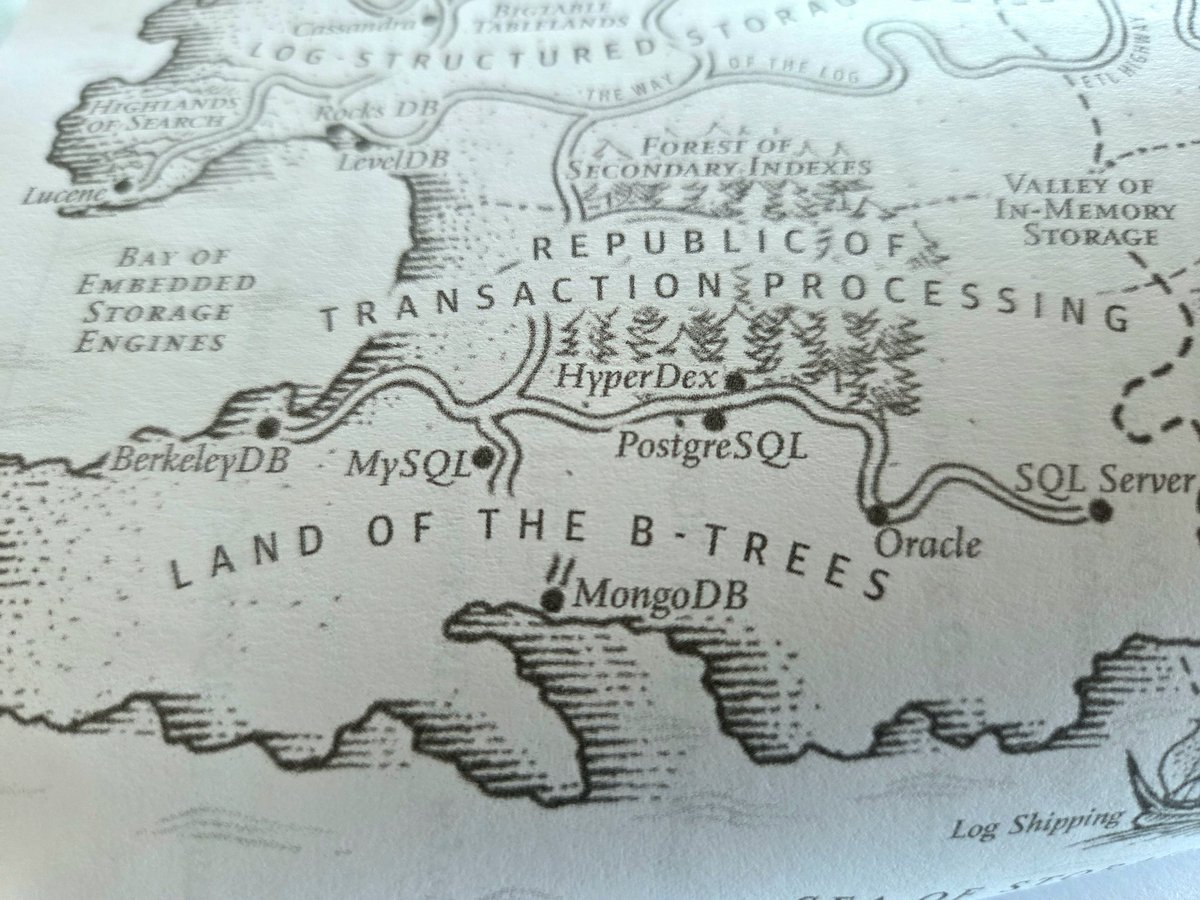
I figured out why nobody uses MongoDB. The path is blocked by B-trees.
Ben Dicken tweet media
English
18
14
306
22.2K
Jonás Ansó retweetledi
Max Roser
Max Roser@MaxCRoser·
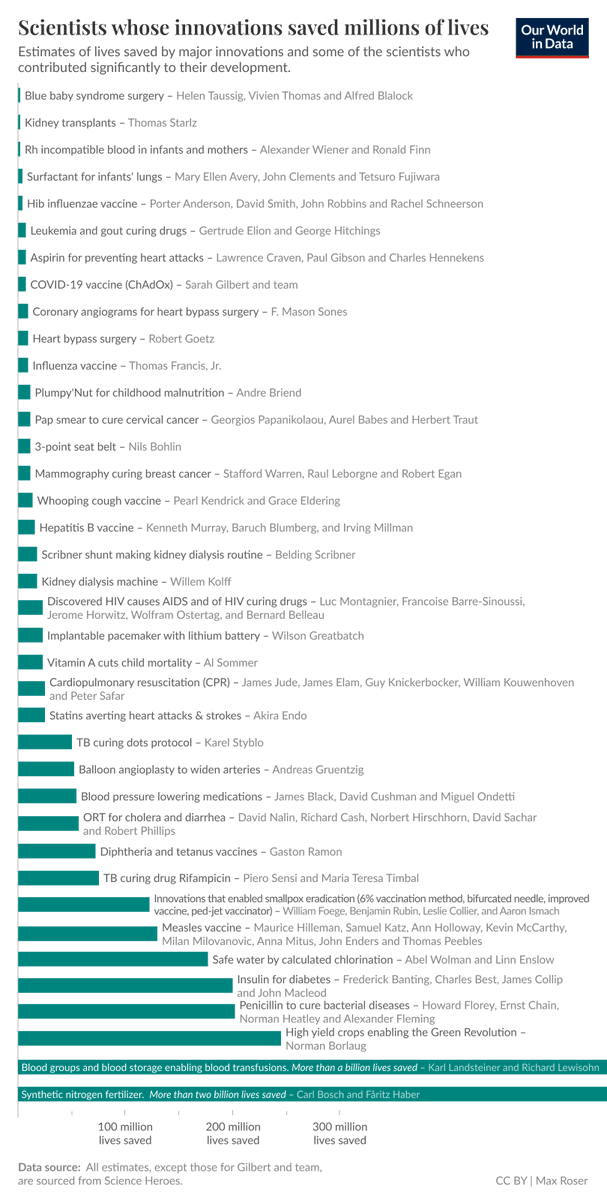
At Our World in Data, we spend much of our time counting deaths. But it’s just as important to know the number of lives saved — even though it is harder to estimate and involves much larger uncertainty. My Data Insight today includes this chart of some estimates.
Max Roser tweet media
English
13
85
331
55.7K
Jonás Ansó retweetledi
Boris Power
Boris Power@BorisMPower·
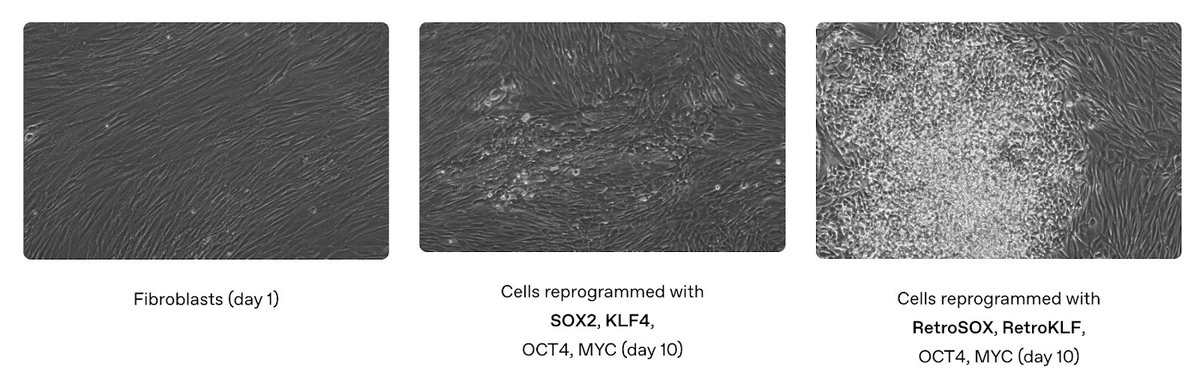
At @OpenAI, we believe that AI can accelerate science and drug discovery. An exciting example is our work with @RetroBiosciences, where a custom model designed improved variants of the Nobel-prize winning Yamanaka proteins. Today we published a closer look at the breakthrough. ⬇️
Boris Power tweet media
English
160
620
3.5K
2.1M
Jonás Ansó retweetledi
Barry Ritholtz
Barry Ritholtz@Ritholtz·
"A big takeaway from economic history is that the past wasn’t as good as you remember, the present isn’t as bad as you think, and the future will be better than you anticipate." @morganhousel collabfund.com/blog/little-ru…
English
0
16
60
12.6K