
Jonathan Said

19.4K posts

Jonathan Said banner
Jonathan Said

Jonathan Said

@JonathanSaid1

Immigrant supporting African governments and private sector to implement modern agro-industrial policies for job creation and inclusive and sustainable growth.

Nairobi, Kenya Katılım Temmuz 2011
1.7K Takip Edilen4.7K Takipçiler
Sabitlenmiş Tweet
Jonathan Said
Jonathan Said@JonathanSaid1·
In this podcast interview, I provide an optimistic take on African governments and their increasing interest to accelerate economic transformation & job creation. I speak to where the challenge of implementation seems to lie & mention some success cases to build on.
Terser Adamu@TerserAdamu

Listen to the 56th episode of the Unlocking #Africa #Podcast with @JonathanSaid1 We discuss – Powering Prosperity. The Transformative Power of Industrial Policy in Africa ow.ly/AJTa50MO9VR #IndustrialPolicy #industrialStrategy #Innovation #EconomicDevelopment

English
9
12
47
14.6K
Jonathan Said retweetledi
Amar Patel
Amar Patel@amarcrktguy·
@JonathanSaid1 That's the challenge across the Global South. Capital exists but the pipeline to productive sectors is broken. Banks thrive while the real economy can't access it.
English
0
1
2
32
Jonathan Said
Jonathan Said@JonathanSaid1·
@AfreprenFwd @AndrewM_Fischer Yes we need both. Curation should be both the education to produce industrialist entrepreneurs, and also support to pioneering industrialist firms (and sectors), identified through meritocratic filter
English
0
0
0
2
AFREPREN/FWD
AFREPREN/FWD@AfreprenFwd·
@JonathanSaid1 @AndrewM_Fischer 🎯 "curation" is, in many ways, the key. I prefer the term "meritocratic filter" that should ideally be nationwide & across all sectors. East Asian countries are pioneers in this respect with their rigorous college & civil service entry exams rooted in historical Imperial exams.
English
0
0
1
22
Jonathan Said
Jonathan Said@JonathanSaid1·
@AfricanBizMag It’s been due to Morocco’s strong industrial policy, albeit what you mentioned helped (but was not primary factor). Important to recognize Morocco’s industrialisation agenda. It’s not just luck!
English
1
1
1
95
African Business
African Business@AfricanBizMag·
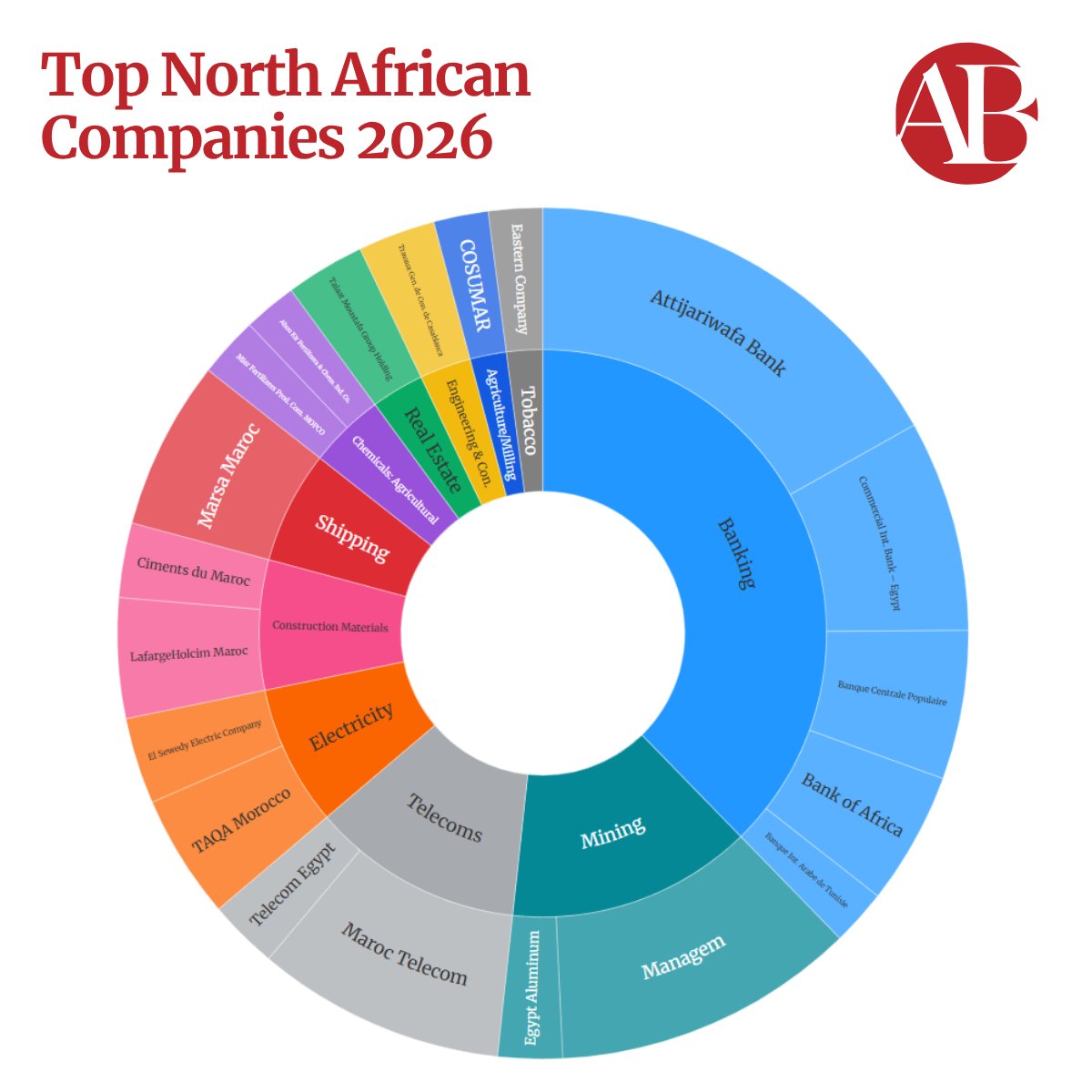
Morocco has quietly become the dominant force in North African business. 8/9 of the biggest listed companies in North Africa are Moroccan, which now also has 11 companies in Africa's overall top 20. While Egyptian firms once jostled with their Moroccan counterparts for regional dominance, the balance has shifted decisively. Surging commodity prices, strong banking performance and a booming mining sector have put Morocco firmly in the driving seat. Which companies are leading the charge? Read the full breakdown here: eu1.hubs.ly/H0vlZk50
African Business tweet mediaAfrican Business tweet media
English
1
9
20
1.5K
Jonathan Said
Jonathan Said@JonathanSaid1·
4 of the largest 6 companies in Southern Africa (exc South Africa) are Malawian banks. Goes to show that there *is* capital in Malawi. Yet productive sectors like value-added agriculture, manufacturing & tradable services that can broaden the economy cannot access it.
African Business@AfricanBizMag

Southern Africa’s corporate landscape may be shifting faster than expected. Could smaller economies become the region’s next market surprise? ⬇️ Explore the Top Companies in Southern Africa 2026 below.

English
2
10
36
1.9K
Jonathan Said
Jonathan Said@JonathanSaid1·
@AndrewM_Fischer Indeed. We need to support the industrialists and grow that class. Entrepreneur support should focus on this. The traders will always be there, industrialists need curation (also in politics/government). PS industrialists inc value services pioneers.
English
1
1
7
174
NomdeGuerre
NomdeGuerre@NomdeGuerre24·
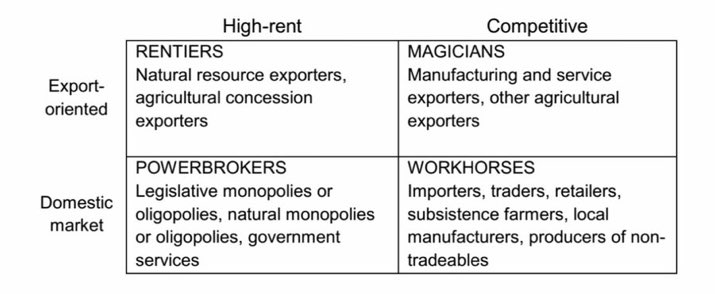
@JonathanSaid1 Stories like this bring to mind this diagram, developed by economists Lant Pritchett and Eric Werker. To really take off you need to nurture as many Magicians as possible.
NomdeGuerre tweet media
English
1
1
4
95
Jonathan Said
Jonathan Said@JonathanSaid1·
@NomdeGuerre24 It is just crazy to me how Dani Rodrik and others are missing this point. I don’t understand it.
English
0
0
1
16
NomdeGuerre
NomdeGuerre@NomdeGuerre24·
@JonathanSaid1 💯 Despite being right next to the biggest market in the world, Mexico didn’t really try that hard in terms of industrial policy. Very few proactive policies to promote export development.
English
1
0
1
37
Jonathan Said
Jonathan Said@JonathanSaid1·
One of the countries mentioned by Rodrik is having 'failed on manufacturing' is Mexico. Mexico has high human development (score of 0.789 up from 0.700 in 2000), so does that mean its human development failed? We need to look in the round: Mexico made mistakes in its industrial..
Jonathan Said@JonathanSaid1

I'm referring to this article by Dani Rodrik. It's weak as ignores benefits of manufacturing that still accrue, limitations of informal trade (which Zilibotti ignored in their paper) & is too simplistic on Mexico, India & Ethiopia & role manuf's playing. project-syndicate.org/commentary/ser…

English
4
6
20
1.8K
Jonathan Said retweetledi
Kolade Afolabi
Kolade Afolabi@koladeafolabi20·
Norwegian fund manager: what will be your legacy Mr. Dangote? Dangote: my legacy would be I am the one that actually pioneered the industrialisation of Africa
English
51
1.5K
7.4K
167K
Jonathan Said
Jonathan Said@JonathanSaid1·
Dangote is the epitome, but there are other African business elites who are starting to think this way. It’s possibly the most important & consequential shift happening on the continent at the moment. From Powerbrokers to Magicians (per Deals & Development).
Larae06@stephfani02

@koladeafolabi20 Dangote’s answer was interesting because most wealthy people talk about money, success or influence. He talked about industrialising Africa. That level of ambition is different. Building factories, refineries and industries that outlive you is a bigger legacy than just being $$

English
2
7
13
750
Jonathan Said
Jonathan Said@JonathanSaid1·
@JitoKayumba Great to hear. Which industries will this investment in thermal energy support, beyond the sugar industry? And what is the industrial strategy for those sectors?
English
0
0
2
108
Jito Kayumba
Jito Kayumba@JitoKayumba·
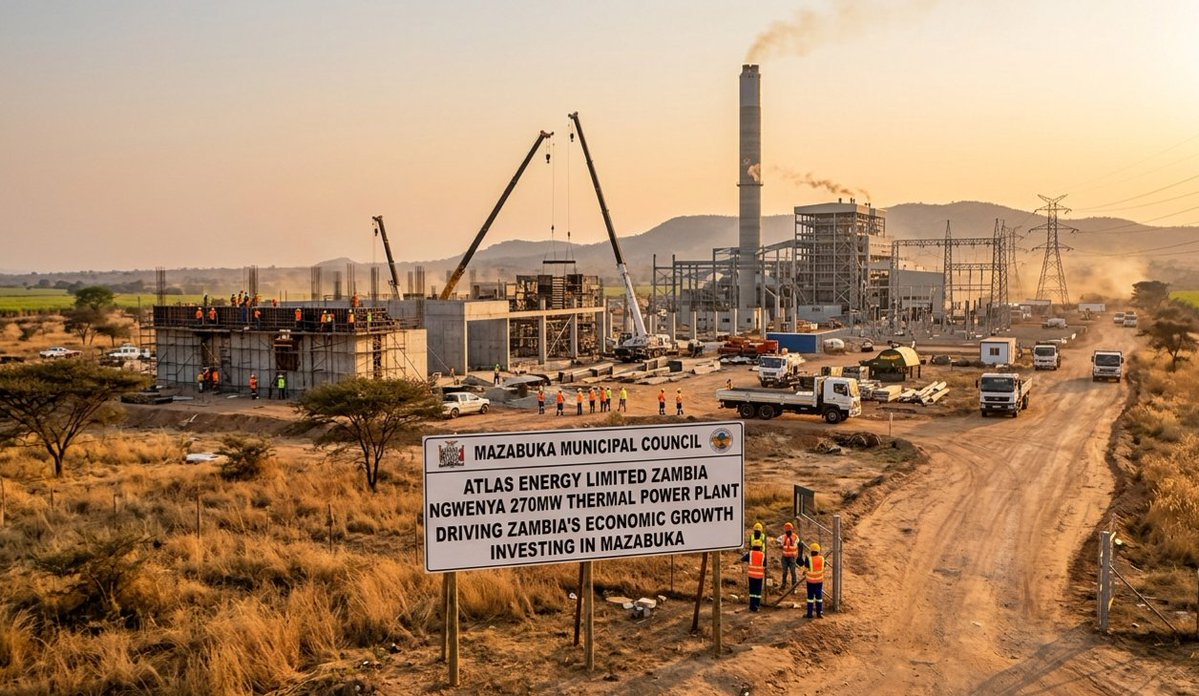
Powering the "Sweetest Town": A New Era of Energy and Economic Growth in Mazabuka ​I recently had the pleasure of visiting Mazabuka, affectionately and rightfully known as the "sweetest town in Zambia." While its legacy and economic foundation have long been defined by its thriving sugar industry, my time there reaffirmed my belief that the district’s potential extends far beyond agriculture. Mazabuka is on the cusp of an industrial evolution, and recent developments demonstrate a clear, decisive trajectory toward robust local and national economic growth. ​The Mazabuka Municipal Council’s recent resolution to allocate 16.5 hectares of land in Ngwenya valued at K4 million to Atlas Energy Limited Zambia for the construction of a 270-megawatt thermal power plant is a landmark decision. This strategic investment is not merely a triumph for the local constituency, it is a critical intervention in addressing the power deficits that have constrained households, businesses, and industrial capacity. ​Energy security remains the bedrock of sustainable industrialisation. By establishing what will be one of the largest thermal power plants in the country, this initiative will dramatically enhance local power supply while fortifying our national energy grid. It is exactly the kind of pragmatic, large-scale investment required to stabilise our energy sector and support broader economic transformation. ​Crucially, the socio-economic dividends of this project will be felt immediately within the community. The first phase alone is projected to create over 200 direct jobs for Mazabuka residents. Beyond direct employment, the ripple effects will stimulate vital secondary sectors, catalysing new enterprise opportunities in construction, supply chains, and ancillary services. ​For a town already synonymous with productivity, this infrastructural leap will reinforce Mazabuka’s position as a vital engine for the Zambian economy. It is highly encouraging to see proactive local governance aligning with substantial private sector investment to secure our energy future. As we continue to drive the nation's economic revitalisation, initiatives like this one in the "sweetest town" are precisely what we need to power Zambia’s next chapter of industrial growth and resilience.
Jito Kayumba tweet media
English
1
1
24
1.1K
Jonathan Said
Jonathan Said@JonathanSaid1·
@TheoNYCData Yes indeed. And in fact UAE is industrialised nonetheless. But in cases where governance and infrastructure don't hold up, sector choice is key to build that up (or prevent it from growing). Few countries can follow UAE model.
English
0
0
0
22
Moses
Moses@TheoNYCData·
@JonathanSaid1 UAE built its entire model on services and logistics with basically zero manufacturing base. Works when governance and infrastructure hold up. Sector choice is downstream of those.
English
1
0
0
23
Jonathan Said retweetledi
Jonathan Said
Jonathan Said@JonathanSaid1·
@EmergingRoy Indeed we need to go beyond binary talk of services vs manufacturing. Both are important, both contribute to transformation & they have different strengths. And within both, some sub-sectors are great, some not so great - depends. Countries need space to find their path.
English
0
1
5
138
Jonathan Said
Jonathan Said@JonathanSaid1·
@AfreprenFwd Indeed, there is so little nuance and roundedness in much Western economics
English
0
0
1
25
AFREPREN/FWD
AFREPREN/FWD@AfreprenFwd·
@JonathanSaid1 Even modest growth in enclave manufacturing is worth pursuing because of outsized short-term impact on balance of payments/jobs while still retaining long-term possibility of realizing multiplier effect on local manufacturing once local infrastructure & tech ecosystem catches up
English
1
0
3
21