
Sabitlenmiş Tweet
Snowdon
35.8K posts

Snowdon
@JulianSnowdon
UK politics, wildlife & conservation, history, literature, films, travel, ex-left. And dogs.
Lambeth, London Katılım Mart 2012
1.3K Takip Edilen1.4K Takipçiler

Snowdon retweetledi

1/ One of the favourite clichés of the Corbynists was 'They fear him because...[add your own].' 'They' meant ostensibly billionaires but in reality people like me, an old Jewish woman who used to work at Waterstone's. Now the Greens claimed to be feared, likewise for their...
English
Snowdon retweetledi

This and another disappeared from our village churchyard on Salisbury Plain a few years ago. Hitherto thought to be no photo record, until this discovered recently. Please repost. It’s just possible that…

English
Snowdon retweetledi

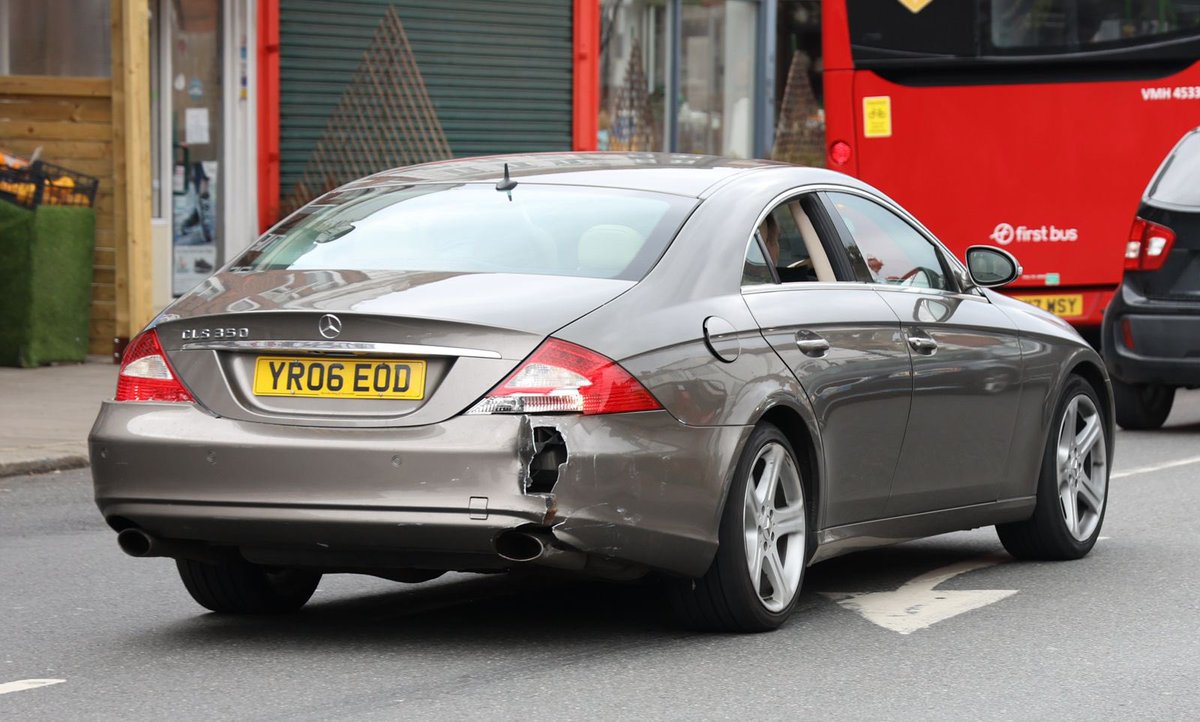
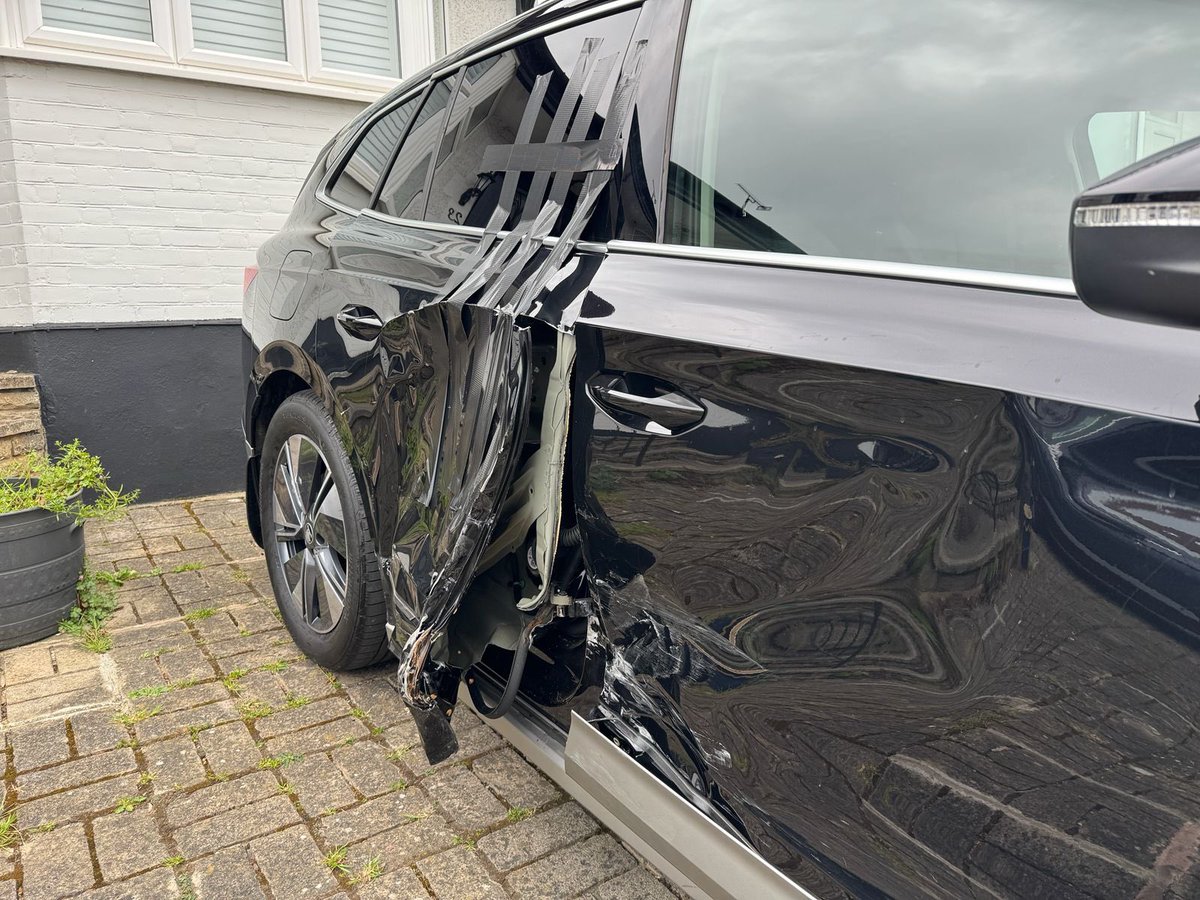
Today at 2.05pm I was the front passenger in a car being driven by my friend in Golders Green. The man pictured carelessly reversed his car, also shown, into ours. He failed to stop and drove away like a lunatic. Identity of man to @metpoliceuk quoting CAD 3858 of today please.

English
@trenner_rebecca @Simon_Nixon @TrevorPTweets @itvnews Not being a Jew I've actually no idea what goes on amongst Jews, but I know a pompous twat when I see one!
English

@JulianSnowdon @Simon_Nixon @TrevorPTweets @itvnews Dalrymple is malicious. I think Simon doesn't understand the nuance of the 3% of the community (loosely defined here) who join with those who hate us for leftie cred. The most useful of idiots. Explanation is better than abuse.
English

Seen this clip several times now. A truly shameful piece of interviewing. Still not clear what point @TrevorPTweets was trying to make, but if he and @itvnews had any self-respect they would apologise to @ZackPolanski for what came across as deeply unpleasant bullying
The Daily Britain@dailybritainonx
"Why is my Jewish identity being erased from this conversation?" asked @ZackPolanski "No.. don't try that one on me!" responded @TrevorPTweets
English
Snowdon retweetledi

As a schoolboy I once played Malvolio in Shakespeare’s ‘Twelfth Night’; the pompous, authoritarian steward of Olivia’s household.
I completely misunderstood the role and didn’t realise I was having the piss taken out of me for the entire play, which made for an excellent performance.
I cannot think of a better parallel for Sir Keir Starmer’s time in office. Vain and oblivious, he stumbles and stutters his way through his premiership.
Or perhaps you can think of a more suitable Shakespearean character?
English
The "why" of things is what he can't answer - only the "how".
Adam Wren@aswren
Dawkins is more intelligent than 99% of the people making fun of him and ‘if AI can be just as capable as us without being conscious, why did we develop consciousness in the first place?’ is a great question
English
@Simon_Nixon @trenner_rebecca @TrevorPTweets @itvnews Judaism is a religeon, so disputes within it are not social or political but doctrinal. And another thing - this was an interview, which is not a debate - so, don't be so pompous. You're as bad as that bloated Dalrymple geezer, and as bad at making these simple distinctions.
English
@trenner_rebecca @TrevorPTweets @itvnews Hi Rebecca - I’ve no wish to intrude in disputes within Judaism. I simply thought Phillips’s sneery, hectoring tone was quite inappropriate - and also very unhelpful as I’m sure many people who don’t share his politics reacted as I did. That is not how to win debates…
English
@greg_ashman Early boosters of AI did it like this: they made a model of a computer thus-
Input->process->output
Then they made a model of a brain thus-
Input->process->output
QED. They're the same!
English

The reaction to Dawkins deciding Claude is conscious is fascinating.
It really is just the Strong AI position that Roger Penrose was criticising in the 1980s. If you think consciousness is just an emergent property of a sufficiently complex computer then of course AI is conscious. It passes the Turing test and that’s it.
The really interesting part is why it is obvious to so many of us that AI is *not* conscious: obvious to the point we think Dawkins’ credulity is amusing. What are we basing that on? Are we deluded or is there something else to consciousness that we cannot articulate but that we clearly sense?
English
@hnjsamuels They hate anything sounds it may predate 1997, the year of the Annunciation of the Blessed Anthony when Lo! A great light appeared, and darkness was banished from the land.
English

I also just don’t buy that there’s any real confusion. In my experience, international clients think the Chancery Division has weight precisely because of its history and prestige. Domestic clients all know what it means (and often relish bringing a claim “in Chancery”!)
Harry Samuels@hnjsamuels
This would be desperately sad and destructive of centuries of history for no good reason.
English

@JulianSnowdon @KeithMillsD7 Anglo-Irish ? Irish then 🤔
English

Is there any Irish person worthy of being on our banknotes?
Mariska den Eelden 🇪🇺🇳🇱@eeldenden
🇪🇺 European Central Bank considers new banknotes featuring Leonardo Da Vinci and other prominent figures
English
@BurnsideWasTosh There's a lot of idiotic bellends out there though, and the Green foundation vote won't even register on the Bellend Scale.
English

English
@JulianSnowdon @Chris_arnade @captgouda24 Yeah, London buses are great and go everywhere- until 1:30 am, when they become a nightmare
English

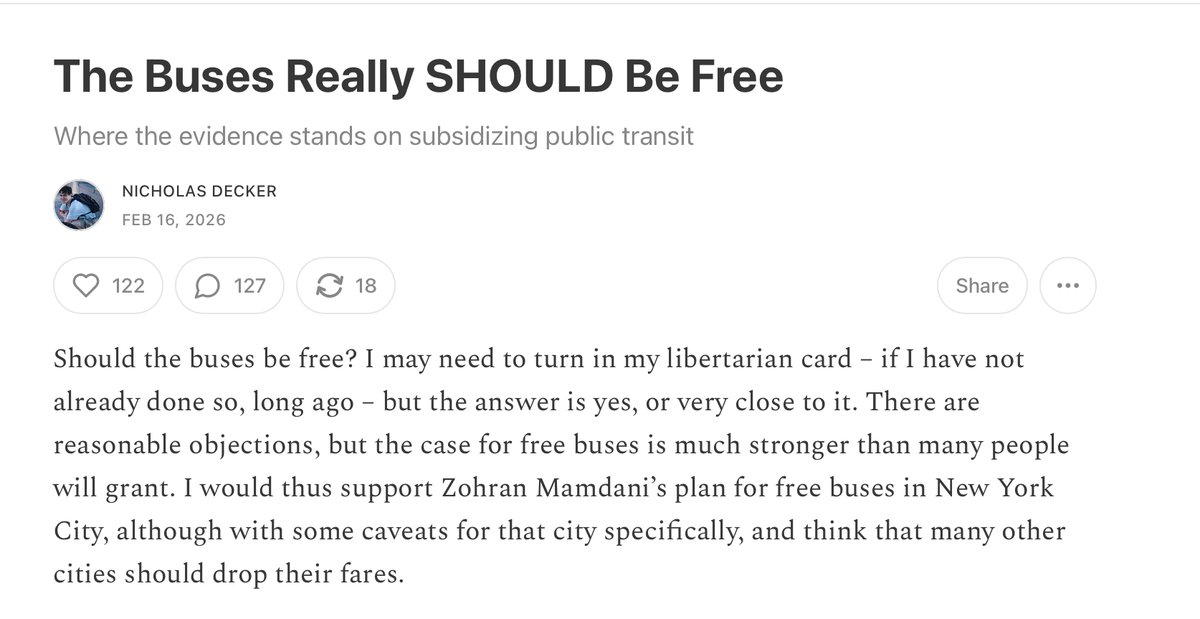
The case for free buses is actually really strong. They take people off the road, and make traffic better for everyone. At the very least, we should not expect them to make back their expenses at the farebox. Read it all below:
English
@BriainOSuill @KeithMillsD7 Don't want to make a facile nationalist point here, but I could name 5 Welsh/Scots/English contenders easily. And if you include Anglo-Irish another couple.
English
@KeithMillsD7 Fair. You could have Yeats or Wilde. But every country would only have one or two worthy of it.
English
I live in London and I take buses all the time. I perhaps live in a particularly well-served area, but a bus is almost always a preferable alternative to the tube. Particularly late at night when people often make eye contact with strangers and chat - there can be a real sense of a tiny temporary ad-hoc community with good humour as the law. Not always, obviously, but surprisingly often.
English
@captgouda24 price is not why people don't take buses. They don't take them because
1) infrequent
2) stigma re-enforced by crappy experience due to public disorder on them.
Making them free makes both worse.
English
Snowdon retweetledi

An interesting fact about the Graham Linehan @Glinner appeal is that the right Mr Linehan exercised - an automatic right to appeal a summary conviction via a full rehearing in the Crown Court - would no longer exist under David Lammy’s proposed reforms.
English

You cannot tell me you watch this video and think the police behaviour needs no explanation.
Owen Jones@owenjonesjourno
Hold on - what? If police officers think someone might be carrying explosives, protocol is to kick them in the head repeatedly like this? Is that actual police protocol? If so, how is it a wise police protocol? Can someone explain the reasoning?
English

@JulianSnowdon @hector_drummond Except Hermer isn’t English
English

This confusion is existential - it follows inevitably if the idea of 'the nation', ie who we are, and what we're about, is muddied with multi-cultural relativism and all the futile attempts to reconcile crude pre-Enlightenment and even pre-Christian cultures with our own. That is why politics is so hopeless now - it's because politicians don't know who "we" are anymore.
English

Sad truth is, Starmer is like most of the recent prime minsters we’ve had in the recent past. Ideologically confused, strategically muddled, no idea where he’s going. He’s so much more like Boris Johnson or Sunak than he would have ever felt comforted imagining.
English