JUNOALSK

205 posts

JUNOALSK

JUNOALSK

@JunoAlk

Katılım Nisan 2018
117 Takip Edilen9 Takipçiler
JUNOALSK
JUNOALSK@JunoAlk·
@mtracey A big campaign talking point in 2016 for him was that Obama had tied the military's hands and he was going to "unshackle" them. Which he followed through with. The myth of him being anti-war, as far as I remember, built up around him after his first term.
English
0
0
0
3
Michael Tracey
Michael Tracey@mtracey·
"Don't you think we deserve a president who's going to restore the moral authority of the United States of America? Don't you think we deserve a president who's going to end the Warfare State and rebuild the middle class?" — Robert F. Kennedy Jr, October 27, 2024 @RobertKennedyJr
The New York Times@nytimes

Breaking News: The White House said it would ask Congress for about $1.5 trillion for defense in 2027, its highest level in modern history. nyti.ms/4sfxvi6

English
13
33
269
15.2K
JUNOALSK
JUNOALSK@JunoAlk·
I understand that ascertainment can be a big problem with something like this but what is your response to: (1) the retroactive search for cases was done hospital by hospital so it's not clear why there would be a significant bias (2) antibody testing as well as deaths also point to that area as being the epicenter
English
0
0
0
6
scott ferguson
scott ferguson@scotub·
@Gretcie @JunoAlk Ascertained cases are biased in several ways, but the two most important are: • originally only cases connected to the market were readily ascertained • ascertained cases much more heavily represented the small percentage of serious infections
English
3
0
0
28
JUNOALSK
JUNOALSK@JunoAlk·
@Biorealism @jaredpretender @scotub exactly, even most of these are arguing against the wet market. when you take away that you are left with very little. for me, I just need something that points to the lab in a substantive way and dwarfs all the evidence for the market.
English
0
0
1
15
Holtz
Holtz@Biorealism·
@JunoAlk @jaredpretender @scotub Here's a non-exhaustive summary of the evidence for the wet market and lab scenarios. There is a reasonable amount of circumstantial evidence to suggest lab origin although I suspect a definitive answer isn't likely to emerge.
Holtz tweet mediaHoltz tweet media
English
1
0
2
24
JUNOALSK
JUNOALSK@JunoAlk·
This is not actually a response to what I said. But if it were true that there were early cases well before the wet market outbreak then it would be substantial evidence against it. But there is a lit of uncertainty with these things, the early cases may be misdiagnosed or misremembered. science.org/doi/10.1126/sc… But anyway the very fact that your response is to call into question the evidence for the wet market rather than point to the substantial evidence FOR the lab leak proves my point.
English
3
0
0
44
Jared 💕 🧠 I Love Rohini/Pushya
@JunoAlk @scotub Except for the fact that (1) early cases predate the wet market, and (2) statistical analyses of the wet market data don’t support the multiple spillover hypothesis necessary for it to be ground zero
English
1
0
2
53
JUNOALSK
JUNOALSK@JunoAlk·
He blocked me for this
JUNOALSK tweet media
English
0
0
0
6
Nick Longrich
Nick Longrich@NickLongrich·
@Noahpinion The CIA, FBI, and Department of Energy all concluded it came from the lab, as did German intelligence. The evidence for a lab origin (furin cleavage site, optimized spike, CGG-CGG doublet, regularly spaced restriction sites, DEFUSE proposal) is overwhelming.
English
13
17
441
19.8K
Chris Martz
Chris Martz@ChrisMartzWX·
What was the global average surface temperature in 7,672 B.C.? Please give me an answer to the nearest tenth of a degree Celsius. Show your math.
Matt@801formal_llama

@ChrisMartzWX @nudawaya Like 5 of the hottest years on record were in the last decade. Microplastics are in our balls.

English
101
144
2K
56K
JUNOALSK
JUNOALSK@JunoAlk·
@ChrisMartzWX Again you misrepresent the Cook paper. You fundamentally misunderstand it.
English
0
0
0
12
Chris Martz
Chris Martz@ChrisMartzWX·
What exactly do climate “scientists” (and I emphasize the air quotes there) actually agree on? What is the “consensus” really about? You need to be specific and elaborate. Do scientists virtually all agree that the Earth has been getting gradually warmer? Do they all agree that mankind contributes to that in some capacity? Or do they all agree that this warming is an existential threat? What is it that they agree on, Mark boy? The 97 (sometimes stated as >99%) consensus does not actually exist. It was manufactured through pure sausage making techniques in two studies published in Environmental Research Letters (ERL): Cook et al. (2013) and Lynas et al. (2021). Let's look closer at these studies. 🔎 𝐓𝐇𝐄 “𝟗𝟕% 𝐂𝐎𝐍𝐄𝐒𝐍𝐒𝐔𝐒” The paper that got this all started was published in ERL in 2013. 🔗 iopscience.iop.org/article/10.108… Led by cognitive psychologist John Cook—a Senior Research Fellow at the Melbourne Centre for Behaviour Change and founder of the climate blog, Skeptical Science—he and eight co-authors skimmed the abstracts of 11,944 climate-related papers published between 1991 and 2011. Of the 11,944 abstracts, a total of 7,930 (66.4%) of them expressed 𝒏𝒐 𝒑𝒐𝒔𝒊𝒕𝒊𝒐𝒏 on the cause(s) of global warming since the pre-industrial era. Of the remaining 4,014 abstracts that endorsed either anthropogenic global warming (AGW) or natural global warming, 3,896 (97.1%) endorsed AGW in at least some capacity, while 78 (1.9%) questioned or rejected AGW. The remaining 40 (1%) of papers expressed uncertainty. But, it gets even more nuanced than that if we look at the abstracts and pick them apart. On whether global warming is being caused entirely by human activities, by nature, or by a combination of both, of those 4,014 papers, they state warming is caused: 🔴 Entirely by humans: 64 papers (1.59%) 🟤 >>50% by humans: 922 (22.96%) 🟡 Equally natural + man-made: 2,910 (72.50%) 🟢 >>50% by natural cycles: 54 (1.35%) 🔵 Man is causing no warming: 24 (0.60%) 🤷 Don't know: 40 (1.00%) So, a “97% consensus” can be contrived by either (a) omitting the 7,930 (66.4% of) abstracts in the 11,944-paper sample that did not explicitly state a position on the drivers of global warming, or by (b) lumping all 3,896 abstracts that endorsed at least some anthropogenic component as entirely endorsing AGW. Either way, that's sausage-making. 🌭 But, what about the >99% consensus? 𝐓𝐇𝐄 “>𝟗𝟗% 𝐂𝐎𝐍𝐄𝐒𝐍𝐒𝐔𝐒” Like Cook et al. (2013), Lynas et al. (2021) attempted to quantify the consensus on AGW. 🔗 iopscience.iop.org/article/10.108… In this synthesis, 3,000 climate papers were selected at random. In that batch, 282 were marked as false positives since they weren't actually climate-related. That’s fair. So, the analysis continued with the remaining 2,718 peer-reviewed articles. Of those, 1,869 (68.8%) of them took 𝒏𝒐 𝒑𝒐𝒔𝒊𝒕𝒊𝒐𝒏 on AGW. And, like Cook et al. (2013), all 1,869 papers neither endorsing nor rejecting AGW were discarded. Of the remaining 849 papers that did endorse a position, 845 (99.5%) of them sided with AGW while four did not. So, like Cook et al. (2013), Lynas et al. (2021) ignored over 65% of the papers selected that didn't take one position or the other on the physical driver(s) of global warming. By doing this, the authors could artificially manufacture a consensus on an issue where none actually existed if all of the relevant papers were considered. The advantage that Lynas et al. (2021) has over Cook et al. (2013) is that each paper was examined thoroughly rather than just the abstract. This made for a more thorough analysis despite the same flawed methodology both used in ignoring the majority of papers that took a neutral stance. 𝐁𝐮𝐭, 𝐰𝐚𝐢𝐭, 𝐭𝐡𝐞𝐫𝐞'𝐬 𝐦𝐨𝐫𝐞. . . Climate activists will argue that the authors of Cook et al. (2013) and Lynas et al. (2021) were justified in excluding the 66.4% and 68.8% of papers, respectively, that did not express a position, on the grounds that those studies did not focus on identifying or discussing causal links. But, that's just hand-waving. 👋 The fact is that not all of the studies endorsing AGW investigated the physical driver(s) of temperature change since 1850. In fact, in order to qualify as endorsing (or rejecting) AGW, a paper merely needed to take a stance on the issue, regardless of whether or not the study's focus was on the physical drivers of climate change. You will find when reading through the literature that even papers challenging the conventional narrative—such as on topics like climate model performance, trends in extreme weather, and/or the efficacy of “net zero” policies—almost always include the disclaimer that mankind's carbon dioxide (CO₂) emissions are the proximate cause of all global warming. This is done so that the paper satisfies reviewers and journal editors enough to get accepted for publication. This is the science equivalent of a land acknowledgement to be in good standing with gatekeepers. Another point I should add about Cook et al. (2013) and Lynas et al. (2021) is that neither paper frame their findings as being a reflection of the “consensus of scientists.” So, when climate activists claim that 97-99% of experts agree, that's not accurately stating what these studies purport. 𝐒𝐜𝐢𝐞𝐧𝐭𝐢𝐟𝐢𝐜 𝐂𝐨𝐧𝐬𝐞𝐧𝐬𝐮𝐬 𝐯𝐬. 𝐂𝐨𝐧𝐬𝐞𝐧𝐬𝐮𝐬 𝐨𝐟 𝐒𝐜𝐢𝐞𝐧𝐭𝐢𝐬𝐭𝐬 Another point I should add about Cook et al. (2013) and Lynas et al. (2021) is that neither paper frame their findings as being a reflection of the “consensus of scientists.” So, when climate activists claim that 97-99% of experts agree, that's not at all an accurate framing of these papers' findings. The papers actually attempted to quantify the “scientific consensus” on AGW, which is a consensus of what the published literature says. That is different from a “consensus of scientists,” which is essentially nothing more than an expert opinion poll. What's more, neither of these reviews addressed the million-dollar question, which is whether or not global warming has been [or will be] dangerous. Just because our GHG emissions 𝑚𝑎𝑦 have caused some [or even most of the warming] since the onset of the Industrial Revolution, that tells us nothing about the level of danger posed by it short- and long-term. So, what do we actually know about what scientists think about (a) the cause(s) of global warming and (b) whether or not they think it is dangerous? Thankfully, we have some insight into that. 𝐖𝐇𝐀𝐓 𝐒𝐂𝐈𝐄𝐍𝐓𝐈𝐒𝐓𝐒 𝐓𝐇𝐈𝐍𝐊 While a “consensus of scientists” (i.e., expert opinion poll) is less robust than a “scientific consensus” (i.e., synthesis of published literature), one advantage that polling scientists for their opinion has over the latter is that it gives them anonymity to express their views on the issue without having to fear losing their job or having their paper(s) rejected by biased journal editors (the gatekeepers). Prestigious, lauded scientific organizations such as the American Geophysical Union (AGU), the American Meteorological Society (AMS), and the Royal Society have manufactured a “consensus of scientists” by taking a very strong stance on the climate issue without first consulting their members for their views. Both the AGU and AMS recently did just that following the Trump administration's decision to repeal the Obama-era 2009 Endangerment Finding that allowed the EPA to regulate tailpipe emissions. From the AGU, 🗨️“𝐴𝐺𝑈 𝑢𝑛𝑒𝑞𝑢𝑖𝑣𝑜𝑐𝑎𝑙𝑙𝑦 𝑐𝑜𝑛𝑑𝑒𝑚𝑛𝑠 𝑡ℎ𝑖𝑠 𝑟𝑒𝑐𝑘𝑙𝑒𝑠𝑠 𝑎𝑛𝑑 𝑠𝑒𝑛𝑠𝑒𝑙𝑒𝑠𝑠 𝑑𝑒𝑐𝑖𝑠𝑖𝑜𝑛, 𝑤ℎ𝑖𝑐ℎ ℎ𝑎𝑠 𝑔𝑙𝑜𝑏𝑎𝑙 𝑖𝑚𝑝𝑙𝑖𝑐𝑎𝑡𝑖𝑜𝑛𝑠 𝑓𝑜𝑟 ℎ𝑢𝑚𝑎𝑛 𝑤𝑒𝑙𝑙-𝑏𝑒𝑖𝑛𝑔 𝑎𝑛𝑑 𝑡ℎ𝑒 𝑒𝑛𝑣𝑖𝑟𝑜𝑛𝑚𝑒𝑛𝑡. 𝐼𝑡 𝑖𝑔𝑛𝑜𝑟𝑒𝑠 𝑡ℎ𝑒 𝑜𝑣𝑒𝑟𝑤ℎ𝑒𝑙𝑚𝑖𝑛𝑔 𝑒𝑣𝑖𝑑𝑒𝑛𝑐𝑒 𝑜𝑓 𝑐𝑙𝑖𝑚𝑎𝑡𝑒 𝑐ℎ𝑎𝑛𝑔𝑒’𝑠 𝑚𝑜𝑢𝑛𝑡𝑖𝑛𝑔 𝑡𝑜𝑙𝑙, 𝑓𝑟𝑜𝑚 𝑑𝑒𝑎𝑑𝑙𝑦 ℎ𝑒𝑎𝑡𝑤𝑎𝑣𝑒𝑠 𝑡𝑜 𝑟𝑖𝑠𝑖𝑛𝑔 𝑠𝑒𝑎 𝑙𝑒𝑣𝑒𝑙𝑠, 𝑎𝑛𝑑 𝑢𝑛𝑑𝑒𝑟𝑚𝑖𝑛𝑒𝑠 𝑑𝑒𝑐𝑎𝑑𝑒𝑠 𝑜𝑓 ℎ𝑎𝑟𝑑-𝑤𝑜𝑛 𝑝𝑟𝑜𝑔𝑟𝑒𝑠𝑠 𝑖𝑛 𝑏𝑢𝑖𝑙𝑑𝑖𝑛𝑔 𝑎 𝑓𝑜𝑢𝑛𝑑𝑎𝑡𝑖𝑜𝑛 𝑓𝑜𝑟 𝑐𝑙𝑖𝑚𝑎𝑡𝑒 𝑎𝑐𝑐𝑜𝑢𝑛𝑡𝑎𝑏𝑖𝑙𝑖𝑡𝑦. 𝑊𝑜𝑟𝑠𝑒 𝑠𝑡𝑖𝑙𝑙, 𝑖𝑡 𝑒𝑟𝑜𝑑𝑒𝑠 𝑝𝑢𝑏𝑙𝑖𝑐 𝑡𝑟𝑢𝑠𝑡 𝑖𝑛 𝑡ℎ𝑒 𝑟𝑜𝑙𝑒 𝑜𝑓 𝑠𝑐𝑖𝑒𝑛𝑐𝑒 𝑡𝑜 𝑖𝑛𝑓𝑜𝑟𝑚 𝑠𝑜𝑢𝑛𝑑 𝑝𝑜𝑙𝑖𝑐𝑦.” 🔗fromtheprow.agu.org/agu-denounces-… And, from the AMS, 🗨️“𝑇ℎ𝑒 𝐴𝑚𝑒𝑟𝑖𝑐𝑎𝑛 𝑀𝑒𝑡𝑒𝑜𝑟𝑜𝑙𝑜𝑔𝑖𝑐𝑎𝑙 𝑆𝑜𝑐𝑖𝑒𝑡𝑦 (𝐴𝑀𝑆) 𝑖𝑠 𝑑𝑒𝑒𝑝𝑙𝑦 𝑐𝑜𝑛𝑐𝑒𝑟𝑛𝑒𝑑 𝑏𝑦 𝑡ℎ𝑒 𝑟𝑒𝑝𝑒𝑎𝑙 𝑜𝑓 𝐸𝑃𝐴’𝑠 2009 𝐸𝑛𝑑𝑎𝑛𝑔𝑒𝑟𝑚𝑒𝑛𝑡 𝐹𝑖𝑛𝑑𝑖𝑛𝑔, 𝑤ℎ𝑖𝑐ℎ 𝑐𝑜𝑟𝑟𝑒𝑐𝑡𝑙𝑦 𝑐𝑜𝑛𝑐𝑙𝑢𝑑𝑒𝑑 𝑡ℎ𝑎𝑡 𝑔𝑟𝑒𝑒𝑛ℎ𝑜𝑢𝑠𝑒 𝑔𝑎𝑠 𝑒𝑚𝑖𝑠𝑠𝑖𝑜𝑛𝑠 ℎ𝑎𝑟𝑚 ℎ𝑒𝑎𝑙𝑡ℎ 𝑎𝑛𝑑 𝑤𝑒𝑙𝑙-𝑏𝑒𝑖𝑛𝑔 𝑓𝑜𝑟 𝑐𝑢𝑟𝑟𝑒𝑛𝑡 𝑎𝑛𝑑 𝑓𝑢𝑡𝑢𝑟𝑒 𝑔𝑒𝑛𝑒𝑟𝑎𝑡𝑖𝑜𝑛𝑠.” The letter continues, asserting without presenting a single shred of evidence, that, 🗨️ “𝑇ℎ𝑒 𝑑𝑒𝑐𝑖𝑠𝑖𝑜𝑛𝑠 𝑜𝑓 𝑒𝑙𝑒𝑐𝑡𝑒𝑑 𝑜𝑓𝑓𝑖𝑐𝑖𝑎𝑙𝑠 𝑎𝑛𝑑 𝑝𝑢𝑏𝑙𝑖𝑐 𝑠𝑒𝑟𝑣𝑎𝑛𝑡𝑠 ℎ𝑎𝑣𝑒 𝑡ℎ𝑒 𝑔𝑟𝑒𝑎𝑡𝑒𝑠𝑡 𝑝𝑜𝑡𝑒𝑛𝑡𝑖𝑎𝑙 𝑡𝑜 𝑠𝑒𝑟𝑣𝑒 𝑡ℎ𝑒 𝑛𝑎𝑡𝑖𝑜𝑛 𝑤ℎ𝑒𝑛 𝑡ℎ𝑒𝑦 𝑎𝑟𝑒 𝑢𝑛𝑑𝑒𝑟𝑝𝑖𝑛𝑛𝑒𝑑 𝑏𝑦 𝑡ℎ𝑒 𝑏𝑒𝑠𝑡 𝑎𝑣𝑎𝑖𝑙𝑎𝑏𝑙𝑒 𝑠𝑐𝑖𝑒𝑛𝑡𝑖𝑓𝑖𝑐 𝑘𝑛𝑜𝑤𝑙𝑒𝑑𝑔𝑒 𝑎𝑛𝑑 𝑢𝑛𝑑𝑒𝑟𝑠𝑡𝑎𝑛𝑑𝑖𝑛𝑔. 𝑇ℎ𝑒 𝑟𝑒𝑝𝑒𝑎𝑙 𝑜𝑓 𝑡ℎ𝑒 𝐸𝑛𝑑𝑎𝑛𝑔𝑒𝑟𝑚𝑒𝑛𝑡 𝐹𝑖𝑛𝑑𝑖𝑛𝑔 𝑑𝑜𝑒𝑠 𝑛𝑜𝑡 𝑎𝑙𝑡𝑒𝑟 𝑡ℎ𝑒 𝑐𝑒𝑛𝑡𝑟𝑎𝑙 𝑢𝑛𝑎𝑚𝑏𝑖𝑔𝑢𝑜𝑢𝑠 𝑠𝑐𝑖𝑒𝑛𝑡𝑖𝑓𝑖𝑐 𝑐𝑜𝑛𝑐𝑙𝑢𝑠𝑖𝑜𝑛: 𝑇ℎ𝑒 𝑐𝑙𝑖𝑚𝑎𝑡𝑒 𝑐ℎ𝑎𝑛𝑔𝑒 𝑡ℎ𝑎𝑡 𝑝𝑒𝑜𝑝𝑙𝑒 𝑎𝑟𝑒 𝑐𝑎𝑢𝑠𝑖𝑛𝑔 𝑡ℎ𝑟𝑒𝑎𝑡𝑒𝑛𝑠 ℎ𝑢𝑚𝑎𝑛 𝑙𝑖𝑣𝑒𝑠 𝑎𝑛𝑑 𝑤𝑒𝑙𝑙-𝑏𝑒𝑖𝑛𝑔.” 🔗ametsoc.org/ams/about-ams/… Both statements were written without consultation of each organization's professional members. Contrary to the AMS' partisan take, we actually have good insight into what their members think about (a) the cause(s) of global warming and (b) whether or not they think warming is dangerous. In January 2016, Dr. Ed Maibach and colleagues from George Mason University (GMU) polled all 7,682 (at that time) professional members of the AMS on their views on climate change. A handful of questions were asked with several follow-ups. 🔗gmuchss.az1.qualtrics.com/CP/File.php?F=… The survey had a 53.3% participation rate and there were 4,092 respondents (p. 1). Here are a sample of the questions asked: 1⃣ 𝗥𝗲𝗴𝗮𝗿𝗱𝗹𝗲𝘀𝘀 𝗼𝗳 𝗰𝗮𝘂𝘀𝗲, 𝗱𝗼 𝘆𝗼𝘂 𝘁𝗵𝗶𝗻𝗸 𝗰𝗹𝗶𝗺𝗮𝘁𝗲 𝗰𝗵𝗮𝗻𝗴𝗲 𝗶𝘀 𝗵𝗮𝗽𝗽𝗲𝗻𝗶𝗻𝗴? (4,091 responses) ✅ Yes: 96% ❌ No: 1% 🤷 Don't know: 3% ✦ [Follow-up, only asked to those who answered “Yes” to 1] 𝗛𝗼𝘄 𝘀𝘂𝗿𝗲 𝗮𝗿𝗲 𝘆𝗼𝘂 𝘁𝗵𝗮𝘁 𝗰𝗹𝗶𝗺𝗮𝘁𝗲 𝗰𝗵𝗮𝗻𝗴𝗲 𝗶𝘀 𝗵𝗮𝗽𝗽𝗲𝗻𝗶𝗻𝗴? (3,854 responses) 🟢 Extremely sure: 58% 🔵 Very sure: 31% 🟡 Somewhat sure: 10% 🔴 Not sure: 0% ✦ [Follow-up, only asked to those who answered “No” to 1] 𝗛𝗼𝘄 𝘀𝘂𝗿𝗲 𝗮𝗿𝗲 𝘆𝗼𝘂 𝘁𝗵𝗮𝘁 𝗰𝗹𝗶𝗺𝗮𝘁𝗲 𝗰𝗵𝗮𝗻𝗴𝗲 𝗶𝘀 𝒏𝒐𝒕 𝗵𝗮𝗽𝗽𝗲𝗻𝗶𝗻𝗴? (53 responses) 🟢 Extremely sure: 13% 🔵 Very sure: 43% 🟡 Somewhat sure: 38% 🔴 Not sure: 6% 2⃣ 𝗗𝗼 𝘆𝗼𝘂 𝘁𝗵𝗶𝗻𝗸 𝘁𝗵𝗮𝘁 𝘁𝗵𝗲 𝗰𝗹𝗶𝗺𝗮𝘁𝗲 𝗰𝗵𝗮𝗻𝗴𝗲 𝘁𝗵𝗮𝘁 𝗵𝗮𝘀 𝗼𝗰𝗰𝘂𝗿𝗿𝗲𝗱 𝗼𝘃𝗲𝗿 𝘁𝗵𝗲 𝗽𝗮𝘀𝘁 𝟱𝟬 𝘆𝗲𝗮𝗿𝘀 𝗵𝗮𝘀 𝗯𝗲𝗲𝗻 𝗰𝗮𝘂𝘀𝗲𝗱... (4,004 responses) 🔴 Largely / entirely by humans (>81%): 29% 🟤 Mostly by humans (60-80%): 38% 🟡 Roughly equally natural + man-made: 14% 🟢 Mostly by natural events (60-80%): 7% 🔵 Largely / entirely by natural events (>81%): 5% 🤷 Don't know: 6% ❌ Climate has not changed: 1% 6⃣ 𝗧𝗼 𝘁𝗵𝗲 𝗯𝗲𝘀𝘁 𝗼𝗳 𝘆𝗼𝘂𝗿 𝗸𝗻𝗼𝘄𝗹𝗲𝗱𝗴𝗲, 𝗵𝗮𝘀 𝘁𝗵𝗲 𝗰𝗹𝗶𝗺𝗮𝘁𝗲 𝗶𝗻 𝘆𝗼𝘂𝗿 𝗮𝗿𝗲𝗮 𝗰𝗵𝗮𝗻𝗴𝗲𝗱 𝗼𝘃𝗲𝗿 𝘁𝗵𝗲 𝗽𝗮𝘀𝘁 𝟱𝟬 𝘆𝗲𝗮𝗿𝘀? (4,002 responses) ✅ Yes: 74% ❌ No: 11% 🤷 Don't know: 15% ✦ [Follow-up, only asked to those who answered “Yes” to 6] 𝗪𝗵𝗶𝗰𝗵 𝗼𝗳 𝘁𝗵𝗲 𝗳𝗼𝗹𝗹𝗼𝘄𝗶𝗻𝗴 𝗯𝗲𝘀𝘁 𝗱𝗲𝘀𝗰𝗿𝗶𝗯𝗲𝘀 𝘁𝗵𝗲 𝗶𝗺𝗽𝗮𝗰𝘁(𝘀) 𝗼𝗳 𝘁𝗵𝗲 𝗹𝗼𝗰𝗮𝗹 𝗰𝗹𝗶𝗺𝗮𝘁𝗲 𝗰𝗵𝗮𝗻𝗴𝗲 𝗶𝗻 𝘆𝗼𝘂𝗿 𝗮𝗿𝗲𝗮 𝗼𝘃𝗲𝗿 𝘁𝗵𝗲 𝗽𝗮𝘀𝘁 𝟱𝟬 𝘆𝗲𝗮𝗿𝘀? (3,546 responses) 🟢 Exclusively beneficial: 0% 🔵 Primarily beneficial: 4% 🟡 Equally mixed, beneficial + harmful: 36% 🟤 Primarily harmful: 36% 🔴 Exclusively harmful: 2% 🤷 Don't know: 21% 7⃣ 𝗧𝗼 𝘁𝗵𝗲 𝗯𝗲𝘀𝘁 𝗼𝗳 𝘆𝗼𝘂𝗿 𝗸𝗻𝗼𝘄𝗹𝗲𝗱𝗴𝗲, 𝘄𝗶𝗹𝗹 𝘁𝗵𝗲 𝗹𝗼𝗰𝗮𝗹 𝗰𝗹𝗶𝗺𝗮𝘁𝗲 𝗶𝗻 𝘆𝗼𝘂𝗿 𝗮𝗿𝗲𝗮 𝗰𝗵𝗮𝗻𝗴𝗲 𝗼𝘃𝗲𝗿 𝘁𝗵𝗲 𝗻𝗲𝘅𝘁 𝟱𝟬 𝘆𝗲𝗮𝗿𝘀? (3,963 responses) ✅ Yes: 78% ❌ No: 5% 🤷 Don't know: 17% ✦ [Follow-up, only asked to those who answered “Yes” to 7] 𝗪𝗵𝗶𝗰𝗵 𝗼𝗳 𝘁𝗵𝗲 𝗳𝗼𝗹𝗹𝗼𝘄𝗶𝗻𝗴 𝗯𝗲𝘀𝘁 𝗱𝗲𝘀𝗰𝗿𝗶𝗯𝗲𝘀 𝘁𝗵𝗲 𝗶𝗺𝗽𝗮𝗰𝘁(𝘀) 𝗼𝗳 𝘁𝗵𝗲 𝗹𝗼𝗰𝗮𝗹 𝗰𝗹𝗶𝗺𝗮𝘁𝗲 𝗰𝗵𝗮𝗻𝗴𝗲 𝗶𝗻 𝘆𝗼𝘂𝗿 𝗮𝗿𝗲𝗮 𝗼𝘃𝗲𝗿 𝘁𝗵𝗲 𝗻𝗲𝘅𝘁 𝟱𝟬 𝘆𝗲𝗮𝗿𝘀? (3,761 responses) 🟢 Exclusively beneficial: 0% 🔵 Primarily beneficial: 2% 🟡 Equally mixed, beneficial + harmful: 29% 🟤 Primarily harmful: 47% 🔴 Exclusively harmful: 3% 🤷 Don't know: 19% So, based on this 2016 survey of professional AMS members, of those who responded, • 96% of AMS members agree that climate change is occurring, regardless of the proximate cause. • 67% of AMS members agree that change has primarily been human-caused, but the contribution estimates vary considerably. 67% is far from a consensus given that 33% have a different opinion. • 38% of AMS members agree that the impacts of climate change in their localities have been negative over the last 50 years. However, 40% said that the impacts have been mixed or primarily beneficial, and 21% said that they weren't sure. So, what can we truly conclude about the “consensus of scientists” on climate change? • Is climate change occurring? ✅ • Human activities contribute to global warming in at least 𝑺𝑶𝑴𝑬 capacity? ✅ • Climate change is [or will be] dangerous? ❌ Thus, just because global warming is real and play a role in causing it is not a good enough justification to rapidly eliminate fossil fuels from the energy mix. There must be sufficient proof that this tiny warming poses a great threat to the welfare of the planet and life on it, and that has yet to be provided contrary to the letters written by the AGU and AMS. It is clear from the survey results that there is greater disagreement among scientists than you are misled to believe. Federal government and university research scientists are often told what they can and cannot say publicly about climate change. I know that for a fact because I have family members and friends that are federal employees OR university faculty that would be fired immediately if they stated what they really think about the issue. Either way, consensus isn't science. Science requires only one investigator who happens to have verifiable data and evidence. Climate alarmists have not done that. They provide a bunch of modeling studies and hypotheticals stacked on top of hypotheticals. But if you look at real-world data on the quality of life, it has never been better.
Chris Martz tweet mediaChris Martz tweet mediaChris Martz tweet mediaChris Martz tweet media
Mark Lunn@Mark_A_Lunn

@ChrisMartzWX @bersteloy You don’t agree with the consensus? Fine Does that mean that the consensus is “imaginary” or “fabricated”? No

English
18
76
247
15.2K
JUNOALSK
JUNOALSK@JunoAlk·
@dmbkparker My spouse is in the navy and they literally all are applying for disability. They joke about this. Veteran health and welfare is such a sensitive topic that it makes it very difficult to talk about these things critically. That seems negative to me.
English
0
0
2
17
Dan
Dan@dmbkparker·
“Every veteran is taking advantage of this broken system.” Let me know the last time someone shot at you, tried to blow you up, or you almost suffocated during sleep. Let me take you to just one target on a dark night, just one not hundreds. Let me watch you run to the MWR tent to call your wife because your gut says, this may be the last call, because you have been up for 26 hours and got an emergency exfil call in the middle of the day. You want to know why we all get pissed off at the “disability is a fraud” crowd. It’s not because we don’t want the VA to be better, it’s not because we think fraud is ok. It’s because we know they’ll come for all of us. We know the VA. And these gross generalizations are disgusting.
Caleb Hull@CalebJHull

Every veteran I know is “disabled” and taking advantage of this broken system. About time we start fixing it.

English
149
71
521
40.6K
JUNOALSK
JUNOALSK@JunoAlk·
My spouse is active duty in the military and every person is applying for disability, no matter what. I'm on the left but seeing all this makes me want to be libertarian. It's not that there's fraud it's that it seems like disability us given out too freely. Maybe it's all fine but it is concerning to me.
English
0
0
0
31
Happy Captain
Happy Captain@EODHappyCaptain·
We’ve reached a point where so few people know a veteran or active service member that that there is zero desire to understand what real sacrifice looks like. Everytime a financial podcast drops with a veteran on it, people rush to scream “fraud.” But, according to the VA Office of the Inspector General, the fraud rate with disability claims is less than 1%. There are a multitude of conditions that are not physically visible: Traumatic Brain Injury, burn pit exposure, PTSD, gastrointestinal issues, etc that veterans deal with every day. America just came out of the longest war in our history. Medical testing has gotten better. Documentation of medical issues has gotten better. You can’t ask America’s sons and daughters to go to war, and then turn your back on them when it’s time to take care of them.
English
361
402
2.7K
220.3K
Bobby Fakename, Esq.
Bobby Fakename, Esq.@BobFakeNameEsq·
I’ve changed my mind: releasing the Epstein Files was a huge mistake. Your average person is just not smart enough to look at something like this with any nuance. It will drive an entire generation of conspiracy-addled nut jobs. We have normies doing PizzaGate. It’s bad!!!
English
319
153
2.1K
180.6K
JUNOALSK
JUNOALSK@JunoAlk·
@ryangrim That has to be impossible, covid is extremely viral. If there were human cases in the Summer it would have to be global by winter. Also, the official CCP line is not that it started in the wet market. The party line is that it came in on frozen food, from outside China.
English
0
0
1
184
Ryan Grim
Ryan Grim@ryangrim·
Some important details from Robert Redfield here: Covid started in the summer of 2019*, which nukes the “wet market” natural origin timeline And the head of the Chinese CDC told him in early January they had hundreds of cases and it “had nothing to do with the wet market.” Redfield understood that top Chinese officials were pushing the wet market narrative and U.S. officials were eager to play along since they were also implicated.
Paul D. Thacker@thackerpd

Former CDC Director Robert Redfield says the Kristian Andersen Proximal Origins paper is fraud that should be retracted. Declassified material shows the pandemic started in the summer of 2019, long before the wet market amplification. China's CDC Director told him in January 2020 that the pandemic's outbreak was not tied to the wet market.

English
78
189
1K
118.3K
Chris Kavanagh
Chris Kavanagh@C_Kavanagh·
Candace Owens claims Charlie Kirk was a time traveler. Jordan Peterson is out of commission due to demon controlled toxic mould. Tucker believes UFOs are angels & he was attacked by demons. Trump says he might invade Greenland because they won’t give him a Nobel Prize…
Chris Kavanagh tweet media
English
90
941
8.3K
169K
Bill
Bill@Billzrex·
@ChrisMartzWX I think temperature drives CO2 more than the reverse. The oceans release captured CO2 as water temperature rises. I know that is rather simplistic compared to your long post but simple terms are more easily communicated to more people.
English
1
0
3
95
Chris Martz
Chris Martz@ChrisMartzWX·
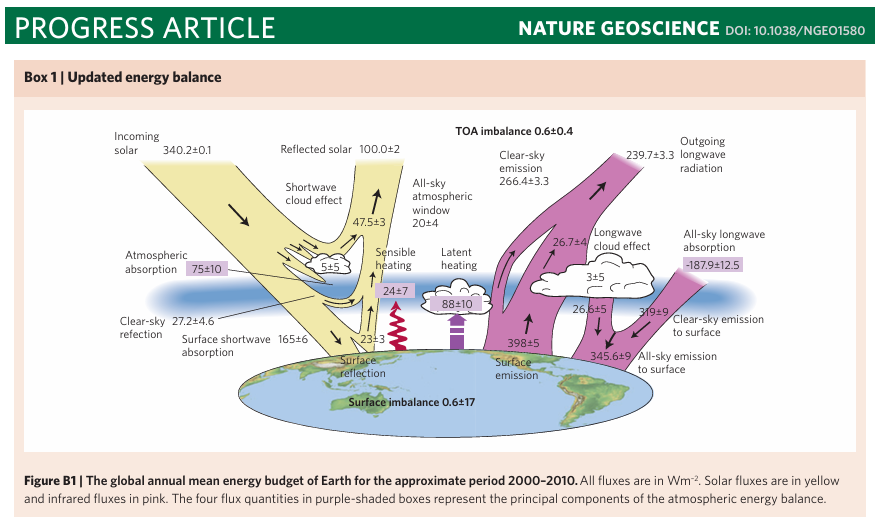
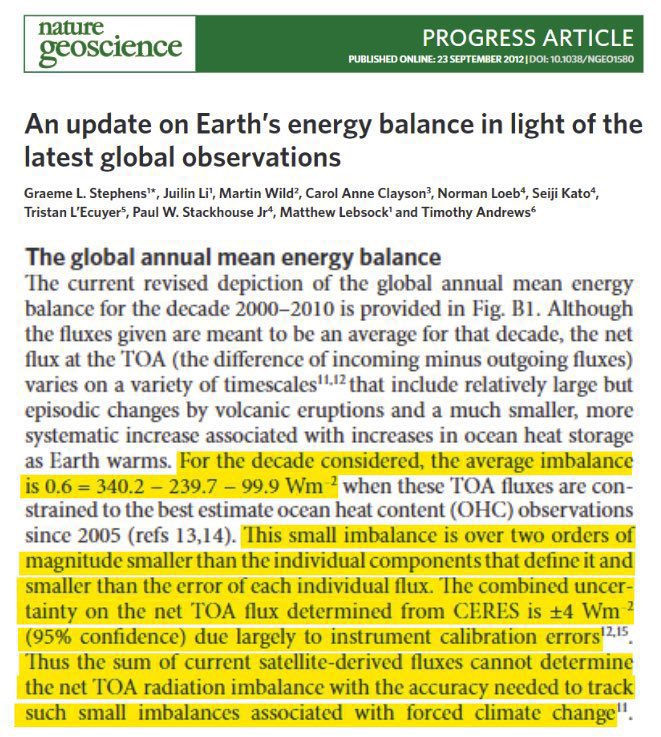
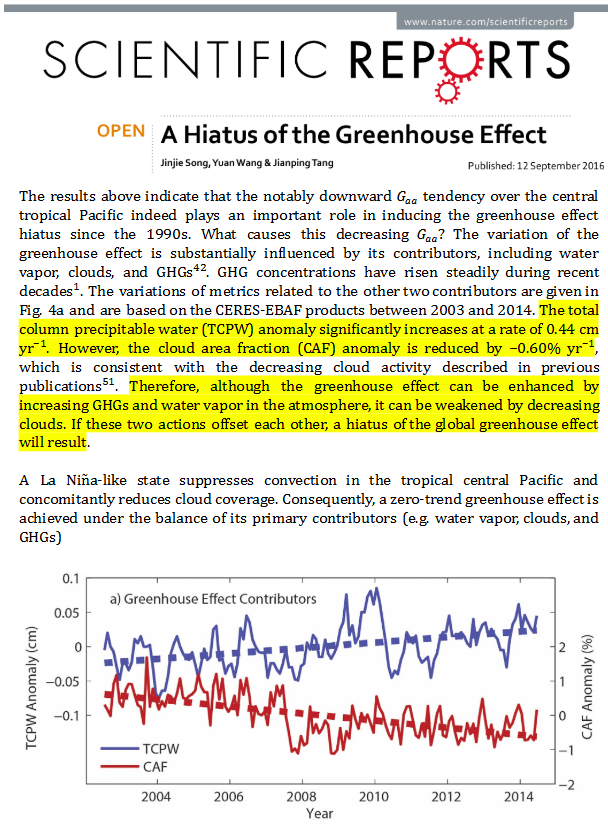
Oh, I understand “the science.” You do not. 🫵😉 First, yes, the planet has warmed up by ~1.2°C since 1850, although nobody knows precisely how much because of poor data quality (e.g., uneven station distribution; fragmented records, especially outside of the United States; station siting changes; and urban heat island contamination) issues that have not been accurately corrected for. But, I have no doubt that the Earth is slightly warmer than it was 175 years ago or that 𝑠𝑜𝑚𝑒 warming is due to carbon dioxide (CO₂) emissions. 🌡️📈 SO WHAT? 🤷‍♂️ Second, contrary to what the army of alarmist foot soldiers have been 𝑚𝑖𝑠𝑙𝑒𝑑 to believe by academics, there are not really any so-called “fingerprints” of human-caused global warming. 🫆 That is, there is no meaningful pattern to differentiate warming caused by forcing (i.e., a perturbation that causes Earth’s energy balance to change) from CO₂ to that of either internal variability (e.g., a change, even a very tiny change, in low- and mid-level cloud cover) or a shift in solar forcing. Numerous peer-reviewed papers claim to have found a human “fingerprint,” but the only evidence that they have presented is that the anomaly of interest is 𝑐𝑜𝑛𝑠𝑖𝑠𝑡𝑒𝑛𝑡 𝑤𝑖𝑡ℎ anthropogenic warming, but they fail to note that said anomaly would also be consistent with natural warming. A reduction in cloud cover, for example, would allow more sunlight into the climate system, which would warm the oceans. A warmer ocean—all else being equal—increases the rate of evaporation, which raises the vapor pressure (humidity) contributing to polar amplification and faster land warming than the ocean (e.g., Compo & Sardeshmukh, 2008). ✅☁️ 🔗link.springer.com/article/10.100… / open-access: psl.noaa.gov/people/gilbert… All warming, natural or man-made, results in: 1⃣ The higher latitudes warming faster than the mid-latitudes and tropics. 2⃣ Land heating up faster than the oceans. An increase in solar forcing would have essentially the same material effect, although we can probably rule that out as the cause since sunspot activity has been declining in recent decades. 🚫☀️ However, there are other ways in which solar activity exerts influence on the climate system that remain very poorly understood (e.g., solar wind) because very little research has been funded to investigate it. In any case, the 𝒃𝒆𝒔𝒕 empirical evidence that I have seen to suggest that there probably is at least some anthropogenic “fingerprint” on recent temperature increases is stratospheric cooling. 🌡️📉 First, understand that in atmospheric physics, heat flux is measured as the power—measured in Watts (that is, Joules per second)—standardized per square meter of surface area. Next, the average radiation flux into the atmosphere is on the order of 239 ± 3.3 W/m² of absorbed solar radiation (ASR) averaged over a year (Stephens et al., 2012). This means that in order to maintain a constant surface air temperature the Earth's surface must emit 239.7 ± 3.3 W/m² back to outer space. 🔗nature.com/articles/ngeo1… / open-access: researchgate.net/publication/26… Global warming theory maintains the direct radiative forcing of doubling atmospheric CO₂ concentrations (RF 2×CO₂) is 3.7 ± 0.4 W/m² (IPCC TAR, 2007). That means the net outgoing longwave radiation to space is reduced by 3.7 W/m², which creates an Earth energy imbalance (EEI) leading to a slight warming tendency in the troposphere (surface to ~13 km altitude). 🔗ipcc.ch/site/assets/up… (p. 357) In the stratosphere (~13-50 km altitude), this causes a cooling tendency because less infrared radiation (IR) flux is moving up from below. These relationships were first demonstrated in Manabe & Strickler (1964). 🔗journals.ametsoc.org/view/journals/… NASA satellite measurements indicate that cooling in the stratosphere has been observed since the late 1970s, although there has been very little cooling over the last 25 years, all the while the troposphere has continued to warm. 🛰️ 🔗nsstc.uah.edu/data/msu/v6.1/… That means that most of the warming observed since 2000 is likely natural OR perhaps caused by a reduction in stratospheric sulfate aerosol concentrations, in part an artifact of stricter pollution regulations in recent years. But, yes, I would agree with most scientists that the cooling observed in the stratosphere, at least that from the 1970s to 2000, is most likely a result of CO₂ forcing. ✅ Again, SO WHAT? 🤷‍♂️ What happens in the troposphere in response to CO₂ forcing is a lot more nuanced. Why? Because in the lower atmosphere, we have feedbacks (largely cloud-related) and precipitation processes that affect the radiation budget a lot more than CO₂. And, just how clouds respond to tropospheric warming, if at all, is not very well understood (and by extension, it is not modeled well). What we do know, theoretically speaking, is that the direct warming effect of doubling atmospheric CO₂ (RF 2×CO₂) is actually very small; it is on the order of <1°C (Wijngaarden & Happer, 2020). 🔗arxiv.org/abs/2006.03098 However, amplifying (or dampening) feedbacks that kick in as a response to forcing mean that the real-world value—the equilibrium climate sensitivity (ECS)—will be higher (lower) than the ~1°C figure that you derive from radiative transfer calculations. Three pieces of critical information remain unknown: 1⃣ Exactly how much warming has been man-made (since, let's say, 1950). We still don't know the answer to this because the coefficients that are used to ascribe anthropogenic versus natural forcings are all computed from computer modeling, not physical measurements. 2⃣ What the exact value of ECS is. 3⃣ Even if global warming is entirely man-made, is it really a net drawback to civilization? To break it down: 🔹If ECS is <3°C, the climate system is largely insensitive to GHGs, and impacts are exaggerated. 🔹If ECS is ≥3°C, the climate system is very sensitive to GHGs, and the warming could be a concern. The IPCC’s “best estimate” of Earth's ECS is 3.0°C with a range of 2-5°C. 🔗ipcc.ch/report/ar6/wg1… (pp. 44-45) In 1994, using NASA's real-world bulk atmospheric temperature data, Drs. John Christy and Richard McNider from the University of Alabama in Huntsville (UAH) calculated the climate sensitivity by removing the effects of El Niño / La Niña and volcanic aerosol injection (e.g., El Chichón, 1982; Mt. Pinatubo, 1991). They found that the human-induced warming rate is about 0.09°C / decade (lower than observations of actual temperature increase). This, by the way, came with the stipulation that unknown mechanisms of internal variability or external forcing remain zero. 🔗nature.com/articles/36732… The authors then affirmed their 1994 findings more recently in 2017 (McNider & Christy, 2017). They found a near-identical anthropogenic warming rate of only 0.096°C / decade and a transient climate response (TCR) of 1.10 ± 0.26°K. 🔗 link.springer.com/article/10.100… / open-access: sealevel.info/christymcnider… Many other recent studies (e.g., Lewis & Curry, 2018; Scafetta, 2021; Spencer & Christy, 2023; Lewis, 2025) have all estimated ECS to be far lower than the IPCC AR6's “best estimate” 🔗journals.ametsoc.org/view/journals/… 🔗mdpi.com/2225-1154/9/11… 🔗link.springer.com/article/10.100… 🔗acp.copernicus.org/articles/25/88… The jury is still out. 🤷‍♂️ What's more, in order to reliably detect anthropogenic influence on the climate system, the EEI must be known to the nearest 0.1 W/m² (e.g., Von Schuckmann et al., 2016; Gebbie, 2021). 🔗nature.com/articles/nclim… / open-access: nora.nerc.ac.uk/id/eprint/5127… 🔗annualreviews.org/content/journa… However, the aforementioned Stephens et al. (2012) estimates the EEI to be 0.6 ± 0.4 W/m², which is eight times larger than the anthropogenic detection limits. And, the natural top-of-atmosphere (TOA) flux has a 6.6 W/m² margin of error, which is 66 times larger than the detection limits. This range of uncertainty remains in newer estimates, such as Loeb et al. (2021), which estimates EEI to be 1.12 ± 0.48 W/m². 🔗agupubs.onlinelibrary.wiley.com/doi/10.1029/20… This means that 𝑚𝑜𝑠𝑡 (not all!) of the observed global warming since 1950 could be natural and scientists would never know for certain. Alternatively, warming could be mostly man-made, but, even if that happens to be the case, SO WHAT? That doesn't mean it is an existential crisis. The big unknown here are CLOUDS. ☁️ This is because (a) cloud albedo has far more impact on the atmospheric radiation budget than CO₂, and (b) how clouds change in response, if at all, to the CO₂ forcing is unknown. What's more, cloud cover can (and does) change naturally without our assistance for any number of chaotic reasons (e.g., El Niño / La Niña activity; ocean circulation changes; cosmic ray flux; etc.). Case in point, even a small decrease in global cloud area fraction (CAF) can more than offset any temperature rise caused by CO₂. Song et al. (2016), for instance, found that, 🗨️ “[𝐴]𝑙𝑡ℎ𝑜𝑢𝑔ℎ 𝑡ℎ𝑒 𝑔𝑟𝑒𝑒𝑛ℎ𝑜𝑢𝑠𝑒 𝑒𝑓𝑓𝑒𝑐𝑡 𝑐𝑎𝑛 𝑏𝑒 𝑒𝑛ℎ𝑎𝑛𝑐𝑒𝑑 𝑏𝑦 𝑖𝑛𝑐𝑟𝑒𝑎𝑠𝑖𝑛𝑔 𝐺𝐻𝐺𝑠 𝑎𝑛𝑑 𝑤𝑎𝑡𝑒𝑟 𝑣𝑎𝑝𝑜𝑟 𝑖𝑛 𝑡ℎ𝑒 𝑎𝑡𝑚𝑜𝑠𝑝ℎ𝑒𝑟𝑒, 𝑖𝑡 𝑐𝑎𝑛 𝑏𝑒 𝑤𝑒𝑎𝑘𝑒𝑛𝑒𝑑 𝑏𝑦 𝑑𝑒𝑐𝑟𝑒𝑎𝑠𝑖𝑛𝑔 𝑐𝑙𝑜𝑢𝑑𝑠. 𝐼𝑓 𝑡ℎ𝑒𝑠𝑒 𝑡𝑤𝑜 𝑎𝑐𝑡𝑖𝑜𝑛𝑠 𝑜𝑓𝑓𝑠𝑒𝑡 𝑒𝑎𝑐ℎ 𝑜𝑡ℎ𝑒𝑟, 𝑎 ℎ𝑖𝑎𝑡𝑢𝑠 𝑜𝑓 𝑡ℎ𝑒 𝑔𝑙𝑜𝑏𝑎𝑙 𝑔𝑟𝑒𝑒𝑛ℎ𝑜𝑢𝑠𝑒 𝑒𝑓𝑓𝑒𝑐𝑡 𝑤𝑖𝑙𝑙 𝑟𝑒𝑠𝑢𝑙𝑡.” 🔗nature.com/articles/srep3… While it is politically popular for people to splinter into one of the two tribalistic camps that either (a) increasing CO₂ has zero effect on the climate, or (b) that it will lead to Al Gore's Armageddon, the truth is probably somewhere in the middle of those extremes. How's that for some real science? 🧪
Chris Martz tweet mediaChris Martz tweet mediaChris Martz tweet mediaChris Martz tweet media
Fozzy Ⓐ 🏴🏴‍☠️ Migrant Shagging Insurrectionist@FozzTheMozz

@ChrisMartzWX No its the same science that says you cant read
English
86
305
1.2K
30.5K