Juno Vortex

6.6K posts

Juno Vortex banner
Juno Vortex

Juno Vortex

@JunoVortex

Teacher | Music Creator | Software Solutions, Juno Bot Whatsapp E-store | Dharmo Rakshati Rakshitah! Stream on Spotify, Apple Music, YouTube & more →🇮🇳 🕉️

India Katılım Ocak 2025
699 Takip Edilen194 Takipçiler
Juno Vortex retweetledi
Āyudhika
Āyudhika@Ayudhika1310·
Varada Chaturthi today! At the twilight of Dwapara Yuga, the venerable Rishi Valakhilya and fellow saints gathered in the lush forests by the Sharavathi River. Their penance was pure, but obstacles kept breaking its rhythm. Seeking guidance, they turned to Narada. Narada suggested that no sacred act succeeds without invoking Ganesha first. The rishis created sacred lakes Devatirtha, sanctifying the land. Narada then invited the divine trinity Brahma, Vishnu, Shiva, and Parvati to bless the site. With their consent, Ganesha descended to earth. Idagunji has a rare form of Ganesha with two tusks and two hands. Shivprabhat 🙏🏽
Āyudhika tweet media
English
13
30
155
1.2K
Juno Vortex retweetledi
Ajeet Bharti
Ajeet Bharti@ajeetbharti·
Oh! Is that so? Why can’t we decide minority benefits from Panchayat level? Whichever community is a minority in panchayat, it will get the minority benefit. Why go on a national basis? If it is social, let’s have at a smaller scale and benefit them.
Asaduddin Owaisi@asadowaisi

Simple math question for @KirenRijiju what is bigger? 79.8% or 14%? If Hindus are the majority community, then every non-Hindu group is a minority community. The minister is indulging in propaganda to deny Muslims their fundamental rights under Article 30. If we accept the Minister Against Minorities’ logic, then Hindi-speakers cannot be a minority in non-Hindi states because their population is more than the combined population of Canada and US.

English
18
424
1.8K
31.1K
Juno Vortex retweetledi
Juno Vortex
Juno Vortex@JunoVortex·
When this desert cult invaded India and forcefully converted Hindus to their Abrahamanical patriarchial religion, that's how Indian women who are still A-brahmanics - their progress was impeded! Hindu women were free to do whatever they want and even became PM, CM, etc. However, the Abrahaminical women can't even go to their place of worship, that's how subjugated they are. They have to always be inside a cage, black color, otherwise they face the risk of getting raped by their own father/brother/father in law. That's how Abrahmanical patriarchy works!
English
0
0
1
13
Juno Vortex
Juno Vortex@JunoVortex·
I would have written a religion was founded in a desert by A-Brahaman who was full of A-Brahamanical patriarchy and till date the women of that religion are subjugated and never treated as equals to men. They are considered slaves to men of ABrahamans. That's how A-Brahaminical patriarchy works. Unlike Hindu religion where we have Ardharnaareeshwarar where shiva and shakti are equal halves.
English
1
0
4
104
Anuradha Tiwari
Anuradha Tiwari@talk2anuradha·
"How did Brahmanical patriarchy hinder women progress in ancient India?" This question was asked in BHU MA history exam. Madan Mohan Malaviya, a Brahmin, founded Banaras Hindu University in 1916. Today, that very same BHU is spreading propaganda against Brahmins. Wow!
Anuradha Tiwari tweet media
English
63
974
2.3K
17.3K
Juno Vortex
Juno Vortex@JunoVortex·
@ARanganathan72 @ncbn Anand ji, I think this policy was aimed at the Hindus only, who are now having just 1 kid, not aimed at the other community which breeds like pigs! If that is made clear, hope it shouldn't be a problem?
English
0
0
0
9
Anand Ranganathan
Anand Ranganathan@ARanganathan72·
Andhra Pradesh’s recent decision to pay parents Rs 30,000 for their third child and Rs 40,000 for the fourth will turn India’s demographic dividend into a demographic disaster and trigger another partition. Here I provide seven arguments why @ncbn must withdraw this policy:
English
195
1.8K
6.3K
198.5K
Juno Vortex retweetledi
Āyudhika
Āyudhika@Ayudhika1310·
In the sacred land of Thondainadu, Padavedu shines as one of the most revered Sakthi Sthalas. Here, the divine presence of Renugambal Amman is swayambhu. What makes Padavedu even more unique is its extraordinary prasadam. Instead of food, devotees receive Vibhuti from a sacred pit, believed to be near the ancient ashram of Rishi Jamadagni, the husband of Renukadevi. This pit is said to be ever‑filling, never running dry, a miracle in itself. This Vibhuti has immense medical properties and cures chronic diseases and ailments. Shubh Ratri 🙏🏽
Āyudhika tweet media
English
14
47
257
2.1K
Juno Vortex retweetledi
Agnimitra Paul BJP
Agnimitra Paul BJP@paulagnimitra1·
Process for compensation and recovery of damages to public property caused by miscreants has been initiated under the jurisdiction of Asansol North Police Station. Strict legal action is being taken to ensure accountability and protect public assets. Law and order will be upheld with firmness, and those responsible for vandalism and destruction will face the consequences as per the law. Public property belongs to the people — its protection is our collective responsibility.
English
9
58
248
3K
Juno Vortex
Juno Vortex@JunoVortex·
@GemsOfINDOLOGY Yes, the British imposed the caste system on us for their convenience (of maintaining records?) or purposefully so they could divide and conquer! Unfortunately, our ancestors were to naive and believed them unbeknownst to their sinister plans!
English
0
1
2
102
Juno Vortex retweetledi
GemsOfINDOLOGY
GemsOfINDOLOGY@GemsOfINDOLOGY·
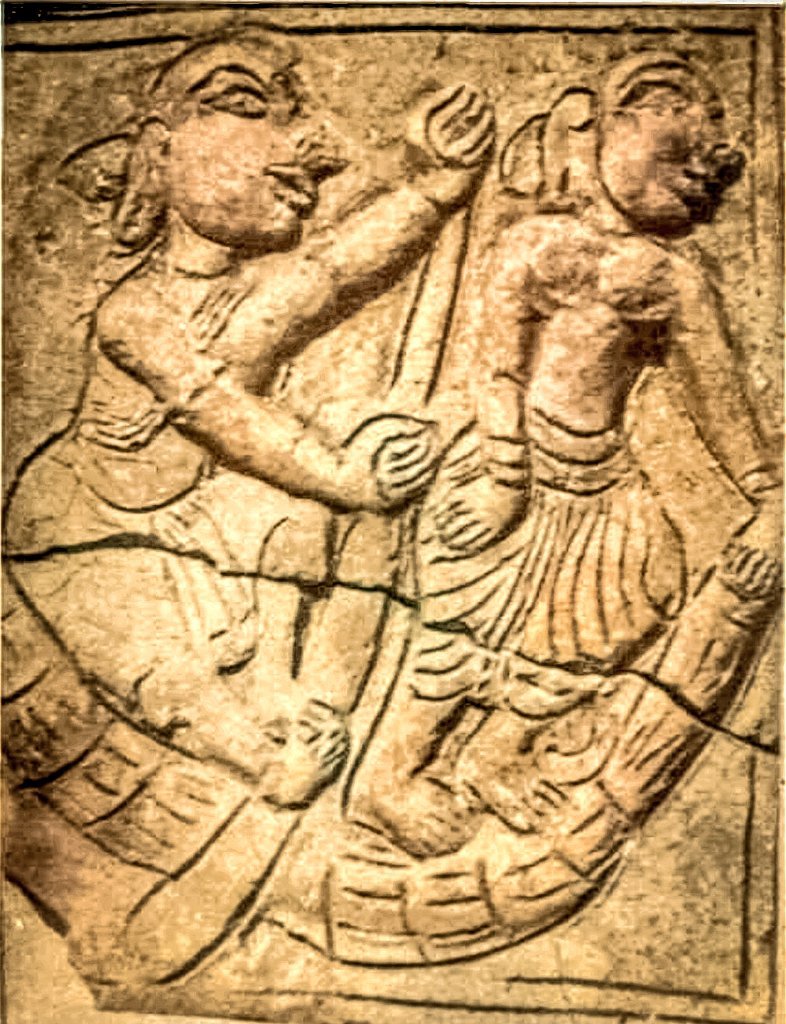
𝐀 𝐦𝐚𝐥𝐥𝐚𝐡 𝐰𝐞𝐚𝐫𝐢𝐧𝐠 𝐣𝐚𝐧𝐞𝐮. A woman from a fishing community. Sacred thread across her spouse chest. Rowing her spouse across water. Archaeological plate LXXXVIII, Guwahati Museum. Indian Archaeological Review 1956-57. Today, this image breaks every rule we're told about "traditional India." Mallah community? Lower in hierarchy. Janeu? Reserved for upper castes. Woman doing physical labor? Not how we imagine the past. But here's the thing— This wasn't rebellion. This wasn't an exception. This was normal. The janeu wasn't always policed. Caste wasn't always hereditary law. Communities wore what they wore, practiced what they practiced, moved between categories. Fluid. Functional. Local. Then the British arrived. Census forms needed neat boxes. Legal categories needed fixed definitions. Administration needed frozen hierarchies. So they froze them. What was negotiable became permanent. What was context-dependent became caste-determined. What was regional became "authentic tradition." And we inherited those lines. Not from the Vedas. Not from ancient lawgivers. From colonial bureaucracy. So when you see this image and feel confused— Ask not what's wrong with her. Ask what was done to the system that made this normal… into something that shocks us today. 🧵
GemsOfINDOLOGY tweet media
English
13
203
450
8.8K
Juno Vortex retweetledi
Nilay 🇧🇩🕉️
Nilay 🇧🇩🕉️@nilaymallikk·
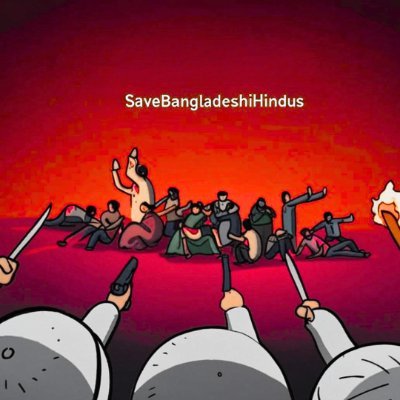
The lady said: “We will never leave our cremation ground & temple land even if we have to die for it” 🔥 Illegal land jihadis now have occupied the temple & smshan land of indigenous Tripuri people in Chittagong Hill Tracts (CHT) The land of the historic Shree Shree Jagannath Temple (established in 1959) & its adjacent Hindu cremation/samshan ground been illegally registered under another person’s name They are facing repeated obstruction during Hindu cremation rites and are now demanding the immediate return and protection of the temple and cremation ground land. 📍 Juddho Kumar Para, Matiranga, Khagrachhari, CHT, Bangladesh
Nilay 🇧🇩🕉️@nilaymallikk

Local land jihadis are forcefully grabbing ancestral land from Mahato Adivasi Hindu families and illegally cutting soil from more than 300 bighas (around 100 acres) of land These poor families have nothing except this land This is their only source of food, income, and survival. If they lose this land, they will become completely helpless. 📍Raiganj, Sirajganj, Bangladesh


English
6
477
874
19.6K
Juno Vortex
Juno Vortex@JunoVortex·
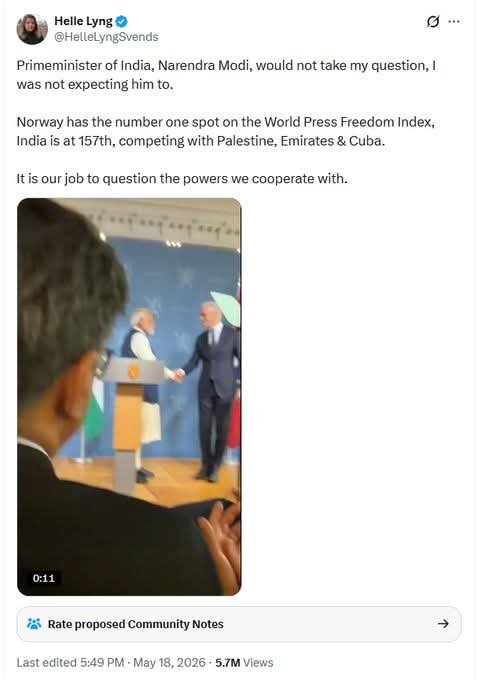
@BS_Prasad Her last name has a missing i.. it should have been Hell Lying!
English
0
0
0
15
Saravanaprasad Balasubramanian (Modi ka Pariwar)
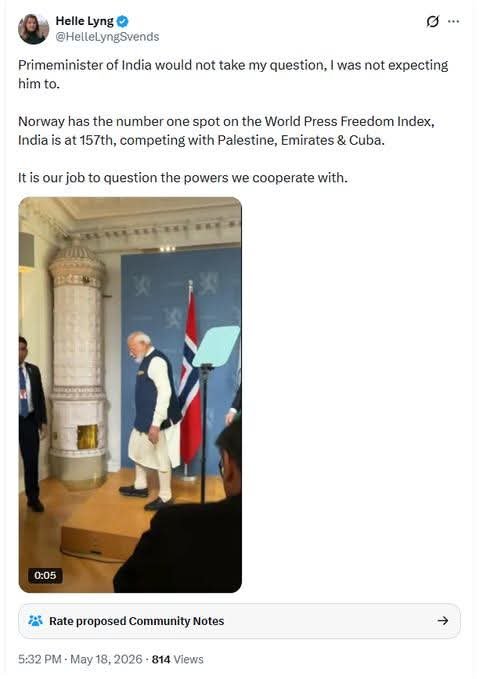
A 28-year-old little-known Norwegian journalist with hardly 500 followers, who hardly had any activity on X, posted a post targeting PM Modi at 12:02 GMT (17:32 IST) She didn't get any traction for next 17 mins only 814 views . In her entire 4 year career, she never raised issue of press freedom, media censorship, attacks on journalists, or the World Press Freedom Index. She covered US elections and cheered Trump's victory and currently she writes on Norwegian domestic issues: interest rates and the housing crisis Anyways, after 17 mins at 12:19 (GMT), she edits her tweet and add name of Indian PM 'Narendra Modi' in her tweet. How does an armature journalist who never talked to any state head earlier, who doesn't have any past on Press freedom section knows that India ranks below Palestine, Emirates, Cuba It means the tweet was meticulously drafted by someone else and sent her to post. The first biggest amplifier of her tweet was Suhasini Haider (The Hindu) at 12:30 GMT who was also present there and probably gave her draft of the tweet Then it was amplified by Congress IT cell (13:23 GMT) Zubair (14:10) Sagrika Ghosh (14:49) Rahul Gandhi (14:56) Mahua Moitra (15:42) Dhurv Rathi (15:51) Need more proof?
Saravanaprasad Balasubramanian (Modi ka Pariwar) tweet mediaSaravanaprasad Balasubramanian (Modi ka Pariwar) tweet mediaSaravanaprasad Balasubramanian (Modi ka Pariwar) tweet mediaSaravanaprasad Balasubramanian (Modi ka Pariwar) tweet media
English
9
34
83
1.8K
Juno Vortex retweetledi
Aravind
Aravind@aravind·
Why should India be trusted? Just one of million reasons: Recently Indian Army officers Lt Col Urmimala Battacharya & Lt Col Kirti Sethi managed to save a life onboard an Ethiopian Airlines flight during an emergency. They were on their way to UN peace keeping mission in South Sudan, where India is a trusted third party peace keeper.
Aravind tweet media
English
44
1.2K
6.4K
97.2K
Juno Vortex retweetledi
Comman Man
Comman Man@CommanMan777589·
Dhurandhar who lived 108 years 🔥 🔥 You've seen spies in movies. You've watched Dhurandhar. You've heard stories of brave soldiers. But what if I told you that the most dangerous, most feared, and most loyal secret weapon India ever had was not a trained intelligence officer, not a decorated army general, not even someone who went to school? Born in 1901, Ranchodbhai Savabhai Rabari known as "Pagi", meaning the one who shows the way spent his entire life doing exactly that. Guiding Indian soldiers through pitch black deserts. Tracking enemy footprints in the sand. Protecting a border that most of us can't even find on a map. His skill was unlike anything any spy school could ever teach. One look at a footprint and he could tell you how many soldiers passed, how fast they were moving, whether they were armed, and how long ago they walked there. 100 years of living in the desert gave him a sense no technology could replace. During the 1965 war, the Indian Army needed to move 10,000 soldiers to their destination in three days. Pagi guided them and arrived 12 hours ahead of schedule. Through a desert. In complete darkness. With zero technology. Field Marshal Sam Manekshaw one of India's greatest ever military heroes personally gave him the nickname "Pagi" and never forgot him till his last breath. In 2008, lying on his deathbed in a hospital in Tamil Nadu, Manekshaw kept whispering one single word in his semi-conscious state. "Pagi… Pagi… Pagi…" He worked with R&AW and the BSF guarding 540 km of the India-Pakistan border in Gujarat. He won the Sangram Medal, the Samar Seva Star and the Police Medal. The BSF named a border outpost after him that still stands today. His story is now in Gujarat school textbooks. Most people retire at 60. Pagi retired at 108. He left this world on January 18, 2013, at the age of 112. No viral moment. No prime time coverage. No trending hashtag. Just a shepherd from Gujarat who quietly kept a billion people safe for over a century. While we were watching fictional spies on screen, the real Dhurandhar was walking barefoot through the desert making sure we slept safely at night. Share this so his name never gets forgotten. 🔖 Save this. The world needs to know him
Comman Man tweet media
English
11
157
393
6.2K
Juno Vortex retweetledi
𝗙𝗮𝘀𝗵𝗶𝗼𝗻𝗶𝘀𝘁𝗮
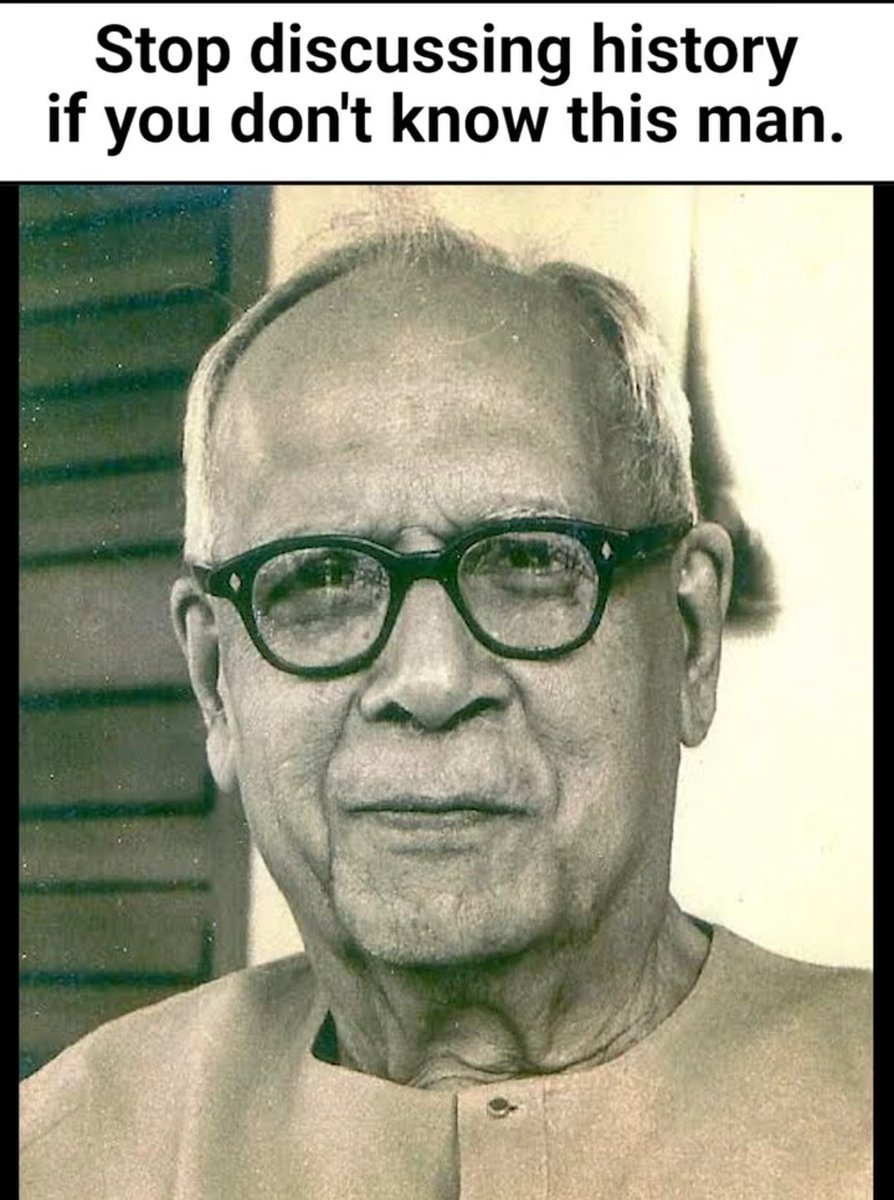
#𝗧𝗵𝗿𝗲𝗮𝗱🧵: 𝗥.𝗖. 𝗠𝗮𝗷𝘂𝗺𝗱𝗮𝗿 𝗿𝗲𝗺𝗮𝗶𝗻𝘀 𝘁𝗵𝗲 𝗯𝗲𝗻𝗰𝗵𝗺𝗮𝗿𝗸 𝗳𝗼𝗿 𝗮𝘂𝘁𝗵𝗲𝗻𝘁𝗶𝗰, 𝘂𝗻𝗰𝗼𝗺𝗽𝗿𝗼𝗺𝗶𝘀𝗶𝗻𝗴 𝗜𝗻𝗱𝗶𝗮𝗻 𝗵𝗶𝘀𝘁𝗼𝗿𝘆. R.C. Majumdar was the most rigorous, data-driven academic of Indian historiography. As a premier indologist and the Vice-Chancellor of Dacca University, his work relied strictly on hard evidence: ancient inscriptions, numismatics, and original Sanskrit texts. He flatly rejected both British colonial bias and post-independence political tailoring. He is the sole architect behind The History and Culture of the Indian People, a monumental 11-volume, 9,000-page academic fortress that took over three decades to compile. In the 1950s, the Indian government appointed Majumdar to head the official history of the freedom movement. The conflict was immediate. The establishment demanded a sanitized, politically useful narrative that romanticized events and downplayed the raw, aggressive resistance of the revolutionaries. Majumdar refused to compromise empirical facts for state policy, famously stating that a historian's loyalty belongs to the dead, not to living politicians. The system retaliated by removing him from the project, cutting his funding, and systematically ensuring his work was excluded from school textbooks. They wanted a comfortable national myth; Majumdar demanded the unedited truth. Working entirely independently through the Bharatiya Vidya Bhavan—without a single rupee of government funding—he preserved the actual scale of Bharat's civilizational struggle. He documented the brutal reality of medieval invasions, the fierce resistance of regional kingdoms, and the definitive strategic impact of Netaji Subhas Chandra Bose and the INA trials in forcing the British exit. If modern Indian history textbooks feel hollow or overly sanitized, it is because they were written by the committee that silenced him.
𝗙𝗮𝘀𝗵𝗶𝗼𝗻𝗶𝘀𝘁𝗮 tweet media
English
0
38
53
531
Juno Vortex retweetledi
Rima Sarkar
Rima Sarkar@_RimaSarkar·
🥮 In 1973, industrialist Alokesh Jana looked around the bustling streets of Howrah and saw a clear need. Schoolchildren needed a quick, affordable tiffin. Workers and commuters craved something reliable to beat sudden hunger pangs at tea stalls, trains, or bus stops. Fancy cakes existed for occasions, but nothing simple, consistent, and pocket friendly for everyday life. That year, Jana established New Howrah Bakery (Bapuji) Pvt. Ltd. in the Pallabpukur area. He launched a square cut vanilla fruit cake priced at just 60 paisa, the perfect tiffin cake designed first with students in mind, then embraced by working people across Howrah, Kolkata, and Hooghly districts. 🥮 No dramatic family recipe tale. No eureka moment passed down in folklore. Just a practical business decision by a forward thinking industrialist who focused on quality ingredients, mild vanilla aroma, and generous mix-ins of tutti frutti, petha (ash gourd preserve/chalkumra morobba), roasted peanuts, and occasional raisins. The result? A soft, moist, not too sweet cake wrapped in iconic oily printed wax paper (red, yellow, green, blue with the big red “R” trademark) that became pure nostalgia without any heavy advertising. 🥮 Why Did It Worked So Well? It perfectly filled the gap between expensive bakery treats and basic bread. Affordable for all strata of society, reliable in taste and texture, and ideal for dabba (tiffin), chai-er dokan, picnics, or quick bites. Word of mouth spread its fame. Even during the 2016 demonetization, when supply briefly dipped, the public outcry made headlines, proof of how deeply it had become part of Bengali daily life. 🥮 Today, Alokesh Jana’s sons, Amitabha (Amitava) Jana and Animesh Jana continue the legacy. The original recipe remains largely unchanged, prices stay modest (around ₹7–8 per slice), and the bakery has expanded into biscuits and more while keeping quality and affordability at the core. A trademark dispute in court only strengthened public loyalty when the Jana family defended their claim successfully. 🥮 For generations of Bengalis, Bapuji Cake is far more than just a sweet treat, it’s edible childhood! The unmistakable vanilla scent opening a school dabba, the oily wrapper crinkling during a local train ride, the perfect square shared at roadside chai stalls or family picnics. In an era of fancy desserts and packaged snacks, this humble cake remains unchanged, evoking pure, simple joy and a sense of home. It’s resilience baked into every slice a quiet symbol of Howrah’s spirit that continues to win hearts across Bengal and beyond. If Bapuji Cake was part of your growing up years, drop your favourite memory in the comments!
Rima Sarkar tweet media
English
32
128
577
17.9K