Kuntal 🦇🦇

4.5K posts

Kuntal 🦇🦇 banner
Kuntal 🦇🦇

Kuntal 🦇🦇

@KCLinguistics

Improving student access| Mostly doing Neurobiology of Language and Multimodality| The original 'gnarly' brain| #FirstGeneration He/Him

London, UK Katılım Eylül 2020
3.6K Takip Edilen911 Takipçiler
Kuntal 🦇🦇 retweetledi
Jared Rosenblum
Jared Rosenblum@JaredRosenblum·
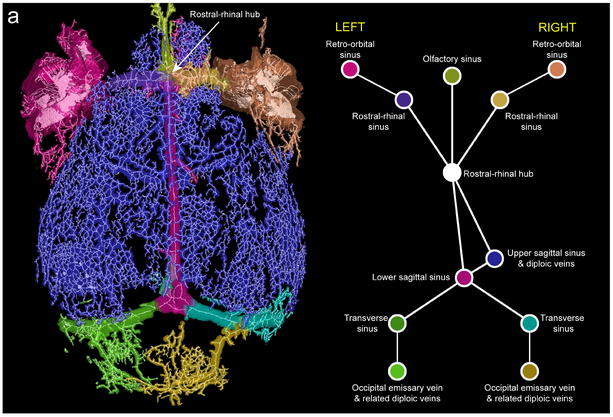
As promised, here's the deep dive on our recent article! Did you know the brain's "sewer drains" (dural sinuses) aren't passive pipes—they're dynamic, ruffling structures that actively guard immunity & regulate pressure? As both a co-author and President & Founder of @neurosimplicity, I am excited to spotlight this groundbreaking discovery from the McGavern lab @NIH_NINDS in @Nature. Our Imaging Suite helped map the amazing cranial & neurovascular connections in unprecedented 3D detail! 🧠🔬 Link: rdcu.be/e4A8i #Neuroimmunology #BrainImmunity
Jared Rosenblum tweet media
English
7
74
299
16.8K
Kuntal 🦇🦇 retweetledi
IUSS PAVIA
IUSS PAVIA@IussPavia·
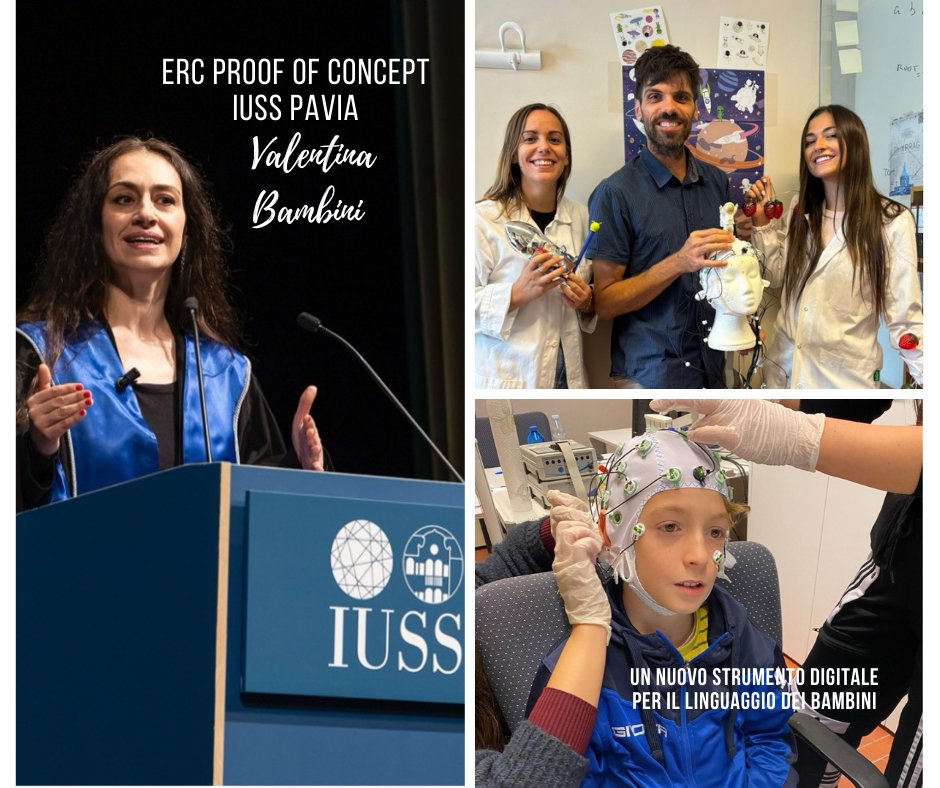
Valentina Bambini (IUSS Pavia) ha ottenuto un ERC Proof of Concept Grant per #Meta4Kids. Il progetto nasce dai risultati dell’ERC Consolidator PROMENADE, che ha studiato con metodi neurofisiologici la comprensione delle metafore nei bambini dai 7 ai 10 anni.#ERCPoC @ERC_Research
IUSS PAVIA tweet media
Italiano
0
4
13
829
Kuntal 🦇🦇 retweetledi
Neuron
Neuron@NeuroCellPress·
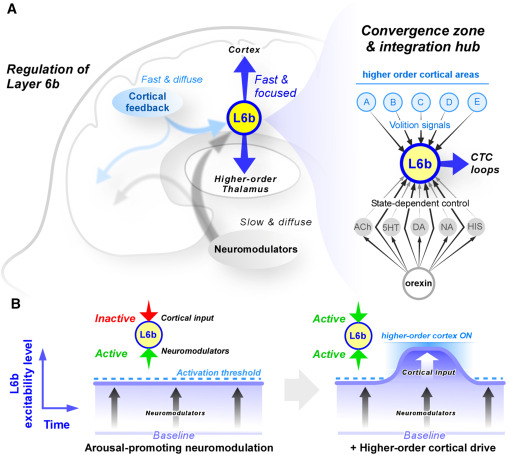
Online now: The layer 6b theory of attention dlvr.it/TQWrfv
Neuron tweet media
English
5
31
116
13.8K
Kuntal 🦇🦇 retweetledi
Science in Boston
Science in Boston@ScienceinBoston·
🤯 A new ‘biomimetic’ model of brain circuits and function showed naturalistic dynamics and learning. The model, co-created by Dr. Earl Miller (@MillerLabMIT) at @MIT_Picower, identified previously unnoticed curious behavior by some neurons: bit.ly/49rQoXp
Science in Boston tweet media
English
2
15
42
3.4K
Kuntal 🦇🦇 retweetledi
Languages MDPI
Languages MDPI@Languages_MDPI·
📚 Join us at the 2026 MLA Convention in Toronto, Canada (January 8–11, 2026) 📍 Visit the MDPI booth #420B to meet our representatives. We're ready to answer your questions and explore publishing opportunities with you. We look forward to seeing you there! #MLA2026 #MDPI
Languages MDPI tweet media
English
0
1
2
121
Kuntal 🦇🦇 retweetledi
Luiz Pessoa
Luiz Pessoa@PessoaBrain·
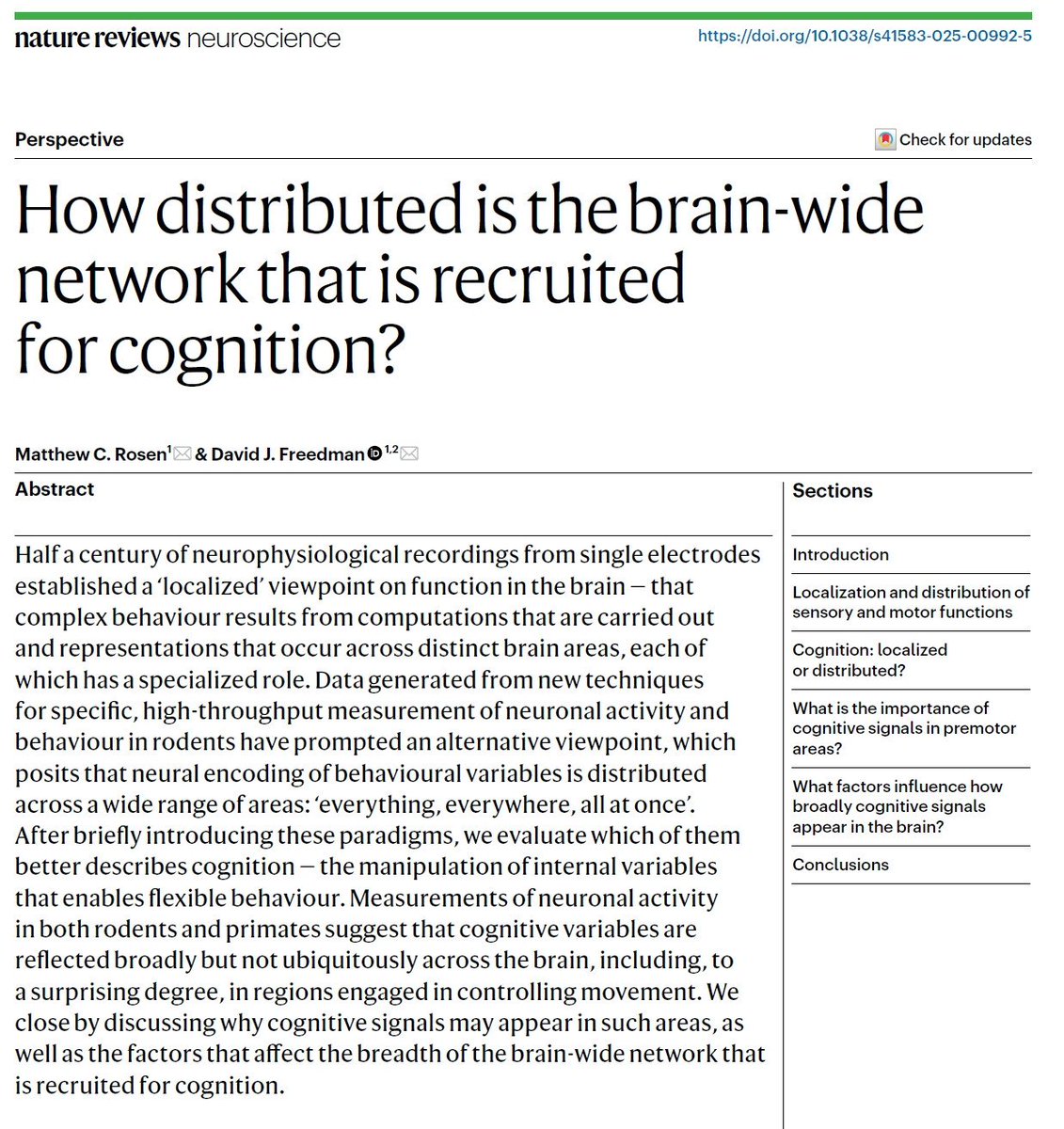
𝗛𝗼𝘄 𝗱𝗶𝘀𝘁𝗿𝗶𝗯𝘂𝘁𝗲𝗱 𝗶𝘀 𝘁𝗵𝗲 𝗯𝗿𝗮𝗶𝗻-𝘄𝗶𝗱𝗲 𝗻𝗲𝘁𝘄𝗼𝗿𝗸 𝘁𝗵𝗮𝘁 𝗶𝘀 𝗿𝗲𝗰𝗿𝘂𝗶𝘁𝗲𝗱 𝗳𝗼𝗿 𝗰𝗼𝗴𝗻𝗶𝘁𝗶𝗼𝗻? Distributed brain processing, this goes to the top of the list! doi.org/10.1038/s41583…
Luiz Pessoa tweet media
English
5
73
393
19.3K
Kuntal 🦇🦇 retweetledi
nature
nature@Nature·
Nature research paper: Evolution of taste processing shifts dietary preference go.nature.com/4ooMvrQ
English
2
29
152
29K
Kuntal 🦇🦇 retweetledi
Brain
Brain@Brain1878·
Tsang et al. reviewed 13 studies combining TMS with intracranial EEG in humans and non-human primates. They found that stimulation can rapidly alter neuronal activity and connectivity, with some effects persisting for extended periods. tinyurl.com/yver3s93
Brain tweet media
English
3
50
195
10.5K
Kuntal 🦇🦇 retweetledi
nature
nature@Nature·
A new technique called ‘mind captioning’ generates descriptive sentences of what a person is seeing or picturing in their mind using a read-out of their brain activity, with impressive accuracy. go.nature.com/4nZaZId
English
39
336
1.1K
77.3K
Kuntal 🦇🦇 retweetledi
Imaging Neuroscience
Imaging Neuroscience@ImagingNeurosci·
New paper in Imaging Neuroscience by Fahimeh Akbarian, Jeroen Van Schependom, et al: Task-induced 1/f slope modulation as a paradigm-independent marker of cognitive control in multiple sclerosis doi.org/10.1162/IMAG.a…
Imaging Neuroscience tweet media
English
0
2
9
962
Kuntal 🦇🦇 retweetledi
Brain
Brain@Brain1878·
Donahue et al. review the anatomy and function of the parasagittal dural space, highlighting its roles in neuroimmune surveillance and in the clearance of proteins implicated in neurodegenerative disorders. tinyurl.com/44f4jk8y
Brain tweet media
English
2
31
146
9K
Kuntal 🦇🦇 retweetledi
Neuron
Neuron@NeuroCellPress·
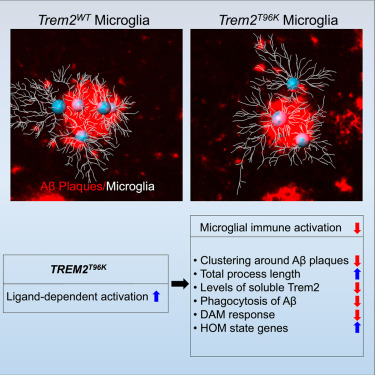
Online now: The gain-of-function TREM2-T96K mutation increases risk for Alzheimer’s disease by impairing microglial function dlvr.it/TNkmQk
Neuron tweet media
English
0
27
94
8.4K
Kuntal 🦇🦇 retweetledi
Steve Jurvetson
Steve Jurvetson@FutureJurvetson·
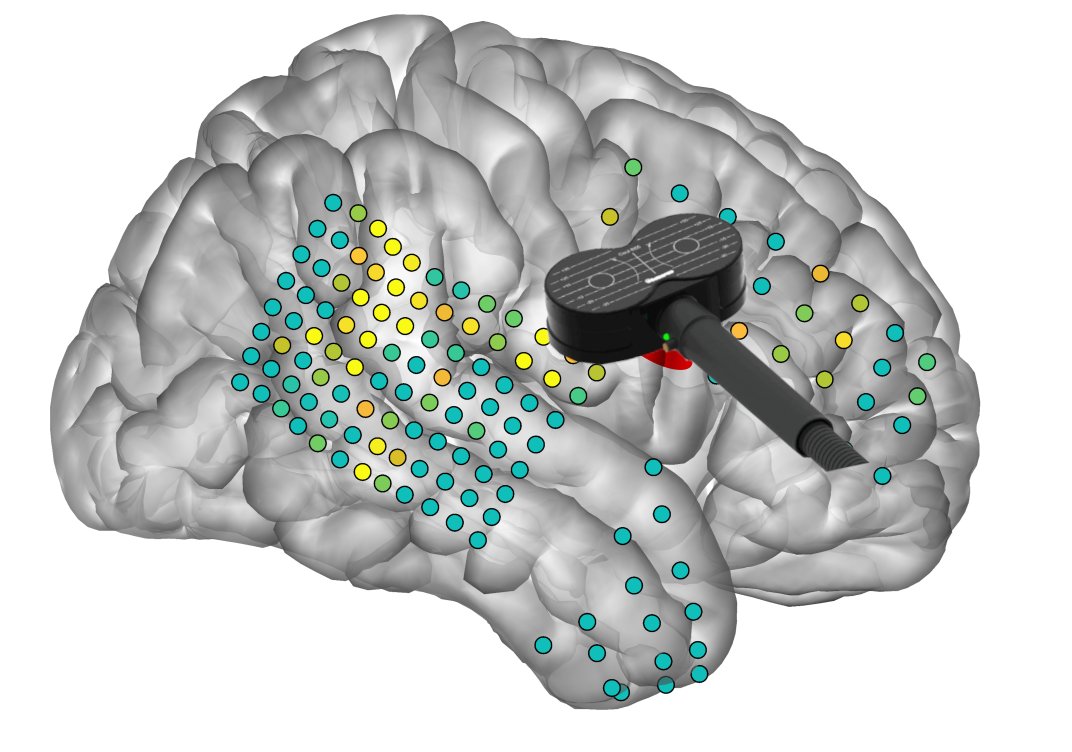
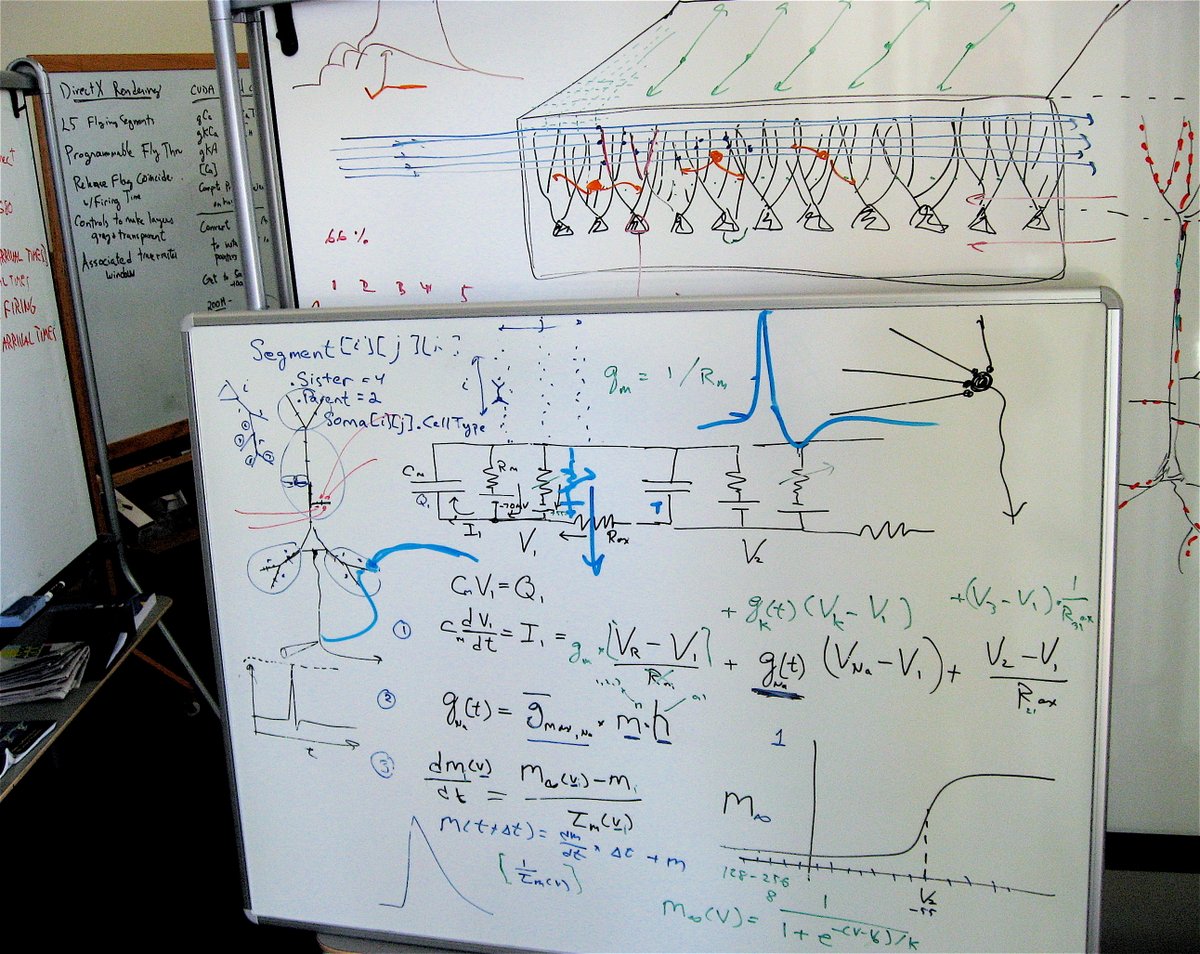
Mental Models — then and now 🧠 Here's a visual comparison of the complex mapping of the brain in 2025 vs 2007. 1) The latest from E11 Bio, on a quest to create a digital twin of the human brain. To decode the neuron type and physical morphology, they "barcode" every cell in the brain from the expressed proteins that fill the cell. They then use expansion microscopy, literally swelling up the brain tissues from within, to make them easier to trace with microscopes. From: biorxiv.org/content/10.110… by E11.bio MIT’s Ed Boyden is an advisor to the project, and I have been speaking with him about it for some time. The complexity of neural activity is way greater than we could have imagined in 2007. The genetic diversity among neurons is enormous, way beyond the typology of neuroscience. And that genetic code might change when encoding memories! There are also local chemical gradients with endogenous cannabinoids and HIV-like particles in the mix, and an extra-cellular matrix that becomes more malleable (affording metaplasticity) under the influence of psychedelics (from Gul Dolen’s work: x.com/FutureJurvetso…). A key question for any mental model is the degree of complexity that is needed to represent brain state. Is any of it superfluous? 2) Evolved Machines 2007. My friend was one of the first five commercial test cases for NVIDIA GPU applications outside of graphics. He built a DIY supercomputer with $2K of GPUs to model neural growth and patterns of firing in a cortical column (for synthetic olfaction). I posted at the time: "Left side: dendrites grow along chemical gradients, densely filling all available space, and exploring approximately 500 possible connections for each ultimate synapse formation. Right side: neural model with detailed modeling of the computation that occurs in the dendrites. Earlier, simplistic neural network models assumed that the cell body was the aggregating locus of computation." 3) His 2007 whiteboard with RC ladders and diff eq’s looked strangely familiar from my EE days. My summary at the time: "To more accurately model neuronal signaling, the dendrite is broken up into a finite element model of adjacent segments. Somewhat like a coax cable, the dendrite has an inner core of conductive ions surrounded by a lipid layer that insulates the signal from the common ground of the intercellular fluid. In addition to static membrane capacitance and axial resistance, the myriad ion channel pores penetrating the lipid insulator provide rich non-linear dynamics (modeled as a battery and voltage-regulated resistor). Conformal proteins in the channel dynamically regulate sodium and potassium current, with positive feedback accelerating the local rise of voltage above a threshold and then reversing to rapid negative feedback (creating a classic neuronal voltage spike). The voltage spike will propagate, with gain, along the dendrite, from one finite element region to the neighbor, not as a free flow of electrons, but as a bucket brigade of opening and closing ion channels, like fingers cascading down a very long flute. The dendrite with myriad branches is a fundamental locus of computation, not just the neuron cell body." And still, there is so much more to learn.
Steve Jurvetson tweet mediaSteve Jurvetson tweet mediaSteve Jurvetson tweet media
English
11
128
552
34K
Kuntal 🦇🦇 retweetledi
Zhongpeng Dai
Zhongpeng Dai@ZhongpengDai·
I am glad to share our latest paper in Schizophrenia Bulletin, which reveals the association between Loneliness, Genetic Susceptibility, Brain Structure, and the Risk of Schizophrenia! academic.oup.com/schizophreniab…
English
0
1
3
193
Kuntal 🦇🦇 retweetledi
Nicholas Fabiano, MD
Nicholas Fabiano, MD@NTFabiano·
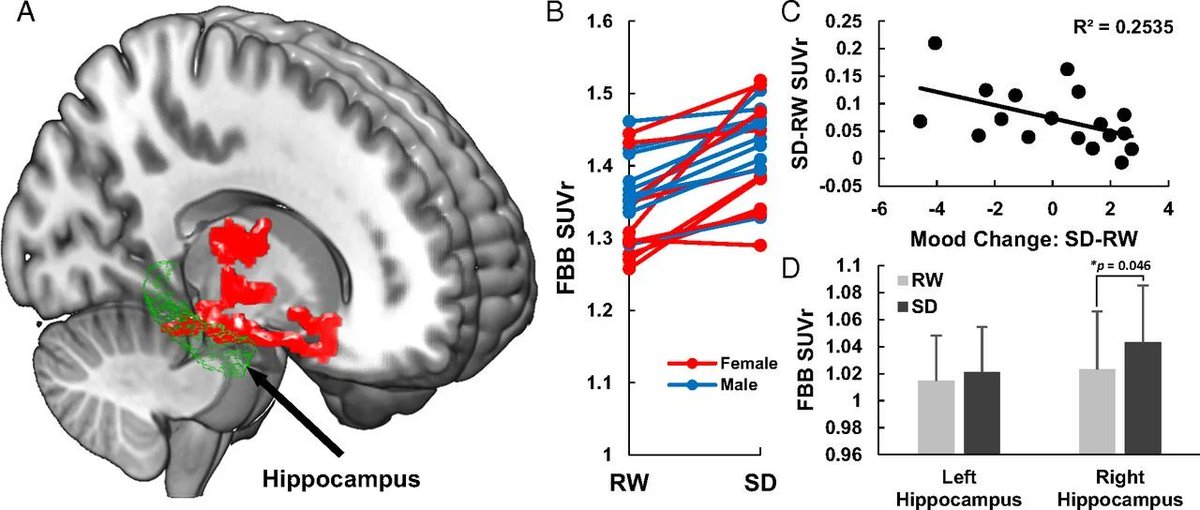
After one night of sleep deprivation the brain begins to accumulate β-amyloid. This is a key protein in Alzhiemer’s dementia.
Nicholas Fabiano, MD tweet media
English
69
470
2.9K
135.7K
Kuntal 🦇🦇 retweetledi
Umberto León Domínguez 🧠 🤖
Bello artículo sobre cómo los procesos cognitivos controlan el flujo de pensamientos. En este estudio, se demuestra que existe una diferencia entre el control inhibitorio motor y cognitivo. Queréis saber cuál es? Hilo va! 🧵
Umberto León Domínguez 🧠 🤖 tweet media
Español
5
113
481
16.8K