

Kevin Conway
681 posts

Kevin Conway
@KConwayCoach
Executive Coach.
Dublin, Ireland Katılım Ocak 2024
36 Takip Edilen28 Takipçiler

The topic of AI data centers is interesting.
I have generally avoided it because (a) it’s not a topic I have spent a lot of time looking into, and (b) it starts ridiculously heated arguments that I don’t feel like engaging in.
From a layman’s POV, I think that there is a lot of hysteria about them that is completely unwarranted. While AI could wipe out a lot of jobs, it will likely create a more just as technological innovation always has. That’s progress. And, as for the water being used to cool them down, well, it’s recycled. Water doesn’t just vanish. Conservation of energy; it’s just physics.
That being said, there are legitimate concerns about AI, particularly with respect to data centers. Wherever they are being built, locals overwhelmingly oppose them regardless of their political ideology or party affiliation. These data centers are huge, ugly, and take up vast amounts of land that could otherwise be used for agriculture or preserved for wildlife. In some places like Georgia, the threat of eminent domain is being used. That is a direct violation of property rights. Also, I am a land conservationist. Caring for the environment used to be a conservative cause. “Conserve” is in the very name.
The big justification for this AI race is that we need to compete with China.
But for what exactly?
What is the ultimate goal?
What is the net benefit of getting into a pissing contest on AI?
What exactly are these AI data centers being used for? Surveillance? Improving medical treatments? Gathering data for some project or research?
I am not an apocalyptic fear mongerer, but these are legitimate questions that need answering without the aggressive tech bro incels getting defensive.
English
There's boiling it down and there's boiling it down. Perfect. No notes.
David Moore@DavidMo50860521
Leftist's only concept of wealth is in the form of 'how do I steal that'.
English
Kevin Conway retweetledi

Leftist's only concept of wealth is in the form of 'how do I steal that'.
Austen Allred@Austen
Virtually no one “hoards” their wealth. Pretty much everyone who is rich turns around and reinvests it almost instantly.
English
Kevin Conway retweetledi

Watching @ZohranKMamdani's oafish, unprovoked attack on Ken Griffin blow up in his face in real time tells us so much about how contemporary leftism has been reconfigured by its elite practitioners.
Firstly, Mamdani is not a "have-not." He is a Bowdoin graduate, the son of a Columbia professor and an internationally celebrated filmmaker, whose path to a New York City mayoralty ran through exactly the credentialed-creative pipeline that produces most of his voters.
His base is not the working class. It is the downwardly mobile but college-educated, who were promised a particular kind of life by their degrees and are furious it didn't arrive, and who have decided the people standing between them and that life are not the radicalized professors who sold them seductive fictions or the ideologically captured universities that took their money, but a hedge fund manager in Miami.
This is what I'd call Privilege Populism. The aesthetics of class struggle, performed by people whose parents or grandparents technically already won the class struggle, but with the appropriated symbolism recast in the direction of people who won it slightly more.
It is war between the "haves" versus "have-mores," as some others have put it.
The Mamdani's inciting video, gleeful in its innumeracy about about whether a $500 million pied-à-terre tax can actually fund anything it claims to, defiant in its ignorance about the dynamic effects of such taxation on human behavior and wealth outmigration, is the genre's mature form.
Griffin's response is the part worth watching. He didn't argue or issue a statement offering a philosophical defense of capitalism. He simply pointed to his Miami construction project and said: this is the way.
Then he said the part that should make every blue-state mayor uncomfortable: that what's happening in New York is "triggering the trauma I went through in Chicago."
I watched that trauma play out for twenty years. Progressive politicians perform to excite the grievances and resentments of credentialed creatives, the productive class that subsidizes the city quietly relocates, the tax base hollows out, and the people who stay behind look at the resulting societal decline around them and misinterpret it as proof that they must vote even further to the left than before in order to improve things.
In a warped but unignorable way, liberal mismanagement of states like Illinois and New York helped nurse the conservative governance triumphs of Florida and Texas.
The Privilege Populists never figure this out, because the point is never truly to improve the lives of the "have-nots." It's to *perform* therapeutic acts of Resistance for them, on camera, against "villains" who can afford to leave and do.
English
Bring back doors website is very good for finding/reporting these and avoiding them. They are the worst and garuntee a 3 star rating.
No filter Skin@NoFilterSkin
Why do hotels do this? I travel with my kids. I travel with my sister. I travel with friends. I don't want to see them shower, bathe, or go to the bathroom through semi-frosted glass, thank you.
English
@ChrisMartzWX these guys are trying boomsupersonic.com/company
English
Technology is supposed to advance at a steady pace, but airplanes have not really become much faster in decades. It’d be awesome if it only took an hour or two to get from NYC to LA instead of 5-6 hours like it has for 50+ years.
English

What are the wisest quotes you've ever heard or read?
English
@ChrisMartzWX But remember, Marxism for thee, never for me...
English
Unmask a climate alarmist, you will unmask a Marxist.
Every time.
English
Kevin Conway retweetledi

This guy rage coded a $199 app in less than an hour and cooked the OP.

English
Kevin Conway retweetledi

Have you watched The Manosphere with Louis Theroux on Netflix?
As the Dad of a 17 year old son, I think @jimmycarr is spot on.
What do you think?
English
Doesn't @rtenews have an obligation to have dissenting voices on these topics? I never hear them. Its just George Lee doom looping.
RTÉ News@rtenews
The World Meteorological Organization has warned that the Earth's climate is more out of balance than at any time in observed history, as greenhouse gas concentrations drive the continued warming of the atmosphere rte.ie/news/environme…
English
Kevin Conway retweetledi

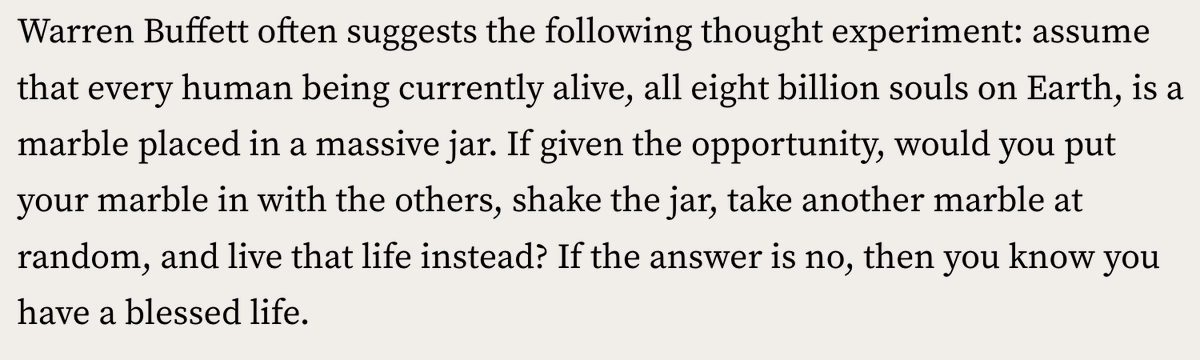
The Warren Buffet test to determine whether you live a blessed life: thefp.com/p/from-slavery…
English
@jeniamy Apple (or similar) airtag is great for situations like this. Hope they turn up.
English
Kevin Conway retweetledi


Kevin Conway retweetledi

The nuclear deterrent was only possible because of the nuclear bomb. Ask the question what would happen if we don't discover new things.
Kpaxs@Kpaxs
This is both the most honest thing I've ever read and also the most terrifying: scientists are just people who are completely addicted to the high of figuring things out.
English

In my village church of St. Bernard’s, Abbeyknockmoy, is a long list of the names of parishioners who died of starvation during the famine. I will make a point of listing them all here in a future post. The Great Hunger still leaves a deep wound, my province, Connacht, was hit brutally hard by it.
Archaeo - Histories@archeohistories
A starving Irish family from Carraroe, County Galway, during the Famine (1845-1852).... Between 1845-1852, Ireland endured one of the most devastating humanitarian crises in modern European history. The Great Famine was triggered by potato blight (Phytophthora infestans), which destroyed the staple crop relied upon by nearly one-third of the population for survival. The consequences were staggering. Around 1 million people died from starvation and disease, while another 1 to 2 million emigrated, many aboard overcrowded “coffin ships” bound for North America. In counties like Galway, entire communities collapsed as food systems failed and relief efforts proved uneven and often insufficient. At the time, Ireland was still part of the United Kingdom, and food continued to be exported from the island even as rural families faced extreme deprivation, a fact that remains central to historical debate about responsibility and response. The famine permanently reshaped Ireland’s population, which fell by over 20% and would not recover to pre-famine levels for more than a century. The Irish diaspora created during the famine years led to cities like New York and Boston developing Irish populations so large that, by the late 19th century, Irish-born residents made up over a quarter of their inhabitants. © National Library of Ireland #archaeohistories
English