
JAYDEN🔳

6.2K posts

JAYDEN🔳 banner
JAYDEN🔳

JAYDEN🔳

@KOAFARMER6

No niche defines me• I adapt •I dominate || Versatile• Boundless• Solo Leveling Energy.⚫

Katılım Temmuz 2013
495 Takip Edilen996 Takipçiler
Joseph (∇, ∇)
Joseph (∇, ∇)@josephweb3·
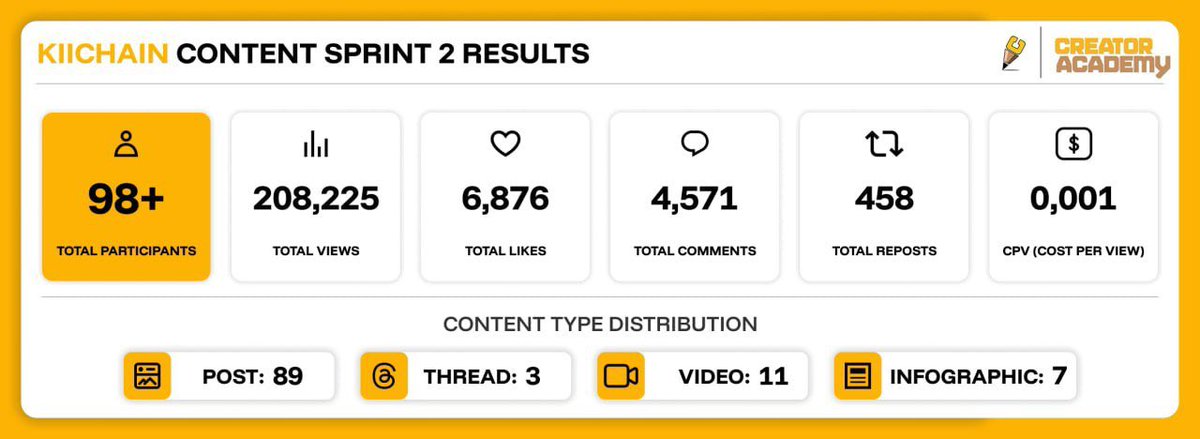
with 98+ creators we generated 208k views > micro-Creators can bring attention to your project if you know a project who might need help with getting attention, tag them below 👇 join our Creator Academy if you are creator DM me
Joseph (∇, ∇) tweet media
English
32
2
119
2.2K
JAYDEN🔳
JAYDEN🔳@KOAFARMER6·
if you can’t explain yield, you are the yield defi made yield easy to see, but much harder to understand. dashboards show high apys, deposits feel simple, and returns appear to grow on their own. from the surface, it looks like a clean system. deposit, earn, repeat. but underneath, the reality is more complex, and most users never stop to ask where that yield is actually coming from. the number you see is rarely the full picture. apy is usually a gross figure, not what you actually keep. factors like impermanent loss, slippage, gas fees, and market volatility quietly eat into returns. a strategy showing 20% can compress heavily once real conditions kick in. this gap between displayed yield and actual outcome is where many users lose without realizing it. so where does yield really come from? it comes from trading fees, lending demand, arbitrage, liquidations, and sometimes token incentives. but not all of these are equal. some are sustainable, tied to real activity. others are temporary, driven by emissions that fade over time. if you do not understand which one you are earning from, you may be the one subsidizing the system, providing liquidity, absorbing risk, and calling it profit. this is why outcomes differ so much. some users chase apy. others focus on structure, cost, and risk. institutions go even deeper, modeling expected returns before deploying capital. it is the same system, but not the same result. the difference is understanding. defi is slowly shifting from yield chasing to yield engineering. that means focusing on net returns, managing risk, and optimizing capital over time instead of reacting to numbers. this is where structured systems start to matter. concrete vaults are built around that idea. instead of leaving users to guess, they automate allocation, manage strategies, rebalance positions, and reduce manual errors. this turns participation into managed defi, where capital is deployed with intention, not just exposure. in the end, yield is not just a number. it is revenue, minus cost, adjusted for risk. once you understand that, you approach defi differently. @ConcreteXYZ
JAYDEN🔳 tweet media
English
6
2
9
160
CryptoRogue
CryptoRogue@saint_lee2100·
If You Can’t Explain Yield, You Are the Yield
While DeFi makes yield look simple, Dashboards show high APYs, Deposit → earn flows feel effortless and Returns update in real time. But here’s the catch:
What you see ≠ what’s actually happening. 🧵…
CryptoRogue tweet media
English
3
0
2
73
Anderson∇, ∇
Anderson∇, ∇@Andersonander24·
My journey building on @OpenGradient Over the past few days, I’ve been deeply exploring the OpenGradient ecosystem not just as a user, but as a builder. Here’s what I’ve been working on 👇 @josephweb3
English
7
1
10
91
OpenGradient (∇, ∇)
OpenGradient (∇, ∇)@OpenGradient·
Open models are growing fast, but they don’t make AI open by default. If inference remains centralized, execution stays opaque and unverifiable. At OpenGradient, we’re focused on verifiable execution, separating execution from verification and enabling cryptographically validated inference. Brilliant work by @FourPillarsFP breaking this down. Full report 👇
Four Pillars@FourPillarsFP

x.com/i/article/2043…

English
102
75
221
16.8K
DKxWeb3
DKxWeb3@xoolman69·
Just generated my @OpenGradient TGE pfp! You can generate to 👇🏻 pfp.opengradient.foundation 2 Lucky person will get OG by sharing it on X. Grinding from months, I'm already on level 45 but no OG 😔, hopefully I'm one of them !
DKxWeb3 tweet media
English
20
3
32
284
OpenGradient (∇, ∇)
OpenGradient (∇, ∇)@OpenGradient·
If you’re around, drop “gAI” 👇🏻 intern is double checking something important 👀
English
611
97
495
21.4K
D PRINCESS 👸
D PRINCESS 👸@Tensixluxe·
OpenGradient has made significant progress, their token $OPG now trades on ESMA and will comply with MiCAR. They have developed a trustworthy, scalable infrastructure for verifiable onchain AI through the use of TEE and zkML technology. GAI
D PRINCESS 👸 tweet media
English
5
0
13
159
JAYDEN🔳
JAYDEN🔳@KOAFARMER6·
TGE is getting close, and OpenGradient just crossed an important milestone. $OPG is now listed on the ESMA register, with a published MiCAR whitepaper. That means it’s legally positioned to trade on MiCAR-licensed exchanges across the EU, which isn’t something most projects sort out this early. It’s a quiet move, but a meaningful one. Regulation isn’t being treated as an afterthought here, it’s part of the foundation. For a project building verifiable AI infrastructure, this matters. When you’re focused on trust, execution integrity, and real-world use, being aligned with regulatory frameworks adds another layer of credibility. Feels like they’re building for the long term, not just the launch. @OpenGradient
JAYDEN🔳 tweet media
English
6
5
14
496
Ugonna
Ugonna@JohnKennedy027·
Easter is all about resurrection, new beginnings, and the comeback story of all comeback stories ✝️ So I thought…….what better way to capture that spirit than through crypto? =•=•=•=•=•==•=•=🐣=•=•=•=•=•=•=•=•=•= My submission for the .@binance event is a creative expression of hope and anticipation, where Bitcoin and other altcoins rise again, breaking out like a reborn force, ready to spark the next bullish wave 📈🔥 📍Because just like Easter reminds us…….what goes down can rise again stronger, louder, and unstoppable!🦅 • Happy Easter celebration BINANCE🤍 • Happy Easter celebration to everyone 🤍 Remain optimistic, WAGMI 🤍❤️🦅! #BinanceEaster
Ugonna tweet mediaUgonna tweet media
Binance@binance

This Easter, we’re doing it differently 🐰🥚 Design your egg. Make it yours. Share it with us. Top 10 designs win a share of 3000 USDC. How to enter: 👉 Follow @binance + repost 👉 Post your design with #BinanceEaster 👉 Complete survey binance.com/en/survey/3414… Let’s see what you’ve got.

English
6
2
9
414
JAYDEN🔳 retweetledi
JAYDEN🔳
JAYDEN🔳@KOAFARMER6·
How Do Concrete Vaults Actually Work? When someone first deposits into Concrete vaults, the process looks simple. You deposit funds, receive vault shares, and over time your balance starts to grow. But once users see terms like eRate and NAV, it is natural to wonder what is actually happening behind the scenes. Think of a vault like a shared pool of capital. When you deposit, you receive vault shares, which represent your ownership in that pool. Each share reflects a portion of the vault’s assets. The eRate simply represents how much each share is worth at a given time. As the vault earns yield and grows, the value of each share increases. You are not getting new tokens every day; instead, your slice of the vault becomes more valuable. This is where NAV, or Net Asset Value, comes in. NAV is the total value of everything inside the vault. If you imagine the vault as a jar filled with assets, NAV is the total amount inside the jar, while your shares represent how much of that jar belongs to you. When the vault’s strategies generate returns and the NAV increases, the value of each share rises alongside it. Time plays an important role in how vaults work. Strategies take time to produce results, and there are real-world costs involved in executing them, such as gas and transaction fees. Because of this, vaults are designed with a longer-term mindset. Short-term changes may happen, but the real advantage appears as strategies run, rewards compound, and capital is managed efficiently over time. In simple terms, the longer capital stays productive, the more the system can work for you. Another key detail many people miss is that Concrete vaults are not passive containers. Capital is actively managed. Funds can be deployed across different strategies, rebalanced when conditions change, and optimized to capture better opportunities. Instead of users manually moving funds between protocols, the vault system handles onchain capital deployment, automated compounding, and strategy adjustments. When you combine all of these pieces together, the outcome becomes clearer. The vault pools capital, strategies generate yield, rebalancing improves efficiency, and compounding strengthens results over time. Users benefit not only from returns, but from how those returns are managed within a structured system. A simple way to think about it is this. The vault is the pooled capital system. Shares represent your ownership. NAV is the total value of the vault. eRate shows how much each share is worth. Time allows strategies and compounding to work. And management ensures capital is deployed effectively within managed DeFi infrastructure. @ConcreteXYZ
JAYDEN🔳 tweet media
English
9
6
16
313
JAYDEN🔳 retweetledi
OpenGradient (∇, ∇)
OpenGradient (∇, ∇)@OpenGradient·
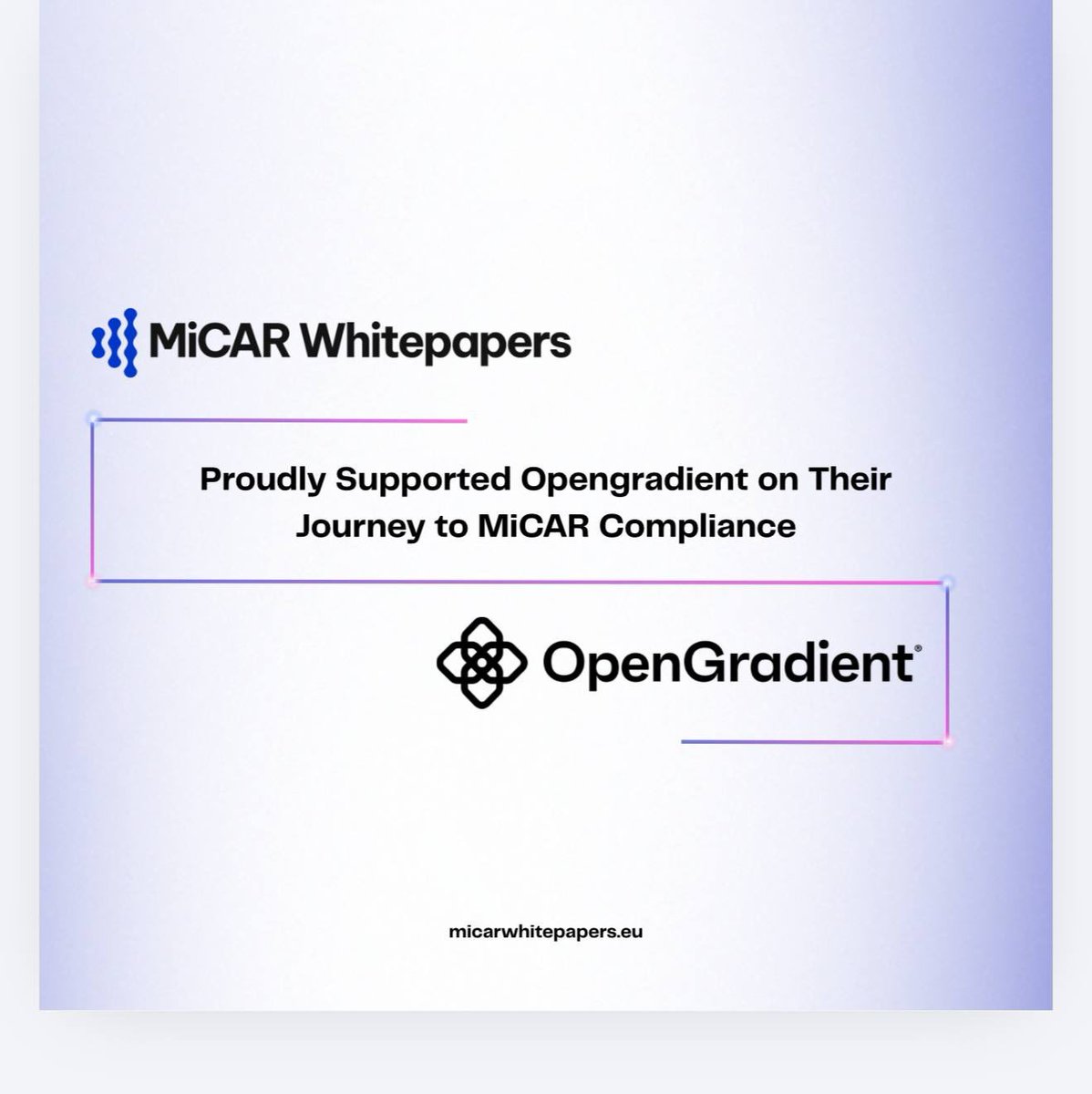
Excited to announce that OpenGradient has partnered with @MiCAR_WP_EU to navigate EU crypto regulation ahead of our TGE. MiCAR is the EU's regulatory framework for crypto assets. Having a MiCAR whitepaper means $OPG can be listed on MiCAR-licensed exchanges across all EEA states. We're building verifiable AI infrastructure the right way, and that includes being regulation-ready from day one. More to come on April 6. 👀 This crypto-asset marketing communication has not been reviewed or approved by any competent authority in any Member State of the European Union. The offeror of the crypto-asset is solely responsible for the content of this crypto-asset marketing communication.
OpenGradient (∇, ∇) tweet media
English
175
95
229
18.3K