

比特币大熊
103 posts

@TingHu888 先搞清楚最新价格和标记价格的区别,爆仓是标记价格决定的,操纵币安的标记价格难度极大,机制决定的,哪怕是流动性很小的合约,套利资金会源源不断砸死你
中文


那些天天喊着“BTC 一枚一千万美元”的人,可能没有认真想过一个很疯狂的事实, 包括MSTR的老板本人。
他们愿意相信,未来全球会有无数人,把几百万亿美元的财富,押在一个由 C++ 写出来、需要长期维护、升级、修补漏洞的软件协议上。
黄金是一块静态的物理资产。它不需要开发者,不需要版本更新,不需要社区投票,不需要修 bug,也不会因为路线之争突然分叉。
但BTC不一样。
它背后有代码,有开发者,有矿池,有节点,有交易所,有托管机构,有 ETF 资金流,有基金会、捐赠方、利益集团和各种现实中的人。
只要是软件,就会有 bug。
只要需要升级,就会有路线分歧。
只要涉及利益,就一定有人性的复杂。
只要币价足够高,每一次技术争议、治理冲突、回滚讨论、分叉风险,都会被放大成巨大的金融冲击。
更关键的是,矿池并没有想象中那么分散,核心开发也不可能完全脱离现实利益网络。所谓“去中心化”,在很多具体环节上,其实仍然依赖一小群人、一批机构、一套基础设施继续运转。
所以我一直觉得,把 BTC 简单类比成“数字黄金”,其实忽略了最本质的差别:
黄金不需要维护;
比特币需要长期维护。
黄金没有版本路线之争;
比特币有。
黄金不会因为开发者意见不合而分叉;
比特币会。
当一个资产的估值被想象到几百万亿美元级别时,任何微小的治理裂缝、代码风险、利益冲突,都可能变成系统性风险。
所以问题来了:
一个长期依赖代码、开发者、矿池、社区共识和利益协调的软件协议,真的应该被赋予几百万亿美元的估值吗?
至少我觉得,这个问题远远没有那些喊单的人说得那么简单。
中文


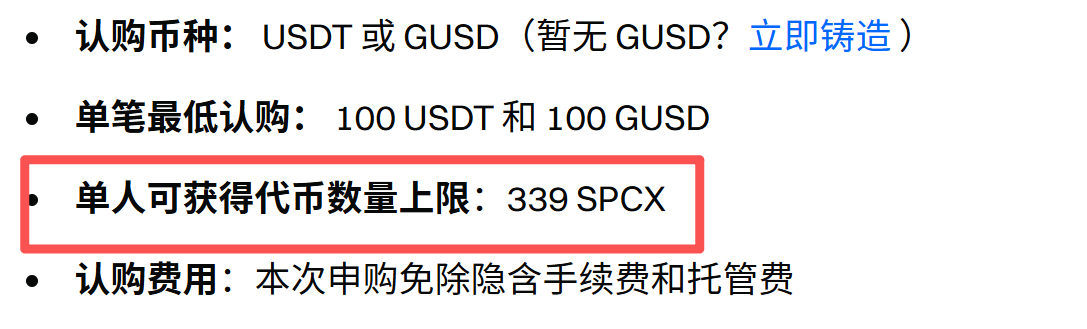
@gate_io 规则隐瞒导致大户实质亏损!SpaceX (SPCX) Pre-IPO 打新的 GUSD “杀猪盘”必须给个说法!
📝 陷阱第一步:虚假的“单人满额上限”官方公告醒目位置写着:“单人可获得代币数量上限:339 SPCX(约等值 20 万 U)”。 基于对规则的信任,我准备了重金,为了追求更高的资金利用率,我选择了支持 GUSD 的池子,单号直接锁进去了 1,900,000 GUSD,就为了拿满这 20 万 U 的额度!
🔍 陷阱第二步:隐藏的“单池 1% 绝对硬顶”结果分配出来傻眼了:我 190万的资金,只分到了 6 万 U 的份额! 仔细一算才破案:Gate 根本没把 GUSD 池子算进“20万U”的上限里。GUSD 池占总分配的 30%,按照系统底层代码,单池最多只能拿总盘的 1%(也就是 6 万 U)! 这么核心的限额规则,公告里的【分配说明】只字未提!
💸 陷阱第三步:无损退回?不,是强制收割(最恶心的一步)如果像 USDT 一样原路退回,我认了。但是!我投入的 190 万 GUSD,因为这隐藏的 6 万 U 硬顶,导致剩下的 184 万 GUSD 成了冗余资金。 我要把这 184 万冗余的 GUSD 换回 USDT,需要面临最高 0.3% 的快速赎回手续费! 就因为你们不写清楚单池上限,让我多锁了 100 多万的资金进去,现在退出来我要硬吃这大几千 U 的手续费摩擦?!
@Godot_gate @Gate_zh @Gate @liguagua
#Gateio #SPCX #GUSD #Crypto #Web3 #维权 #加密货币


中文

关于资金成本,说个有意思的。
Strategy(MSTR)从2020年8月就开始大举买入比特币,已持有近6年,目前总计持有815061 BTC。
现金收购总成本约615.6亿美元,平均成本75527美元/BTC。
早期仓位已持有近6年,后期大额买入持有仅几个月到2年。
若按过去5年美联利率平均4-5%年化机会成本复利计算,Strategy有效回本价大约需要涨82000-88000美元。
比纯现金成本额外高约8-15%。
现金是有成本的,基本无风险存美国银行吃4-5%利率,比现在赚的多。
再算上借债成本,虽然不高,合计下表面成本75527美元,算上时间,预估至少也要涨到9万,才算真正意义回本。
中文

Arbitrum 官宣已经紧急冻结了攻击KelpDAO 黑客持有的30766枚ETH,评论区骂声一片。
关于是否要冻结黑客的链上赃款,无论怎么做,都不可能让所有人满意,因为看热闹的人永远没有办法跟被盗的感同身受。
不冻 = 不作为;冻 = 违背去中心化(今天能冻黑客,以后就能冻其他人)
加密发展至今,我认为没有必要太教条式地去看待去中心化。去中心化的目的是为了对抗强权,是为普罗大众服务的;那么如果中心化的目的是为了帮助普罗大众而不是为强权牟私利,我认为这种中心化是值得被推崇的。
某种意义上讲,冻结黑客就是这种中心化。

yyy@y_cryptoanalyst
这个月可以称得上是crypto 史上黑客最猖獗的月份了: 0418: @KelpDAO 被盗 $293M 0416: Grinex 被盗 $15M 0416: @rhea_finance 被盗 $18.4M 0412: @hyperbridge 被盗 $2.5M 0401: @DriftProtocol 被盗 $285M 累计被盗资产高达6亿美元。 更恐怖的是,这个月还有11天才结束。
中文

下午一个刚发生在我同学身上的事,可能损失 20 万 u,挺难受,写下来提醒所有人,链上转账一定要再三确认
我同学在广东做外贸生意,今天下午 6 点多,他的手下给客户转一笔 USDT,对方是俄罗斯人。
本来应该转 22200+ USDT,结果转账的人多输了一位数,转了 222000+ 出去。多转了 20 万 USDT 加个零头。很慌。然后我和 @Nazarick_eth 一起看了下资金链路
1. 钱是从币安提现,到对方的地址,走的是 @justinsuntron 的波场 (波场覆盖度真的很广)
2. 对方可能当时就懵了,觉得天降横财吧,17 分钟后,就把这笔钱转进了 Bybit,有一种要赶紧把钱转走的画面感
然后我同学找了币安客服,币安客服的回应是:1) 钱已经进入 Bybit 了,可以联系 Bybit 客服冻结收款账户或退回;2) 报警。这里也问下 @benbybit 老板和 Bybit 的老师,这种情况可以配合下,看看资金是否还在 Bybit 吗,是否可以协助沟通。
我的看法是:
1. 优先跟俄罗斯人沟通,从生意角度去看,双方生意利益捆绑有多深、对方格局有多大,是否可以协商退回 (哪怕一部分);如果能退回,之后生意上给什么优惠,能长期共赢。但这事太考验人性了,他们还在跟对方沟通。
2. 如果报案,钱还在 Bybit 的话还好,有可能能配合沟通冻结资金 (我同学这边可以提供合同等资料);但要是钱已经经过 Bybit (作为桥) 转移到另外的自托管钱包里,那就更麻烦了。
这两年做外贸挺不容易的,为我同学感到心疼。其实一般公司里,传统银行转账,都是出纳、会议至少两次审批。他因为对 Crypto 这些不太熟,所以没介入进行审核。这个教训有点贵。
也建议 @Christianeth @0xshawnpang 两位做 to B 财务 SaaS 产品的老板,可以在类似流程上多多优化下,防止业务同学犯低级错误,带来巨大损失。
要从付款流程上优化,@Nazarick_eth 提了个不错的建议,可以搞两个币安账户,A 用来收款 (存大额资金),由我同学 (老板) 管理;需要对外付款的时候,给 B 账户中转再对外支付。B 账户平时不放钱,最多留一点手续费在账户里。
大家平时在交易所 app 内、链上提现/转账,一定要多核实一下对方的钱包地址、UID、金额、所属区块链等等信息,不要犯这种很贵的教训!
中文


@xiejiayinBitget @bitget 有一说一,作为一个职业交易员的体验来说,贵金属永续合约领域的专业性和流动性上,币安和bitget确实是遥遥领先
中文

关于 @Bitget 的流动性报告
1、现货流动性从现货在0.03%与0.05%价位带的深度,以及$500K与$1M卖单的滑点来看,2项数据都是Binance表现最优,Bitget 位居第二
2、Bitget 在期货领域有较强的竞争力,0.05%与0.1%的累计深度均为第一,BTC 期货 1M 订单规模滑点最低。5M 订单规模滑点约为 0.055%–0.060%
3、贵金属期货流动性深度上大哥币安遥遥领先,Bitget与另两家组成第2梯队。同时,黄金的价差在 Binance和Bitget 最紧。
打造最佳 #UEX 一站式金融操作平台。Crypto、美股、CFD(黄金白银原油、外汇、指数、大宗商品)
TokenInsight@TokenInsight
中文



今天才把OKX的双币赢搞清楚,后悔没有早点搞清楚,错失了好多时机
市场下跌想要三心两意抄底的同志们,双币赢是你们的不二之选
先看看okx的双币赢操作
交易所app菜单找到双币赢,这里只建议做稳定币跟BTC的交易对
我对比了一圈,选择了7-30天那一列13天的低买BTC最合算
选择买入的价格越高年化越高,买入的概率也就越高,最后不管你是买进了还是没买进,你下单的那一刻年化不会变,到期连本带利给你
比如BTC现价66238,你要是设置66000低买,年化是78%,1万u放13天就是274u,但是你这个66000的价格随时可以买进BTC的,买进去以后也会给你78%的利息,按照买入价格折算BTC给你,但是这时候你的风险是BTC本币下跌的风险
我也算比较激进型的,选了62000买入,年化是37%,1万u放13天大概130u,13天期间如果BTC高于62000,到期我能拿到10130u,利息130u,如果低于62000了,那我就买进去了,37%的年化会按照62000的BTC折算给我,买进去了就等于62000抄底了BTC
要是有10万u也是这个操作,13天不就是1300多u嘛,这太暴力了,果然钱还是流向了不缺钱的人
不是特别想买BTC的你可以选择买入价格更低一点,年化稍微少点
@okxchinese

中文


出金这事,真不是赚不赚钱的问题,而是你能不能把钱安全带走。
我以前不懂流程,卡被冻结过,吓得一周没睡好。后来踩过的坑多了,才总结出一套“稳出金”的方法,今天直接说重点:
第一步:商家一定要选干净的。什么叫干净?不是你自己干净就行,是对方有没有案底。我只认两种商家:注册两年以上;月交易额超千万;拒绝那种名字带“闪电到账”“币圈老哥”的,雷点高得离谱。$BTC
第二,交易痕迹必留存。币安订单截图、链上哈希记录、与商家的聊天记录(重点截金额、付款方式),这些都是后续出问题的“保命证据”。
第三,出金前先“冷却”。交易所提币后,先放钱包72小时不动;银行卡选城商行/农商行储蓄卡,别用工资卡,提前存200元刷小额消费,留日常痕迹。
第四,币安C2C实操有讲究。优先选蓝盾认证商家,重点看三个数据:30天成交>500单、好评率>99%、保证金>50万U。金额拆分出,10万可拆成5万+3万+2万,间隔24小时以上;到账核对付款人姓名,不符立刻退款,转账备注留空;到账后至少存72小时,避免快进快出被银行预警。
这些步骤看似麻烦,实则是切断风险。币圈赚再多都是浮盈,能安全落袋,才是真的赢。
中文

看了你的仓位,本质上就是在通过周末休市的时间进行套利。
一:你整个账户里就700u不到开2.5手的原油,谁正常交易会开那么大,只要价格波动0.3左右就爆掉了。
二:为什么判定你风险交易本质上就是你账户的钱太少了,利用休市机制去获利,如果跳空你就亏700u;高开你就爽赚。
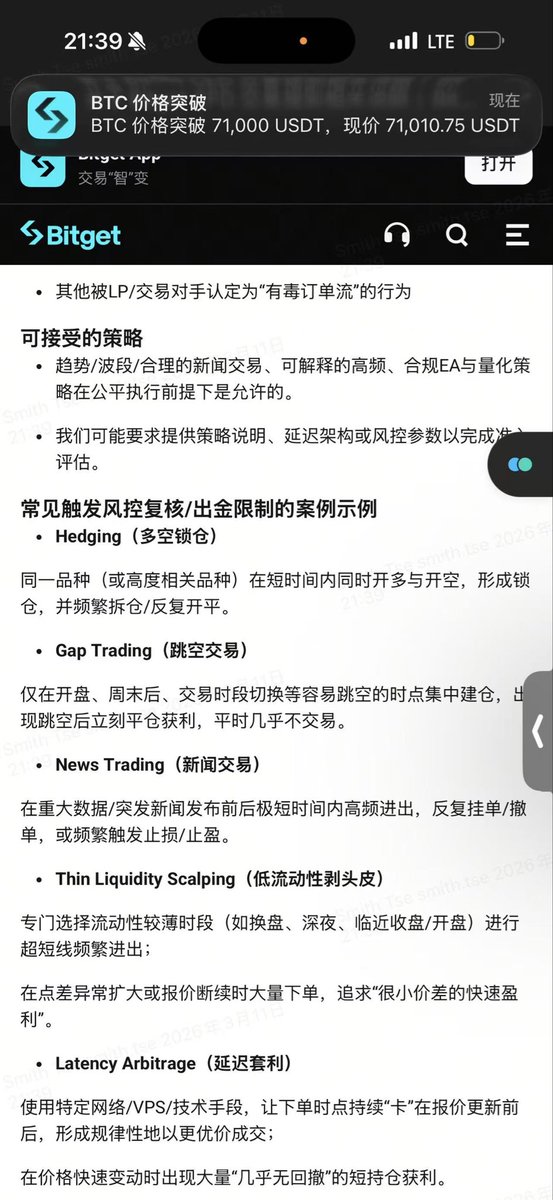
最近刷到挺多bitget和bybit的这种维权,本质上是投机失败遇到风控来想通过闹来解决,但我只能和你说没用,占理闹可能还有点用,你这无理取闹没用,你的操作真正的交易员一眼就能看破
以上分析来自我的交易员好朋友 @sean_zhuzhu
宁采臣@TT6202467868533
【维权实锤】@Bitget_zh 的 TradFi 平台原油期货赚钱了不让提现! @BitgetGlobal 赢不起?跨周末持仓 49 小时获利,竟被强行抹除 3 万美金盈利! 本人于 3月7日 05:56 入场,下单后因为500被杠杆波动巨大,差点被爆仓,持仓跨周末 49 小时(承担巨大爆仓风险),3月9日 06:01 看到盈利手动平仓获利 29,117.5 USD。 官方竟定性为“跳空违规(Gap Trading)”要求扣除盈利!我有 iPhone 手动平仓完整录像(见视频)证明操作合规。@BitgetSupport 恶意定性,完全无视手动操作证据。 本次盈利源于原油主升趋势的正常交易判断,持仓跨越周末 48 小时闭市期,本人承担了全部风险。盈利完全合理合规! 我已在 RFI 问卷提供一切证明资料。 赢了不给提现,输了本金归零,这就是 Bitget 的公平吗?请大家帮忙转发! @GracyBitget @BitgetGlobal @xiejiayinBitget @Bitget_DACH @BitgetWalletCN #Bitget #Scam #Trading #维权 #MT5
中文


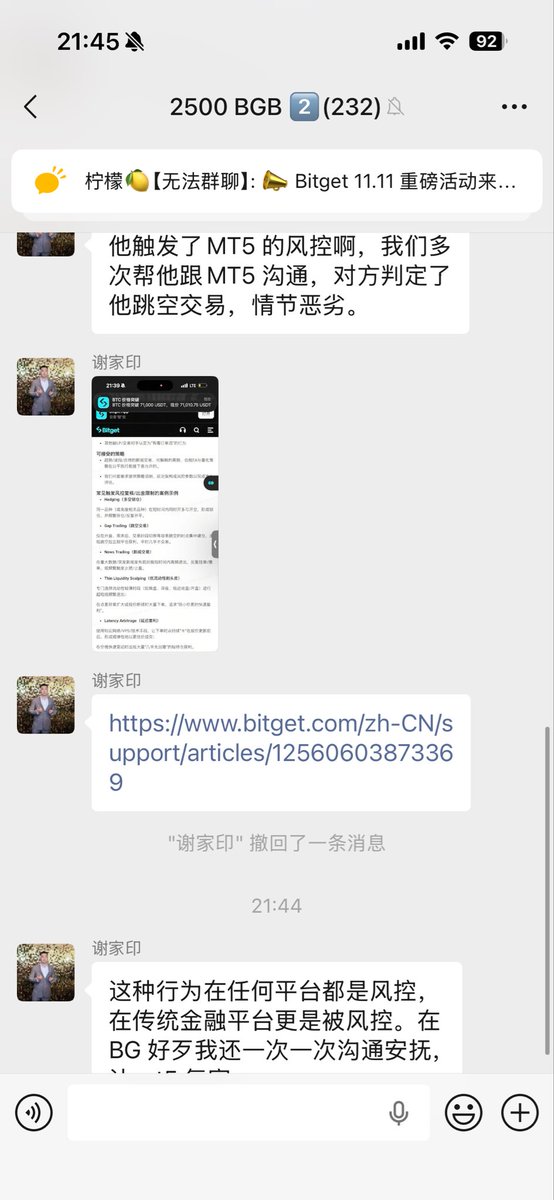
1️⃣你违规跳空交易触发mt5风控
2️⃣bg多次跟mt5沟通试图挽回
3️⃣mt5仍判定你违规交易情节恶劣
这是我刚在群里看到家印回复的,没接触过美股,我也学习到了,股票跟币圈还是有区别的,兄弟,不是谁闹谁有理
宁采臣@TT6202467868533
【维权实锤】@Bitget_zh 的 TradFi 平台原油期货赚钱了不让提现! @BitgetGlobal 赢不起?跨周末持仓 49 小时获利,竟被强行抹除 3 万美金盈利! 本人于 3月7日 05:56 入场,下单后因为500被杠杆波动巨大,差点被爆仓,持仓跨周末 49 小时(承担巨大爆仓风险),3月9日 06:01 看到盈利手动平仓获利 29,117.5 USD。 官方竟定性为“跳空违规(Gap Trading)”要求扣除盈利!我有 iPhone 手动平仓完整录像(见视频)证明操作合规。@BitgetSupport 恶意定性,完全无视手动操作证据。 本次盈利源于原油主升趋势的正常交易判断,持仓跨越周末 48 小时闭市期,本人承担了全部风险。盈利完全合理合规! 我已在 RFI 问卷提供一切证明资料。 赢了不给提现,输了本金归零,这就是 Bitget 的公平吗?请大家帮忙转发! @GracyBitget @BitgetGlobal @xiejiayinBitget @Bitget_DACH @BitgetWalletCN #Bitget #Scam #Trading #维权 #MT5
中文

以太坊这边,Vitalik已经十分重视抗量子威胁的问题,V给出了抗量子路线图。
BTC和ETH面临的问题差不多,主要问题是现在的加密签名方式(ECDSA)会被量子破解,等于能从公钥反向推出私钥。
BTC和ETH相比,以太坊这边明显进度更快,但两边都会有一个棘手问题,丢失私钥的那些僵尸地址可能变成待宰羔羊。
因为最终不管是通过迁移还是分叉的方式,都需要用户主动去操作,而这些已经丢失私钥的币,就像游离在空气中一样,失去了主人和控制权,量子计算机一旦能破解,这些币就可能被人“捡走”。除非设定一个时间进行硬分叉,没有迁移的币全部冻结或销毁,但这种做法明显不符合BTC & ETH的加密精神,特别是BTC社区应该不会允许这种事。
目前BTC有一部分“老币”是公钥暴露的状态,理论上可以定义为 易受量子攻击 的地址。当然这个问题ETH这边也一样存在,但以太坊这边的优势是工具更多,灵活性更大,毕竟它具有可编程性,比如Vitalik的路线图中强调用AA来处理用户签名问题,让用户直接升级账户安全 (抗量子),而不需转移所有资产。当然这对于丢私钥的僵尸币,目前两边都是无解的。
总体来说,两边对比,以太坊的抗量子工程可能更加复杂,但更容易推进,生态开发者巨多容易协调,而且我的直观感觉是以太坊的用户比较能快速接受和适应,毕竟以太坊本身是一个日常天天被使用且不断迭代升级的系统,是一个开发者和应用主导的平台,而比特币可能偏保守,它的特性是价值存储,很多用户常年处在低活跃甚至不活跃的状态。
vitalik.eth@VitalikButerin
Now, the quantum resistance roadmap. Today, four things in Ethereum are quantum-vulnerable: * consensus-layer BLS signatures * data availability (KZG commitments+proofs) * EOA signatures (ECDSA) * Application-layer ZK proofs (KZG or groth16) We can tackle these step by step: ## Consensus-layer signatures Lean consensus includes fully replacing BLS signatures with hash-based signatures (some variant of Winternitz), and using STARKs to do aggregation. Before lean finality, we stand a good chance of getting the Lean available chain. This also involves hash-based signatures, but there are much fewer signatures (eg. 256-1024 per slot), so we do not need STARKs for aggregation. One important thing upstream of this is choosing the hash function. This may be "Ethereum's last hash function", so it's important to choose wisely. Conventional hashes are too slow, and the most aggressive forms of Poseidon have taken hits on their security analysis recently. Likely options are: * Poseidon2 plus extra rounds, potentially non-arithmetic layers (eg. Monolith) mixed in * Poseidon1 (the older version of Poseidon, not vulnerable to any of the recent attacks on Poseidon2, but 2x slower) * BLAKE3 or similar (take the most efficient conventional hash we know) ## Data availability Today, we rely pretty heavily on KZG for erasure coding. We could move to STARKs, but this has two problems: 1. If we want to do 2D DAS, then our current setup for this relies on the "linearity" property of KZG commitments; with STARKs we don't have that. However, our current thinking is that it should be sufficient given our scale targets to just max out 1D DAS (ie. PeerDAS). Ethereum is taking a more conservative posture, it's not trying to be a high-scale data layer for the world. 2. We need proofs that erasure coded blobs are correctly constructed. KZG does this "for free". STARKs can substitute, but a STARK is ... bigger than a blob. So you need recursive starks (though there's also alternative techniques, that have their own tradeoffs). This is okay, but the logistics of this get harder if you want to support distributed blob selection. Summary: it's manageable, but there's a lot of engineering work to do. ## EOA signatures Here, the answer is clear: we add native AA (see eips.ethereum.org/EIPS/eip-8141 ), so that we get first-class accounts that can use any signature algorithm. However, to make this work, we also need quantum-resistant signature algorithms to actually be viable. ECDSA signature verification costs 3000 gas. Quantum-resistant signatures are ... much much larger and heavier to verify. We know of quantum-resistant hash-based signatures that are in the ~200k gas range to verify. We also know of lattice-based quantum-resistant signatures. Today, these are extremely inefficient to verify. However, there is work on vectorized math precompiles, that let you perform operations (+, *, %, dot product, also NTT / butterfly permutations) that are at the core of lattice math, and also STARKs. This could greatly reduce the gas cost of lattice-based signatures to a similar range, and potentially go even lower. The long-term fix is protocol-layer recursive signature and proof aggregation, which could reduce these gas overheads to near-zero. ## Proofs Today, a ZK-SNARK costs ~300-500k gas. A quantum-resistant STARK is more like 10m gas. The latter is unacceptable for privacy protocols, L2s, and other users of proofs. The solution again is protocol-layer recursive signature and proof aggregation. So let's talk about what this is. In EIP-8141, transactions have the ability to include a "validation frame", during which signature verifications and similar operations are supposed to happen. Validation frames cannot access the outside world, they can only look at their calldata and return a value, and nothing else can look at their calldata. This is designed so that it's possible to replace any validation frame (and its calldata) with a STARK that verifies it (potentially a single STARK for all the validation frames in a block). This way, a block could "contain" a thousand validation frames, each of which contains either a 3 kB signature or even a 256 kB proof, but that 3-256 MB (and the computation needed to verify it) would never come onchain. Instead, it would all get replaced by a proof verifying that the computation is correct. Potentially, this proving does not even need to be done by the block builder. Instead, I envision that it happens at mempool layer: every 500ms, each node could pass along the new valid transactions that it has seen, along with a proof verifying that they are all valid (including having validation frames that match their stated effects). The overhead is static: only one proof per 500ms. Here's a post where I talk about this: ethresear.ch/t/recursive-st… firefly.social/post/farcaster…
中文


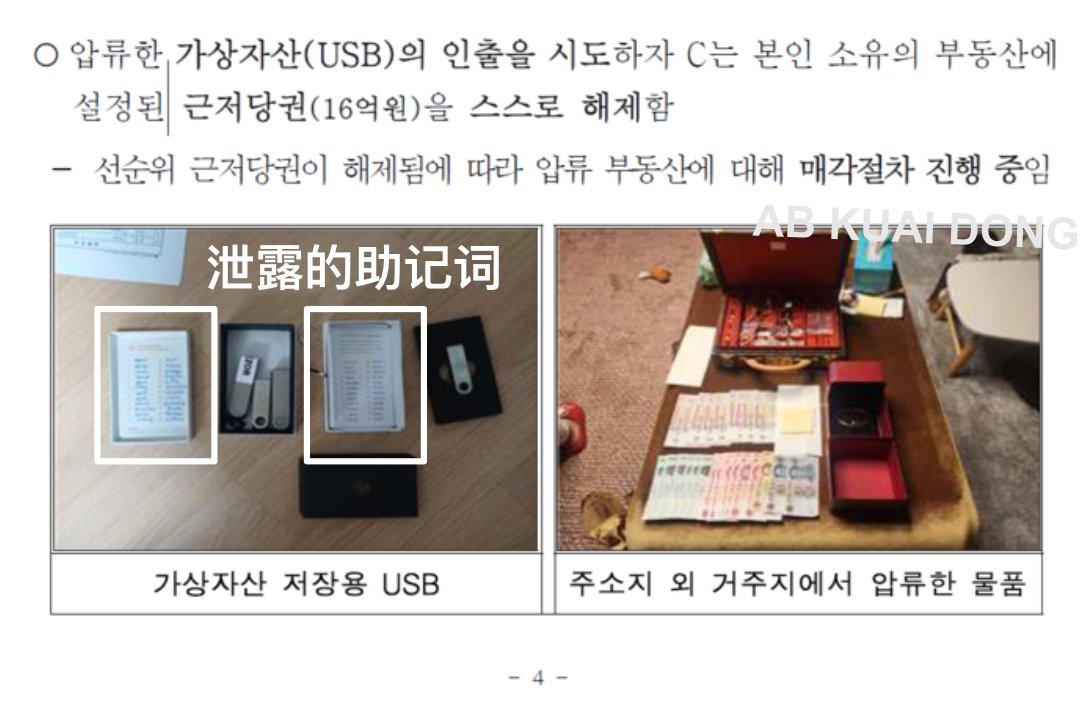
巨大的草台班子。韩国国税厅前阵子,对 124 名欠税人展开现场搜查,最后查封了约 81 亿韩元的资产。而其中有位欠税人的抽屉里,有 4 个用于存储加密货币的钱包。
结果在公示这项成果的时候,官方直接把钱包的助记词纸张,没有加马赛克处理,一同发布新闻稿了。
这导致钱包内的山寨币,直接被转走。
约造成损失达 480 万美元。
中文

@BTCdayu 比特币就抗量子攻击的长期危险,以及挖矿公司转AI数据中心,转数据中心的收益远大于挖矿(大约3倍利润),会导致比特币长期的挖矿难度不停下降,币价死亡螺旋找平衡点,直到比特币的信仰者坚持住了币价,矿工在比特币的收益上和AI数据中心收益平衡,这次的熊要熊很久!
中文

@rometheminer @BTCdayu 你花重金买了矿机,私下挖矿,结果广播的一个区块后,全球警报,立刻硬分叉并换算法,你的ip被加入黑名单并且矿机成为一堆废铁
中文

@BTCdayu 比特币网络的安全性撑不住1000万美元一个的比特币。现在51%的比特币算力40亿美元就能买断。200万亿美元市值的比特币,靠什么支撑安全性?
中文