Sabitlenmiş Tweet

KS Chalapati Rao
3.7K posts

@KSC_Rao
Senior Research Fellow Academy of Business Studies (ABS), Delhi https://t.co/lGckTZ98Y5

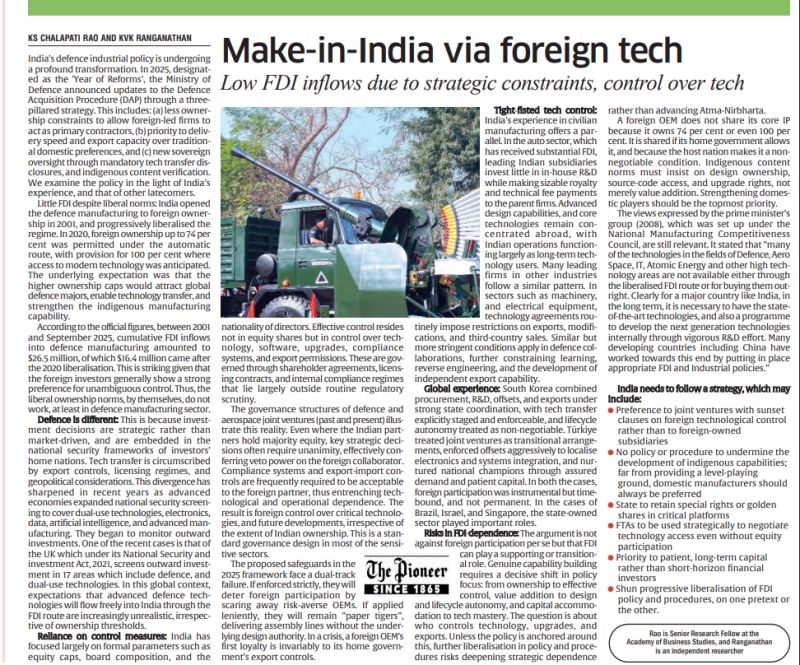
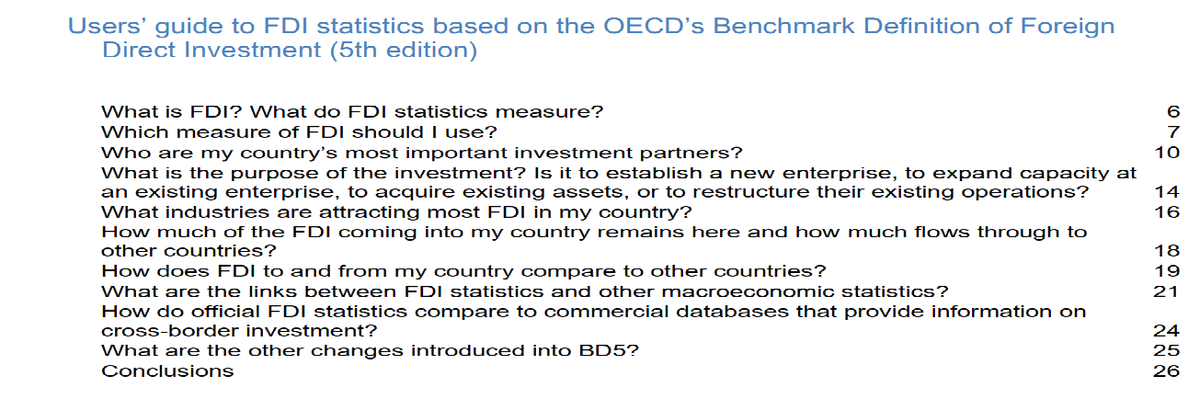
Glad to share that today’s Delhi edition of The Pioneer carries an article based on our recent study. It highlights the need to look beyond the headlines. The full paper is available at (mpra.ub.uni-muenchen.de/126713/1/MPRA_…)



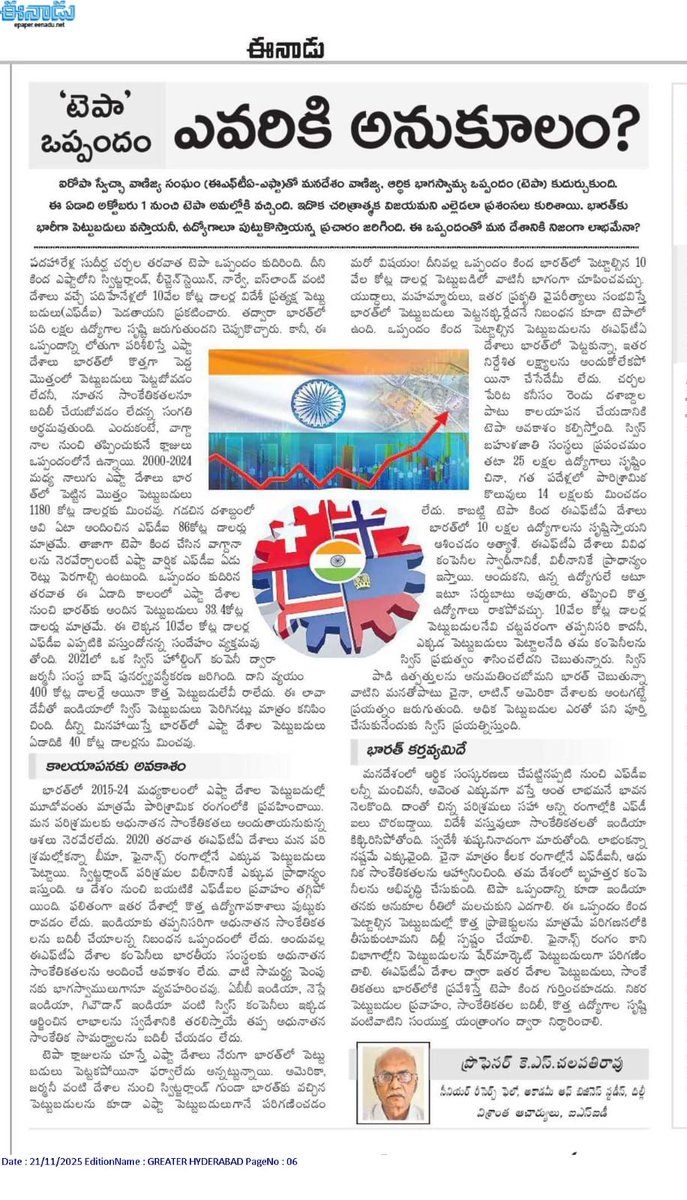
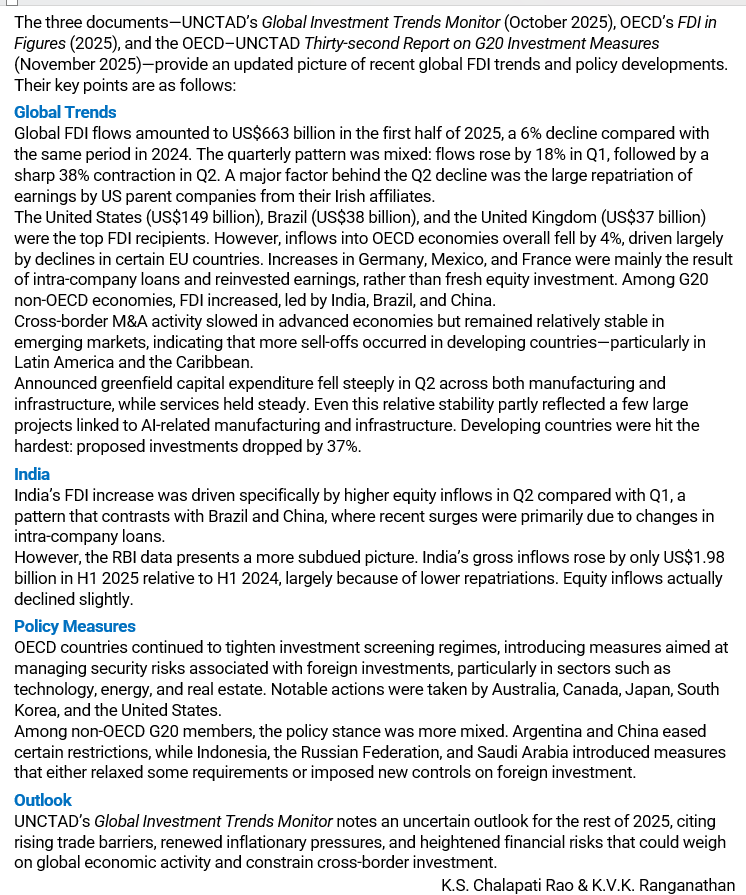


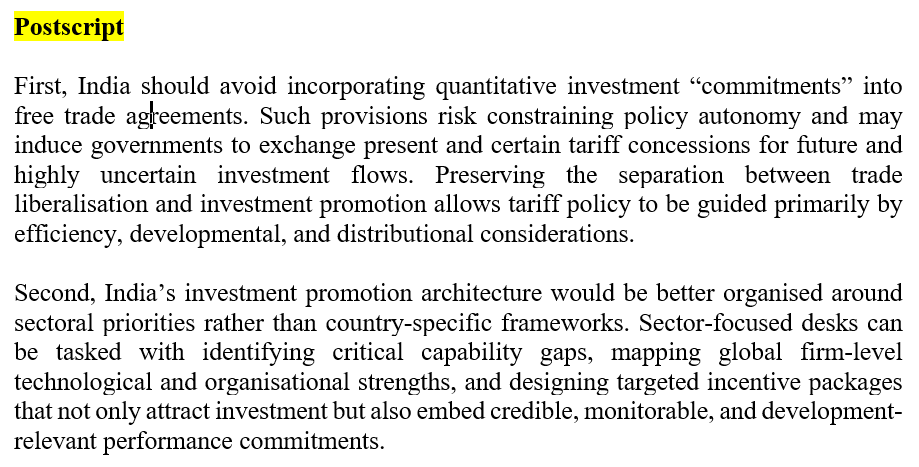
Happy to share our new Working Paper: Shaping Future FTAs: Lessons from the Investment Provisions in India’s TEPA with EFTA 🔗 bit.ly/47pMqyV The study draws on India’s aggregate and remittance-level FDI data, global and Swiss FDI statistics, parliamentary debates, official and company documents, and other public sources. It critiques the lack of clarity in several TEPA provisions—an unexpected feature in an international agreement—and cautions against overreliance on generic FDI inflows. We find that while the EFTA secured tariff-free access to the Indian market, the agreement’s safety clauses effectively hedge against non-performance, leaving India with limited practical remedies if targets are missed. In effect, India could end up receiving global FDI flows routed through EFTA, rather than genuine EFTA investments. By treating FDI as an end in itself, TEPA risks overlooking the traditional exchange of market access for technology and developmental gains. Our paper calls for: - Precise definitions and transparent provisions - Strategic sectoral prioritisation aligned with India’s goals - Stronger monitoring and accountability mechanisms We position TEPA as a test case for India’s evolving FDI strategy, urging policymakers to balance quantitative targets with qualitative outcomes—especially in upcoming FTA negotiations with the EU and New Zealand. We hope this study contributes to shaping a more evidence-based and development-oriented approach to investment provisions in India’s future treaties.
Happy to share our new Working Paper: Shaping Future FTAs: Lessons from the Investment Provisions in India’s TEPA with EFTA 🔗 bit.ly/47pMqyV The study draws on India’s aggregate and remittance-level FDI data, global and Swiss FDI statistics, parliamentary debates, official and company documents, and other public sources. It critiques the lack of clarity in several TEPA provisions—an unexpected feature in an international agreement—and cautions against overreliance on generic FDI inflows. We find that while the EFTA secured tariff-free access to the Indian market, the agreement’s safety clauses effectively hedge against non-performance, leaving India with limited practical remedies if targets are missed. In effect, India could end up receiving global FDI flows routed through EFTA, rather than genuine EFTA investments. By treating FDI as an end in itself, TEPA risks overlooking the traditional exchange of market access for technology and developmental gains. Our paper calls for: - Precise definitions and transparent provisions - Strategic sectoral prioritisation aligned with India’s goals - Stronger monitoring and accountability mechanisms We position TEPA as a test case for India’s evolving FDI strategy, urging policymakers to balance quantitative targets with qualitative outcomes—especially in upcoming FTA negotiations with the EU and New Zealand. We hope this study contributes to shaping a more evidence-based and development-oriented approach to investment provisions in India’s future treaties.

Happy to share our new Working Paper: Shaping Future FTAs: Lessons from the Investment Provisions in India’s TEPA with EFTA 🔗 bit.ly/47pMqyV The study draws on India’s aggregate and remittance-level FDI data, global and Swiss FDI statistics, parliamentary debates, official and company documents, and other public sources. It critiques the lack of clarity in several TEPA provisions—an unexpected feature in an international agreement—and cautions against overreliance on generic FDI inflows. We find that while the EFTA secured tariff-free access to the Indian market, the agreement’s safety clauses effectively hedge against non-performance, leaving India with limited practical remedies if targets are missed. In effect, India could end up receiving global FDI flows routed through EFTA, rather than genuine EFTA investments. By treating FDI as an end in itself, TEPA risks overlooking the traditional exchange of market access for technology and developmental gains. Our paper calls for: - Precise definitions and transparent provisions - Strategic sectoral prioritisation aligned with India’s goals - Stronger monitoring and accountability mechanisms We position TEPA as a test case for India’s evolving FDI strategy, urging policymakers to balance quantitative targets with qualitative outcomes—especially in upcoming FTA negotiations with the EU and New Zealand. We hope this study contributes to shaping a more evidence-based and development-oriented approach to investment provisions in India’s future treaties.

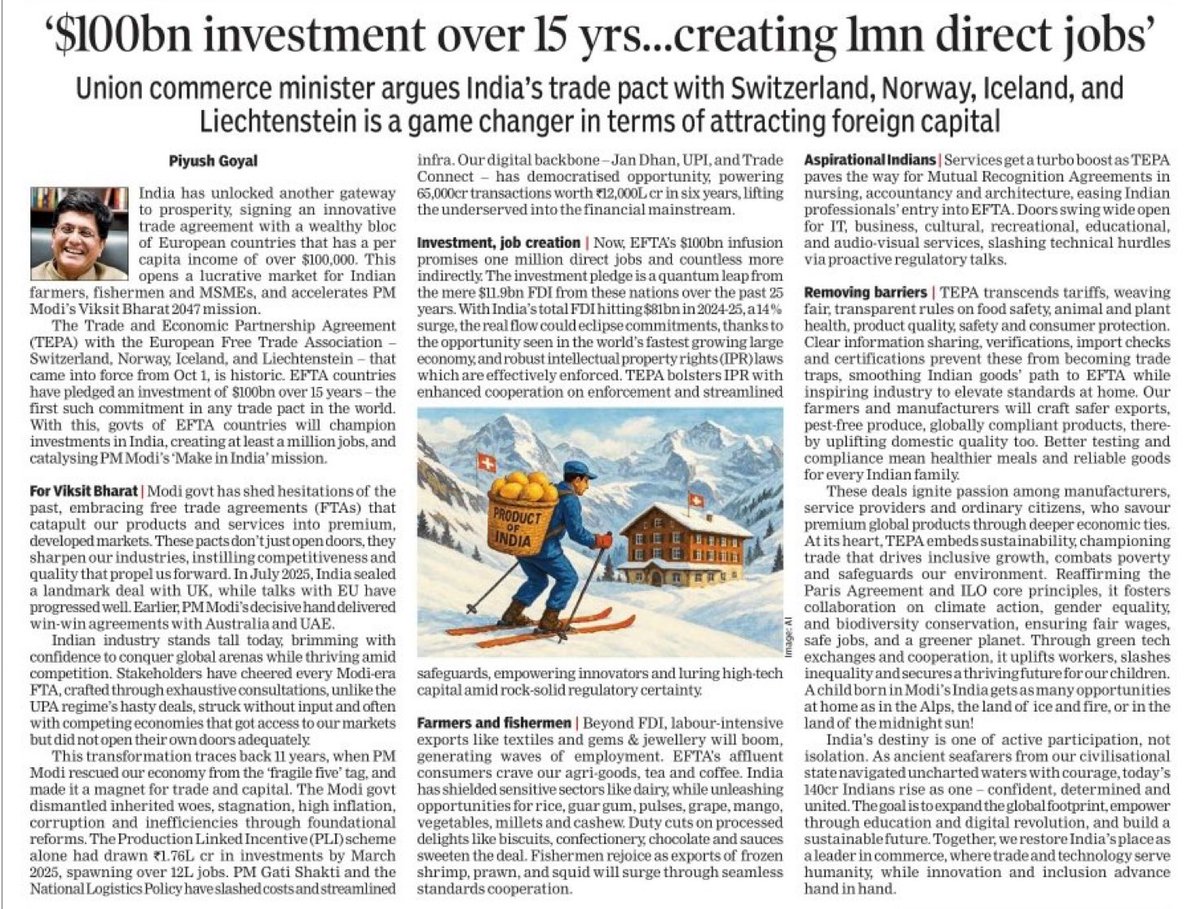
The India-EFTA Trade & Economic Partnership Agreement (TEPA) reflects our: Trusted & Efficient Partnership with Accountability