Kenda

5.7K posts

Kenda

Kenda

@Kenda

Sin City Katılım Ağustos 2007
2.5K Takip Edilen548 Takipçiler
Kenda retweetledi
James E. Thorne
James E. Thorne@DrJStrategy·
Food for thought. Iran Is Not Winning. It Is Unraveling. The prevailing narrative on Iran has it almost perfectly reversed. We are told that Tehran is winning a war of wills in the Gulf and that Donald Trump is gambling recklessly with the world’s most sensitive chokepoint. In reality, Iran is not consolidating strength; it is managing decline. And Trump’s play on the Strait of Hormuz has quietly forced energy markets to reprice security—tilting the balance decisively toward the Americas, and away from Europe, Asia and China. The Islamic Republic no longer resembles a confident revolutionary project. With the old clerical core leadership shattered, power has splintered between a camp that recognises a deal with the outside world as the only path to survival and the Islamic Revolutionary Guard Corps, a class of military dictators with guns, patronage networks and a rational fear that any genuine settlement will ultimately throw them overboard. This is not a unified strategy at work; it’s infighting, paranoia, a fragmented system in late-stage decay, crumbling under pressure. Into this fragmentation, the White House has introduced a form of calibrated coercion too often caricatured as impulsive. Around the Strait of Hormuz, Washington has threatened disruption without fully triggering it, forcing shipowners, insurers and policymakers to absorb a hard truth: dependence on vulnerable, seaborne Middle Eastern barrels is not a passing inconvenience but a structural risk. Iran can harass tankers and jolt day-to-day sentiment; it cannot rebuild a broken economy on sporadic shocks to global shipping. And the world must deal with the end of Pax Americana! The underlying playbook is anything but novel. Sun Tzu’s insistence that “all warfare is based on deception”, Machiavelli’s counsel that a ruler must manipulate appearances and exploit factionalism, and Alfred Thayer Mahan’s argument that sea power and control of chokepoints shape the fate of nations are not museum pieces. They are, in this case, the operating code. Trump’s opaque signalling, deliberate use of disinformation and visible but limited naval posture in and around Hormuz amount to a modern, Mahanian use of sea power as economic statecraft. Energy markets are already adjusting. Tankers are head to the Gulf of America. In a world where a single strait can a risk to economies is Europe and Asia, without ever being fully closed, assets tied to secure basins and diversified export routes deserve a premium. The Americas sit in an enviable position: vast, politically stable hydrocarbon resources, multiple pipelines and ports, and no dependence on a distant maritime chokepoint controlled by adversaries. By contrast, Europe, much of Asia and China find themselves downstream of vulnerabilities they do not control and regimes they cannot stabilise, exposed to shipping routes that can be threatened faster than alternative supply can be mobilised. All of this plays out against a domestic backdrop in Iran that looks less like revolutionary vigour and more like fear. A state that cannot safely keep its internet on, that must rely on public brutality to deter dissent, is not projecting confidence. It is signalling weakness, to its own citizens as much as to its rivals. Winston Churchill once remarked that “in war, resolution; in defeat, defiance; in victory, magnanimity; in peace, goodwill.” Iran’s leadership offers only defiance, without realistic prospects of victory or peace. The uncomfortable conclusion for those still insisting that Tehran is “winning” is that what they are observing is not the rise of a regional hegemon, but the protracted, strategically exploited unwinding of a brittle regime at the centre of an overexposed energy system.
James E. Thorne tweet media
English
195
520
1.7K
253.9K
Kenda retweetledi
James E. Thorne
James E. Thorne@DrJStrategy·
Food for thought. Trump, Hormuz and the End of the Free Ride For half a century, Western strategists have known that the Strait of Hormuz is the acute point where energy, sea power and political will intersect. That knowledge is not in dispute. What is new in this war with Iran is that the United States, under Donald Trump, has chosen not to rush to “solve” the problem. In Hegelian terms, he is refusing an easy synthesis in order to force the underlying contradiction to the surface. The old thesis was simple: the US guarantees open sea lanes in the Gulf, and everyone else structures their economies and politics around that free insurance. Europe and the UK embraced ambitious green policies, ran down hard‑power capabilities and lectured Washington on multilateral virtue, secure in the assumption that American carriers would always appear off Hormuz. The political class behaved as if the American security guarantee were a law of nature, not a contingent choice. Their conduct today is closer to Chamberlain than Churchill: temporising, issuing statements, hoping the storm will pass without a fundamental reordering of their responsibilities. Trump’s antithesis is to withhold the automatic guarantee at the moment of maximum stress. Militarily, the US can break Iran’s residual ability to contest the Strait; that is not the binding constraint. The point is to delay that act. By allowing a closure or semi‑closure to bite, Trump ensures that the immediate pain is concentrated in exactly the jurisdictions that have most conspicuously free‑ridden on US power: the EU and the UK. Their industries, consumers and energy‑transition assumptions are exposed. In that context, his reported blunt message to European and British leaders, you need the oil out of the Strait more than we do; why don’t you go and take it? Is not a throwaway line. It is the verbalisation of the antithesis. It openly reverses the traditional presumption that America will carry the burden while its allies emote from the sidelines. In this dialectic, the prize is not simply the reopening of a chokepoint. The prize is a reordered system in which the United States effectively arbitrages and controls the global flow of oil. A world in which US‑aligned production in the Americas plus a discretionary capability to secure,or not secure, Hormuz places Washington at the centre of the hydrocarbon chessboard. For that strategic end, a rapid restoration of the old status quo would be counterproductive. A quick, surgical “fix” of Hormuz would short‑circuit the dialectic. If Trump rapidly crushed Iran’s remaining coastal capabilities, swept the mines and escorted tankers back through the Strait, Europe and the UK would heave a sigh of relief and return to business as usual: underfunded militaries, maximalist green posturing and performative disdain for US power, all underwritten by that same power. The contradiction between their dependence and their posture would remain latent. By declining to supply the synthesis on demand, and by explicitly telling London and Brussels to “go and take it” themselves, Trump forces a reckoning. European and British leaders must confront the fact that their energy systems, their industrial bases and their geopolitical sermons all rest on an American hard‑power foundation they neither finance nor politically respect. The longer the contradiction is allowed to unfold, the stronger the eventual synthesis can be: a new order in which access to secure flows, Hormuz, Venezuela and beyond, is explicitly conditional on real contributions, not assumed as a right. In that sense, the delay in “taking” the Strait, and the challenge issued to US allies to do it themselves, is not indecision. It is the negative moment Hegel insisted was necessary for history to move. Only by withholding the old guarantee, and by saying so out loud to those who depended on it, can Trump hope to end the free ride.
James E. Thorne tweet media
English
2.3K
7.5K
25.3K
4.2M
Kenda retweetledi
nic carter
nic carter@nic_carter·
it hasn't sunk in for most people. we already live in a post-scarcity society. UBI is already here. basic package: disability, medicaid, food stamps etc bonus package: literally getting paid for staying at home and hanging out with your relatives extra bonus: if you are willing to commit fraud, pretend your kids are autistic and get paid for that. get paid for watching your neighbor's kid. pretend you are taking care of your grandma. fake hospice clinic. fake rehab clinic. fake therapy clinic. giga bonus: during a time of crisis take advantage of PPP or CARES and open a fake business and get paid for existing people are shocked when they learn that defense is the FIFTH largest line item in the budget. ahead of defense: social security ($1.6T), interest on debt ($1.1T) medicare ($1T), medicaid + ACA ($1T), AND THEN defense ($0.9T) complain about defense all you like, but healthcare fraud is a way bigger factor. hundreds of billions per year. this is only going to get worse, because the fraud is a structural part of the system – payouts to client groups in exchange for votes (normally D). in the US, only 47% of the population actually works (fully 14% of the population is working age and does not work). retirees are 18% and children 22%. the system I described above subsidizes 50m non-working people absolute minimum, but really it's far more because people that are paid to stay home and take care of their relatives are considered "workers" of that 47% of "actual workers" maybe one third does real work, the rest are shuffling papers around or doing fake email jobs. so you have, rough math, 50 million actual workers supporting 300 million dependents. that's the nature of the economy today. it will only accelerate. eventually you will have 10 million using AI tools to do all the work and 340 million dependents. the reason no one roots out the fraud is because it's the system that keeps our extremely fragile polity intact. the fraud is the UBI. the purpose of the system is what it does. of course, it's a deeply unfair system, because you are allowed to commit fraud if you are a politically protected client group of the democrats. DOGE was killed faster than any government program ever, because it attempted to root out the fraud. if you are honest and unwilling to commit fraud, you are a huge loser in this system. your neighbor will have their mortgage subsidized by some government program. they will get favorable SBA loans due to DEI. they will open a fake hospice or autism clinic. they will get paid for taking care of their neighbor's kid and vice versa. the primary skill in the labor market is learning how to extract money from state and federal government programs, not gaining skills or making yourself employable. if you are just trying to work an ordinary wagie job you are a huge sucker. you are paying 40-50% effective all in taxes to everyone else who is a net taker. the sad part is because AI is such a substantial productivity boost, it will actually keep this system going for a while longer, and maybe in perpetuity. AI boosts the 15% of the population that is actually productive so much that the remaining 85% can coast by. no one in charge will change this because they can't think of anything else. the political costs of a real UBI program are too great and we don't have the money for it anyway. so we will keep this covert fraud-based UBI program running indefinitely. unfortunately, if you are an honest wagie, you lose.
Augustus Melmotte@EnriqueDiazAlva

These numbers are extraordinary. NYC has lost jobs in almost every sector for the last 6 years except "health and social assistance", which is essentially old people putting their relatives on Medicaid's payroll.

English
592
5K
23.8K
71.5M
Kenda retweetledi
Santa Carota Beef
Santa Carota Beef@SantaCarotaBeef·
This is one of the hardest things we have ever had to share. We are not the kind of people who like to ask for help. We have always believed in putting our heads down, working hard, trusting God, and doing everything we can to carry the weight ourselves. But there comes a point where the truth is bigger than pride, and our customers, followers, supporters, and everyone deserves to know what is really happening. Right now, we are in a legal battle with a major meat processor. And while this fight has our name on it, it is much bigger than our family alone. Small producers, family ranchers, and farmers spend generations building something they are proud of, only to come up against an industry that too often protects power over people, profit over principle, and control over transparency. The effects do not stop with the people raising the food. They reach every person purchasing meat because corruption and lack of transparency in the beef industry affect the food system as a whole and the trust families place in what they buy and feed their loved ones. This fight has cost us deeply. Between personal health struggles and the weight of this battle, we have had to make sacrifices we never wanted to make. We have had to cut back on our restaurants and e-commerce. We have sold cattle to help pay attorney fees. We have carried stress, heartbreak, and pressure that, at times, have felt impossible to explain. But we are still here, and we are still fighting. We are fighting for our family, for our ranch, for the values we were raised on, and for every small rancher and farmer who has ever felt crushed under a system that was never built to protect them. So today, we are asking for help. If you believe in family ranches, quality food, hard work, and a more transparent, healthy, and clean food system, please stand with us. One of the best ways you can support us right now is by purchasing our beef at santacarota.com. We started a GoFundMe for those who want to be part of something bigger than our family alone. If you want to help us keep fighting, please consider donating and helping us fight for farmers, ranchers: gofund.me/5f9dbc127
English
281
2.6K
5.7K
407.3K
Cynical Publius
Cynical Publius@CynicalPublius·
I lost my brother today. Saw him at Thanksgiving, he was just fine. 3 months later he was diagnosed with metastatic cancer with "too many tumors in his lungs to count." Two weeks later he was gone. Please, if you have cancer in your family, get screened. This is the second brother I have lost to the Big C. I'll link one below to a good comprehensive test for cancer screening. I'll be on X less for a while. Or maybe more to take my mind off it. I don't know. I'm knackered at the moment. Thanks for listening.
English
6.7K
2.1K
32.4K
603.7K
Kenda retweetledi
Devon Eriksen
Devon Eriksen@Devon_Eriksen_·
Stop this. Don't you understand? They are not looking for sales. They do not want your approval. They hate you, and they want to humiliate and demoralize you so they can be socially ascendant and feel good and momentarily forget that they were weird theater kids in high school that no one liked. And so they can pave the way for a communist revolution that they imagine will put the theater kids in charge. In reality, they'll all be machine gunned into mass graves by thugs within the first 18 days after the fall of the old order, but they don't know that. So every time they hollow out another franchise and wear it like a skinsuit, they don't care if you buy it. They just want to hear you cry. So if you tell them you don't like it, you won't buy it, you're very upset, then you might as well be giving them a smoothie and a handjob. But you can't help it, though, can you? You see the death of your beloved Warcraft, your Star Wars, your Warhammer 40K, and you can't help but mourn. You think something precious has been destroyed. You're sad for what might have been, but never will be. You're wrong. You don't understand. You don't understand because you are an electrical engineer who designs high-voltage grid hardware, and reads and watches stories in his spare time. You are not a professional maker of stories. Well, I am. So I'm going to explain this to you. Star Wars, Star Trek, Cowboy Bebop, Lord of the Rings, Warhammer40K... these aren't stories. They are story ideas. And any professional author will tell you that ideas are the cheapest and easiest part of our whole job. That's not the hard part, or the part that requires talent and skill. The real work in storytelling consists of turning that idea into a complete, satisfying story that is ready to publish and be read and loved. I can come up with ten story ideas in ten minutes, but I dream of someday having enough control over my writing process to publish one good novel a year. The reason you loved all these franchises is that they were a garment worn by good writers, who were able to make you love the characters and situations. Now they are a skinsuit worn by bad writers. Good writers are always going to make stories you like, regardless of which characters and settings they use. Bad ones are always going to disappoint you, no matter which franchise you hand them the keys to. If all the good writers are kicked out of Games Workshop, they still exist and can write good stuff. And if they are not kicked out, but merely disenfranchised and overruled by managerial theater kids, but they have to stay for a paycheck, then it's because YOU give more money to Games Workshop than you would to all the independent projects they could start. You thinking you are fighting for the soul of Warhammer40K and Star Wars. But you are fighting against the people who own the copyrights, so you will always lose. The best you could ever do is to kill the franchise by rallying the customer base to defect. And you can do that right now by giving your attention to storytellers who don't hate you, instead. But you are attached to the familiar, to what you are used to instead of to what could be. So you follow franchises and intellectual properties instead of artists and writers. And you get so mad that there won't be more Star Wars that you reward critics like @TheCriticalDri2 for his tenth angry rant about how Star Wars sucks now. Sure, I could tell him to spend his time promoting good new stuff instead, but the only reason he is able to promote anything is because he has an audience, and you are that audience, and you are rewarding him for ragebaiting you, demanding that he ragebait you, because that's the only thing you tune in for. That's why there are so few good writers in your field of view who are making good new stuff that you like. Because you've never heard of the ones that exist, and if they're not attached to one of your beloved franchises, they can't raise any money. I would love to spend 100% of my working hours writing novels. I'd certainly finish them faster that way. But I can't. Because I have to be on Twitter most of the time, so I can pay my bills now. And I'm considered one of the fortunate ones, because the time I spend on publicity actually earns me enough money to do that. Most other authors, good storytellers who don't hate you, can't even quit their day jobs. Which means even less time and energy for creating. I know you loved these franchises when they were alive. I did, too, some of them. But you have to let them go. Because they are dead now. They are still moving, but they are dead. We're in the part of the zombie movie now where your son has succumbed to the infection, and you have him locked in the basement, feeding him raw meat while he lunges at the end of his chain, trying to devour your flesh. You're just too attached to let go, hoping against hope that you can hang on until a cure is found, but there isn't a cure, there's never a cure, and that isn't your son. It's pure evil piloting the husk of his body. The only thing left for him is a quick 5.56mm bullet in the head. Do you doubt me? Do you think you can win against the copyright holders? Well, tell me then, when have you ever won one of these? Name one franchise that fans have rescued. Not rescued from financial cancellation, there are plenty of those, but name one that was rescued from woke infiltration, and brought back to its roots. Well? I'm waiting. The truth is, wars are not won by being bold and resolute and surrendering no inch of ground. That's just a strategy for filling graveyards with your brothers. Wars are won by fighting the enemy where you are strong and he is weak. If every one of you gave an independent author, or artist, or filmmaker, or developer, one tenth the time and money you spend on overpriced plastic army women made by neomarxist feminists who hate you, then a lot more of them would thrive, and there would be just as many new things for you to love are there were old ones. You're not selfish, or short-sighted, or tight-fisted. You just loved too deeply, and you can't let go. But he who cannot cast away a treasure at need is in chains. Stop stalking your crazy ex-girlfriend who got fat and hates you now. There are younger, hotter, nicer women who would love to meet you.
Grummz@Grummz

Look at what they did to our game. It's just like what happened to DnD. We went from epic battles to "slice of life" Disney town.

English
217
422
3.4K
223.5K
Kenda retweetledi
John Ʌ Konrad V
John Ʌ Konrad V@johnkonrad·
This is potentially the biggest Iran story nobody is talking about: the global insurance market may be heading toward a systemic crisis. Here’s why… Most people don’t realize London isn’t just a financial center it’s THE center of global insurance. Lloyd’s underwrites ~40% of the world’s marine cargo. Ship sinks, port gets bombed, canal gets blocked the bill lands in London. This is why the UK punches above its weight. Not the Royal Navy. Not diplomacy. Insurance. Control insurance, control trade. And London doesn’t just control the 90% of global trade that moves by sea. Lloyd’s and the London market are major insurers of almost everything skyscrapers, factories, ports, satellites, entire supply chains. You can’t participate in public markets or raise large amounts of capital without insurance. Now, the normal playbook for war risk is repricing, not cancellation. Canceling coverage entirely is a massive escalation in underwriting posture. It signals something beyond risk, it signals uncertainty so deep the underwriter can’t even price it. The question everyone should be asking: why? Why not just jack up premiums and make a fortune off the crisis like they did in the Black Sea off Ukraine? To answer that, you have to understand WHY London has maintained a stranglehold on global insurance while losing nearly submarket related to ships. The answer: better intelligence. It is no coincidence that MI6 headquarters sits directly across the Thames from the @IMOHQ, the world’s maritime regulator & a short distance from Lloyd’s itself. I have no proof of a direct pipeline, but it has long been speculated in the industry that intelligence flows from MI6 to Lloyd’s. Having the best intel in the world would be the single greatest competitive advantage any insurer could possess: the ability to price risk that competitors can only guess at. Here’s the problem: the majority of MI6’s intel doesn’t come from its own agents. It comes from Five Eyes the alliance comprising the US, UK, Australia, Canada, and New Zealand. And within 5Eyes, the dominant partner is obvious. The CIA, NSA, NRO, etc generate the lion’s share of intel. So if Lloyd’s pricing advantage flows from MI6, and MI6’s best intelligence flows from the US… what happens when that data pipeline gets throttled? All indications are that @Keir_Starmer was blindsided by the size and scope of the US/Israel strikes on Iran this weekend. That alone tells you something about the current state of transatlantic intelligence sharing. And we know there has been serious anger in Washington over the UK’s decision to sell Diego Garcia, home to America’s most strategically important base in the Indian Ocean, to Mauritius. It is not a huge leap to conclude that the submarine cables linking Langley to London have gone dark, or at minimum have been significantly throttled. What this means for UK national security is a question for the Brits. But what it means for EVERY company globally that’s insured through the London market has massive implications for the entire financial system. Because most large insurers worldwide don’t do independent intelligence work. They index off Lloyd’s rates. If you’re insuring a skyscraper in Tokyo, a semiconductor fab in Taiwan, or a port in Argentina you get a Lloyd’s quote, then shop that price around. Other insurers see Lloyd’s number and assume the diligence was done. They price accordingly. This means if London is suddenly flying blind it’s not just Lloyd’s policyholders at risk. It’s the entire global reinsurance chain. The cancellation of war risk coverage on ships isn’t the crisis. It’s the canary. If this hypothesis is correct, we could be looking at a systemic repricing event across global insurance markets…. the kind of cascading uncertainty that defined 2008 and COVID. Watch Lloyd’s. Watch reinsurance spreads. What Five Eyes. That’s where this story, and possibly Wall Street, breaks. CC @BillAckman
gCaptain@gCaptain

Major marine insurers just cancelled war risk coverage for the Strait of Hormuz. 150+ ships stranded. Rates tripled. One seafarer dead. And this is only day 3 of the Iran conflict. gcaptain.com/marine-insurer…

English
916
5.9K
21.4K
5.4M
Kenda retweetledi
John Ʌ Konrad V
John Ʌ Konrad V@johnkonrad·
You don’t understand. I’ve watched a ton of congressional defense hearings. In EVERY. SINGLE. ONE. the Admirals and Generals say “we are only strong because of our allies.” At first I believed it. Then I started attending defense conferences overseas. I watched U.S. GOFOs get treated like royalty. Five-star hotels. Wined and dined. Told how great they are for “being such great allies.” The pattern became obvious. Europeans spend lavishly on ego-boosting, awards dinners, and fine wine… and in exchange, every GOFO goes home and tells Congress how indispensable our allies are. And our “allies” save a fortune on defense. Then a buddy got a job at European Command and confirmed everything—except it wasn’t just GOFOs. There are entire departments of people working in “intelligence” who are basically travel agents for generals and members of Congress. Then I started digging into the UN. Guess what? They hold a massive number of “security” conferences too—except most of theirs are in straight-up resort towns. Then I got inside a few think tanks. You want to see posh surroundings and excellent wine and food? Buddy up with them. I started posting about all this a few years ago and got MASSIVE pushback—which I knew meant I was on the right track. But I still wasn’t 100% sure. Most of it was grift, but maybe some parts were essential… until Midnight Hammer. Then Maduro. Now this. My European friends were totally blindsided by all of it. And guess what? We performed better without these great “allies.” Why? Going all the way back to Korea, one thing has remained true: Europeans don’t fully trust us—and they like having a little power over us. So they are absolute sticklers for Rules of Engagement. They wine and dine our JAGs. They hold endless conferences about “the rule of law” to reinforce the “importance of ROEs.” And ROEs are what kills our military. Nobody is suggesting soldiers should do anything immoral. Nobody is saying there shouldn’t be consequences for atrocities. What I am saying is that having a battalion of JAGs and a dozen allied nations—each with their own ROEs—breathing down every commander’s neck is why we lose wars. That includes Vietnam, where most “allies” refused to fight but every one of them put serious diplomatic pressure on DC to tighten ROEs. All of this “allies are our strength” dogma gets reinforced at these conferences, at war colleges, by European-influenced media, and through think tanks. The reason we’re suddenly so effective is because @PeteHegseth has cut all this out. Our allies are flying blind. They can’t throw up a million legal objections because they don’t know the details behind these missions any sooner than we do. Just look at Starmer’s body language. He’s clueless. And it’s not just our allies that no longer get to micromanage everything but media and UN diplomats and think tanks and bureaucrats and more. Now if we could just cut Congress off from this “allies are great” grift, we could probably start passing legislation too. P.S. I see no signs of Hegseth or DoW weakening our allies or alliances. They genuinely seem to want Europe to be stronger. They just aren’t asking permission anymore or giving allies veto power over everything like before.
Politics UK@PolitlcsUK

🚨 PICTURED: Keir Starmer on the phone with French President Macron and German Chancellor Merz to discuss the situation in Iran

English
712
3.9K
17.7K
1.9M
Kenda retweetledi
Oilfield Rando
Oilfield Rando@Oilfield_Rando·
I dunno man seems like wars are super easy when the objective is to win and not launder a trillion dollars to your friends in the DC-VA-MD area for decades
English
937
12.1K
83.1K
2.8M
Kenda retweetledi
🐺
🐺@LeighWolf·
Venezuela, Iran, Cuba, Greenland, Panama…it’s all interconnected and it all points to China. As U.S. energy ramps up, and China is deprived of subsidized oil, subsidized shipping channels, freedom of navigation through sovereign waters and allies that can cause the U.S. problems…their global position diminishes substantially and their costs of doing business skyrocket. Venezuela and Iran account for something like 20% of China’s oil imports and they’re getting an insane deal on it. China has a huge problem if that oil goes away. You’d be forgiven for thinking Trump’s foreign policy seems random and chaotic, but it’s actually one of the most focused and (thus far) well executed foreign policies in at least 2 generations.
Breaking911@Breaking911

The USA now produces more oil then Saudi Arabia And Russia combined

English
325
3.3K
16.2K
2.3M
Kenda retweetledi
Jeffery Tompkins
Jeffery Tompkins@JATompkins·
Alot of people trash talking Northwest Indiana today. I’m from Hammond. And there’s a lot you don’t know about The Region. Working class union families. Chicago time, media, sports, and food. But not “Chicagoland”. It’s culturally eschewed from the rest of Indiana. Steel mills amidst cat tails and hundred foot sand dunes. Shift work traffic. The “tamale guy” that sells them out a cooler at the bar. Gyros and lemon rice soup. Made the steel that won WWII. Commuter rail. There is something poetic, even romantic about the place. It’s extremely polluted. But there’s more under the covers. Stop by and have a pierogi sometime. But don’t be a dick to get likes.
English
271
109
2.2K
210.2K
Kenda retweetledi
Charles C. W. Cooke
Charles C. W. Cooke@charlescwcooke·
Every sports piece during the last 48 hours: “Someone did something good. But then they did something that upset me, a political obsessive. And that complicates things. My story.”
English
63
668
6.7K
112.7K
Devon Eriksen
Devon Eriksen@Devon_Eriksen_·
The Master of Business Administration isn't a degree. It's a disease. There is no such thing, you see, as "business administration". There is only the business you are in. You cannot effectively run a business with abstract, number-crunching, money-moving pie chart magic. If your degree is in "make Spreadsheet Look Good", then you can make spreadsheet look good for a while. You can even make Number Go Up, because many stockholders buy and sell based on whether Spreadsheet Look Good. But if you don't understand how make pizza, how design rocket, how wash car, why game fun, or whatever it is your business actually does for people in exchange for pennies, then inevitably, something you do to make Spreadsheet Look Good, and Number Go Up, will make pizza not delicious, rocket not fly, game not fun. And then Spreadsheet will not Look Good, and Number will not Go Up, because Number ultimately comes from all the pennies people give you when pizza is delicious, when rocket puts satellite in orbit, when game is fun. A decision maker who knows how make pizza isn't just the only guy who can make pizza more delicious... he's the only guy who can make pizza cheaper without making pizza less delicious. The moral of this story is don't invest in a company controlled by anyone who isn't an expert in its core business function. Companies like that can make Number Go Up, sometimes, but Number will also go down again... unpredictably. Which means you won't know when to get out. Because you never know when an MBA who doesn't know how to steer a ship will call a guy who just got off duty, is six or seven cocktails to the wind, and tell him, "I need you to go fill in for the captain of the Valdez. Right now. "
Rich 🐺@heywildrich

I knew this guy who ran a pretty large pizza chain. Worth tens of millions of dollars. One day I saw him walk into one of his pizza stores, they were short staffed, he literally went in the back, in his suit, and started making dough and pizzas to help out until other employees got there. He knew every detail of the business. He could repair any of the equipment. He could do any job in the whole place. At a certain point in society people like you came to accept that management was just about spreadsheets and useless meetings and email chains. And I think that's part of why it's all so abysmal and low quality now. "Car guys" used to run car companies, now it's accountants. This is true of all industries. Accountants suck at everything, sometimes even accounting. Every justification people have for this unqualified clown is another example of why the quality of everything has fallen off a cliff. My pizza guy knew when the pizza was made right. Would this CEO even know a good game if it smashed her over the head? Doubtful. Would the manager who doesn't know about cooking temps make for a good boss to the chefs, servers, and line cooks? No. Would somebody who has no idea how cars work be able to explain anything to a customer or supplier or really anybody they worked with daily? Of course not. The idea that you don't need to understand the business to run the business is plainly absurd. Would you hire a family law attorney to negotiate a multi-million dollar business deal in an industry they don't understand at all? I hope not. I've seen it happen, didn't go well for the client. You people have no common sense or business experience and frankly need placed into some sort of work camps to make you useful to society.

English
66
122
1.2K
63.3K
Kenda
Kenda@Kenda·
@TimothyDSnyder So you're what here? The hero who wouldn't stay silent? The posturing/moral preening Canadian virtue signal routine is all played out. Canada can't win the Stanley Cup. Concentrate on that.
English
0
0
0
13
Kenda retweetledi
InfantryDort
InfantryDort@infantrydort·
The impulse for retribution. There’s a tone you hear right before a civilization ages out. It isn’t the sound of defeat. It’s the sound of score settling. When leaders talk about what they’ll do to their enemies once they “come back,” you’re not listening to governance. You’re listening to something different. Law used to be a wall. Now it’s a blade people argue over who gets to swing. The dangerous part isn’t left or right. It’s the hunger. The need to make someone pay. The belief that power exists to avenge humiliation. That’s not how republics talk in their prime. In their prime, they talk about building, defending, expanding horizons. Pushing the envelope. When they’re tired, they talk about punishing. Late civilizations become theatrical. Every election feels like a trial. Every loss feels like injustice. Every win promises “accountability.” Real strength doesn’t need revenge. But you already know that. Or you should. Once a portion of people start craving retribution more than stability, you’re no longer watching a confident sect of a nation. You’re watching one that knows, somewhere deep down, it’s slipping. And it’s angry about it. These people are telling you who they are. Believe them.
Western Lensman@WesternLensman

Susan Rice offers a taste of what’s coming should the left retake power — promises Democrats will punish corporations and other institutions who have “taken a knee to Trump.” “It’s not going to end well for them." “If these corporations think that the Democrats, when they come back in power, are going to play by the old rules…they’ve got another thing coming." “There will be an accountability agenda." “This is not going to be an instance of forgive and forget."

English
425
2.4K
6.6K
150.3K
Kenda retweetledi
Roger Stone
Roger Stone@RogerJStoneJr·
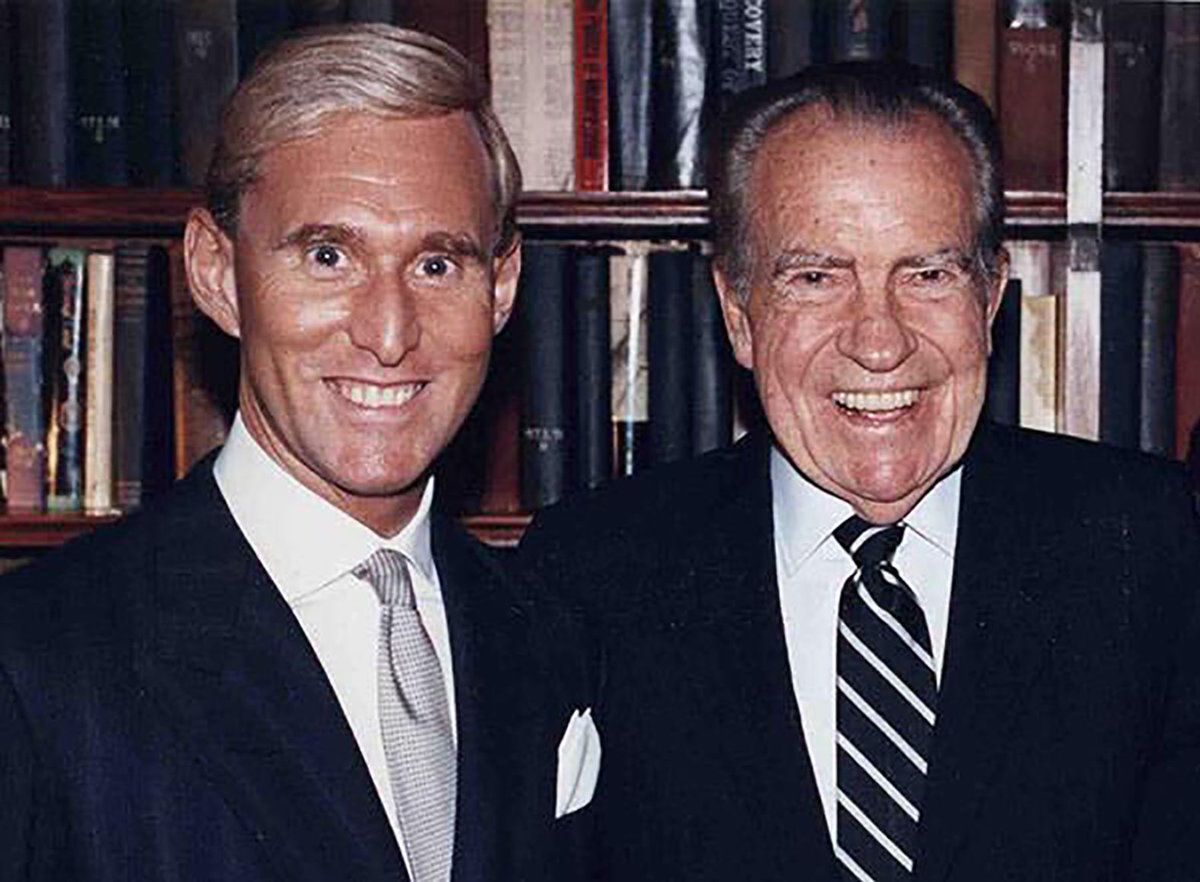
Nixon told me who killed JFK. Nixon called the Warren Commission “the biggest goddamn hoax in American history.” “Lyndon and I both wanted to be President — the difference was, I wasn’t willing to kill for it,” the President muttered to me over martinis at his Saddle River home. Nixon knew the CIA and the mob were both in on it.
Roger Stone tweet media
English
1.1K
6.4K
27.9K
1.2M
Graham Platner for Senate
Graham Platner for Senate@grahamformaine·
The eyes of the world have turned away, but Gaza is still starving and the West Bank is still being annexed piece by piece in blatant violation of international law.
English
704
2.6K
14.3K
728.1K
Charles C. W. Cooke
Charles C. W. Cooke@charlescwcooke·
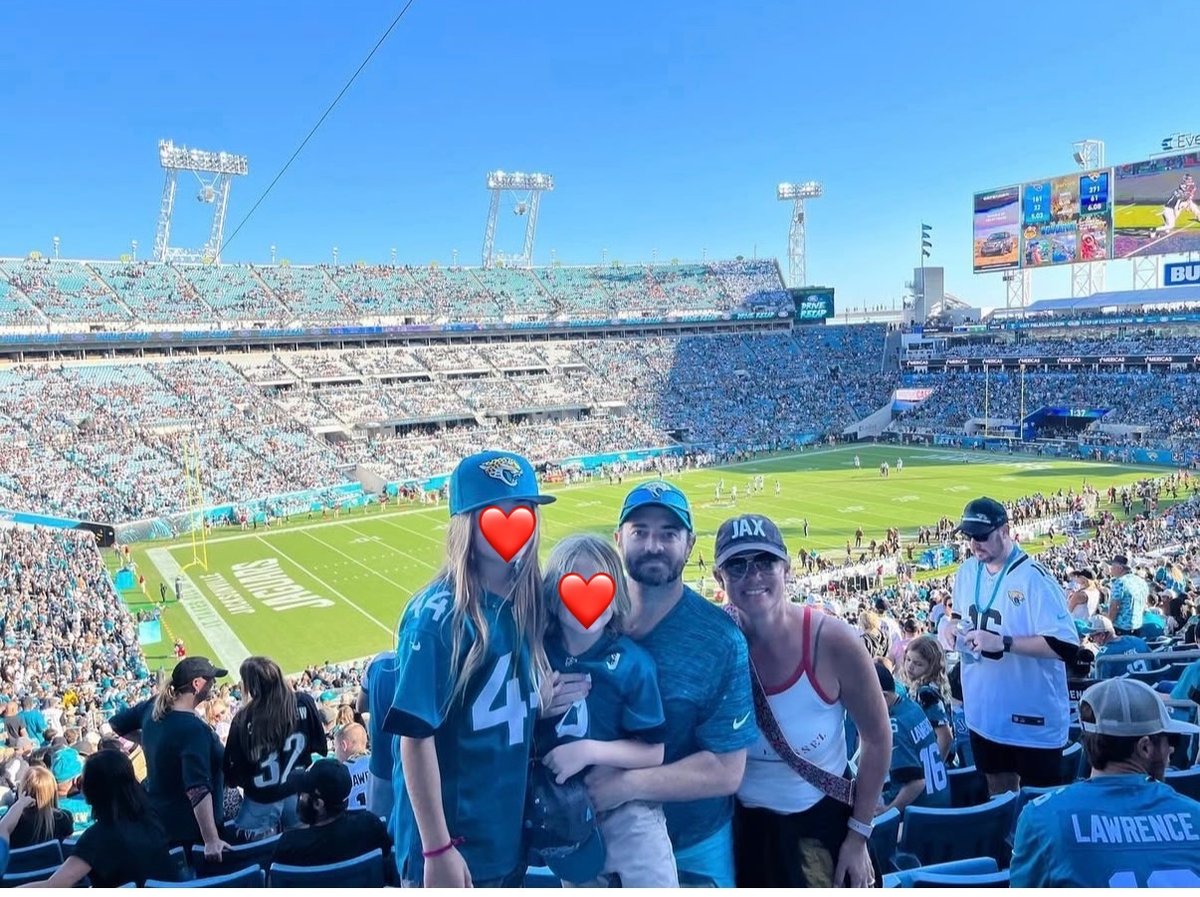
John Ekdahl was my best friend. He died today of cancer, at 47. I know that some of you knew and loved John, so I thought I’d let you all know. I have set up a GoFundMe for his family, which is linked in this tweet. John and I “met” on Twitter about 13 years ago, and then, a couple of years later, met in person at the 2014 NRA Convention in Indianapolis. We quickly realized that we had a lot of the same interests—technology, amusement parks, baseball (we were both Yankees fans)—and soon started texting about everything and nothing. In 2015, when I published my book, the first stop on my promotional tour was in Jacksonville, where John lived. I asked him which hotel I should stay at, and he said that, instead, I should stay with him and his family. So I did. From that moment on, he and his wife (and their two kids—one of whom had just been born) became my closest friends. When, in 2017, my wife and I decided to move to Florida, John barraged me with propaganda about Jacksonville, and invited us to stay for a few days so that he and his wife could show us around. We were sold. John was like that. For the first few years after I moved to the United States, I wasn’t into the NFL. In 2016, this started to change, so John began a remote campaign to turn me into a Jaguars fan. “Jags are on,” he’d text apropos of nothing on a Sunday, even though he knew that, from Connecticut, the chance of my getting the game was close to zero. As part of this effort, I got weekly AFC South updates, a series of memes about Blake Bortles, and an introduction to the perfidious cabaret act that is the Tennessee Titans. John even invited me down to see a game against the Colts—which the Jaguars won 30-10. In my first real season as a fan, the Jaguars made the AFC Championship game, and were minutes away from making their first Super Bowl. After I moved down to Florida, John and I bought season tickets together, which we kept until the end. I had hoped devoutly that the Jaguars would make the Super Bowl this season—which was destined to be John’s last. During the pandemic, John and I started a business together that, relative to our expectations, did pretty well for a while. As is typical, most of our ideas didn’t pan out, but that didn’t matter. We had fun coming up with them at the bar, adding “just one more drink” to the tab to make sure that we hadn’t missed an angle or forgotten to write something crucial down on the back of an increasingly ragged napkin. I am 41-years-old and, with the exception of my wife, I’ve never met anyone who was easier to talk to than John. If we went for lunch, we’d go for hours, chatting about sports and rollercoasters and our kids and the new iPhone and the unforgivable changes that Disney made to Epcot in 1999. I shall miss that immensely. There was one thing we didn’t talk about: At no point since his diagnosis, did John and I ever acknowledge with each other how serious his condition was, or that, all things being equal, it was likely to take him before his time. From the start, it seemed that John silently picked me to be the person with whom he could pretend that everything was normal, and I fulfilled this role until the last. Even when things were clearly terrible, we’d make plans—to take a trip to New Hampshire with our families and friends; to ride the new rollercoaster at Epic Universe; to go to opening day at the new Jaguars Stadium in 2028; and more. The last time I saw him, I said the same thing as I said every time I'd chatted with him over the last 11 years: "Talk to you in a bit." gofund.me/20cbdce0f
Charles C. W. Cooke tweet media
English
1.1K
998
8.5K
2.2M