Rohan Paul@rohanpaul_ai
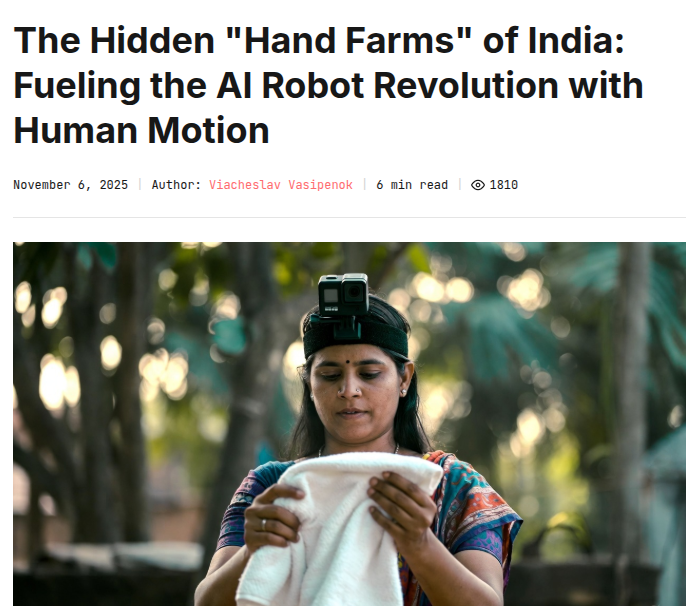
Indian factory workers wear head-mounted cameras to capture data for training robotics AI models.
This image captures a blunt truth about robotics: teaching a machine to move in the real world is still painfully expensive.
What looks dystopian at first is also a clue about the bottleneck.
Robots do not learn useful physical behavior from internet-scale text the way language models do.
They need embodied data: hands reaching, wrists turning, objects slipping, fabric folding, tools resisting, people recovering from small mistakes in real time.
That data is rare because reality is slow, messy, and costly.
A robot fleet is expensive to buy, expensive to maintain, hard to supervise, and dangerous to scale in uncontrolled settings.
Even teleoperation is costly, because every minute of human-guided movement requires hardware, operators, calibration, and failure recovery.
So companies go looking for the cheapest possible proxy for physical intelligence.
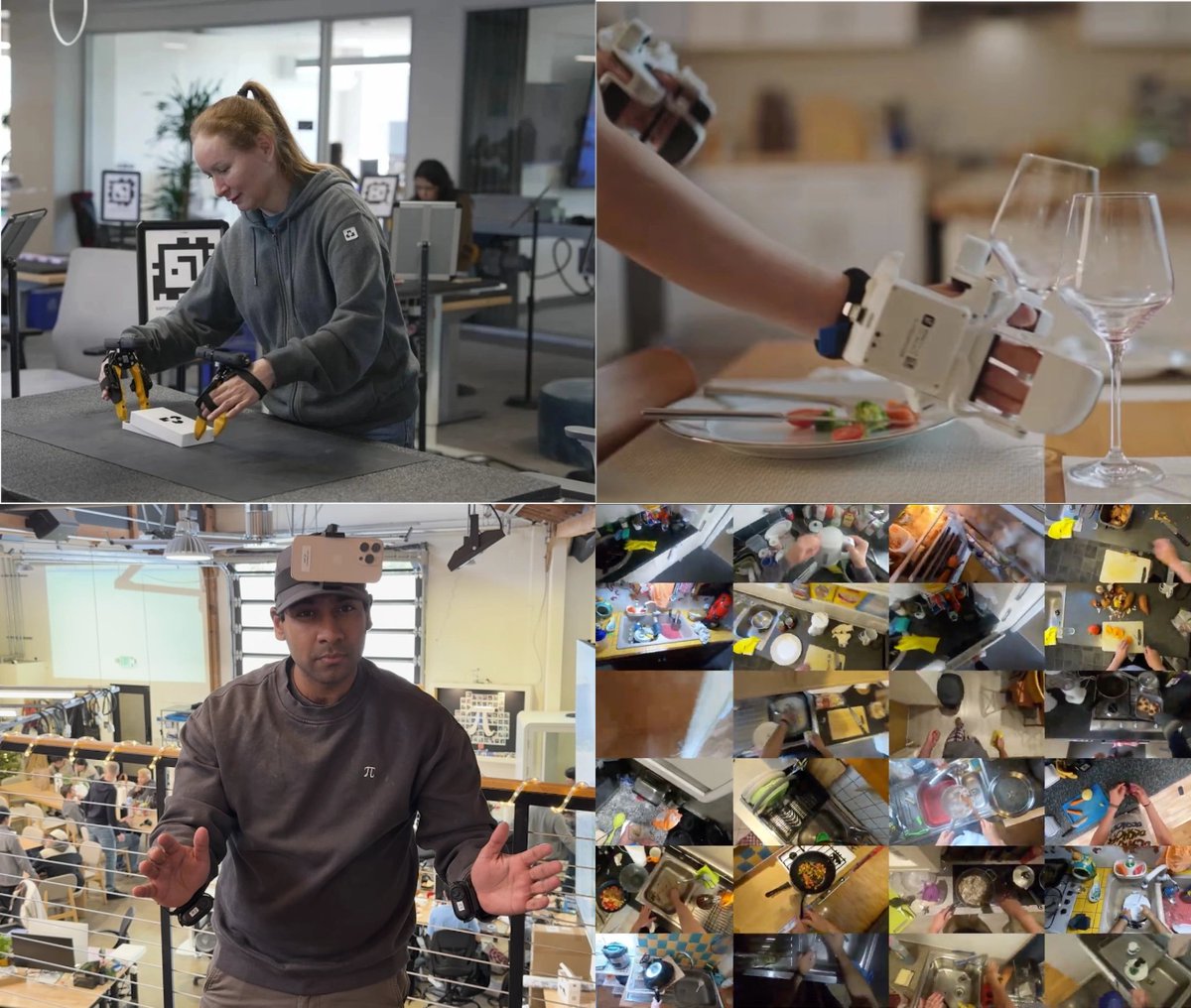
First-person video from factory workers is not the same as robot action data, but it can still be valuable because it captures sequencing, posture, bimanual coordination, and the micro-adjustments that make real work look easy.
The frontier in robotics is not just better models.
It is better pipelines for collecting reality itself.
That is why warehouses, factories, kitchens, and repair benches matter so much: they are dense environments of repeated contact with the physical world, which is exactly what robots lack.
The unsettling part is that this turns human labor into training infrastructure twice over, first as work, then as data.
And until embodied data becomes cheaper to gather than human motion is to record, robotics will keep learning from workers before it fully replaces them.