

0xKimos ⛏️
748 posts

BTC链第二矿币 $NAT ( DMT-NAT)遭受攻击,部分矿池、矿工受损。下面是 @TheBlockRunner 对这次攻击解析。@tap_protocol 协议在第一时间发现并更新了协议,此类攻击不会再次得逞。 #NAT #DMT #BTC
ᴛʜᴇ ʙʟᴏᴄᴋ ʀᴜɴɴᴇʀ Podcast | 91.bitmap 🟧@TheBlockRunner
$NAT UNDER ATTACK 🚨 Exploit narratives. Miner tension. Bad incentives. A lot of noise. We break down what’s actually happening and why this moment could matter more than people realize. How NAT Just Experienced Its Coming Of Age Moment! Miner Poisoning Explained! Four mining pools, @Braiins, SEC Pool, Ultimate Pool, and Mining Squared, all adopted the $NAT token within the same few hours, which initially felt like a major win. But as we dug deeper, something strange became clear: all four of these pools share a connection to @AntPoolofficial, the original $NAT mover. A research article by Bitcoin developer B10C on Bitcoin mining centralization in 2025 confirmed it, @Braiins, @CloverPool_com, @AntPoolofficial, @ultimus_pool, and others are all listed together as "Antpool and friends." The fact that only these four affiliated pools adopted $NAT simultaneously, while others did not, made us pause. The situation escalated quickly. We noticed that all four pools sent their $NAT tokens to a single wallet address, which is a major red flag. Independent mining entities don't typically consolidate to one address unless something coordinated,or something wrong, is happening. Sure enough, that address proceeded to dump all the $NAT at roughly a 50% discount. It was absorbed almost instantly by people who understood the opportunity. This was not a legitimate adoption, it was a scam exploiting a real vulnerability in the protocol. The attack vector is what's known as transfer poisoning. Antpool and its affiliated pools use a shared technology stack that automatically signs all UTXO outputs. A sophisticated attacker sent a transfer inscription to those pool addresses. Because the dispatcher automatically processes UTXO outputs and a token send encodes the recipient address of the attacker, the transfer was completed without any manual confirmation. @FoundryServices was also targeted, but because Foundry does not auto-sign all UTXO outputs the same way, the attack failed there, validating exactly where the vulnerability lived. @rarity_garden and the @natgmi development team responded fast. A mandatory protocol update was implemented, requiring miners to opt into an unlocking step before they can transfer $NAT, essentially inscribing an intent to their own address first. This opt-in inscription prevents transfer poisoning because attackers can no longer trigger an automatic send. It's a clean, elegant fix. This kind of event has a historical precedent. Bitcoin itself had a critical overflow bug in August 2010, barely a year after launch, where a hacker generated 184 billion BTC in a single transaction. Satoshi and developers patched it within five hours. @ethereum had the DAO hack. These events aren't the end of a protocol; they're stress tests that force improvements and build long-term resilience. The fact that NAT's response was equally swift is a positive signal, not a catastrophe. The bigger takeaway here is awareness. The only real long-term defense is making sure every Bitcoin miner knows about NAT. Pools like @ViaBTC , @f2pool, and @SpiderPool_com were not compromised because they operate outside the Antpool technology stack, but that's not the point. If Antpool is already moving and selling NAT rewards, their customers, the miners using their infrastructure, deserve to know this is happening and how to protect themselves. Centralization in mining isn't just a philosophical concern; it creates systemic exploitable surfaces. And as the Bitcoin security budget conversation grows louder, NAT's role in solving that problem will matter more, not less. Pay attention to the organic ones.
中文
0xKimos ⛏️ retweetledi

$NAT UNDER ATTACK 🚨
Exploit narratives.
Miner tension.
Bad incentives.
A lot of noise.
We break down what’s actually happening and why this moment could matter more than people realize.
How NAT Just Experienced Its Coming Of Age Moment! Miner Poisoning Explained!
Four mining pools, @Braiins, SEC Pool, Ultimate Pool, and Mining Squared, all adopted the $NAT token within the same few hours, which initially felt like a major win. But as we dug deeper, something strange became clear: all four of these pools share a connection to @AntPoolofficial, the original $NAT mover. A research article by Bitcoin developer B10C on Bitcoin mining centralization in 2025 confirmed it, @Braiins, @CloverPool_com, @AntPoolofficial, @ultimus_pool, and others are all listed together as "Antpool and friends." The fact that only these four affiliated pools adopted $NAT simultaneously, while others did not, made us pause.
The situation escalated quickly. We noticed that all four pools sent their $NAT tokens to a single wallet address, which is a major red flag. Independent mining entities don't typically consolidate to one address unless something coordinated,or something wrong, is happening. Sure enough, that address proceeded to dump all the $NAT at roughly a 50% discount. It was absorbed almost instantly by people who understood the opportunity. This was not a legitimate adoption, it was a scam exploiting a real vulnerability in the protocol.
The attack vector is what's known as transfer poisoning. Antpool and its affiliated pools use a shared technology stack that automatically signs all UTXO outputs. A sophisticated attacker sent a transfer inscription to those pool addresses. Because the dispatcher automatically processes UTXO outputs and a token send encodes the recipient address of the attacker, the transfer was completed without any manual confirmation. @FoundryServices was also targeted, but because Foundry does not auto-sign all UTXO outputs the same way, the attack failed there, validating exactly where the vulnerability lived.
@rarity_garden and the @natgmi development team responded fast. A mandatory protocol update was implemented, requiring miners to opt into an unlocking step before they can transfer $NAT, essentially inscribing an intent to their own address first. This opt-in inscription prevents transfer poisoning because attackers can no longer trigger an automatic send. It's a clean, elegant fix.
This kind of event has a historical precedent. Bitcoin itself had a critical overflow bug in August 2010, barely a year after launch, where a hacker generated 184 billion BTC in a single transaction. Satoshi and developers patched it within five hours. @ethereum had the DAO hack. These events aren't the end of a protocol; they're stress tests that force improvements and build long-term resilience. The fact that NAT's response was equally swift is a positive signal, not a catastrophe.
The bigger takeaway here is awareness. The only real long-term defense is making sure every Bitcoin miner knows about NAT. Pools like @ViaBTC , @f2pool, and @SpiderPool_com were not compromised because they operate outside the Antpool technology stack, but that's not the point. If Antpool is already moving and selling NAT rewards, their customers, the miners using their infrastructure, deserve to know this is happening and how to protect themselves. Centralization in mining isn't just a philosophical concern; it creates systemic exploitable surfaces. And as the Bitcoin security budget conversation grows louder, NAT's role in solving that problem will matter more, not less. Pay attention to the organic ones.
English


中文

比特币生态有一个希望
是 @LeonidasNFT 带领的符文狗
对于 @unisat_wallet 我是粉转黑
对于 @MerlinLayer2 现在也都有点摸不着头脑了
比特币生态能玩的真没啥了,最近也陆陆续续捡了一些“优质资产”,希望都能继续好起来~
我始终认为比特币生态才是真正的去中心化生态~沉寂了两年,希望复苏。
中文
0xKimos ⛏️ retweetledi

这在比特币早期是多次出现过的。这也是为什么51%的算力几乎就可以垄断出块权,把其余算力的挖出的区块变成孤块。因此,51%算力约等于100%算力。
Dr.Jingle🦞🦀🐟@drjingle
比特币网络最近发生了一次包含两个区块的重组。Foundry 连续挖出 7 个区块,最终将 AntPool/ViaBTC 的两个区块从历史记录中抹去。 在区块 941881–941882 处,Foundry 和 AntPool/ViaBTC 同时在相互竞争的链上进行竞赛。Foundry 的区块链最终胜出,成为最佳区块链,而 AntPool 和 ViaBTC 的两个区块则被判定为无效,成为孤儿区块,永远无法被载入永久史册。 比特币的规则很简单:最长的链获胜。有时,两个矿工会几乎同时找到一个有效的区块,导致网络短暂分叉,一些节点跟随一条链,另一些节点跟随另一条链。当有人在其中一个区块之上挖出下一个区块时,平局就会被打破,更长的区块链获胜。失败的方块会变得“过时”,并被完全丢弃,矿工们也将无法获得奖励。两块重组意味着这场竞争跨越了两个连续的区块才得以解决,这种情况虽然罕见,但也并非闻所未闻。
中文


HOLY FUCK 🤯 someone spent $50k on NAT after new miners started managing their nat rewards
At this point almost all of BTC hashpower is interacting with NAT on Ordinals Wallet.

English

@ordinalswallet Is there a long term chart for nat? Cant find in coingecko
English
所有共识比特币生态的应该好好看看 $nat, $nat 的交易量是所有的比特币生态交易总和,为什么你们还要忽略它?这才是比特币生态真正的价值项目,解决了比特币安全预算的问题。而不是那些仅仅靠想象的meme
Ordinals Wallet@ordinalswallet
HOLY FUCK 🤯 someone spent $50k on NAT after new miners started managing their nat rewards At this point almost all of BTC hashpower is interacting with NAT on Ordinals Wallet.
中文
0xKimos ⛏️ retweetledi
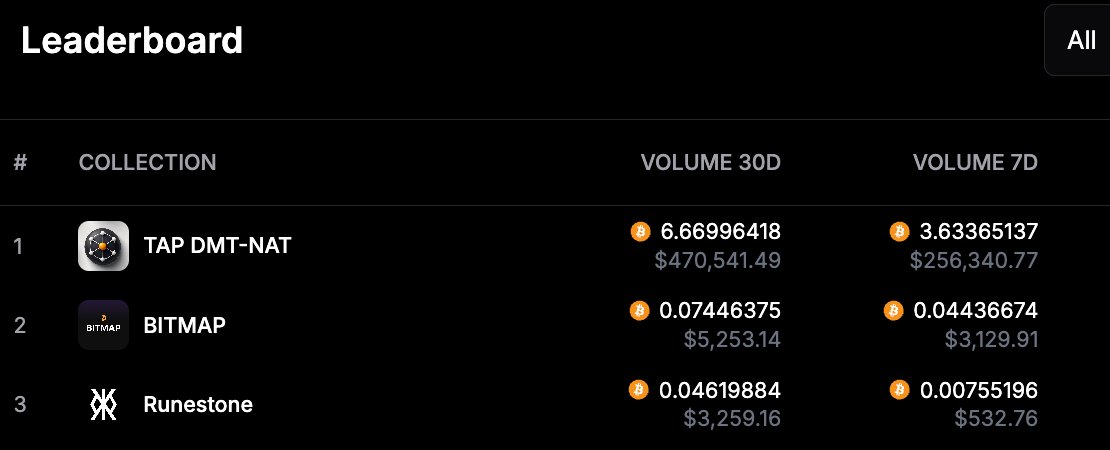
#比特币生态 #BTCEco 最近7日交易量和最近30日交易量,其他所谓的王炸级比特币生态资产的交易量总和还不足 $NAT 交易量的一个零头。@ordinalswallet 靠 $NAT 这个单一资产,就能养活整个平台。 #BTC #NAT
中文
0xKimos ⛏️ retweetledi

中国名校年轻人,对于Crypto,从来没有真正的信仰和认可。
能All In Crypto的,大部分都是:学历不高的普通人,遭遇过很多人生挫折,真的喜欢Crypto,坚信读书确实无用论,坚信努力改变命运,坚信私有财产,坚信去中心化,坚信BTC。
有中文KOL说,现在区块链行业已经不能吸引优秀年轻人了,清华北大的年轻人都去搞AI了,去做金融了,区块链行业有结构性问题。
没什么脑子的人,看问题就是跟普通人一样,肤浅,平庸。
清华北大的年轻人啊,不是说不优秀,而是大部分本身就是风险厌恶者。
你永远记住,名校精英,读书读的特别好的人,他们的自律啊,聪明啊,永远是发挥在——
寻找一条稳定的确定的上升通道
这些人是天然极端厌恶风险的。
这些精致的利己主义者,20年21年梭哈进Crypto,你觉得他们懂什么去中心化,朋克密码,比特币啊?
当然是不懂的,无非是那时候Crypto最火,容易暴富,可以一夜暴富罢了。
所以说,这些人现在转身去搞AI,那不是天经地义的事情吗?
现在是个人都知道AI好,融资多,上限高,确定性极强,这不是跟他妈21年梭哈Crypto,原理是一样一样的啊?
只有傻逼,才说得出名校年轻人不加入Crypto,证明行业没新鲜血液了,行业不行了。
天大的笑话。
Vitalik什么学校毕业的啊?
CZ什么学校毕业的啊?
何一什么学校毕业的啊?
Uni老板什么学校毕业的啊?
要么辍学,要么三流学校毕业的。
AI呢?
全他妈清华北大复旦,哈佛耶鲁麻省理工CMU。
搞AI,不就是做题家内心最认可的,正统路径,高大上路径,又精英又体面,活脱脱当年的科技界投行。
所以我就明说吧:能All In Crypto的,长期很多年,大概率是性格,真的喜欢Crypto,坚信读书确实无用论,坚信私有财产,坚信去中心化,坚信BTC。
你内心不相信这些东西,你看Crypto永远是盲人摸象,太监聊性生活,你永远只是把Crypto当暴富的工具罢了。
中文
0xKimos ⛏️ retweetledi

0xKimos ⛏️ retweetledi

@paoloardoino @Tether,
You already operate massive Bitcoin mining through MiningOS and accumulate billions in BTC treasury holdings.
If you're mining #BTC today, you're already receiving $NAT automatically into your coinbase wallet with every block solved—no added effort, hashrate, or energy required.
$NAT is Bitcoin's organic second subsidy via Digital Matter Theory (DMT): governed purely by math and physics laws, no VCs, no founders—entirely community-driven, just like #BTC itself.
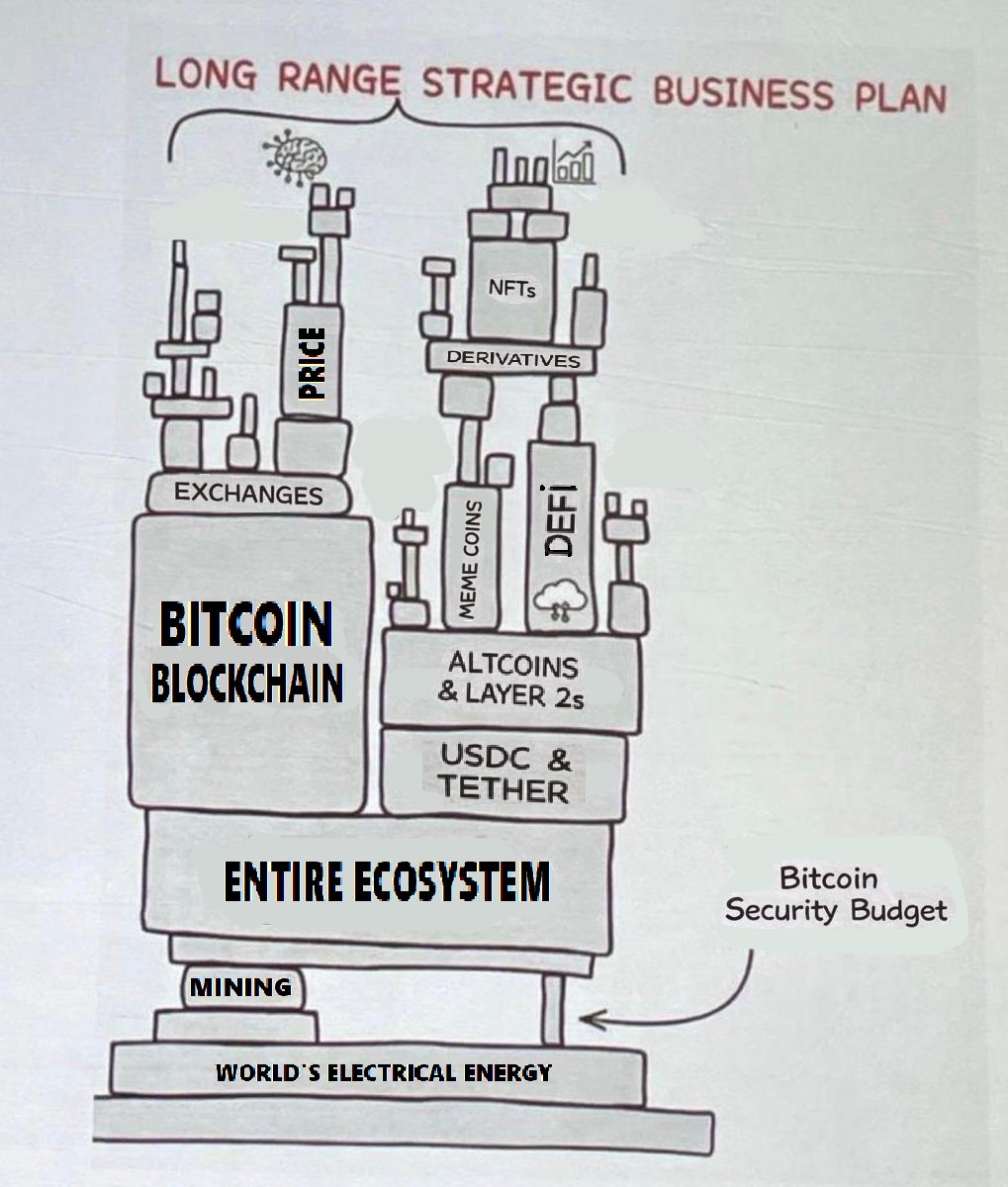
Major miners such as @AntPoolofficial have begun implementing it (with signals from others like @SpiderPool_com/@f2pool), as it secures the #Bitcoin network indefinitely by closing the halving revenue gap.
Launched nearly three years ago, $NAT is live with liquidity pools on $ETH, $SOL, and $BNB chain.
This isn't too early—it's the right time. Imagine overlooking Bitcoin after just three years... what a missed opportunity that would have been.
Time to explore @natgmi, implement/hold/sell strategically $NAT to get revenues, and spread the word.
The math aligns perfectly, and so does the mission of securing and strengthening the $BTC network forever.
#BTC #BitcoinMining #NAT #BNB #ETH #SOL
ᴛʜᴇ ʙʟᴏᴄᴋ ʀᴜɴɴᴇʀ Podcast | 91.bitmap 🟧@TheBlockRunner
Bitcoin's price has to double every 4 years just to maintain today's security level. Can it double forever? We explain why $NAT exists and why miners are already earning it. Full video 👇 Why NAT Is Quietly Climbing To #1 Bitcoin Token Status! Last Crypto To Survive The Winter! @natgmi is back in the spotlight. We break down why the conversation around Bitcoin’s long-term security model is becoming harder to ignore. As we dig into the recent surge in attention around $NAT, why people suddenly care when price action returns, and how that ties into a deeper structural issue inside Bitcoin itself. The discussion starts with the broader state of crypto culture, using the recent @VanityFair feature and @opensea token controversy as examples of how disconnected the industry has become from its original ideals. From delayed token launches to incentive schemes dressed up as community participation, the episode contrasts the speculative side of crypto with the kind of infrastructure-level problems that actually matter. From there, the focus shifts to Bitcoin mining, the halving cycle, and the security budget problem. As we explain why miner revenue is directly tied to Bitcoin’s security, why relying on price appreciation alone becomes less realistic over time, and how AI is now emerging as a serious competitor for the same energy resources miners depend on. We also challenge the common argument that difficulty adjustment solves everything, arguing that network survival is not the same as preserving meaningful security and decentralization. That is where $NAT comes in. NAT is a second subsidy for Bitcoin, born directly from Bitcoin block data, with no team allocation, no VC supply, and no traditional token-launch structure. We explain why miners already receiving NAT may eventually view it as a meaningful economic layer, and why growing miner participation, community-led liquidity, and multi-chain expansion are fueling stronger interest in the token. The conversation also covers NAT’s recent momentum, including signs of miner integration, expanding access across @Ethereum, @Solana, and now @Binance Smart Chain, and how its market position compares to other major Bitcoin-derived tokens. Rather than being driven by pure hype, the argument here is that @natgmi stands out because it is tied to a real problem, a real mechanism, and a part of the crypto stack that everything else ultimately depends on. What comes through most clearly is that this is not just a conversation about another token. It is really a conversation about whether Bitcoin can preserve the thing that gives it value in the first place, and whether the market is willing to look seriously at a solution before the pressure becomes impossible to ignore. The broader view in this episode is that crypto has spent years rewarding narratives, speculation, and short-term extraction, while ignoring foundational questions that may matter much more over the next decade. NAT is presented here as one of the few ideas in the space that feels connected to first principles, and whether people agree or not, it forces a discussion that Bitcoin cannot avoid forever.
English
Believing in Bitcoin as Digital Gold means facing the security budget reality. $NAT offers the most "Bitcoin-native" solution available today. No shifting toward Ethereum models. No forced L2s. No protocol forks. Just $NAT letting Bitcoin be Bitcoin. @luciaq84 @TheBlockRunner
English
0xKimos ⛏️ retweetledi

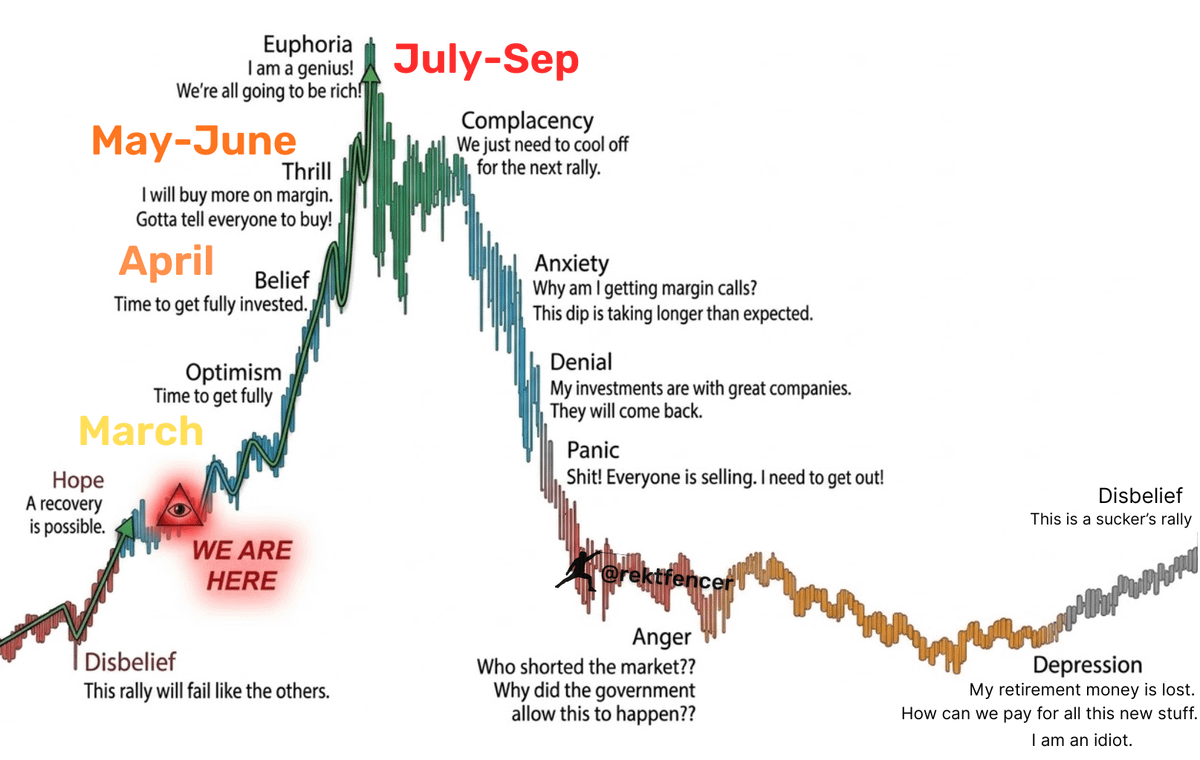
This is exactly how 2026 will play out for crypto:
March: Bottom is in
April: Recovery begins
May-June: BTC and HYPE hit new ATHs
July-September: Alts go 10x to 50x from the bottom
Just don't get shaken out before the best part.
Bookmark this and come back in 6 months.
English
0xKimos ⛏️ retweetledi

2024年底初识NAT,当时并未在意。
2025年年中深入了解后发现,#NAT 已升级为比特币伴生矿,挖比特币区块即可获得 $NAT 奖励,相当于给矿工发额外福利。
兴奋之下,我凌晨3点果断入场。
2026年,我将全力深耕DMT-NAT,持续布道!!!
中文
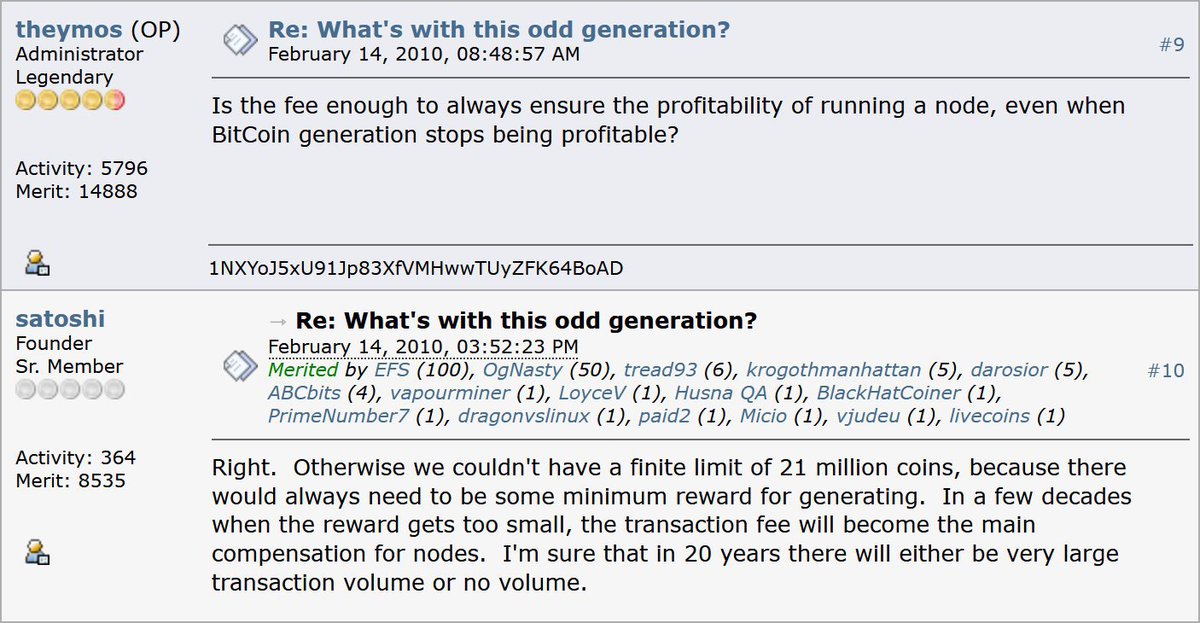
@sevenelon 铭文带来的交易量不足以支持矿工的收入。关注 $nat 这个项目,给矿工第二补贴,这才是解决比特币安全预算最好的方案。Natgmi.com/natpaper
中文


0xKimos ⛏️ retweetledi

@niner0526 @BitcoinFrogs People forget that Bitcoin Frogs once commanded a 0.5 BTC floor and were the #1 Ordinals collection
English

Correct this logic if it is false please.
For NAT to solve the problem it is meant to solve for bitcoin it requires ongoing demand in terms of some sort of utility or value proposition.
In order for it to have this, it basically requires a BITCOINesque scarcity (due to chain data protocols) = value belief to be widespread. BUT... unlike bitcoin, NAT will go on being made forever (by its nature), AND, it requires other networks (TRAC, ICP and Bitcoin itself) to continue its operations.
This makes NATs survival and problem solve success a more difficult problem than creating another BITCOIN, more technically complex than creating another BITCOIN and a has no fundamental way to ensure demand is baked into the protocol (other than scarcity), unlike some sort of proof of stake solution - which gives people at least some sort of requirement to hold.
The NAT solution therefore looks more likely to reward miners until there is no value left in the NAT token and it therefore ceases to be a reward. OR at the very least, it requires some fundamental UTILITY to be developed and sustained, which puts it in the same category as any other utility token in terms of its potential for success.
Genuine query. Not trying to undermine. Trying to understand.
English

$NAT: On Conviction, Bias, and Information Asymmetry
An interesting phenomenon I’ve noticed⬇️
Sometimes, several independent people simultaneously experience a sense of inevitability around an idea’s success, even when there are clear, objective signs of temporary stagnation.
• I see this in the confidence of the TBR guys.
In the clarity and internal logic of their narrative across messages, podcasts, and videos.
• And in today’s post by @rometheminer, where he shares an inner feeling of being ready to dedicate his lifetime to building around $NAT.
• I also see it in the unwavering willingness to keep developing the active part of the $NAT community.
• And in my own internal, logical sense, the idea of an additional financial layer for Bitcoin will eventually be accepted by the cryptoworld.
That made me genuinely curious: why does the mind work this way?
I fully acknowledge the possibility of cognitive biases, confirmation bias, and sunk cost fallacy. It’s important for me to keep a clear head and not turn into a fanatic. That’s exactly why I welcome criticism and objections. I see difficult and uncomfortable questions not only as stress tests for the concept itself, but also as tests for each of us, a way to remain mentally grounded and unbiased.
So where does this confidence and willingness to keep going until the end come from?
➡️Information asymmetry.
Inside the community, information is open. Builders communicate directly with active members. We’re deeply immersed in what’s happening, we’ve repeatedly engaged with counterarguments, and we understand where the $NAT concept is resilient. From this, a sense of inevitability around broader adoption naturally emerges.
Outside the community, the picture is very different. Most crypto participants aren’t nearly as deeply involved. For them, much of this isn’t obvious. This gap in perception creates a paradox that even shows up in market cap metrics.
➡️Self-fulfilling prophecy.
Conviction drives action, and action shapes outcomes. This becomes especially visible during difficult phases of a project. When a few key individuals keep moving forward based on what they believe, it builds confidence in everyone else. Efforts become parallelised, execution points multiply, and a constant pressure on results emerges. We’ve already seen this pattern in the $NAT community more than once.
I looked at how this played out in Bitcoin’s early days, and the behavioural patterns feel remarkably similar. Satoshi, Hal Finney, and the earliest miners also felt a sense of inevitability because they saw the code and the economics, while the rest of the world ignored it. What followed, you already know.
And please don’t take this as empty motivational talk. We don’t need that.
Stay focused. Do your own DYOR.
This was simply an attempt to honestly understand my own perception of what’s happening.
English