
Krebit (🆔,💙)

1.4K posts

Krebit (🆔,💙) banner
Krebit (🆔,💙)

Krebit (🆔,💙)

@KrebitID

🆔💙own your #reputation, earn with your #talent💸💼, keep your #privacy

Proof your skills now ➡️ Katılım Mart 2021
288 Takip Edilen1.9K Takipçiler
Sabitlenmiş Tweet
Krebit (🆔,💙)
Krebit (🆔,💙)@KrebitID·
🤖🔥This is John Connor. If you are reading this message, you are the Resistance. 🦾🔥 Krebit's #Web3 credentials provide a solution for trust, verification, and quality issues in a world where synthetic content and labor displacement are rampant! 💪🏼💻 #FutureOfWork
English
3
1
4
1K
Isabel Foxen Duke⚡️
Isabel Foxen Duke⚡️@isabelfoxenduke·
The “programmable runes” team has been made aware of a number of scams falsely claiming to be the team in question. For the sake of consumer protection, the team has decided to dox its creator - @judoflexchop - going forward all announcements related to this subprotocol will come exclusively from their account. Btw this protocol has been named PROTO-RUNES by its creator.
English
24
26
121
30.2K
Krebit (🆔,💙) retweetledi
Vault Layer
Vault Layer@VaultLayer·
Today, UX is fragmented across #Bitcoin DeFi💔. There are a hundred new Layer2s announced every day, and too many wallets and bridge steps just to get started.😫 🚀 Introducing VaultLayer's first feature: 1-click bridge & earn on Bitcoin Layer2s!
English
4
7
21
2.7K
Krebit (🆔,💙) retweetledi
francesco 🏰
francesco 🏰@francescoweb3·
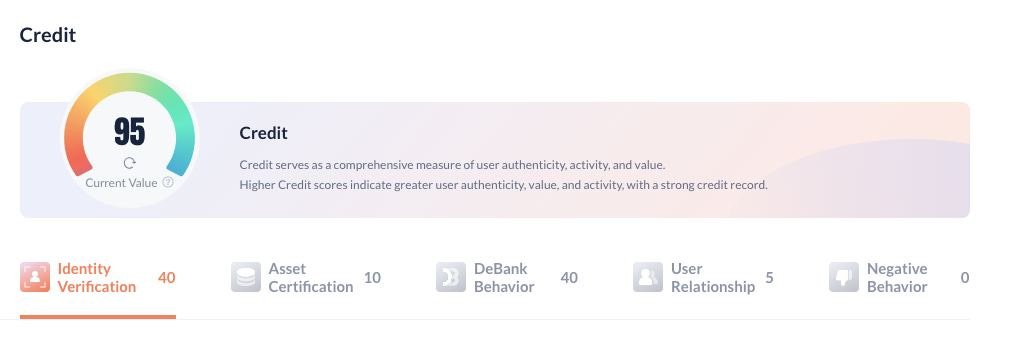
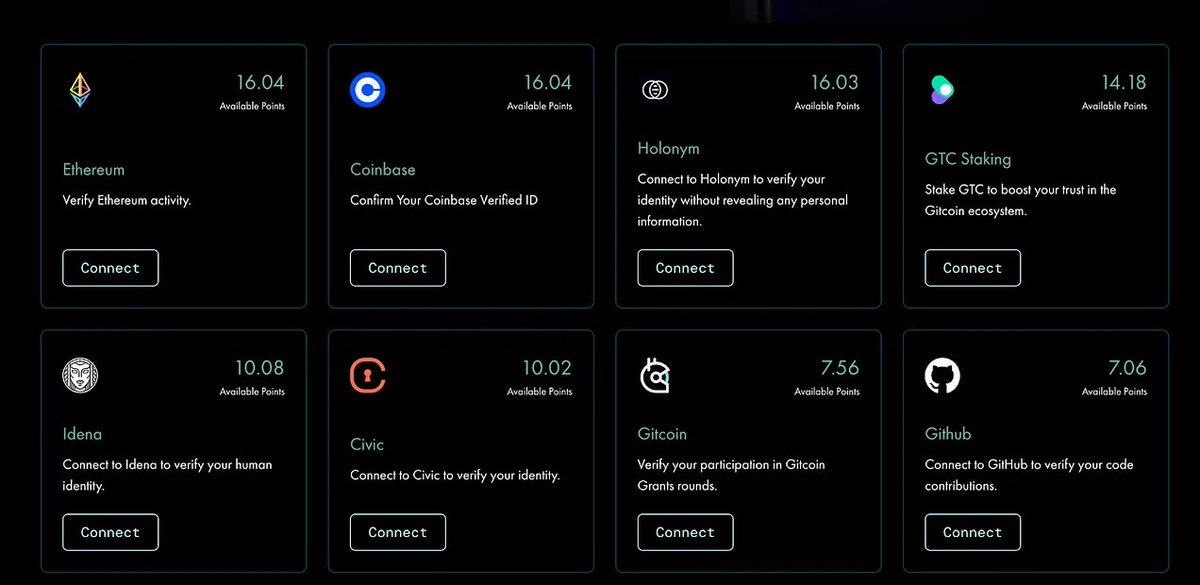
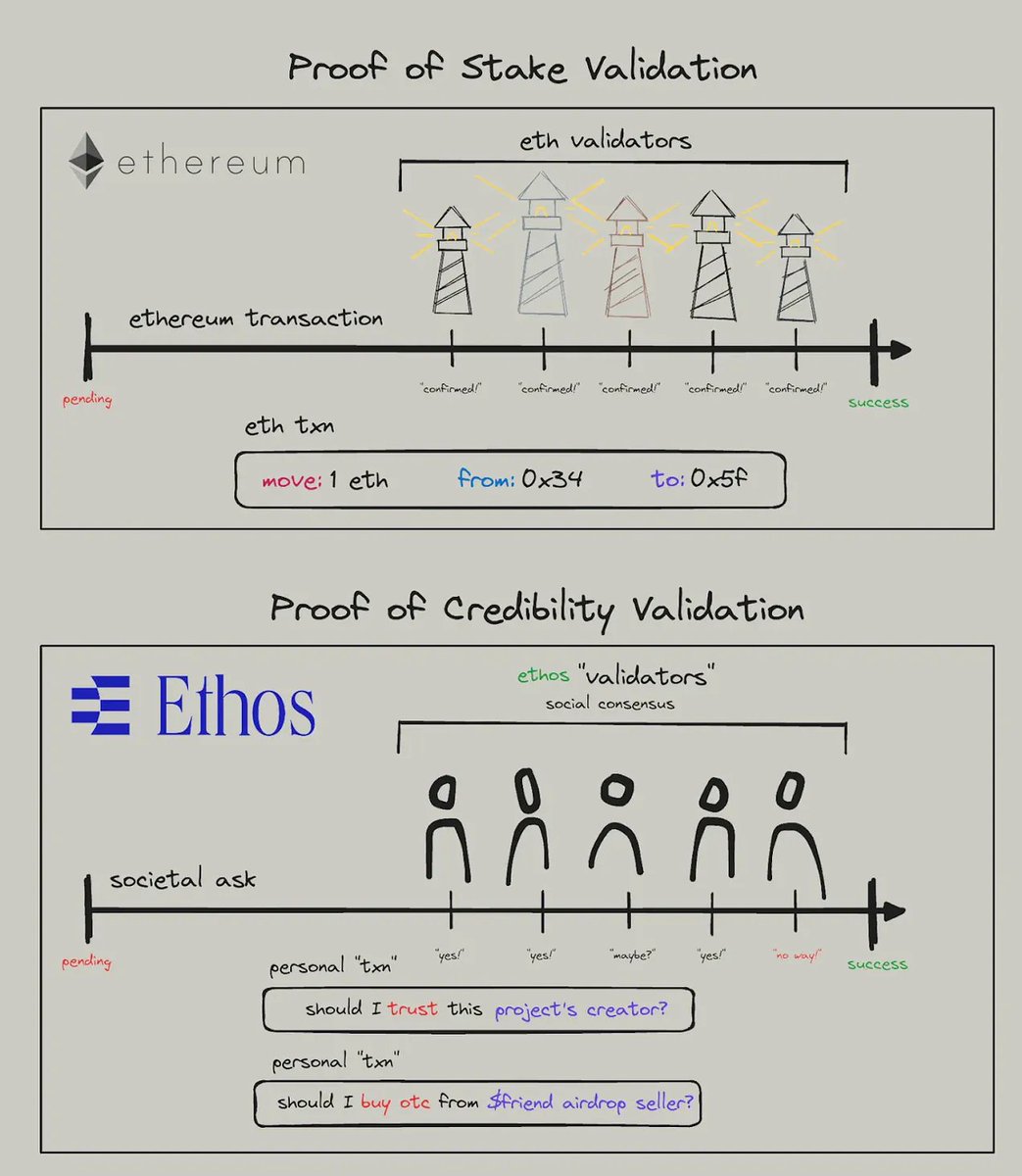
The Importance of On-chain Reputation in a World of Rugs, Celebrity Tokens, and KOLs Dumping 🏆 ​ This piece introduces the concept of on-chain reputation and its importance, focusing on projects working on it, such as Debank and Ethos Network. On-Chain Reputation ⛓️ ​ A lot has been said over the years about on-chain reputation. ​ Since 2017, projects have tried to solve this dilemma and empower on-chain users to leverage a reputation layer to know who they are dealing with. ​ Nowadays, this seems more important than ever, with all the rugs, SocialFi, and celebrities launching shitcoins left and right. ​ On-chain reputation answers a simple question: How do we assess the trustworthiness of the people we interact with in a decentralized system? ​ In centralized systems, third parties often ensure this reputation (e.g., a credit score, the Interpol red list, a bank account). ​ Is there a way to replicate reputation assurance in a distributed system? ​ These efforts go beyond single protocols, trying to innovate in the space. To be applicable, this reputation system has to create a unique set of standards that can be identified across Web2 and Web3 platforms, establishing a common cross-chain framework for on-chain reputation. ​ Anything short of being a new standard would make this process useless. ​ According to A16Z: “to mainstream decentralized identity, we must first establish systems that map people’s relevant off-chain experiences and affiliations on-chain”, then “we must build mechanisms to standardize, process, and prioritize the influx of data that will be added on-chain” and “solve endemic challenges to decentralized identity, including the lack of context around on-chain records and issues around gaining access to the decentralized web”. ​ Currently, even block explorers record very basic inputs for transactions. Without additional context mapping and assigning transactions a reputational score will be much harder. ​ For instance, receiving a token as part of a swap should have a different weight than doing so because of extraordinary community contributions to that project. ​ Furthermore, in crypto, reputation takes various forms, such as protocol trust, lending and borrowing credit scores, and project founders’ track records. ​ Only once all of this is taken into account will this system be applicable to many use cases, factoring on-chain reputation into “offline activities” based on the “openly queryable nature of decentralized identities.” ​ To achieve truly on-chain reputation, there are three core steps: • Record data on chain • Map and interpret it • Translation into “reputational score” ​ A Truly Standardized Reputation 🌐 In their Request for Builders, the @Base team outlines how they see on-chain reputation as fundamental to its success. They compare “on-chain” as the next “online,” with reputation playing a massive role in each on-chain account. ​ Within this context, “reputation protocols” could create more trust on-chain. They postulate this could look something like a FICO (the most recognizable credit score name) or a Google Page Rank score. ​ Wallets could implement these standards as a fraud prevention mechanism, with warnings about risky addresses. We’ve seen how @Rabby_io has pioneered the introduction of warnings about new contracts or scammy tokens. ​ Others who have introduced some reputational measures include blockchain analytics companies like Chainalysis based on on-chain behavior and @DeBankDeFi, with the creation of the DeBank Credit score. The credit score is “a comprehensive measure of user authenticity, activity, and value.” A higher score means more activity and user authenticity, but in its current state, DeBank Credit does not stand as a proxy for reputation. Furthermore, we can also observe how much weight is given to formal identity verification, which remains a controversial topic within crypto. A successful example of a reputational mechanism is the @Gitcoin Passport. ​ Gitcoin Passport can be described as an “identity verification aggregator application.” ​ Just like a normal passport, users can collect stamps by verifying previous activity or carrying out tasks and verification from different Web2 and Web3 authenticators: • @0xHolonym (KYC) • @Civickey (Biometrics) • Google and LinkedIn (Web2) • @Guildxyz and @SnapshotLabs (web3) These stamps increase the Default Humanity Score, a proxy for your trustworthiness to web3 projects, assigned to each user. A higher Humanity Score gives access to more opportunities, and a minimum of 20 is required to be considered a human. ​ Here’s an example of the stamps that can be collected: The great thing about Passport is that it preserves user privacy, using a zero-knowledge methodology where “a verifiable credential is created that proves that the user has performed the specific activity, but none of the personally identifiable information is collected.” Another interesting attempt to create a “proof of verifiable validation” is being carried out by the @Ethos_Network. ​ Ethos is developing a “credibility platform” integrated within the broader ecosystem and not limited to a single dApp. This platform could be incorporated into existing interfaces (Chrome plugins, Metamask snaps) and dApps. The blueprint of this new social consensus is similar to the proof of stake, with users acting as “social validators.” • Users can stake in people, showing they trust them • Bad actors can be slashed • Providers of social consensus can be rewarded ​ Ethos introduces financial rewards and penalties, ensuring that: • Reputation is protected by financial security, and it becomes expensive to fake a reputation • Reputation is valuable • It’s easier to observe social interactions At the same time, it is essential to strike a balance and ensure that reputation cannot simply be bought. ​ On Ethos Network, users will be able to: • Review: to develop a reputation beyond providing financial stakes • Vouch: Like staking, users can voice their ETH to others and earn staked ETH yield. The person you vouched for will get 10% of that yield to incentivize validators and referrals. • Slash: If validators act in bad faith, those who have vouched ETH to them can propose a slashing, removing up to 10% of the offender's staked ETH from the Ethos contract. Those who propose a rejected slashing will be penalized. • Attest: reflecting authority, reputation, and influence from other sources ​ All of these mechanisms will be translated into a single Credibility Score. ​ While less focused on on-chain reputation as such, other notable mentions in this sector are: ​ • @Worldcoin: this VC-run behemoth promises to scan your iris and airdrop some WLD tokens for the inconvenience. ​ Whether their purpose is noble or utopian is open to discussion. Nonetheless, they bring about proof of humanity thanks to the biometric scans of users' iris. While this opens up new avenues for risk, it is an exciting experiment. ​ • @ENSdomains: translating crypto addresses into human-readable names facilitating “on-chain messaging” ​ A Long Road Ahead 🏃 Developing a truly standardized and generalized on-chain reputation system will be a long and dark road, and several challenges will arise. ​ • Centralized Solutions: The main one is to ensure that all these systems are truly decentralized and not controlled by a centralized party, as in the case of Worldcoin or even Gitcoin Passport. ​ How can we achieve an on-chain reputation in a decentralized manner? Anything less will make the whole system lose its trustless element. ​ • Crypto reputation can be gamed/Purchased • Must be privacy-preserving • Must go beyond single-wallet attachments and be generally applicable ​ This implementation will be a combined effort by all actors, wallets, block explorers, dApps, and networks. ​ The vision using practical use cases What’s the final vision for on-chain reputation? ​ Here are some examples and practical situations where on-chain identity could help. ​ • Open CVs: Anyone can assess the reputation of other participants by assigning a single reputational score to each user. Furthermore, every article written, contribution, or community engagement will be recorded and could be used as proof of reputation. ​ • Celebs launching Tokens: with celebrity tokens being the new meta, the data from these launches could be used to determine a trust profile for each celebrity. We have seen how many of them have run serial scams. This could be partially solved by having a quick risk assessment for them, which could show users how to be careful with these tokens. ​ • Meme developers: It’s peak time for meme developers. However, many abuse this power to run pump-and-dump and even outright scams. We’ve seen several figures acting as serial meme developers, continually running scams. Identifying the deployer of a token as a previous scammer is of great utility for users as it allows them to run their risk assessments with more knowledge. ​ • KOL dumping: One of Crypto Twitter's staples is KOLs shilling their bags while dumping on their followers. Imagine if you could have a reputational ranking of your favorite KOLs or just know who’s an outright dumper and liar. ​ • Loyalty Programs: Developing an on-chain reputation system would give dApps much deeper information on user interactions, creating custom programs focusing on rewarding high-quality interactions that are highly valuable to the protocols. ​ Additional Existing Reputation Tools Aside from the ones mentioned, there’s already a variety of tools contributing to trust and accountability. ​ 🌐 Reputation Building and Tracking • @collabland: an NFT-gated bot that verifies ownership • @karmahq_: visibility in DAO contributions • @NeonPantheonNFT: tracks DAO member reputation ​ 👤 Reputation and ID Verification • @pentaclexyz: helps users navigate protocols • @OntologyNetwork: identify framework for decentralized identifiers and verifiable credentials • @KrebitID: users can prove their identity without revealing it, preserving privacy • @OrangeProtocol: multi-chain reputation systems as verifiable credentials ​ ⚖️ Reputation and Governance • @Metopia_xyz: reputation system for governance • @AstralyXYZ: on-chain reputation and reputation-based token-distribution platform ​ Tagging friends who could be interested in the future of on-chain reputation ⬇️ 🙏​ @poopmandefi @DeFi_Cheetah @0xTindorr @wajahat @DeFiMinty @jake_pahor @0xsurferboy @CryptoShiro_ @hmalviya9 @DefiIgnas @DeFi_Made_Here @MaxLongCEO @chilla_ct @DefiMoon @Slappjakke @CryptoKoryo @LouisCooper_ @0xSisyphus @milesdeutscher @Route2FI @thedailydegenhq @Hercules_Defi
francesco 🏰 tweet mediafrancesco 🏰 tweet mediafrancesco 🏰 tweet mediafrancesco 🏰 tweet media
English
3
8
37
3.9K
Krebit (🆔,💙) retweetledi
Privado ID (formerly Polygon ID)
👤 Understanding eIDAS 2.0: Your Digital Identity in the European Union 🌐 🔒 eIDAS has been regulating digital identity since 2016. With the arrival of eIDAS 2.0, the European Union is redefining how we interact digitally with our identity! But what does this mean for you?👇 Key Objectives of eIDAS 2.0🎯: 1️⃣ Cross-Border Interoperability: our digital identities recognized across the EU. 2️⃣ Consumer Trust: Establishing a solid legal framework for secure identity transactions. 3️⃣ Enhanced Efficiency: Streamlining digital transactions for everyone. 4️⃣ Supporting Digitalization: Supporting a seamless digital market, both in public and private sectors. What's New in eIDAS 2.0: 📱 European Digital Identity Wallets (EUDI-Wallets): Your identity and personal data, all in your smartphone. 🗂️ Personal Identification Data (PID): Digital ID cards at your fingertips, along with other digital credentials. 🔏 Qualified Electronic Attestations (QEAs): For uncomplicated digital identification and authentication. ✅ Mandatory Acceptance: The public sector and certain private sectors must accept EUDI-Wallets. eIDAS 2.0 initiative will change the way we live, work, and interact in the digital EU! Are you ready to fix your digital identity? 🆔
Privado ID (formerly Polygon ID) tweet media
English
2
10
32
3.3K
Krebit (🆔,💙) retweetledi
FLock.io
FLock.io@flock_io·
That's why we need Decentralised AI
Elon Musk@elonmusk

@farzyness Governments will attempt to seize power over AGI, which may be worse. But it is increasingly coming down to a choice of what company do you trust most to develop AGI.

English
0
1
5
3.9K
Krebit (🆔,💙) retweetledi
Carlit0
Carlit0@chrlslev·
We've been working so hard for this with @ceramicnetwork! We expand Orbis to new use cases while offering a competitive solution vs centralized DB. Open data will be the next revolution after open source! 🚀
Orbis@orbisdb

Two years ago we launched Orbis because web3 needed accessible decentralized social infrastructure. But something was still missing. So we built it 💪 ⚡️𝗜𝗻𝘁𝗿𝗼𝗱𝘂𝗰𝗶𝗻𝗴 𝗢𝗿𝗯𝗶𝘀𝗗𝗕: a practical, scalable solution for storing and managing open data.

English
1
9
19
1.5K
Krebit (🆔,💙) retweetledi
Orbis
Orbis@orbisdb·
Two years ago we launched Orbis because web3 needed accessible decentralized social infrastructure. But something was still missing. So we built it 💪 ⚡️𝗜𝗻𝘁𝗿𝗼𝗱𝘂𝗰𝗶𝗻𝗴 𝗢𝗿𝗯𝗶𝘀𝗗𝗕: a practical, scalable solution for storing and managing open data.
English
17
27
107
29.9K
Krebit (🆔,💙)
Krebit (🆔,💙)@KrebitID·
The POTUS AI Executive Order is taking steps "to mitigate privacy risks potentially exacerbated by AI — including by AI’s facilitation of the collection or use of information about individuals, or the making of inferences about individuals" whitehouse.gov/briefing-room/…
English
1
0
0
220
Krebit (🆔,💙) retweetledi
Orbis
Orbis@orbisdb·
Orbis isn't an app. Orbis is an 𝐞𝐜𝐨𝐬𝐲𝐬𝐭𝐞𝐦. 🌏 Orbis provides a powerful infrastructure for a network of interconnected social experiences. This is Orbis:
Orbis tweet media
English
8
22
63
13.2K
Krebit (🆔,💙) retweetledi
Orange Protocol
Orange Protocol@OrangeProtocol·
🚀 Web3 Reputation Systems: Building Trust 🔍 Reputation systems build trust in Web3 by tracking and verifying user activity, rewarding good behavior 👍. 🌐 Check out popular tools for building and tracking reputation in Web3. 1/ 🧵👇
English
1
4
6
513
Krebit (🆔,💙) retweetledi
US3R Network
US3R Network@getus3r·
@ceramicnetwork is probably the only ground breaking protocol in composable & interoperable data that give us the promised of building dapps that could rival web2 UIUX! Super pumped for the future with more in depth collaboration and partnership for building the Dataverse!
English
30
2.9K
2.5K
80.2K
RYAN SΞAN ADAMS - rsa.eth 🦄
If you hate worldcoin then build something better. Cause the alternative right now is AML/KYC.
English
360
46
596
270K
Bankless
Bankless@Bankless·
👁️ Worldcoin is now LIVE 👁️ Creators Sam Altman (@sama) & Alex Blania (@alexblania)'s experiment in crypto-enabled universal basic income just launched What is it? Is it safe to scan my eyeball? What's the token distribution? We spoke w/ @worldnetwork's creators to find out 👇
Bankless tweet media
English
47
41
255
145.9K