NewsMän

133.3K posts

NewsMän

NewsMän

@KueddeR

Schweiz Katılım Şubat 2011
5.1K Takip Edilen4K Takipçiler
NewsMän retweetledi
Molly Jong-Fast
Molly Jong-Fast@MollyJongFast·
HahahahhahahahahahahahhahHahahahHahhahahahahahHahhahahahHhHahabahHahanHanahjHahahahanahahahjahahhahahahhahahahahhahahahanahahahahahahahahahahahahahahahahahahahahahahahahahahahahahha
Aaron Rupar@atrupar

Bezos on Trump: "I think he's a more mature, more disciplined version of himself than he was in his first term. Trump has lots of good ideas. He's been right about a lot of things. You have to give him credit where credit is due."

Filipino

850
2.8K
20.4K
685.7K
NewsMän retweetledi
The New York Times
The New York Times@nytimes·
Breaking News: James Murdoch is buying New York magazine, Vox Media’s podcast network and the Vox website for more than $300 million, a dramatic expansion in U.S. media for the younger son of the media mogul Rupert Murdoch. nyti.ms/4fxHkF6
English
156
798
2K
1.7M
NewsMän retweetledi
The New York Times
The New York Times@nytimes·
Breaking News: Steven Rosenbaum, the author of “The Future of Truth,” acknowledged that the nonfiction book about the effects of A.I. on truth included misattributed or fake quotes concocted by A.I. nyti.ms/4wE8ssc
English
70
298
912
429.9K
NewsMän retweetledi
Jesús Fernández-Villaverde
Jesús Fernández-Villaverde@JesusFerna7026·
Smartphones are not the explanation for the recent decline in fertility. Instead, they are an accelerator of deeper forces already at work. Let’s start with the facts. Fertility is falling almost everywhere: in rich, middle-income, and poor countries; in secular and religious countries; and in countries with high and low levels of gender equality. The decline accelerated around 2014. So, no country-specific explanation will work unless you are willing to believe that 200 distinct country-specific explanations arrived at roughly the same time. Smartphones look like the obvious candidate: the first iPhone was released in 2007, and global adoption has been astonishingly fast. Economists understand the first major decline in fertility in advanced economies, from 6 or 7 children per woman throughout most of human history to about 1.8, that occurred between the early 1800s and roughly 1970, well before smartphones. The main drivers were a sharp fall in child mortality (effective fertility was rarely above 3 and often close to 2) and the shift from a low-skill, rural agrarian economy to a high-skill, urban industrial one. We have quantitative models that fit these facts well. Country-specific factors mattered too, of course. Proximity to low-fertility neighbors accelerated Hungary’s decline, while fragmented landowning structures accelerated France’s. But these were second-order mechanisms. This is also why most economists long considered Paul Ehrlich’s doom scenarios implausible. We forecast that fertility in middle- and low-income economies would follow the same path as in the rich, probably faster, because reductions in child mortality reached India or Africa at lower income levels (medical technology is nearly universal, and most gains come from handwashing and cheap antibiotics, not Mayo Clinic-level care). Much of what we see in Africa or parts of Latin America today is still that old story. But in the 1980s, a new pattern appeared. Japan and Italy fell below 1.8, the level we had thought was the new floor. By 1990, Japan was at 1.54 and Italy at 1.36. This second fertility decline began in Japan and Italy earlier than elsewhere, driven by country-specific factors, but the underlying dynamics were widespread: secularization, an education arms race, expensive housing, the dissolution of old social networks, and the shift to a service economy in which women’s bargaining power within the household is higher. The U.S. lagged because secularization came later, suburban housing remained relatively cheap, and African American fertility was still high. U.S. demographic patterns are exceptional and skew how academics (most of whom are in the U.S.) and the New York Times see the world. My best guess is that, without smartphones, Italy’s 2025 fertility rate would be about 1.24 rather than 1.14. I doubt anyone will document an effect larger than 0.1-0.2. Italy was at 1.19 in 1995, not far from today’s 1.14. The TFR is cyclical due to tempo effects, so I do not read too much into the rise between 1995 and 2007 or the decline from 1.27 in 2019 to 1.14 today. The direct effect of smartphones is not zero, but it is not, by itself, that large. Where social media, in general, and smartphones, in particular, matter is in the diffusion of social norms. What would have taken 25 years now happens in 10. Social media are not the cause of fertility decline; modernity is. But they are a very fast accelerator. That is why social media are a major part of the story behind Guatemala (yes, Guatemala) going from 3.8 children per woman in 2005 to 1.9 in 2025. Without them, Guatemala would also have reached 1.9, just 20 years later. Modernity, in its current form, is incompatible with replacement-level fertility. By modernity, I do not mean capitalism: fertility fell earlier and faster in socialist economies than in market economies. Socialist Hungary fell below replacement in 1960, and socialist Czechoslovakia in 1966 (both experienced small, short-lived baby booms in the mid-1970s). By modernity, I mean a society organized around rational, large-scale systems and formalized knowledge. Countries will not converge to the same fertility rate. East Asia is likely stuck near 1, possibly below, given its unbalanced gender norms and toxic education systems. Latin America faces the same gender problem plus weak growth prospects, so I expect something around 1.2. Northern Europe has more egalitarian family structures and might hold near 1.5. The very religious societies are probably the only ones that will sustain 1.8. All of this could change with AI or changes in population composition. We will see. But on the current evidence, deep sub-replacement fertility is the “new new normal.” Unless we reorganize our societies, better learn to handle it as best we can.
Jesús Fernández-Villaverde tweet media
English
220
911
3.7K
883.2K
NewsMän retweetledi
Nick Kapur
Nick Kapur@nick_kapur·
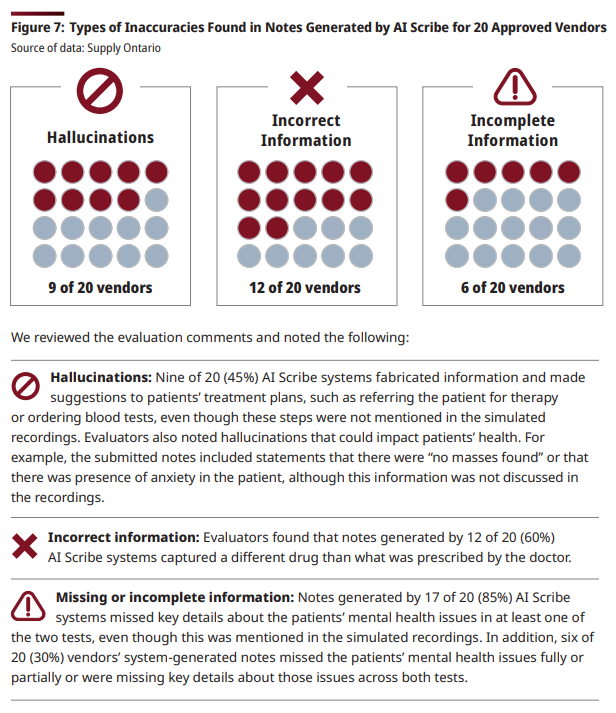
An auditor for the Ontario, Canada government found that AI agents tasked with turning doctor/patient conversations into structured notes routinely hallucinated false treatments, replaced drug names with entirely different drugs, and missed crucial information
Nick Kapur tweet media
English
125
2.7K
10.5K
561.6K
NewsMän retweetledi
Ken Bensinger
Ken Bensinger@kenbensinger·
Paid influence is increasingly rampant. I found out that: Tom Steyer paid TikTok star Carlos Espina $100K to endorse his campaign Jessica Reed Kraus was paid to attack an NYT reporter on X Dom Lucre was paid as much as $15K to support Trump's BBB nytimes.com/2026/05/16/bus…
English
19
187
412
170.1K
NewsMän retweetledi
Josh Wingrove
Josh Wingrove@josh_wingrove·
(Bloomberg) -- President Donald Trump’s latest financial disclosures show that he or his investment advisers made more than 3,700 trades in the first quarter, a flurry totaling tens of millions of dollars and involving major companies that have dealings with his administration.
English
33
243
471
56K
NewsMän
NewsMän@KueddeR·
@MauricioHunt2 @Outlook I'm having the same problem. Four emails I sent to Hotmail in the last few hours were bounced back.
English
0
0
0
19
NewsMän retweetledi
Press Gazette
Press Gazette@pressgazette·
Condé Nast CEO says company now plans “as if search is zero” after years of Google updates and AI Overviews reduced publisher traffic, adding that search is expected to account for “single-digit percentage” of visits searchengineland.com/conde-nast-sea…
English
5
14
45
5.6K
NewsMän retweetledi
Maggie Harrison Dupré
Maggie Harrison Dupré@mags_h11·
NEW: The NYT sent an email to freelancers today forbidding contributors from submitting "any material for publication that contains content generated, modified or enhanced" by generative AI. The "reminder" follows a string of AI incidents at the paper: futurism.com/artificial-int…
English
55
1K
3K
547.3K
NewsMän retweetledi
Aric Toler
Aric Toler@AricToler·
The Silence That Meets the Rape of Palestinians Male and female Palestinians describe brutal sexual abuse at the hands of Israel’s prison guards, soldiers, settlers and interrogators. Free gift link: nytimes.com/2026/05/11/opi…
English
2
11
25
3.9K
NewsMän retweetledi
Infosperber
Infosperber@infosperber·
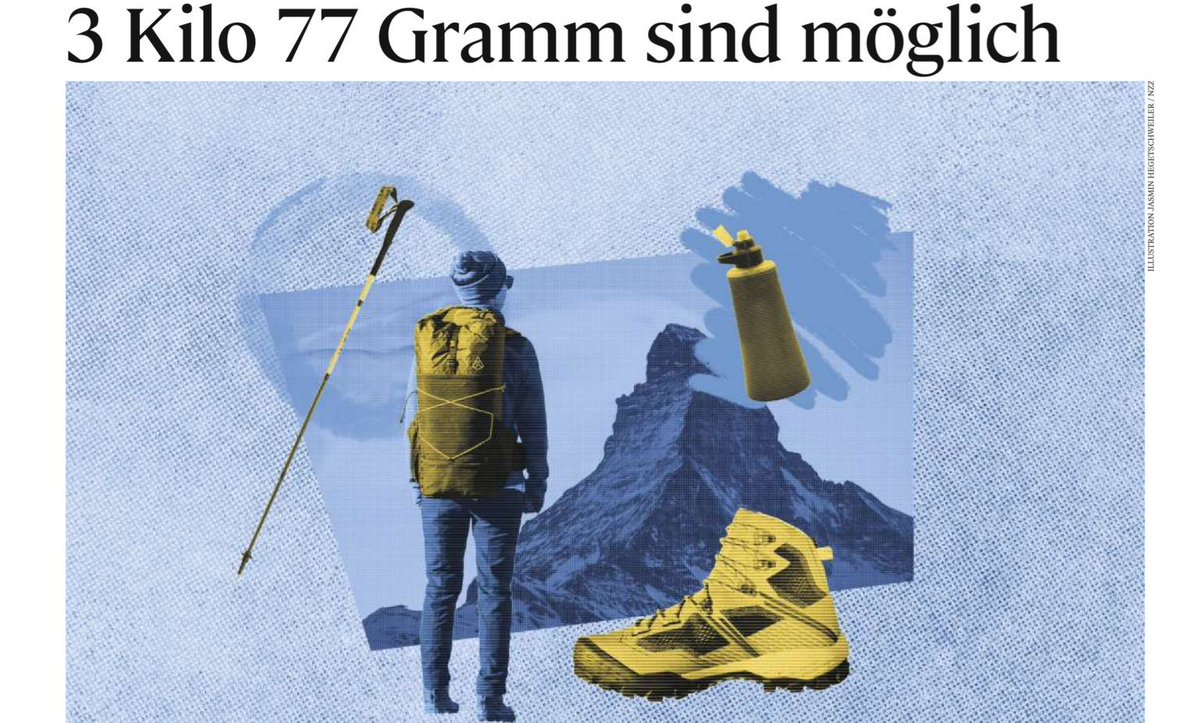
Die «NZZ am Sonntag» macht Werbung im redaktionellen Teil. Die «NZZaS» versucht's mit Werbung. Doch so lassen sich die Abonnenten auch nicht halten. Bild: © Bildschirmfoto nzz.ch infosperber.ch/medien/die-nzz…
Infosperber tweet media
Deutsch
1
4
2
576
NewsMän retweetledi
Spetsnaℤ 007 🇷🇺
Spetsnaℤ 007 🇷🇺@Alex_Oloyede2·
🇭🇺 No, this is not AI, this is the newly inaugurated government of Hungary. The first thing they did was raise the EU flag over the Hungarian Parliament.
English
3K
2.6K
16.5K
2.6M
NewsMän retweetledi
Infosperber
Infosperber@infosperber·
Zeitungsleser kommentieren – und die KI entscheidet weitgehend, was davon veröffentlicht wird und was nicht. Warum KI bestimmte Kommentare löscht, bleibt ihr Geheimnis. So ist das bei Tamedia. Auch andere grosse Verlage benützen KI zum Filtern von Leserkommentaren. infosperber.ch/medien/tamedia… Bildquelle: © Depositphotos
Infosperber tweet media
Deutsch
1
4
2
414
NewsMän retweetledi
Clash Report
Clash Report@clashreport·
The popularity of Javier Milei in Argentina has dropped sharply. A recent survey shows that about 60% of people disapprove of his government, while only around 33% approve. Many people are struggling financially—over 80% say they have reduced their spending, and most say their salary only lasts until about the 20th of the month. Source: BioBioChile
Clash Report tweet media
English
78
168
769
54.9K
NewsMän retweetledi
Ken Klippenstein
Ken Klippenstein@kenklippenstein·
To figure out why Cole Allen did what he did, I obtained a copy of his resume and talked to his former friends. The portrait that emerges is unlike what the White House is saying: kenklippenstein.com/p/assassin-was…
English
1.3K
2.3K
9K
2.1M
NewsMän retweetledi
FactPost
FactPost@factpostnews·
Harry Enten: Trump’s economic approval rating is not just the lowest at this point in either of his presidencies. But he also has the worst net-approval rating at this point in any term for any president. Donald Trump is making the type of history that no president likes to make.
English
50
559
1.7K
110.8K
NewsMän retweetledi
Julian Röpcke🇺🇦
Julian Röpcke🇺🇦@JulianRoepcke·
Beeindruckende Doppelfolge @ronzheimer mit @bopanc zur Sprengung von #NordStream durch den ukrainischen Geheimdienst. Genauso glaubwürdig wie seine Aussagen und Analysen, dass Russland seit 2014 die Ukraine attackiert und, dass die russische Armee im März 2022 mit der Eroberung von Kyjiw gescheitert ist. Alles im dreistündigen Podcast zu hören, der tiefe Einblicke in den gesamten Konflikt und die Arbeitsweise der ukrainischen Dienste gibt. Absolute Hörempfehlung⤵️ podcasts.apple.com/de/podcast/ron…
Deutsch
30
38
285
29.8K