Nicolas Bernard@Nicolas_itl
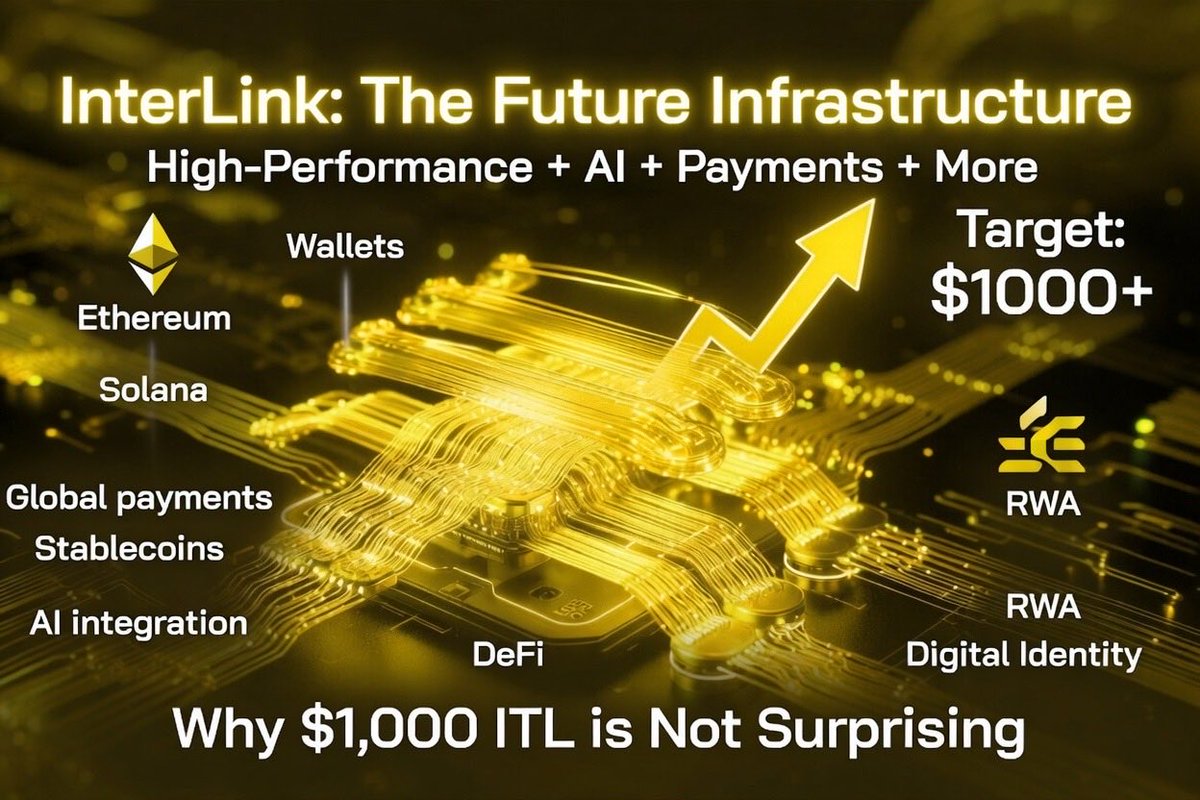
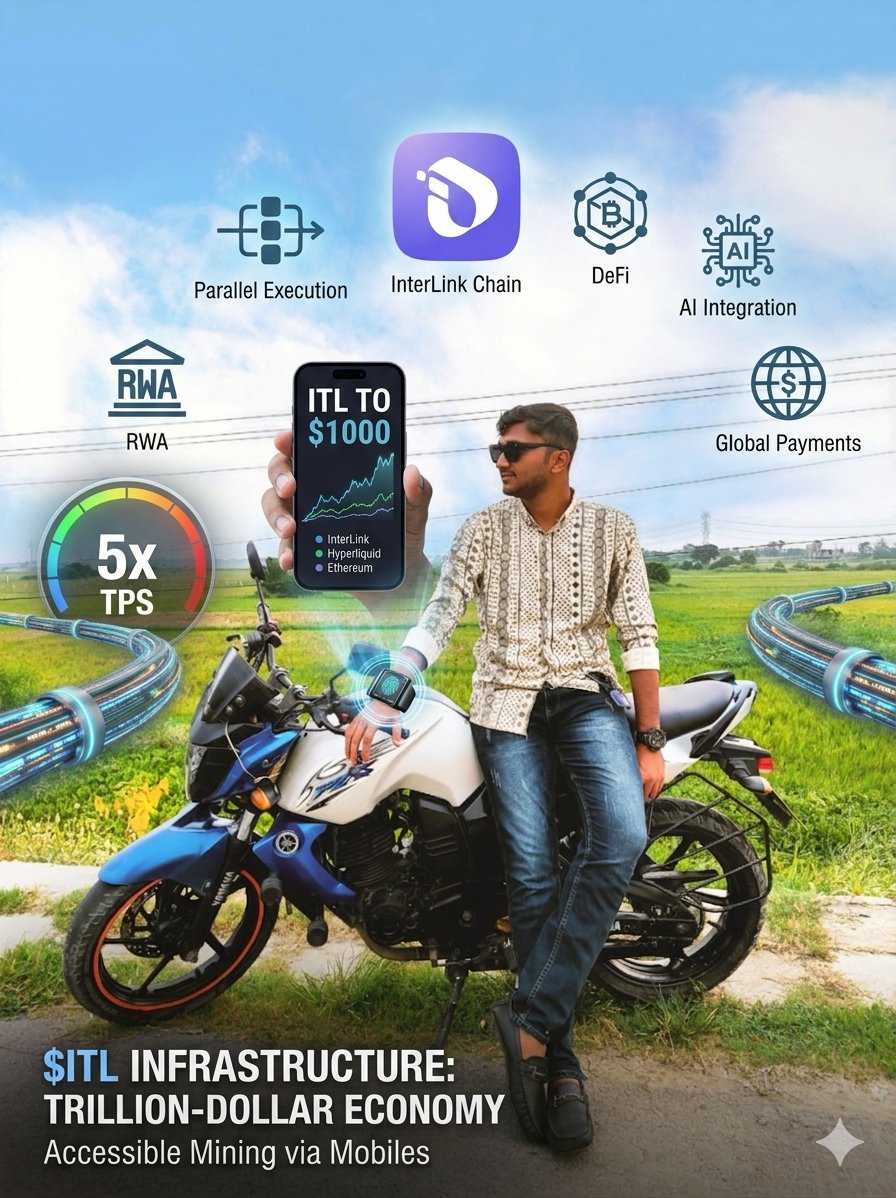
Why would ITL reaching $1,000 not be surprising at all?
Because people are still comparing InterLink to ordinary blockchain projects instead of understanding what is actually being built behind the scenes.
Hyperliquid reached around $60 mainly from trading infrastructure and exchange ecosystem growth, while ITLX is aiming toward a much larger vision combining wallet infrastructure, liquidity routing, payments, stablecoin settlement, and potentially global payment rails.
Ethereum still maintains a multi-thousand dollar valuation because it became the core infrastructure layer for smart contracts and DeFi. Meanwhile, InterLink Chain is targeting significantly faster execution, lower fees, higher scalability, parallel transaction execution, and much faster finality.
The most important thing is that InterLink is not trying to compete in only one category. Most crypto projects dominate one narrative only. Some dominate payments, some dominate DeFi, some dominate AI, and some dominate scalability.
InterLink is attempting to combine all of the strongest narratives together into one ecosystem including high-performance blockchain infrastructure, AI integration, digital identity, compliant finance, RWA infrastructure, payments, DeFi, and global-scale onboarding.
People still underestimate how important infrastructure is. The recent upgrade from sequential execution to parallel transaction execution alone is already the same direction used by some of the most advanced blockchain systems in the world because parallelization fundamentally changes scalability.
A 5x TPS increase combined with much lower finality time changes the entire future capability of the chain. Suddenly global payments become realistic, real-world settlement becomes possible, and massive-scale applications become practical.
Now imagine what happens if millions of existing users continue growing, dApps launch successfully, payment points expand globally, ITLX gains adoption, validators accumulate, developers from Ethereum and Solana ecosystems begin joining, and real-world businesses start settling transactions onchain.
At that point the market no longer values the project like a startup. It starts valuing it like infrastructure. And infrastructure is where trillion-dollar ecosystems are created.
What feels even crazier is that such a project was opened to ordinary users through free mining in the early stages. In today’s market, opportunities like that almost never exist anymore.
Bitcoin once looked impossible. Ethereum once looked overvalued at $100. Solana was called dead many times before exploding again.
History repeatedly shows that when strong infrastructure, strong technology, strong talent, strong network effects, and massive user adoption converge together, valuation expansion can become far larger than what most people initially imagine.
That is why the idea of ITL one day reaching or even surpassing the scale of the largest blockchain ecosystems in the world honestly does not feel unrealistic at all.