CaroLinaM

975 posts

CaroLinaM banner
CaroLinaM

CaroLinaM

@LMartoci

Las cosas que más disfruto son las más simples. The things I enjoy the most are the simplest.

Chile Katılım Ekim 2019
157 Takip Edilen46 Takipçiler
CaroLinaM retweetledi
Jahanzib Wesa
Jahanzib Wesa@jahanzibwesa·
The Taliban has codified child marriage into law, permitting the forced marriage of girls as young as 9 years old. Independent Women condemns this horrific act. #EndGenderApartheid #FreeAfghanWomen
Jahanzib Wesa tweet media
Independent Women@IWF

The Taliban has codified child marriage into law, permitting the forced marriage of girls as young as 9 years old. Independent Women condemns this horrific act. @mobbs_mentality independentwomen.com/2026/05/20/ind…

English
3
67
108
1.8K
CaroLinaM
CaroLinaM@LMartoci·
@roitele1 Y ese libro hoy se puede conseguir en español?
Español
0
0
1
19
Tami 🇮🇱
Tami 🇮🇱@roitele1·
Mientras los nazis intentaban borrar todo rastro de la vida judía, un grupo de escritores dentro del gueto de Łód ź hizo algo extraordinario: lo escribieron todo. 📜 La Crónica del Ghetto Łód ź es uno de los actos de resistencia más notables en la historia del Holocausto. De 1941 a 1944, un equipo de escribas judíos, archiveros e intelectuales documentaron en secreto la vida diaria dentro del gueto: el hambre, las deportaciones, los nacimientos, las muertes, los rumores, la esperanza. Escribieron en yiddish, alemán y hebreo, escondiendo sus páginas de los ojos nazis, sabiendo que lo que grabaron podría ser la única prueba que el mundo tendría. La mayoría de los escritores no sobrevivieron. Pero sus palabras sí. The Chronicle fue descubierta después de la guerra y ahora es uno de los relatos de primera mano más detallados de la vida de guetos jamás encontrados. Es un testimonio de la creencia judía de que la memoria misma es un acto de resistencia. ¿Qué significa arriesgar tu vida no para luchar, sino para recordar?
Tami 🇮🇱 tweet media
Español
6
131
324
3.2K
CaroLinaM retweetledi
Shabnam Nasimi
Shabnam Nasimi@NasimiShabnam·
Since when did the UK start calling members of the Taliban leadership “Ministers”? Has the UK recognised the Taliban regime as the government of Afghanistan? And to post this in a week when the “child marriage” of little girls has been legalised makes it even more shameful.
Richard Lindsay@RLindsayUK

I met Minister for Economy Hanif in Kabul this week. I emphasised the importance of an educated population, and the economic opportunities from Afghan women’s active contribution.

English
10
17
51
5.3K
CaroLinaM retweetledi
Shabnam Nasimi
Shabnam Nasimi@NasimiShabnam·
I honestly don’t get what the UN’s “grave concern” is going to do for the girls of Afghanistan. The Taliban just legalised that a girl as young as 9 can be “married.” It’s a crime against humanity, slavery, rape and all you can say is “grave concern”? Sickening.
UNAMA News@UNAMAnews

UNAMA expresses grave concern over the promulgation of Decree No. 18 by #Afghanistan’s de facto authorities. Statement: unama.unmissions.org/en/news/unama-…

English
17
57
164
7.8K
CaroLinaM
CaroLinaM@LMartoci·
@hoyer_kat This is so sad, and I think it is so hard to realize that it still happen today, for example, with women in Afganisthan, they are in great pain and almost no one really care about it
English
0
0
6
725
Katja Hoyer
Katja Hoyer@hoyer_kat·
I'm in Weimar where there are traces of the people I wrote about everywhere. This was Hedwig Hetemann's shop where she repaired toys for children. It was destroyed by the SA in the pogrom of 1938 because she was Jewish. Nobody helped her. She became withdrawn and isolated. 1/2
Katja Hoyer tweet mediaKatja Hoyer tweet media
English
53
220
1.8K
110.5K
CaroLinaM retweetledi
Karun Pal
Karun Pal@karunpal·
Stay humble. You can seem like a millionaire to one person and a homeless person to the next. The ants think you are a giant, and the trees don't even notice you. You think you have a boring life, but the next person might be in love with your lifestyle. Don't compare. Ever. Everything is apple and oranges. Comparison is the thief of joy. Stay humble. And just be gareful for what you have. Life is just a big game of perspective.
English
71
759
3.2K
72.9K
CaroLinaM retweetledi
Qais Alamdar
Qais Alamdar@Qaisalamdar·
''Girls are being raped. Not metaphorically. Not as legal shorthand. The day their bodies bleed for the first time, they will be made pregnant by a man four, five, or six times their age, and their small bodies tell the rest. Thirty-two per cent of deaths for Afghan girls aged 15 to 19 are pregnancy-related and Afghanistan's maternal mortality rate is among the world's highest, 521 deaths per 100,000 live births.'' - Writes @NasimiShabnam independent.co.uk/world/child-ma…
English
271
3.3K
7.5K
820.9K
CaroLinaM retweetledi
BlackSword
BlackSword@Blacksword011·
BlackSword tweet media
ZXX
138
5.3K
63.9K
1.2M
CaroLinaM retweetledi
Jahanzib Wesa
Jahanzib Wesa@jahanzibwesa·
Where is the UN and international community?
Jahanzib Wesa tweet media
English
8
81
119
2.3K
Sylvia Eyzaguirre
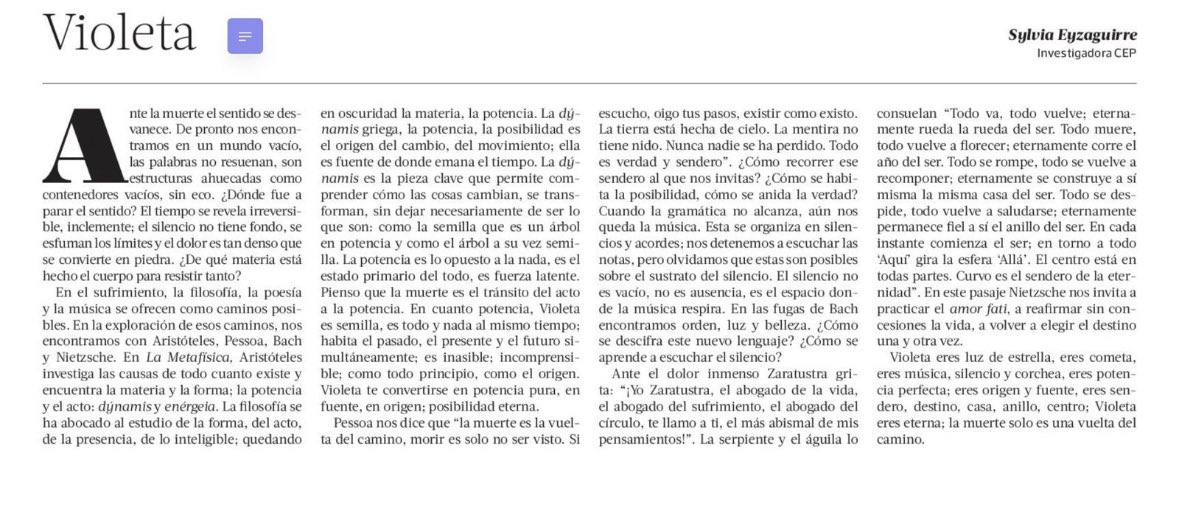
Sylvia Eyzaguirre@SylviaEyzaguirr·
Mi columna dominical dedicada a los padres de Violeta
Sylvia Eyzaguirre tweet media
Español
8
17
62
10.7K
CaroLinaM retweetledi
Jahanzib Wesa
Jahanzib Wesa@jahanzibwesa·
The heartbreaking cries and loud voice of an Afghan woman teacher echo through the streets of Kabul as she begs the everyone to hear her voice and hard feelings she cries and says: “My children are hungry… I am sick… please hear my voice.” 💔 She was once a teacher educating girls and helping build a brighter future. Today, she is forced to collect charity on the streets just to survive. Millions of Afghan girls and women remain banned from school and universities and female teachers are begging in streets. This is the painful reality Afghan women are living every day. Where is the UN?
English
72
644
1.2K
18.4K
CaroLinaM retweetledi
Karun Pal
Karun Pal@karunpal·
Living a slow life has calmed my nervous system. I don’t panic over every little thing anymore. I don’t feel guilty for resting. I don’t treat every moment like it needs to be productive. Some mornings I just make coffee and sit in silence. Looking at the sky. The birds. Breathing in the morning calm. Some evenings I stare out the window and watch the sky turn orange. Sometimes I read 20 pages. Sometimes I read none. I don’t feel the need to optimize every second of my existence anymore. That constant pressure to “do more,” “be more,” has disappeared. And in its place came what I actually needed: calm. I’ve realized life becomes meaningful the moment you stop rushing through it. Meaning was never hidden. It's was always there in the little things that made you feel peaceful and fully alive.
English
127
881
5.6K
165.5K
CaroLinaM retweetledi
Jahanzib Wesa
Jahanzib Wesa@jahanzibwesa·
Each image reflects an Afghan woman reported killed in different provinces of Afghanistan. Some cases involve husbands; others remain unclear. No investigations. No justice, No action! Humanity and rights demand attention and action for Afghan women freedom. Where is the UN?
English
10
80
209
6.3K
CaroLinaM retweetledi
Crazy Vibes
Crazy Vibes@CrazyVibes_1·
He died with 200 children in a gas chamber, holding their hands until the end. He was a father to 200 souls who had no one else in the world. As the soldiers shouted and the world collapsed into madness, he looked at his children and smiled, telling them not to be afraid because they were going on a trip together. Janusz Korczak was a famous doctor and a brave Polish military officer who spent his entire life proving that children are the most important people on Earth. This wasn’t just a job for him—it was his life’s mission. In 1912, he founded a very special place called the Orphans’ Home in Warsaw, designed specifically for children who had lost their parents and had nobody else to protect them. He didn’t just look after their health; he respected them as complete human beings with deep feelings and big dreams. He even created a “Children’s Republic” inside the home, where the orphans had their own small government and even their own court to settle arguments fairly. To him, every child was a “precious gift” and a “creative flame” that adults were lucky enough to protect. He lived by one simple, powerful rule: you haven’t done enough for a child until you have done everything you possibly can. Because he lived by that rule, his responsibility grew even heavier when World War II began. When the Nazi occupation forced the Jewish population into the walled-off Warsaw Ghetto, Korczak moved all 200 of his children there to keep them together. In a place filled with hunger and disease, he became their father figure, their doctor, and their only shield. He spent every day begging for food and medicine just to keep them alive. Because Korczak was so famous and respected, he was offered several chances to escape to the “safe” side of the city and hide. He refused every single time. He knew that if he abandoned those 200 children to save his own life, everything he had ever taught about loyalty and love would be a lie. He stayed because a father does not leave his children when the storm arrives. The day they were taken away to the death camps, the streets witnessed something that looked more like a happy school parade than a march to a tragedy. Korczak wanted to protect the children’s hearts from the terrifying truth, so he told them they were finally going on a trip to the countryside. He had them wash their faces and dress in their very best clothes. They marched through the ghetto singing songs and carrying a bright green flag. Korczak walked at the very front of the line, standing tall in his military doctor’s uniform, carrying the two smallest children in his arms while the others clung to his pockets to stay close. Even the enemy soldiers watching them at the train station were moved to silence by the sight of such incredible dignity. When a soldier recognized him and offered him one last chance to walk away, Korczak didn’t even hesitate. “You do not understand,” he told the officer. “The children are not just my work. They are my life. I will not leave them now.” In the end, he followed his children all the way into the dark gas chambers of Treblinka. He stayed true to his word until his very last breath, holding their hands so they wouldn’t be afraid of the dark. When the chambers were opened later, they found him still leaning forward, surrounded by the sea of children who had huddled close to him for safety in their final moments. Janusz Korczak was a man who had every excuse to run, every reason to save himself, and every opportunity to look away, yet he chose to stand in the fire so his children wouldn’t have to stand there alone.
Crazy Vibes tweet media
English
454
3.6K
10.7K
194.7K
Brandon Robinson
Brandon Robinson@b_m_robinson·
I am trying to find the family of Adolf Synaj as his path crossed with my great-grandparents in 1943. Adolf Synaj was a Jewish man from the village of Stare Bystre in the Podhale region (the south of Poland). In August 1942 the Gestapo visited the Synaj farm. They killed his mother. Adolf, his wife and their children were picking mushrooms in a nearby forest and so by chance missed the Gestapo’s visit. They went into hiding. The boys died of dysentery that autumn; his wife was caught mid 1943 and never seen again. Adolf escaped to the village of Maruszyna, where my great-grandparents Franciszek & Aniela Ligas provided him with refuge. A month later a village collaborator denounced them. Three mounted Gestapo officers came; Adolf ran but was shot 20 meters from the house. My great-grandfather was taken for interrogation and eventual execution in Krakow. His name was published at number 14 on a public death-sentence list in Krakow on 18 December 1943; a copy of the document is attached to this post. My great-grandmother was visibly pregnant with my grandmother - the officer decided to spare her. Adolf had a brother Jozef Synaj who was rumored to have emigrated to Uruguay and a sister whose name is thought to be Linka, who lived for a time in Kłodzko, Silesia. I do not know anything else about his family. I am in the process of documenting this as carefully as I can for posterity and so I would like to get in contact with the Synaj family. I am a historian by training, but I feel an obligation to do this for my family, for the living, and for the dead. I’ve gone through the Polish state archives on this case; they have over 200 pages on an investigation into this - the picture is relatively complete. If you have any connection - to Stare Bystre, to the Synaj family, to Podhale Jewish genealogy, or to anyone who might know, please reach out to me.
Brandon Robinson tweet media
English
16
110
295
24.7K
CaroLinaM retweetledi
Sebastian Arciniegas
Sebastian Arciniegas@SebastianUp_·
Hay gente alrededor tuyo muriendo poco a poco por dentro - Algunos dejaron de hacer fotos. - Otros perdieron el interés por la ropa nueva. - Algunos ahora odian el amor. - Otros se acostumbraron a la soledad. - Algunos dejaron de quedar con amigos. - Otros dejaron de compararse con los demás. - Algunos simplemente aceptaron lo que no pudieron lograr. Las mismas personas que antes soñaban a lo grande ahora solo pasan los días como pueden. Pregunta por tus seres queridos. No todo el mundo está bien.
Español
21
79
277
9.7K
CaroLinaM
CaroLinaM@LMartoci·
@RudiGeerts Thank you Rudi, what happened to his sister Maria?
English
1
0
2
72
Cowboy Tcherno Bill
Cowboy Tcherno Bill@RudiGeerts·
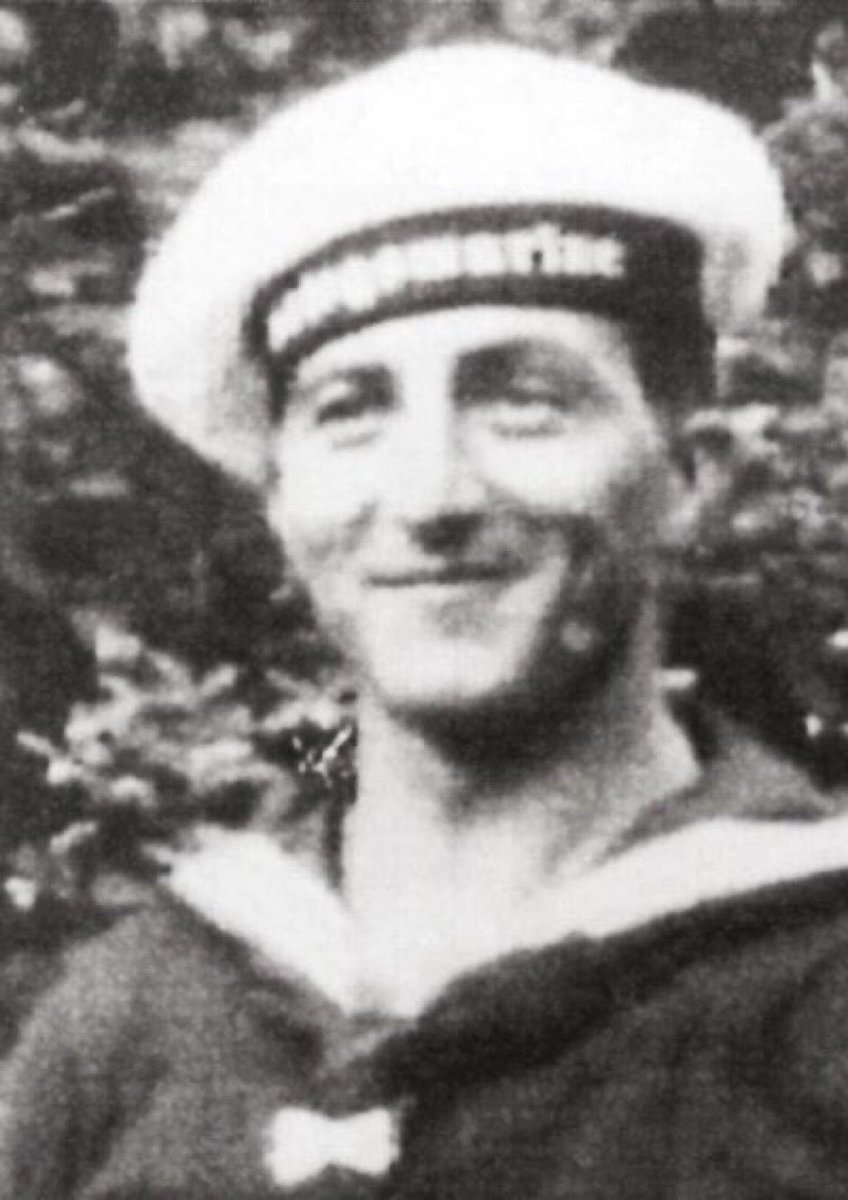
🧵 1/n Walter Stanoski Winter (June 19, 1919 – November 19, 2012) grew up with eight brothers and sisters in a Sinti family. He attended elementary school in Oldenburg. At the age of eleven, he joined his parents traveling all year round, and attended school wherever the
Cowboy Tcherno Bill tweet media
English
2
11
104
2.3K
CaroLinaM
CaroLinaM@LMartoci·
@AuschwitzMuseum Descansa en paz querida Edith, con tu libro nos ayudaste a muchos, bendita sea tu memoria 🙏🏾
Español
0
0
0
77
Auschwitz Memorial
Auschwitz Memorial@AuschwitzMuseum·
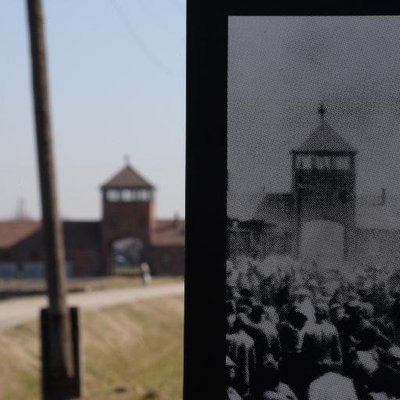
With great sadness, we received information of the passing of Edith Eva Eger, an Auschwitz Survivor. Edith was born on 29 September 1927 in a Jewish family in Budapest. She was the youngest daughter of Lajos and Ilona Elefánt. She attended a gymnasium and took ballet lessons. She was a member of the Hungarian Olympic gymnastics team. In 1942, the Hungarian government enacted new anti-Jewish laws, and she was removed from the gymnastics team. In March 1944, after Nazi Germany installed a pro-German regime in Hungary, Edith Eger was forced to live in the Kassa (Košice) ghetto with her parents and her sister Magda. In May of that year, they were deported to Auschwitz. She was separated from her mother, who was murdered in a gas chamber. In November 1944, Edith and Magda were consigned to ammunition trains and slave labor. In May 1945, they were liberated from Gunskirchen - one of the subcamps of Mauthausen. After the war, Edith Eger moved to the United States. She became a psychologist and a specialist in the treatment of post-traumatic stress disorder. Edith Eger was 98 years old.
Auschwitz Memorial tweet media
English
302
1.2K
10K
148.9K