Kirel

3.1K posts

Kirel banner
Kirel

Kirel

@Lemardunks

Young Degen 💎💨

Katılım Ocak 2022
252 Takip Edilen157 Takipçiler
Kirel retweetledi
IGBO History & Facts
IGBO History & Facts@IgboHistoFacts·
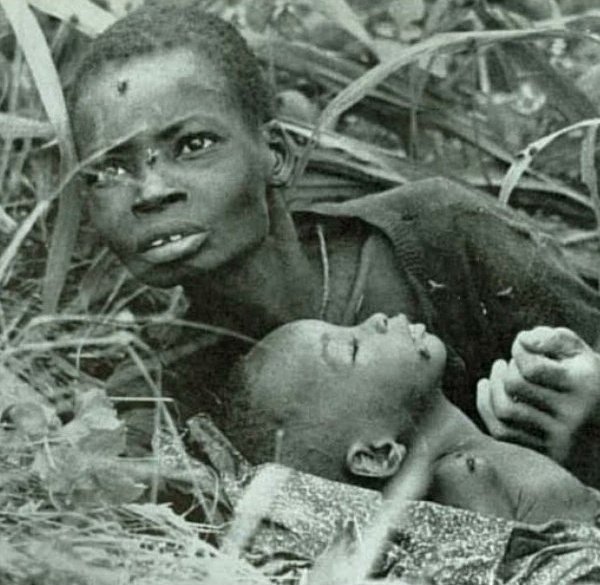
We Remember Our Fallen Heroes Today. Dear Igbo Nation, today marks 56 years since we tragically lost over 4.5 million Igbo brothers and sisters to the Nigerian–Biafran War. They gallantly fought and died so that we might live. 🕊️ Let's Retweet in their memory. 🙏

IGBO History & Facts tweet mediaIGBO History & Facts tweet mediaIGBO History & Facts tweet mediaIGBO History & Facts tweet media
English
311
4.7K
9.3K
283.7K
Divine Voice
Divine Voice@DivineVoice256·
This is your week. Own it. Crush it. Celebrate it.
GIF
English
1
1
3
22.3K
Telala
Telala@telala00·
Dear Mr Khalid, Seif, and Paulina, @Khldfx @ipaulinakj @saif_qaddoura @fundingpips @avikkfp I would like to express my sincere appreciation for the opportunity to participate in this evaluation process. Thank you for providing the three $1,000 accounts; I recognize the time and resources you and your team have invested in my progress. In preparation for collecting the two weeks of trading data as requested, I have been conducting an in-depth analysis of my strategy’s mathematical expectancy. My system is built on a disciplined approach, I strictly limit myself to two trades per day, with a risk-per-trade of 0.2% and a target risk-to-reward ratio of 1:5. While I am fully committed to the data collection process, I have identified a significant constraint with the $1,000 account model. With a maximum drawdown limit of only $50, the account is highly susceptible to being breached by standard market volatility rather than strategy failure. I am currently effectively limited by the capital size rather than the efficacy of the trading system itself. To ensure the data i provided to your team is both accurate and reflective of my true professional performance, I would like to propose transitioning to a $100,000 account for this data collection period. A $100,000 Pro Account with a 6% maximum drawdown ($6,000) would provide the necessary buffer to sustain a losing streak of over 30 losses. This would allow me to execute my strategy in a realistic market environment without the fear of an premature account breach due to minor fluctuations. I am confident that this adjustment will produce the high-quality, long-term data you require to evaluate my consistency. I am ready to begin this data collection immediately and am prepared to adhere to all necessary reporting protocols. I know I don't want to come to you with a lot of excuses, I want you to know this. I want to be fully transparent with you regarding my current situation. I am deeply committed to this process, but I am facing significant financial pressure. In December/ 10/2024, I took out a bank loan of ₦554,000 Naira to buy a FundingPips $100k account with 20% Discount to continue my trading journey, and I am still working hard to repay that debt. Because of this, I am unable to take further loans or risk additional debt. However, I am fully dedicated to succeeding in this bootcamp and collecting the two weeks of data required. To ensure I can proceed with the $100k account and complete the necessary data collection, And told everything that you did to me to my mother, and My mother has graciously offered to sell her diamond jewelry to provide me with the funding to by a $100k account. This is her diamond which my father giving to him on his Wedding marriage Day in the 1989. I do not take this responsibility lightly. I am committed to the discipline of my strategy—limiting myself to two trades per day with a 0.2% risk management approach—to ensure I produce the quality data needed for our sessions. Thank you again for your mentoring and Bootcamp, and really appreciate a lot @ronna256 @SealFunded @astucefx @isaacthequach @forexblog9ja @gfy_26 @Magic_Tradess @JadeJMA @AU79executioner
Telala tweet mediaTelala tweet mediaTelala tweet mediaTelala tweet media
Telala@telala00

Today I say goodbye to Forex. I became a trader to help my family, but it’s ruining my life and making me sad every day 😥. It's not a joke, I give up 🙇. Goodbye fellas." "I am quitting Forex after I lost all my savings. 😪. I've blowing account for 3 years, I'm done." In the pass 3 years I blow over 55 with FundingPips without any payout 😭😭 "I can't stand the chaotic nature of the Forex market. It's simply not worth the stress in my life." "I realized that I was gambling, not trading. I need to focus on a real career." Even though I passed a lot of point where I can't even afford to buy 5k, but from now on I DONE. My family looking on me to do good for them and they getting older "After spending over 5 years since COVID-19 till today. This is not for me, and I'm not going to keep risking more." @fundingpips @avikkfp @fundingpips @ipaulinakj Good by Sir 🙏🏻🙏🏻🙏🏻 Thank you for a good people that I meet in this journey @ZamcoCapital @ronna256 @PropTradeSavvy @isaacthequach @apparentlytrder @Somesh_HP Thank you so much 🙏🏻🙏🏻🙏🏻 Peace

English
22
7
103
22.3K
ɠɧıʂɧ
ɠɧıʂɧ@rirokpik·
Only three countries in the whole world refused to allow the COVID shots into their country. Here are those men. Burundi — Pierre Nkurunziza. Tanzania — John Magufuli. Haiti — President Jovenel Moise. All three presidents died at almost same intervals and with same health reasons. Are you thinking what I'm thinking? 🫢🤔
illuminatibot@iluminatibot

Make sense now?

English
2
7
22
708
Kirel retweetledi
ibtisem 𓂆🕊️
ibtisem 𓂆🕊️@ibti_16·
The back of a Namibian laborer covered in scar tissue from years of whipping by a German farmer named Ludwig Cramer, (1912–1913). Taken by the Rhenish missionary Johann Jakob Irle.
ibtisem 𓂆🕊️ tweet media
English
1.5K
23.9K
76.5K
10.2M
Kirel retweetledi
Ashley Young
Ashley Young@youngy18·
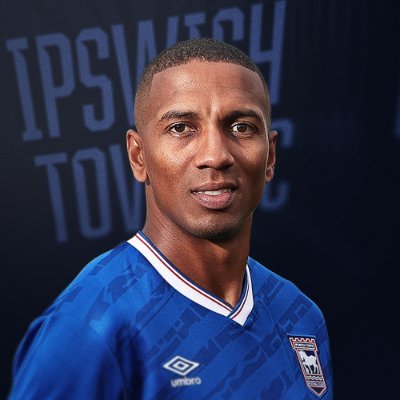
Right, time to properly sign out ✍🏾 What can I say, it’s the right time for me to hang up my boots and call it a day on my career and what a way to go out, gaining automatic promotion, it was exactly the way I saw it happening and the reason why I signed for the club!
Ashley Young tweet media
English
750
2.6K
27.9K
756.8K
Trader Mike
Trader Mike@tradermike1234·
Stay away from shady offshore unregulated brokers Even many big popular influencers promote them but that does not mean they are reputable May seem like common sense to some but many use this logic They get paid INSANE money when you sign up to trade with these brokers And I know this because I have had offers from these brokers and I have had other big influencers dm me in the past trying to get me to use their broker "I want you to have a good broker" na you know I trade crazy size and want those fees in your account 😂 You're not slick you goobers Folks, do your due dilligence please Search regulated borkers in your region A little research is all it takes
English
7
3
49
3.2K
Kirel retweetledi
Path of Men
Path of Men@PathOfMen_·
The big secret nobody tells you is that everything is actually easy. you just have to do it. That's it. That's the whole secret. Most people spend years psyching themselves out over something that takes five seconds of just doing it. Stop overthinking. Stop preparing to prepare. Just do the thing. It's easier than you think.
English
52
751
5.3K
92K
Kirel retweetledi
GRITCULT
GRITCULT@GRITCULT·
controversial: the best thing that can happen to a young man is total failure before 25. not small failure. catastrophic, humiliating, public failure. the kind where everyone sees. the kind where you cant hide from it. because it destroys the one thing that was going to hold you back your entire life: the fear of it happening. once it happens you realise it didnt kill you. you got back up. you rebuilt. and now you move different because the worst case scenario already happened and you survived it. most men spend their entire lives avoiding something that would have freed them if they just let it happen. failure is not the opposite of success. its the prerequisite. every great man was great because he failed catastrophically early enough that it couldnt kill him but late enough that it could teach him. after the catastrophe you are free. genuinely free. because the threat that controlled you has already happened. be more retarded. just do it.
English
29
164
1.7K
50.5K
Kirel retweetledi
Vivian Ifeoma
Vivian Ifeoma@VivianIfeomaOj·
Everyone talks about the Great Wall of China. But the Igbo built a defence system that was alive, invisible, and self-healing called the “Okpi Botanical Barriers. According to the story, “Dry-Leaf” zones and bird-attracting trees were planted inside these barriers. If an intruder tried to move through the forest at night, snapping bamboo and disturbed birds acted like a silent alarm. The British supposedly called them “juju forests” because they did not understand how the system worked. The “wall” grew naturally, required no repairs, and became stronger with time, making outsiders think they were only looking at ordinary forest rather than a hidden defensive structure. The idea presents the Igbo as early “green engineers” who used nature itself as protection instead of fighting against it. ✍🏽 Chukwubueze
Vivian Ifeoma tweet media
English
62
491
1.6K
21.3K
Kirel retweetledi
Ihtesham Ali
Ihtesham Ali@ihtesham2005·
A Hungarian psychologist raised three daughters to prove that any child could become a chess grandmaster through early specialization. He succeeded. Two of them became grandmasters. One became the greatest female chess player who ever lived. Then a sports scientist looked at the data and found something nobody wanted to hear. His name is David Epstein. The book is called "Range." The Polgar experiment is one of the most famous case studies in the history of deliberate practice. Laszlo Polgar wrote a book before his daughters were even born arguing that geniuses are made, not born. He homeschooled all three girls in chess from age four. By their teens, Susan, Sofia, and Judit were dominating tournaments against grown men. Judit became the youngest grandmaster in history at the time, breaking Bobby Fischer's record. The story became the gospel of early specialization. Pick a domain young, drill it hard, and you can manufacture excellence. Epstein opens his book by telling that story honestly and then quietly demolishing the conclusion most people drew from it. Chess works that way. Most things do not. Here is the distinction that took him four years of research to articulate, and that almost nobody who quotes the 10,000 hour rule has ever read. There are two kinds of environments in which humans develop expertise. Psychologists call them kind and wicked. A kind environment has clear rules, immediate feedback, and patterns that repeat reliably. Chess is the cleanest example. Every game ends with a winner and a loser. Every move is recorded. The board never changes shape. The pieces never invent new ways to move. A child who plays ten thousand games will see most of the patterns that exist in the game, and pattern recognition is exactly what chess mastery is built on. A wicked environment is the opposite. Feedback is delayed or misleading. Rules shift. The patterns that worked yesterday may be exactly the wrong patterns to apply tomorrow. Most of the real world looks like this. Medicine is wicked. Investing is wicked. Building a company is wicked. Scientific research is wicked. Almost every job that involves a complex changing system with humans in it is wicked. The Polgar sisters trained in the kindest environment any human can train in. Their success was real and the method was correct. The mistake was generalizing the method to fields where the underlying structure of the environment is completely different. Epstein's research is what made the implication impossible to ignore. He looked at the careers of elite athletes outside of chess and golf and found that the pattern was almost the inverse of what people assumed. The athletes who reached the very top of their sports were overwhelmingly people who had played multiple sports as children, specialized late, and often switched disciplines well into their teens. Roger Federer played squash, badminton, basketball, handball, tennis, table tennis, and soccer before tennis became his focus. The kids who specialized in tennis at age six and trained year-round for a decade mostly burned out, got injured, or topped out at lower levels of the sport. The same pattern showed up everywhere he looked outside of kind environments. Inventors with the most patents had worked in multiple unrelated fields before their breakthrough work. Comic book creators with the longest careers had drawn for the most different genres before settling. Scientists who won Nobel Prizes were dramatically more likely than their peers to be serious amateur musicians, painters, sculptors, or writers. The skill that mattered in wicked environments was not depth in one pattern. It was the ability to recognize when a pattern from one domain applied unexpectedly in another. That kind of thinking cannot be built by drilling a single subject. It can only be built by accumulating mental models from many subjects and learning to move between them. The deeper finding is the one that should change how you think about your own career. Specialists in wicked environments often get worse with experience, not better. Epstein cites studies of doctors, financial analysts, intelligence officers, and forecasters showing that years of experience in a narrow domain frequently produce more confident judgments without producing more accurate ones. The expert builds elaborate mental models that feel comprehensive and turn out to be increasingly disconnected from the actual structure of the problem. They stop noticing what does not fit their framework. They mistake fluency for understanding. Generalists do better in wicked domains for a reason that sounds almost mystical until you understand the mechanism. They have less invested in any single mental model, so they abandon broken models faster. They are used to being a beginner, so they are not threatened by the discomfort of not knowing. They have seen enough different domains that they can usually find an analogy from one field that unlocks a problem in another. The technical name for this is analogical thinking, and the research on it is one of the most underrated bodies of work in cognitive science. The single most useful sentence in the entire book is the one Epstein puts almost as a throwaway. Match quality matters more than head start. A person who tries six different fields in their twenties and finds the one that genuinely fits them will outperform a person who picked one field at fourteen and stuck to it on willpower alone. The lost years were not lost. They were the search process that produced the match. Every field they walked away from taught them something they later imported into the field they finally chose. The reason this is so hard to accept is cultural, not empirical. We tell children to pick a path early. We reward the prodigy who knew at six. We treat the late bloomer as someone who failed to launch on time, when the data suggests they were running an entirely different and often more effective optimization process underneath. The Polgar sisters were not wrong. The conclusion the world drew from them was. If your environment is genuinely kind, specialize early and drill hard. If it is wicked, and almost every interesting human problem is, then the people who win are the ones who refused to specialize until they had seen enough to know what was actually worth specializing in. You are not behind. You were running the right experiment all along.
Ihtesham Ali tweet media
English
383
2.9K
11.2K
1.1M
Kirel retweetledi
IGBO History & Facts
IGBO History & Facts@IgboHistoFacts·
On 30 June 1968, one Biafran soldier stopped an entire Nigerian brigade alone. He had almost no ammunition. What happened next turned him into a legend.🧵
IGBO History & Facts tweet media
English
47
431
1.6K
64.4K
Andre
Andre@_dreamsofpearls·
@murutrades THIS!!! In 3 weeks I got from $300 drawdown left in my funded account to a $1,000 payout! This was the confirmation I needed that patience, focus and discipline are all that is required from me, just let time do the heavy lifting and compounding 🙏
English
2
0
1
62
MURU
MURU@murutrades·
One month of real focus can reshape your entire trading journey. One solid month of clarity, patience, and discipline. beats months of guessing and inconsistency. Stick to one plan. One model. One execution style. Not jumping strategies. Not forcing trades. Not chasing price. Just clarity. Patience. Discipline. Repeated daily. Do that for 30 days straight… After that, you won’t even recognize your old habits and you definitely won’t go back to them.
English
12
13
146
3.3K
Kirel
Kirel@Lemardunks·
@MrEkenx_ @B_trader__ Bro I Trade Spending hours on the charts daily would give you insights, Infact you get into flow State If you're good. what has started making me consistent though is how intently I have studied trading in the zone.
English
0
0
0
17
MrEkenx
MrEkenx@MrEkenx_·
@Lemardunks @B_trader__ Reading lots of Trading books without having insight of price behavior is suicide. Only price can teach you price behavior, there’s no alternative route.
English
1
0
1
26
B Trader
B Trader@B_trader__·
You want to improve in your trading? Do more studying than trading. Spend 10 hours studying, 15 minutes trading.
English
64
51
938
52.8K
Kirel
Kirel@Lemardunks·
@MrEkenx_ @B_trader__ I can tell you one Thing for free. It would save you a lot of pain, I only started to forgive myself after I read it.
English
1
0
0
21
MrEkenx
MrEkenx@MrEkenx_·
@Lemardunks @B_trader__ I’m sorry bro, but i do not find trading related books helpful for me. I have not read one and i do not have plans to read any. A man who is serious about learning how to drive should be on the steering not in class.
English
2
0
1
81
MrEkenx
MrEkenx@MrEkenx_·
@B_trader__ The hardest part of studying is knowing what to study
English
1
0
38
1.7K
Kirel retweetledi
Atal
Atal@Atalburhani·
For over a year, I made every mistake a trader could make. I revenge traded after losses. I forced setups that weren't there. I'd sit at my desk for hours, convinced that more screen time meant more chances, and more chances meant I'd eventually break through. Every night I'd close the charts knowing I did it again. The same mistakes. The same feeling. That sinking, heavy weight of 'I know better than this.' My heart broke a little every time. Not because of the money but because I couldn't stop doing the thing I knew was destroying me. I felt stuck. Like I was running on a treadmill bolted to the floor. Determined to keep going, but with no end in sight. Some days I felt everything. Some days I felt nothing. And underneath it all, a set of beliefs I didn't even know were running the show: Losses are meant to be avoided. The less I lose, the faster I get to profitability. More activity means more opportunity. If I'm losing, I'm failing. Every single one of them was wrong. But I didn't know that yet. I just thought I wasn't trying hard enough. So I tried harder. More hours. More setups. More indicators. More backtesting. And the harder I tried, the worse it got because effort was the problem dressed up as the solution. The shift didn't come from a book. It didn't come from a mentor. It didn't come from one magical trade that turned everything around. It came from a notebook and a question I didn't want to answer. I started listing my mistakes. Not the trades. The decisions. What did I do? What was I feeling before I did it? What did I believe in that moment that made the decision feel logical? Every mistake had a feeling before it, and every feeling had a belief underneath it. Revenge trading wasn't impulsive. It was driven by the belief that ending the day red meant I failed and I couldn't sit with that identity. So I traded to escape it. Overtrading wasn't greed. It was driven by the belief that more activity meant more progress. That sitting still while the market moved was the same as falling behind. Closing winners early wasn't fear. It was driven by the belief that profit in hand is the only safe profit because the market will take it back if I let it. Once I could see them clearly, I started questioning them. Is it true that the less I lose, the faster I reach profitability? No. My system requires losses to function. Avoiding them means avoiding the trades that produce the winners. Is it true that more activity means more opportunity? No. More activity means more exposure to the exact emotional triggers that cause my worst decisions. Is it true that a losing day means I failed? No. A losing day where I followed my process is a successful day. A winning day where I broke every rule is a failure. None of these were breakthroughs in the moment. They were slow, grinding realizations that I had to sit with every day until they stopped being ideas and started being beliefs. And then came the hardest part. Every morning, I'd close my eyes and visualize. Not the win, but the loss. I'd see myself in a trade. I'd watch it hit my stop. I'd let the old emotions come up. The anger, the disappointment, the urge to re-enter. And then I'd replay the scene differently. I'd see myself feel the loss and do nothing. Remind myself of the belief I discovered. Close the chart. Walk away. Not because I wanted to but because I was training my brain to respond differently to the same trigger. I did this every day for weeks. Some days it felt pointless. Some days the old emotions hit so hard I wanted to skip it. But I kept showing up. Because I knew that the version of me who could sit with a loss without flinching was the version who would eventually be profitable. It didn't happen overnight. There was no single moment where I woke up and everything was different. But one day I took a loss and felt close to nothing. A little disappointment, but not enough to tilt me over the edge. There was a quiet recognition that this was part of the process. That I was exactly where I was supposed to be. That was the shift. Not a new strategy. Not a new indicator. A new relationship with the thing I'd been running from my entire trading career. I went from making every mistake in the book to breakeven. And breakeven, after years of bleeding, felt like a miracle. I'm not writing this from some mountaintop of consistent profitability. I'm writing this from the middle of the journey. But the middle feels completely different when you're not fighting yourself anymore. If you're in the phase I was in, making the same mistakes, feeling stuck, wondering if it'll ever change, I need you to hear this: You don't need a better strategy. You need to find the beliefs that are making you override the one you already have. List your mistakes. Question the feelings behind them. Prove to yourself why the old beliefs don't hold up. And then sit with the discomfort of doing nothing when everything in you wants to react. That's not a hack. That's not a shortcut. It's the slowest, most uncomfortable work you'll ever do. And it's the only thing that actually changes anything.
English
1
7
41
2.2K