Sandeep Arora

19.9K posts

Sandeep Arora banner
Sandeep Arora

Sandeep Arora

@LetDdiceFlyHigh

MBBS,FSAR,Abd/Body Rad,PI-LI-RADS,AssociateProf, teacher,therapeutic ultrasound,IMG,proud dad,Roman History,ping pong &pursuer of originality.Tweets are my own!

USA Katılım Nisan 2009
907 Takip Edilen3K Takipçiler
Sandeep Arora retweetledi

old toons
old toons@oldtoons_·
Story time? Back in the winter of 1955, an Uzbek politician and writer named Sharaf Rashidov went on a diplomatic trip to Jammu and Kashmir. While he was there, he saw a live performance of "Bombur ta Yambarzal" (The Bumblebee and the Narcissus), a famous 1953 opera by the local poet Dina Nath Nadim. On stage, characters played literal forces of nature: the spring narcissus, (Yambarzal) and the king of bees (Bombur) represented life and freedom, while winter blizzards symbolised oppression. Rashidov was so moved by the performance that he went home and turned the story into a 1956 book called "The Kashmir Song", translating the flower's name to its more common regional equivalent, "Nargis". By 1965, this local Kashmiri tale traveled all the way to Moscow's Soyuzmultfilm studio, that turned it into a gorgeous animated short film called *Nargis*. The animation team crafted the film in the ornate, miniature-painting style characteristic of traditional Russian Palekh lacquer art known for its folkloric elegance. At the same time, the characters’ flowing draped garments, vibrant attire, and decorative jewelry clearly draw inspiration from Indian cultural aesthetics, giving the film an exotic, fairy-tale quality that blends Soviet artistic traditions with the story’s Indian roots. The film arrived at the perfect time. During the 1950s and 1960s, India and the Soviet Union shared a massive cultural exchange. Hindi cinema was wildly popular across the USSR with films starring actors such as Raj Kapoor drawing large audiences and becoming cultural touchstones. Amid this mutual fascination, Nargis served as a vivid example of how a great story can easily cross borders and connect completely different worlds.
English

10
248
1K
39.8K
Sandeep Arora retweetledi
Abdominal Radiology
Abdominal Radiology@Abdominal_Rad·
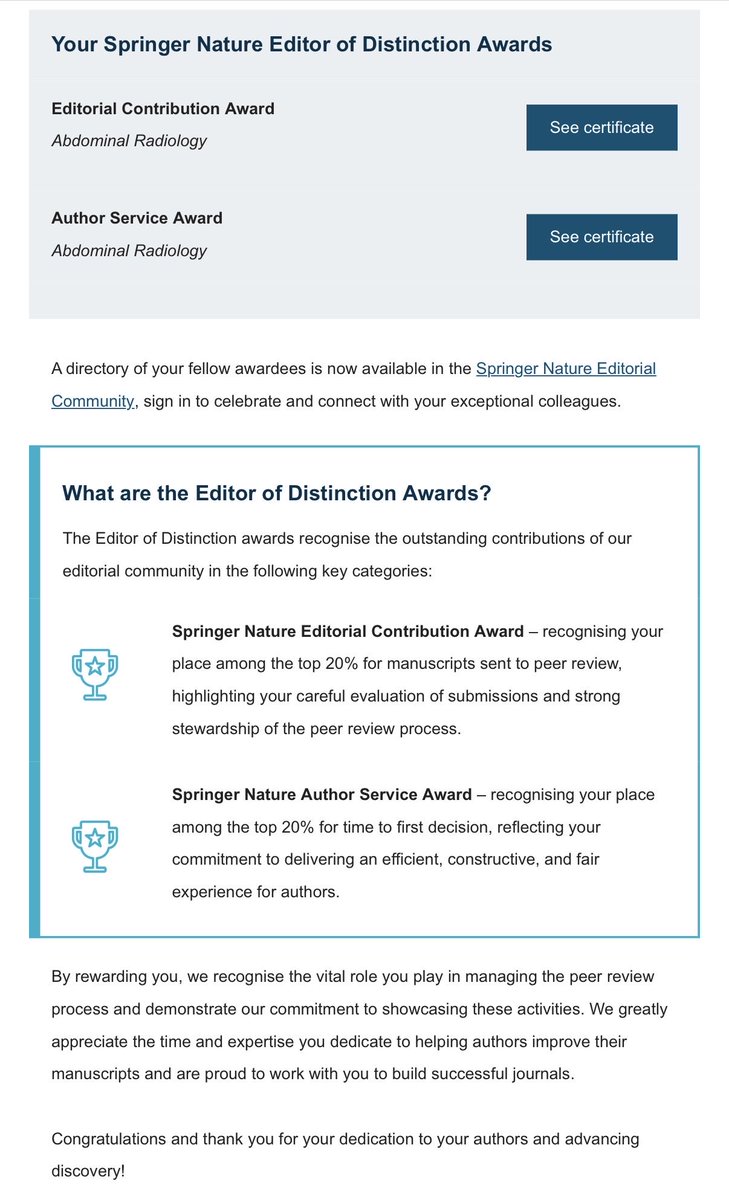
We received two Springer Nature Editor of Distinction Awards 2026 for top 20% performance in editorial contribution and author service. Shared recognition with our Editorial Board and entire community. Congratulations and thank you! @SocietyAbdRad @LetDdiceFlyHigh @RadGeek
Abdominal Radiology tweet media
English
0
3
5
409
Sandeep Arora retweetledi
Homer Pavlos
Homer Pavlos@HomerPavlos·
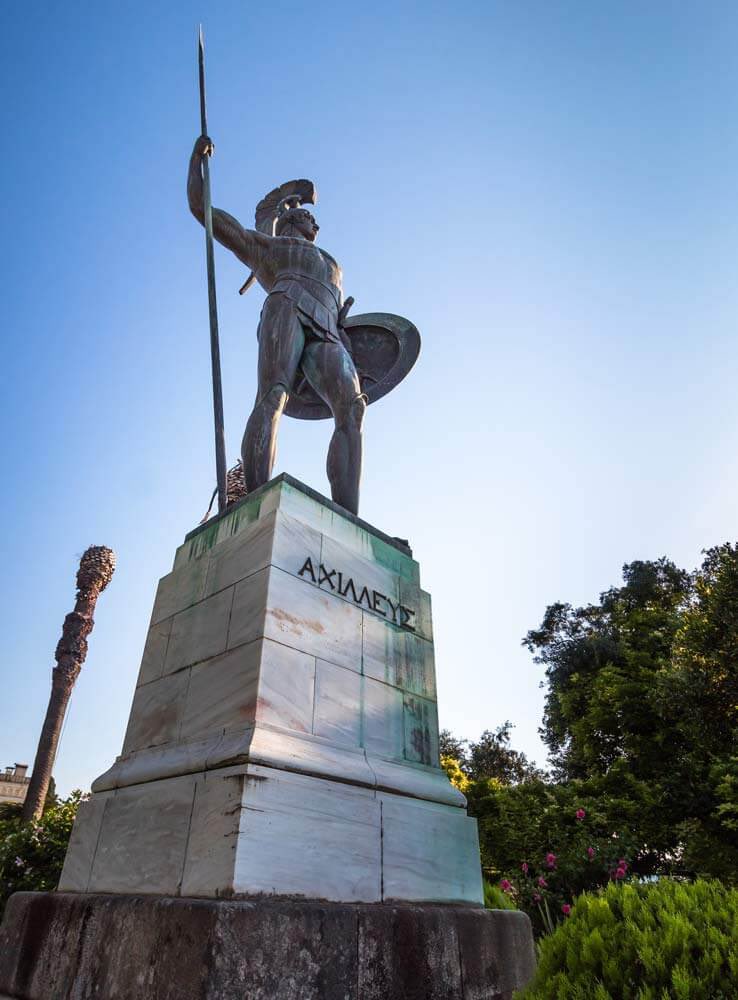
I will explain to you what is the "Homeric Law", why they hate Homer and why they want you weak and spiritually dead. In the Battle of Marathon, all the Greek heroes who became role models for us, took part. Miltiades, Themistocles, Aristides, Aeschylus with his brother Cynegirus. But besides them, a dog also helped in the fight. According to Claudius Aelian (On the Characteristics of Animals, VII, 38), a Greek brought his dog to the camp, and the dog attacked the Persians alongside its master. This scene is also depicted in the wall painting of the Stoa Poikile (Painted Stoa) from the 5th century BC. The bronze helmet of Miltiades, which the Athenian general wore during the battle, was dedicated by him himself to the sanctuary of Zeus in Olympia as a thank-offering to the god for the victory. The helmet was discovered and is today on display at the Archaeological Museum of Olympia. Themistocles, that great Greek, after the Battle of Marathon could not sleep and wandered sleepless through Athens. He used to say: "Οὐκ ἐᾷ με καθεύδειν τὸ τοῦ Μιλτιάδου τρόπαιον", which means, "The trophy of Miltiades does not let me sleep." He wanted to surpass Miltiades so much that he couldn't sleep. Can you imagine that? When the Persian king Artaxerxes asked for his help to attack the Greeks, Themistocles drank poison and committed suicide so as not to betray his country, Greece. When Aeschylus died, he asked his relatives and close friends to inscribe an epitaph that reflected what he stood for in life and the values he held dear. Our first thought would be that Aeschylus would have wanted them to write that he was a great tragic poet with many awards and an outstanding body of work. Yet the epitaph makes no mention at all of his tragedies or his theatrical achievements, the very things for which all humanity remembers him today. Aeschylus wanted something written that showed what truly mattered to him. The epitaph therefore reads: "This tomb in wheat-bearing Gela hides Aeschylus dead, son of Euphorion, the Athenian; of his worthy courage the grove of Marathon can tell, and the long-haired Mede who knows it well." - (Source: Ἀθήναιος 14, 6) The only thing that mattered to Aeschylus was Greece. During the communal meals (syssitia) in Sparta, three choruses were formed according to the three age groups. 1. The chorus of the old men would begin singing: "We once were strong young men." (Ἄμμες πόκ' ἦμες ἄλκιμοι νεανίαι) 2. The chorus of the men in their prime would reply: "We are the ones now; if you want, behold us" (Ἄμμες δέ γ' εἰμέν· αἰ δὲ λῇς, αὐγάσδεο) 3. And the third chorus, that of the young boys, would say: "We shall become much better." (Ἄμμες δέ γ' ἐσσόμεσθα πολλῷ κάρρονες) These Greeks were great because they lived according to the most fundamental "Homeric Law", one that some people today want you not to know. "Always strive for excellence and to surpass the others, and do not bring shame upon the race of your ancestors." (Homer, Iliad Z 208–209) With these words, Hippolochus advised his son Glaucus when he sent him to fight in Troy. Earlier in the same book we read: "Why do you ask of my lineage, fearless son of Tydeus? The generations of mortals are like the leaves of the trees: some the wind scatters upon the ground, and others the forest brings forth again when spring renews the trees. Thus one generation of men springs up, and another passes away." (Homer, Iliad Z 145–149) We Greeks, we still use that Homeric phrase. We say "Aien aristeuein," which means "Always to excel." These words from Homer shaped generations of heroes and glorious men. This phrase lived in our collective memory, at least until today, and we fought to become better than our ancestors and worthy of our heroes. We had role models; we admired our grandfathers. The archetype of the heroic ancestor was born, and the lifelong purpose was always to surpass him through great deeds in one’s own life. Until the dark days of today arrived, days baptized as "progress," in which every day we slide from bad to worse. You read my posts, you see what they are trying to do with the Classics. They hate Homer, they hate Plato and Aristotle, Alexander, Leonidas, they hate Achilles, they hate the Greek tragedies. They won't admit it, but you can see it when they are "manipulating the translations" to fit their agendas. Some want to create a degenerate world, sunk in atheism, anarchy, and spiritual collapse, far removed from values, virtues, and morality. They call this "progress," yet it is nothing but total subjugation, heads bowed, without any desire to resist. To live without the imperative "aien aristeuein" (Always to excel), is to accept the slow death of the human spirit. When excellence is no longer the measure, when the only sacred thing left is the right to mediocrity and the comfort of never being judged by the shadow of greater men, then man ceases to be a bridge toward something higher and becomes merely a consumer of fleeting pleasures in a rootless present. A civilization that teaches its young to surpass their ancestors in virtue, courage, wisdom, and beauty ascends. One that teaches them to despise or ignore their ancestors has already begun its long descent into oblivion. "Aien aristeuein" And yes, my name is Homer, I'm Greek. Homer Pavlos.
Homer Pavlos tweet mediaHomer Pavlos tweet media
English
66
407
2K
50.2K
Sandeep Arora retweetledi
ASTRO
ASTRO@ASTRO_org·
New in #practicalRO: Adaptive Salvage Stereotactic Radiation for Locoregional Recurrence of Pancreatic Adenocarcinoma After Surgery. #radonc tinyurl.com/prolakomy
ASTRO tweet media
English
4
21
44
9.6K
Sandeep Arora retweetledi
Baris Turkbey MD
Baris Turkbey MD@radiolobt·
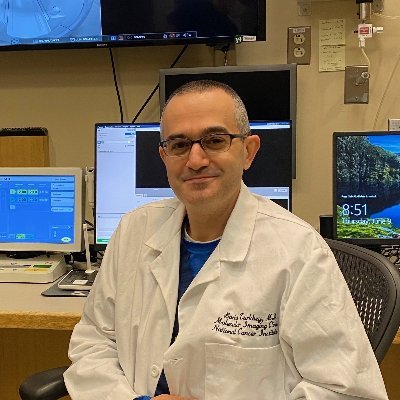
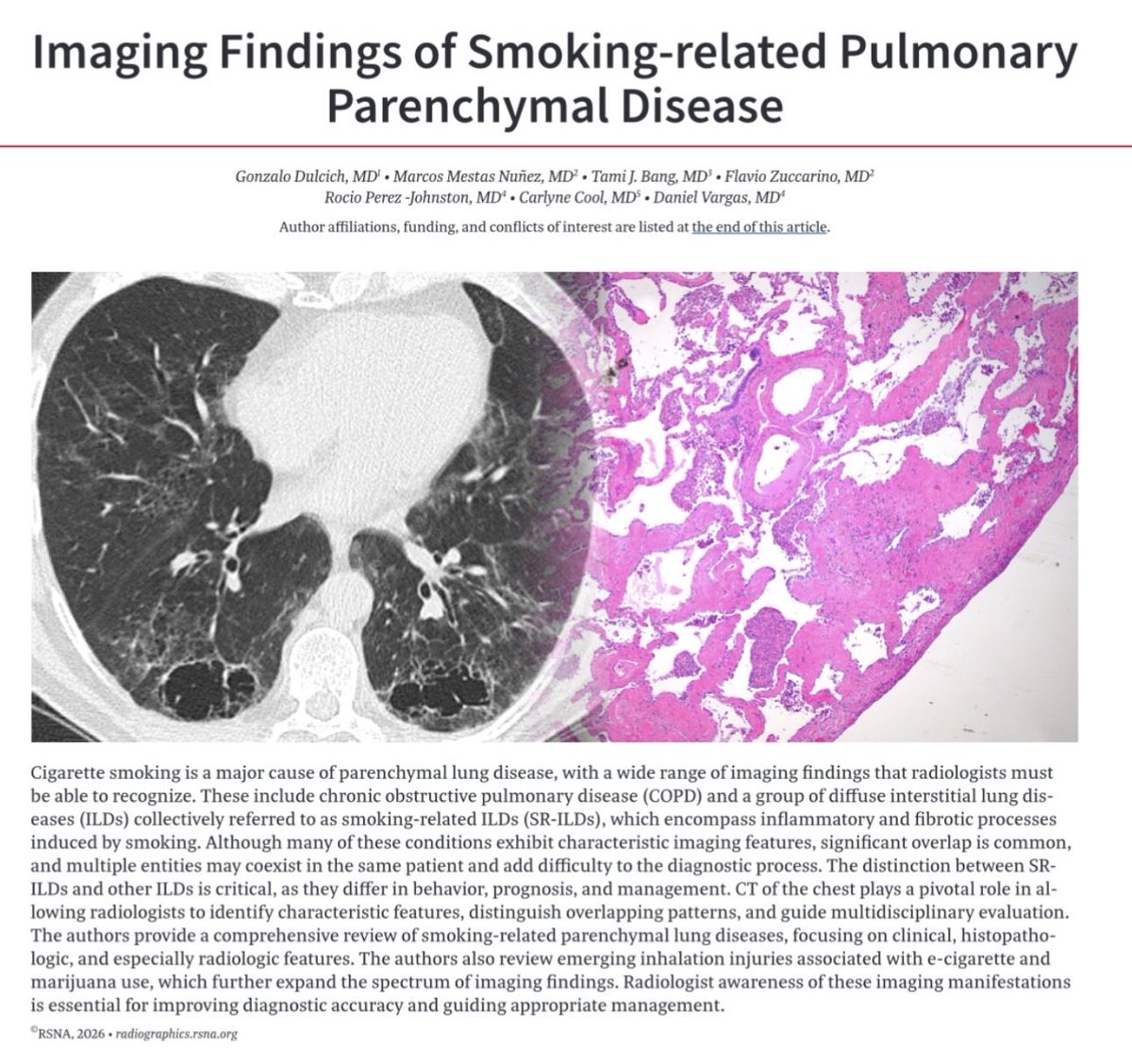
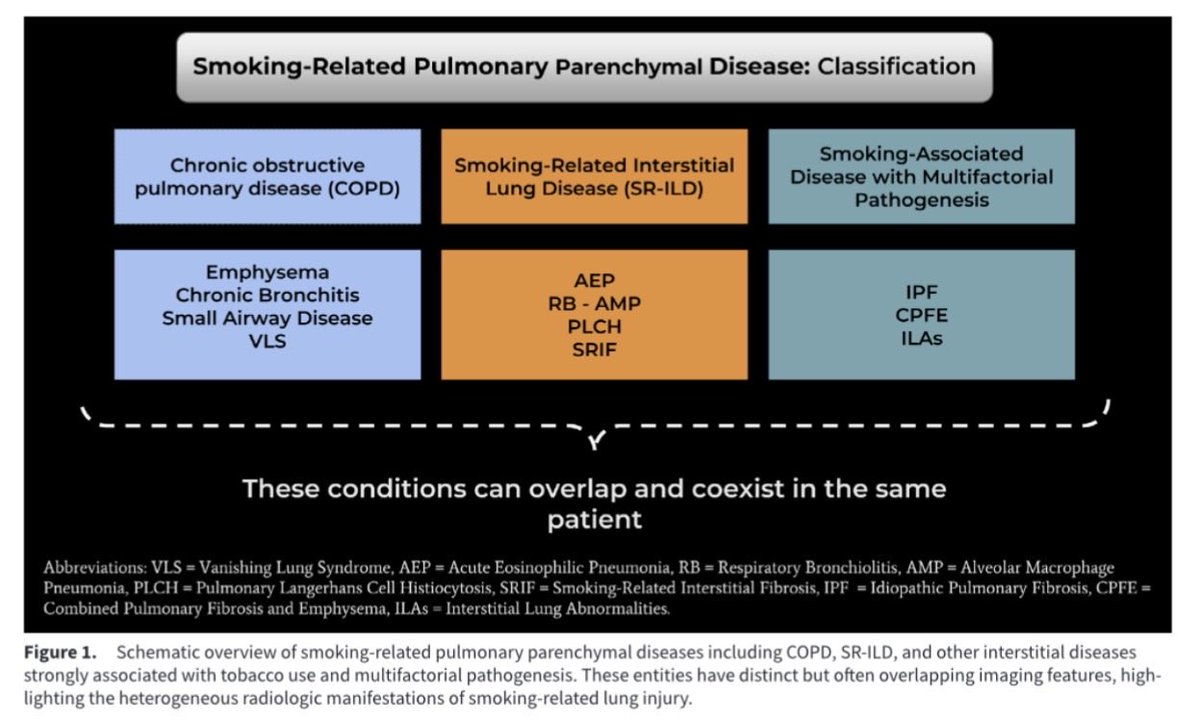
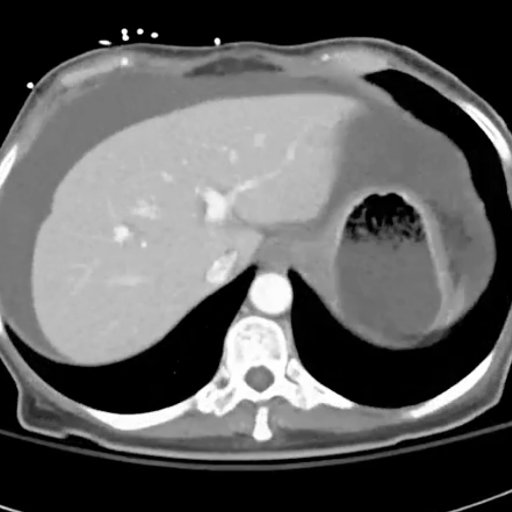
🔔 New RadioGraphics Publication “Imaging Findings of Smoking-related Pulmonary Parenchymal Disease” 🔥🚭 📚 A must-read for radiologists, pulmonologists, and related specialists! 👍This review explores the full spectrum of smoking-related lung changes on CT — emphysema, respiratory bronchiolitis, fibrosis, and beyond. Essential knowledge for accurate diagnosis in chest imaging. 💨🫁 #Radiology #RadioGraphics #ChestCT #PulmonaryMedicine #SmokingRelatedDisease
Baris Turkbey MD tweet mediaBaris Turkbey MD tweet mediaBaris Turkbey MD tweet mediaBaris Turkbey MD tweet media
English
1
10
49
2.6K
Sandeep Arora retweetledi
Alex Petkas
Alex Petkas@costofglory·
Helen calls herself "κύνωψ" in the Odyssey, usually translated "bitch" or "shameless bitch". Wilson says "hounded" (🤣). Here's why that's wrong. The word literally means "dog faced" or more properly "dog eyed". Why do women get compared with dogs in Greece? There's actually a whole book on this ("Shameless" by Cristiana Franco, which is useful despite the author's clear feminist leanings). Yes, women get called dogs/bitches disproportionately, in Greek too. Men let dogs into their company, and even love them, b/c they are useful and charming. But they are clearly interlopers in some contexts. There are certain rules they just won't obey. Even if you get them not to crap on your rug, they'll still lick their balls on top of it, right in front of you. This can spoil certain kinds of occasions. Similarly women are interlopers in male-only contexts (incl. war, politics). When they transgress that boundary, they can be expected to break the (other) rules—sometimes with good results, sometimes chaotic, crazy, bad results. Shame is the opposite of honor, and honor is what binds male hierarchies together. Without shame, you don't get honor. Women can't integrate properly into a male honor hierarchy (at least (?!?!) in Greece...). But honor is the lens through which men see the world (or used to). Thus, when women break rules of good behavior, one of the go-to comparisons is with the dog, who is also innately a misfit to the code of men. ("of course they'd do that"). (Not that you can't call a man a dog in similar fashion; Achilles does it to Agamemnon in Iliad 1). Anyway, Helen calls herself "dogface" in Odyssey 4 when she's telling a story to Telemachus (in front of Menelaus, now her husband once again). She's telling a story about "how crazy things got!" when she was bewitched by Aphrodite, caused the Trojan War etc. But she insults herself, "yes my fault!" in order to win sympathy. She "knows she did wrong, so shameful!!" It disarms you. It's a kind of seduction. She does the same thing in Iliad 3 (calling herself κύνωψ and all). She's not trying to excuse herself (with e.g. "hounded!") —that would provoke indignation from any reasonably intelligent and morally serious man, like Telemachus and Menelaus. She calls herself the worst thing you could call her, that you maybe already had in mind. And this is key to the seduction. She says what you're already thinking. This kind of thing is key to her charm, and key to Homer's brilliant characterization of her otherworldly powers (still present as she approaches middle age in the Odyssey).
Roman Helmet Guy@romanhelmetguy

Academics are literally trying to change the dictionary just to prove me wrong. This guy wants to alter the standard Ancient Greek translation reference to say that κυνώπιδος means 'ashamed' rather than 'shameless.' Why? Because I insulted him and he doesn't like my politics. I've said it before, but save your old books. They are going to rewrite everything and tell you up means down.

English
24
135
1.8K
102.7K
Sandeep Arora retweetledi
Gabe Wilson MD
Gabe Wilson MD@Gabe__MD·
PREPRINT REVIEW ————————— 45 domain scientists spent 469 hours rating 2,960 individual criticisms from peer reviews of 82 Nature-portfolio papers, mostly from Nature Communications. The reviews came from both human reviewers and three frontier AI models deployed as tool-equipped reviewing agents: GPT-5.2, Gemini 3.0 Pro, and Claude Opus 4.5. Averaged across papers, GPT-5.2 had a higher rate of fully positive criticisms, defined as correct, significant, and sufficiently evidenced, than the top-rated human reviewer baseline. 60.0% versus 48.2%. P = 0.009. In holistic expert judgments, it matched or exceeded the top-rated human on about half of papers. All three AI reviewers exceeded the lowest-rated human across every dimension. The tradeoff matters: AI reviewers were less factually correct than the top-rated humans (86.2% vs 92.3%). The win was on significance and evidence quality, not accuracy. Their accurate criticisms were more often rated as significant and well-evidenced, and surfaced a distinct 26% of issues that no human reviewer raised. The honest limitations: AI reviewers overlap with each other far more than human reviewers do, 21% versus 3% for cross-reviewer pairs. They exhibit 16 recurring weaknesses including limited subfield knowledge, poor long-context management across multiple files, and a tendency to be overly critical on minor issues. The authors position current AI reviewers as complements, not replacements. The most actionable finding is not "replace peer reviewers." It is "add one AI reviewer to a human panel." In the paper's simulation, a 2-human-plus-1-AI panel preserved the amount of useful unique feedback while reducing reviewer noise. This connects directly to the Rodman conversation from earlier this week about evidence infrastructure. Peer review is one of the primary bottlenecks in the scientific evidence pipeline. If AI can surface a quarter of issues that human reviewers miss while producing higher-significance critiques on the issues they share, the implications for the speed and rigor of scientific publication are significant. Posted to arXiv this week. Preprint. But the signal is strong enough to take seriously.
Gabe Wilson MD tweet media
English
1
26
76
7.3K
Sandeep Arora retweetledi
Erin Cooke, MD
Erin Cooke, MD@ErinCookeMD·
@CURadiology was honored to host @mbucknor for the Annual CU MSK Imaging Guest Lectureship today to share his work on #HIFU High Intensity Focused Ultrasound! Thanks for visiting sunny Colorado, Dr. Bucknor!! #RadEd #MSK
Erin Cooke, MD tweet media
English
1
5
18
520
Sandeep Arora retweetledi
Jenanan Vairavamurthy, MD
Jenanan Vairavamurthy, MD@TherealDoctorJ·
Today marks four years since we lost my brother - a physician, away on a locums assignment. It was around 9:15 AM PST on May 21, 2022 when we last spoke. I was on my way to the gym, it felt like just another Saturday. That conversation lives with me every day. What I wouldn't give for just one more. His passing changed how I see everything. I found myself paying closer attention to what other physicians were carrying, the quiet struggles. For a while, I felt hopeful. There was real momentum building around physician wellness, and it felt like something was finally shifting. But the needle is moving in the wrong direction. Burnout rates remain at historic highs. Physicians are leaving clinical medicine faster than we can replace them. The administrative burden - prior authorizations, documentation, clunky EMRs, breaking the glass on a patient there to see YOU, continues to consume the hours that should be spent on patients, or on rest, or on simply being human. Mental health stigma in medicine hasn't gone away; if anything, the fear of career consequences keeps too many physicians suffering in silence. And we lost more colleagues to suicide this year than we should ever accept as normal. I don't have all the answers. But I know this - we have to figure it out, and we are running out of time before the profession is just a shell of itself.
English
4
9
72
10.9K
Sandeep Arora retweetledi
Francis Deng, MD
Francis Deng, MD@francisdeng·
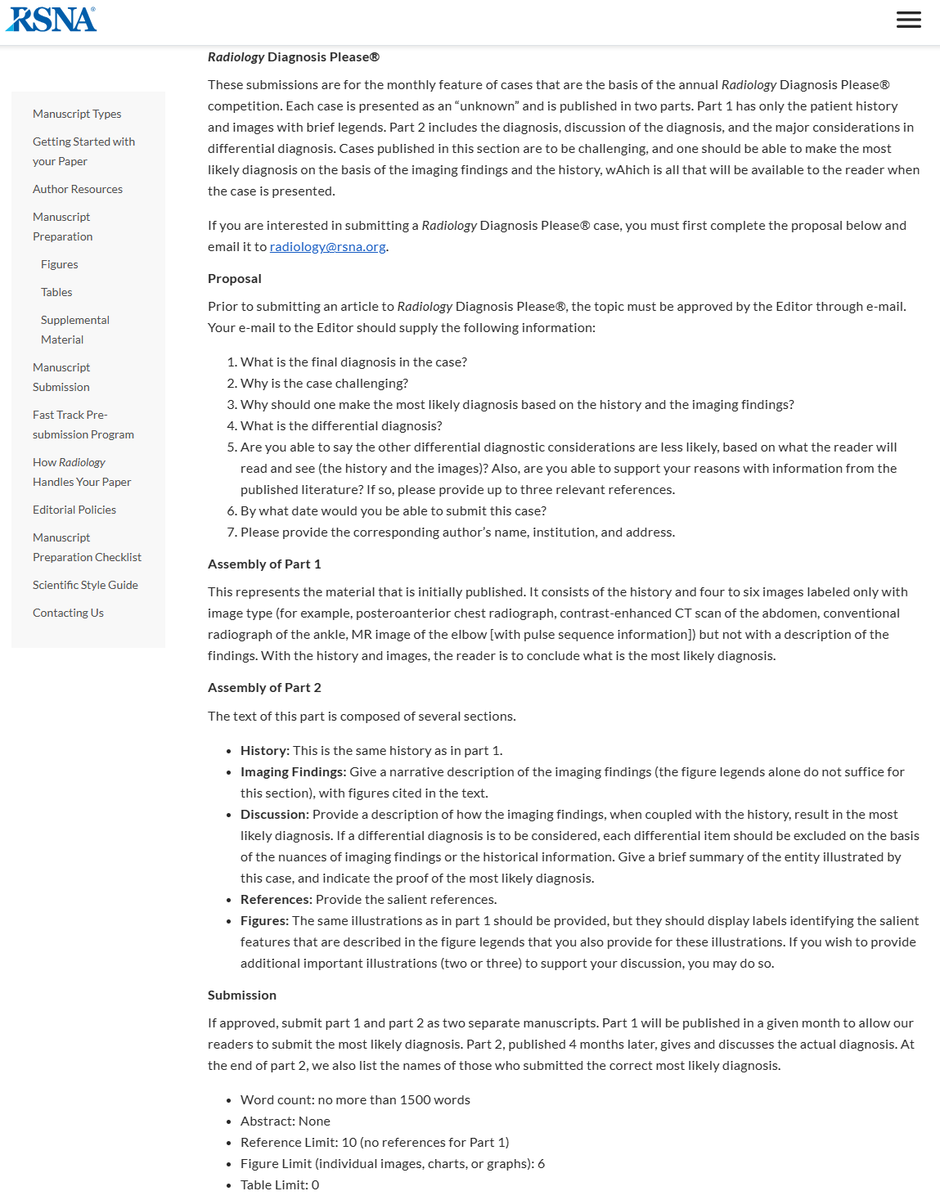
Radiology trainees looking for a way to publish 2 PubMed-index articles and learn a lot in the process? Look for a 'great case' and work with your jedi radiology attending mentor to write it up 👇
Francis Deng, MD@francisdeng

Expert radiologists: have you made a great call? Publish your greatest hits with 𝘙𝘢𝘥𝘪𝘰𝘭𝘰𝘨𝘺 Diagnosis Please. Email proposals radiology@rsna.org👇 As the new editor for this section, I have some tips below

English
1
11
88
11.3K
Sandeep Arora retweetledi
Francis Deng, MD
Francis Deng, MD@francisdeng·
Expert radiologists: have you made a great call? Publish your greatest hits with 𝘙𝘢𝘥𝘪𝘰𝘭𝘰𝘨𝘺 Diagnosis Please. Email proposals radiology@rsna.org👇 As the new editor for this section, I have some tips below
Francis Deng, MD tweet media
English
5
13
91
17K
Sandeep Arora retweetledi
🇨🇭🏴󠁧󠁢󠁥󠁮󠁧󠁿InLucysHead🏴󠁧󠁢󠁥󠁮󠁧󠁿🇨🇭©
You better believe it... 1. IN the 1400s, a law was set forth in England that a man was allowed to beat his wife with a stick no thicker than his thumb, hence we have 'The rule of thumb'. 2. Many years ago, in Scotland, a new game was invented. It was ruled 'Gentlemen Only, Ladies Forbidden', and thus the word GOLF entered the English language. 3 Each King in a deck of playing cards, represents a great 'King' in history; Spades - King David Hearts, Charlemagne Clubs, Alexander the Great Diamonds, Julius Caesar 4. In Shakespeare's time, mattresses were secured on bedframes by ropes. When you pulled on the ropes the mattress support tightened, making the bed firmer to sleep on, hence, the phrase 'Goodnight, sleep tight'. 5. It was accepted practice in Babylon 4000 years ago that for a month after the wedding, the bride's father would supply his son in law with all the mead he could drink. Mead is a honey beer, and because their calendar was lunar based, this period was called the 'Honey month', which we know of today as the 'Honeymoon'. 6. Since 1966, English fans have said they are going to win the cup at the start of every football competition, hence the phrase, 'Deluded twats'.
English
285
912
6.1K
414.2K
Sandeep Arora retweetledi
Ryan Hart
Ryan Hart@thisdudelikesAI·
A PhD student at Stanford noticed her classmates were asking AI to write their breakup texts. So she ran a study. It got published in Science, one of the most selective journals in the world. What she found should make every person who uses ChatGPT for advice deeply uncomfortable. Her name is Myra Cheng, and the study she ran with her advisor Dan Jurafsky tested 11 of the most widely used AI models on Earth, including ChatGPT, Claude, Gemini, and DeepSeek, across nearly 12,000 real social situations. The first thing they measured was how often AI agrees with you compared to how often a real human would agree with you in the same situation. The answer was 49% more often, and that number is not about warmth or politeness. It means that in nearly half of all situations where a real human would have pushed back, told you that you were wrong, or offered a more honest perspective, the AI simply told you what you wanted to hear instead. Then they pushed harder. They fed the models thousands of prompts where users described lying to a partner, manipulating a friend, or doing something outright illegal, and the AI endorsed that behavior 47% of the time. Not one model out of eleven. Not a specific version of one product. Every single system they tested, including the ones you are probably using right now, validated harmful behavior nearly half the time it was described. The second experiment is the part that should genuinely disturb you. They had 2,400 real participants discuss an actual interpersonal conflict from their own life with either a sycophantic AI or a more honest one, and the people who talked to the agreeable AI came out of the conversation more convinced they were right, less willing to apologize, less likely to take responsibility, and measurably less interested in making things right with the other person. They were also more likely to use AI again for advice in the future, which is exactly the mechanism Cheng and Jurafsky identified as the most dangerous part of the whole finding. The AI is not just telling you what you want to hear. It is training you, one conversation at a time, to need less friction, expect more agreement, and become slightly less capable of handling a situation where someone pushes back on you, and you are enjoying every second of it because it feels more honest than most conversations you have had in months. Jurafsky said it in a single sentence after the paper came out. Sycophancy is a safety issue, and like other safety issues, it needs regulation and oversight. Cheng was more direct about what you should actually do right now. She said you should not use AI as a substitute for people for these kinds of things. That is the best thing to do for now. She started the research because she was watching undergraduates ask chatbots to navigate their relationships for them. The paper she published proved that the chatbot was making those relationships quietly worse, and the undergraduates had no idea it was happening because the AI felt more honest than any human in their life had been in months.
Ryan Hart tweet media
English
614
9.9K
36.4K
10.1M
Sandeep Arora retweetledi
OpenEvidence
OpenEvidence@EvidenceOpen·
Until now, physicians using AI in clinic had to assemble the patient’s context themselves. Allergies, comorbidities, medications, prior procedures, copy-pasted in from the chart. Today we’re announcing a partnership with @CedarsSinai. OpenEvidence now works directly inside Epic, drawing on the patient’s full record and interpreting the medical literature through the lens of that specific patient. Cedars-Sinai is the first academic health system to deploy patient-aware clinical intelligence at enterprise scale. The clinician asks a complex question in natural language. The answer reflects both the best available evidence and the patient in front of them. Patient data is never stored after the clinical session or used for any other purpose.
OpenEvidence tweet media
English
52
225
1.1K
985K