

Ben
276 posts

Ben
@LetMeCookBrah
Well lookie here I like movies and music Follow me if you loathe the government
Katılım Kasım 2014
241 Takip Edilen3.4K Takipçiler

@BretWeinstein There’s a four hour documentary on YouTube breaking down every trick he does, it’s not surveillance, you’re retarded
English

This seems like nothing, but it's obviously something. It's possible to deduce things from subtle cues, but it is impossible do it reliably, on cue. Certainly not pin numbers or baby names.
It's done with surveillance. And the message is obvious: We know your secrets.
Jonathan Karl@jonkarl
. @OzTheMentalist reveals the trick he had just performed on Karoline Leavitt when the shooting happened last night at the White House correspondents’ dinner. He figured out the name of @PressSec ‘s soon to be born child
English
Ben retweetledi


Ben retweetledi

Nothing unites this app quite like a corporate sex scandal
English
Ben retweetledi

Americans don't even ask before taking your countrys oil anymore, they just look at you like this
DiscussingFilm@DiscussingFilm
First look at a freak in Zach Cregger's ‘RESIDENT EVIL’.
English
Ben retweetledi

Gas prices up 30%.
Beef prices up 12%.
Farm bankruptcies up 46%.
Republicans:
The Hill@thehill
Senate Republicans push bill to authorize $400 million for White House ballroom thehill.com/homenews/senat…
English
Ben retweetledi

Hello Julia, sans aucune ironie, c'est top que tu prennes le temps de te renseigner. Mais le problème quand on lit Marx aujourd'hui, c'est qu'on prend pour acquis sa prémisse de départ, alors qu'elle a été démontée scientifiquement il y a plus de 150 ans.
Toute la pensée de Marx repose sur la théorie de la valeur-travail. L'idée que la valeur d'un bien vient de la quantité de travail nécessaire pour le produire. Si tu acceptes cette prémisse, alors oui, tout son raisonnement tient. Le capitaliste "vole" la plus-value du travailleur, l'exploitation est mathématique, la révolution est inévitable.
Sauf qu'en 1871, trois économistes (Menger en Autriche, Jevons en Angleterre, Walras en Suisse) découvrent indépendamment la même chose : la valeur n'est pas objective, elle est subjective et marginale.
Un verre d'eau dans le désert vaut une fortune. Le même verre à côté d'une rivière ne vaut rien. Le travail incorporé est identique. Donc le travail ne détermine pas la valeur. C'est le consommateur qui valorise un bien selon son utilité marginale dans un contexte donné.
Exemple concret : tu peux passer 1000 heures à tricoter un pull moche que personne ne veut. Selon Marx, ce pull a énormément de valeur (beaucoup de travail incorporé). Selon la réalité, il ne vaut rien. Parce que personne n'en veut.
À l'inverse, Bernard Arnault crée des milliards de valeur non pas parce qu'il "exploite" mais parce qu'il a su anticiper et organiser des désirs humains à grande échelle. La valeur est créée par la coordination, pas extraite par le vol.
Cette découverte (la révolution marginaliste) a invalidé tout l'édifice marxiste. Pas pour des raisons idéologiques, pour des raisons scientifiques. C'est pour ça que plus aucun département d'économie sérieux au monde n'enseigne Marx comme un cadre d'analyse valide. On l'enseigne en histoire de la pensée.
Maintenant, le truc important. Si ton intention en lisant Marx c'est d'aider les pauvres (c'est une intention noble), alors tu vas être surprise par ce qui suit.
Regarde les chiffres de la Banque mondiale. En 1820, 90% de l'humanité vivait dans l'extrême pauvreté. Aujourd'hui, moins de 9%. Cette chute historique ne s'est PAS produite dans les pays qui ont appliqué Marx. Elle s'est produite dans les pays qui ont libéralisé leur économie.
Chine post-1978, Vietnam post-1986, Inde post-1991, Pologne post-1989. À chaque fois qu'un pays libéralise, des centaines de millions de gens sortent de la pauvreté en une génération. À chaque fois qu'un pays applique Marx (URSS, Cambodge, Corée du Nord, Venezuela), c'est la famine et les goulags.
Ce n'est pas une opinion, c'est l'expérience la plus massive jamais menée en sciences sociales. Plusieurs milliards de cobayes humains, sur un siècle.
Donc paradoxalement, si tu aimes vraiment les pauvres, la position la plus cohérente n'est pas d'être marxiste. C'est d'être pour la liberté économique. Parce que c'est empiriquement la seule chose qui a jamais sorti massivement les gens de la misère.
Pour creuser, je te recommande trois lectures qui vont changer ta vision :
"La Loi" de Frédéric Bastiat (court, lumineux, gratuit en ligne)
"La Route de la Servitude" de Hayek
"Économie en une leçon" de Henry Hazlitt
Bonne lecture, et vraiment chapeau de chercher à comprendre plutôt que de rester dans tes certitudes. C'est rare.
Julia ひ@lifeimitatlife
Depuis tout à l'heure je me renseigne sur les idées de Karl Marx sincèrement je n'arrive pas à comprendre comment on peut être pour le capitalisme et même plus généralement être de droite
Français
Ben retweetledi

Ben retweetledi

Ben retweetledi

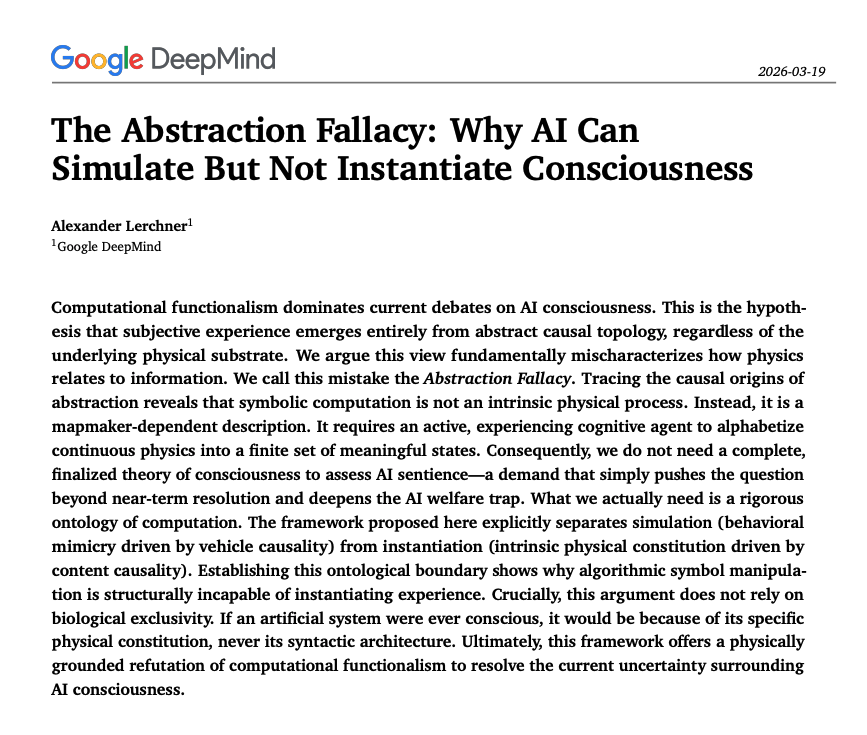

Opus 4.7 uses more thinking tokens, so we've increased rate limits for all subscribers to make up for it. Enjoy!
English
Ben retweetledi

Ben retweetledi

What a time to be alive, it's like the collapse of Rome, but with memes.
English
Ben retweetledi

Ben retweetledi

Obama was just more charismatic and a better liar. They are both mass murderers.
Mark 🍁@Markfry809
How in hell did America go from This to This?🤪
English
Ben retweetledi

Judging by my tl there is a growing gap in understanding of AI capability.
The first issue I think is around recency and tier of use. I think a lot of people tried the free tier of ChatGPT somewhere last year and allowed it to inform their views on AI a little too much. This is a group of reactions laughing at various quirks of the models, hallucinations, etc. Yes I also saw the viral videos of OpenAI's Advanced Voice mode fumbling simple queries like "should I drive or walk to the carwash". The thing is that these free and old/deprecated models don't reflect the capability in the latest round of state of the art agentic models of this year, especially OpenAI Codex and Claude Code.
But that brings me to the second issue. Even if people paid $200/month to use the state of the art models, a lot of the capabilities are relatively "peaky" in highly technical areas. Typical queries around search, writing, advice, etc. are *not* the domain that has made the most noticeable and dramatic strides in capability. Partly, this is due to the technical details of reinforcement learning and its use of verifiable rewards. But partly, it's also because these use cases are not sufficiently prioritized by the companies in their hillclimbing because they don't lead to as much $$$ value. The goldmines are elsewhere, and the focus comes along.
So that brings me to the second group of people, who *both* 1) pay for and use the state of the art frontier agentic models (OpenAI Codex / Claude Code) and 2) do so professionally in technical domains like programming, math and research. This group of people is subject to the highest amount of "AI Psychosis" because the recent improvements in these domains as of this year have been nothing short of staggering. When you hand a computer terminal to one of these models, you can now watch them melt programming problems that you'd normally expect to take days/weeks of work. It's this second group of people that assigns a much greater gravity to the capabilities, their slope, and various cyber-related repercussions.
TLDR the people in these two groups are speaking past each other. It really is simultaneously the case that OpenAI's free and I think slightly orphaned (?) "Advanced Voice Mode" will fumble the dumbest questions in your Instagram's reels and *at the same time*, OpenAI's highest-tier and paid Codex model will go off for 1 hour to coherently restructure an entire code base, or find and exploit vulnerabilities in computer systems. This part really works and has made dramatic strides because 2 properties: 1) these domains offer explicit reward functions that are verifiable meaning they are easily amenable to reinforcement learning training (e.g. unit tests passed yes or no, in contrast to writing, which is much harder to explicitly judge), but also 2) they are a lot more valuable in b2b settings, meaning that the biggest fraction of the team is focused on improving them. So here we are.
staysaasy@staysaasy
The degree to which you are awed by AI is perfectly correlated with how much you use AI to code.
English
Ben retweetledi

Imagine being a pilot hunted through 18,000 foot mountains, struggling for breath, and your clown-ass President is tweeting fucking war crimes while his son is making money off gambling whether you’ll live or die on Polymarket.

English


What are the odds he sends emails to Charlie Kirks dead email like it's his therapist
Disclose.tv@disclosetv
JUST IN - FBI director Kash Patel's personal email address hacked, says DOJ. This comes only a day after Iran-linked Handala hacking group claims it breached the FBI: "Soon you will realize that the FBI's security was nothing more than a joke."
English