

Linn
106 posts

Linn retweetledi

AI Agents will need their own payment rails.
Not your wallet. Not your keys. Their own.
ENIPAY gives AI Agents:
→ On-chain autonomous settlement for micro-payments
→ Dedicated Agent Credit Cards for real-world purchases
→ Independent payment identity with full compliance
The Agent Economy needs infrastructure.
We're building it.

English
Linn retweetledi

🔴عـــــــاجل
شيفرة البيت الابيض تنكشف، بعد ان نشر على حسابه الرسمي على منصة X " تم توضيح الصورة، التي تشير ان ترامب يضغط على الزر الاحمر، المعروف بصفارة الانذر للاسلحة النووية.


العربية
COME ON. Japanese biubiued their president with plastic. How come this ped0 still alive
The White House@WhiteHouse
English


Linn retweetledi

Linn retweetledi

Linn retweetledi


Linn retweetledi

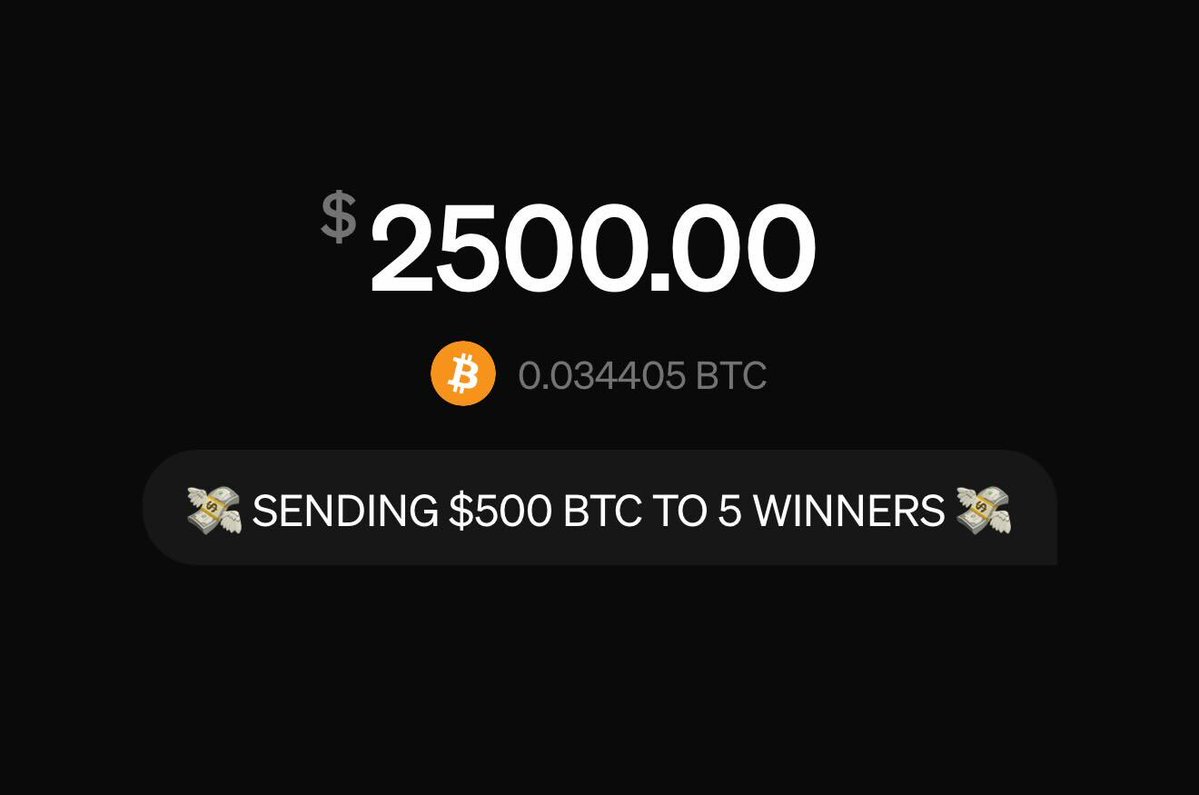
💰 $2,500 BITCOIN GIVEAWAY 💰
5 winners get $500 in Bitcoin each on March 31.
To enter:
1️⃣ Follow @moonpay
2️⃣ Like this post
3️⃣ RT to spread the love
p.s. if we hit 300K followers before March 31, we’ll add another $1,000.
Reply if you want to get MoonPaid 👇
English


Linn retweetledi

Linn retweetledi

Linn retweetledi

Everyone knows crypto is “macro-driven” now.
But most are still confused about how it actually works, which macro variables matter, or why price reacts the way it does.
These are my brief insights towards crypto pricing in this cycle, and what macro factors would be a red flag for crypto in 2026 👇
To understand what’s driving crypto prices today, it helps to start with some history.
The early crypto cycles were driven by a very different kind of demand.
A lot of it came from black market and shadow economy actors, their surrounding ecosystems, and a group of OGs with a strong cypherpunk mindset.
That kind of capital didn’t care much about macro data or interest rates. The key questions back then were very practical:
> Can it be used?
> Can it be transferred?
> Can it move across borders?
Because of that, crypto had very weak correlation with the broader macro environment during those early years.
What’s changed in this cycle is pricing power (who is setting the marginal price) 👇
As regulated access expanded and institutional capital gradually entered the market, crypto started to be treated less like a fringe asset and more like something that fits into standard asset allocation frameworks.
That’s the point where crypto became highly sensitive to macro liquidity conditions, meaning changes in rates, money supply, and global liquidity started to directly affect pricing.
When you see Bitcoin described as liquidity-driven, sensitive to macro conditions, or tied to real interest rates, this is generally what people are pointing to.
So what does that actually mean in practice?
I think it comes down to two main forces.
The first is dollar liquidity conditions 👇
The market is no longer debating whether rate cuts will happen. The real focus is on the pace, slope, and depth of those cuts.
Over longer horizons, crypto has been highly sensitive to changes in money supply and real interest rates.
When liquidity increases but money itself loses purchasing power, capital naturally looks for scarce assets that can’t be printed at will.
This isn’t a hard rule, but it shows up repeatedly across cycles and helps explain why capital flows into crypto in certain phases.
In plain language: when money gets printed faster and holding cash feels worse, people start searching for things with fixed or hard to dilute supply.
Bitcoin is one of those things.
More bluntly, it’s not that people suddenly fall in love with Bitcoin. It’s that confidence in money itself starts to weaken.
The second force runs a bit deeper and has to do with how markets define and allocate to safe haven assets 👇
We’ve seen traditional precious metals like gold and silver get repriced multiple times across different phases.
That reflects persistent demand for protection against sovereign credit risk.
Even now, many investors still think of Bitcoin mainly as a risk on asset.
But as institutional participation increases, more long term capital is starting to treat it as a complementary store of value.
That shift is closely tied to Bitcoin’s decentralized nature and its supply structure, which is difficult to arbitrarily dilute.
Because of this, I don’t see Bitcoin as replacing traditional safe haven assets. I see it increasingly being used as an allocation option outside the sovereign credit system.
When uncertainty rises and stress in the financial system builds, this positioning tends to become more visible.
Looking ahead, there are a few potential macro factors that I’m monitoring closely ⚠️
> Political uncertainty around the US midterm election cycle.
> Valuation and sentiment risks in AI and broader tech.
> Policy uncertainty in Japan that could disrupt yen carry dynamics and tighten global liquidity.
> Ongoing geopolitical tensions.
> Repricing pressure in sovereign debt markets, especially at the long end of the yield curve.
> And slowing global growth with rising downside risks to earnings.
Any one of these on its own is manageable. But if a bunch of them start to overlap, they could quickly become a black swan and present great risk for global markets.
When you layer this macro backdrop on top of Bitcoin’s four-year cycle, the setup from late Q3 into year end looks structurally more challenging for crypto.
There’s an argument that the four-year cycle is “dead” because of ETFs, institutional participation, and changing market structure. I don’t fully buy that.
I do think the cycle has weakened. I do think it’s less clean and less dramatic than it used to be.
But I don’t think it has disappeared.
Market structure evolves, but human behavior, liquidity cycles, and positioning habits don’t vanish overnight.
The rhythm may be flatter, but the pattern is still there.
Historically, these late-cycle, high-uncertainty phases haven’t been comfortable.
But they’ve often been the periods where long-term opportunities are created.
In simple terms, if Bitcoin were to see a sharp drawdown around late Q3 2026, it wouldn’t surprise me.
That’s typically the phase where I’d be leaning into (furiously) buying, not stepping away or panic.
I’d view it less as a failure of the thesis and more as part of the cycle.
Historically, those moments tend to offer the most asymmetric long-term opportunities.
English

Linn retweetledi

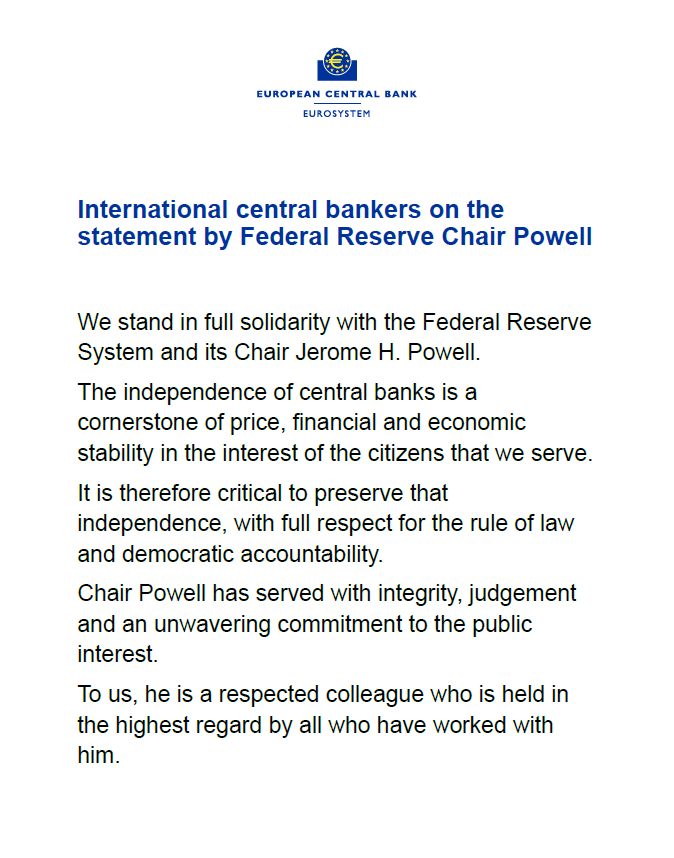
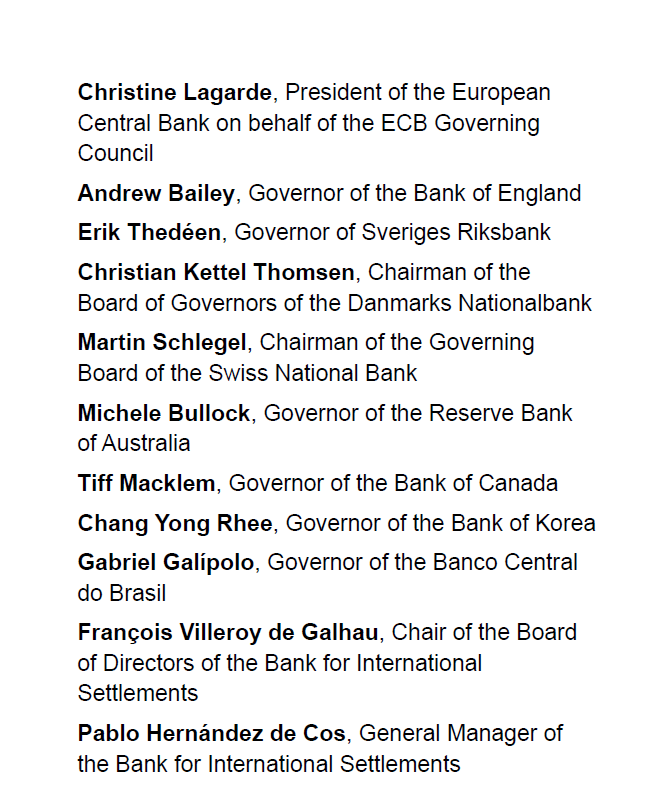
The ECB and other European and international central banks stand in full solidarity with the Federal Reserve System and its Chair Jerome H. Powell.
The independence of central banks is in the interest of the people we serve.
English