MercedesLopezArratia

559 posts

MercedesLopezArratia

MercedesLopezArratia

@LopezArratia

Estoy convencida de que el empoderamiento de las mujeres debe pasar por su autonomía financiera, emocional , sexual y de propósito.

Katılım Eylül 2009
399 Takip Edilen113 Takipçiler
MercedesLopezArratia retweetledi
LongevityLab
LongevityLab@LxngevityLab·
I've spent thousands of hours watching all 835 episodes of The Diary Of A CEO podcast. Here are the 10 craziest health lessons I learned (so you can skip the 1000+ hours): 1. Weekly sex extends your life by 49%:
English
19
201
1.7K
706.1K
MercedesLopezArratia retweetledi
Matthew LaBosco
Matthew LaBosco@matthew_labosco·
Robert Sapolsky is a Stanford neuroscientist who proved chronic stress is the silent killer doctors ignore. On Chris Williamson's podcast, he revealed 10 "normal" habits you do every day that wreck your sleep, mood, and nervous system: 1) Replay conversations in your head
English
157
2.1K
17.8K
3.8M
MercedesLopezArratia retweetledi
Nav Toor
Nav Toor@heynavtoor·
Claude can now meal prep your entire week and hit your exact nutrition goals like a $200/hour registered dietitian from the Mayo Clinic. For free. Here are 12 prompts that plan meals, calculate macros, and save you $500/month on groceries: (Save this before it disappears)
Nav Toor tweet media
English
118
625
7.4K
1.4M
MercedesLopezArratia retweetledi
Evan Luthra
Evan Luthra@EvanLuthra·
Anthropic pays engineers $750,000+ a year to understand how LLMs work. Stanford just put a 2 hour lecture that covers 80% of it for FREE. Bookmark this. Give it 2 hours today. It might be the highest ROI thing you do this month:
English
232
3.3K
21.8K
2.5M
MercedesLopezArratia retweetledi
Neyazuddin Ansari
Neyazuddin Ansari@riyazz_ai·
Finding 5 — Meditation changes brain density in 8 weeks. Harvard neuroscientist Sara Lazar showed: 8 weeks of daily meditation increases gray matter in regions controlling: → Self-awareness → Compassion → Emotional regulation And DECREASES gray matter in: → The amygdala (fear center) You are literally building a less fearful, more aware brain with meditation.
English
1
18
297
56.5K
MercedesLopezArratia retweetledi
Jaynit
Jaynit@jaynitx·
In the 1920s, a Stanford psychologist tracked genius children for 50 years. Malcolm Gladwell breaks down what he discovered: Rich families → successful. Poor families → failures. Not average. Failures. Genius-level IQs that produced nothing. He spent 60 minutes at Microsoft explaining why we're wrong about success: The psychologist was named Terman. He gave IQ tests to 250,000 California schoolchildren. He identified the top 0.1%. Kids with IQs of 140 and above. His hypothesis: these children would become the leaders of academia, industry, and politics. He tracked them. And tracked them. For decades. The results split into three groups. The top 15% achieved real prominence. The middle group had average, moderately successful professional lives. And the bottom group? By any measure, failures. The difference wasn't personality. Wasn't habits. Wasn't work ethic. It was simple: the successful geniuses came from wealthy households. The failures came from poor families. Poverty is such a powerful constraint that it can reduce a one-in-a-billion brain to a lifetime of worse than mediocrity. There's a concept called "capitalization rate." It asks a simple question: what percentage of people who are capable of doing something actually end up doing that thing? In inner city Memphis, only 1 in 6 kids with athletic scholarships actually go to college. If our capitalization rate for sports in the inner city is 16%, imagine how low it must be for everything else. Here's something stranger. Gladwell read the birth dates of the 2007 Czech Junior Hockey Team: January 3rd. January 3rd. January 12th. February 8th. February 10th. February 17th. February 20th. February 24th. March 5th. March 10th. March 26th... 11 of the 20 players were born in January, February, or March. This isn't unique to the Czechs. Every elite hockey team in the world shows the same pattern. Every elite soccer team too. Why? The eligibility cutoff for youth leagues is January 1st. When you're 10 years old, a kid born in January has 10 months of maturity on a kid born in October. That's 3 or 4 inches of height. The difference between clumsy and coordinated. So we look at a group of 10 year olds, pick the "best" ones, give them special coaching, extra practice, more games. We think we're identifying talent. We're just identifying the oldest. Then we give the oldest more opportunities, and 10 years later they really are the best. Self-fulfilling prophecy. The capitalization rate for hockey talent born in the second half of the year? Close to zero. We're leaving half of all potential hockey players on the table because of an arbitrary date on a calendar. Kids born in the youngest cohort of their school class are 11% less likely to go to college. 11% of human potential squandered because we organize elementary school without reference to biological maturity. Now here's the part about math. Asian kids dramatically outperform Western kids in mathematics. The gap is enormous and consistent across decades of testing. Some people say it's genetic. It's not. It's attitudinal. When Asian kids face a math problem, they believe effort will solve it. When Western kids face a math problem, they believe the answer depends on innate ability they either have or don't. Here's the proof. The international math tests include a 120-question survey. It asks about study habits, parental support, attitudes. It's so long most kids don't finish it. A researcher named Erling Boe decided to rank countries by what percentage of survey questions their kids completed. Then he compared it to the ranking of countries by math performance. The correlation was 0.98. In the history of social science, there has never been a correlation that high. If you want to know how good a country is at math, you don't need to ask any math questions. Just make kids sit down and focus on a task for an extended period of time. If they can do it, they're good at math. Why do Asian cultures have this attitude? Gladwell's theory: rice farming. His European ancestors in medieval England worked about 1,000 hours a year. Dawn to noon, five days a week. Winters off. Lots of holidays. A peasant in South China or Japan in the same period worked 3,000 hours a year. Rice farming isn't just harder than wheat farming. It's a completely different relationship with work. There's a Chinese proverb: "A man who works dawn to dusk 360 days a year will not go hungry." His English ancestors would have said: "A man who works 175 days a year, dawn to 11, may or may not be hungry." If your culture does that for a thousand years, it becomes part of your makeup. When your kids sit down to face a calculus problem, that legacy of persistence translates perfectly. Now consider distance running. In Kenya, there are roughly a million schoolboys between 10 and 17 running 10 to 12 miles a day. In the United States, that number is probably 5,000. Our capitalization rate for distance running is less than 1%. Kenya's is probably 95%. The difference isn't genetic. The difference is what the culture values and where it spends its attention. Here's the most fascinating finding. 30% of American entrepreneurs have been diagnosed with a profound learning disability. Richard Branson is dyslexic. Charles Schwab is dyslexic. John Chambers can barely read his own email. This isn't coincidence. Their entrepreneurialism is a direct function of their disability. How do you succeed if you can't read or write from early childhood? You learn to delegate. You become a great oral communicator. You become a problem solver because your entire life is one big problem. You learn to lead. 80% of dyslexic entrepreneurs were captain of a high school sports team. Versus 30% of non-dyslexic entrepreneurs. By the time they enter the real world, they've spent their whole life practicing the four skills at the core of entrepreneurial success: delegation, oral communication, problem solving, and leadership. Ask them what role dyslexia played in their success and they don't say it was an obstacle. They say it's the reason they succeeded. A disadvantage that became an advantage. Here's what Gladwell wants you to understand: When we see differences in success, our default explanation is differences in ability. We forget how much poverty, stupidity, and attitude constrain what people can become. We refuse to admit that our own arbitrary rules are leaving talent on the table. We cling to naive beliefs that our meritocracies are fair. The capitalization argument is liberating. It says you don't look at a struggling group and conclude they're incapable. It says problems that look genetic or innate are often just failures of exploitation. It says we can make a profound difference in how well people turn out. If we choose to pay attention. This 60 minute Microsoft talk will teach you more about success than every self-help book you've ever read combined. Bookmark this & give it an hour today, no matter what.
English
394
2.1K
7.8K
1.6M
MercedesLopezArratia retweetledi
Goku
Goku@ProjectGokuu·
Dr. Rhonda Patrick just dropped a 3-hour masterclass on the Huberman Lab podcast. She shared 8 shocking insights about everyday things that are slowly making you sick: 1) Drinking water from glass bottles (has higher levels of microplastics than in plastic ones)
English
277
411
5.3K
3.1M
MercedesLopezArratia retweetledi
Allen Braden
Allen Braden@allen_explains·
Every salary you accepted, every price you agreed to, every negotiation you walked out of thinking you did okay The person across the table wasn't guessing. They were calculating. You were improvising. They were running a system. That system has a name: Game Theory. And one Yale professor named Ben Polak taught an entire course on it. The same frameworks that get drilled into students paying $150k for an MBA — laid out clean, in one hour, completely free. After watching it you'll never sit across from someone in a negotiation the same way again. You'll start seeing the hidden logic behind why people make the moves they make — in business, in hiring, in pricing, in everyday decisions most people treat as instinct. This is the kind of thinking that separates people who react from people who position themselves three moves ahead. Yale put it online for anyone willing to spend 60 minutes on it. That's the most asymmetric trade you'll make all week.
English
2
256
936
97.6K
MercedesLopezArratia retweetledi
Robert ₿reedlove
Robert ₿reedlove@Breedlove22·
I interviewed one of the most controversial MDs on the internet @paulsaladinomd He exposed the 9 biggest lies the health industry sold you and every single one is making you fatter, weaker & sicker (THREAD) Lie #1: "Sunscreen prevents cancer''
English
48
237
1.7K
678.8K
MercedesLopezArratia retweetledi
Roan
Roan@RohOnChain·
This 2 hour Stanford lecture shows exactly how Stanford trains it's engineers to build AI systems. It's more practical than every Claude tutorial & prompting threads you've seen. Bookmark & give it 2 hours, no matter what. It'll be the most productive thing you do this weekend.
English
159
1.9K
13.7K
1.7M
MercedesLopezArratia retweetledi
Rony
Rony@Ronycoder·
Instead of watching Netflix, watch this 1-hour Yale lecture by Professor Ben Polak. It will change how you think about decisions in negotiations, business, and everyday life.
English
55
1.8K
8.1K
802.9K
MercedesLopezArratia retweetledi
CooperBaggs 💰🍞
CooperBaggs 💰🍞@edgaralandough·
Joy is not childish. It is the whole point of being alive. 20. I hope I have earned your follow. Have a great day!
English
15
26
597
102.5K
MercedesLopezArratia retweetledi
Roan
Roan@RohOnChain·
This 2 hour Stanford lecture on AI careers will teach you more about winning in the AI race than every piece of AI content you have scrolled past this year. Bookmark this & give it 2 hours, no matter what. It'll be the most productive thing you could do this weekend.
English
137
2.3K
11.7K
1.6M
MercedesLopezArratia retweetledi
Isabel Fernández
Isabel Fernández@isafernan·
Jay Shetty acaba de tener en su podcast a uno de los mejores cirujanos ortopédicos del mundo. La Dra. Vonda Wright. Reveló verdades impactantes sobre la grasa, el envejecimiento y tu cuerpo que el 99% de los médicos no te contarán... Aquí tienes todo lo que necesitas saber: 1. Caminar hace crecer el cerebro.
Español
20
82
353
53.5K
MercedesLopezArratia retweetledi
Dan Go
Dan Go@CoachDanGo·
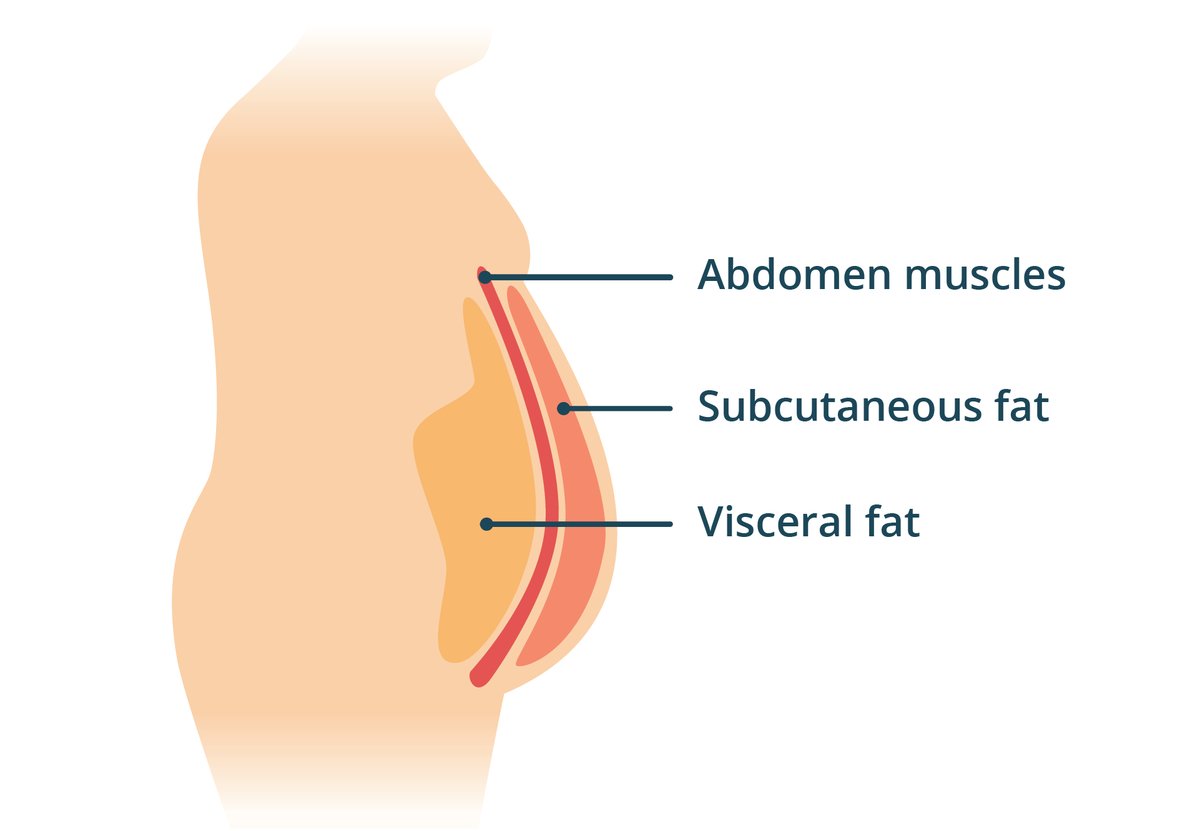
The world's easiest diet to eliminate visceral fat:
Dan Go tweet media
English
28
131
2.2K
1.9M
MercedesLopezArratia retweetledi
Dickie Bush 🚢
Dickie Bush 🚢@dickiebush·
A handful of things that are worth the money: - Eight Sleep - One $5000+ watch - Blackout curtains - Bamboo sheets - Uber Black - Home espresso machine - 1:1 skill tutoring - High-level masterminds - Standing desk - Herman Miller chair - Specced out MacBook Pro - Home sauna & cold plunge - Second work phone - AirPod Pros - Flying your friends in - Grass fed ribeyes - 1:1 personal training - The whole tab at group dinners - Home mobility station - The person behind you’s coffee - Flowers for your mom and girlfriend - Carbon steel pans - High-quality chef’s knife - Fresh socks every quarter - Premium gym membership - Luggage that doesn’t break - Max speed WiFi - Walking desk treadmill - A+ talent team members - Paid ads - Muji pens & journals - Maxxed out AI tools - New running shoes often - Sports massages - The newest iPhone - TSA PreCheck - Weekly house cleaner - Bedroom air purifier - Personal meal prep chef - Prescription blue light blocking glasses - Executive assistant - VIP tickets at music festivals - Full bloodwork panels 3x per year - Weekend getaways in dope Airbnbs - Weekly date nights - Tax strategist
English
182
228
4K
605.7K
MercedesLopezArratia retweetledi
Aakash Gupta
Aakash Gupta@aakashgupta·
AI PMs at Netflix get paid $900K+. She's been an AI PM at not just Netflix, but also Amazon and Meta. And today, she broke down how you can too: 1:43 Types of AI PMs 7:11 - Technical Concepts Masterclass 58:57 - How to Job Search Well
English
17
138
1.1K
359.7K