Lowest Score Wins

1.6K posts

Lowest Score Wins banner
Lowest Score Wins

Lowest Score Wins

@LowScoreWins

Golf is hard®️ and the only sport where the Lowest Score Wins - We tweet stats, concepts and strategies to help shoot lower scores. Book is available now at...


Katılım Nisan 2014
98 Takip Edilen3.8K Takipçiler
Brad Sparling
Brad Sparling@playgolfcollege·
Most junior golfers practice. Very few practice efficiently. After watching thousands of hours of range sessions over 25 years, here are the most common practice mistakes I see: 1. No goal, plan, or purpose. Showing up and figuring it out as you go is not training. It’s killing time. Elite players walk onto the range knowing exactly what they’re working on, why it matters, and how they’ll know the session was successful. Purposeless practice builds lazy habits. 2. Not warming up dynamically before starting. Stretching your arms across your chest and hitting a few wedges is not a warm-up. Your body needs to be activated before it can perform its best. Dynamic movement, mobility work, and a progressive build from short to long prepares your nervous system for what’s coming. 3. Too much technique, not enough skill development. Working on mechanics has a place. But if every session is about swing positions, you are building a range player, not a golfer. Skill development means learning to control the ball under conditions that simulate real golf. 4. No clear idea of separation value. Most players practice what they enjoy, not what actually separates them from the competition. Separation value is simple: what parts of your game, if improved, would translate directly into lower scores? 5. All range, no course. Hitting perfect 7-irons from a flat lie in silence is not golf. It’s a drill. Real golf has uneven lies, wind, nerves, and consequences the range removes entirely. You cannot simulate pressure in a vacuum. Schedule at least as much on course practice as range time. Play games. Create competitions with yourself. That ratio alone will change your scores faster than any swing change. 6. Practicing strengths. Players naturally gravitate to what they’re already good at. It feels productive. It isn’t. Find the pattern in your data and go to work on what actually hurts you. Comfort is the enemy of improvement. 7. No sense of urgency or consequences. Hitting ball after ball with nothing on the line is not preparation for competition. It’s just repetition. Elite practice creates stakes. Hit this shot or you run. Make five in a row or you start over. Compete against a partner. Invent a game with a loser. If nothing matters in practice, nothing will feel familiar when everything matters in a tournament. 8. Skipping mental reps. If you’re not going through your full pre-shot routine in practice, you’re not practicing golf. You’re practicing mechanics. The routine is the bridge between thought and execution. Build it on the range so it’s automatic on the course. Under pressure you don’t rise to the occasion. You fall to your preparation. 9. No feedback loop. Practice without measurement is guessing. Track something. Face contact. Face to path. Strokes gained. What gets measured gets improved. What gets ignored stays broken. 10. Ignoring speed training. Distance is the most undervalued asset in junior golf. Coaches value it. Courses reward it. Speed work is non-negotiable. Clubhead speed is trainable at every age with the right protocols. 11. Phone and social media distraction. The phone is one of the most underrated killers of productive practice. One notification pulls you out of the work. One scroll breaks the focus you spent 20 minutes building. Practice demands presence. Leave the phone in the car, turn it off, or give it to someone else for the session. The players who protect their practice environment protect their development. 12. Never planning for creative and fun exploration. Not every session needs to be structured and serious. Some of the best development happens when players give themselves permission to experiment, try things that might fail, and play without judgment. Work harder than everyone else. But work smarter first.
English
4
8
64
16.7K
Lowest Score Wins retweetledi
Erik J. Barzeski
Erik J. Barzeski@iacas·
Big credit to EF for the changes he’s made to his golf swing. It’s often not easy or fast. The best students put in the time, even if it’s 5-10 mins/day, with focused practice. EF is one of those solid “Type 4” golfers who go about it the right way. Results speak for themselves!
English
4
5
49
21K
Lowest Score Wins retweetledi
Erik J. Barzeski
Erik J. Barzeski@iacas·
Thanks to @A_M_Golf for hosting the @GearsSports Summit again — always a great time! Also good fun talking with Shaun and Mike for the podcast. I love what they’ve done to help golfers understand concepts and play better. Check it out here: youtu.be/Xoh5R-S51fI
YouTube video
YouTube
Erik J. Barzeski tweet media
English
0
3
15
1.4K
Lowest Score Wins retweetledi
Erik J. Barzeski
Erik J. Barzeski@iacas·
@GearsSports' new “Hybrid” mode has gotten *really* good and offers superb accuracy with only a marked club, belt, and hat. I have a 14-camera setup and will be using Hybrid in many lessons in 2026 and beyond. Reach out if you’d like to #GetInGEARS (Hybrid or Classic!) today!
Erie, PA 🇺🇸 English
1
2
12
1.6K
Lowest Score Wins retweetledi
Erik J. Barzeski
Erik J. Barzeski@iacas·
Do you use your arms incorrectly in the backswing? Probably! Here’s the simple, easy move that you can master to put the club in the right spot every time. Your arms elevate and you rotate the thumbs a little. That’s it. that’s the move. #PlayBetter
English
6
30
302
77.7K
Lowest Score Wins retweetledi
Erik J. Barzeski
Erik J. Barzeski@iacas·
Just a few of the talented golfers I've had the pleasure of working with recently @GearsSports. If you're looking to take your swing to the next level, let's do it! Looking forward to working with the golfers traveling from CO and MO this weekend - reach out to #GetInGEARS! ⚙️
English
0
3
9
2.1K
Jon Sherman
Jon Sherman@practicalgolf·
What’s the most “boring” thing you’ve done in your golf game that saved most strokes?
English
787
9
666
458.2K
Lowest Score Wins
Lowest Score Wins@LowScoreWins·
Shameless bit of self promotion… I think y'all will really like this podcast with @iacas/@JaysonNickol/@TysonDeskins. Episodes are ≤ 20 minutes and this Episode 3 talks about our 6 Favorite Drills. If you'd like to shoot lower scores… subscribe and listen to @TheSpinAxis!
Erik J. Barzeski@iacas

It's always a great day when an episode of @TheSpinAxis drops. 😀 This episode features a snake draft of our 6 Favorite Drills! Did yours make the list? What's your favorite? Share them with @TheSpinAxis and we'll do a listener follow-up episode some day! thespinaxis.com/ep3/

English
1
1
7
10.6K
Jon Sherman
Jon Sherman@practicalgolf·
I love the internet (This is a 100 yard shot)
Jon Sherman tweet media
English
138
2
915
257.6K
Lowest Score Wins
Lowest Score Wins@LowScoreWins·
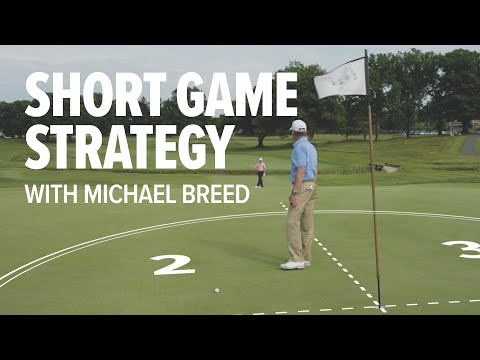
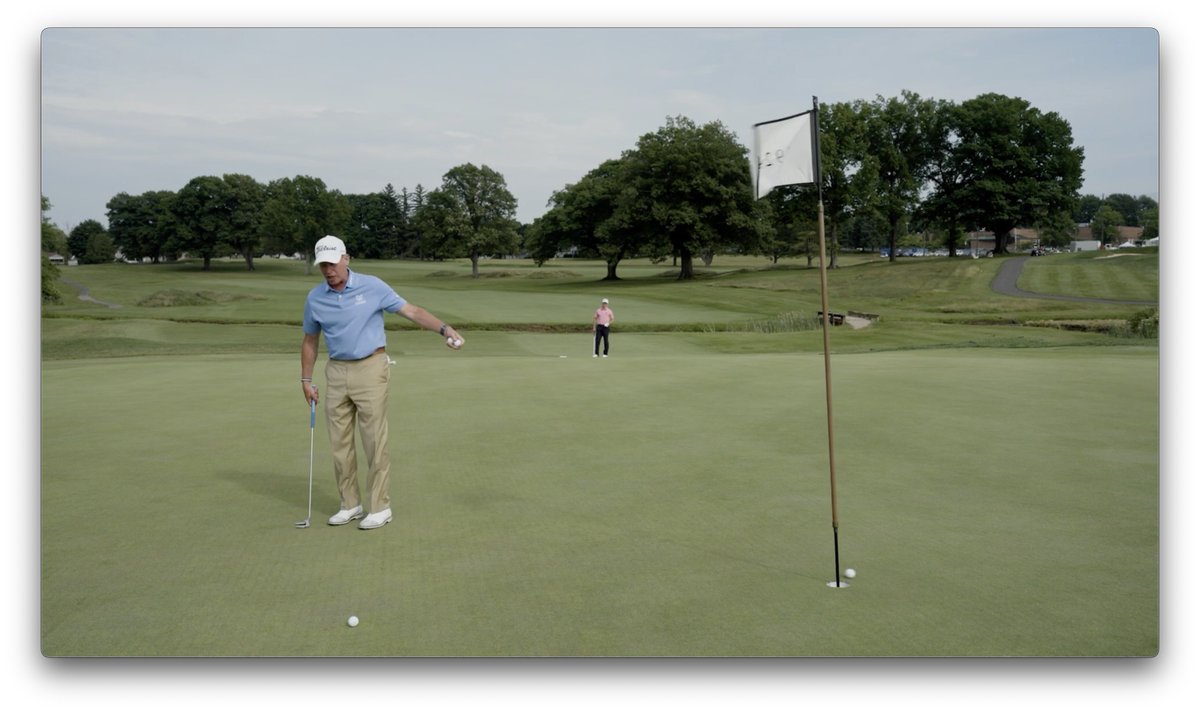
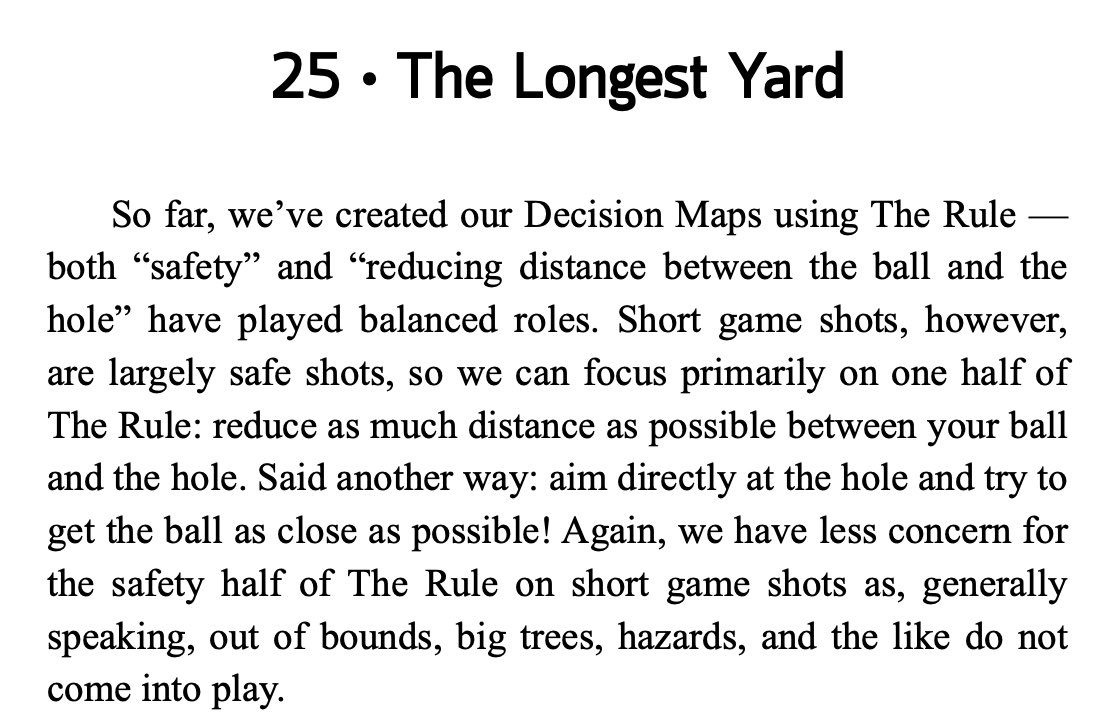
@MichaelBreed, re: youtu.be/IPIoioV9DpI … We found that a golfer’s best chance of getting up & down is hitting the ball closer to the hole, not intentionally trying to miss in a “good” quadrant. They make a lot more putts 4’ downhill than 8’ up.
YouTube video
YouTube
Lowest Score Wins tweet mediaLowest Score Wins tweet media
English
0
0
1
1.9K
Lowest Score Wins retweetledi
Erik J. Barzeski
Erik J. Barzeski@iacas·
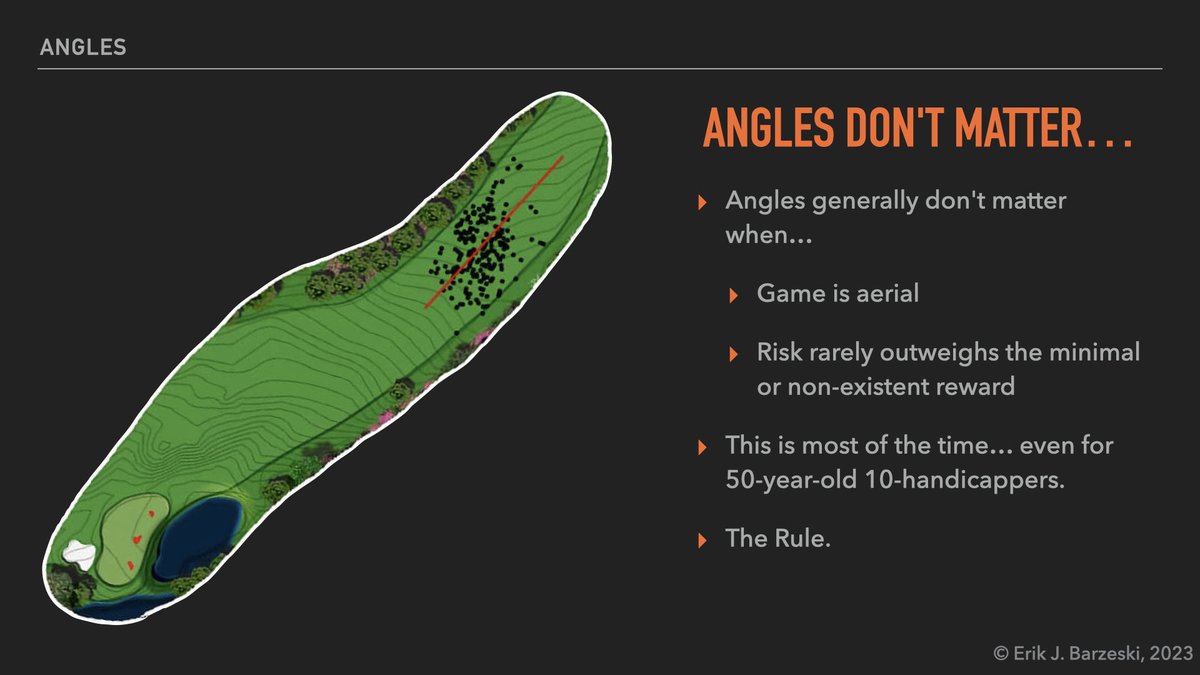
Two of the last few slides from my presentation to the @ASGCA last year on “angles” in golf course architecture:
Erik J. Barzeski tweet mediaErik J. Barzeski tweet media
English
1
1
6
1.3K
Jon Sherman
Jon Sherman@practicalgolf·
Hitting more GIR is one of the most significant predictors of scoring potential. Scratch golfers are GREAT at hitting them. But a typical 0 index will hit about 50-60% of greens in regulation. That's about eight missed greens per round.
English
7
2
201
109K
Jon Sherman
Jon Sherman@practicalgolf·
There are roughly 65 million golfers in the world. Less than 1% of them are scratch or better. People assume they must have magical powers on the golf course. But here are some stats that should blow your mind and, more importantly, give you perspective:
English
101
154
2.9K
1.5M
Lowest Score Wins
Lowest Score Wins@LowScoreWins·
@kevinjpmurray Yep. 1. You don’t need to come in from the left with a sand wedge. 2. Aiming for the left side of a 30-yard wide fairway is silly. 3. Moving over a yard or two on the tee changes the angle minimally. If it helps psychologically, great, but… materially, meh.
English
0
0
2
37
Kevin Murray
Kevin Murray@kevinjpmurray·
@LowScoreWins Chasing angle (zigzag), tee ball location (on right), aiming into trouble as a notion ….broadu speaking
English
1
0
1
55
Jon Sherman
Jon Sherman@practicalgolf·
The driver is the most important club for scoring. Agree or disagree? Why?
English
1K
5
947
429.7K
Shot Pattern
Shot Pattern@ShotPattern·
Scott Fawcett took course management and strategy to a new level with his ideas. Total game changer. HIGHLY recommend this podcast - and if you haven’t watched it, the full Happy Hour available to @GolfDigest + members. @LukeKerrDineen is crushing it these days! Link👇🏼
Shot Pattern tweet media
English
3
0
11
867
Jon
Jon@jonboguth·
@ryanmouquegolf I’ve been pretty sold on the theory “get closer to the hole” for years. It might have even been @LouStagner that convinced me!
English
1
0
3
285
Ryan Mouque
Ryan Mouque@ryanmouquegolf·
I feel like this will ALWAYS be debated due to golfers never really testing this hypothesis over time… The “feeling” you have from 100y vs 50y will always outweigh the FACTS that (as Lou said) 96% of golfers will in fact hit the ball closer to the hole the less distance they have to the hole I ask you… when you say you’re better from 100y than 50y… have you actually tested that for yourself or is that just an assumption based off feel and confidence? Not actually proximity to the hole…?
Lou Stagner (Golf Stat Pro)@LouStagner

96% of amateur golfers perform better from 40 to 60 yards than they do from 90 to 110 yards. If you are laying back to your "favorite number", you are very likely costing yourself strokes. If you are one of the few that perform better from 90 to 110 yards, there is a decent chance you have a case of the short game yips going on. You should find a good instructor to help you work through that. Advance the ball as far as you can, as often as you can, taking into account penalty strokes and other hazards. data from @ArccosGolf (Use code DATALOU15 to save 15%)
English
35
2
53
96.6K