Matthew D. Sacchet@MatthewSacchet
What happens in the brain when consciousness is voluntarily suspended in advanced meditation and then returns with radical clarity, equanimity, and relief?
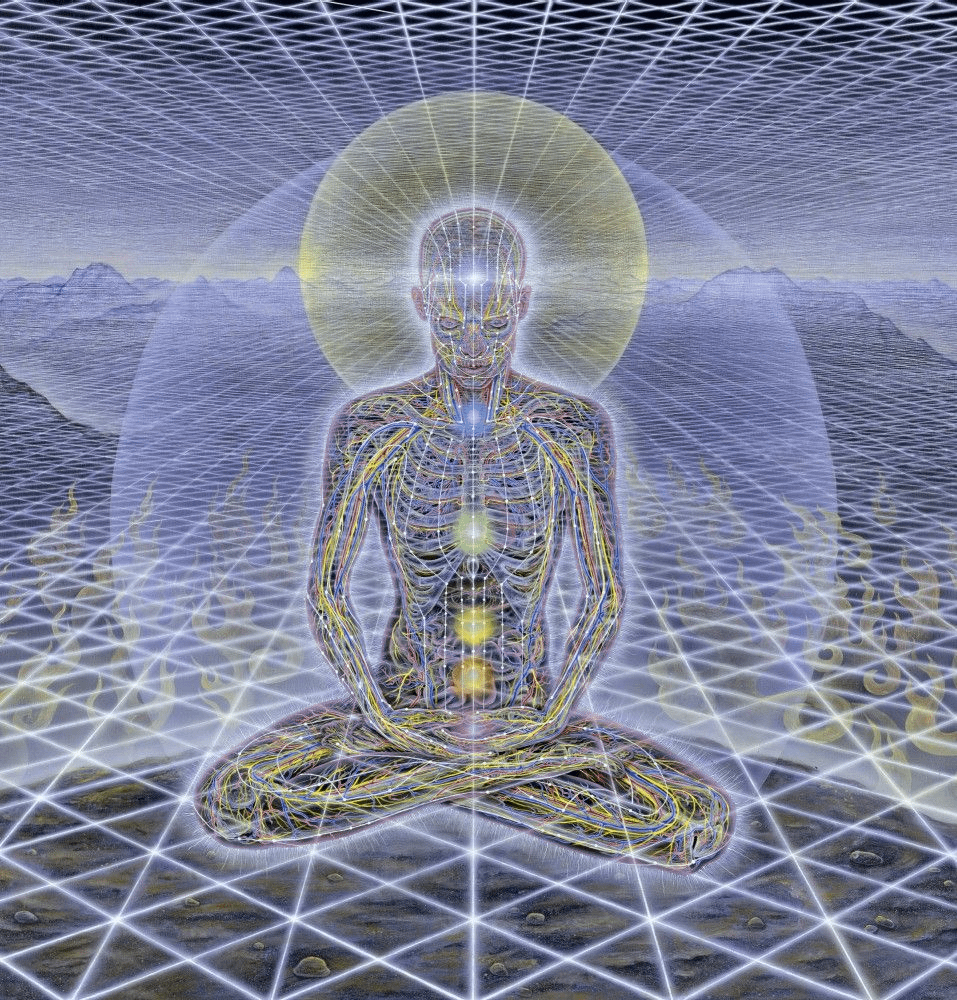
Mainstream neuroscience has largely studied reduced consciousness through sleep, anesthesia, or pathology, but advanced meditation offers something very different: extended cessation (EC). EC is a rare meditative endpoint (MEND) where phenomenal experience is temporarily and volitionally absent, followed by pronounced perceptual vividness, openness, equanimity, and affective balance. EC offers an endogenous, non-pharmacological, and volitional way to investigate how conscious experience may temporarily cease, and how the mind may reorganize afterward.
I'm delighted to share our new preprint: "EEG brain reconfiguration during meditation-induced extended cessation of consciousness: A dense-sampling multi-participant microstate study.”
Using high-density EEG microstate analysis across six frequency bands (broadband, delta, theta, alpha, beta, gamma) in five highly trained meditators, this study is one of the first empirical characterizations of EC.
Our key findings include:
-- Microstate B (linked to self-referential imagery and autobiographical memory) became less frequent and shorter during EC, suggesting down-regulation of the brain's inner self-narrative
-- Microstate C (linked to the default mode and salience networks) increased in dominance, reflecting deep inward absorption and metastable DMN reconfiguration
-- Transition flows shifted: sensory processing fed more toward DMN-like states and away from self-referential networks
-- Delta band changes point toward strengthened sensory-led updating with deprioritized self-related priors
-- Beta band changes suggest reduced cognitive-autobiographical interplay and enhanced local sensory loops
Together, these results support a precision re-weighting account of EC, converging with our prior 7T fMRI evidence of reduced global connectivity alongside enhanced sensory differentiation. Notably, EC produced no novel EC-specific microstate class, consistent with sleep and anesthesia. Instead, altered consciousness appears to modulate the temporal
parameters and syntax of existing maps. Unlike sleep and anesthesia, however, EC preserves neural complexity and is followed by a profound psychological afterglow rather than residual confusion.
Congratulations to first author David Zarka, co-authors Winson Yang @winsonfzyang, Abel Rassat, Ruby Potash @rpotash16, and Terje Sparby @terjesparby, as well as the extraordinary meditators who offered their time and their practice to make this science possible.
We warmly welcome reflections from scientists, clinicians, practitioners, and friends interested in this frontier.
The full preprint is included below ⤵️
May this work benefit many 🙏