Ludovic Huraux

1.3K posts

Ludovic Huraux banner
Ludovic Huraux

Ludovic Huraux

@LudovicHuraux

Co-founder & co-CEO of Amata - Building the brain of a matchmaker with AI - Pre-seed investor @HuggingFace.

Paris & NYC Katılım Haziran 2009
416 Takip Edilen9.2K Takipçiler
Ludovic Huraux retweetledi

Amir Mahla
Amir Mahla@amir_mahla·
Reachy Mini can now control my computer… by voice. I’ve POC a Computer Use Agent directly embedded into Reachy Mini (local computer automation + speech control), built on top of the conversational app. Simple idea → Put Computer Use in Reachy Mini, and let the robot’s voice-first, multimodal agent interface make it accessible to anyone. I’m super excited about this new paradigm and would love feedback on whether we should open it to the community. Would you want a computer-use Reachy Mini agent?
English
17
34
187
16.7K
Ludovic Huraux retweetledi
TechCrunch
TechCrunch@TechCrunch·
Nvidia CEO Jensen Huang showcases AI use cases that have become "utterly trivial" with the pace of advancement, during #CES2026.
English
14
58
228
87.7K
Ludovic Huraux retweetledi
Remi Fabre
Remi Fabre@RemiFabreRobot·
Feels like a much better interface for AI. Multimodal LLM + embodiment on Reachy Mini, an open-source robot. Voice, vision, real-time interaction.
English
7
20
101
14.5K
Ludovic Huraux retweetledi
clem 🤗
clem 🤗@ClementDelangue·
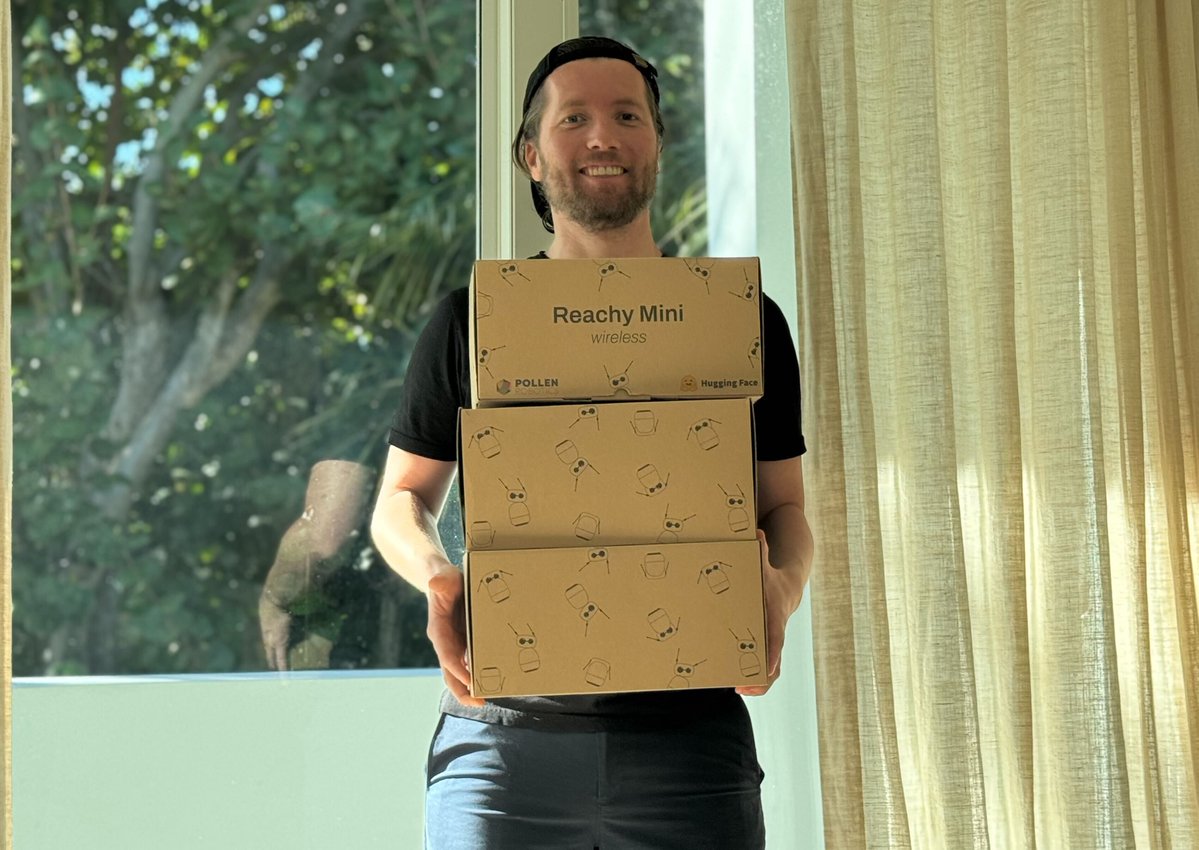
This weekend, we’re shipping 3,000 Reachy Minis all over the world! To my knowledge, it’s one of the largest shipments of AI robots of the year (or ever?) just in time for Christmas! If you’re in this batch, expect to receive an email in the coming days. Keep in mind that this first version is designed for AI builders, so it’s very bare-bones. At the moment, it has very little software on it, and, like most early hardware, will likely have a fair number of bugs and quirks. Right now, it’s much more of an open-source, DIY robotics platform than a polished consumer robot. The beautiful thing is that we’ve already seen community members managing to hack cool apps and help to improve Reachy Mini a lot! If you’re not in this batch or haven’t bought a Reachy Mini yet, you can expect delivery by the end of January, or roughly 90 days after your purchase (we’re actively working to shorten that timeline). In the meantime, you can start building for current or future Reachy owners using the simulator in the GitHub repo, as all of the software is open-source. Congrats to the @pollenrobotics @huggingface @seeedstudio teams that worked extremely hard to get to this milestone, just 5 months after the beginning of the project! I'm terribly excited to see what you’ll all build with this! Let’s go open and collaborative AI robotics!
clem 🤗 tweet media
English
33
39
341
74.5K
Ludovic Huraux retweetledi
Gradium
Gradium@GradiumAI·
Yesterday at AI Pulse we plugged our real-time STT + TTS API into @reachymini and turned it into a live, unscripted conversational robot. Voice, personality, language, gestures, all controlled by speech. Big shoutout to @pollenrobotics and @huggingface for making this cool little guy.
English
13
50
229
67.8K
Ludovic Huraux retweetledi
clem 🤗
clem 🤗@ClementDelangue·
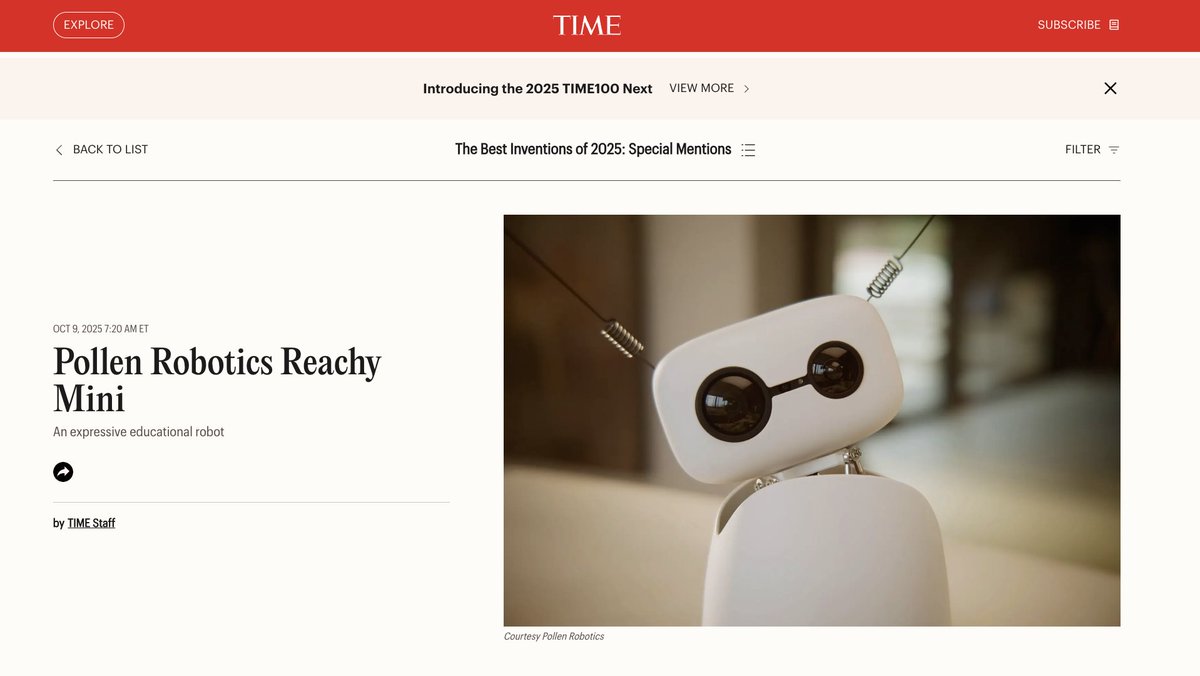
So proud to see Reachy Mini named one of the Best Inventions of 2025 by @TIME! Huge credit to the @pollenrobotics and @huggingface teams, turning a concept into thousands of units sold and shipped in under 6 months. We might not be as slick as some other robotics companies (we sure don't do such good marketing videos and demos), but if we hit 100,000 Reachy Minis next year and 1 million by 2027, we’ll have a real shot at transforming robotics and AI through open-source and collaboration. We’re just getting started 🦾🦾🦾
clem 🤗 tweet media
English
14
37
254
52.6K
Ludovic Huraux retweetledi
clem 🤗
clem 🤗@ClementDelangue·
Remi plugged @openai GPT-4o to Reachy Mini and it's pretty cool. Check the mirror challenge & chess playing in particular! Fun new capabilities: - Image analysis: Reachy Mini can now look at a photo it just took and describe or reason about it - Face tracking: keeps eye contact and makes interactions feel much more natural - Motion fusion: [head wobble while speaking] + [face tracking] + [emotions or dances] can now run simultaneously - Face recognition: runs locally - Autonomous behaviors when idle: when nothing happens for a while, the model can decide to trigger context-based behaviors Questions for the community: • Earlier versions used flute sounds when playing emotions. This one speaks instead (for example the "olala" at the start is an emotion + voice). It completely changes how I perceive the robot (pet? human? kind alien?). Should we keep a toggle to switch between voice and flute sounds? • How do the response delays feel to you? Some limitations: - No memory system yet - No voice identification yet - Strategy in crowds still unclear: the voice activity detection tends to activate too often, and we don’t like the keyword approach Can't wait to see what you all build with it!
English
16
38
200
35.4K
Ludovic Huraux retweetledi
clem 🤗
clem 🤗@ClementDelangue·
Reachy mini + emotion reaction. Fun stuff by @RemiFabreRobot!
English
13
36
275
32.3K
Ludovic Huraux retweetledi
Sam Altman
Sam Altman@sama·
gpt-oss is a big deal; it is a state-of-the-art open-weights reasoning model, with strong real-world performance comparable to o4-mini, that you can run locally on your own computer (or phone with the smaller size). We believe this is the best and most usable open model in the world. We're excited to make this model, the result of billions of dollars of research, available to the world to get AI into the hands of the most people possible. We believe far more good than bad will come from it; for example, gpt-oss-120b performs about as well as o3 on challenging health issues. We have worked hard to mitigate the most serious safety issues, especially around biosecurity. gpt-oss models perform comparably to our frontier models on internal safety benchmarks. We believe in individual empowerment. Although we believe most people will want to use a convenient service like ChatGPT, people should be able to directly control and modify their own AI when they need to, and the privacy benefits are obvious. As part of this, we are quite hopeful that this release will enable new kinds of research and the creation of new kinds of products. We expect a meaningful uptick in the rate of innovation in our field, and for many more people to do important work than were able to before. OpenAI’s mission is to ensure AGI that benefits all of humanity. To that end, we are excited for the world to be building on an open AI stack created in the United States, based on democratic values, available for free to all and for wide benefit.
English
1.3K
2.1K
21.3K
2.7M
Ludovic Huraux retweetledi
clem 🤗
clem 🤗@ClementDelangue·
When @sama told me at the AI summit in Paris that they were serious about releasing open-source models & asked what would be useful, I couldn’t believe it. But six months of collaboration later, here it is: Welcome to OSS-GPT on @huggingface! It comes in two sizes, for both maximum reasoning capabilities & on-device, cheaper, faster option, all apache 2.0. It’s integrated with our inference partners that power the official demo. This open-source release is critically important & timely, because as @WhiteHouse emphasized in the US Action plan, we need stronger American open-source AI foundations. And who could do that better than the very startup that has been pioneering and leading the field in so many ways. Feels like a plot twist. Feels like a comeback. Feels like the beginning of something big, let’s go open-source AI 🔥🔥🔥
clem 🤗 tweet media
English
88
248
2.7K
168.7K
Ludovic Huraux retweetledi
Thomas Wolf
Thomas Wolf@Thom_Wolf·
5 days after launch and we've sold $1M of Reachy Mini Steadily getting $50k orders per day following the release peak time to ramp up production!
Thomas Wolf tweet media
English
9
9
232
29.2K
Ludovic Huraux retweetledi
Thomas Wolf
Thomas Wolf@Thom_Wolf·
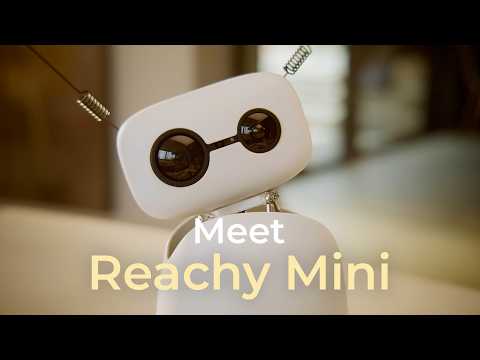
Thrilled to finally share what we've been working on for months at @huggingface 🤝@pollenrobotics Our first robot: Reachy Mini A dream come true: cute and low priced, hackable yet easy to use, powered by open-source and the infinite community. Tiny price, small size, huge possibilities. A robot built to code, learn, share with AI builders of all ages, all around the globe, using the latest vision, speech and text AI model. A first robot for today's and tomorrow's AI builders. Read more and order now at hf.co/blog/reachy-mi… First deliveries expected right after the summer.
English
242
524
3.4K
1.3M
Ludovic Huraux retweetledi
Remi Cadene
Remi Cadene@RemiCadene·
$120k worth of order in just a few hours! 🤗 - Cute robots will be present in our daily lives - Reachy mini is an important step forward - And it's open-source! youtube.com/watch?v=JvdBJZ…
YouTube video
YouTube
English
8
10
162
18.6K
Ludovic Huraux retweetledi
Romain 🎾🇫🇷
Romain 🎾🇫🇷@RomainNextGen·
Premier point ATP pour Mathys Domenc 🇫🇷 2009 ! Le jeune français est le 3 ème 2009 🇫🇷 après Kouamé et Jade a remporter un point ATP. Et quelle victoire sur Denolly 🇫🇷 n°313. En 3 sets, 7-6 3-6 7-6 à la guerre, à la bataille, au courage. Super content pour lui, j'aime bien le profil. BRAVOOO Et pourquoi pas en gratter d'autre ?
Romain 🎾🇫🇷 tweet mediaRomain 🎾🇫🇷 tweet media
Français
8
2
70
6.7K
Ludovic Huraux retweetledi
clem 🤗
clem 🤗@ClementDelangue·
Great research on open-source by @Harvard: - $4.15B invested in open-source generates $8.8T of value for companies (aka $1 invested in open-source = $2,000 of value created) - Companies would need to spend 3.5 times more on software than they currently do if OSS did not exist I suspect that these numbers and impact are even greater for AI than for software (would be great to study!)
clem 🤗 tweet media
English
135
1.4K
5.8K
792.5K
clem 🤗
clem 🤗@ClementDelangue·
We just crossed 2,000 organizations who upgraded to @huggingface Enterprise including Mercedes, Nvidia, Deutsche Telekom, Synopsys, ServiceNow, Fidelity, Chegg, Perplexity, Procter and Gamble, Meta, Mistral, AMD, Snowflake, Shopify, Jasper, Writer, IBM, J&J, Credit Karma, Adyen, Gates Foundation, Fiverr, Ernst & Young,... Let's go!
clem 🤗 tweet media
English
10
18
173
42.6K
Ludovic Huraux retweetledi
clem 🤗
clem 🤗@ClementDelangue·
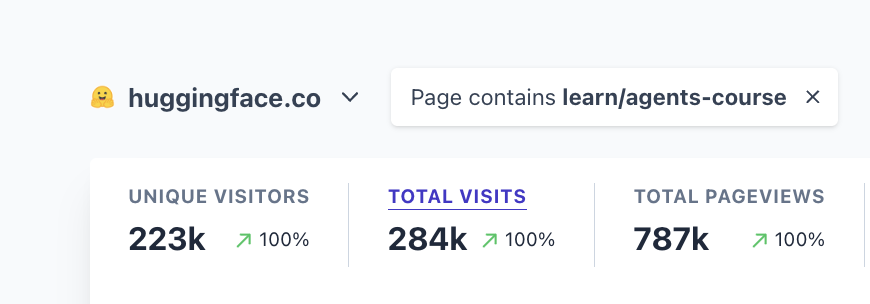
Is this the biggest classroom on AI agents to date?
clem 🤗 tweet media
English
19
10
226
23.9K
Ludovic Huraux retweetledi
andrew chen
andrew chen@andrewchen·
My product went viral on social media but all I got were these shitty users Product launches work differently in the age of social media. Imagine that one day, you launch an app. Your new app is received well. A small trickle of users shows up, and they are loyal and loving. With their feedback, you iterate on the product. You ship. They send in nice comments. Feels good man. One night, a friend sends you a link showing a thumbnail of your app, with the comment, “omg this vid is hilarious.” Wow, one of your users made a video about your app, and it’s funny. Really funny. You watch it a few times. Wow there’s a lot of comments. You check your analytics, and HOLY SHIT. Signups are going straight up. A major influencer just shared your video, and then another. Even more signups are piling up. Your app gets a Reddit thread. You search on X, and there’s posts in many languages about your app. It’s the start of a wild night. Congratulations, you’ve just gone viral on social media! Living the dream, right? The Invasion of the Looky-Loos Going viral is a new phenomenon, borne of the era of social media. Fueled by memetic copycatting, people view, share, and click through on the same videos and content. But when products go viral, they are invaded by Looky-Loos. What are Looky-Loos? Here’s the Oxford dictionary: LOOKY-LOO: A person who views something for sale with no genuine intention of making a purchase. (I learned this phrase a long time ago from a friend who used to sell cars!). When your product goes viral, yes, you do a big spike in users. But what you’re really getting is an Invasion of Looky-Loos, low quality users who come in, check things out, but don’t stick. In prior eras, this type of behavior was less extreme — there were fewer marketing channels, and fewer large scale ecosystems the size of today’s social media platforms. As a result, the top of funnel you receive in a less fragmented environment are naturally higher quality. The only comparison might be in getting a big newspaper headline written about your product, but that was rare — in a world of limited front page space and a daily cadence (not real time, like the internet), the new social media environment is much different. The question isn’t simply to increase DAUs but rather to look at the fundamentals: Is it durable? Is it scalable? Is it valuable? Looky-Loos are none of these, and as such, I am against the constant search to “go viral” on social media. When growth goes away When a product goes viral, its traction can’t last. It’s not pretty. Here’s what happens next: - The spike goes away after a few days. It isn’t plausible to sustain endless sharing, so eventually new signups will die down, and the real question is if your product retains (hint: it won’t, at least not this audience). And then you’re back where you started, looking for the next spike. - Unfortunately, it’s impossible to create a second spike the same way. People won’t re-share the same viral video multiple times. You can’t make the same jokes a second time. - The looky-loos arrive. The spike of new users is actually a spike of worse users. They’re less engaged, lower quality, and less valuable. They don’t convert to premium at the same rates, they don’t use the product in the same ways, and although your DAUs might be up 10x, your other metrics often aren’t. - Not ready. Turns out your product wasn’t ready for all the international users. Or the power users. Or the teens. They want to use your product in all the wrong ways, posting bad and weird things, terrorizing your loyal base. And after a while, both sets of users want to leave. Why does this happen? There is ultimately a tradeoff of quality and quantity for user growth, because getting more users generally leads to lower intent (and targeting) of that audience. People who find your product because they were recommended it by a friend — a highly targeted, relevant bunch — are not the same as the masses who see a funny video and click through to check it out. If you generalize this rule more fully, you realize that traction works on an “Easy come, Easy go” basis. If users come slowly, and an audience is built over time, they are will have high retention. But when they come quickly and all at once, they will leave quickly too. Again, easy come, easy go. Why big user spikes are bad I’m anti-spike! I’ll say it. I always tell people to stop chasing these silly launch spikes because in the end, they’re not valuable to the business. This is all funny to say because product builders are often looking to create these spikes. They’re chasing a big launch, or a huge trend driven by viral video. But I’ll argue that this is the wrong approach, and these crazy-fast traffic spikes are actually bad for your product. You can't just look at those up-and-to-the-right graphs and call it a win - you need to evaluate traction through multiple lenses, not just celebrate because some curves are shooting up. Not all traction is created the same. Instead, you want to look at the traction ask evaluate it on multiple lenses: - Durable. When product traction is durable, it means that high-quality users are finding the product, slowly but surely, and they stay engaged. They're the right target audience and they stick around. This means that you can trust that week to week or month-to-month, you are really building growth curves on growth curves. Metrics: D1/7/30, consistent weekly growth (5-10% WoW), NPS (and qualitative feedback), DAU/MAU - Scalable. When traction scales, it means your marketing channel has a repeatable motion that can be tapped again and again. These are channels with real size and depth - not just a one-off spike, but something that can be systematically activated. For example, if your growth motion is built around TikTok videos, it will probably get you some quick spikes of users, but it’s not possible to grow the number of new signups/day over time. You need to find deep channels like referrals, paid marketing, and viral growth that can scale to millions. Metrics: % organic, MAU/registered (low means poorly targeted), paid marketing payback period, signups/day (particularly if it smoothly increases over time) - Valuable. Not every customer is created equal, and the ones at the heart of your target audience will be more engaged, spend more, and interact with other users more. You need your marketing channels to deliver you valuable users, and you also need the most valuable ones to stick around Metrics: % US versus international, % convert to paid, ARPDAU, ARPU and ARPPU, and key action metrics The problem with going viral on social media is that that the traction comes quickly, and leaves quickly, so it’s not durable. The spikes you see can’t scale, and in fact, often the opposite — the initial spike you get is the biggest one, and once people have seen it, they are actually less likely to share over time. So it can’t scale. And of course, the Invasion of the Looky-Loos means they aren’t valuable. When do spikes work? Am I being too pessimistic about these viral spikes? Perhaps. After all, if you design your product correctly, perhaps you can filter out the bad users and just get the good ones. So here are some counter-examples: Waitlists. If you put a lot of users in queue and make them fill out some information, you can make sure your app for graphic designers is actually being users by graphic designers. This may not be scalable, but it’s more likely to be durable and valuable. Raise VC money immediately. I say this half joking, but sometimes having a big spike and a top ranking app is exactly the time you should be raising money to set you up to build something durable over time! Playing the long game. Targeted at the masses. Sometimes the product you’re building really is for the masses, and it’s just so great that it means the looky-loos will stick. This is of course the best possible outcome, where your spikes are retained. (But obviously very rare) Designed to churn. Some products are made knowing that they will have low rates of retention. The early AI image apps that show you in various AI filters come to mind — these are single player, try to get you to put in a recurring subscription right away, and ask you to share to your friends. You probably won’t use it month after month, but could an app dev end up with a few million bucks of revenue from people who forget to cancel? Sure. Cold start. Sometimes you’re building a networked product — a social app, a workplace collaboration tool, a marketplace, or otherwise — and you just need a lot of tonnage of users to get things going. Even if most folks are irrelevant, if you can get the 1% of creators in the 1/9/90 of creators/contributors/lurkers to show up, and you can aggregate even a few of them, maybe you just need to get started … I’m sure there’s many more! And in fact, if you have other ideas for how to take advantage of this, shoot me a mention on X at andrewchen and I’ll add to this list Of course, there are always X factors. Sometimes a product utilizes so much interesting tech, or is so ground-breaking in its approach, or the team is simply so good, that you should bet on them anyway. Even if their v1 causes ephemeral spikes, you might want to bet that it’s their v2 or v3 that gets there. A lot of this is what underlies many of the very large (but probably pre-product/market fit) investments in AI startups. But even then, it’s important to understand the risks. Don’t forget the goal is to scale high-intent users, not the Looky-Loos You might wonder, are the ephemerality of these social media spikes fundamental to their nature? I argue yes. My long-time readers will know that this has a distant relationship to something else I’ve written about in the past, on why A/B tests that purport to increase a metric like Signups by +10% usually don’t lead to +10% increases in revenue or active users. This essay argues that anything that increases the top of funnel by making it easier to do something always ends up letting in lower intent users who then are less motivated to go all the way through the funnel. Instead, they drop off. A big viral social media spike is exactly a flavor of this, but out in the real world. More users more quickly equals more users leaving quickly too. And if the spike is ephemeral, those DAUs will be too. Ultimately, startups and product builders need to remember that their goals aren’t to increase signups, or active users, which can be gamed by these spikes of Looky-Loos. Instead, the goal is to scale their high-intent, highly sticky users over time. Sometimes that is slow, gradual, and requires constant iteration. DAU spikes don’t matter. And this is why when I talk about product/market fit, I consider metrics that generally run over long periods of time — because stickiness, and high-intent, take time to measure. Instead, I refer to metrics like this to indicate scaled product/market fit (from a tweet I posted a few years back): 1) cohort retention curves that flatten (stickiness) 2) actives/reg > 25% (validates TAM) 3) power user curve showing a smile -- with a big concentration of engaged users (you grow out from this strong core) 3) viral factor >0.5 (enough to amplify other channels) 4) dau/mau > 50% (it's part of a daily habit) 5) market-by-market (or logo-by-logo, if SaaS) comparison where denser/older networks have higher engagement over time (network effects) 6) D1/D7/D30 that exceeds 60/30/15 (daily frequency) 7) revenue or activity expansion on a *per user* basis over time -- indicates deeper engagement / habit formation 8) >60% organic acquisition with real scale (better to have zero CAC) 9) For subscription, >65% annual retention (paying users are sticking) 10) >4x annual growth rate across topline metrics Of course, hitting these metrics is hard. Very hard. But it’s metrics like these that define an scalable, durable, valuable product. Anything else is just ephemeral.
English
39
42
297
52.1K