Luhanda Monti

455 posts

Luhanda Monti banner
Luhanda Monti

Luhanda Monti

@LuhandaM

MD, Cardiologist - Complex Coronary Disease | Heart Team Brazil | Heart Institute - InCor FMUSP🫀

Sao Paulo, Brazil Katılım Eylül 2021
637 Takip Edilen204 Takipçiler
Luhanda Monti retweetledi
Dr. Filippo Cademartiri
Dr. Filippo Cademartiri@FCademartiri·
💥 “Low risk”, no therapy, no events… what could possibly go wrong? They took 205 “healthy-ish” individuals: No MACE No lipid-lowering therapy CAC ≤ 100 (and 54% had CAC = 0) So basically: 👉 the kind of patients we reassure every day And then we did something radical: 👉 we actually looked at their arteries over time (serial CCTA) 📉 What happened? Spoiler: not great. Total plaque almost doubled over ~5 years Non-calcified plaque grew the most Low-attenuation plaque: 👉 from 9% → 23% 🧠 Translation (in case the message is still too subtle) 👉 Atherosclerosis progresses 👉 Even when: - CAC is low - no events occur - no treatment is given 🧬 The uncomfortable biology This is the key: 👉 Disease progression is mostly non-calcified Which means: 👉 the most dangerous part of the disease is the least visible to CAC 🎯 And stenosis? Almost unchanged. Of course. Because: 👉 plaque evolves BEFORE it obstructs 🧠 My favorite part (the silent killer insight) We are still: 👉 using CAC = 0 👉 as a “reassurance tool” While in reality: 👉 CAC = 0 ≠ no disease 👉 CAC = 0 = “we’re just not seeing it yet” 🔥 The real message of this paper This is not a “natural history study” This is: 👉 a demonstration of how blind we are without plaque imaging 🚨 Final uncomfortable truth If you wait for: - stenosis - symptoms - events You are not practicing prevention. You are: 👉 watching biology unfold in slow motion
Dr. Filippo Cademartiri tweet media
English
4
27
75
5.3K
Luhanda Monti retweetledi
Mente Estoico
Mente Estoico@Mente_estoico·
“Ningún hombre puede cruzar el mismo río dos veces, porque ni el hombre ni el agua serán los mismos.” - Heráclito
Mente Estoico tweet media
Español
8
579
2.7K
36.4K
Luhanda Monti retweetledi
Dr. Filippo Cademartiri
Dr. Filippo Cademartiri@FCademartiri·
🫀 This paper is quietly dangerous. Not because it’s wrong—
but because it can be misunderstood. Let’s go straight to the core. What the study actually shows In 479 CCS patients undergoing CCTA: 👉 Lower LDL-C (<70 mg/dL) was associated with 👉 MORE severe CAD and higher plaque burden Even more interesting: 👉 These patients had - more diabetes / pre-diabetes - more metabolic syndrome - worse glucose metabolism markers And: 👉 Diabetes (OR ~6.1) and pre-diabetes remained strong independent predictors of CAD risk The uncomfortable observation 👉 The “best treated” patients (low LDL) had the worst arteries Before anyone panics: This is NOT saying LDL reduction is harmful. This is saying something much more subtle—and more important. What is really happening? 1. Reverse causality (the elephant in the room) Patients with: 👉 prior events 👉 higher baseline risk 👉 more aggressive treatment → end up with lower LDL So: 👉 Low LDL is a marker of treated high-risk patients Not the cause of disease. 2. Metabolic risk is the real signal The study shows very clearly: 👉 Glucose dysregulation dominates residual risk - Diabetes - Pre-diabetes - Insulin resistance - Metabolic syndrome → strongly associated with plaque burden and Leiden score This is the key shift For years, we simplified CAD risk to: 👉 LDL = bad → lower is better That’s still true. But incomplete. What this paper actually teaches 👉 You can have “perfect LDL” and still have high atherosclerotic risk Because: 👉 Atherosclerosis ≠ cholesterol alone 👉 It is a metabolic + inflammatory + vascular disease The imaging angle (the real gold here) CCTA shows: 👉 more non-calcified plaques in low LDL group 👉 higher plaque burden (SIS) 👉 higher Leiden risk scores This is exactly where imaging becomes decisive: 👉 Biology > numbers Clinical implication (the part guidelines are still catching up with) Treating LDL alone: ❌ does NOT eliminate risk Because: 👉 residual risk = metabolic + inflammatory + phenotypic My take This paper reinforces a concept that is still underused clinically: 👉 CAD is an atheroma disease, not a cholesterol disease The real mistake to avoid A superficial reading would lead to: ❌ “Low LDL is associated with more disease → LDL doesn’t matter” That would be wrong. The correct interpretation 👉 LDL lowering works 👉 BUT it does not address the whole disease Where this goes next This is exactly where: 👉 advanced CCTA (plaque quantification, phenotype) 👉 PCCT (microstructure, composition) 👉 AI-QCT will redefine risk stratification. Bottom line 👉 LDL reduction is necessary 👉 but absolutely not sufficient And if you only track LDL: 👉 you are managing a number 👉 not the disease
Dr. Filippo Cademartiri tweet media
English
5
40
107
8.4K
Luhanda Monti retweetledi
Pensador Sincero
Pensador Sincero@pensadorinspira·
💭…
Pensador Sincero tweet media
2
49
187
3.2K
Luhanda Monti retweetledi
Reads with Ravi
Reads with Ravi@readswithravi·
“Every word has consequences. Every silence, too.” ― Jean Paul Sartre
English
22
138
801
19.4K
Luhanda Monti retweetledi
Libertario 🟨⬛
Libertario 🟨⬛@QuotesforGoal·
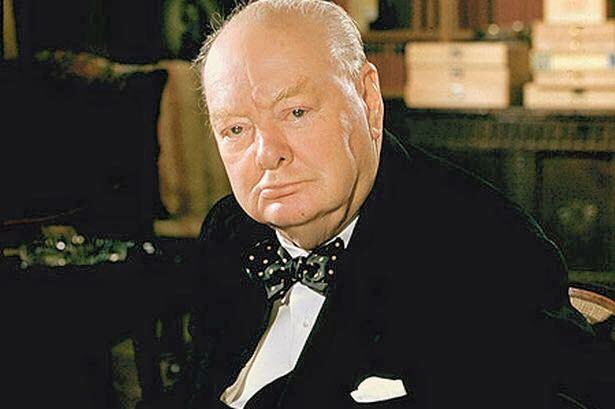
"Yo no escucho lo que dice la gente, solo observo lo que hacen. El comportamiento nunca miente" Winston Churchill
Libertario 🟨⬛ tweet media
Español
47
2K
7.7K
121.1K
Luhanda Monti retweetledi
Words of Wise | Mindset Coach
“To be free, you must first eliminate two things: the fear of a bad future and the memory of a bad past.” — Seneca
Words of Wise | Mindset Coach tweet media
English
39
911
3.8K
54.5K
Luhanda Monti retweetledi
AHA Science
AHA Science@AHAScience·
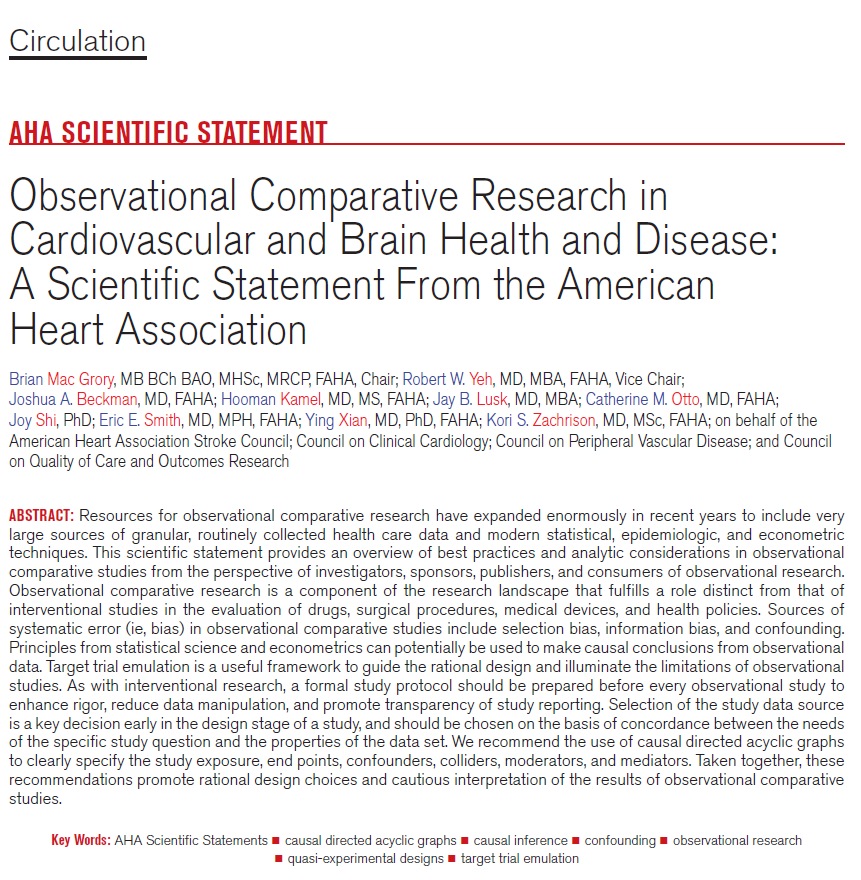
This scientific statement provides an overview of best practices and analytic considerations in observational comparative studies from the perspective of investigators, sponsors, publishers, and consumers of observational research and is applicable to all areas of cardiovascular, stroke and brain health research. ✍🏼 @brianmacgrory @joshuabeckmanmd @joy_shi1 @rwyeh @YingXian21
AHA Science tweet media
English
1
9
27
4K
Luhanda Monti retweetledi
Reads with Ravi
Reads with Ravi@readswithravi·
I’m in love with this sentence: “The degree to which a person can grow is directly proportional to the amount of truth he can accept about himself without running away.”
English
122
7.6K
35.1K
524.6K
Luhanda Monti retweetledi
The Ways of A Gentleman
The Ways of A Gentleman@Gentleman_Ways·
“More is lost by indecision than wrong decision. Indecision is the thief of opportunity.” - Cicero
The Ways of A Gentleman tweet media
English
57
1.1K
6.3K
110.3K
Luhanda Monti retweetledi
Camus
Camus@newstart_2024·
Most adults in their 20s, 30s, and 40s still can’t handle frustration, disappointment, or sadness any better than they could as toddlers — except now the stakes are massively higher. Dr. Becky Kennedy said this on Lewis Howes’ podcast and it hit hard. Real resilience isn’t avoiding tough emotions. It’s getting better at sitting with them. A brain surgeon with 1,000+ operations told Lewis Howes directly: the #1 skill every human needs is emotional regulation. Science backs this — research shows strong emotional regulation is one of the best predictors of long-term mental health, better relationships, and even physical health outcomes. In a world full of distractions and quick escapes, this might be the most important skill we’re not teaching. This one made me pause. I’ve definitely avoided hard feelings more than I’d like to admit. Getting better at sitting with them has quietly improved almost everything. How well do you handle uncomfortable emotions — sit with them or try to escape?
English
30
199
1.2K
114.2K
Luhanda Monti retweetledi
C. Michael Gibson MD
C. Michael Gibson MD@CMichaelGibson·
The key to success is not accepting rejection. Therefore I am sad to report that given the large number of rejections I receive every year, I am only able to accept under 5% of rejections. Please do remember, as I tell my team, no today just means yes is coming tomorrow. I wish you the best in your rejections of others. #cmgsays be a delusional optimist
C. Michael Gibson MD tweet media
English
4
12
93
8.7K
Luhanda Monti retweetledi
Nicholas Fabiano, MD
Nicholas Fabiano, MD@NTFabiano·
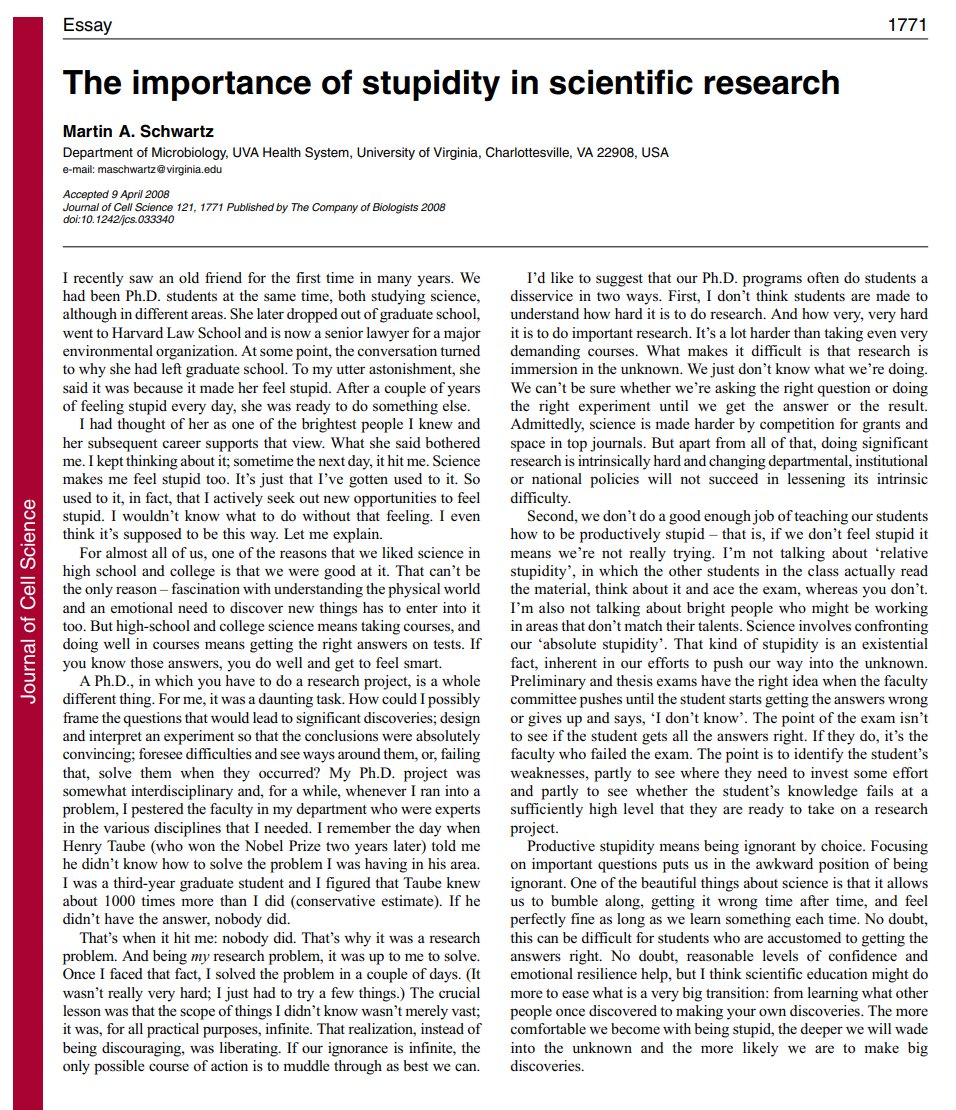
Feeling stupid is a crucial part of science. It means you're pushing into the unknown where real discoveries happen.
Nicholas Fabiano, MD tweet media
English
83
969
4.4K
145.2K
Luhanda Monti retweetledi
Reads with Ravi
Reads with Ravi@readswithravi·
“The meaning of life is to find your gift. The purpose of life is to give it away.” — Pablo Picasso
Reads with Ravi tweet media
English
37
572
3K
63.7K
Luhanda Monti retweetledi
Dr. Filippo Cademartiri
Dr. Filippo Cademartiri@FCademartiri·
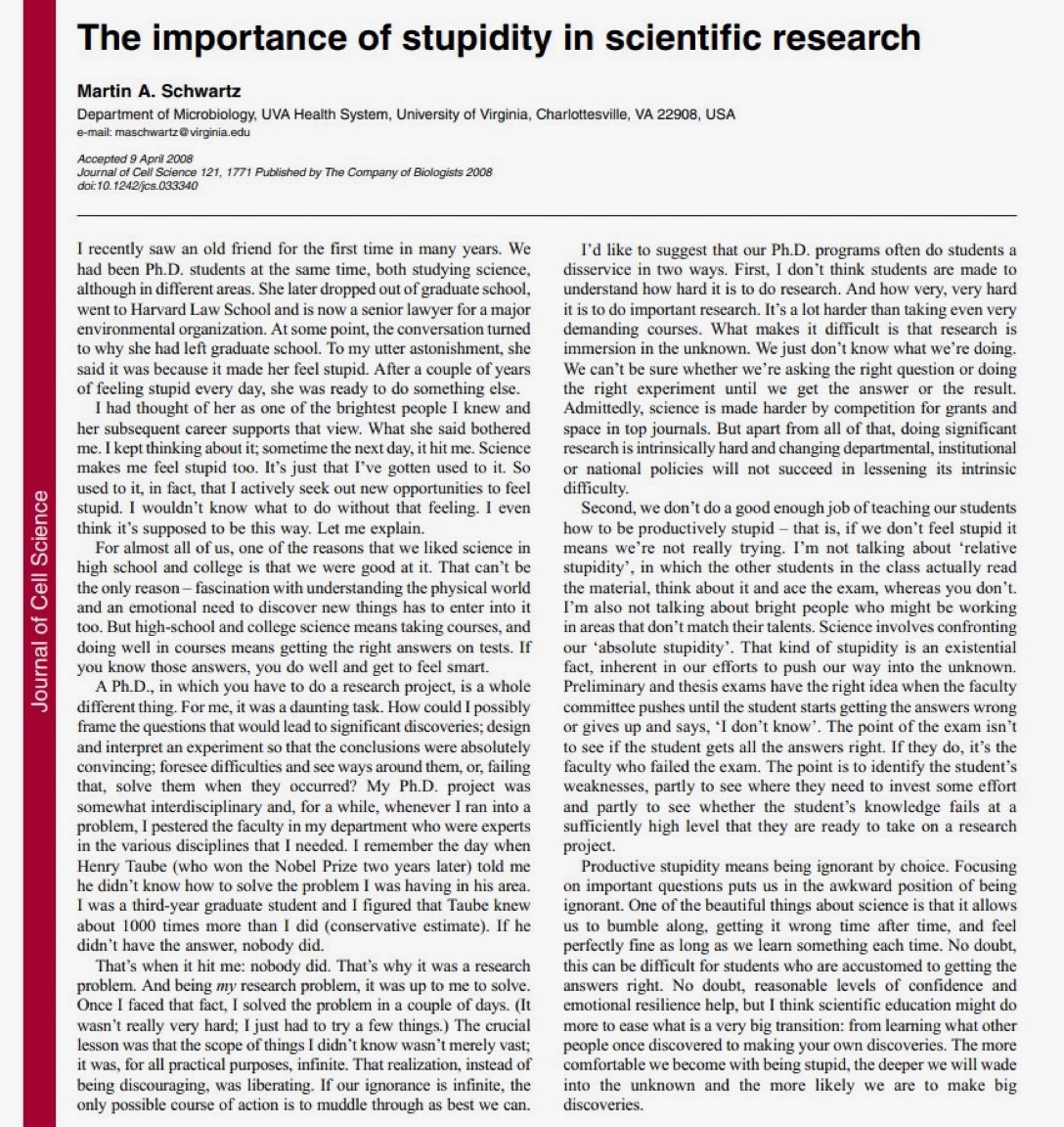
This article should be mandatory reading for every medical student, PhD candidate, researcher—and honestly, for anyone who mistakes expertise for certainty. “The importance of stupidity in scientific research” sounds provocative, almost offensive. But Martin Schwartz is not glorifying incompetence. He is describing the real operating system of discovery. Science is not built on knowing. Science is built on tolerating not knowing. That distinction matters. Most of education rewards correctness. School teaches us to answer. Exams reward speed, certainty, and precision. You feel intelligent when you get things right. Research is the opposite. Real research begins exactly where competence ends—at the frontier where nobody knows the answer, including the people you thought must know. That moment is psychologically brutal. You ask the expert. The expert shrugs. You assume you’re missing something. Then you realize: no—this is the work. You are not failing. You are standing at the actual boundary of knowledge. That feeling—“I must be stupid”—is often not a sign of inadequacy. It is often the first sign that you are finally asking an important question. Medicine struggles with this. We train doctors to avoid uncertainty, to fear being wrong, to perform confidence. But the best clinicians and the best scientists know how to sit inside ambiguity without collapsing into fake certainty. This is why AI in medicine also deserves caution. Systems trained only to reproduce established answers may become extraordinarily good at passing exams while being terrible at discovering what matters next. Guideline intelligence is not the same as scientific intelligence. Discovery requires productive stupidity: the willingness to stay with the uncomfortable, to look ignorant, to ask naïve questions, to be wrong repeatedly without protecting your ego. Most people want the authority of expertise. Very few want the humiliation required to earn it. But progress lives there. Not in certainty. Not in performance. Not in sounding smart. In the quiet discipline of saying: “I don’t know… yet.” And continuing anyway.
Dr. Filippo Cademartiri tweet media
English
36
547
1.5K
184.9K
Luhanda Monti retweetledi
Reads with Ravi
Reads with Ravi@readswithravi·
Elon Musk advice to ambitious people: Try to read a lot of books (read broadly), ingest as much information as you can and develop a good general knowledge.
English
60
622
4.2K
99K