Yves Lussier

2.5K posts

Yves Lussier banner
Yves Lussier

Yves Lussier

@LussierY

#Physician, #Scientist & #Entrepreneur, transforming #health with #PrecisionMedicine, #Genomics & practice-based evidence, #quantifiedself , Opinions are my own

Katılım Temmuz 2011
2.5K Takip Edilen1.4K Takipçiler
Yves Lussier retweetledi
Mustafa Suleyman
Mustafa Suleyman@mustafasuleyman·
We're approaching the dawn of medical superintelligence - the moment when affordable, world-class medical knowledge and support is at your fingertips whenever you need it. I think people are still underestimating how profound this transformation is going to be. Today we're announcing Copilot Health, enabling users to connect all their EHR records and wearable data in a secure, private health space that Copilot can analyze and reason about to provide personalized insights and proactive nudges. You choose what information to connect - from hospital lab results to your fitness tracker - and Copilot Health applies medical intelligence to surface easy to understand, personalized insights that you can actually act on. It's a dedicated space to bring your personal health data together in a single profile, including: - Activity, sleep, and vital trends from 50+ wearable devices, including Apple Health, Oura, Fitbit and many more - Health records from 50,000+ U.S. hospital and health systems, including visit summaries, medications, and test results - Comprehensive lab test results from Function Copilot Health enables people to arrive at their appointment with the right questions and the right context to make the time they have with doctors really count. Your data is always your data, and you are always in full control. Your data won't be used to train our AI models, and you can disconnect sources at any time. Our Copilot Health responses are also grounded in information from credible health organizations like Harvard Health, as well as real-time US provider directories to find the right real-world care. Copilot Health is launching first in the US to adults over 18, but we ultimately want to make this service available to the billions of people around the world who struggle to access reliable medical advice. Please give it a go and sign up to join the early Copilot Health community and help shape what comes next. More on the MAI blog: microsoft.ai/news/introduci…
English
80
142
659
164.5K
Yves Lussier retweetledi
Rony
Rony@Ronycoder·
She literally explained why you feel tired all day and how to fix it:
English
10
36
176
11.5K
Yves Lussier retweetledi
Dhairya
Dhairya@dkare1009·
🚨 MIT just dropped their entire AI library for FREE. Yes... the same MIT that trains the world’s top AI researchers. If you want to learn AI properly (not YouTube shortcuts), this is a goldmine 🧠⚡ Here’s the roadmap 👇 🧩 FOUNDATION LEVEL 1️⃣ Foundations of Machine Learning → Core algorithms → Theory + practice lnkd.in/d4fUFJwT 2️⃣ Understanding Deep Learning → Neural networks made simple → Visual explanations lnkd.in/dygJ4trA 3️⃣ Machine Learning Systems → Production-ready ML → System design for scale lnkd.in/dQNYDcyT 🚀 ADVANCED TECHNIQUES 4️⃣ Algorithms for ML → Computational thinking → Smarter decision frameworks lnkd.in/da_U-mmD 5️⃣ Deep Learning (The Bible) → The definitive textbook → Everything from CNNs to Transformers lnkd.in/degYeZH9 🎮 REINFORCEMENT LEARNING TRACK 6️⃣ RL Basics (Sutton & Barto) → Agent training fundamentals lnkd.in/dS_2-r4R 7️⃣ Distributional RL → Beyond average rewards → Advanced theory lnkd.in/d4eNP-pe 8️⃣ Multi-Agent Systems → Cooperation & competition marl-book.com 9️⃣ Long-Game AI → Strategic agents → Future-proof intelligence lnkd.in/d8Ddw_Kt ⚖️ ETHICS & PROBABILITY 🔟 Fairness in ML → Bias detection → Responsible AI fairmlbook.org This is basically an AI degree from MIT — for $0. Bookmark this. Share with your dev friend. Future you will thank you. ❤️ Repost if you want more AI learning threads 📌 Save this for later #AI #MachineLearning #DeepLearning #MIT #FreeResources #Learning #DataScience
Dhairya tweet media
English
1
44
163
8K
Yves Lussier retweetledi
Aria Westcott
Aria Westcott@AriaWestcott·
Breaking: GOODBYE POWERPOINT. CLAUDE can now create a presentation in 2 minutes. Use these prompts instead and see the magic:
Aria Westcott tweet media
English
28
244
1.3K
145K
Yves Lussier retweetledi
Aria Westcott
Aria Westcott@AriaWestcott·
5. The Full Slide Content Generator “Create full content for each slide of a presentation on [topic]. Write concise, presentation-ready bullet points for every slide, ensuring clarity, professionalism, and easy understanding. Audience: [describe audience].”
English
1
5
17
4.6K
Yves Lussier retweetledi
Science girl
Science girl@sciencegirl·
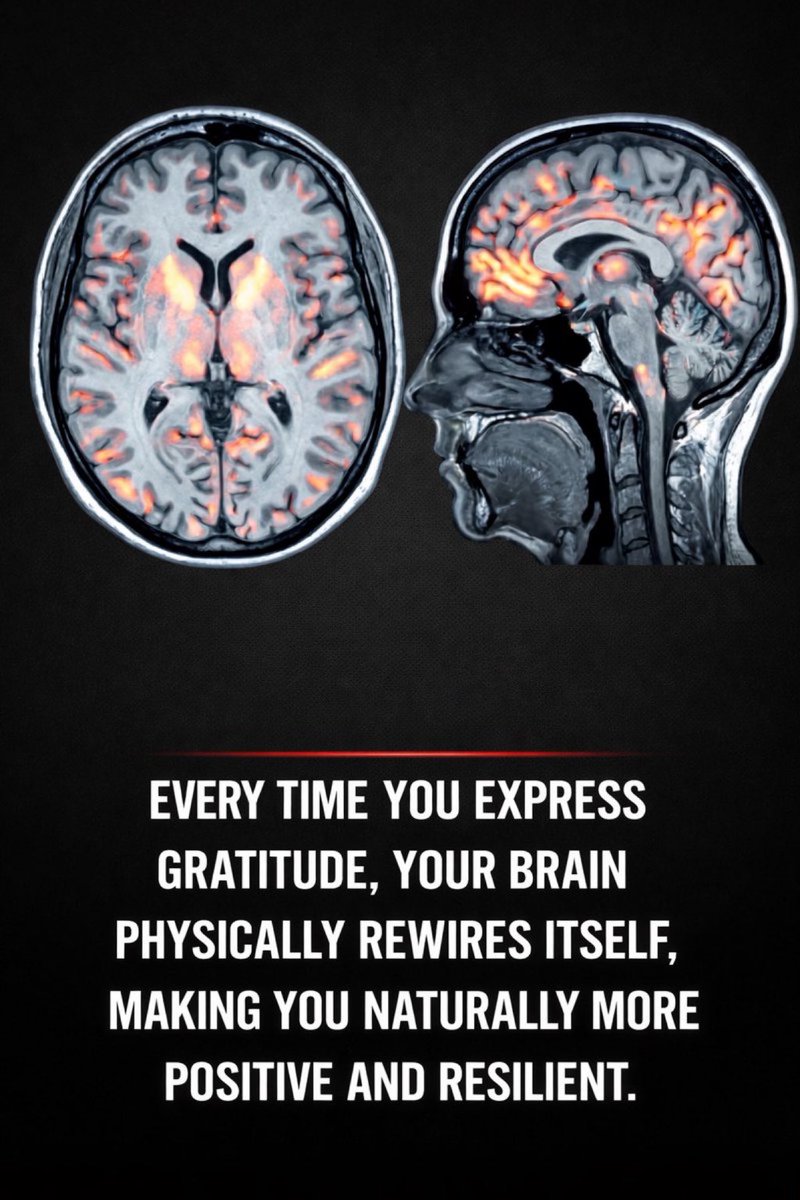
Research shows that regularly practicing gratitude can lead to measurable changes in the brain. This effect is driven by neuroplasticity, the brain’s ability to reorganize itself based on repeated thoughts and behaviors. When people intentionally focus on appreciation, neural pathways involved in emotional control and coping become stronger. Grateful thinking also stimulates the release of dopamine and serotonin, chemicals linked to pleasure and motivation, while helping reduce cortisol, the hormone associated with stress. Brain regions such as the prefrontal cortex and hypothalamus become more active, supporting improved mood regulation and overall mental health. Over time, gratitude does more than provide short-term emotional relief. It gradually shifts the brain away from its natural bias toward threat detection and toward noticing positive experiences instead. Simple habits like writing down what you’re thankful for or expressing appreciation aloud reinforce these patterns, making optimistic thinking more automatic. Studies indicate that this repeated practice builds lasting neural connections, promoting emotional balance, resilience, and well-being. In essence, regularly acknowledging what’s going well can retrain the brain showing that small daily moments of gratitude can produce meaningful, long-term psychological benefits.
Science girl tweet media
English
110
702
2.7K
122.5K
Yves Lussier retweetledi
Dhairya
Dhairya@dkare1009·
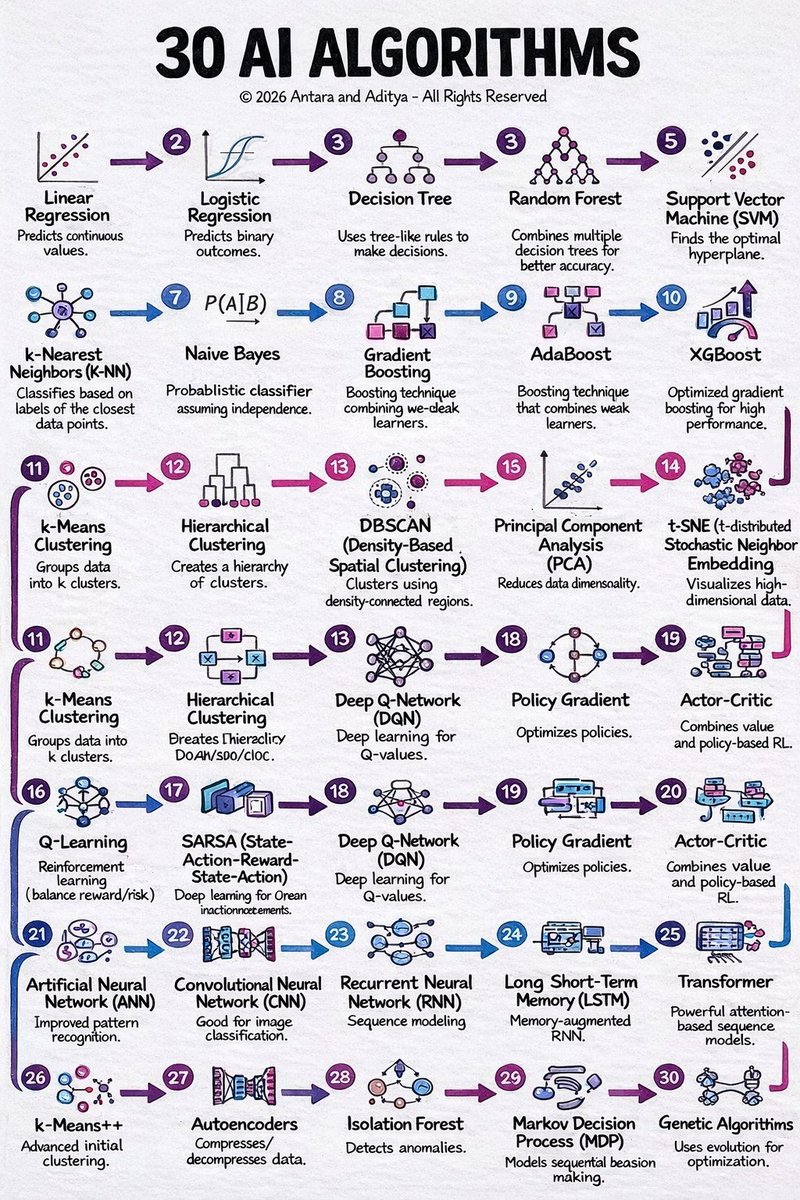
MIT offers 12 Books on AI & ML (FREE TO DOWNLOAD): 1. Foundations of Machine Learning cs.nyu.edu/~mohri/mlbook/ 2. Understanding Deep Learning udlbook.github.io/udlbook/ 3. Algorithms for ML algorithmsbook.com 4. Reinforcement Learning andrew.cmu.edu/course/10-703/... 5. Introduction to Machine Learning Systems mlsysbook.ai/book/assets/do… 6. Deep Learning deeplearningbook.org 7. Distributional Reinforcement Learning direct.mit.edu/books/oa-monog… 8. Multi Agent Reinforcement Learning marl-book.com 9. Agents in the Long Game of AI direct.mit.edu/books/oa-monog… 10. Fairness and Machine Learning fairmlbook.org 11. Probabilistic Machine Learning ❯ Part 1 : probml.github.io/pml-book/book1… ❯ Part 2 : probml.github.io/pml-book/book2
Dhairya tweet media
English
14
451
1.4K
65.3K
Yves Lussier retweetledi
Razelle Kurzrock, MD
Razelle Kurzrock, MD@Dr_R_Kurzrock·
🔥🔥Read @DrArturoAI beautiful analysis of our paper. Every ca is unique. Rx should be customized N-of-1. We needed to lump tumors together before we had NGS/technology to know each Ca. New model— assess robustness of matching algorithm rather than each individual therapy
Razelle Kurzrock, MD@Dr_R_Kurzrock

Rare cancers are the model. Every tumor is an orphan — complex and distinct. Need individualized therapy pubmed.ncbi.nlm.nih.gov/41610840/@VivekSubbiah

English
2
6
17
2.6K
Yves Lussier retweetledi
JAY
JAY@jaymohan·
@EricTopol @ScienceMagazine Science just unlocked “zoom in on life” mode and I’m low‑key obsessed.
English
0
1
1
437
Yves Lussier retweetledi
Dr Singularity
Dr Singularity@Dr_Singularity·
wow, this is huge for bio/acc A dual branch transformer predicts how drugs reshape gene expression. "By combining attention mechanisms with biological prior knowledge, it's now possible to predict transcriptional responses to drugs that have never been tested in a given cellular context, opening a path toward in silico pharmacodynamics and mechanism-of-action discovery at scale."
Dr Singularity tweet media
Jorge Bravo Abad@bravo_abad

A dual-branch transformer predicts how drugs reshape gene expression Drug discovery is shifting from "one drug, one target" to "one drug, multiple targets." But mapping how a compound ripples through the transcriptome—across different doses, exposure times, and cellular contexts—remains experimentally prohibitive. Most cell-drug combinations have never been measured. Yue Guo and coauthors introduce XPert, a transformer-based model that predicts drug-induced transcriptional changes by separately encoding pre-perturbation cellular states (via self-attention) and post-perturbation effects (via cross-attention). This dual-branch design lets the model disentangle intrinsic gene-gene interactions from the regulatory shifts triggered by chemical perturbation. A key innovation is bridging chemical and biological spaces. Because structurally similar drugs don't always produce similar effects, XPert builds a heterogeneous knowledge graph connecting drug-target interactions, protein-protein interactions, and structural similarity. The result: drugs with the same mechanism of action cluster in the learned embedding space, even when their chemical structures diverge. The model also encodes dose and time as learnable condition tokens, capturing nonlinear pharmacodynamic relationships that one-hot encoding misses entirely. On the L1000 benchmark, XPert achieves 36.7% higher correlation and 78.2% lower error than the next-best model when generalizing to unseen cell lines. The authors trace this gap to a fundamental limitation of VAE-based approaches: the denoising that helps with reconstruction erases the cellular context needed for out-of-distribution prediction. When pretrained on large-scale preclinical screens and fine-tuned on clinical data, XPert improves patient-specific response predictions by up to 15%—and identifies resistance biomarkers invisible to standard differential expression analysis. The upshot: by combining attention mechanisms with biological prior knowledge, it's now possible to predict transcriptional responses to drugs that have never been tested in a given cellular context, opening a path toward in silico pharmacodynamics and mechanism-of-action discovery at scale. Paper: nature.com/articles/s4225…

English
5
45
329
24.7K
Yves Lussier retweetledi
Olivier Elemento
Olivier Elemento@ElementoLab·
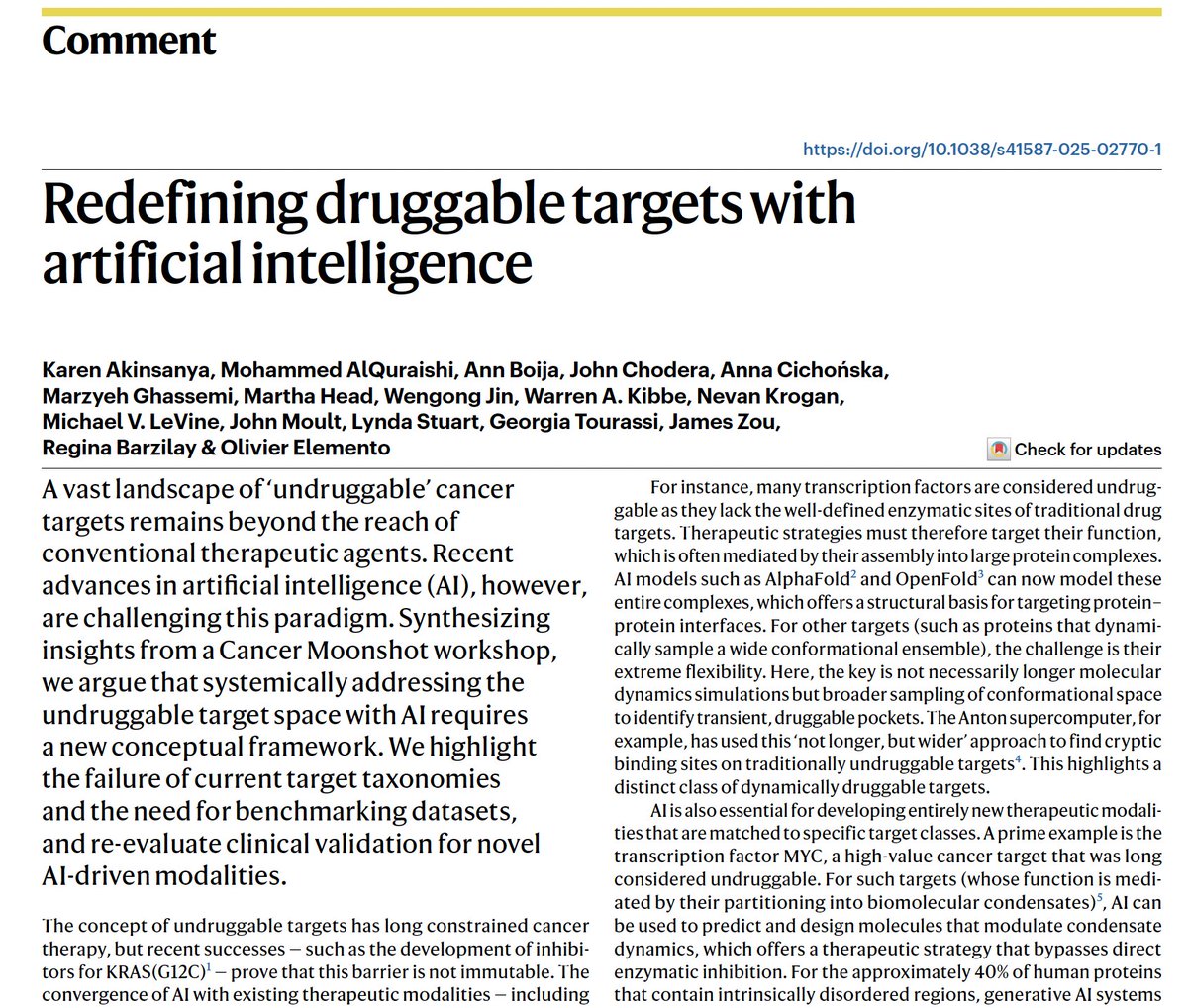
AI is challenging the paradigm of "undruggable" cancer targets. Our new Nature Biotechnology comment outlines how AI-driven approaches, from modeling protein complexes to designing novel biologics, can unlock these intractable proteins nature.com/articles/s4158…
Olivier Elemento tweet media
English
2
15
53
7.7K
Yves Lussier retweetledi
Eric Topol
Eric Topol@EricTopol·
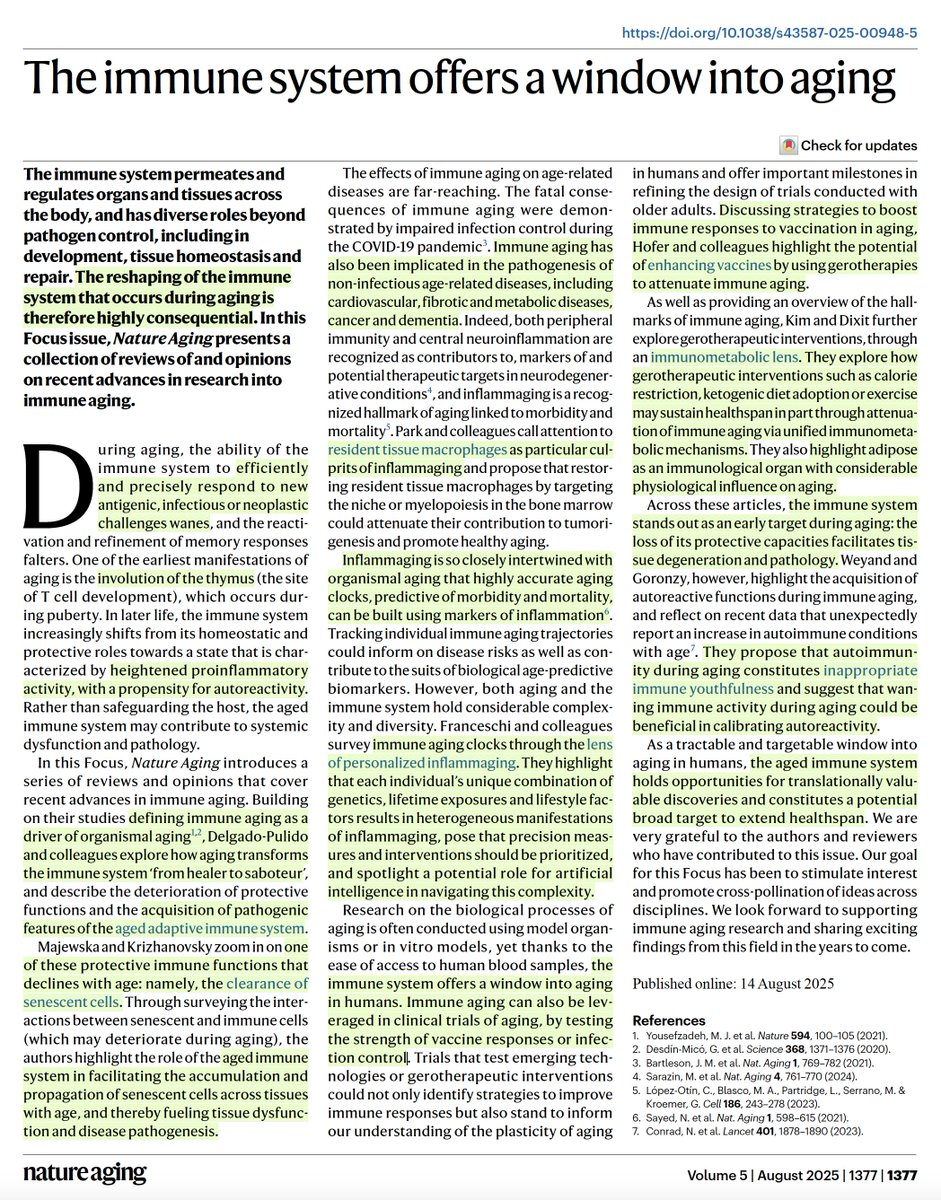
As I wrote in SUPER AGERS, the immune system is the key to modulating our aging process and the opportunity to extend healthspan. Today @NatureAging 7 new articles, summarized here, that reinforce its central role nature.com/articles/s4358…
Eric Topol tweet media
English
14
239
1.1K
102K
Yves Lussier retweetledi
Wenhao Yu
Wenhao Yu@wyu_nd·
𝑳𝑳𝑴𝒔 can really 𝑺𝒆𝒍𝒇-𝑬𝒗𝒐𝒍𝒗𝒆, 𝒘𝒊𝒕𝒉𝒐𝒖𝒕 𝑯𝒖𝒎𝒂𝒏 𝑫𝒂𝒕𝒂! -- One LLM, two roles: Challenger creates tasks, Solver answers them. -- No data, no labels, just a base model that learns and improves itself! We name it 𝑹-𝒛𝒆𝒓𝒐: arxiv.org/abs/2508.05004
Wenhao Yu tweet media
English
34
243
1.4K
143.7K
Yves Lussier retweetledi
Mohit Mishra
Mohit Mishra@chessMan786·
Visual Explanation of How LLMs Work
English
54
1.1K
5.7K
297.3K
Yves Lussier retweetledi
Eric Topol
Eric Topol@EricTopol·
The new special issue @ScienceMagazine features Immunity with 4 outstanding review papers, 5★ science.org/toc/science/cu… Our immune system over the lifespan, sex differences, influence on physiology, and host antiviral defenses
Eric Topol tweet media
English
2
110
435
42.1K
Yves Lussier retweetledi
JMIR Publications
JMIR Publications@jmirpub·
Call For Papers 📣 JMIR Human Factors invites submissions for a theme issue on Human Factors in Health Care: Education, Management, and Knowledge Translation. Focus: education, digital skills, usability, knowledge translation & more. ℹ️ humanfactors.jmir.org/announcements/…
JMIR Publications tweet media
English
8
19
84
535.1K
Yves Lussier retweetledi
Min Choi
Min Choi@minchoi·
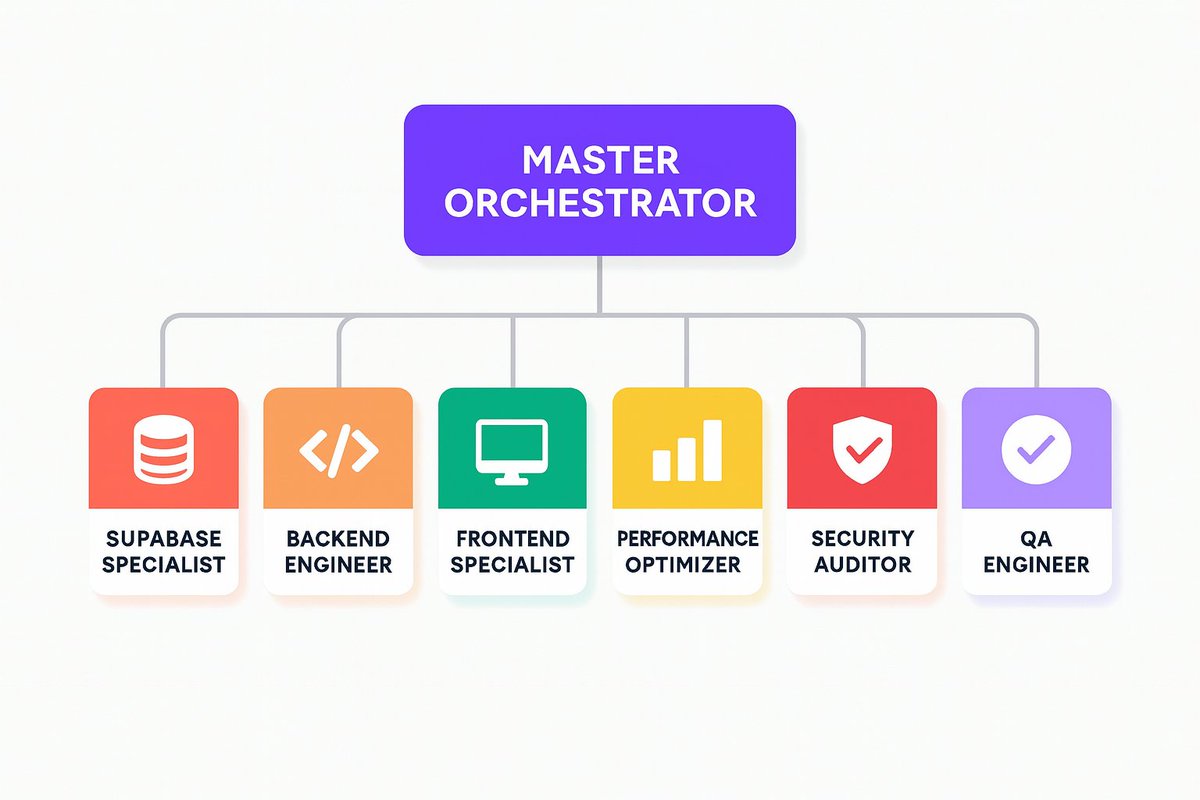
Less than 89 hours ago, Claude Code unlocked sub agents. Minds are blown. And people are already building with their own agentic AI dev team. 10 wild examples:
Min Choi tweet media
English
93
338
2.9K
696.7K