CoachHalik

79 posts

CoachHalik banner
CoachHalik

CoachHalik

@LyndseyHalik

Katılım Şubat 2019
82 Takip Edilen27 Takipçiler
CoachHalik
CoachHalik@LyndseyHalik·
@linneadewaard How did you increase your numbers? I'm on my second year at my current school. Last year I had 7 girls, this year I've got 12. I need more girls to run xc!
English
1
0
1
40
Linnea DeWaard
Linnea DeWaard@linneadewaard·
last year we only raced FOUR girls at the valley meet - today we're racing SEVENTEEN
English
4
2
41
1.6K
CoachHalik retweetledi
Wendi A. Irlbeck MS, RDN, LD, CISSN
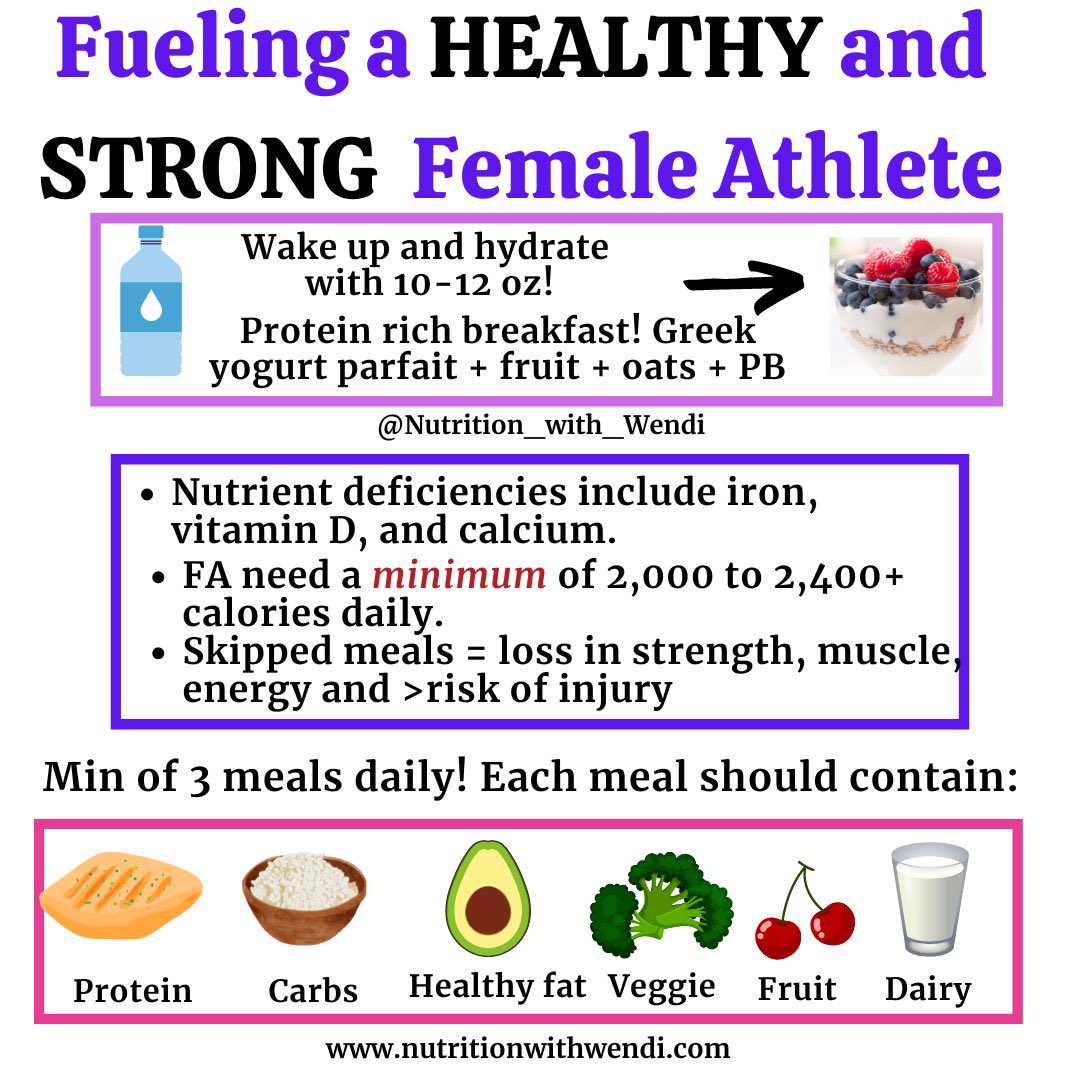
A female athlete who weighs 125 pounds needs >2,400 calories per day. Many female athletes are eating close to 1,600-1,800 some knowingly and others unintendedly. ⭐️Remember, athletes don’t diet and exercise. Athletes fuel and train.. to be clear.. student-athletes NEED more nutrition than their non-active counterparts playing video games after school.🙃 Especially female athletes at a young age that are still developing their bones, brain, and muscle tissue! 🚨If you’re worried your young female athlete is not properly fueling you shouldn’t “wait for things to get better”. Female athletes who under-eat key bone-building nutrients like calcium, vitamin D, B12, protein, carbs, and overall calories are at risk for: ✖️Stress fractures, injuries, poor development ✖️Poor mental health/anxiety/depression ✖️Missed/lost period known as amenorrhea ✖️Disordered eating/poor cardiac function and DEATH if left untreated Many young female athlete’s low intake/poor relationship with food will go untreated and carry into adulthood. 🚨PLEASE get yourself or your child/athlete help. DO NOT WAIT.If you’re a coach, school, parent, or university looking for sports nutrition resources for your athletes let us help you!
Wendi A. Irlbeck MS, RDN, LD, CISSN tweet media
English
1
65
166
47.4K
CoachHalik retweetledi
David Roche
David Roche@MountainRoche·
In a post-Leadville 100 Q+A, I was asked about my weight and bodyfat percentage. I responded that I didn’t know. We tossed our scale in the dumpster sometime around 2014, and I haven’t weighed myself since. There is some nuance there, which I wanted to expand on. Yes, we discarded our scale, and it had been around a decade since I saw those numbers intentionally. But going through my bike accident medical records a week or so pre-race, I stumbled on my weight. I was much heavier than I was the last time I saw the number (I am not giving specific numbers so that no one compares to their own unique journey). Thankfully, I didn’t think much of it. I was about to chase history at my first 100 miler, I’m a dad now, and I was going to do my week of pre-race burgers no matter what. And when I was 5 miles away from setting the Leadville record, I remember thinking: “Thank god for strength.” After I quit football in college, I weighed myself every AM and PM for 2 years. I had heard equations about weight and height for runners, and I tried to reverse engineer my own solution. I wish I could go back in time to tell myself what I learned since then: Running is a power sport. Find your strong, no matter what that weight corresponds to and what that looks like relative to other athletes or even other versions of yourself. For me, that meant tossing the scale and telling doctors that I didn’t want to know during routine check-ups. For you, it might mean something else entirely. Just remember: Strength is not a number. For me, numbers got in the way. I set a record because I am a powerful MFer. EMBRACE YOUR POWER 💪🧡
David Roche tweet media
English
11
18
417
30.1K
CoachHalik retweetledi
Timmy Crowe
Timmy Crowe@timmy400h·
If you have a few moments to listen to this interview as a parent with your child. Possible one of the best post race interviews I have ever watched #PlayOn
English
308
5.4K
27.7K
3.4M
CoachHalik retweetledi
Ben Griffin
Ben Griffin@Coachgriffin88·
Hamstring bridges are a staple in programs I write, for athletes. The joint angles seen when doing them, match those seen upon ground contact when sprinting. Hence, we’re building hamstring strength, in a position specific to sprinting. Below, I outline the progression I use.
English
1
27
244
31K
CoachHalik retweetledi
Liz Bayley
Liz Bayley@lizbayleyphysio·
End-stage F&A you can do at home with a Post It + music 🎶 The intrinsics activate best under high load at shorter contact times where medial & lateral stability is needed - cutting, sprinting & hopping! 🦘🏃🏽‍♀️ Do in trainers if not used to it 👟 🔹4 STAGES - it gets hard 🤣👀🦶🏼
English
1
8
81
14.4K
CoachHalik retweetledi
Billy Oppenheimer
Billy Oppenheimer@bpoppenheimer·
At both the 1988 & 1992 Olympics, speed skater Dan Jansen was the favorite to win the 500- & 1,000-meter races. He didn't medal at either—the media was brutal: “Jansen Chokes Again” “Greatest Choke in Sports History” “The Buffalo Bills of speed skating” So his agent called the performance psychologist Dr. Jim Loehr, and said, “Would you consider working with Dan Jansen? It turned out: hours before the 500-meter race at the '88 Olympics, Jansen received a phone call and learned that his 27-year-old sister died unexpectedly. “He's been struggling, mentally,” Jansen's agent told Loehr. “If we can get his head right, he'll be an Olympic champion. If we can’t, he'll go down as the greatest choker in sports history.” “I know about Dan’s story,” Dr. Loehr replied. “I’d love to work with him.” So Jansen started working with Loehr leading up to the 1994 Winter Olympics in Lillehammer, Norway. During their first meeting, Loehr learned that Jansen hated the 1,000-meter event. “He felt like he was a fast muscle twitch kind of a guy,” Loehr explains. “He thought of himself as a sprinter. So he loved the 500 and hated the 1,000.” Loehr started attending Jansen's training sessions, and after watching Dan skate over and over and over again, he became convinced that Dan's best shot at winning a gold medal was not in the 500, but in the 1,000. “You need to change your mindset,” Loehr told Jansen. “You need to change the story you tell yourself about the 1,000. If you change that story, I believe it can change your life.” Jansen kept a daily training log—“From now on,” Loehr told him, “on the top of your training log, I want you to write, ‘I love the 1,000.’” “But,” Jansen said, “I hate the 1,000.” “I know,” Loehr said. “But we’re going to recondition the way you think and feel about the 1,000.” So for 2 years, at the top of his training log, Jansen wrote, “I love the 1,000.” “And before Lillehammer,” Loehr said, “Dan came to me and said, ‘You know, I’m actually starting to like the 1,000. I think I might even like the 1,000 better than the 500.’” At the games in Lillehammer, in the 500, Jansen slipped and finished 8th. Before the 1,000 (four days later)—which Jansen knew would be the last time he ever skated competitively—“We created a mindset,” Loehr said. “and the mindset we created was—instead of a gold medal or a world record or anything else—think about what a gift the sport of speed skating has been to you. Think about the joy it's brought you.” With that mindset, Jansen lined up for the 1,000-meter event at the 1994 Winter Olympics in Lillehammer. With that mindset, he not only won his first Olympic gold medal, he set a new world record time in the 1,000. Takeaway 1: There's a paradox known as “the backwards law.” It comes from the philosopher Alan Watts, who writes in his book The Wisdom of Insecurity: “I have always been fascinated by the law of reversed effort. Sometimes I call it the 'backwards law.' When you try to stay on the surface of the water, you sink; but when you try to sink, you float.” With that mindset Dr. Loehr helped him create before the 1,000, Jansen said, “I stopped thinking so much about a gold medal.” When Jansen stopped thinking so much about a gold medal, paradoxically, he won a gold medal. Takeaway 2: In his work with hundreds of world-class performers, Dr. Loehr spent many years listening to the stories people tell themselves. He would even have athletes wear microphones and articulate out loud everything that they said to themselves during competition. “And I began to realize that what really matters, in a really significant way, is the tone and the content of the voice in your head,” he said. “The power broker in your life is the voice that no one ever hears. How well you revisit the tone and content of that voice in your head is what determines the quality of your life. It is the master storyteller, and the stories we tell ourselves are our reality.” Jansen changed the story he told himself about the 1,000, and, as Loehr told him it would, it changed his life. - - - “The mind is a funny thing.” — Dan Jansen Follow @bpoppenheimer for more content like this!
Billy Oppenheimer tweet media
English
31
470
2.7K
607.2K
Wildwood Running
Wildwood Running@RunningWildwood·
TOMORROW we welcome 130 coaches to our clinic focused on supporting the female distance runner. A topic often skipped over at coaching clinics. Last year we have 50 live participants and 10 virtual attendees. Pumped to see these numbers double! People want this information!
Wildwood Running tweet media
English
2
6
26
2.4K
CoachHalik
CoachHalik@LyndseyHalik·
@BStulberg Have an "open" category and then a female sports category. No one is excluded. When you allow biological males into female sports, females are excluded.
English
0
0
0
8
Brad Stulberg
Brad Stulberg@BStulberg·
It's wild how many people have lost common decency, a sense of reality, or both. 1. Let young kids play sports based on their gender identity 2. At a certain level, separate based on biological sex in accordance with Title IX and fairness. That's the only reasonable framework.
Rep. Alexandria Ocasio-Cortez@RepAOC

Targeting trans children for playing sports makes all women, whether trans or cisgender, less safe. Sex testing is regressive, invasive, discriminatory, and a fundamental violation of our privacy as women and as Americans. This is shameful.

English
10
3
66
36.5K
CoachHalik retweetledi
Cooper HS
Cooper HS@RCHS_Jaguars·
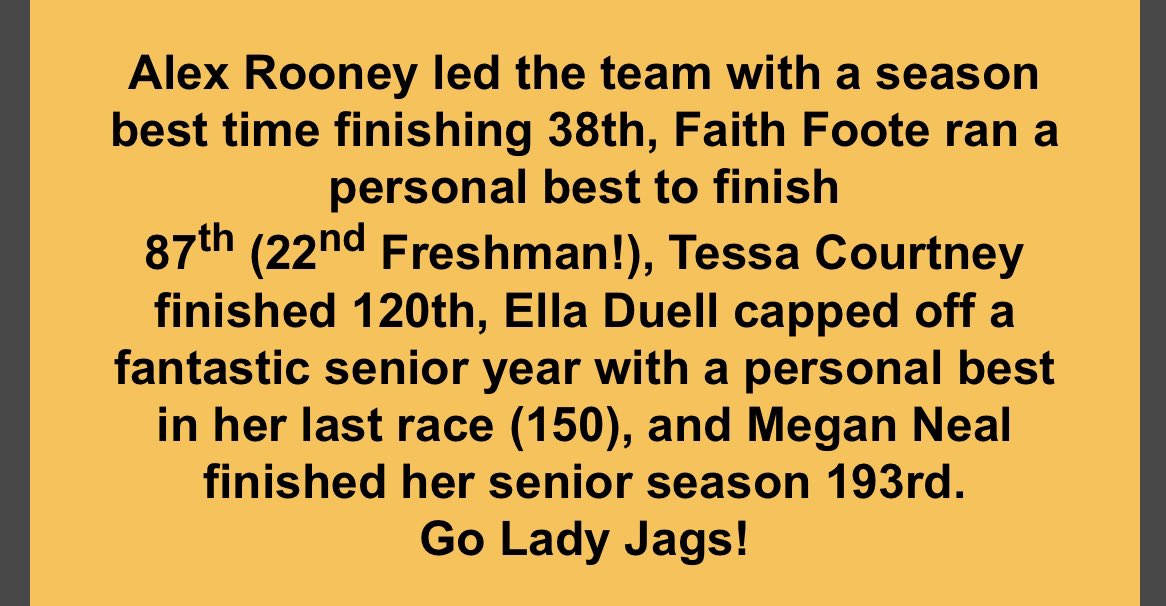
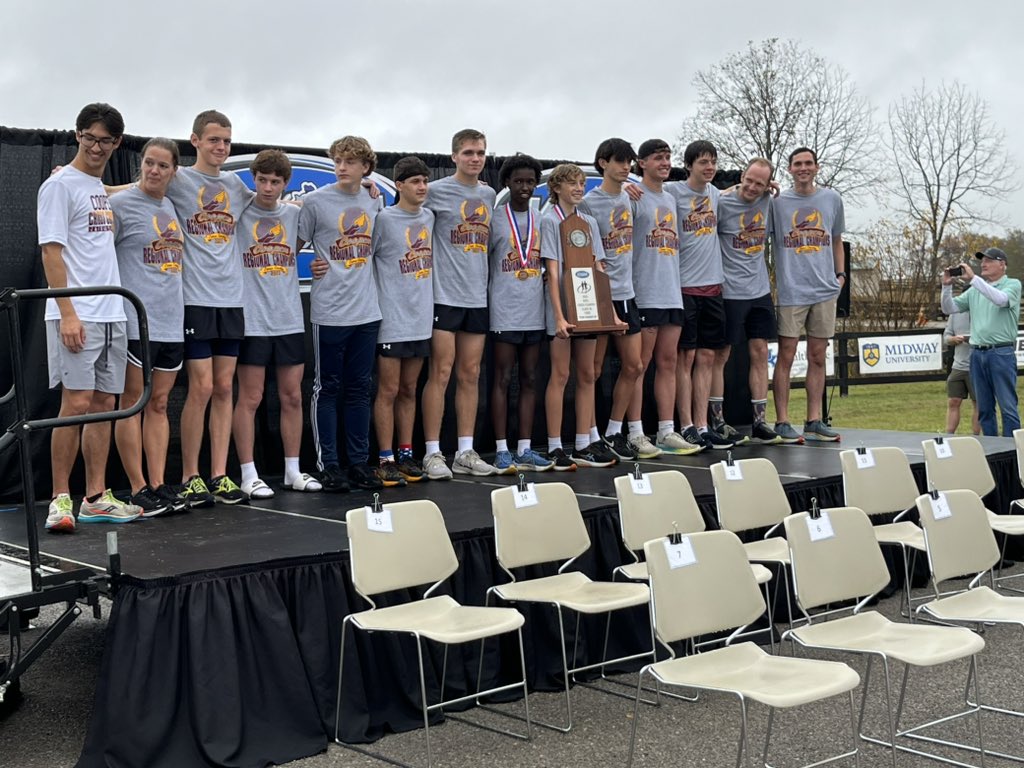
The Lady Jags Cross Country team easily had their best race of the season at the State Championships Saturday. They finished 19th overall, their best finish since 2018.Go Lady Jags!
Cooper HS tweet mediaCooper HS tweet media
English
0
1
5
526
CoachHalik
CoachHalik@LyndseyHalik·
Spartan Deka Mile! Tough workout!!
CoachHalik tweet media
English
0
0
1
51
CoachHalik retweetledi
Jay Johnson
Jay Johnson@coachjayjohnson·
They don't give All-Conference or All-State honors for impressive Strava accounts. They don't give team trophies in October and November based on pre-season polls in August. Tune out the noise and do it on the day. Let's go!
English
4
48
276
32.2K
CoachHalik retweetledi
Dr. Scott Carlin
Dr. Scott Carlin@scottcarlinpt·
10 of the best isometric exercises for runners: 🧵 1. Single Leg Hamstring Bridge Iso
English
12
209
1.9K
707.1K
Les Spellman
Les Spellman@les7spellman·
Extensive rudiment on mats to reintroduce the volume of contacts
English
8
21
311
135.8K
Jay Johnson
Jay Johnson@coachjayjohnson·
I haven't spoken at a clinic out of state for roughly a decade. I'm excited to speak at this one. I remember the first year of the @BldrRunClinics - it was a humble start and this clinic's first edition is going to be much bigger. Thanks, @SteveNester1 and Howard Russ @creekxc!
Buckeye Running Company@BuckeyeRun

Our two day Midwest Distance Forum has just a few spots left. All 1st day activities (Fri. 6/16) take place @ Buckeye Running, 4200 Aero Dr. in Mason. All 2nd day (Sat. 6/17) meetings take place @ the Holiday Inn Express, 5100 Natorp Blvd. in Mason. Register @buckeyerunning.com

English
2
3
32
7.9K