
ModernHealthspan

585 posts

ModernHealthspan banner
ModernHealthspan

ModernHealthspan

@MHealthspan

Modern Healthspan – Living Longer with Healthier, Happier & Fulfilling Life!

Katılım Kasım 2020
188 Takip Edilen753 Takipçiler
ModernHealthspan retweetledi
Robert Lufkin MD
Robert Lufkin MD@robertlufkinmd·
Mitochondrial Transplant Reverses Disease Scientists just transplanted healthy mitochondria into diseased cells -- and reversed Parkinson's, Leigh syndrome, and mtDNA depletion. In Cell. As a medical school professor, I can tell you this is one of the most important papers of 2026. Chinese researchers solved the delivery problem that's challenged mitochondrial medicine for decades. The breakthrough: wrapping healthy mitochondria in red blood cell membranes. Delivery efficiency jumped from under 5% to 80%. The results: - Rescued mitochondrial defects in patient-derived cells - Reversed mtDNA depletion syndrome in mice - Extended survival in Leigh syndrome mice - Prevented neuron loss and restored motor function in a Parkinson's model Tested in both mice and monkeys. This is what I wrote about in "Lies I Taught in Medical School" -- we treated mitochondrial diseases as untreatable because we couldn't fix the powerhouse. Now we can replace it entirely. "Organelle therapy" is no longer theoretical. It's here. Full breakdown coming on the Health Longevity Secrets podcast. Source: cell.com/cell/abstract/… #Mitochondria #Parkinsons #RegenerativeMedicine #CellTherapy #Longevity
Robert Lufkin MD tweet media
English
24
241
740
34.2K
ModernHealthspan
ModernHealthspan@MHealthspan·
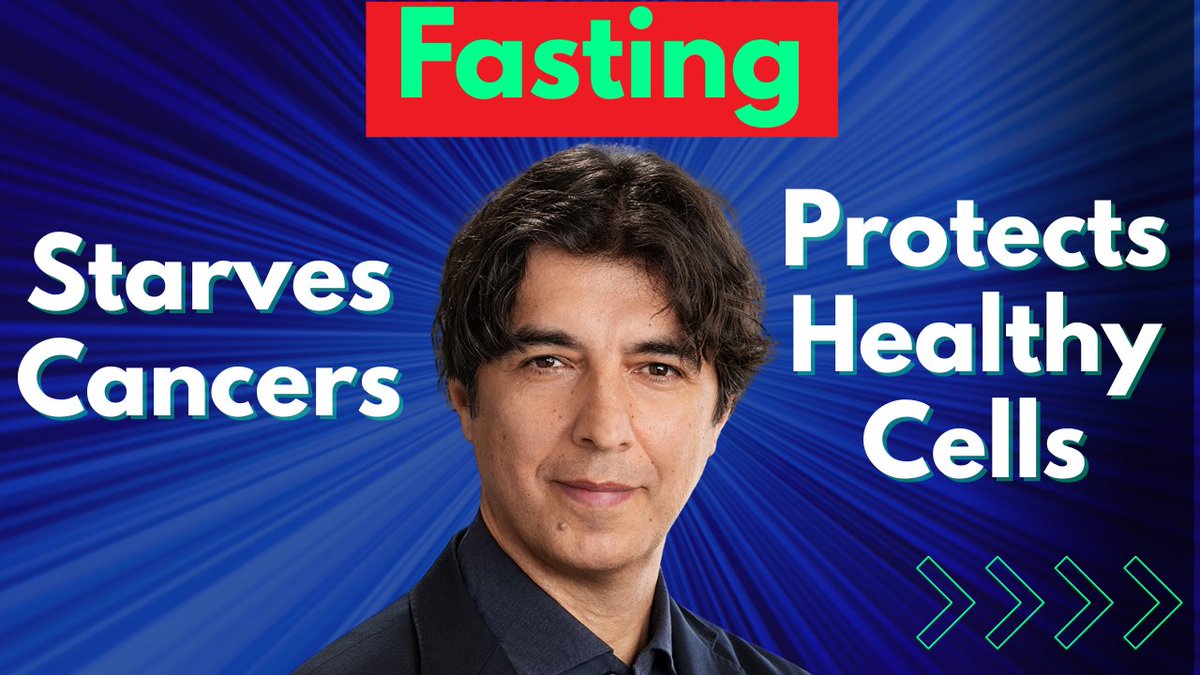
Thanks to @ProfValterLongo for a fascinating conversation on his new book Fasting Cancer. Key insight: While on an FMD healthy cells enter a protected mode while cancer cells can't, making them more vulnerable to therapy. Full interview:
ModernHealthspan tweet media
English
0
0
0
11
ModernHealthspan
ModernHealthspan@MHealthspan·
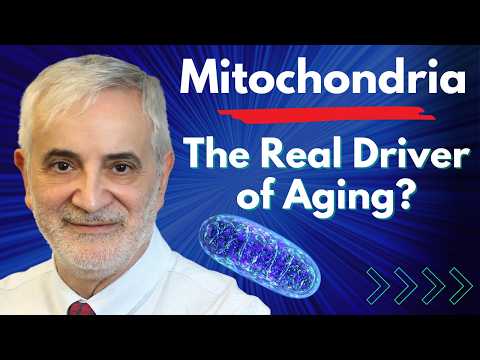
Grateful to Dr. Luigi Ferrucci from @theNIAgov for sharing his insights from 60 years of Baltimore Longitudinal Study. We talked about how they measure the pace of aging, how it relates to healthspan and how mitochondria could be the source of all aging. youtu.be/NS-VxoHltdw
YouTube video
YouTube
ModernHealthspan tweet media
English
0
0
0
38
ModernHealthspan retweetledi
Jay Bhattacharya, MD, PhD
Jay Bhattacharya, MD, PhD@NIHDirector_Jay·
At NIH, we’re accelerating the future of medical research, advancing innovation and repurposing existing drugs to deliver new treatments faster for the American people🔬🇺🇸
English
103
118
886
35.7K
ModernHealthspan retweetledi
Dave Feldman
Dave Feldman@realDaveFeldman·
I want to share a crucial update on our study, KETO-CTA. (The video for this article is in the next tweet) Our study recruited 100 participants, each undergoing two high-resolution heart scans, known as CT angiograms, one year apart. (For more background on this study design, see preprint in the following tweet) There are now four analyses of those same 200 scans. But one of those analyses stands out — and I have some new developments to report. For a quick background, the first quantitative analysis was from an AI company, Cleerly. We published their analysis of our scans last year. After the paper was published, the Citizen Science Foundation was free to look at the raw Cleerly data, and we found a number of patterns that appeared different from what is typically seen in other coronary plaque studies. For example, in Cleerly's analysis, not one of the participants showed lower plaque levels at follow-up — even though CTA scans typically show some natural variation in both directions, especially in people who start with very little plaque. For another example within their data, people with no detectable calcium in their scans appeared to have several times more plaque progression than those who already had some calcium present. This runs counter to what many in cardiology call the "power of zero" — the well-established finding that having no coronary calcium is typically associated with lower risk and slower disease progression. Another major development: shortly after publication, we learned that the scans Cleerly was analyzing were not fully blinded. In studies like this, the order of scans is typically kept unknown to the analyst to help prevent any potential for bias. But in this case, the chronological order was available in the scans. We therefore asked Cleerly to repeat their analysis using a properly blinded set of scans, which is standard practice in longitudinal studies. Cleerly declined to perform a blinded reanalysis. Because of this, we commissioned an additional, independent analysis from Heartflow. Heartflow has been a leader in this space and is the most extensively validated AI platform for coronary CTA analysis. The Heartflow analysis was conducted with full operational blinding and completed right before the prespecified third, and final quantitative analysis, which uses Medis QAngio. These two independent platforms were consistent with each other, yet both differed substantially from the Cleerly results. As these independent results became available, we shared them privately with Cleerly and again requested a blinded reanalysis of their original work. We offered to cover any costs involved just in case this was the barrier to reanalysis. Cleerly again declined. However, a new development emerged. Several participants requested their scans from the study and submitted them directly through their own, personal cardiologist. Any cardiologist with a proper Cleerly account can appropriately submit scans on their patient's behalf. So in a sense, our participants themselves were able to provide a portion of the blinded analysis we were originally requesting. This was then shared with me on behalf of the Citizen Science Foundation. In total, there are 19 of these individual submissions — about 10% of the total scans in our study so far. Individual Submissions vs. Study Data We focused on the 8 participants who have both a baseline and a follow-up individual submission of their scans (the other 3 submissions are unpaired). [Please Note: These data are preliminary] Figure 1 compares the change in soft plaque (Non-Calcified Plaque Volume or NCPV) reported by the original Cleerly study analysis against the results from each participant's individual submission. [See Figure 1] Of the 8 participants, four showed an increase in soft plaque in both datasets — but in three of those four cases, the individual submissions reported substantially less progression than the study data. The remaining four participants all showed progression in the study data, yet every one of their individual submissions showed a decrease — a complete reversal of direction. The largest discrepancy was a single participant whose study data reported an increase of 32 mm³, while their individual submission showed a decrease of 48 mm³ — a reversal of approximately 80 mm³. The median change in soft plaque for these 8 participants was +20.6 mm³ (a 31% increase) in the original study data, compared to just +0.7 mm³ (about a 2% increase) from their individual submissions (Figure 2). The mean average is even more pronounced: the study data shows an average increase of +20.9 mm³ (42% from baseline), while the individual submissions show an average decrease of 5.1 mm³ (an 8% decline). In other words, the study data says plaque went up; the individual submissions say it went down (Figure 3). Direction of Change Across Platforms To put these individual submissions in broader context, Figure 4 compares the direction of soft plaque change across three analyses of these same scans. On the left is the original Cleerly study analysis — 99 participants after excluding one who had a procedure between scans. 98% showed an increase in soft plaque. Only 2 showed no change. Zero showed regression. In the middle are the 8 individual submissions, split right down the middle: 50% showing progression and 50% showing regression. On the right is the full Heartflow analysis across 95 participants. While 8 is a small sample size, the direction-of-change in these individual submissions is far closer to the Heartflow analysis than the original Cleerly analysis. It is worth emphasizing: 4 out of the 8 participants — fully half — received individual submission results showing less plaque in their second scan than their first. But after accounting for the single exclusion mentioned above, not one of the 99 participants in the original Cleerly study analysis showed plaque regression. We are not sure what happened with the original Cleerly analysis. We just know the other analyses are largely consistent with each other — and now, that includes these individual submissions to Cleerly as well. Next Steps We have already taken steps regarding last year's paper that contained the original Cleerly analysis. We are working with the journal on that now, and we expect news on this very soon. In the meantime, the preprint of our current paper with both Heartflow and QAngio results is available at the link below. Importantly, the two principal findings reported in the original paper have been reproduced in both the Heartflow and QAngio analyses: (1) baseline plaque strongly predicts future plaque progression, and (2) ApoB was not associated with plaque progression I want to once again thank Dr. Budoff and the Lundquist team for providing these scans to study participants who request them. If you are a participant in our study and interested in sending in your scans through your cardiologist, we now have a budget to help cover the cost of that submission. You can contact us at info@citizensciencefoundation.org for more details. Thank you again to everyone for your support. 🙏 cc @nicknorwitz @AdrianSotoMota
Dave Feldman tweet mediaDave Feldman tweet mediaDave Feldman tweet mediaDave Feldman tweet media
English
70
121
607
279.5K
ModernHealthspan retweetledi
Jay Bhattacharya, MD, PhD
Jay Bhattacharya, MD, PhD@NIHDirector_Jay·
Thank you Sec. Kennedy & President Trump. I will work hard to help make the @cdc the best public health agency in the world, following gold standards science and restoring public trust in public health.
Secretary Kennedy@SecKennedy

Congratulations, @NIHDirector_Jay, on your appointment as Acting Director of @CDCgov in addition to your role as Director of @NIH. You have championed gold standard science, transparent data, and public accountability — and CDC will benefit from that same disciplined leadership at this pivotal time.

English
140
517
4.7K
196.6K
ModernHealthspan
ModernHealthspan@MHealthspan·
Latest video: @Healthformance explains the dosing protocol that preserves cognitive performance under sleep deprivation and aging, including reaction time, working memory & decision-making. youtu.be/IxyRlcr86Jo
YouTube video
YouTube
ModernHealthspan tweet media
English
0
0
0
26
ModernHealthspan
ModernHealthspan@MHealthspan·
Grateful to Dr. Allen Taylor from @TuftsUniversity for this deep dive on vision and nutrition: high glycemic foods damage your eyes as much as smoking does. The good news? Switching to low glycemic eating protects your vision AND your heart. youtu.be/2GTTcGl_7vc
YouTube video
YouTube
ModernHealthspan tweet media
English
0
0
0
50
ModernHealthspan
ModernHealthspan@MHealthspan·
Just interviewed @DrGoodenowe on plasmalogens, brain lipids that decline after 60. His trial: 41% of Alzheimer's patients improved cognition. Not just slowed, improved. Why it works: His precursors cross the blood-brain barrier where plasmalogens can't. youtu.be/SMMiWvi38X0
YouTube video
YouTube
ModernHealthspan tweet media
English
0
1
1
74
ModernHealthspan retweetledi
Michael Levin
Michael Levin@drmichaellevin·
The practical answer is what @Madam_Mito said - think of how much money has gone into biochemistry and molecular biology over the last 50+ years; I don't know the exact numbers but the investment in bioelectricity has to have been << 0.1% of that. The scientific answer is that biochemistry and genetics can be done on dead tissue: take cells, fractionate them, sequence everything, etc., the information is still there. Bioelectricity is much harder - it only exists as long as the cell is alive. It's gone the moment you kill, preserve, freeze, or fractionate cells. The technology to read and write that kind of physiological information in the living state is relatively new. The first noninvasive imaging of non-neural voltage patterns, and the first use of molecular biology to manipulate those patterns, was only in 2002. If you can't slice organs into pieces without losing the info (cell voltage changes if you separate them from their microenvironment), it mean you have to image voltage fluorescence *through* tons of other cells. That's difficult. Think of how long it's been since the first complete gene sequence was read - 1972 or so? Bioelectricity is an emerging field, but it's definitely moving forward. A number of commercial efforts are working on human stem cells, mouse regeneration, and electroceuticals for human cancer etc. It's coming but it needs a lot of tool development up-front to get to the exponential rise tipping point.
English
6
23
135
9.9K
ModernHealthspan retweetledi
Jan Ellison Baszucki
Jan Ellison Baszucki@janellison·
tinyurl.com/238f94v7 I am grateful to the New York Times @nytimes for including a mention of our son @matthewbaszucki's story and a link to our foundation, Metabolic Mind, in recent coverage of the question of whether ketogenic diets can "cure" schizophrenia. After five years of illness, Matt began using ketogenic therapy for bipolar disorder in 2021. He has been in remission from symptoms for nearly five years. I am working on a longer response, but for now, please visit our Metabolic Mind dot org website for information on the emerging science, practice and personal stories surrounding the use of ketogenic and metabolic therapies for serious mental illnesses like bipolar and schizophrenia, along with other mental disorders. Was our son "cured" of bipolar disorder with a ketogenic diet? That's not a term we typically use, but to me, that's also not the most important question. The focus must remain on the scientific and clinical questions of how ketogenic interventions work mechanistically, who might be helped, and how they can find that help. Those are the questions our family, our team @BaszuckiGroup and @metabolicmind, and those pioneering the field of #MetabolicPsychiatry are dedicated to helping answer. @ChrisPalmerMD @GeorgiaEdeMD @ShebaniMD @KetoCounselor
English
25
74
366
34.3K
ModernHealthspan retweetledi
P. Jeffrey Ungar, PhD
P. Jeffrey Ungar, PhD@pjungar·
@DrNeilStone The greatest source of medical misinformation right now is midwit MDs who scream “pseudoscience”" at anything outside their 20-year-old pharma-sponsored textbook while ignoring pilot data, case series, and emerging metabolic psychiatry research.
English
11
39
266
9.5K
ModernHealthspan
ModernHealthspan@MHealthspan·
New video with Dr. Elena Seranova (@NMNBio) on magnesium deficiency, supplement quality, and taking control of your healthspan. 90% are deficient in magnesium and most supplements use forms with only 3% absorption. Which forms actually work? youtu.be/pPc7S3sbCZs
YouTube video
YouTube
ModernHealthspan tweet media
English
0
0
2
129
ModernHealthspan retweetledi
Ted ⚡️ Naiman
Ted ⚡️ Naiman@tednaiman·
✨📈📉✨ Latest data download of >250,000 person-days of Hava data showing absurdly powerful protein leverage — as predicted! Protein percent of calories is the single most important factor, by a mile. 🔥👊🏼🔥
Ted ⚡️ Naiman tweet media
English
4
10
55
8.1K