The Nyati_Grootman🐃🇿🇼

21.3K posts

The Nyati_Grootman🐃🇿🇼 banner
The Nyati_Grootman🐃🇿🇼

The Nyati_Grootman🐃🇿🇼

@MM_Zim

Ad Maiorem Dei Gloriam | Blue Blood - 1 of 1 | Old Guard | Car Enthusiast | Foodie | Farm Life 👨🏾‍🌾🚜🐂🌾| @BlackfordbyGU Alumni | Arsenal#COYG

+263 ZW Katılım Ağustos 2011
6.7K Takip Edilen1.8K Takipçiler
The Nyati_Grootman🐃🇿🇼 retweetledi
Dhara Blessed Mhlanga
Dhara Blessed Mhlanga@bbmhlanga·
We have sunk to depths that we might never be able to rescue ourselves from.
English
18
45
137
11.3K
The Nyati_Grootman🐃🇿🇼 retweetledi
Doug Coltart ✊🏼🇿🇼
The MAGIC number: 1️⃣8️⃣6️⃣ That’s how many MPs any old kleptocrat will need to buy in order to purchase the Presidency 🪄💸 …. if #CAB3 goes through! Watch the FULL EPISODE here to find out more: youtu.be/lKCTX85KQ3A?si… Join the effort to say #NoToCAB3 and defend #OneManOneVote
YouTube video
YouTube
English
5
47
119
4.9K
King Jay🇿🇼
King Jay🇿🇼@KingJayZim·
Sadly, it’s time to say goodbye to Zimbabwe. What a journey this sojourn has been. A true roller coaster. From laughter and celebrations to heartbreak and grief, then somehow finding moments to smile again through it all. On 11 April, we gathered at the village in Redhill Njanja to celebrate the lives of our dearly departed grandparents, unveiling tombstones for them and for our late uncles too. It was emotional, but beautiful. A family united in remembrance, love and respect. Barely a week later, we were back again under dark clouds, laying my Aunt Grace to rest after her sudden passing. Life can change in an instant. One moment you are celebrating legacy, the next you are mourning loss. That hit hard. Through it all, I was carried by the love, support and warmth of family and friends. I want to thank my sister Charmaine for the logistical support, Blu Innovations⁠ @bluinnovations1 for the service kit, and Oliver “Twist” Madzinga of Cardeck Auto⁠ for keeping the Green Beast purring like a content lion. To family, friends and the #PyjamaParty possé, thank you for the laughter, the company and the warmth. To my daughter Cory, thank you for keeping the home fires burning . Thank you Sisi Ruth, Sekuru Manu and Endurance for making my stay comfortable, keeping me well fed, and for all the running around that had to be done behind the scenes. Sekuru Manu, I truly appreciate you. Mama Rose… thank you for everything you do for us. Love you very much. There are simply too many people to mention individually, but every phone call, every plate of food, every lift, every laugh, every comforting word and every embrace meant something. I leave teary-eyed and heavy-hearted. Leaving home never gets easier. But as they say, a man’s got to do what a man’s got to do. Until next time, Zimbabwe. Cheers for now. Later is gonna be greater.
Harare, Zimbabwe 🇿🇼 English
115
36
465
58.6K
The Nyati_Grootman🐃🇿🇼 retweetledi
Mami Amah 🎀
Mami Amah 🎀@ItsAmahAdoma·
This guy is effortlessly funny 😂😭😭
English
477
3.5K
38.5K
3.5M
The Nyati_Grootman🐃🇿🇼 retweetledi
Nigel Tha SlickPastor
Nigel Tha SlickPastor@thaslickpastor·
I struggled to stay in character in this scene 😂. @Tinayechiketa killed it! 🔥😂. This family is broken beyond saving . Go and watch "Bongozozo" , our latest short film on YouTube.
English
21
31
316
22.8K
The Nyati_Grootman🐃🇿🇼 retweetledi
zimDaily
zimDaily@ZimDaily·
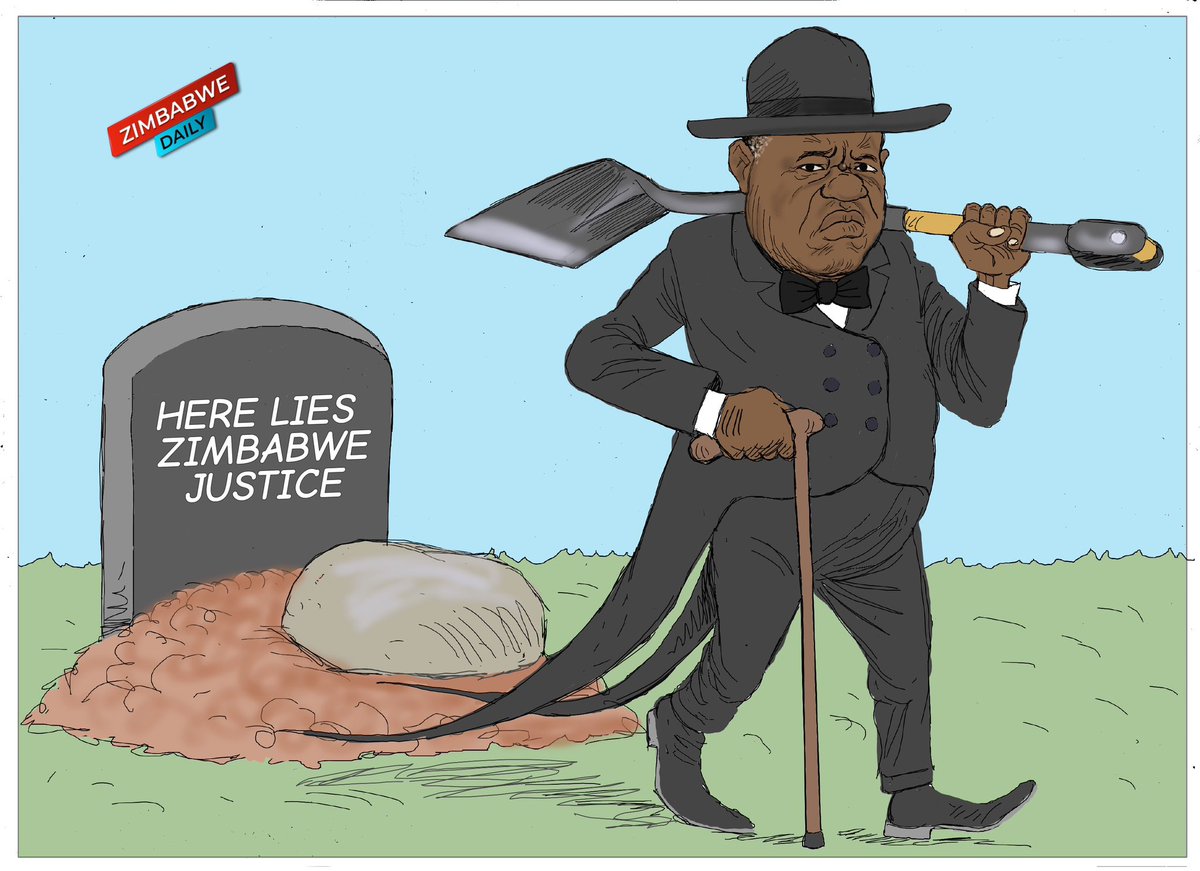
zimDaily tweet media
ZXX
1
34
155
6.3K
The Nyati_Grootman🐃🇿🇼 retweetledi
Doug Coltart ✊🏼🇿🇼
We successfully submitted our letters to @ParliamentZim objecting to #CAB3. If you haven’t yet, you still can at clerk@parlzim.gov.zw or at the Parliament Building before 18 May 2026. I will post my full letter below. #NoToCAB3
English
42
302
1K
27.4K
The Nyati_Grootman🐃🇿🇼 retweetledi
Hopewell Chin’ono
Hopewell Chin’ono@daddyhope·
Well done @DougColtart for providing leadership👏🏿👏🏿👏🏿
English
17
133
858
31.3K
The Nyati_Grootman🐃🇿🇼 retweetledi
Doug Coltart ✊🏼🇿🇼
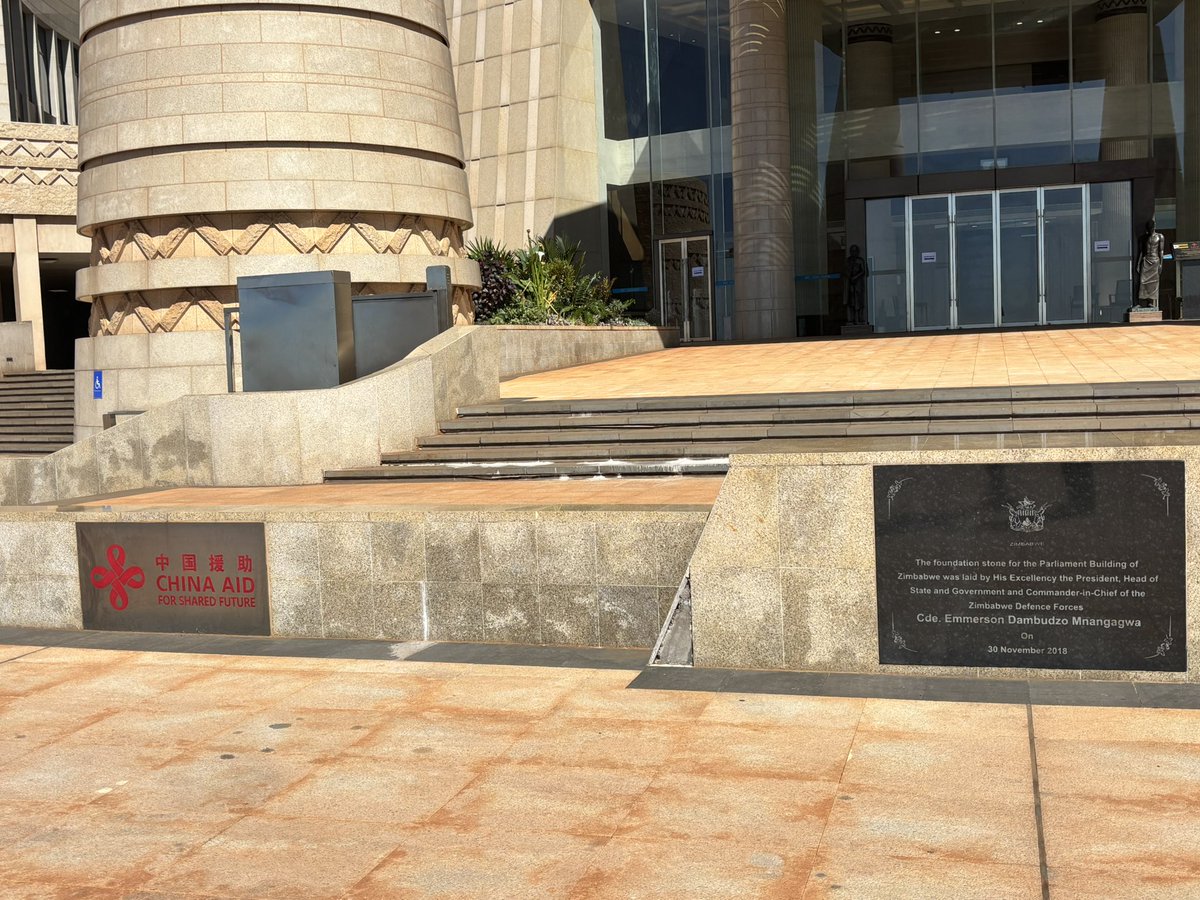
Our new Parliament is a nice building, but I found the extremely in-your-face prominence of CHINA AID’s involvement quite distasteful and disrespectful to our sovereignty as a nation. The word “CHINA” is actually more prominent than the word “ZIMBABWE” at the front of Parliament and there are THREE permanent plaques honoring China Aid. Surely we can show our gratitude for China’s support towards its construction while maintaining a bit of self-respect for ourselves as a nation at the house of the Zimbabwean People.
Doug Coltart ✊🏼🇿🇼 tweet mediaDoug Coltart ✊🏼🇿🇼 tweet mediaDoug Coltart ✊🏼🇿🇼 tweet mediaDoug Coltart ✊🏼🇿🇼 tweet media
English
110
161
759
71.9K
The Nyati_Grootman🐃🇿🇼 retweetledi
Hopewell Chin’ono
Hopewell Chin’ono@daddyhope·
The richest black man in the world and Nigerian entrepreneur and businessman, Aliko Dangote, was asked on a podcast which African countries are currently the most promising for doing business. He mentioned 10 countries, and Zimbabwe was not on that list, despite the fact that Dangote was recently in Zimbabwe. What this should teach Zimbabwe’s government, particularly ZANUPF and President Emmerson Mnangagwa, is that propaganda does not build confidence. Propaganda does not attract serious investors. Serious business people like Dangote are not moved by slogans, political speeches, or staged public relations exercises. They are moved by policy consistency, transparency, stability, infrastructure, rule of law and an environment where business can operate without corruption and uncertainty. No amount of propaganda can hide corruption, bad policies, policy inconsistencies, collapsing infrastructure and economic instability. The world’s serious investors look beyond headlines and political praise singing. They study the fundamentals. That is the reality of global business. You cannot cheat your way into economic success.
English
95
209
803
123.6K
The Nyati_Grootman🐃🇿🇼 retweetledi
David Coltart
David Coltart@DavidColtart·
I have sent the attached e mail to the Clerk of Parliament today. Whilst I am extremely skeptical about the objectivity of Parliament I think it necessary to take this small step in any event. I urge all patriots to write their own e mails objecting to Constitutional Amendment Bill Number 3. E mails can be sent to clerk@parlzim.gov.zw . Now is not the time to be apathetic.
David Coltart tweet media
English
15
79
247
11.8K
The Nyati_Grootman🐃🇿🇼 retweetledi
K
K@begottensun·
How the Ecocash hijack scam works and how they keep trying to hit businesses. Thank me later
K@begottensun

x.com/i/article/2054…

English
6
35
104
49.5K
The Nyati_Grootman🐃🇿🇼 retweetledi
David Coltart
David Coltart@DavidColtart·
The Catholic Church in #Zimbabwe has an unmatched record in speaking out against serious human rights abuses and grave abuses of governance for decades. It spoke out against the Rhodesian Front’s racially discriminatory policies, it spoke out against the use of violence pre independence, it courageously spoke out against Gukurahundi in the 1980s and ever since then has routinely spoken in favour of truth, democracy and respect for the rule of law. It is in that context that its latest statement against #CAB3 comes as no surprise. It is consistent with the Church’s long history in standing up against the abuse of power in Zimbabwe. Thank God for the Catholic Church.
David Coltart tweet mediaDavid Coltart tweet mediaDavid Coltart tweet mediaDavid Coltart tweet media
English
6
103
229
6.2K
The Nyati_Grootman🐃🇿🇼 retweetledi
SEWE OUT NOW!🤘🏿🎸
This is what heartbreak sounds like in ChiShona 💔🇿🇼
English
0
4
12
419
The Nyati_Grootman🐃🇿🇼 retweetledi
King Jay🇿🇼
King Jay🇿🇼@KingJayZim·
#Harare #Zimbabwe .13 May 2026. Finally, a move ,albeit several decades behind many developed cities, to curb errant driving at some of Harare’s most chaotic intersections through the installation of the Smart Traffic Management System. The system is being introduced at about 20 key crossings including Glenara Avenue/Samora Machel Avenue, Herbert Chitepo Avenue/Leopold Takawira Street (that’s Moffat Street/Rhodes Avenue pre-1980 for those who may have lost touch 😅), Cripps Road/Remembrance Drive, and this one here at Second Street/Churchill Avenue, among others. The AI-powered cameras will reportedly transmit real-time data to a new data centre at CID headquarters. It is my hope that this new traffic management system will deter the growing culture of motorists “jumping” red lights, blocking intersections and generally turning major crossings into scenes of confusion. Importantly, the technology also reduces direct human-to-human interaction in traffic enforcement, an area that has long been vulnerable to corruption. The programme is expected to roll out to Bulawayo soon. Press play for more. #TheKingIsAround #HappinessIsOurBusiness
English
21
19
113
19K
The Nyati_Grootman🐃🇿🇼 retweetledi
Hopewell Chin’ono
Hopewell Chin’ono@daddyhope·
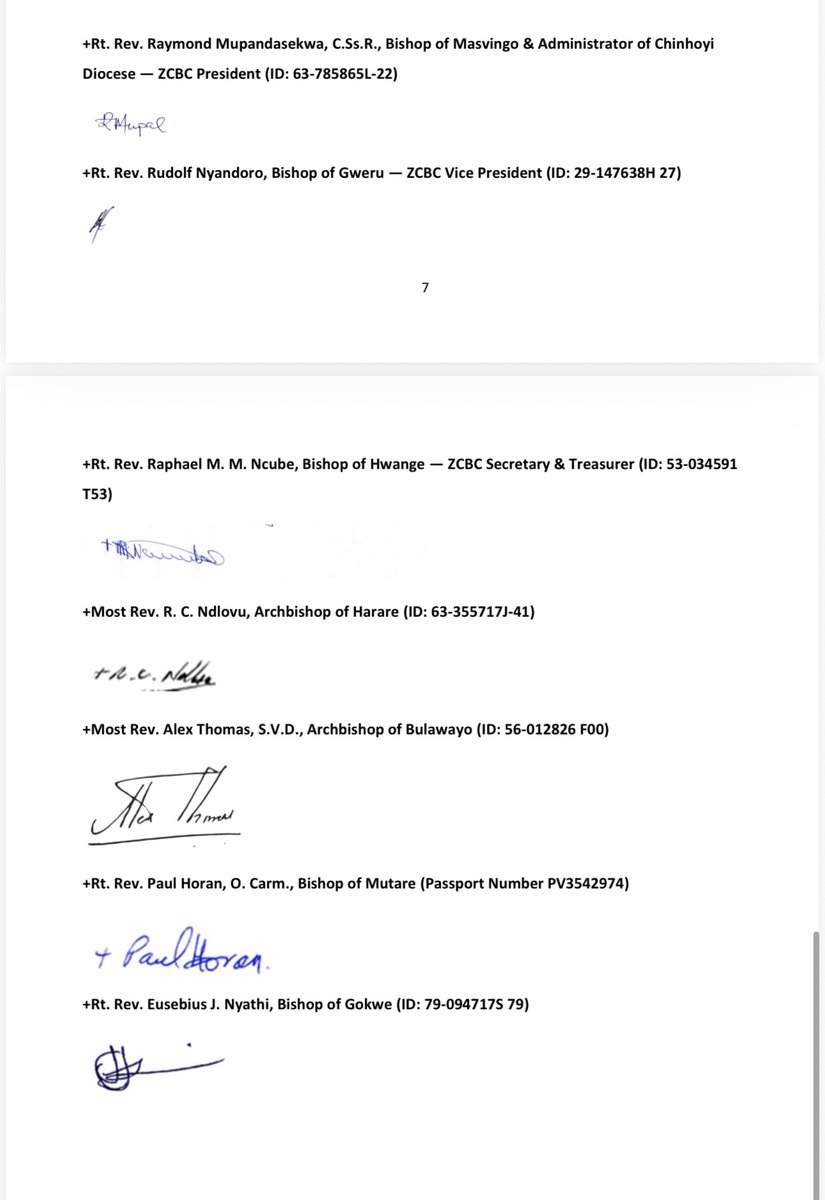
The Zimbabwe Catholic Bishops’ Conference has formally submitted a powerful objection to Constitutional Amendment Bill No. 3, warning Parliament that the proposed changes threaten democracy, constitutionalism, judicial independence, electoral integrity, and the sovereignty of the people. The bishops strongly oppose proposals to abolish direct presidential elections, extend presidential and parliamentary terms from five to seven years, weaken the Zimbabwe Electoral Commission, increase presidential influence over the judiciary and Parliament, abolish key constitutional commissions, and dilute constitutional safeguards designed to prevent abuse of power. In essence, the Catholic Church is arguing that these amendments would fundamentally shift Zimbabwe away from the democratic principles agreed to by citizens in the 2013 Constitution and could dangerously concentrate power in the executive. Full Statement 👇🏿 SUBMISSION TO PARLIAMENT ON THE CONSTITUTION OF ZIMBABWE AMENDMENT (NO. 3) BILL, 2025 12 May 2026 In Defence of Truth, Justice, and the Voice of the People 1. Introduction The Zimbabwe Catholic Bishops’ Conference (ZCBC) respectfully submits its observations and objections regarding the Constitution of Zimbabwe Amendment (No. 3) Bill, 2025 (“CAB3”). The Catholic Church in Zimbabwe participates in this constitutional process not as a political actor, but as a moral and civic voice concerned with the protection of human dignity, constitutionalism, democratic participation, justice, accountability, and the common good. Constitutional questions are not merely technical legal matters; they shape the moral and institutional foundations upon which national life rests. Our Constitution is more than a legal instrument. It is a solemn national covenant born out of the sacrifices, aspirations, and sovereign will of the people of Zimbabwe as expressed through the 2013 referendum. It embodies the principles of constitutional supremacy, separation of powers, accountable governance, protection of rights, and the sovereignty of the people. For this reason, constitutional amendments must strengthen rather than weaken democratic safeguards, public confidence in institutions, and the constitutional protections deliberately entrenched by the people of Zimbabwe. The Conference is deeply concerned that several provisions of CAB3 undermine foundational constitutional principles, weaken institutional independence, diminish direct democratic participation, and erode constitutional safeguards against the concentration and abuse of power. The Conference therefore respectfully urges Parliament to reject those provisions of the Bill that are inconsistent with constitutional democracy, the sovereignty of the people, and the long-term stability and integrity of Zimbabwe’s constitutional order. 2. Constitutionalism, Democracy, and the Sovereignty of the People The Constitution affirms that all public authority derives from the people of Zimbabwe and must always remain accountable to them. Democracy is not merely the holding of elections; it requires meaningful participation, institutional independence, transparency, constitutional fidelity, and respect for the dignity of every citizen. Zimbabwe’s constitutional order also resonates with the African ethical vision of ubuntu/unhu, which recognises leadership as a responsibility of service to the community rather than a mechanism for the concentration of power. Strong and independent institutions are indispensable pillars of democratic life. Public confidence in the Judiciary, the Zimbabwe Electoral Commission (ZEC), prosecutorial authorities, and Parliament itself is essential for national peace, stability, and constitutional legitimacy. The Conference therefore submits that constitutional reform must: • deepen democratic participation, • strengthen constitutional safeguards, • preserve institutional independence, • and protect the sovereign voice of the people. 3. Concerns Regarding the Consultation Process Section 141 of the Constitution obliges Parliament to facilitate meaningful public participation in legislative processes. This obligation is not procedural formality but an expression of democratic sovereignty itself. The Conference is deeply concerned by reports of intimidation, suppression of dissenting voices, disruptions, and unequal participation opportunities during public hearings on CAB3. Such irregularities undermine the integrity of the consultation process and weaken public confidence in constitutional reform. Meaningful consultation must be: • free, • inclusive, • peaceful, • transparent, • and genuinely participatory. The Conference therefore urges Parliament to ensure that constitutional reform processes fully comply with both the letter and spirit of constitutional public participation requirements. ANALYSIS OF KEY PROVISIONS 4. Clause 2: Abolition of Direct Presidential Elections Current Constitutional Position Section 92 of the Constitution presently provides for the direct election of the President by registered voters through universal adult suffrage and secret ballot. This provision gives practical expression to several foundational constitutional principles: • popular sovereignty, • equality of votes, • democratic accountability, • and the principle that executive authority derives directly from the people. The Proposed Amendment Clause 2 seeks to repeal this arrangement and replace it with a system in which the President is elected by Parliament sitting jointly as the Senate and National Assembly. The Conference’s Position The Conference opposes Clause 2 and respectfully submits that it must be withdrawn. The direct election of the President by registered voters is not merely one method among equals; it is the constitutionally chosen expression of the democratic principle that executive authority derives from the people of Zimbabwe. To transfer the election of the Head of State from citizens to Parliament fundamentally alters the source and character of executive legitimacy. Such a profound constitutional change cannot properly be treated as a mere procedural adjustment. Zimbabwe’s liberation struggle was deeply rooted in the principle of “one person, one vote” and the right of citizens to determine their political leadership directly. The right to vote for one’s Head of State forms part of the broader political rights protected under Section 67 of the Constitution and under international instruments such as the International Covenant on Civil and Political Rights (ICCPR). The Conference further notes that the stated justification of reducing “electoral toxicity” is constitutionally insufficient to justify removing the people’s direct vote for President. The Conference therefore respectfully submits that Clause 2 must be withdrawn. Should Parliament nevertheless seek to proceed with such a fundamental alteration of Zimbabwe’s democratic architecture, the matter should be subjected to a national referendum so that the people of Zimbabwe may directly determine the issue themselves. 5. Clauses 3, 7, and 8: Extension of Presidential and Parliamentary Terms The Proposed Amendments The Bill proposes: • extending presidential terms from five to seven years, • extending parliamentary terms from five to seven years, • and applying these extensions to current office holders. The clauses further attempt to operate “notwithstanding Section 328(7)” of the Constitution. The Conference’s Position The Conference firmly opposes Clauses 3, 7, and 8 and respectfully submits that they must be withdrawn in their entirety. Section 328(7) was deliberately entrenched in the Constitution to prevent the use of constitutional amendment powers for incumbency advantage. It expressly protects term-limit provisions from benefiting sitting office holders without approval through a national referendum. This safeguard is one of the most important constitutional protections within Zimbabwe’s democratic order. The Conference respectfully submits that Parliament cannot bypass entrenched constitutional protections merely by inserting the phrase “notwithstanding Section 328(7)” into ordinary amendment provisions. To permit such an approach would weaken constitutional supremacy itself and render constitutional safeguards vulnerable to temporary parliamentary majorities. Term limits are not technical formalities. They are democratic safeguards designed to: • prevent excessive concentration of power, • encourage constitutional accountability, • protect peaceful democratic succession, • and preserve public trust in governance. The comparative African experience demonstrates that attempts to extend incumbency through constitutional amendments have frequently contributed to democratic instability, institutional weakening, and political tension. The Conference therefore respectfully submits that any proposed alteration of presidential or parliamentary term limits must, at minimum, be subjected to direct approval by the people through a national referendum as contemplated by Section 328(7). 6. Clause 6: Presidential Appointment of Additional Senators Clause 6 proposes to increase the number of presidentially appointed senators. The Conference opposes this amendment and respectfully submits that it must be withdrawn. The Senate derives its legitimacy primarily from democratic representation. Increasing presidential appointments within the Senate risks weakening its representative character and creating perceptions of excessive executive influence over the legislative branch. The proposed amendment also contains no sufficiently clear safeguards regarding: • appointment criteria, • transparency, • parliamentary oversight, • or protection against partisan use. The Conference therefore submits that constitutional reform should strengthen rather than dilute the representative and independent character of Parliament. 7. Clauses 9–12: Electoral Governance and the Zimbabwe Electoral Commission The Conference opposes Clauses 9 to 12 and respectfully submits that they must be withdrawn. The independence of the Zimbabwe Electoral Commission is constitutionally protected under Section 235 of the Constitution and remains indispensable to democratic legitimacy and public confidence in elections. The proposed transfer of core electoral functions, including voter registration and management of the voters’ roll, away from ZEC raises serious concerns regarding institutional independence and public trust. The voters’ roll is not merely an administrative register; it is the foundational instrument of democratic participation. Public confidence in its impartial management is therefore essential. The Conference further notes that regional democratic standards, including the SADC Principles and Guidelines Governing Democratic Elections, strongly emphasise the independence of electoral management bodies from executive control. The Conference respectfully submits that Zimbabwe’s electoral institutions should be strengthened, not weakened, and that ZEC’s constitutional mandate over electoral administration must be preserved. 8. Clause 14: Judicial Appointments and Judicial Independence The Conference opposes Clause 14 and respectfully submits that it must be withdrawn. The current constitutional framework governing judicial appointments was deliberately designed to promote: • transparency, • merit, • accountability, • and judicial independence. Public interviews and Judicial Service Commission (JSC) shortlisting processes are not procedural technicalities; they are constitutional safeguards intended to protect the Judiciary from excessive executive influence. The proposed amendments significantly weaken these safeguards by reducing the role of the Judicial Service Commission and increasing presidential discretion in judicial appointments. The Conference is deeply concerned that such changes may undermine public confidence in the independence and impartiality of the Judiciary. An independent Judiciary remains essential for: • constitutional governance, • protection of rights, • separation of powers, • and the rule of law. The Conference therefore respectfully urges Parliament to preserve and strengthen judicial independence rather than weaken existing constitutional safeguards. 9. Clause 15: Constitutional Obligations of the Defence Forces The Conference expresses concern regarding Clause 15 and respectfully recommends that it not be passed in its current form. The proposed replacement of the constitutional duty “to uphold this Constitution” with language requiring conduct merely “in accordance with the Constitution” materially weakens the constitutional fidelity obligations of the Defence Forces. Given Zimbabwe’s constitutional history, the Conference submits that the Defence Forces should remain affirmatively obligated to uphold and defend constitutional democracy and constitutional order. 10. Clauses 17 and 18: Abolition of the Zimbabwe Gender Commission The Conference opposes Clauses 17 and 18 and respectfully submits that they must be withdrawn. The Zimbabwe Gender Commission was constitutionally established to provide specialised and focused institutional protection for gender equality and women’s rights. While institutional efficiency is important, the abolition of a dedicated constitutional body responsible for gender equality risks weakening the practical protection and advancement of women’s rights as guaranteed under the Constitution and international human rights obligations. The Conference therefore respectfully recommends the retention of the Zimbabwe Gender Commission as an independent constitutional institution. 11. Clause 19: Appointment of the Prosecutor-General The Conference opposes Clause 19 and respectfully submits that it must be withdrawn. The independence of prosecutorial authority is fundamental to equal justice under the law and public confidence in the criminal justice system. The removal of mandatory consultation with the Judicial Service Commission in appointing the Prosecutor-General risks creating perceptions of excessive executive influence over prosecutorial decisions. The Conference therefore submits that constitutional safeguards protecting prosecutorial independence should be strengthened rather than weakened. 12. Clause 20: Traditional Leaders and Constitutional Accountability The Conference opposes Clause 20 and respectfully submits that it must be withdrawn. The current constitutional provisions requiring traditional leaders to remain non-partisan and to respect fundamental rights are essential safeguards, particularly within rural communities where traditional leaders exercise substantial social authority and influence. The removal of these constitutional protections risks: • politicising traditional leadership, • weakening constitutional accountability, • and exposing vulnerable communities to discrimination and abuse. The Conference therefore respectfully submits that these constitutional protections should be retained and strengthened. 13. Clause 21: Abolition of the National Peace and Reconciliation Commission The Conference opposes Clause 21 and respectfully submits that it must be withdrawn. Zimbabwe continues to carry unresolved historical wounds arising from political violence, social conflict, and past injustices. The National Peace and Reconciliation Commission remains an important constitutional institution for promoting healing, accountability, reconciliation, and national unity. The abolition of the NPRC without a clear and credible replacement mechanism risks undermining ongoing reconciliation processes and weakening Zimbabwe’s commitment to justice and national healing. The Conference therefore respectfully recommends the retention of the National Peace and Reconciliation Commission. 14. Catholic Social Teaching and Constitutional Responsibility Catholic Social Teaching affirms: • the dignity of every human person, • meaningful participation in public life, • accountability, • subsidiarity, • solidarity, • and the pursuit of the common good. Political authority derives legitimacy from service to the people and must always remain subject to moral and constitutional limits. The Church does not seek partisan political power. However, the Church has both a moral responsibility and constitutional right to speak whenever constitutional developments affect justice, democratic participation, institutional integrity, human dignity, or the welfare of society. The Conference respectfully submits that constitutional reform must: • strengthen democratic accountability, • preserve institutional independence, • protect constitutional safeguards, • and uphold the sovereign will of the people of Zimbabwe. 15. Conclusion The Zimbabwe Catholic Bishops’ Conference reiterates its commitment to peace, justice, constitutionalism, democratic participation, and the common good. For the foregoing constitutional, moral, and democratic reasons, the Conference respectfully urges Parliament to reject those provisions of Constitutional Amendment Bill No. 3 that: • undermine constitutional safeguards, • weaken institutional independence, • diminish direct democratic participation, • compromise accountability, • or erode the sovereign will of the people. Zimbabwe’s Constitution emerged from the sacrifices, hopes, and collective aspirations of the people of Zimbabwe. Its foundational protections must therefore be preserved with wisdom, constitutional fidelity, restraint, and profound respect for the sovereignty of the people. +Rt. Rev. Raymond Mupandasekwa, C.Ss.R., Bishop of Masvingo & Administrator of Chinhoyi Diocese — ZCBC President (ID: 63-785865L-22) +Rt. Rev. Rudolf Nyandoro, Bishop of Gweru — ZCBC Vice President (ID: 29-147638H 27) +Rt. Rev. Raphael M. M. Ncube, Bishop of Hwange — ZCBC Secretary & Treasurer (ID: 53-034591 T53) +Most Rev. R. C. Ndlovu, Archbishop of Harare (ID: 63-355717J-41) +Most Rev. Alex Thomas, S.V.D., Archbishop of Bulawayo (ID: 56-012826 F00) +Rt. Rev. Paul Horan, O. Carm., Bishop of Mutare (Passport Number PV3542974) +Rt. Rev. Eusebius J. Nyathi, Bishop of Gokwe (ID: 79-094717S 79) You can get the full PDF via this link; t.me/informationhub…
Hopewell Chin’ono tweet mediaHopewell Chin’ono tweet media
English
20
179
438
36.4K