Malik

1.9K posts

Malik

Malik

@MWS0470

Katılım Mayıs 2025
193 Takip Edilen13 Takipçiler
Malik
Malik@MWS0470·
@tparsi Thats assuming Iran would not strike US assets and bases in the region again.If the need arises to pull the US back, Iran can argue that the US blockade is an act of war and violations in Lebanon have effectively ended the ceasefire agreement. Therefore,finding the justification
English
0
0
0
733
Trita Parsi search. ..
Why the Iran ceasefire may have shifted the dynamics back in Trump's favor Diplomacy between Washington and Tehran has not yet unraveled, despite JD Vance’s theatrical departure from last week’s talks in Islamabad. Trump now signals that the two sides could reconvene within days in the Pakistani capital. Whether negotiators return to the table or continue their exchanges through quieter, remote channels before the ceasefire lapses, one reality appears to have shifted: Trump has clawed back a measure of momentum—and with it, leverage—over Iran, largely by virtue of the ceasefire. Here’s why. Trump entered this moment politically cornered and strategically constrained. Surging gasoline prices were inflicting acute domestic pain, eroding his standing at home. More critically, he faced a barren escalation ladder. Each conceivable move—strikes on Iran’s oil infrastructure, attacks on civilian targets, the seizure of Persian Gulf islands, or covert operations to capture enriched uranium—carried the near-certainty of forceful Iranian retaliation. Such responses would not merely match his escalation but compound it, deepening his economic exposure, amplifying political risk, and entangling him further in a perilous and unwinnable strategic bind. Nor could he simply extricate the United States from the conflict on his own terms. Absent an understanding with Tehran, Iran retained both the capacity and the incentive to continue targeting Israel and vulnerable U.S. assets across the Gulf. Trump needed Iran’s permission to get out of the war. The ceasefire, however, has subtly altered that equation. Trump may no longer need a formal nod from Tehran to step back. If he disengages now—without a comprehensive agreement—Iran will almost certainly maintain its grip over the Strait of Hormuz, a strategic setback for Washington. Yet Tehran is unlikely to resume direct military operations against U.S. targets in the Persian Gulf. To do so, in the absence of renewed American strikes, would cast Iran as the aggressor, inviting severe and potentially coordinated repercussions—not only from Washington but from wary global powers such as Russia and China. Moreover, the balance of needs has tilted. Iran now appears to need an agreement more than the United States does. Trump has already secured his central objective—the escape from a war he was ill-advised to begin—while Iran, despite accruing leverage through its command of the Strait, remains far from realizing its broader ambitions: meaningful sanctions relief, a definitive and enduring end to hostilities, and perhaps even the contours of a more stable, constructive relationship with Washington. Tehran’s decision to dispatch its largest, most senior, and most expansive delegation to Islamabad for direct talks with the American vice president reflected a striking confidence—that it occupied its strongest negotiating position vis-à-vis the United States since 1979. Yet to convert that moment of perceived ascendancy into little more than a cessation of U.S. bombardment would fall short of its aspirations. Even if Washington were to acquiesce to Iran’s control of the Strait, such an outcome would pale against the far more consequential gains Tehran believes are within reach. Instead, Iran needs to translate this leverage not only into a durable end to the war, but ideally, into a new peace: One that delivers sweeping sanctions relief and inaugurates a more stable, mutually defined economic and political relationship with Washington. Such an arrangement would serve as a bulwark against renewed conflict. The economic imperative is especially stark: sanctions relief is indispensable to reconstruct a country now burdened with damage running into the hundreds of billions of dollars. As I have argued before, sanctions relief is not merely an economic demand—it is a strategic necessity. Without it, Iran risks a condition of chronic erosion, a slow but steady weakening that would leave it exposed. That vulnerability, in turn, could invite further attacks. It was, after all, the misperception of Iranian weakness that helped open the window for initial strikes. But Trump does not, in any fundamental sense, require any of this. The United States can endure without a formal agreement with Iran and without the benefits of an economic relationship with Tehran. To be sure, a negotiated settlement would better serve long-term American interests: the nuclear constraints Trump seeks can only be credibly secured at the negotiating table. Abruptly abandoning diplomacy while leaving Iran in undisputed control of the Strait would also unsettle key regional allies. Yet these are strategic preferences, not immediate necessities. Trump’s calculus is far more transactional and far less patient. He can point to the damage already inflicted on Iran’s nuclear infrastructure and conventional forces, proclaim a hollow victory, and disengage. He has already emphasized that the United States no longer depends on Persian Gulf oil, insulating it from the direct economic consequences of Iran’s toll regime. As a result, the burden shifts outward: the Strait becomes a problem for European and Asian powers—countries that Trump has noted declined to rally to his side when he sought their help in prying the waterway from Tehran’s grip. The window now open offers Tehran a chance to convert battlefield leverage into lasting strategic gain. To let it close would mean forfeiting not just incremental progress, but the possibility of reshaping its economic and geopolitical position. By contrast, the United States, having already secured a tenuous exit ramp through the ceasefire, has less at stake in the short term. Walking away, therefore, is politically and strategically easier for Trump than for his Iranian counterparts. Both can live with diplomatic failure, but Tehran has more gains to lose. How Tehran chooses to navigate this narrowing corridor—whether it presses its advantage or overplays its hand—will be interesting to see.
English
231
261
1.1K
293.6K
Malik
Malik@MWS0470·
@CyrusMRH @EthanLevins2 I don’t know how you equate that, with a diplomat whos job is simply diplomacy and negotiations!?. You can have all your views about a certain government, but cmon man, diplomats are just diplomats
English
1
0
1
22
Cyrus
Cyrus@CyrusMRH·
Obviously, this is Islamic Republic propaganda. Being paid by a terrorist regime is no different from participating in its crimes, and you will be held accountable soon. It’s disgusting that you support someone who has the blood of tens of thousands of innocent Iranians on their hands. Honestly, this is beyond disgusting. How can you call yourself a human being? #IranRevolution2026 #DigitalBlackoutIran #FreeIran #IranMassacre #KingRezaPahlavi
English
3
0
3
795
Ethan Levins 🇺🇸
Ethan Levins 🇺🇸@EthanLevins2·
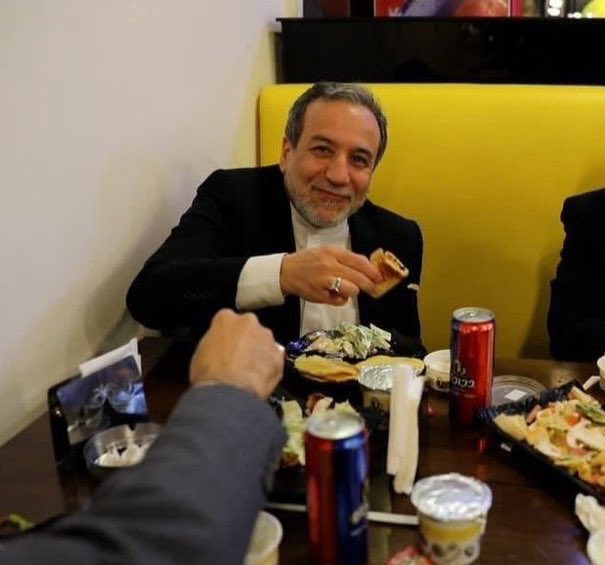
Abbas Araghchi is more likable than Trump. This is not up for debate.
Ethan Levins 🇺🇸 tweet media
English
1.3K
3.2K
30.5K
426.6K
Adeel
Adeel@adeelwrites21·
1. Half of Silicon Valley's founders trained abroad; nobody says Google is really Russian because Brin did a PhD at Stanford. NFAP (2022) — 55% of US billion-dollar startups have an immigrant founder - nfap.com/wp-content/upl… - nfap.com/research/new-n… - inc.com/guadalupe-gonz… Stanford / Crunchbase (2025) — 44% of US unicorn founders born outside the US - news.crunchbase.com/venture/foreig… Bay Area Council / Joint Venture Silicon Valley — 52% of Bay Area startups have immigrant key founders; 66% of SV tech workers foreign-born - spokesman.com/stories/2025/m… - audacy.com/knxnews/news/s… 2. "US investment stops at unstable geographies except Israel" — Factually wrong. US VC deployed ~$25B/yr into India, billions into Brazil, Vietnam, Poland, UAE. The CHIPS Act gave TSMC alone $6.6B — more than any single Israeli firm ever received. Taiwan sits under active PLA missile threat. - commerce.gov/news/press-rel… - nist.gov/chips/tsmc-ari… - pr.tsmc.com/english/news/3… - bain.com/insights/india… - statista.com/statistics/880… 3. "Universities restrict China but not Israel" — Israel is under ITAR. The US killed the Israel-China Phalcon AWACS deal (2000) and the Harpy drone sale (2005), and blocks Israeli modifications to F-35 code. Hardly "unmitigated access." - armscontrol.org/act/2000-09/pr… - washingtonpost.com/archive/politi… - armscontrol.org/act/2005-09/us… - flightglobal.com/usa-and-israel… 4. Taiwan got RCA tech transfer, Korea got US licensing + MITI-style backing, Japan got the entire postwar Marshall framework, China got WTO accession and JV-mandated IP transfer. Policy support is necessary but not sufficient. - construction-physics.com/p/morris-chang… - itritoday.itri.org/114/content/en… - en.wikipedia.org/wiki/TSMC 5. "Mellanox's valuation came from protected US customers" — Mellanox beat Intel (Omni-Path, killed 2019) and Cisco on technical merit: InfiniBand latency. Nvidia outbid Microsoft and Intel for it. ~20% of Mellanox revenue came from Chinese hyperscalers (Alibaba, Baidu, Tencent) — the opposite of a protected market. - nvidianews.nvidia.com/news/nvidia-to… - techcrunch.com/2019/03/11/nvi… The specific innovations aren't policy artifacts or the result of protected US consumerism. - Stateful firewall (Check Point, 1993), USB flash drive (M-Systems DiskOnKey, 2000), ICQ (1996), Waze routing. 6. "US entered a disastrous war on Israel's urging" — The push came from inside the Bush administration: Cheney, Rumsfeld, Wolfowitz, and the Pentagon's Office of Special Plans. Where dissent actually was documented, it came from US agencies themselves: the State Department's INR and the Department of Energy both formally dissented in the October 2002 NIE that the aluminum tubes were for centrifuges (postwar findings vindicated them), and Air Force intelligence footnoted its disagreement that Iraqi UAVs were biological-weapons delivery platforms. Tangent to the tech question regardless. State Dept INR — dissented on aluminum tubes and Niger uranium - irp.fas.org/cia/product/dc… (DCI Tenet's statement on the 2002 NIE, with INR dissent text) - globalsecurity.org/intell/library… (Senate Report, Chapter 3) - armscontrol.org/factsheets/chr… Department of Energy — dissented on aluminum tubes (tubes were wrong specs for centrifuges) - en.wikipedia.org/wiki/Iraqi_alu… - nsarchive.gwu.edu/document/29894… (primary-source DOE memo, Sep 13 2002) - isis-online.org/publications/i… (David Albright / ISIS analysis) - ucs.org/resources/atta… Air Force (Director, ISR) — dissented that Iraqi UAVs were for biological-weapons delivery - cbsnews.com/news/iraqi-dro… - globalsecurity.org/intell/library… (NIE key judgments with Air Force footnote) - dronecenter.bard.edu/history-lesson…
English
1
0
0
17
Amir Husain
Amir Husain@amirhusain_tx·
Population 330M - United States of America 450M - Entire European Union 600M - KSA, Iran, Egypt, Türkiye & Pakistan
Română
7
18
200
9.8K
Malik retweetledi
Saroyah♡ྀི🎀
Saroyah♡ྀི🎀@saroyahx·
The Sudanese woman in the pink hijab said: “I say this to the Muslim leaders: Stay in your castles, wear our hijabs, and hand over your weapons. We deserve them more than you. You are cowards, sitting on the thrones built from the bones of the children of Gaza”
د🪽@moonlighba3e

There’s a video that always plays in the back of my mind and brings tears to my eyes. Sudanese women gathering and donating all their gold as if their lives depended on it for Gaza. They stood up for the oppressed, yet we didn’t do anything for them. We should do better for them.

English
36
12.9K
46.3K
780.7K
Malik
Malik@MWS0470·
@tparsi Not enough!! Should be minus 100!
English
0
0
0
87
Trita Parsi search. ..
Stunning! It was achieved through the wars Israel pushed the US into, the genocide it committed, and the manner in which criticism of Israel has been punished. It's backfiring MASSIVELY. Among men under 50, Israel's favourability has tanked from -3 in 2022 to -47 in 2026!
English
106
1.2K
4.8K
423.2K
Malik retweetledi
Clash Report
Clash Report@clashreport·
Xi Jinping to Pedro Sánchez: China and Spain are both principled and reasonable countries. We are willing to stand on the right side of history. We should oppose the law of the jungle and together maintain true multilateralism and protect world peace and development.
English
53
479
2.8K
128.3K
Malik retweetledi
عبدالله الملا @قطر
This man is being mocked by enemies of Islam through his image, and the far-right uses his angry expression as a tool to distort the image of Islam. This man is Shakil Ahmad Bhat. He has a sad story. When he was 12 years old, the Indian police stormed their home and threw his sister out of a window, which caused a spinal injury. She later died four years later as a result. At that time, Shakil Ahmad became angry and entered into the political movement (peaceful) for the independence of Kashmir, his occupied homeland. This angry photo of him was taken when he participated in protests against cartoons insulting the Prophet ﷺ in 2007, and then this image turned into an icon used to distort the image of Muslims, even though he was in a peaceful protest. He was arrested more than 300 times unjustly. He was released from prison in 2020. His brother died due to a brain hemorrhage. His father became bedridden because of the repeated abuses and raids by Indian soldiers on Ahmed’s home. This is the story behind the angry image that spread around the world and was used to distort the image of Islam. Behind it is an innocent, oppressed, and sad face that suffered the hardships of injustice and tyranny. This is the media of evil since the dawn of history: It turns the victim into a villain and the oppressor into a victim. And Allah is sufficient for us, and He is the best disposer of affairs. Our consolation is that this is a fleeting world, and the Hereafter is the abode of reward and punishment.
عبدالله الملا @قطر tweet mediaعبدالله الملا @قطر tweet mediaعبدالله الملا @قطر tweet mediaعبدالله الملا @قطر tweet media
English
227
3.6K
15.5K
445.8K
Malik retweetledi
Malik retweetledi
Malik retweetledi
Dr.Sam Youssef Ph.D.,M.Sc.,DPT.
⛔️A CGTN reporter from China Central Television, broadcasting live in front of Gaza Shifa Hospital: ▪️"I saw with my own eyes that there were at least 10 Palestinian children under the age of 5 without heads."‼️
English
179
10.1K
19.5K
236.5K
Malik retweetledi
Maitreya Bhakal
Maitreya Bhakal@MaitreyaBhakal·
Dubai gets more attention, but many often forget that Singapore is almost as soulless. Literally an artificial "city" (i.e. a collection of roads and buildings) created out of thin air. More people should know that Singapore is not a sovereign country. Not least because of its existential exposure to the US financial system. The empire can crush Singapore like a bug overnight if it steps out of line. While it allows leaders of the "city state" to make the occasional statement or two about US hegemony, the minute Singapore takes any material action on the ground against US abuse, the "country" is finished. And it knows it. In this case, Singapore *completely* abided by US secondary sanctions on Iran, that were fully and unequivocally in violation of international law. "Principles" didn't come in the way then. But now when Iran defends itself against US aggression, and is even willing to give Singapore favorable terms, then suddenly "principles" start mattering. We are a country of principles after all.
Eric 𝕏@WorldStrategist

Singapore’s Foreign Minister on why he cannot accept negotiating with Iran for safe passage of ships. Definitely worth listening to:

English
138
645
2.9K
192.8K
Malik
Malik@MWS0470·
@MsMelChen Cutting of internet due security reasons doesn’t violate international law, Iran hasn’t killed tens of thousands, its propaganda, Iran abided by all agreements with the IAEA and the JCPOA until the US pull out unilaterally in 2017. Stop your bullshit
English
1
0
1
890
Melissa Chen
Melissa Chen@MsMelChen·
Singapore is the first and only Asian country so far to publicly refuse negotiating passage with Iran. Many others have made deals with Tehran to allow their shipments through. Some vessels are reportedly paying as much as $2m in fees to Iran to cross the waterway without coming under fire. This speech which was given for a domestic audience in Singapore's parliament but somehow, it has ended up triggering a diplomatic incident with Malaysian politicians who are friendly and supportive of the Iranian regime. Singapore refuses to accept the principle of turning transit through international straits as an extortion racket or a modern pirate toll booth. It’s a right under UNCLOS transit passage rules, the same rules that keep the global economy breathing. Partly, this is due to self-interest as Singapore, Malaysia and Indonesia lie at the crossroads of another chokepoint - the Malacca Strait. The narrowest point is the Phillips Channel in the Singapore Strait is barely 2 nautical miles wide, squeezed between Singapore’s islands and Indonesia’s Riau chain. Compared to the Strait of Hormuz’s 21 nautical mile pinch point, Singapore’s narrowest stretch is ten times tighter. Every eastbound ship on the planet is funneled through its Traffic Separation Scheme. If anyone had a temptation to start charging “protection fees,” it would be Singapore. Negotiating with Iran would shred the legal norm that protects every strait used for international navigation. Malaysia, Indonesia, or anyone else with "geographical privilege" and a grudge could do the same. And before you say “but Israel and America violated international law so why can't Iran," let me just reiterate that two wrongs don’t license Iran to play 17th-century privateer with 21st-century oil tankers. Clearly the same people making this argument don't extend the accusations of flouting of international law to an Iranian regime that has cut the internet off for its people, murdered several tens of thousands, and has been found in breach of international nuclear safeguards and IAEA obligations due to undeclared nuclear materials and activities, particularly in violating the 2015 JCPOA deal by enriching uranium up to 60% and limiting inspector access. Selective outrage is the refuge of people who only care about rules when they hurt their preferred side. Singapore has never played that game. During the 1973 and 1979 oil crises, Singapore faced a severe shock and given that it was an oil refining hub, it could have nationalized foreign oil stocks and kept the lights on for two years. But Lee Kuan Yew didn't do that. Singapore honored contracts and kept the system running. Part of its brand in a chaotic world is that of being a responsible actor. This decision prioritized long term global trust and reliability over short term national gain. It positioned Singapore as a dependable partner in the eyes of multinational oil companies and international business. As a result, it attracted even more investment, expanded its role as a major refining and trading hub, and strengthened its economy far beyond what hoarding the oil would have achieved. Building credibility pays dividends for decades. Furthermore, every single dollar funneled to Iran’s “safe passage” scheme ends up subsidizing the very terror networks rebuilding Hezbollah and Hamas. Singapore knows it.
Eric 𝕏@WorldStrategist

Singapore’s Foreign Minister on why he cannot accept negotiating with Iran for safe passage of ships. Definitely worth listening to:

English
441
996
4.3K
680K
Caroline Kingwell
Caroline Kingwell@ckingwell·
Stuff like this does indeed demonstrate that it was never about "religion" but rather about a job for a *paycheck*. Including the proxies. They just hide behind "religion" because they're criminals who want to appear to be doing what God wants to the extremely naive. Newsflash: God never wanted anyone to rape and murder children, falsely proclaim sanctification of temporary marriage for prostitution or rape... or systematically throw innocent young students off of rooftops to make an example of the actual righteous. Shocker, I know 😒
English
4
1
22
10.5K
Open Source Intel
Open Source Intel@Osint613·
Ahmad Vahidi, IRGC chief, on Iranian parliament speaker Ghalibaf: “The supreme leader isn’t even buried yet, and yet Ghalibaf is already shaking hands with those who kiIIed him.” -C14
Open Source Intel tweet mediaOpen Source Intel tweet media
English
264
951
5.8K
419K
Malik retweetledi
Election Enjoyer 🇺🇸
visits the pope → pope dies leads Iran negotiations → talks collapse flies to Hungary to prop up Orbán → Orbán loses in a landslide Man’s got a streak.
Election Enjoyer 🇺🇸 tweet media
English
5.2K
35.9K
269.4K
4.9M
Malik retweetledi
الرويـتـعي MBS 🐪
تصدى السعوديون بقوة على الحملة الإعلامية الإماراتية السلبية ضد باكستان. 🔥 تُدار الحسابات الإماراتية من قِبل أفراد مرتبطين بالحكومة الإماراتية. "هذا ليس بغريب على السعوديين يا عزيزي؛ إنهم بارعون في كشف الأكاذيب ونبذ الفتنة وتهذيب المراهقين."
South Asia Index@SouthAsiaIndex

Arab Social Media Monitoring: The UAE social media is buzzing with negative commentary about Pakistan and its alliance with Saudi Arabia. An analysis of the Arabic language X shows this negative commentary from UAE started right after: ◾ Pakistan didn't not invite UAE to the US-Iran talks in Islamabad, while reportedly observer from Saudi Arabia and Egypt were invited to Islamabad. ◾ Pakistan sent huge contingent of over 13,000 soldiers to Saudi Arabia, along with 12-18 fighter jets as part of Pak Saudi Defence Agreement. The analysis of the Arab X reveals that negative commentary about Pakistan is being strongly countered by Saudi Arabia social media users. It is also noteworthy that criticism of Pakistan & Saudi Arabia from the UAE social media is mostly originating from influencers who are linked to the govt. ◾As the content is mostly in Arabic language, so due to a language barrier, Pakistani response is mostly absent. ◾ However, Saudi X users are filling in the gap and providing a strong push back against it & supporting Pakistan. 📨 Some conversations are attached:

العربية
58
240
1.1K
48.2K
KW
KW@Warren_Britain·
@PolitlcsGlobal Well looks like Hungary will be a third world shithole in 2 years time. Peter magyar whoever he is will import migrants into Hungary against the wishes of the Hungarians. Orban played the game badly. Fat idiot.
English
17
4
86
10.6K
Politics Global
Politics Global@PolitlcsGlobal·
🚨🇭🇺 BREAKING: Hungarian PM Viktor Orbán has conceded to opposition leader Péter Magyar
Magyar
79
312
4.3K
330.8K
Malik retweetledi
Ethan Levins 🇺🇸
Ethan Levins 🇺🇸@EthanLevins2·
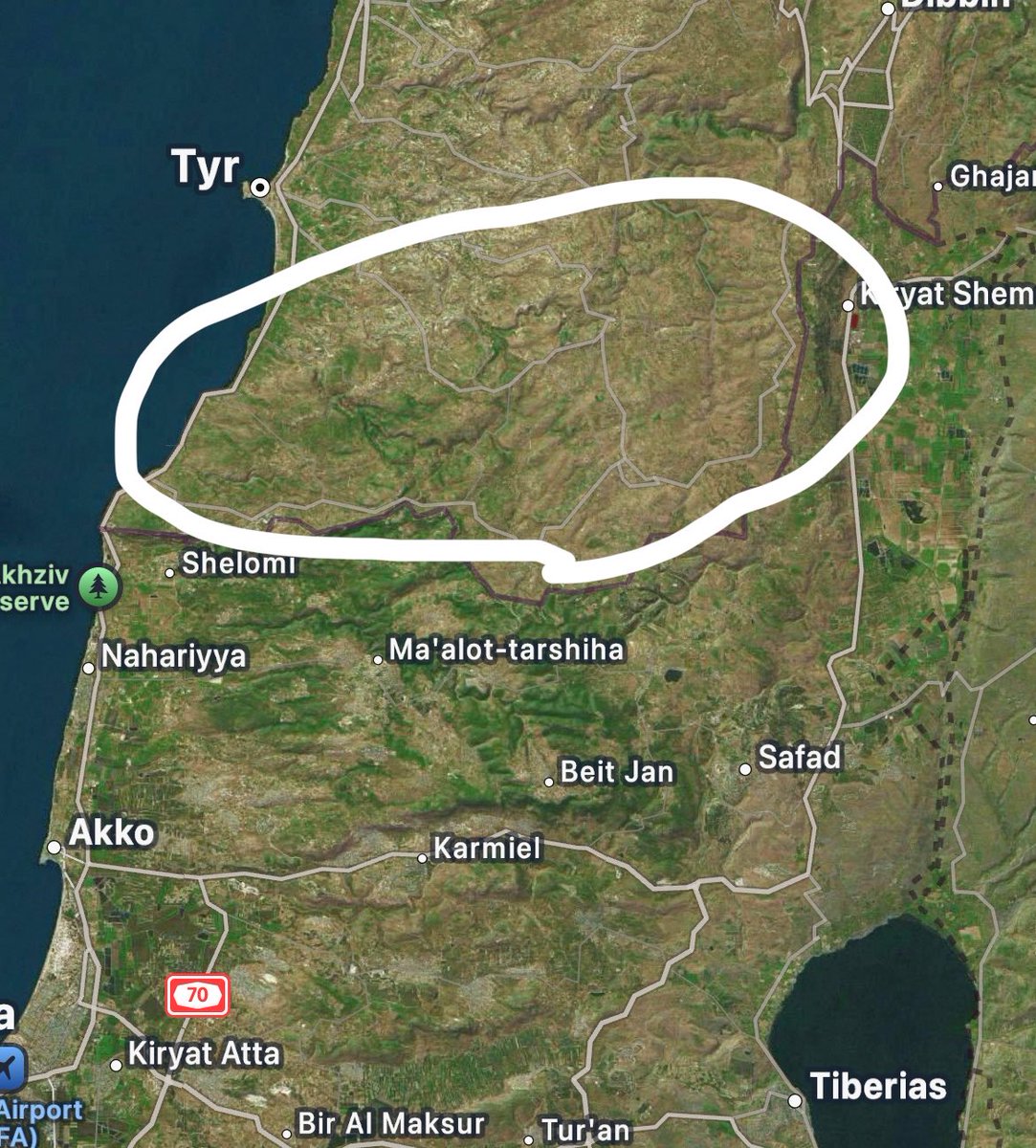
Apple has removed Lebanese village names in Southern Lebanon. As Israel invades, they are already setting the state to justify occupation. I’ve never seen something like this.
Ethan Levins 🇺🇸 tweet media
English
3.4K
80.2K
257.2K
12.8M