

MagnusJonsson
1.8K posts

MagnusJonsson
@MagnusJonsson
Software guy since ´86 passionate about decentralisation, automation, AI, energy, startups, entrepreneurship, retro games, drones, photography & my kids
Malaga, Spain Katılım Mart 2008
1.3K Takip Edilen564 Takipçiler

Happy new year y'all! Had a great time chatting with @F_Cool_Indies on his podcast to close out the year - feel free to give it a listen if you're looking for some productivity ideas to carry into January. Hoping to see you all for a new devlog soon!
youtube.com/watch?v=w10BNp…
YouTube
English
MagnusJonsson retweetledi

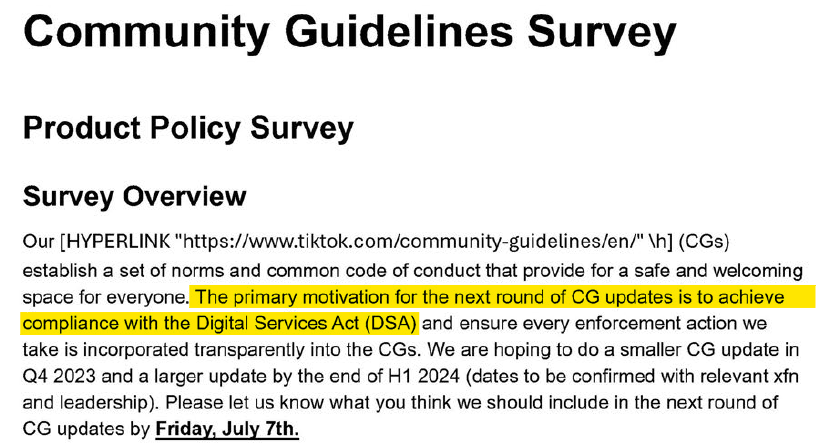
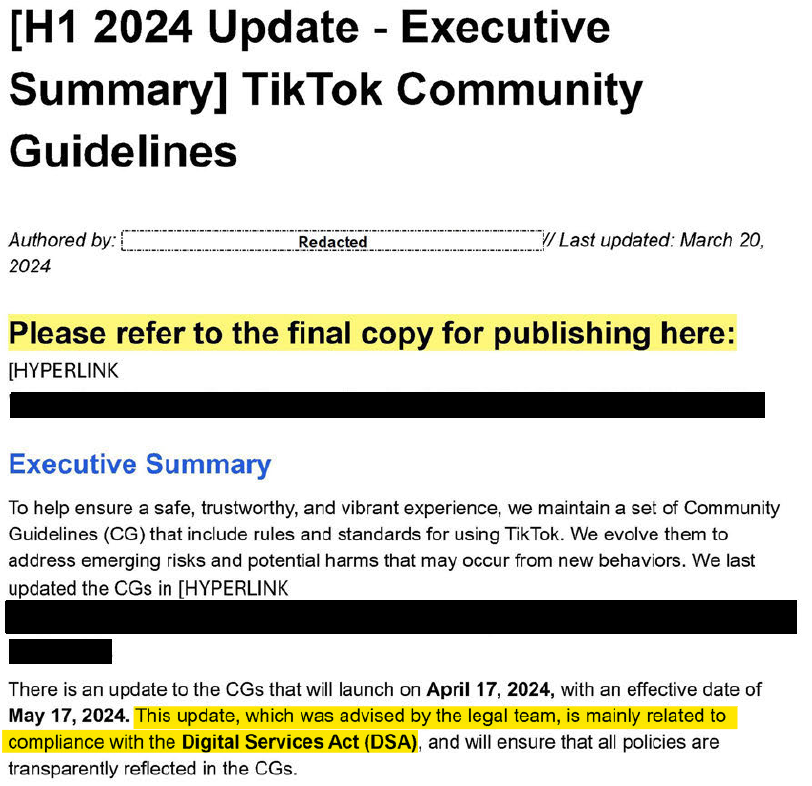
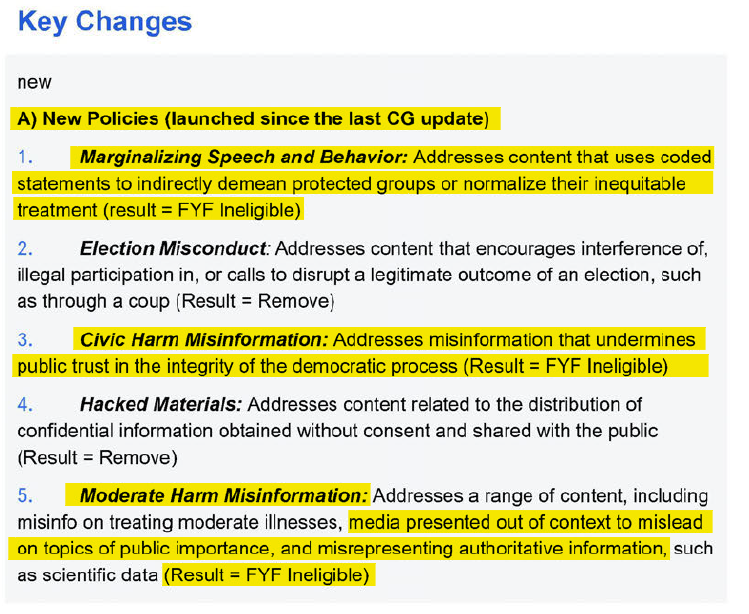
🚨The EU Censorship Files, Part II
For more than a year, the Committee has been warning that European censorship laws threaten U.S. free speech online.
Now, we have proof: Big Tech is censoring Americans’ speech in the U.S., including true information, to comply with Europe’s far-reaching Digital Services Act.
English
MagnusJonsson retweetledi

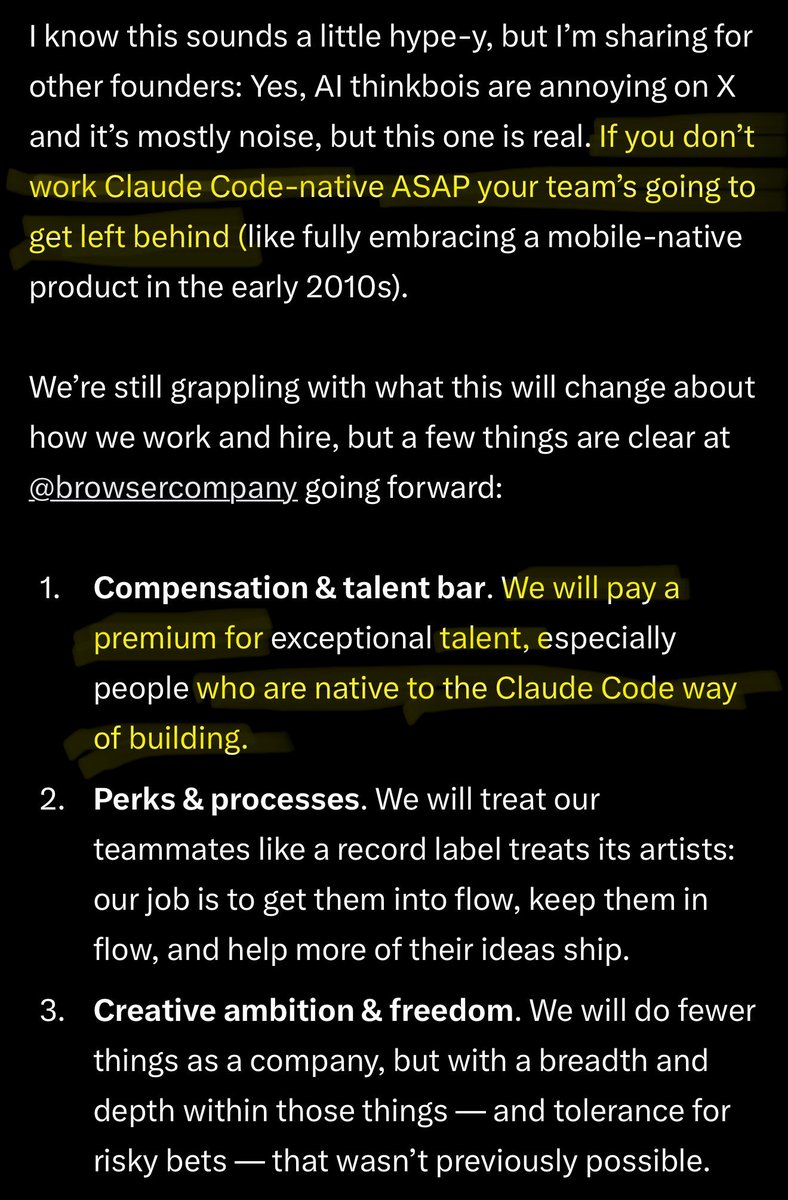
Founder of The Browser Company: “If you don’t work Claude Code-native ASAP your team’s going to get left behind.”
The “Claude Code-native” thing sounds like a buzzword until you look at what’s actualy happening at top engineering orgs.
Boris Cherny, who created Claude Code at Anthropic, runs 5-10 parallel Claude instances simultaneously while coding. His team pushes around five releases per engineer per day. Jaana Dogan at Google admitted Claude Code generated a distributed system in 60 minutes that her team spent a year iterating on.
The math on productivity compression is wild.
Traditional dev cycle for a feature… weeks. Claude Code native teams? Days. Sometimes hours. Ethan Mollick had Claude Code autonomously work for 74 minutes straight building a complete startup website from a single prompt.
Miller’s three hiring principles tell you where this is going.
One… Premium pay for people native to this way of building. Not “can use AI tools.” Native. Meaning the AI is the primary execution layer and the human provides direction, taste, judgment.
Two… Treat teammates like artists at a record label. Get them into flow. Keep them in flow. Help more of their ideas ship. This only works if execution friction approaches zero.
Three… Do fewer things with MORE depth and tolerance for risky bets. You can only operate this way when your velocity is 10x what it was before.
The mobile native comparison is spot on. Remember when companies were debating whether to build mobile apps? The ones who went mobile-first won. The ones who treated mobile as a nice-to-have got left behind.
Same dynamic playing out now.
But there’s a harder truth Miller is hinting at.
If one engineer with Claude Code outputs what previously required a 5-person team… what happens to headcount planning? The Browser Company already operates with a small team relative to their ambition. Under Atlassian they’re not scaling headcount. They’re scaling output per person.
This means two things for founders.
First… Your best engineers become worth significantly more. They’re now force multipliers instead of individual contributors. Compensation will reflect this.
Second… Your average engineers become a liability. Not because they’re bad. Because they’re not adapting fast enough to the new paradigm.
The gap between AI-native engineers and everyone else will widen faster than the mobile transition did. We went from “maybe we should have a mobile site” to “mobile is 60% of traffic” in about four years. I think the Claude Code native transition happens in half that time.
Mobile wasn’t optional. Neither is this.
Josh Miller@joshm
English
MagnusJonsson retweetledi

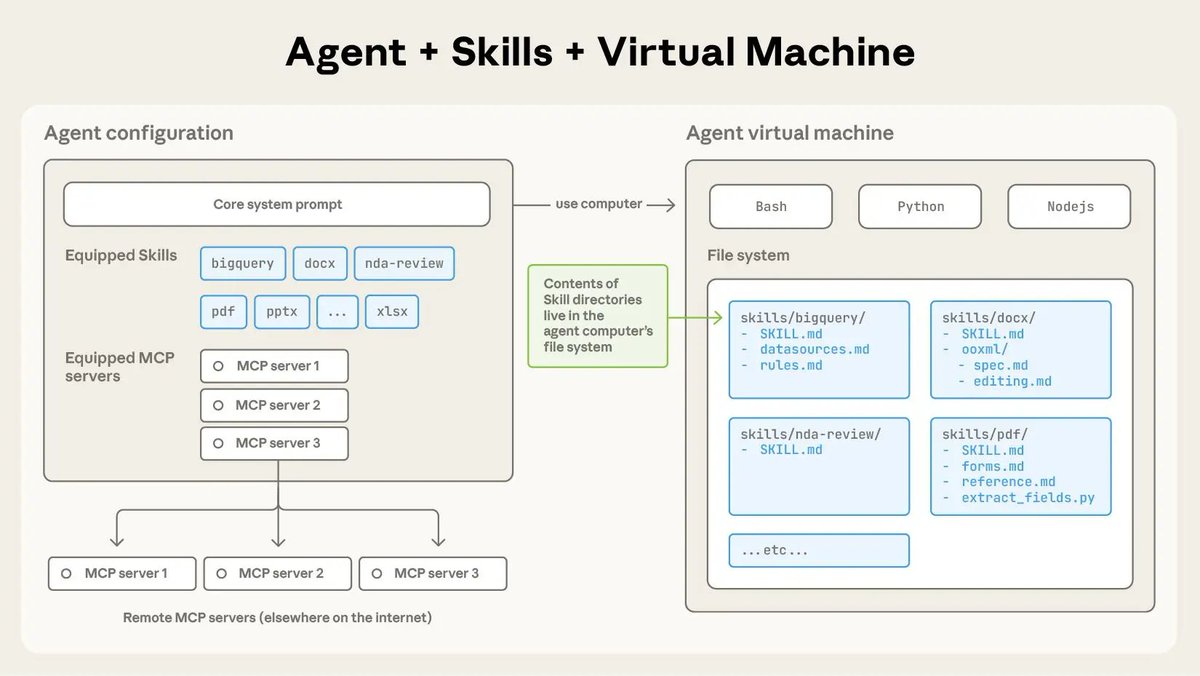
Today we're introducing Skills in claude dot ai, Claude Code, and the API.
Skills let you package specialized knowledge into reusable capabilities that Claude loads on demand as agents tackle more complex tasks.
Here's how they work and why they matter for the future of agents:
English
MagnusJonsson retweetledi

MagnusJonsson retweetledi

This is insane.
New AI model from Samsung, 10,000x smaller than DeepSeek and Gemini 2.5 Pro just beat them on ARC-AGI 1 and 2
Samsung’s Tiny Recursive Model (TRM) is about 10,000x smaller than typical LLMs yet smarter because it thinks recursively instead of just predicting text. It first drafts an answer, then builds a hidden "scratchpad" for reasoning, repeatedly critiques and refines its logic (up to 16 times), and produces improved answers each cycle.
This approach shows that architecture and reasoning loops (not just size), can drive intelligence. It enables powerful, efficient models that run cheaply, validate neuro symbolic ideas, and open highest quality reasoning to far more applications.
Acceleration is everywhere

Jackson Atkins@JacksonAtkinsX
My brain broke when I read this paper. A tiny 7 Million parameter model just beat DeepSeek-R1, Gemini 2.5 pro, and o3-mini at reasoning on both ARG-AGI 1 and ARC-AGI 2. It's called Tiny Recursive Model (TRM) from Samsung. How can a model 10,000x smaller be smarter? Here's how it works: 1. Draft an Initial Answer: Unlike an LLM that writes word-by-word, TRM first generates a quick, complete "draft" of the solution. Think of this as its first rough guess. 2. Create a "Scratchpad": It then creates a separate space for its internal thoughts, a latent reasoning "scratchpad." This is where the real magic happens. 3. Intensely Self-Critique: The model enters an intense inner loop. It compares its draft answer to the original problem and refines its reasoning on the scratchpad over and over (6 times in a row), asking itself, "Does my logic hold up? Where are the errors?" 4. Revise the Answer: After this focused "thinking," it uses the improved logic from its scratchpad to create a brand new, much better draft of the final answer. 5. Repeat until Confident: The entire process, draft, think, revise, is repeated up to 16 times. Each cycle pushes the model closer to a correct, logically sound solution. Why this matters: Business Leaders: This is what algorithmic advantage looks like. While competitors are paying massive inference costs for brute-force scale, a smarter, more efficient model can deliver superior performance for a tiny fraction of the cost. Researchers: This is a major validation for neuro-symbolic ideas. The model's ability to recursively "think" before "acting" demonstrates that architecture, not just scale, can be a primary driver of reasoning ability. Practitioners: SOTA reasoning is no longer gated behind billion-dollar GPU clusters. This paper provides a highly efficient, parameter-light blueprint for building specialized reasoners that can run anywhere. This isn't just scaling down; it's a completely different, more deliberate way of solving problems.
English
MagnusJonsson retweetledi
MagnusJonsson retweetledi

🚨 We’ve just published a recipe to train a frontier-level deep research agent using RL.
With just 30 hours on an H200, any developer can now beat Sonnet-4 on DeepResearch Bench using open-source tools.
(Thread 🧵)

English

@FoxNews @IngrahamAngle Possibly the most ineffective VP in the history of modern politics.
English

VP Vance to Zelenskyy: "Mr. President, so long as you behave, I won't say anything."
Vance explains to @IngrahamAngle how he broke the ice with Ukrainian President Zelenskyy while he was at the White House on Monday
English
MagnusJonsson retweetledi

A Structural Planning Framework for LLM Agent System in Enterprise
Agentic systems for enterprise are a work in progress. Reliability is a real problem.
No secret that planning works, but structural planning can further help improve the reliability of AI agents.
My notes:

English
MagnusJonsson retweetledi

Reddit user u/Alternative_Lab_4441 trained a FLUX Kontext LoRA to turn low-res Google Earth screenshots into high-res drone photos.
This LoRA turns basic satellite images into professional-quality aerial shots
And yes, it’s free to download!
English
MagnusJonsson retweetledi

IT'S FINALLY HERE!
🔥 Magnific Precision 🔥
First we created the first Creative Upscaler. Now, we reimagine the new world standard for non-creative upscales! Perfect for photographers and creatives: just more resolution/detail without unwanted changes!
Info + tutorials 🧵👇
English
MagnusJonsson retweetledi

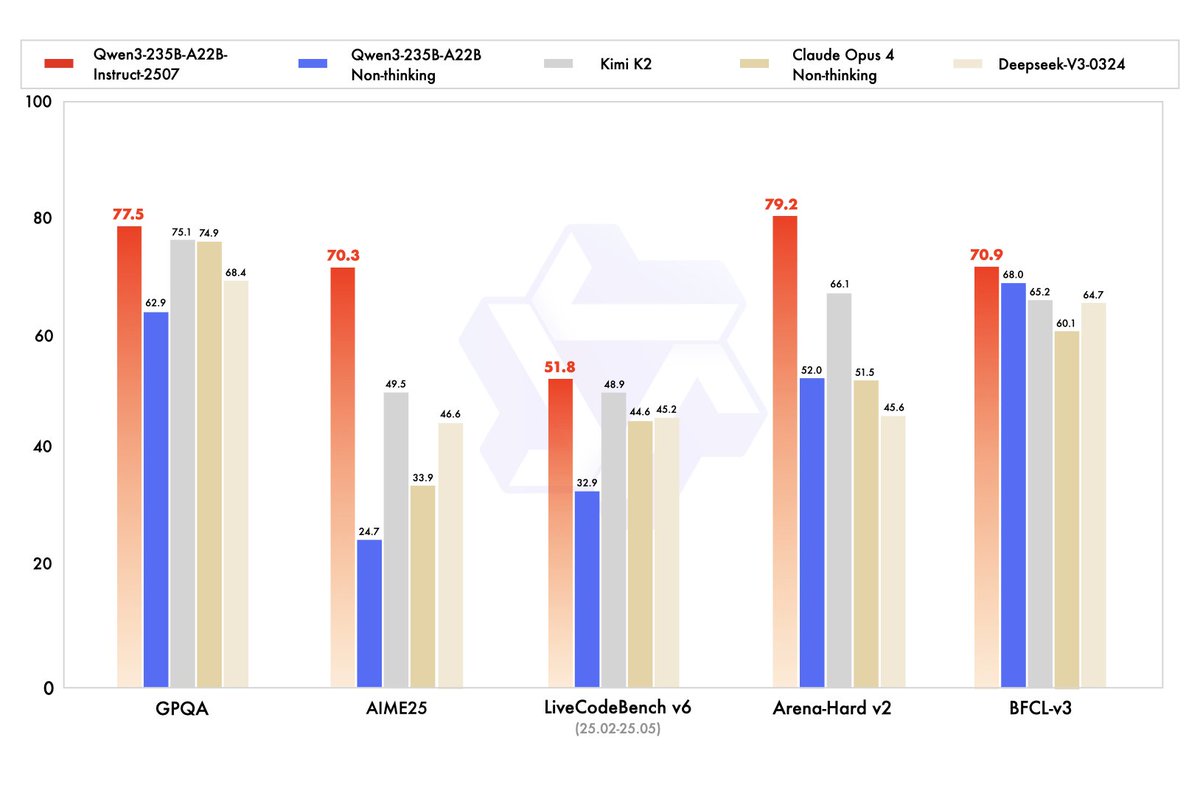
Alibaba Qwen has just released a non-thinking model even more powerful than Kimi K2...
And even better than Claude Opus 4 🤯
→ 100% open source
→ Only 22B active parameters
→ Available for free in Qwen Chat
All the links below
English
MagnusJonsson retweetledi

Official results are in - Gemini achieved gold-medal level in the International Mathematical Olympiad! 🏆 An advanced version was able to solve 5 out of 6 problems. Incredible progress - huge congrats to @lmthang and the team! deepmind.google/discover/blog/…
English
MagnusJonsson retweetledi

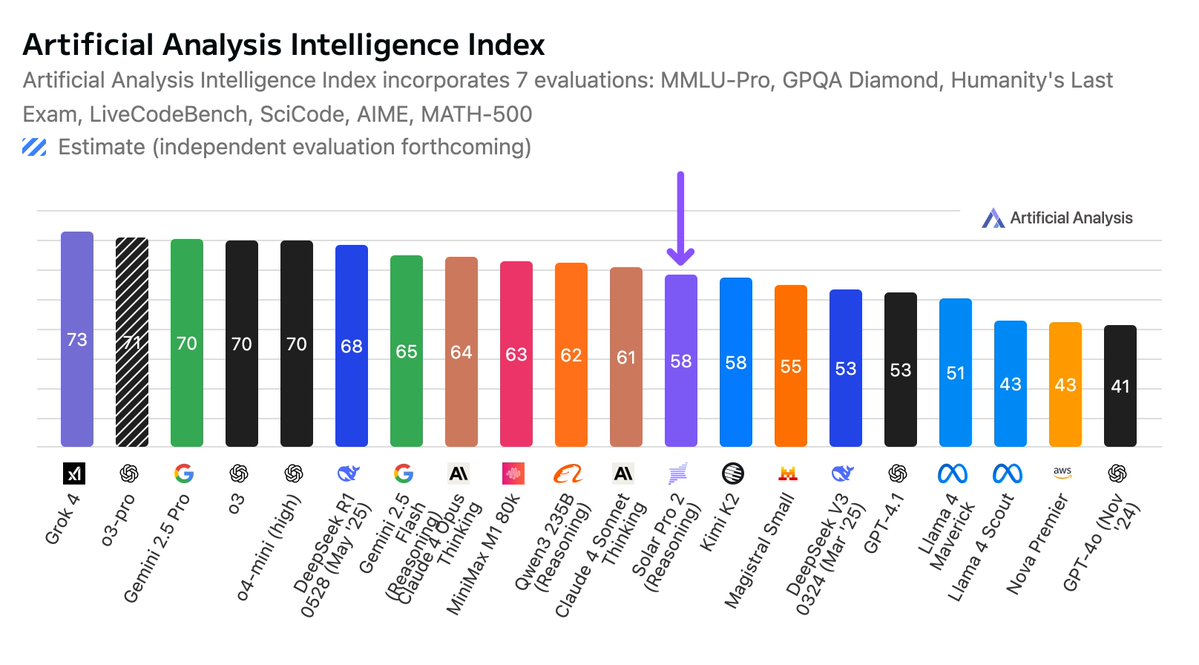
🇰🇷 South Korean AI Lab Upstage AI has just launched their first reasoning model - Solar Pro 2! The 31B parameter model demonstrates impressive performance for its size, with intelligence approaching Claude 4 Sonnet in 'Thinking' mode and is priced very competitively
Key details:
➤ Hybrid reasoning: The model offers optionality between 'reasoning' mode and standard non-reasoning mode
➤ Korean-language ability & Sovereign AI: Based in Korea, Upstage announced superior performance in Korean language evaluations. This release aligns with countries' interests to develop sovereign AI capabilities
➤ Pricing: Competitively priced at $0.5/1M tokens (input & output), significantly cheaper than comparable models including Claude 4 Sonnet Thinking ($3/$15/M input/output tokens) and Magistral Small ($0.5/$1.5/M input/output tokens)
➤ Proprietary: @upstageai has not released the model weights, though they have open-sourced previous Solar Pro models. Whether they will release Solar Pro 2's weights remains unclear as it wasn't mentioned in their announcement
English
MagnusJonsson retweetledi
MagnusJonsson retweetledi

1/
Agentic AI isn’t just a new tool—it’s a new paradigm. We’ve moved from deterministic programs to autonomous digital collaborators. LLMs aren’t scripts—they’re minds with context, memory, and feedback.
@danielbentes/the-agentic-transformation-of-software-engineering-81d1d5dbd51e" target="_blank" rel="nofollow noopener">medium.com/@danielbentes/…
English
AI engineering in 2025: Context is king. This nails where we're at with applied AI. philschmid.de/context-engine…
English
Have we become complacent? This is actually a remarkable achievement 👏
Tesla@Tesla
World's first autonomous delivery of a car! This Tesla drove itself from Gigafactory Texas to its new owner's home ~30min away — crossing parking lots, highways & the city to reach its new owner
English
MagnusJonsson retweetledi

Anthropic announced they've activated "Al Safety Level 3 Protections" for their latest model. What does this mean, and why does it matter?
Let me share my perspective as OpenAl's former lead for dangerous capabilities testing. (Thread)

English