Authentic Seerah

9.9K posts

Authentic Seerah banner
Authentic Seerah

Authentic Seerah

@MannaMth

Studying The Seerah of The Prophet ﷺ.Proud Muslim|Ahlus Sunnah|Salafi| Ahlul-Hadith| B.E (Aero)| B.A (Islamic Studies)|No to Khawarij/Isis.

Katılım Temmuz 2020
212 Takip Edilen4.5K Takipçiler
Sabitlenmiş Tweet
Authentic Seerah
Authentic Seerah@MannaMth·
My threads, may Allah have Mercy upon me and all of us... الحمد لله والصلاه والسلام على رسول الله وعلى اله واصحابه اجمعين ومن تبعهم باحسان الى يوم الدين.
العربية
11
26
83
0
Authentic Seerah
Authentic Seerah@MannaMth·
Assalaamu Alaikum. I am searching for the post/note which states that Imam Ibn Baaz changed his opinion on wiping the face after Dua? Any help brothers.
English
2
0
7
1.3K
Authentic Seerah retweetledi
Authentic Seerah
Authentic Seerah@MannaMth·
The Story of Imam Talut bin Abdul Jabbar and Sultan Al-Hakam, and the evil minister. [Thread]
English
1
5
13
1.3K
Authentic Seerah
Authentic Seerah@MannaMth·
This note presents a series of AI-assisted historical map reconstructions of the Arabian Peninsula, tracing the transition from the fragmented Najdi political landscape before the Dirʿiyyah alliance to the First, Second, and Third Saudi States. The aim is explanatory rather than polemical: to visualize changing centers of power, campaigns, rival dynasties, and external pressures across Arabia in a chronological way. These maps are not archival maps from the periods themselves, but modern visual reconstructions generated with AI from historically grounded prompts and then checked against published historical reference works. authenticseerah.com/2026/04/11/the…
English
0
0
12
544
Authentic Seerah
Authentic Seerah@MannaMth·
@socialnology That's not the point of discussion dear brother. Abdullah ibn Saba is a true individual who spread chaos.
English
0
0
0
30
mustafa Ahmed
mustafa Ahmed@socialnology·
@MannaMth Well am not gonna be arrogant about it & say yes, just because he recorded doesn’t mean he said it was authentic. So are you saying the figure ibn Saba did not exist?
English
1
0
0
15
Authentic Seerah
Authentic Seerah@MannaMth·
Where does it say that Imam At-Tabari deemed it authentic? He just compiled it. Otherwise it would mean that Imam At-Tabari also accepts that ‘Ammar bin Yasir, the noble Sahabi, was influenced by the deceptive words of ‘Abdullah bin Saba and his companions, as mentioned in the report of Abdullah ibn Saba. May Allah keep us safe from thinking as such about the Sahabah.
English
1
0
1
110
mustafa Ahmed
mustafa Ahmed@socialnology·
@MannaMth It is quite clear the scholars have differed on the classification of narrations, and evidently Imaam At-Tabari saw it to be authentic so I don’t think it’s from justice to say it is ‘unfounded’
English
1
0
0
81
Authentic Seerah
Authentic Seerah@MannaMth·
They're using this narration to critique anyone and everyone who criticises the evils of the Muslim ruler publicly as someone following the footsteps of Abdullah ibn Saba. So by that it implies Ibn Baaz, Al-Luhaydaan, Al-Albani and the other Ulama from the Salaf (Rshimahumullah) were following the footsteps of Abdullah ibn Saba when they were publicly criticizing the rulers.
English
0
0
1
101
.
.@k17_mt·
@MannaMth The argument was never based on this narration. It was a small supporting narration that can be disregarded without the basis being harmed, for it is rooted in none other than kitab and sunnah
English
1
0
1
89
Aasif
Aasif@aasif__javid·
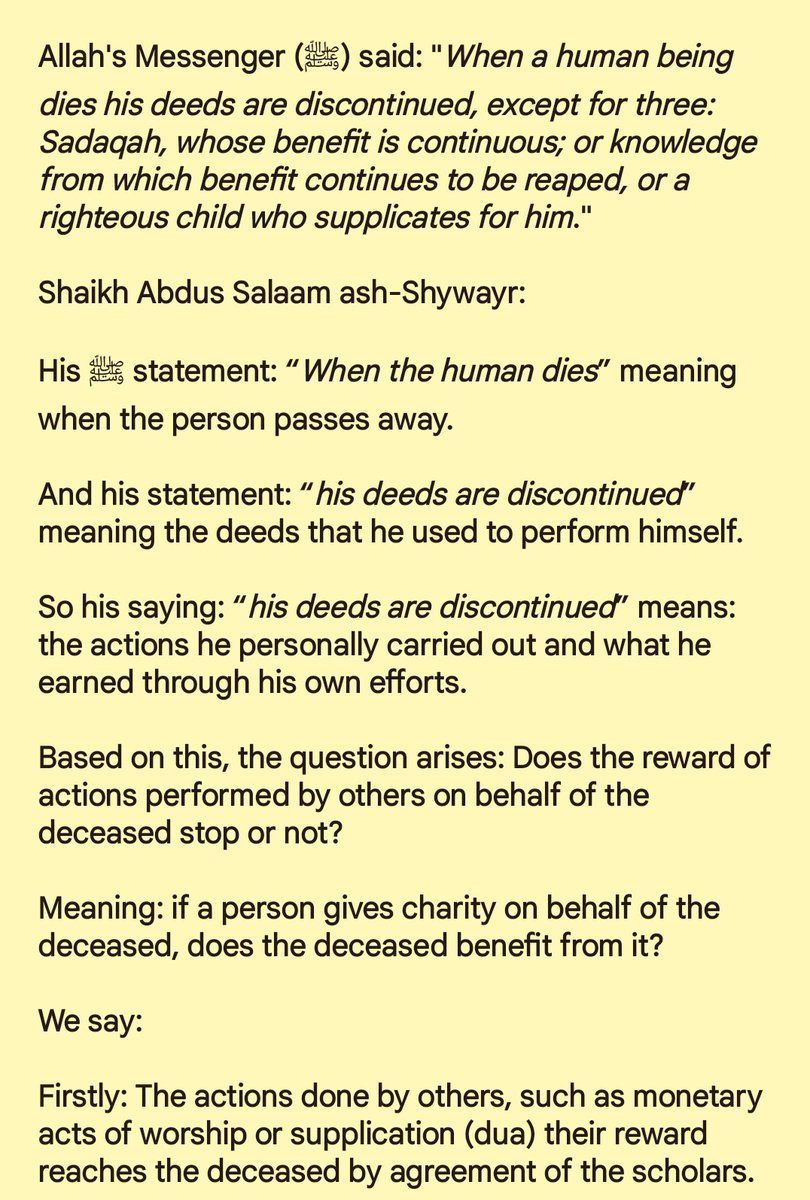
@MannaMth Same view favoured by Shaikh Ash Shuwayr in above post
English
1
0
1
7
Authentic Seerah
Authentic Seerah@MannaMth·
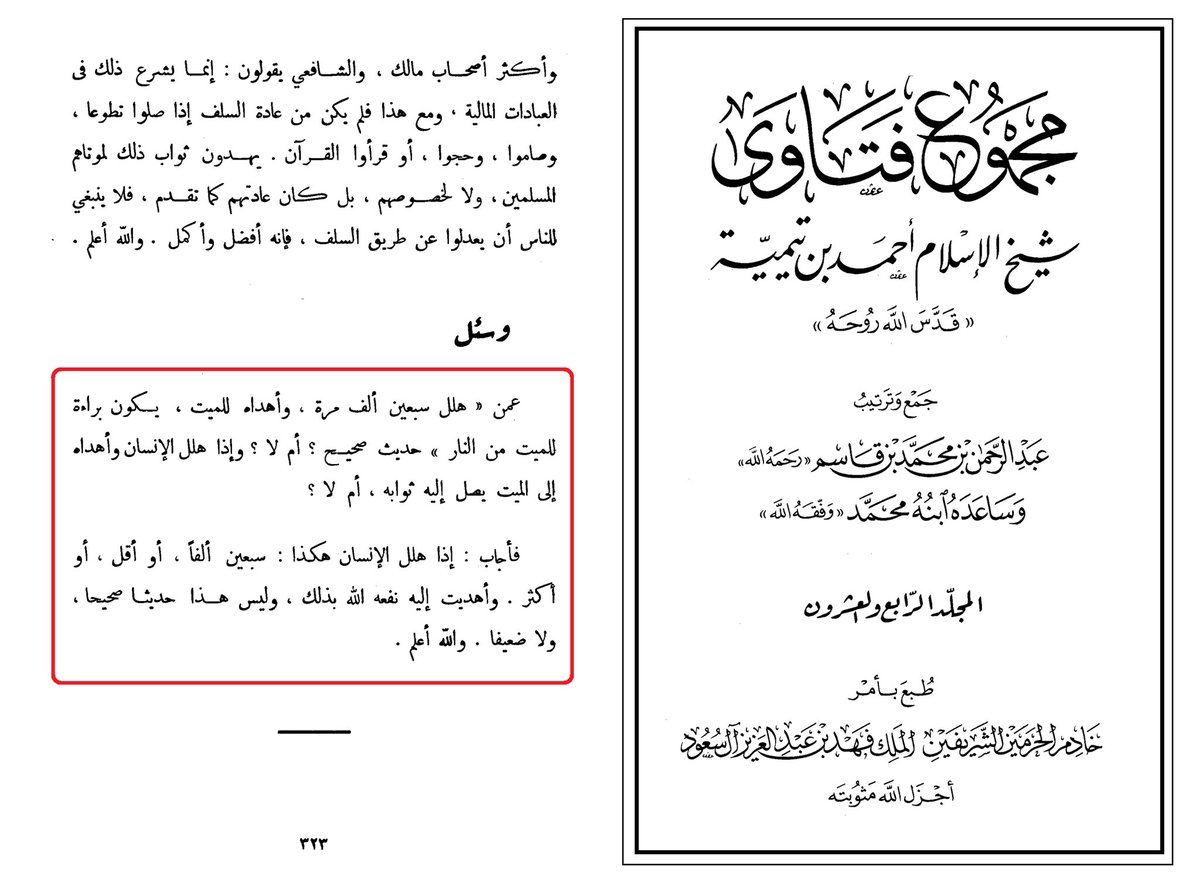
Allāmah Ibn Taymiyyah was asked about saying “Lā Ilāha illā Allāh” 70,000 times and gifting it to the dead. He responded: “If he does it like this 70,000 times, or more, or less, and gifts it Allāh will benefit them with it. And this has no [basis] in neither authentic nor weak Hadīth”. 📚 [Majmū‘ al-Fatāwā, 24/323, translation from @ahnaafservices Twitter] Benefits: 1. Ihda As-Sawab (Urdu Isaal e Sawab), or gifting deeds to the dead, is something that was generally considered permissible. 2. It's not necessary that every particular deed related to Sadaqah Jariyah is proven from the Sahabah. For ex. It's not necessary to show that the Sahabah donated an X-ray machine to a hospital with the intention of Sadaqah Jariyah. 3. A precedent in the actions of the Sahabah. - Summary- Unable to financially contribute to the Tabuk expedition, ‘Ulbah bin Zayd (Radi Allahu Anhu) wept in prayer and sincerely offered his personal honor as charity by forgiving any Muslim who had wronged him. The next morning, the Prophet (Salallahu Alaihi Wa Sallam) informed him that Allah had recognized his pure intention and officially accepted his act of forgiveness as a highly rewarded charity. (Seerat Ibn Hisham (Vol. 2, p. 516) and Zaad al-Ma'ad by Ibn al-Qayyim (Vol. 3, p. 461), authentic.) 4. This also means, reciting the Qur’an and gifting it to the dead is permissible. Ibn Taymiyyah held that opinion. In our contemporary Ulama, Shaykh Muhammad bin Saleh Al-Uthaymeen said that it was permissible to gift deeds to the dead.
Authentic Seerah tweet media
English
3
6
50
4.6K
Authentic Seerah
Authentic Seerah@MannaMth·
@AhnaafServices Anyone who is sensible will not call this a Bid'ah. Most youth amongst the Salafis who do so are not well grounded in knowledge, sadly.
English
0
0
2
49
Ahnaaf Services
Ahnaaf Services@AhnaafServices·
@MannaMth Thanks but also such Prescribed Azkar (Wazifas) are also proven from Imam Ibn Taymiyyah x.com/AhnaafServices…
Ahnaaf Services@AhnaafServices

❌ Any Ashari Scholar Does It: BIDDDAAAAAH!!!! ✅ Imam Ibn Taymiyyah Does It: Well...we follow only Quran and Sunnah aKhI! 📌 Here are Some More BONUS Prescribed Azkar (Wazifas) of ‘Allāmah Ibn Taymiyyah that are not found in Quran and Sunnah (Lets See Your Fatwa of Bidʿah) 1️⃣ ‘Allāmah Ibn Taymiyyah Reciting Specific Words at a Specific Time for a Specific Number of Days for a Specific Virtue Ḥāfiẓ Ibn Qayyim mentions that his teacher, ‘Allāmah Ibn Taymiyyah, said to him that the two names of Allah, “Al-Hayy” and “Al-Qayyum”, have a great effect on the heart. ‘Allāmah Ibn Taymiyyah said that whosoever constantly recites the words “ya Hayyu Ya Qayyum Laa ilaha Illa Anta Bi-rahmatika nastaghees” forty times (×40) daily, between the Sunnah of Fajr and the Farz (obligatory) prayer, his heart will attain life and, hence, it will not die. 📚 [Madārij As Salikīn 1/446] 2️⃣ ‘Allāmah Ibn Taymiyyah’s Wird of Sūrah Fātiha The student of ‘Allāmah Ibn Taymiyyah, Abu Hafs al-Bazzār narrates that ‘Allāmah Ibn Taymiyyah would always repeat Sūrat al-Fātiha from after Fajr until sunrise. 📚 [al-A‘lām al-‘Aliyyah, pg. 38] 3️⃣ A Strange Practice of Allāmah Ibn Taymiyyah When Allāmah Ibn Taymiyyah wanted guidance in Tafsīr, he would visit abandoned Masājid, rub his face in dirt, and say: “O teacher of Ibrāhīm, make me understand” or: “O teacher of Adam and Ibrāhīm, teach me”. 📚 [al-‘Uqūd al-Durriyyah, pg. 24-25] 4️⃣ Allāmah Ibn Taymiyyah’s Practice of Writing Qurān on Forehead for Treatment Ḥāfiẓ Ibn al-Qayyim regarding writing a specific verse of the Quran as cure from epistaxis (a form of nose bleeding) mentions that Allāmah Ibn Taymiyyah used to write on the forehead: “And it was said, O earth Swallow up your water. And O sky! Withhold your rain. The floodwater receded and the decree was carried out.’ (Sūrat Hūd 44). He says, I heard him say: “I wrote it for multiple people who were all cured.” 📚 [Zād al-Ma‘ād, 4/328] 5️⃣ Wazifa of Allāmah Ibn Taymiyyah to Overcome Difficulties Ḥāfiẓ Ibn al-Qayyim narrates Allāmah Ibn Taymiyyah used to read verses of Sakīnah when in harsh positions, and he overcame great difficulties due to it. Ḥāfiẓ Ibn al-Qayyim says: I have tried it myself and found great benefit in it. 📚 [Madārij al-Sālikīn, 2/471]
English
1
0
2
317
Authentic Seerah
Authentic Seerah@MannaMth·
@aasif__javid I respect this. But I'm more inclined to the opinion that deeds can be transferred to the dead. And that's what the majority of the Ummah was upon.
English
1
0
2
70
Authentic Seerah
Authentic Seerah@MannaMth·
Imam Ibn al-Qayyim (Rahimahullah) stated: “As for reciting the Qur’an and gifting it to him (the deceased) voluntarily without payment, this reaches him, just as the reward of fasting and ḥajj reaches him. If it is said: This was not known among the Salaf, and the Prophet (Salallahu Alaihi Wa Sallam) did not direct them to it — the answer is: if the one raising this objection already admits that the reward of ḥajj, fasting, and supplication reaches the deceased, then it is said to him: what is the difference between that and the reward of Qur’an recitation reaching him? The mere fact that the Salaf did not do something is not itself proof that it cannot reach; from where do we get such a universal negation? And if it is said: the Messenger of Allah (Salallahu Alaihi Wa Sallam) guided them to fasting, ḥajj, and charity, but not to recitation — the answer is: he (Salallahu Alaihi Wa Sallam) did not initiate those rulings without being asked; rather, they came as answers to questions. One asked him about performing ḥajj for his deceased relative, so he allowed it. Another asked him about fasting on behalf of the deceased, so he allowed it. He did not forbid anything else besides that. And what difference is there between the reward of fasting — which is merely intention and abstention — and the reward of recitation and remembrance?” (Ibn al-Qayyim, al-Rūḥ, p. 142–143)
English
0
0
3
362
Authentic Seerah
Authentic Seerah@MannaMth·
From Shaykh Muhammad bin Saleh Al-Uthaymeen’s official website. Source Question: A listener, Muḥammad Ḥamd Allāh Bātī, asks: Is it permissible to dedicate the reward of prayers offered after the obligatory prayer to one’s deceased father or mother? Answer: Ash-Shaykh: The stronger view according to us is that this is permissible, and that a person may gift the reward of non-obligatory righteous deeds to whomever he wishes among the Muslims. However, even so, this is not something that ought to be done, nor is it from the Sunnah; that is to say, it is not something required of a person to do. If he does so, there is no harm in it. Supplicating for one’s parents is better than gifting acts of devotion to them, because supplication is a legislated matter by agreement and beneficial by the agreement of the people of knowledge, whereas gifting acts of devotion is a matter concerning which the scholars have differed. We advise our brothers who wish to benefit their parents or other Muslims to benefit them by supplicating for them for forgiveness, mercy, and divine good pleasure, for that is more effective and more beneficial by the consensus of the Muslims. [End of the answer.] authenticseerah.com/2026/04/03/the…
Română
1
0
4
446
Authentic Seerah
Authentic Seerah@MannaMth·
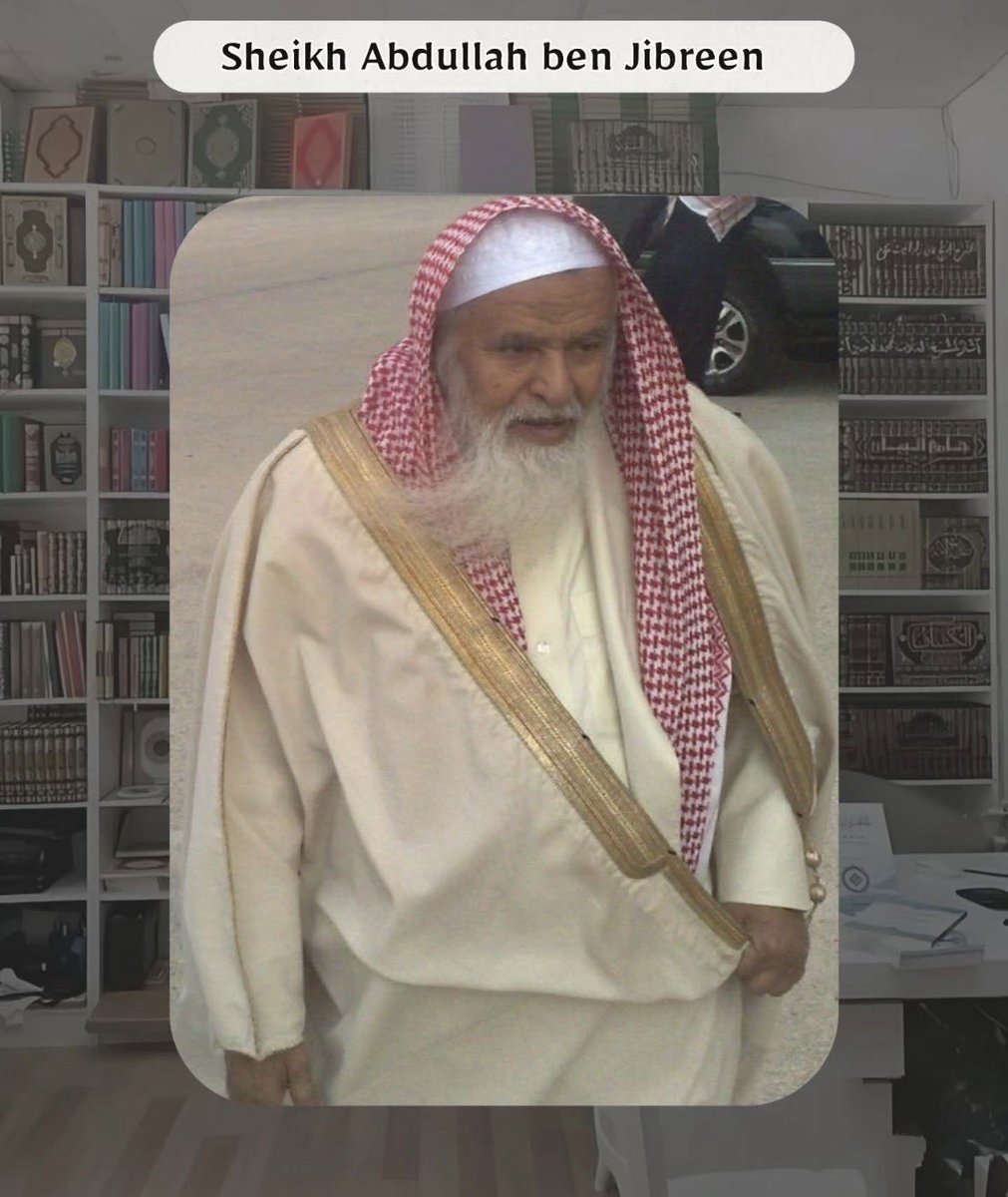
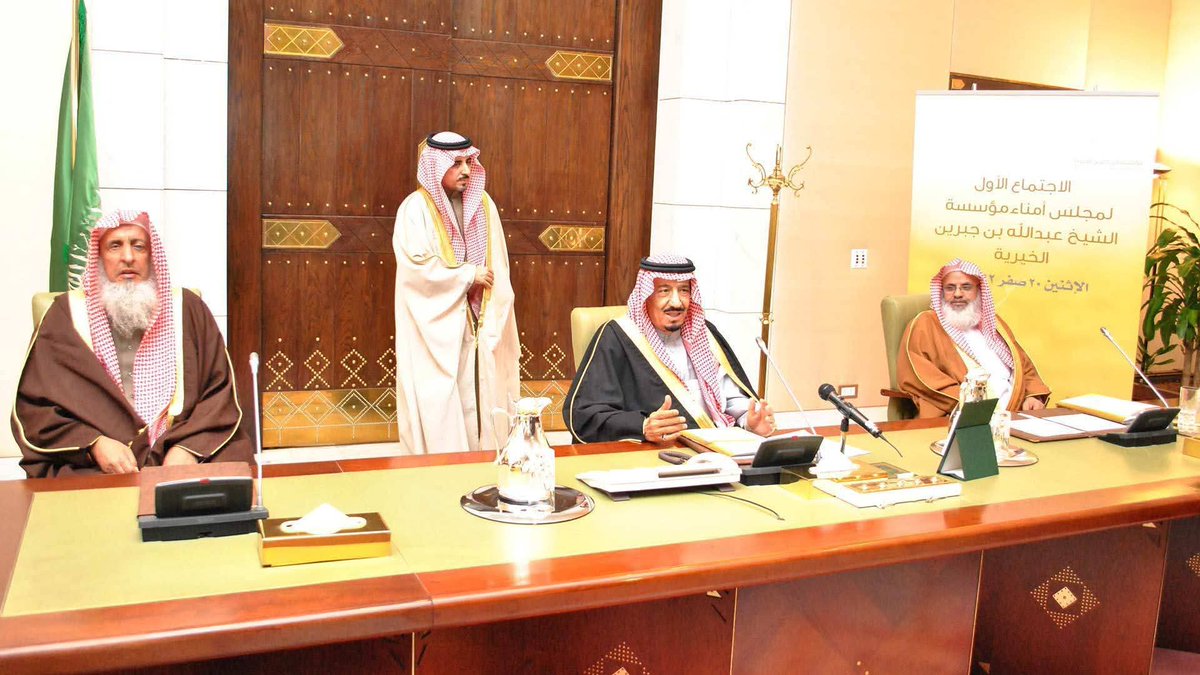
Some mistakes don't erase the good that a scholar has done. Alhamdulillah Allamah Ibn Jibreen is still respected and honoured by the Ulama and Hukkam of Saudi Arabia. The small minority that despise him are those that keep fighting and splitting every year among themselves. Below: A panel of senior scholars and King Salman visit the Muassasah of Ibn Jibreen to look over the working of the foundation. 2023.
Authentic Seerah tweet mediaAuthentic Seerah tweet media
English
0
0
0
72
ابن محبوب
ابن محبوب@IbnMahbub_·
Shaykh Abdullah Ibn Jibrīn رحمه الله Long after his death, Shaykh Sālih al-Fawzān (the current Muftī) wrote a beautiful biographical tribute to Sheikh Abdullah bin Jibrīn He writes: “He (Ibn Jibrīn) was steadfast upon the methodology of the Pious Predecessors (Salaf as-Salih) in knowledge, action, and following their example, until his time came and the Muslims lost him and wept for him” P.s. Always remember the was a group who never wept for him, but actually celebrated when he was gone because they thought he was “Ikhwani”. Far away they are from Shaykh Fawzān who they claim to follow.
ابن محبوب tweet mediaابن محبوب tweet media
Català
9
32
158
34.9K