Emmanuel Kahembwe

5.3K posts

Emmanuel Kahembwe banner
Emmanuel Kahembwe

Emmanuel Kahembwe

@MannyKayy

CEO (UK&I) @VDE_Group @AIQ_EU | Chair of Robotics @BSI_UK | AI @BSI_UK @OECD @Standards4EU | AI, Robotics: @EdinburghUni (PhD, MSc), @HeriotWattUni (PhD)

Edinburgh Katılım Mart 2010
2.3K Takip Edilen2.1K Takipçiler
Emmanuel Kahembwe
Emmanuel Kahembwe@MannyKayy·
@karpathy I have preached that long-horizon time and memory are the frontier challenges for LLMs for the last 2 years. Surfacing what is contextually relevant at a particular timepoint, when you have infinite context/memory is a grand challenge.
English
0
0
1
141
Andrej Karpathy
Andrej Karpathy@karpathy·
One common issue with personalization in all LLMs is how distracting memory seems to be for the models. A single question from 2 months ago about some topic can keep coming up as some kind of a deep interest of mine with undue mentions in perpetuity. Some kind of trying too hard.
English
1.8K
1.1K
21.2K
2.6M
Emmanuel Kahembwe retweetledi
Ash Jogalekar
Ash Jogalekar@curiouswavefn·
My take on the whole "AI cures cancer in dog in Australia". It's a very interesting story, but perhaps not for the reasons that are being noted. In 2007, Freeman Dyson published an essay in The New York Review of Books called “Our Biotech Future.” It contains one of the most memorable predictions about the future of biology I’ve ever read. “I predict that the domestication of biotechnology will dominate our lives during the next fifty years at least as much as the domestication of computers has dominated our lives during the previous fifty years.” Dyson believed biology would eventually follow the trajectory of computing. At first, powerful tools live inside large institutions - universities, government labs, major companies. Over time those tools get cheaper, easier to use, and more widely distributed. Eventually individuals start doing things that once required entire organizations. “Biotechnology will become small and domesticated rather than big and centralized.” He even imagined genome design becoming something almost artistic: “Designing genomes will be a personal thing, a new art form as creative as painting or sculpture.” Dyson's words rang in my mind as I read the "AI cures dog cancer" story. Much of the coverage framed this as an example of AI discovering new science. But that’s not really the interesting part of the story. The scientific pipeline involved here is actually well known. It closely mirrors the workflow used in personalized neoantigen vaccine research that has been under active development for years. The steps are fairly standard: sequence the tumor, identify somatic mutations, predict which mutated peptides might be recognized by the immune system, encode those sequences in an mRNA construct, and deliver them to stimulate an immune response. The biological targets themselves were almost certainly not new discoveries (I have been unable to find out what they are, but mutations in targets like KIT which are common might be involved). Partly therein lies the rub, since the hardest part of drug discovery, whether in humans or dogs, is target validation, the lack of which leads to lack of efficacy - the #1 reason for drug failure. In neoantigen vaccines, the proteins involved are usually ordinary cellular proteins that happen to contain tumor-specific mutations. AlphaFold which was used to map the mutations on to specific protein structures is now a standard part of drug discovery pipelines. The challenge is identifying which mutated peptides might plausibly trigger immunity. What is interesting though is how the pipeline was assembled. Normally, this type of workflow spans multiple domains - genomics, bioinformatics, immunology, and translational medicine - and in institutional settings those pieces are distributed across specialized teams, document sources and legal and technical barriers. Navigating the literature, selecting computational tools, interpreting sequencing results, and designing a candidate mRNA construct is typically a collaborative process. In this case, AI appears to have helped compress that process, pulling together data and tools from different sources. Instead of requiring multiple experts, a motivated individual was able to assemble the workflow with AI acting as a kind of guide through the technical landscape. I’ve seen something similar in my own work while building lead-optimization pipelines in drug discovery. The underlying science hasn’t changed, but the friction involved in assembling the workflow can drop dramatically. Tasks that once required stitching together multiple tools, papers, and areas of expertise can now often be executed much faster with AI helping navigate the terrain; and by faster I mean roughly 100x. That kind of workflow compression is powerful, to say the least. When the cost of navigating technical knowledge drops, more people can realistically assemble sophisticated research pipelines. This story is a great example of what naively seems like a boring quantitative acceleration of the research process. In that sense, therefore, the real novelty here is not the biology but the combination of three things: a non-specialist orchestrating a complex biomedical pipeline, AI acting as a navigational layer across multiple technical domains, and the resulting decentralization of capabilities that were once confined to institutional research environments. But I think the story also points to something deeper, which is a challenge to modern regulatory environments. Modern biomedical innovation does not operate solely according to what is scientifically possible. It is structured by regulatory frameworks - clinical trials, safety oversight, institutional review boards, and regulatory agencies. Those systems exist for important reasons, but they also assume that the development of therapies occurs primarily within large, regulated organizations. When individuals begin assembling pieces of these pipelines outside those institutions, the relationship between technological capability and regulatory oversight starts to shift. The dog in this story sits outside the human regulatory framework. That fact alone made the experiment possible. In other words, the story is not just about technological capability; it is also about how certain forms of experimentation can occur when they bypass the regulatory pathways that normally govern biomedical innovation. One is reminded of another Australian, Barry Marshall, who received a Nobel for demonstrating through self-experimentation that ulcers are caused by bacteria. This raises an interesting question: what happens when the tools for assembling sophisticated biological workflows become widely accessible while the regulatory structures governing them remain institution-centric? That tension may ultimately be the most important implication of this moment. Regulatory frameworks will need to adapt to this kind of citizen science. Seen in this light, the story about the AI-assisted vaccine is less about a breakthrough in cancer therapy and more about a glimpse of the early stages of something Dyson anticipated nearly two decades ago: the domestication of biotechnology. If AI continues to reduce the cognitive overhead required to navigate biological knowledge and assemble complex pipelines, the boundary between professional research and motivated individuals may begin to blur. That shift will require careful thinking about safety, governance, and responsibility. But it also carries an exciting possibility. Dyson imagined a world in which biological design might eventually become something like a creative craft practiced not only by institutions but also by curious individuals experimenting at smaller scales. For a long time that vision felt distant. Now, it feels like we may be seeing the first hints of it.
English
14
113
525
88.4K
Emmanuel Kahembwe
Emmanuel Kahembwe@MannyKayy·
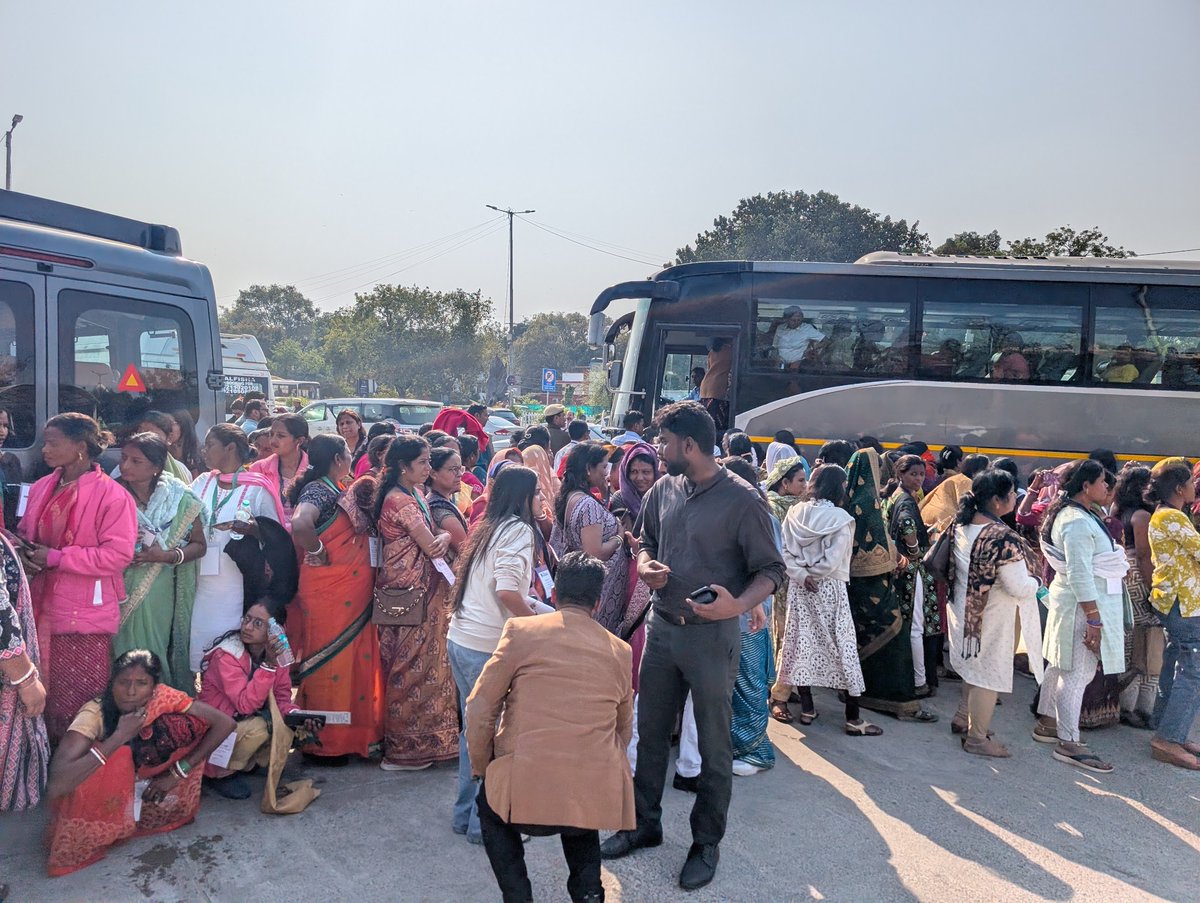
The most impressive (and uniquely India) thing I encountered at the AI Impact Summit in New Delhi was a tailor who knew nothing about AI at the beginning of the week, and by the end of it, he was using @NanoBanana to generate suits & outfits that he then delivered in 24hs !!! Fitted and everything, for the equivalent of a couple of £100. He approached me with a catalogue of ai generated photos, all black males of similar build, skin tone, etc (I could relate better)... Each in different suits, and I just told him what I liked about each of their outfits. He took my number and measurements there and then. An hr or so later, I got a sample of photos imagining the look I was going for, and there was one that was pretty much perfect so offcourse I ordered it, I was a little sceptical of the turn around times but I had a fitting the next morning and it was with me by the evening... all in, less than 24hrs start to finish 😊. I have to give it to @narendramodi and @OfficialINDIAai for actually including their people, everyday people. Giving them access to such a summit. It's usually a closed off in-crowd of academics, politicians and tech-bros. #IndiaAIImpactSummit2026
Subbarao Kambhampati (కంభంపాటి సుబ్బారావు)@rao2z

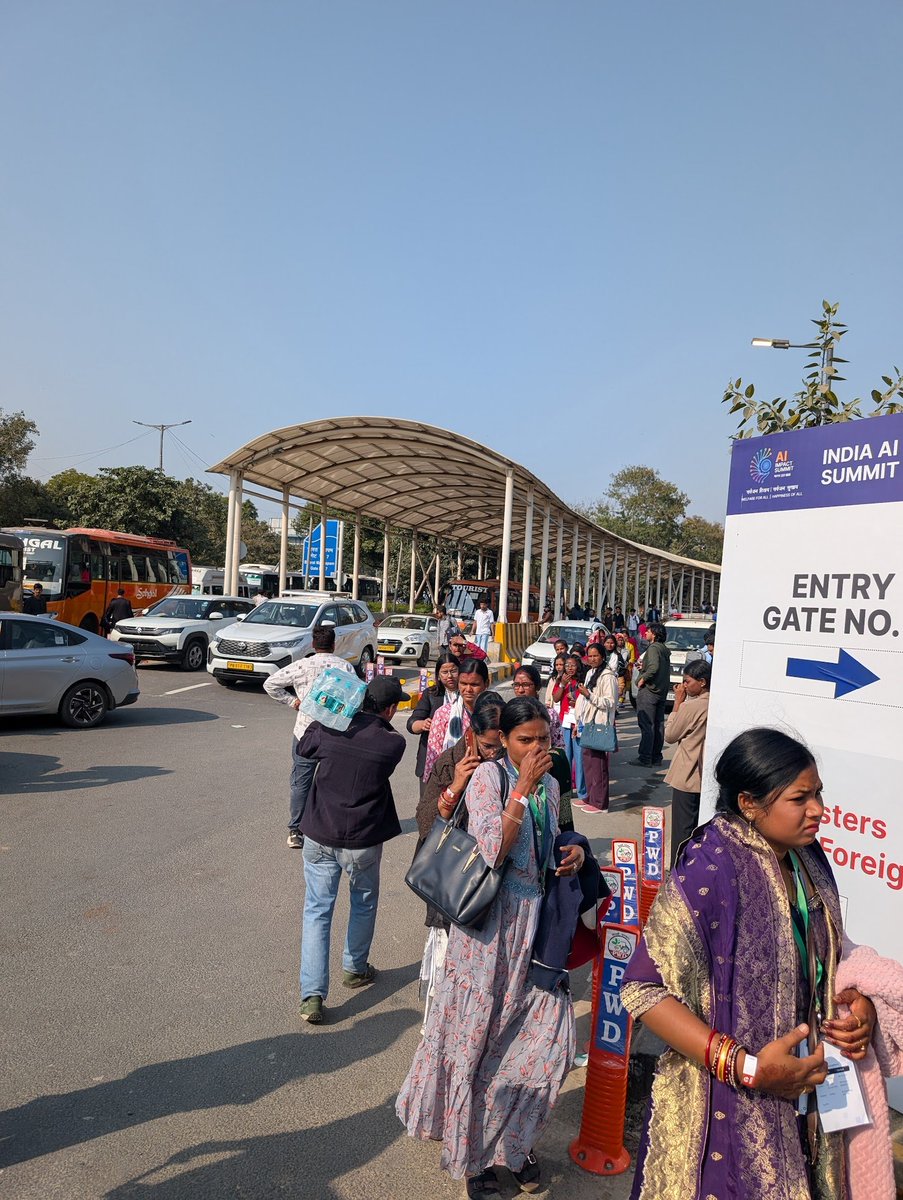
My take on AI Kumbh Mela : They went out of their way to make it possible for people from many walks of life to attend.. #IndiaAIImpactSummit2026 So going by the media accounts, all that really happened at the summit were the long security lines, lost wearables, and other more pressing first world problems like some of us not getting our millet foam at @PMOIndia dinner. Perhaps there is another way to look at it. This is the first of the AI Summits that seemed to have allowed basically free registration to anyone who wanted to come. As far I know, the other ones in UK, Paris and Seoul were limited to mostly invited "delegates". Opening the summit up this way meant LOTS of people showed up (as they apparently do to the other Kumbh Mela..)--estimates of registrations at 250K and daily attendance of as much as 70K. It's in a different plane all together compared to the "invited delegates only meetings", and in a different league even compared to the mega AI conferences like #NeurIPS2025. The bigger numbers also meant longer lines, more chaos and lower signal to noise ratio for the cognoscenti. After my panel, I met one student who brought his mother (who didn't seem particularly tech savvy) to show and tell her about AI.. I talked to a neurologist from the capital region, who showed up just to get a sense of how and whether this technology might atrophy our own cognitive skills. A lady working in Arts and Crafts, who was trying to get a sense of how AI will affect the artists and their livelihoods. I saw lines of women--clad in their finery--waiting for their group buses after a trip to the summit. And I of course saw tons and tons of UG students from Indian colleges attending sessions and trying to make sense of things (however primitive some of their understanding seemed after a minute of talking to them). Maybe some of this was orchestrated. But I would think that if AI is supposed to be such a transformative technology that would impact everyone, perhaps it is quite justified to "let everyone in".. For that inclusiveness, I believe the organizers of this AI Kumbh Mela deserve a huge amount of credit--and our benefit of doubt on the attendant inconveniences. (No, I have no connection with the organizers. I own my opinions.)
English
1
0
4
255
Emmanuel Kahembwe retweetledi
Subbarao Kambhampati (కంభంపాటి సుబ్బారావు)
My take on AI Kumbh Mela : They went out of their way to make it possible for people from many walks of life to attend.. #IndiaAIImpactSummit2026 So going by the media accounts, all that really happened at the summit were the long security lines, lost wearables, and other more pressing first world problems like some of us not getting our millet foam at @PMOIndia dinner. Perhaps there is another way to look at it. This is the first of the AI Summits that seemed to have allowed basically free registration to anyone who wanted to come. As far I know, the other ones in UK, Paris and Seoul were limited to mostly invited "delegates". Opening the summit up this way meant LOTS of people showed up (as they apparently do to the other Kumbh Mela..)--estimates of registrations at 250K and daily attendance of as much as 70K. It's in a different plane all together compared to the "invited delegates only meetings", and in a different league even compared to the mega AI conferences like #NeurIPS2025. The bigger numbers also meant longer lines, more chaos and lower signal to noise ratio for the cognoscenti. After my panel, I met one student who brought his mother (who didn't seem particularly tech savvy) to show and tell her about AI.. I talked to a neurologist from the capital region, who showed up just to get a sense of how and whether this technology might atrophy our own cognitive skills. A lady working in Arts and Crafts, who was trying to get a sense of how AI will affect the artists and their livelihoods. I saw lines of women--clad in their finery--waiting for their group buses after a trip to the summit. And I of course saw tons and tons of UG students from Indian colleges attending sessions and trying to make sense of things (however primitive some of their understanding seemed after a minute of talking to them). Maybe some of this was orchestrated. But I would think that if AI is supposed to be such a transformative technology that would impact everyone, perhaps it is quite justified to "let everyone in".. For that inclusiveness, I believe the organizers of this AI Kumbh Mela deserve a huge amount of credit--and our benefit of doubt on the attendant inconveniences. (No, I have no connection with the organizers. I own my opinions.)
Subbarao Kambhampati (కంభంపాటి సుబ్బారావు) tweet mediaSubbarao Kambhampati (కంభంపాటి సుబ్బారావు) tweet mediaSubbarao Kambhampati (కంభంపాటి సుబ్బారావు) tweet media
English
42
211
812
41.3K
Emmanuel Kahembwe
Emmanuel Kahembwe@MannyKayy·
@sarahookr Yeah, same thing on our end. We gave up on the roads and ended up hopping on the underground. Which was quite the adventure. And the locals were very helpful!
English
0
0
3
907
Sara Hooker
Sara Hooker@sarahookr·
I just want to clarify here since this had a bigger reaction than expected. The organizers shared ahead of time to be careful leaving the venue and trying to get back. They said after 6 there would be travel restrictions and roads shut down. So no fault of the organizers, my car was just stuck in the wrong part of the city and the roads got locked down before I could get through. There have been many fabulous dinners this week, and more events today and tomorrow that I’m looking forward to.
Sara Hooker@sarahookr

I got the invite to the gala with the Prime Minister, but got stuck in traffic getting back to the venue after I changed into gala attire (changed out of my jeans). Would have been honored to attend. But after 4h in traffic was equally honored to sit down to really excellent room service at 11 pm 😂

English
26
11
390
57.3K
Emmanuel Kahembwe
Emmanuel Kahembwe@MannyKayy·
Called it… Looks like some people are finally starting to understand the value of AI standards. Standards are not the same as regulations and serve a completely different purpose to regulation. Standards are technical in nature and written by subject matter experts (not by lawyers/politicians). Standards came from industry and encourage a safe, trustworthy, vibrant and interoperable eco-system. Without them, the world would be a complete mess.
Luiza Jarovsky, PhD@LuizaJarovsky

What Trump said about AI regulation today. What do you notice?

English
0
0
0
140
Emmanuel Kahembwe
Emmanuel Kahembwe@MannyKayy·
Forming a new technical committee to develop international standards for autonomous unmanned aerial systems (UAS). We’re seeking engineers, researchers, and testing professionals passionate about drone safety & reliability to help shape the future of flight. 👉 Interested? Get in touch for details. #DroneStandards #AviationSafety #UAS #Standardization #TechForGood
English
1
0
1
104
Emmanuel Kahembwe retweetledi
Reece Shuttleworth
Reece Shuttleworth@ReeceShuttle·
🧵 LoRA vs full fine-tuning: same performance ≠ same solution. Our NeurIPS ‘25 paper 🎉shows that LoRA and full fine-tuning, even when equally well fit, learn structurally different solutions and that LoRA forgets less and can be made even better (lesser forgetting) by a simple intervention! Read on for behavioral differences (forgetting, continual learning) and other analysis! Paper: arxiv.org/pdf/2410.21228 (1/7)
Reece Shuttleworth tweet media
English
18
253
1.6K
191.7K
Emmanuel Kahembwe
Emmanuel Kahembwe@MannyKayy·
@pmarca Give every one with an eduroam account access to the GPU clusters, no application, no proposals, automatic access... And then scale up clusters based on demand. A move that would change the AI landscape overnight.
English
0
1
3
3.2K
Emmanuel Kahembwe retweetledi
Andrej Karpathy
Andrej Karpathy@karpathy·
@zenitsu_aprntc Good question, it's basically entirely hand-written (with tab autocomplete). I tried to use claude/codex agents a few times but they just didn't work well enough at all and net unhelpful, possibly the repo is too far off the data distribution.
English
40
104
1.6K
485.9K
Emmanuel Kahembwe retweetledi
Simon Willison
Simon Willison@simonw·
"if the agent ingests anything, then it's permissions should be dropped to the level of the author of that information" I like that lot, it's a very succinct way of explaining the problem here Anyone who can author text that gets into your agent can control what that agent does next
Baibhav 𐃏@baibhavbista

Prompt injection is pretty scary, be very careful when leveraging AI agents @simonw has a bunch of writeups on prompt injection. The only secure way that made sense to me was: if the agent ingests anything, then it's permissions should be dropped to the level of the author of that information Of course, this, while secure, would massively limit the capabilities of AI agents

English
33
70
901
103.6K
Emmanuel Kahembwe retweetledi
Emmanuel Kahembwe
Emmanuel Kahembwe@MannyKayy·
@Golovanov_ammoc I recommend any and every lecture by Federic P. Schuller. I discovered him via The WE-Heraeus International Winter School on Gravity and Light. I also recommend this set of lectures.
English
0
1
4
331
Emmanuel Kahembwe retweetledi
Tom Westgarth
Tom Westgarth@Tom_Westgarth15·
Another day, another top job available in the Sovereign AI Unit. We are looking for someone that can sniff out amazing startup partnership opportunities, transformative datasets to invest in, and think through what the UK's most ambitious plays can be Help the UK stand up tall!
Tom Westgarth tweet mediaTom Westgarth tweet media
English
1
8
27
4.2K
Beidi Chen
Beidi Chen@BeidiChen·
🥳
Infini-AI-Lab@InfiniAILab

Huge thanks to @tinytitans_icml for an amazing workshop — see you next year! Honored to receive a Best Paper Award 🏆 Let’s unlock the potential of sparsity! Next up: scaling to hundreds/thousands of rollouts? Or making powerful R1/K2-level LLMs (not just 8B 4-bit models) run on edge devices? Big kudos to @RJ_Sadhukhan, @chenzhuoming911, @haizhong_zheng, @IronSteveZhou, collaborator Emma Strubell, and our advisor @BeidiChen!

ART
8
4
145
17.6K
Emmanuel Kahembwe
Emmanuel Kahembwe@MannyKayy·
@thechrisperry This in itself is a skill… and should not be underrated. Corporate bureaucracy significantly hurts productivity and innovation.
English
0
0
0
46
Chris Perry
Chris Perry@thechrisperry·
I've been at Google coming on 12 years, and I'm a great PM I swear, but sometimes I wonder if the biggest value I provide to Google is having friends everywhere so it's easy to skip through the bureaucracy and get stuff done at scale
English
175
165
6.5K
658.6K
Emmanuel Kahembwe
Emmanuel Kahembwe@MannyKayy·
@t_blom Same problem here, unironically I think that the best solution maybe to automate your responses.
English
0
0
1
207
Tom Blomfield
Tom Blomfield@t_blom·
I get so many emails every day that it's becoming unmanageable. If I reply "no thanks", the sender tries to convince me otherwise. If I don't reply, I get a "just bumping this up" email. Each email seems like it's (at least somewhat) custom written for me, so the spam filter doesn't catch it. And this is going to get worse and worse with AI. I've simply started to block emails that I don't want to deal with. What I really want is karma for email accounts. If I downvote the email, it should harm deliverability in future. Only emails with impeccable karma should land in my inbox.
English
299
29
1.7K
263.2K
Emmanuel Kahembwe
Emmanuel Kahembwe@MannyKayy·
Dealing with memory across space and time is an open and grand challenge for NN-based models.. particularly in the long-horizon case
English
0
0
1
103