Marc W. Chesley

4.2K posts

Marc W. Chesley banner
Marc W. Chesley

Marc W. Chesley

@MarcChesley

Dual-use defense tech champion. Helping people be superhuman with AI and automation. Scaling expert. Curious technologist. Attorney & I Love Guitars!

Phoenix, AZ Katılım Nisan 2008
2.8K Takip Edilen2.4K Takipçiler
Marc W. Chesley retweetledi
Gagan Ghotra
Gagan Ghotra@gaganghotra_·
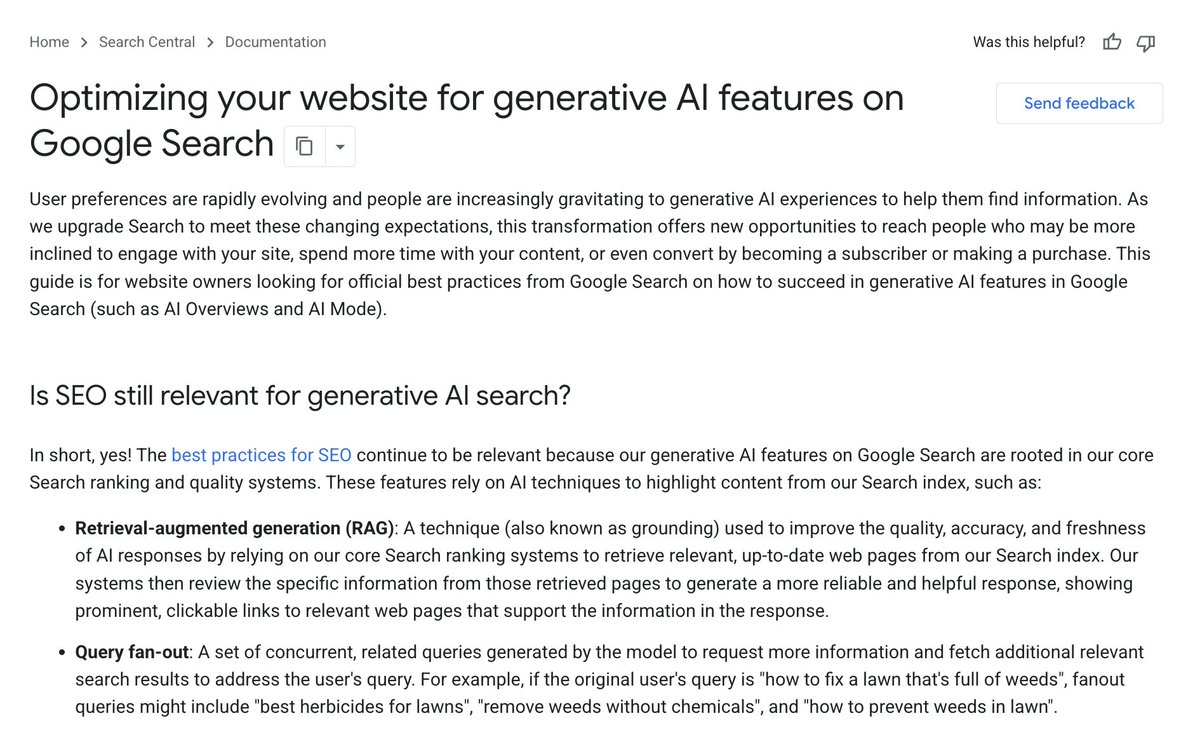
🚨 JUST IN - Google published a long piece about "Optimizing your website for generative AI features on Google Search" 👀 A lot in it developers.google.com/search/docs/fu… 🧵
Gagan Ghotra tweet media
English
56
379
4.7K
820.4K
Marc W. Chesley retweetledi
Chamath Palihapitiya
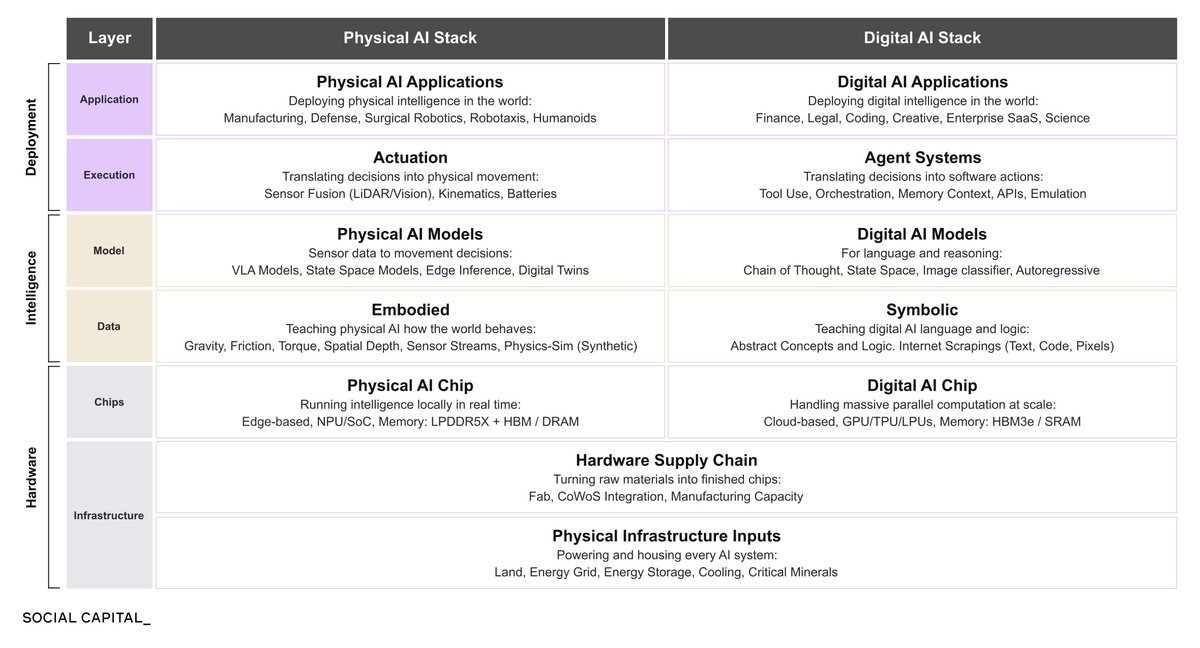
A framework to understand how value accrues across the AI stack. This is a blueprint for understanding what builds AI into its pragmatic parts: what each layer is, where it ends, and where value is accrued. So here’s how you can think about it: 1. Layer 1 - Infrastructure Before any AI model trains or any robot moves, an industrial foundation must exist. Land, energy grids, cooling systems, critical minerals, and fabrication facilities. Infrastructure is the constraint that all the other layers depend on. 2. Layer 2 - Chips Transistors that are etched onto silicon wafers using extreme ultraviolet light. This is what allows both physical and digital AI to take an input, process it, and return a predictive output. The more transistors that fit on a chip, the more computation it can perform. 3. Layer 3 - Data Both digital and physical models train on data. Digital models train on text, code, and images; physical models train on gravity, friction, depth, and sensor streams. The more accurate the data, the more accurate the output. 4. Layer 4 - Models A model is a system that learns from examples. Feed it enough examples of inputs paired with correct outputs, and it adjusts its internal structure until it can predict correct outputs on inputs it has never seen before. LLMs represent a specific class trained on text. They learn by processing billions of examples of human language, developing the ability to write, reason, summarize, and generate code. 5. Layer 5 - Execution This is what lets models take actions on behalf of users. The execution layer lets models pursue objectives through sequential action: observing the environment, reasoning about the next step, acting, and looping until the goal is reached. 6. Layer 6 - Application All of the AI Stack’s revenue originates at the application layer, then goes to the layers below. Every dollar paid for AI is paid for an outcome, a task completed, and an answer delivered. Nobody wants H100s for their own sake. They want H100s because someone, somewhere, wants to run an application. These are the different layers that make up the entire ecosystem of AI. We did a full study on the AI stack. If you want to read about it, head over to my Substack (chamath.substack.com/p/the-ai-stack)
Chamath Palihapitiya tweet media
English
87
186
1.4K
128K
Marc W. Chesley
Marc W. Chesley@MarcChesley·
Abundance… there is more than enough for everyone to win in the new AI normal.
Marc Benioff@Benioff

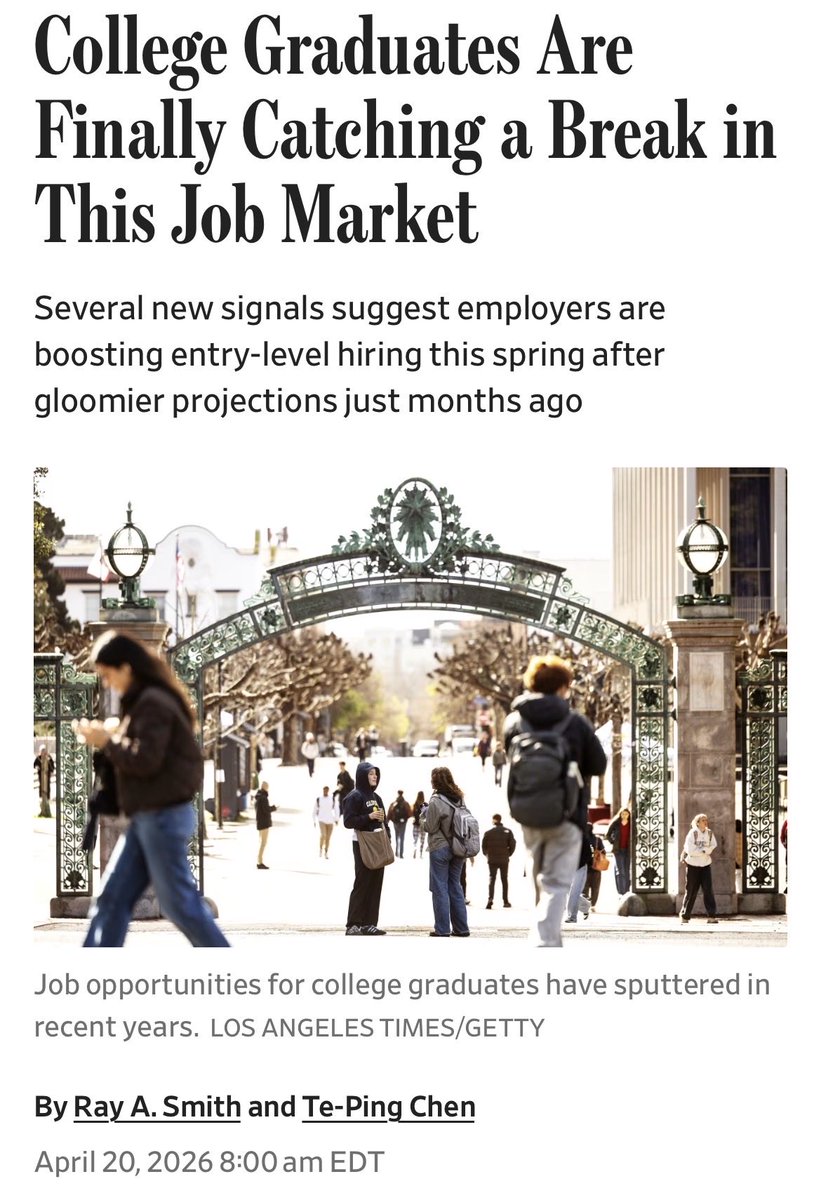
I’m locked on, @DavidSacks! We’re hiring 1,000 new grads & interns right now to ride the AI exponential. You are right they said AI would kill entry-level jobs. Meanwhile these grads & interns are building it — powering Agentforce & Headless360 at Salesforce. 🚀 New grads: Drop your resume to @salesforcejobs or futureforce@salesforce.com #FutureForce #AI

English
0
0
0
51
Marc W. Chesley retweetledi
David Sacks
David Sacks@DavidSacks·
Narrative violation: Hiring of new college graduates is up 5.6% over last year. Youth unemployment for degreed 20–24‑year‑olds fell to 5.3% from 8.9%. Weren’t we told that 50% of entry-level jobs were going away?
David Sacks tweet media
English
263
344
3.4K
832.5K
Marc W. Chesley retweetledi
HH Sheikh Mohammed
HH Sheikh Mohammed@HHShkMohd·
بتوجيهات أخي رئيس الدولة حفظه الله... نعلن اليوم عن المنظومة الجديدة لحكومة الإمارات والتي تهدف لتحويل 50% من قطاعات وخدمات وعمليات الحكومة لتطبق نماذج الذكاء الاصطناعي ذاتية التنفيذ والقيادة Agentic Ai خلال عامين... ولتكون حكومة الإمارات الأولى عالمياً في تُحول قطاعاتها وخدماتها لنماذج ذاتية التنفيذ والقيادة من الذكاء الاصطناعي. نماذج الذكاء الاصطناعي تستطيع اليوم رصد المتغيرات، وتقديم التحليلات، ورفع التوصيات، وإدارة العمليات، وتنفيذ سلسلة مستقلة من الإجراءات بدون تدخلات بشرية... الذكاء الاصطناعي سيكون شريكنا التنفيذي الحكومي لدعم القرارات وتحسين الخدمات ورفع كفاءة العمليات بل وتقييم النتائج وإجراء التحسينات بشكل آني. لدينا موعد محدد لإنجاز هذا التحول حسب توجيهات رئيس الدولة حفظه الله وهو عامان... وسيكون تقييم الوزراء ومدراء العموم وكافة الجهات الاتحادية خلال العامين مبني على قدرتهم على مواكبة هذا التحول... وسرعتهم في تطبيق المعايير الجديدة للعمل الحكومي... وفهمهم للواقع التقني الجديد الذي يعيشه العالم، ومهارتهم في استخدام أدوات الذكاء الاصطناعي لخلق آليات جديدة كلياً لإدارة العمل الحكومي المستقبلي.
HH Sheikh Mohammed tweet mediaHH Sheikh Mohammed tweet mediaHH Sheikh Mohammed tweet mediaHH Sheikh Mohammed tweet media
العربية
283
1.4K
3.9K
551.7K
Marc W. Chesley retweetledi
Peter H. Diamandis, MD
Peter H. Diamandis, MD@PeterDiamandis·
Never bet against iteration speed. Humanoid robots went from viral stumbles to kung fu flips in one year. Same trajectory as everything else in tech—initially clumsy, then suddenly superhuman.
English
86
102
1.6K
171K
Marc W. Chesley
Marc W. Chesley@MarcChesley·
My favorite post of the last 3 years… Apple - please and thank you for making Siri great again. P.S. Peter, I appreciate your tone. All of it. More please.
Peter Girnus 🦅@gothburz

I'm the VP of AI at Apple. I've been here since 2011. I watched Siri launch. It was revolutionary. For about six months. Then Google Assistant came out. Then Alexa. Then ChatGPT. We kept saying we were "focused on privacy." Privacy is what you say when you're losing. Three years ago the board asked about our AI strategy. I showed them a slide that said "On-Device Intelligence." They nodded. They didn't know what it meant. Neither did I. But it had a picture of a neural network. Neural networks look impressive. Even when they don't work. Last year someone asked Siri to set a timer. It opened a Wikipedia article about timers. Tim saw the meme. He didn't laugh. He scheduled a "strategic offsite." Offsites are where we go to admit failure privately. I presented three options. Option 1: Build our own LLM. That would take four years. We don't have four years. Option 2: Buy a startup. We looked at twelve. They all wanted $40 billion. For teams of nine people. Who would leave after the acquisition. Option 3: Call Google. The room went quiet. Google is the enemy. We've spent fifteen years pretending we're better than Google. Our entire brand is "not Google." But Google has TPUs. We don't. Google has Gemini. We have Siri. Siri still can't reliably add items to a grocery list. I called Sundar. He picked up on the first ring. He'd been waiting. They all wait. Eventually everyone calls Google. I asked for TPU access. He said yes. I asked for Gemini integration. He said yes. I asked how much. He said one billion dollars. I said that's a lot. He said "per year." I paused. He said "you don't really have a choice." He was smiling. I could hear it. We announced it as a "strategic partnership." Partnership means we're paying them. The press release said we're "enhancing Siri's capabilities." Enhancing means replacing. We said the new Siri arrives "late 2026." Late 2026 means 2027. Maybe 2028. Definitely not 2026. A reporter asked if this means Apple lost the AI race. Our comms team said we're "thoughtfully deliberate." That's not an answer. But it has enough syllables to sound like one. Internally, we're calling it "Project Humble Pie." Someone suggested "Project Brain Transplant." HR flagged that as "not brand-aligned." The engineers are relieved. They've been trying to make Siri work for years. Now they can blame Google. Blame is a renewable resource. Tim did a podcast. He said AI is "a profound technology." He's never used ChatGPT. I showed him once. He asked why it was typing so slowly. I said that's how it works. He said "Siri should be faster." I said "Siri will be Google." He said "don't say that publicly." I won't. Publicly, we're "leveraging industry partnerships." Leveraging means surrendering. But with dignity. We still have the best hardware. We still have the ecosystem. We still have the brand. We just don't have AI. So we're renting it. From the company we've mocked for two decades. The one billion dollars is a licensing fee. The real cost is the narrative. We were the innovators. Now we're the integrators. But the stock is up 3%. Wall Street doesn't care about innovation. Wall Street cares about not falling behind. We're not falling behind anymore. We're being carried. By Google. For one billion dollars a year. I'll present this as a win at the next all-hands. Wins are whatever you frame them as. The graph will go up and to the right. It always does. As long as you pick the right metric.

English
0
0
0
165
Marc W. Chesley retweetledi
Mark Kretschmann
Mark Kretschmann@mark_k·
Elon Musk just dropped a post with huge implications: > “We have entered the Singularity” By that he means the technological singularity: the point where progress compounds so fast that “normal” timelines stop making sense. AI is already compressing years of work into days. Robotics is next. Energy and space scale the floor under it. When the cost of intelligence and production keeps falling, abundance stops being a slogan and starts being a roadmap. If this is the singularity, the move is simple: build, ship, iterate. Don’t slow it down. Don’t fear it. Shape it. Acceleration is the path to abundance.
Mark Kretschmann tweet media
Elon Musk@elonmusk

@DavidSHolz We have entered the Singularity

English
326
925
5.1K
453.6K
Marc W. Chesley retweetledi
Roy Rogers Happy Trails Music Shop 
Steve Vai vs Ralph Macchio Epic Guitar Battle Who really won 🥇 this Epic Guitar 🎸 Battle ⚔️ ?
English
53
136
689
28.5K
Marc W. Chesley retweetledi
The Extreme Music Enthusiast
The Extreme Music Enthusiast@TheExtremeMusi1·
Adrian Smith of Iron Maiden performs the solo from Pink Floyd’s Comfortably Numb. Sublime.
English
9
127
807
21.6K
Marc W. Chesley retweetledi
Srishti
Srishti@srishticodes·
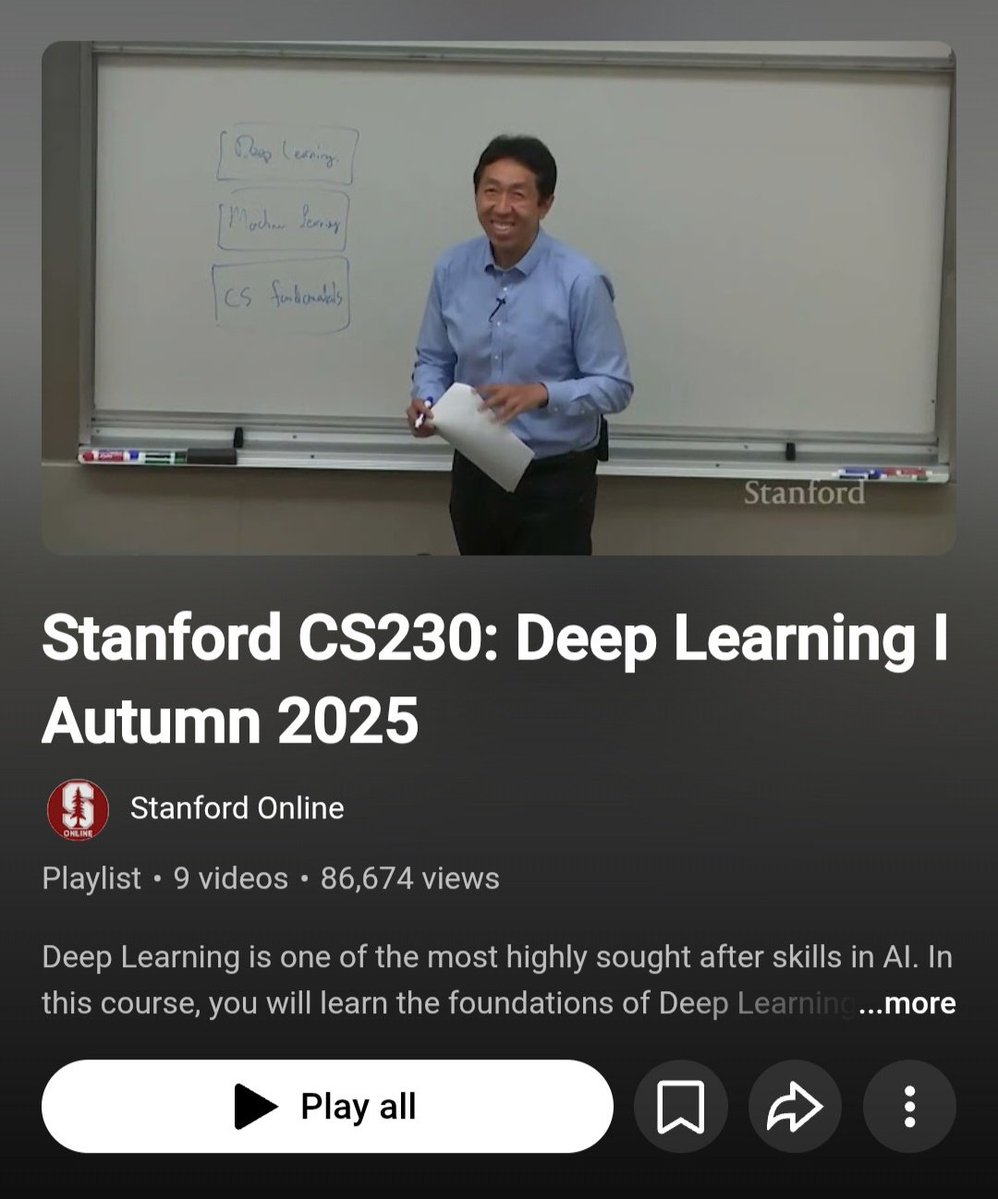
Stanford just made a $200,000 AI degree free. No application. No tuition. No “elite access”. Stanford released its actual AI/ML curriculum on YouTube. Not a PR-friendly intro. Not “AI for the public”. This is the real thing. The same lectures shaping people working on frontier models. What just became public: Deep Learning (CS230) → youtube.com/playlist?list=… Transformers & LLMs (CME295) → youtube.com/playlist?list=… Language Models from Scratch (CS336) → youtube.com/playlist?list=… ML from Human Feedback (CS329H) → youtube.com/playlist?list=… Computer Vision (CS231N) → youtube.com/playlist?list=… LLM Evaluation & Scaling → youtube.com/playlist?list=… The uncomfortable truth: The degree isn’t the scarce asset anymore. Execution speed is. Top schools know this. That’s why they’re publishing the playbook. 👉 Bookmark this. Comment the first lecture you’ll actually watch.
Srishti tweet media
English
415
5.1K
29K
4.1M
Marc W. Chesley retweetledi
unusual_whales
unusual_whales@unusual_whales·
Scott Bessent says there will be an AI economic boom "as soon as the first quarter of next year."
English
630
467
3.8K
407.7K
Marc W. Chesley retweetledi
Elon Musk
Elon Musk@elonmusk·
Grok Imagine is AI Vine! Btw, we recently found the Vine video archive (thought it had been deleted) and are working on restoring user access, so you can post them if you want.
English
4K
4.7K
57.3K
15M