
Sabitlenmiş Tweet
Maria Ana Lugo
1.2K posts

Maria Ana Lugo
@MariaAnaLugo
Lead Economist, World Bank
Beijing, China Katılım Mayıs 2013
792 Takip Edilen1.1K Takipçiler
Maria Ana Lugo retweetledi

Maria Ana Lugo retweetledi
“By the end of the century, you get well less than half of the population who are of working age,” says @CEPAR_research’s Philip O’Keefe of China’s aging problem. He joined Pekingology to discuss the consequences of China’s changing demographics.
Revisit the conversation here: csis.org/podcasts/pekin…
English
Maria Ana Lugo retweetledi

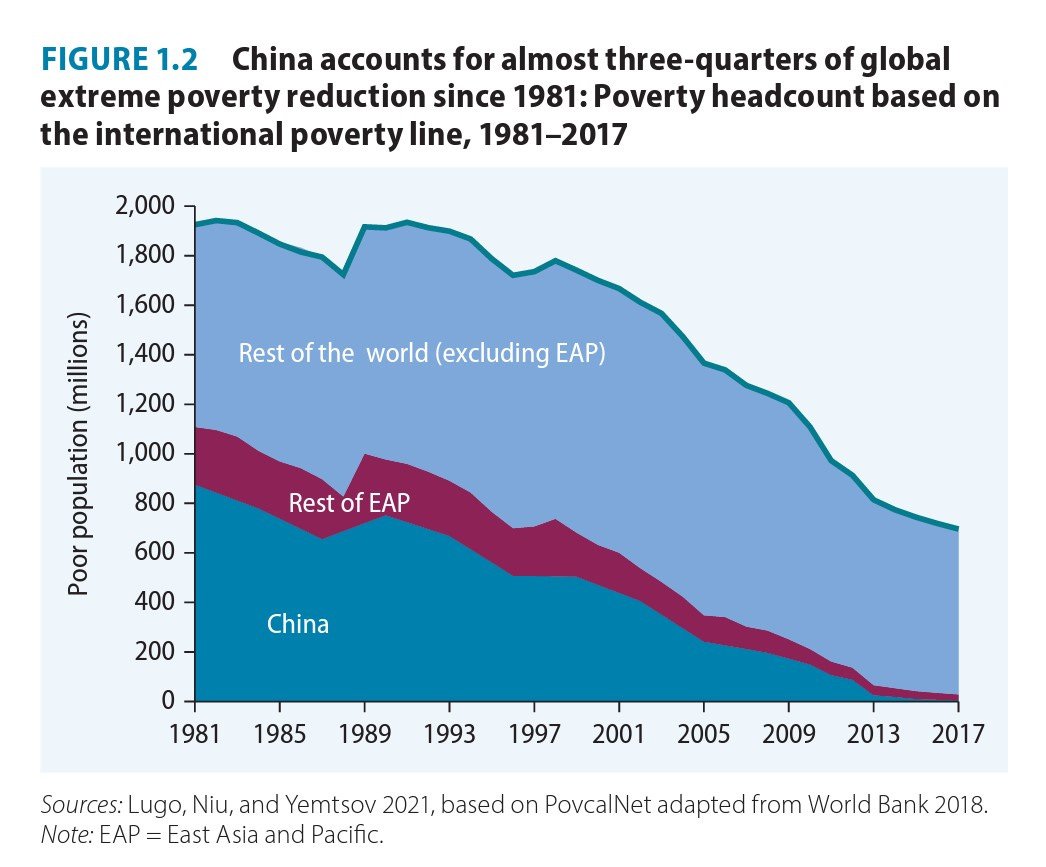
The 1990 start point is doing a lot of work here. If you start from 1980, 75% of global extreme poverty reduction occurred in China (according to the World Bank).
Our World in Data@OurWorldInData
Was the global decline of extreme poverty only due to China? The share of the world population living in extreme poverty has never declined as rapidly as in the past three decades. The decline in China was particularly fast, and given that one in six people in the world lives there, we’re often asked whether the decline in global poverty was only due to the decline in China. The chart shows the data that answers this question. In blue, we see the global decline. In red, we see the decline if we exclude China from the data. In the world outside of China, 33% lived in extreme poverty in 1990; by 2025, this share was down to 12%. The large economic growth that lifted 940 million Chinese people out of extreme poverty since 1990 was a major contributor to the global decline in poverty. But the non-Chinese world also achieved a very large reduction. It is not true that the global decline in poverty was only due to China. Extreme poverty has declined in China and the rest of the world. (This Data Insight was written by @MaxCRoser and @parriagadap.)
English
Maria Ana Lugo retweetledi

This @MarkusEconomist 'video interview' with Keynes about the economics of AI is pretty wild.
youtube.com/watch?v=kbUcXp…

YouTube

English
Maria Ana Lugo retweetledi

The UK ponders adopting an economic demography transition approach - 40 years after China adopted this approach:
"Young people will suffer most from UK’s ageing population, Lords say
House of Lords report says tools such as raising pension age and increasing immigration will not be adequate"
theguardian.com/society/2025/d… @davidpgoldman @michaelxpettis @MariaAnaLugo @martinwolf_ @JChengWSJ @CarlZha @IEAKwame
English
Maria Ana Lugo retweetledi
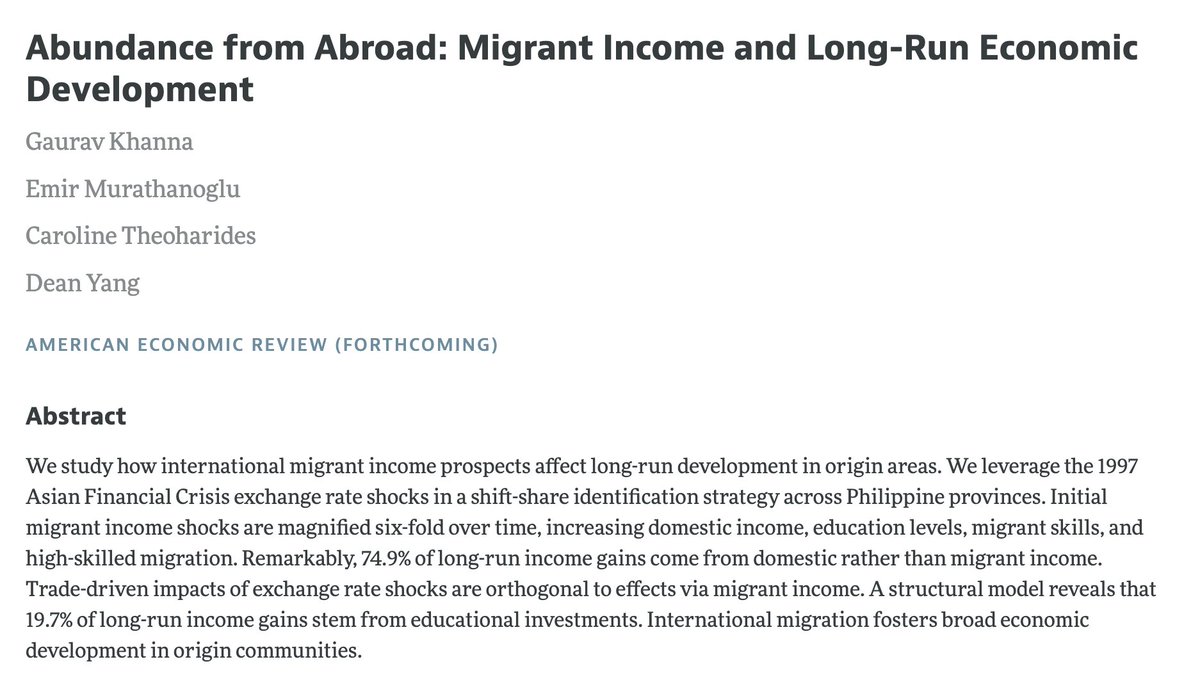
Migration from poor to rich countries leads to massive income gains for migrants + remittances back home. But isn't there a trade-off here with long-run growth in the country of origin?
This new @AEAjournals paper might be the best causal evidence we have, & suggests not
English
Maria Ana Lugo retweetledi

We were wrong about convergence.
Or rather the facts have changed, again.
@dev_a_patel @JustinSandefur & I update our earlier heady finding on the end of divergence
Solow convergence has faded but 70% of developing countries still “outgrew” the G-7
chat-gdp.org/we-were-wrong-…


English
Maria Ana Lugo retweetledi

Manufacturing for export has been the major path for rapid growth in developing countries.
How is the World Bank's private sector arm the IFC doing in supporting that model?
Not so good.

English
Maria Ana Lugo retweetledi

EL GOBIERNO DISOLVIÓ EL SERVICIO DE CALIBRACIÓN DEL INTI, UNA FUNCIÓN ESTATAL CLAVE Y MODELO EN LATINOAMÉRICA
El Servicio Argentino de Calibración y Medición (SAC) fue creado por el INTI a partir de acuerdos con distintos laboratorios especializados, conformando una red de cooperación e intercambio técnico. Todos estos laboratorios operan bajo la supervisión del INTI y cumplen con la Norma ISO/IEC 17025, el estándar internacional que establece los requisitos para demostrar competencia técnica en ensayos y calibraciones, garantizando resultados válidos y confiables.
Este esquema permitió que la industria acceda a servicios de calibración y medición en laboratorios cuya capacidad técnica está verificada, utilizando patrones de referencia trazables al Sistema Internacional de Unidades (SI). En consecuencia, los certificados e informes emitidos poseen plena validez técnica.
El INTI, además, es responsable de realizar, reproducir y mantener los patrones nacionales de medida, asegurando la coherencia metrológica en todo el país.
¿Qué ocurrió ayer?
Se publicó en el Boletín Oficial la eliminación del SAC. El punto más delicado es que sus funciones pasarán al Organismo Argentino de Acreditación (OA).
El OA no es un organismo estatal. Forma parte del sector privado. Esto plantea un problema evidente de intereses, porque implica delegar en actores privados la custodia y certificación de las calibraciones de todos los instrumentos de medición del país.
Además, el OA tiene accionistas y empresas asociadas que participan de su conducción. Un caso es Lenor, que integra su directorio y, al mismo tiempo, está habilitada por el propio OA. Esa doble condición genera un conflicto evidente. Una empresa privada participando de las decisiones del organismo que controla los patrones nacionales, la trazabilidad y la calidad de las mediciones.
El INTI es quien históricamente resguarda los patrones nacionales de medida. Trasladar esa responsabilidad al OA abre un problema profundo: si se pierden los patrones o la trazabilidad, se deteriora la capacidad de medición de toda la industria.
El cambio implica un retroceso institucional y técnico muy serio, porque el OA no posee ni la capacidad académica, ni la infraestructura, ni el nivel de especialización que tiene el INTI.

Español
Maria Ana Lugo retweetledi
Applying those sector characteristics to the industry composition of World Bank's private sector investments over time -- which is a bit of a leap, but is the best I can do with the data at hand -- what you see is basically a declining focus on jobs, exports, and growth.
8/

English
Maria Ana Lugo retweetledi
Hello! I'm starting a new blog/newsletter thing.
First post is about aid and growth, and what I think is missing from the renewed enthusiasm in DC to subsidize private investment in developing countries: i.e., export discipline.
1/

English
Maria Ana Lugo retweetledi

✨Winter School #IT19 ✨
Habemus program: linux2.dse.univr.it/it/index.php/p…
@APeichl @MathiasDolls @DenisaSologon @MunziTeresa @Roberto__Iacono @MentaGiorgia @ALepinteur @VitoPeragine1 @pverme
Francesco Andreoli@FAndreoli83
📢 @CESifoNetwork , @dseunivr and @LISER_LC are glad to announce the Nineteenth Winter School on #Inequality and #SocialWelfare Theory (IT19): Inequality and Big Challenges. 👉January 6-10, 2026 👉Alba di Canazei 🇮🇹 👉 Call: dse.univr.it/it/documents/i…
Deutsch
Maria Ana Lugo retweetledi

Campaigns targeting political outsiders may backfire: criticizing Javier Milei’s proposals reduced support among some voters but mobilized others to advocate for him, from Georgy Egorov, @sguriev, Maxim Mironov, and Ekaterina Zhuravskaya nber.org/papers/w34430

English
Maria Ana Lugo retweetledi
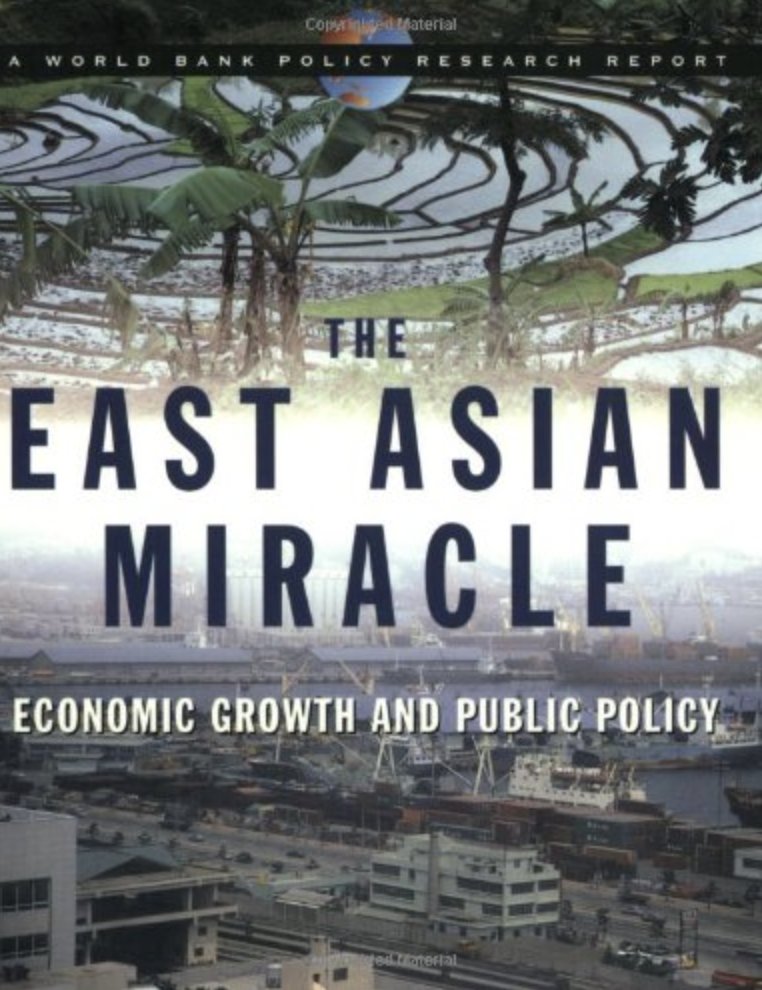
The World Bank's 1993 "East Asian Miracle" report attributed the miracle to macroeconomic fundamentals, not state intervention.
"Industrial policy" would remain taboo for 30 years.
In a new JEP symposium, @nancymbirdsall -- who oversaw the report -- reassesses that call.
🧵

English
Maria Ana Lugo retweetledi
What were the causes of South Korea's export miracle?
My new paper w @philippbarteska, @straightedge, @seung_econ explores a major overlooked factor: U.S. military procurement during the Vietnam War.
We bring new evidence to the Q of how geopolitics shapes development. 🧵:

English
Maria Ana Lugo retweetledi
Policymakers significantly over-estimate foundational learning levels in their country (they underestimate the scale of the problem). They guess that on average 47 percent of 10 year olds in their country can read, compared with World Bank Learning Poverty data ( based on actual assessments) of just 23 percent.
Foundational skills may thus be under-prioritized in part because policymakers do not realize the magnitude of the crisis in their countries. This is one of the many interesting results in this paper by @leecrawfurd @AnaMinardi1 @JustinSandefur & @susannahhares
sciencedirect.com/science/articl…

English
Korea expanded health coverage over decades of incremental reform, learning by doing, and adapting policy instruments to changing demographic, economic, and political conditions. blogs.worldbank.org/en/health/what… via @worldbank
English
Maria Ana Lugo retweetledi

This is extraordinary: China accounts for almost three quarters of global poverty reduction since the 1980s.
English
“…average drug prices…ranged from 18.1 in Lebanon to 578.6 in Argentina, meaning prices in Lebanon were on average 18.1% of those in the base country (Germany price index, 100), while average prices were approximately 5.8 times higher in Argentina than in Germany.”
Kalipso Chalkidou@kchalkidou
Many low- and middle-income countries paid higher prices for the same essential medicines compared to wealthier countries, placing a disproportionate cost burden on patients in poorer nations. jamanetwork.com/journals/jama-…
English
Maria Ana Lugo retweetledi

Look at how parenthood imposes a greater mental health burden on mothers than on fathers!
"[Parenthood] creates a long-run gender gap in antidepressant prescriptions of about 93.2% (in Austria) and 64.8% (in Denmark)."

English