Marieke

177 posts

Marieke banner
Marieke

Marieke

@mariekeflament

Board member, advisor, writer on digital assets and geopolitics.

Katılım Ekim 2009
1.7K Takip Edilen6.4K Takipçiler
Marieke retweetledi
Leon Waidmann
Leon Waidmann@LeonWaidmann·
Stablecoin B2B payment volume just keeps compounding! 📈 🔹 2023: $3.5B 🔹 2024: $19B (5x) 🔹 2025: $66B (3.5x) 🔹 2026 forecast: $147B (2.2x) by @obchakevich_ and @artemis That's a 42x increase in 3 years. Why it's happening?? cross-border B2B via SWIFT costs 3-5% and takes 2-5 days. Stablecoins settle the same route in seconds for under $1. For companies paying suppliers in Asia, Latin America, or the Middle East, this isn't an experiment anymore. It's an operational necessity. Regulatory clarity (MiCA in Europe, GENIUS Act in the US), better infrastructure, and new B2B payment rails being built directly on stablecoins are all converging at the same time. Bullish.
Leon Waidmann tweet mediaLeon Waidmann tweet media
English
10
8
49
2.9K
Marieke
Marieke@mariekeflament·
🇧🇷 Brazil’s new regulation might say a lot about where stablecoin regulation is heading globally. Last week, the Banco Central do Brasil published Resolution No. 561, banning regulated fintechs and eFX providers from using stablecoins or any cryptocurrency to settle cross-border payments. Effective October 1, companies like Nomad and Braza Bank — which had built USDT and XRP-ledger settlement into their cross-border rails — must now route everything through traditional FX transactions. Brazilians can still buy, hold, and trade digital assets freely. What the BCB is targeting is the back-end plumbing of international finance — which makes sense when looking at the numbers: Brazil's traditional remittance market — migrant transfers, SME payments, corporate flows — is worth around $25B a year. Inbound flows alone hit $6.3B in 2024, growing at 14% year-on-year. By any measure, it's a significant market. But crypto had quietly built something much bigger alongside it. Brazil's crypto market now moves $6–8B per month, with stablecoins accounting for ~90% of that volume. Annualised, that's $70–90B in cross-border flows running through channels the central bank can't see. A parallel payments infrastructure — larger than the regulated market it was supposed to complement — operating almost entirely outside the BCB's field of vision. At that scale, the regulatory blind spot had become impossible to ignore. There is a tension yet to be resolved: the BCB's rule works perfectly at the institutional chokepoint. Licensed fintechs have authorizations to lose — the compliance will happen. What it can't touch is the peer-to-peer layer. Any Brazilian with a self-custodied wallet can still settle in USDT on Tron or USDC on Solana, entirely outside the eFX framework. So what does this signal for stablecoins going forward? Three things stand out to me: 1. Sovereign risk is now real. The USD dominance of stablecoin markets — USDT and USDC make up the overwhelming majority of global volume — is precisely what makes central banks nervous. 2. Regulatory pressure will intensify, not ease. We're entering a phase where regulators worldwide will increasingly demand that stablecoin flows touch supervised infrastructure at some point — whether through licensing, travel rule compliance, or reserve requirements. 3. Domestic stablecoins become strategically interesting. If foreign-issued USD stablecoins are the problem, the logical response is a locally-issued, locally-supervised alternative. Brazil already saw Braza Bank issue a real-backed stablecoin on XRP Ledger. Expect more central banks — and domestic fintechs — to explore BRL, EUR, and other currency-pegged tokens as a way to capture the efficiency of blockchain settlement without ceding monetary control to USD-denominated assets. --- I co-author @CurrenPower with @Nicolas_Colin, subscribe to get more insights on Money, Code, and the Struggle for Control in a Debased World.
Marieke tweet media
English
1
0
3
46
Marieke
Marieke@mariekeflament·
When it comes to China’s foreign investments, the focus has often been looking at the Belt and Road Initiative, focusing on the ports and the bridges in developing countries, but what China has been doing is re-thinking entirely what influence and financial power means. China has quietly rewritten the rules of global influence. Today it underwrites $2.1 trillion in loans across 217 countries — not as a do-gooder, but as a strategist. The share of its overseas portfolio qualifying as official aid has collapsed from 22% to just 1% since 2000. In its place: commercial lending, strategic acquisitions, and an offshore currency ecosystem built through Panda and Dim Sum bonds that are steadily pulling sovereigns and Western corporations into Beijing’s financial orbit. But the most consequential play is the Electrostate — China’s export of the world’s electrification infrastructure. Solar panels, batteries, grid software. Not commodities. Capabilities. Capabilities create dependency: on Chinese standards, Chinese updates, Chinese financing terms. This is the thalassocracy playbook modernized. Control the routes, and you control the world that flows through them. The Belt and Road built the roads. The Electrostate now owns what runs on them. Check out our latest edition of @CurrenPower where @Nicolas_Colin and I explore exactly that. With huge thanks to @SineadOS1 @izakaminska from @cashequivalence @JessicaHoversen and @AidData for their research in the field, which feeds our thinking and this article! open.substack.com/pub/eurostable…
English
3
1
6
463
Marieke
Marieke@mariekeflament·
The Chinese are travelling big time for Labor Day Holidays [劳动节 (Láodòngjié)]: 1.52 billion single trips are expected to be taking place between May 1st and May 5th. That’s an average of 330mn trips a day. Yup, the entire US is moving per day across the country. Just imagine the level of logistics and infrastructure required to handle that amount of people on the roads and at sites. Source: WeChat
Marieke tweet mediaMarieke tweet media
English
11
6
66
5.1K
Marieke retweetledi
Brad Setser
Brad Setser@Brad_Setser·
There has been too much talk of petrodollars. And not enough talk of Chinese dollars China isn't really de-dollarizing. Rather the contrary. A new blog 1/ cfr.org/articles/china…
English
23
154
522
77.1K
Marieke
Marieke@mariekeflament·
𝗘𝘂𝗿𝗼𝗽𝗲 𝗘𝗻𝗲𝗿𝗴𝘆 𝗗𝗶𝗹𝗲𝗺𝗻𝗮: 𝗘𝗹𝗲𝗰𝘁𝗿𝗼𝘆𝘂𝗮𝗻 𝗼𝗿 𝗣𝗲𝘁𝗿𝗼𝗱𝗼𝗹𝗹𝗮𝗿𝘀 ⚡ A recent Financial Times article warns that Europe is "sleepwalking" into dangerous dependence on Chinese green technology. It misframes the actual choice Europe faces. Europe must choose between two dependencies: Chinese clean energy infrastructure, or continued reliance on fossil fuel markets dominated by the US dollar. As @Nicolas_Colin and I write in @CurrenPower: the Electroyuan versus the Petrodollar. 𝗘𝘂𝗿𝗼𝗽𝗲 𝗶𝘀 𝗰𝗮𝘂𝗴𝗵𝘁 𝗶𝗻 𝗮 𝗱𝗶𝗹𝗲𝗺𝗺𝗮 🪤 On one side: the US, threatening tariffs and reduced security commitments if Europe deepens ties with Chinese clean energy. On the other: an oil dependence the Iran crisis is actively worsening, and a climate emergency that makes fast, cheap renewable deployment an existential necessity. The threat from Chinese infrastructure is largely hypothetical — the FT report's own authors concede a cyber attack is "very unlikely." On the other hand cost of fossil fuel dependency is not hypothetical. Europe has already paid it, repeatedly. Much of the security case against Chinese green tech serves American strategic interests. Europe should be clear-eyed about that. 𝗖𝗵𝗶𝗻𝗮'𝘀 𝗹𝗲𝗮𝗱 𝗶𝘀 𝗮 𝘁𝘄𝗼-𝗱𝗲𝗰𝗮𝗱𝗲 𝗵𝗲𝗮𝗱 𝘀𝘁𝗮𝗿𝘁 🇨🇳 China controls 90% of global solar module production and over 80% of wind turbines and battery cells — built through sustained industrial investment while Europe was still debating whether renewables were viable. That lead won't be closed by building walls. The more productive path is to treat China's clean energy expertise the way Europe once treated American industrial methods or Japanese manufacturing discipline: worth learning from and building with. 𝗦𝗽𝗮𝗶𝗻 𝘀𝗵𝗼𝘄𝘀 𝗶𝘁 𝗮𝗹𝗿𝗲𝗮𝗱𝘆 𝘄𝗼𝗿𝗸𝘀 🇪🇸☀️ Spain's solar boom was built on Chinese supply chains. Jinko Power won the 182.5MW Seville tender. China Three Gorges bought Spanish solar plants outright. Chinese firms supply battery and electrification infrastructure nationwide. The results: solar at 21% of electricity generation, wholesale prices 40% lower, household bills 30% below Germany's, industrial output consistently outpacing the eurozone. As Nicolas Colin recently argued, Spain moved fast because it had no choice — unable to devalue its currency, cheap energy becomes its competitiveness lever. The eurozone straitjacket becomes the incentive. 𝗖𝗹𝗮𝗿𝗶𝘁𝘆 𝗼𝘃𝗲𝗿 𝗳𝗲𝗮𝗿 🔋 Europe's path forward is deliberate engagement with China's clean energy lead — not out of naivety, but strategic necessity. Spain is proof: not despite Chinese technology, but because of it. The Electroyuan or the Petrodollar. Europe's choice to make. 🌍
Marieke tweet mediaMarieke tweet media
English
4
3
7
1.1K
Marieke retweetledi
Izabella Kaminska
Izabella Kaminska@izakaminska·
🏴‍☠️1/ If what I think is happening is really happening, then I can make some predictions. Especially about incoming European problems. But first an important side story, which also relates to the “special relationship”. What a lot of people don’t know is that when Minos Zombanakis, the father of the Eurodollar market, started looking for a hub for his offshore dollar operation in Europe, he originally hoped Brussels not London would be its base. That’s because Brussels was the home of NATO. This was not to be. As Andrew Hilton (city veteran) once told me, the Belgian central bank refused to give approval. Zombanakis next turned to Paris, but the BdF also rejected him. Finally, he turned to London. As Hilton tells the story “they [aka the BoE] didn’t put any obstacles in his way.” The rest, as they say, is history. London Eurodollar clearing became a trillion dollar business, over which Brexit fights would eventually be fought. In no time at all Stanley Yassukovich (at the time representing investment bank White Weld), as well as a number of other American banks, got approvals to set up euromarket operations in the square mile. Why did no other central banks want to say yes? Officially, they were concerned about financial stability. In reality, they knew what a dollar tap in their jurisdictions signified for their own monetary sovereignty. Their currencies would never be their own again, because European corps would always find it more cost effective to fund in dollars. This was all the more the case in any economy operating a dirigiste policy. They feared price discovery through competition. Eurodollars didn’t just bypass monetary control — they undermined the system of domestically captive finance that governments relied on, raising funding costs and exposing fiscal policy to external market discipline. It also translated to pressure on the gold price in ways that increasingly drained reserves. Which brings us back to the special relationship. Why did London say yes when nobody else would? Probably because it had no choice. It was just after Suez, which made the nature of capital flows and dependencies abundantly clear.
English
14
54
231
36.5K
Marieke
Marieke@mariekeflament·
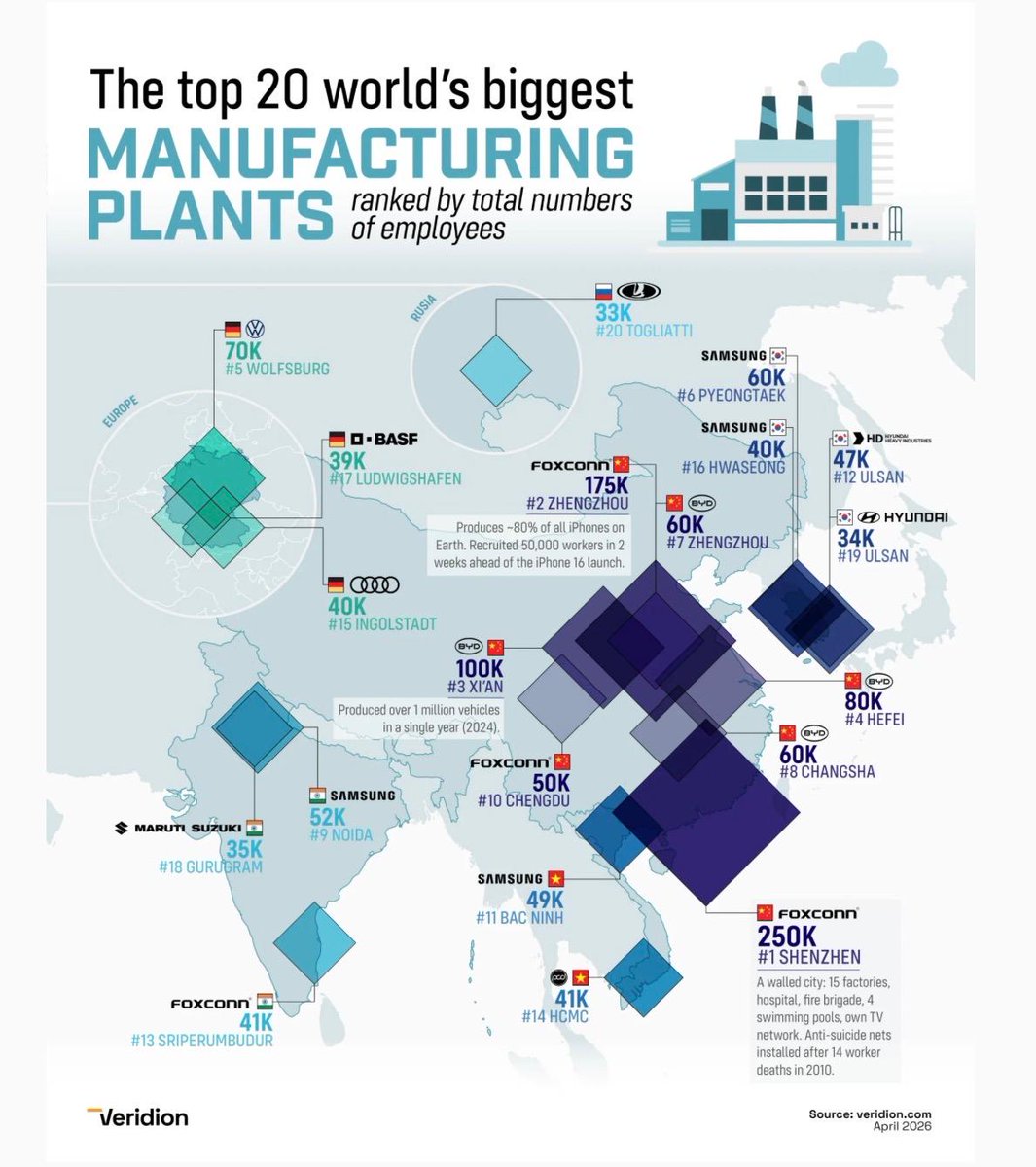
17 out of the world's 20 largest manufacturing plants, by employees are in Asia. The remaining 3 are in Germany. Source: voronoiapp.com/diagram/The-Wo…
Marieke tweet media
English
1
3
13
1.2K
Marieke
Marieke@mariekeflament·
China loves AI — 中国爱AI 🇨🇳 (Note: it's a play on words — 爱, "love," is pronounced "ai.") China is a tech-optimist country, where new technologies are more often than not widely and rapidly adopted. My recent trip to Shenzhen's Talent Park, where a drone delivers your food, a humanoid robot makes your coffee was a good illustration of this enthusiasm. Smart glasses, AI pets, chess robots everywhere — and people trying them out, curious, enthusiastic, unafraid. And that’s quite refreshing. This enthusiasm got me to look deeper into China’s AI landscape, something I’ll continue doing as it's worth understanding. Chinese is a language is full of metaphors, and so its AI story reads like a tale. The tale of "Six Tigers and a Whale 🐯🐋" The Six Tigers are Six Chinese AI labs challenging the Western giants: Zhipu AI, Moonshot AI, MiniMax, Baichuan Intelligence, StepFun, and 01. AI. Why Tigers? That's a reference to Asia's export powerhouses (Hong Kong, Singapore, South Korea, and Taiwan) who were known as the Four Tigers in the 1960s. DeepSeek is the whale. In a language that thinks in pictures, it needs no further explanation. It's the only fully open source out of the 7, freely swimming in the oceans. AI in China is being built under major constraints — limited chip access, tighter funding. The result is forced efficiency and intense competition. Doing more with less, faster. DeepSeek's recent announcement is a great illustration of this. DeepSeek released its v4 model. Excellent performance. At a fraction of the cost of its competitors. And it is now getting ready to run on Huawei chips, not NVIDIA. A great read to understand the announcement is on @jjding99 of ChinaAI's newsletter. Continuing to cut China off - whether access to chips, oil or dollars - will only continue to push the country to continue building what Nicolas Colin rightly calls “a full-stack civilisation”. The part that fascinates me most — and that I think is most under appreciated in the West — is China’s embrace of open source, in particular for AI. For the deeper history of how China came to embrace open source at all, @kevinsxu "Chinese Open Source: a definitive history" is an essential read. Deep Seek, the whale freely swimming, is in particular an example where China is open-sourcing its AI while the US is doing the exact opposite — the Eagles, (OpenAI and Anthropic) remain firmly closed and unaccessible in China. @Nicolas_Colin and I explored this paradox in @CurrenPower in “Wide Opened, Locked In”. So who will win? The Whale? The Tigers? The Eagles? For now, very large funding rounds can still only mostly be envisioned in the US. If that is not a route for Chinese AI companies, ensuring that China can keep its talent engaged and motivated without the hope of very large raises will be key to avoid a talent exodus. The recent blocking of the acquisition of Manus by Facebook might just an indication of the battles to come.
Marieke tweet media
English
1
1
2
351
Marieke
Marieke@mariekeflament·
Well... I don't think keeping your eyes shut on progress made in China is the solution.
Marieke tweet media
English
0
3
3
243
Marieke retweetledi
Reuters
Reuters@Reuters·
Japan Airlines will trial humanoid robots for baggage handling and aircraft cleaning at Tokyo's Haneda Airport starting in May, citing workforce shortages and rising tourist numbers
English
213
1.4K
3.7K
884.3K
Marieke retweetledi
Michael Pettis
Michael Pettis@michaelxpettis·
2/2 The most telling part of the article is Blustein's recounting of how Germany and Japan in the late 1970s refused to take part in the "exorbitant privilege" the US presumably enjoyed. He cites Barry Eichengreen, who wrote that at the time the Bundesbank "made clear that it would do whatever it took to discourage central banks and governments from accumulating deutschmarks." Japan again refused to share in the exorbitant privilege in the years after the GFC, when China tried to shift part of its reserve accumulation from USD to JPY. Their multiple refusals help puncture another exciting myth, which is that the USD's global dominance and its role in absorbing excess saving elsewhere is good for the US and an important reason for its economic wealth and power. It turns out, however, that while every country may want the financial power that the Fed controls, except perhaps for the UK – the other major country besides the US in which the financial sector dominates policymaking – no one else wants to pay the economic costs of the exorbitant privilege, which include an overvalued currency, surging debt, and deindustrialization. foreignpolicy.com/2011/09/07/an-…
English
7
21
105
8.6K
Marieke
Marieke@mariekeflament·
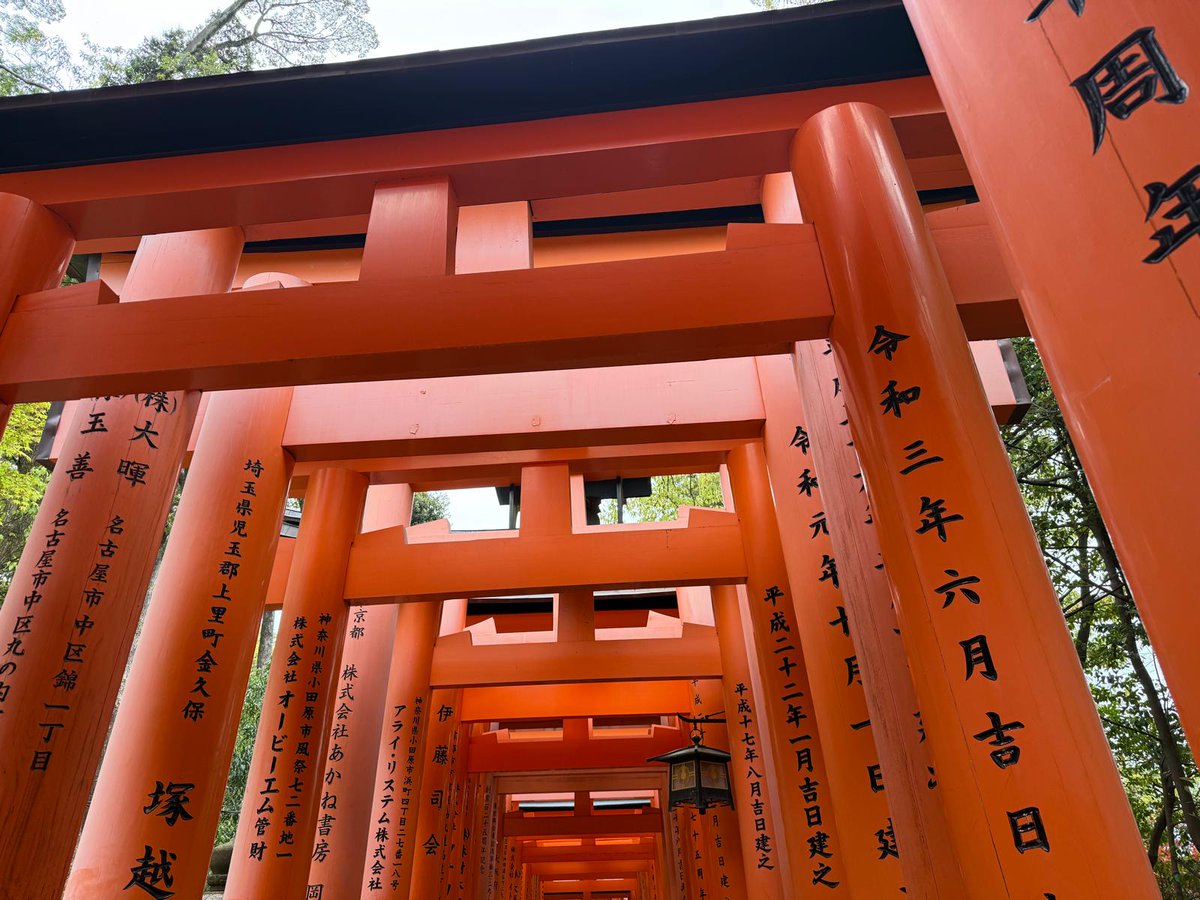
Just back from three weeks in China + Japan — back to back. The contrast was sharper than I expected and eye opening. I recently wrote about China, this is now about Japan. Japan: 43 million tourists a year. A currency that has lost a third of its value in five years. Less than 2% EV adoption. And streets that are somehow completely spotless with almost no public bins. Japan is a country of fascinating paradoxes — 20 years later and after a week in China, I saw it with eyes I wouldn't have had otherwise. Five things I can't stop thinking about, including why Japan's "cheapness" is not a travel deal, but a symptom of something much bigger. 👇 linkedin.com/pulse/japan-th…
Marieke tweet media
English
8
11
72
20.9K
Marieke
Marieke@mariekeflament·
There are lots of headlines on the end of the dollar and how the yuan could — or couldn't — replace it. It's a topic we've been exploring a lot at @CurrenPower. My recent trip to Hong Kong made me realise that the dollar is way more entrenched in the Chinese system than is often understood. Hong Kong has always been a city in between. Between East and West, between colony and sovereign territory, between market freedom and party control. Deng Xiaoping famously called this "One Country, Two Systems." When it comes to money, Hong Kong offers a fascinating paradox: for 43 years, the HKD has been pegged to the USD within a tight band. And yet today, over 50% of Hong Kong's trade is with mainland China. As China continues to build its own financial infrastructure and move away from the dollar — what role will Hong Kong play in that transition? @Nicolas_Colin and I explore this in today's edition of Currency of Power: "One Country, Two Currencies." 👇 open.substack.com/pub/eurostable…
Marieke tweet media
English
7
5
22
14K
Marieke retweetledi
Izabella Kaminska
Izabella Kaminska@izakaminska·
A note on the increasingly frustrating dollar swap line confusion. While the ESF definitely has a shady history in which it doubles up as black ops financing arm of the US Treasury, when it comes to the UAE situation, it's simple dollar liquidity mechanics that are the issue in this case. To understand this you need to go back to your Zoltan Pozsar 101, about how shadow dollar liquidity actually flows through the system. This explains entirely what's going on at the moment. Adam Tooze would have you think otherwise and brings up the ESF's shadowy history as a source of slush funds to add intrigue to the situation. (While it's not untrue, it's besides the point). And now Brad Setser is speculating there may be "something radically new about the US providing dollar credit to a country that itself has pledged to invest in the US" and that this "looks like the US government is financing a off balance investment fund outside Congressional scrutiny, with the Emirates getting the upside ..." But I'm pretty sure that this is not the case. It's an entirely obvious and transparent situation. First of all, the original WSJ story that flagged the UAE situation talked about swap lines not ESF-funded Argentina-style swaps. These are entirely different arrangements. For one, the ESF is a Treasury-powered vehicle and usually operates via finite credit facilities. It is also usually arranged between respective sovereign Treasuries. A swap line, however, is Fed-initiated and potentially limitless. It is an arrangement between fellow central banks. Now, if you speak to central bankers in the know, they will tell you that despite the central banking framing, it's not entirely the case that the Treasury has no influence on the initiation or not of a swap line. But this doesn't change the mechanical structure, which sits outside of the Treasury system — and imposes on it only in so much as central bank profits or losses ever do. The WSJ may have got the nomenclature wrong, but I doubt it. As to why the UAE, despite having pledged to invest in the US, needs dollars? I'd argue it's because the original investment is mostly an expression of allegiance, and a signal that the UAE trusts the US to defend its property rights more so than any other superpower and is prepared to fund its military-industrial reconstitution... since the protection of its property rights also hangs in the balance. If the UAE decides to fund these investments with USTs, this mostly constitutes a transfer of that economic value from the Treasury to the private sector. There needn't be a liquidity event associated with the transfer if it's mediated, as it has been, at the US Government level and extended via a co-investment with the US into newly forged equity investments. The UAE leg, in that sense, becomes a promise to expire its outstanding claim over the US Treasury in exchange for x shareholding (49% one would presume) in the newly forged company. Think of it more like an asset swap, wherein its debt-based assets are swapped into equity assets underpinned by USG co-investments. The actual liquidity to start the venture up would likely come exclusively from the US side, with the funding essentially already raised by way of the defense industrial allocations in the BBB. In that scenario, the investments act more like a quid pro quo with an ally, to ensure the US can raise the money it needs via formal channels, without fear that its bond markets do a Liz Truss. But it's very unlikely that the UAE plans to fund these American investments entirely with UST reserve assets. Much more likely, it plans to deploy its trillion-dollar sovereign wealth fund chest, as well its future oil revenue, to meet most of the $1.4 trillion investment it has promised over 10 years. In that case, what the UAE would really be doing is merely bouncing back dollar liquidity that's already coming its way from existing USD-denominated assets straight back into American investments. The only difference is that on this occasion, it has agreed to transfer some level of influence over how those investments will be steered. This makes sense if the true purpose of the arrangement is to help reindustrialise the US, as the USG sees fit, so that it can better provide regional security and defy industrial decoupling with China. Why does it make sense for the UAE? Since some 50% of its SWF is already invested in the US, if America loses in a war with China or Iran, so does the UAE. It needs a strong and autonomous America with trusted supply chains to defend it. In some respects, this is an echo of how China funded its own industrialization. In 1979 under Deng Xiaoping’s broader “Reform and Opening-Up,” China brought in its Equity Joint Venture Law, creating the main channel through which foreign capital first entered China’s industrial economy. The main difference here is that in China's case, the co-investments were with Western private sector companies or multinationals. In America's case it is wooing capital from fellow sovereigns, with whom it can establish related defense agreements. Statecraft 101. Why dollar swap lines then? Well, if a good chunk of UAE dollar liquidity is drawn from oil sales, this is self-evidently currently under pressure. And while the UAE probably has many other sources of dollar income, it's what happens at the margin that matters. Under a peg system even a small marginal fluctuation in flows can put pressure on the system. All the more so, if foreign residents are moving money out of the UAE because of regional volatility. A country like the UAE, in such circumstances, faces the same problem as a distressed bank. It finds itself technically dollar-asset rich, but simultaneously dollar-liquidity poor. The options it has on the table in that case are either to abandon its peg temporarilly, liquidate its assets at potentially firesale prices compounding the problem (definitely suboptimal), borrow from the market, or seek the one thing it doesn't have under a pegged system: Access to a dollar lender of last resort. With the UAE likely to become a formal ally, extending lender of last resort facilities to help it manage local dollar liquidity issues, seems the obvious way to go for the US. In a sense it becomes the first official member of what Robert McCauley sees as the emergence of a new dollar swap-line diplomacy club. [Which could, in my mind, be the makings of a new type of IMF system.] For a country that already operates under a soft form of dollarization, it's not too great a leap. References below:
English
14
35
125
21.8K
Marieke retweetledi
a16z crypto
a16z crypto@a16zcrypto·
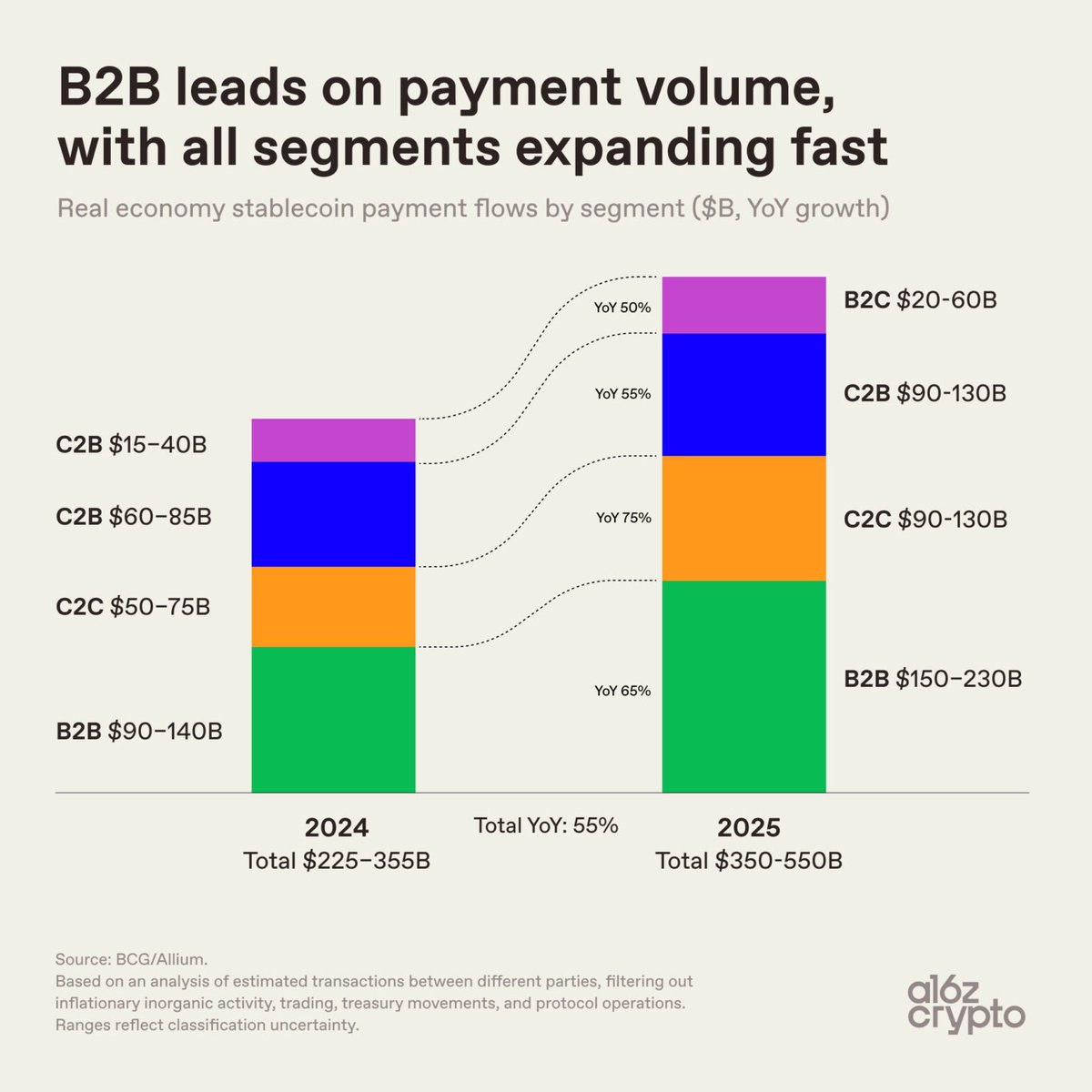
Strip out trading, treasury flows, and exchange mechanics and you're left with $350–550B in real stablecoin payments last year. B2B leads on volume, but every segment is expanding fast.
a16z crypto tweet media
English
15
41
199
126.2K
Marieke
Marieke@mariekeflament·
20 years ago I lived, studied and worked in China — in Shanghai and Hong Kong — and travelled relentlessly across the country and the broader Asian region. Last year I wrote about returning to China after 20 years — observing the changes we saw in Shanghai, Beijing, Hong Kong. That post got quite a bit of traction. This year, our itinerary was more eclectic: Hong Kong, XingPing (deep in the Guilin region), Shenzhen, and then Japan (more on that later). The trip left again a strong impression — and confirmed much of what we've been writing in Currency of Power: China as the Electrostate, building a what Nicolas Colin calls a "full-stack civilisation", laying the groundwork to export its Electroyuan. Part II. Here's what I found 👇 linkedin.com/pulse/chinas-t…
English
11
18
231
17.3K