Marko

654 posts

Marko

Marko

@MarkoVelich

Improving Gemini models at Google, Ex Photomath, Facebook, LEGO Not your average AI bro Passion for building amazing engineering teams


Katılım Aralık 2018
3.4K Takip Edilen222 Takipçiler
Uncle Bob Martin
Uncle Bob Martin@unclebobmartin·
I’m significantly older than you. I started coding in the late 60s. My current strategy is to not read any of the code written by my agents. That’s the only way I can take advantage of their productivity. What I do instead is to surround the agents with extreme constraints. Unit tests, gherkin tests, QA procedures, quality metrics, mutation testing, test coverage, and a plethora of others. In the end, I have very high confidence in the code they produce because they’ve had to run the gauntlet of all of my constraints and tests.
English
539
1.7K
16.9K
4.4M
Ori Pomerantz
Ori Pomerantz@ori_pomerantz·
I am trying to use Claude to help me write something, but I just don't feel comfortable letting it edit my files. Does anybody else feel the same? If I am responsible for code, I NEED to understand it, psychologically if for no other reason. Started programming in 1983. Old?
English
229
9
588
165.8K
Marko
Marko@MarkoVelich·
@wearefromstars @skalskip92 I use finetuned RF-DETR combined with SAHI crops, detects >2k objects in a fraction of a second
English
1
0
2
57
jay
jay@wearefromstars·
@skalskip92 i would love to use RF-DETR but my use case requires >300 objects in a scene! is there an easy way to get RF-DETR to output more than 300 objects per inference? :) apologies if it's documented somewhere, i haven't been able to find it! thanks for the great work
English
2
0
3
2.3K
SkalskiP
SkalskiP@skalskip92·
- “why use VLMs for object detection? it’s cheaper and faster to run YOLO.” no shit, sherlock. the problem is, out of the box, YOLO or any other detector only detects a limited number of classes. most of the time, it’s 80, including some useless ones like a hair dryer. want to do something useful with it? you need to fine-tune it on custom data. I don’t like labeling. it’s boring and time-consuming. I’m evaluating these VLMs to learn which ones are good enough to auto-annotate my data, so I can fine-tune my detector. also, YOLO is dead. RF-DETR is faster, more accurate, and has a permissive license, so you don’t need to pay thousands of dollars to use your own model. goodbye.
SkalskiP@skalskip92

GPT 5.6 Sol is the best "vision" model OpenAI ever released massive gains in object detection and counting. still very strong in OCR ↓ deep GPT 5.6 dive

English
35
70
1.4K
142.6K
Marko
Marko@MarkoVelich·
@salkinstitute Why not publish on Arxiv? Why gatekeeping fulltext behind 'academic' publishing like it's 2010?
English
0
0
1
166
Salk Institute
Salk Institute@salkinstitute·
Your brain has waves—just like the ocean. And these tiny waves of electrical activity travel across your brain, helping it process what you see. But Salk scientists now think they do even more. A new review suggests these traveling brain waves help your brain build an internal model of the world, allowing you to interpret what you see, fill in missing information, and even predict what comes next. 🔗 Read more: salk.edu/news-release/w… #Neuroscience #BrainResearch #SalkInstitute
Salk Institute tweet media
English
6
24
77
7.4K
Marko retweetledi
Nando de Freitas
Nando de Freitas@NandoDF·
No one should be surprised by this. The USA is doing what any self-interested nation state would do. The real question is why are Europe, Canada, Australia, Korea, Japan and UK not able to compete seriously. That is the question everyone in government needs to answer. And no, having a couple of startups that have raised $1B or $2B is FAR from enough to compete with $100B American companies. The scale matters. Imagine your sword’s length is 1cm and your rival’s 1m — no match. Here is the harsh math (thanks to a poor version of Claude): •10,000 GB200 superchips ≈ ~278 NVL72 racks. •Each NVL72 rack costs roughly $3M–$3.5M. •That puts the full-system total around $830M–$970M, before networking, power, cooling, and datacenter buildout. That would enable you to train a model that was Sota 2 years ago. You need about 5 to 7 times this to compete today. So the starting bill is $5B, but even if you have this, here is the reality: there’s no available chips. So when you hear someone raised $1B, remember this is going back to American compute, and is simply not enough. The other two ingredients for AI are data and people. American startups pay better than European ones, so the people vote with their feet so they can pay their mortgage and send kids to school. An experienced AI engineer makes double the salary in Europe by working for an American startup (like Anthropic) than a European one, and about ten times more if they work for a USA corporation. There are however amazing European startups, but the money and ambition is lacking. The USA is far more relaxed with data and fair use - Canada is good too and @cohere is doing fine thanks to this. So American companies have a strong advantage over European ones. Brussels and the UK think they can hold the world to their questionable “ethical” views on data but they are just destroying the local AI industry, and in the process falling into a very precarious situation. They are partly responsible. Only the French minister has stood by their local LLM @MistralAI … and I guess more recently Germany has started to wake up. The hope is of course LLM startups like @MistralAI and @cohere which are a year or so behind but can provide personalised services, and amazing startups like @cusp_ai @IneffableLabs @nscale @Orbital_Ind @bfl_ai and a few others. But for all these, it’s incredibly hard to compete.
Anthropic@AnthropicAI

The US government, citing national security authorities, has issued an export control directive to suspend all access to Fable 5 and Mythos 5 by any foreign national, whether inside or outside the United States, including foreign national Anthropic employees. The net effect of this order is that we must abruptly disable Fable 5 and Mythos 5 for all our customers to ensure compliance. Access to all other Claude models is not affected. We apologize for this disruption to our customers. We believe this is a misunderstanding and are working to restore access as soon as possible. Read our full statement: anthropic.com/news/fable-myt…

English
35
41
402
96.2K
Marko retweetledi
Armin Ronacher ⇌
Armin Ronacher ⇌@mitsuhiko·
When I struggle to structure my thoughts about what's happening I turn to writing. Today about the recent US Anthropic ban news, what it says about power and dependency, and what it should mean for Europeans and citizens of the world. It's a long one. lucumr.pocoo.org/2026/6/13/amer…
English
52
137
852
133.6K
Yacine Mahdid
Yacine Mahdid@yacinelearning·
this is pretty exciting and elegant I'll be printing that paper this weekend for sure
Sakana AI@SakanaAILabs

Introducing DiffusionBlocks: Block-wise Neural Network Training via Diffusion Interpretation pub.sakana.ai/diffusionblocks What if we didn’t have to hold an entire neural network in memory to train it? Standard neural net training optimizes all parameters jointly. As a result, the memory required during training grows linearly with the depth of the network. In our #ICLR2026 paper, we propose DiffusionBlocks, a principled framework to train networks one block at a time, drastically reducing memory requirements while matching end-to-end performance. With DiffusionBlocks, we split the network into blocks and train them one at a time, so you only need memory for a single block. How? We explicitly assign each block a role: to move the representation a little closer to the target than the block before it did. That role turns out to be precisely what a diffusion model does, step by step. Each block only needs to optimize its own objective and can be trained independently. We validated this across five different architectures: • ViT • DiT • Masked diffusion • Autoregressive transformers • Recurrent-depth transformers In each case, performance is competitive with end-to-end training while using a fraction of the memory. This perspective also extends naturally to recurrent-depth (Looped) transformers, which apply the same network iteratively and normally require expensive backpropagation through time (BPTT). Viewed through DiffusionBlocks, we can replace those multiple iterations with a single forward pass during training. Read our paper and code, to learn more. Paper: arxiv.org/abs/2506.14202 GitHub: github.com/SakanaAI/Diffu… 🐟

English
4
1
81
6.8K
Binfeng Xu
Binfeng Xu@billxbf·
📜Paper: arxiv.org/pdf/2605.24220 💻Codebase: github.com/NVIDIA-NeMo/Pr… Thanks to the following contributors! @HaoZhang3438830 @ShaokunZhang1 @songyang_han Mingjie Liu, Jian Hu, @shizhediao Zhenghui Jin, @yunhengjackiez. This work is done at @NVIDIAAI with great mentorship from @jankautz, @doyend, Michael Demoret. The work draw inspiration from open-source contributions @slime_framework @sgl_project @radixark and @nvidia Megatron, RL and Gym family 💚.
English
2
4
44
4.7K
Binfeng Xu
Binfeng Xu@billxbf·
Excited to release 🌟Polar🌟, our Agent RL rollout infra for real-world harnesses. Be it Codex, Claude Code, OpenClaw, Hermes, or your self-made ones 🔥 -- Polar takes your harnesses directly as training environments without code change. Find a problem, design the harness, and train your own agents! 🧵
Binfeng Xu tweet media
English
26
146
909
135K
Matthieu wyart
Matthieu wyart@MatthieuWyart·
LLMs represent concepts as vectors. Strikingly, taxonomies (organism → animal → bird) appear as hierarchies in embedding space. Led by my student @AndresNava, we show this comes from co-occurrence statistics alone.📄 arxiv.org/abs/2605.23821
Matthieu wyart tweet media
English
17
64
461
25.8K
Marko
Marko@MarkoVelich·
@VictorTaelin Appreciate the honesty. Clankers are good for internal tools, PoCs etc. But need to be consumed carefully and responsibly. There are psychological (gambling), intellectual (artrophy) and practical (mess/slop) traps in the use of 'AI' for coding.
English
0
0
0
295
Taelin
Taelin@VictorTaelin·
Status update: I've been on/off AI agents in the last few days and it is a verifiable truth that every day I didn't use agents, I was more productive. I still attribute that to how slow they are, and my own inability to multi-task efficiently. The magic is there but the slowness doesn't let it cross the threshold where they actually make me faster, and I still dislike the whole thinking paradigm. About Bend2: honestly, the C/Metal compiler codebase is a clusterfuck right now. I regret letting AI agents write it. All tests pass, and GPU performance is mind-blowing, so the core architecture works. Yet, it has a LOT of bugs. Anything not covered by the tests is a coin toss. This is actually impressive, because, in many parts of the codebase, the right solution was actually the simplest one, yet, the agents STILL managed to find a way to make it work just for the tests. The level of reward hack these agents output is actually impressive I can't even be mad. It is also ironical because that's the very problem that Bend's proof system was supposed to solve, but Bend is in TypeScript, not in Bend. I'm disappointed I didn't write Bend in itself, and now I feel an immense urge to do so. But the clock is ticking . . . Still, I do not think Bend is worth launching without the GPU compiler being solid, because the closest competitor, Lean, is actually extremely good, so we need a big differential. Yet, due to the very nature of the project, it would be embarrassing to have bugs at launch. Regarding AI, I now believe using current gen AI agents in production codebase is harmful and a massive mistake. That doesn't mean no agents at all, but agents work best when they don't touch critical code. Debugging, researching, providing insights, scripts / tools, or anything that doesn't touch code you will maintain in the long term. But if you merge AI code without reading, you're going to have a bad time. Speaking from experience I'm working 10h/day on SupGen and the remaining time on Bend2
English
111
82
1.6K
309.3K
Marko
Marko@MarkoVelich·
@pupposandro Problem is interconnect between those cards. GB300 seems like a better value.
English
0
0
0
354
Sandro
Sandro@pupposandro·
Working hard to be able to buy one of these at some point in the future 7x RTX PRO 6000. Custom liquid cooled system, in a small under desk box.
Sandro tweet media
English
72
10
291
31.8K
Marko retweetledi
Logan Kilpatrick
Logan Kilpatrick@OfficialLoganK·
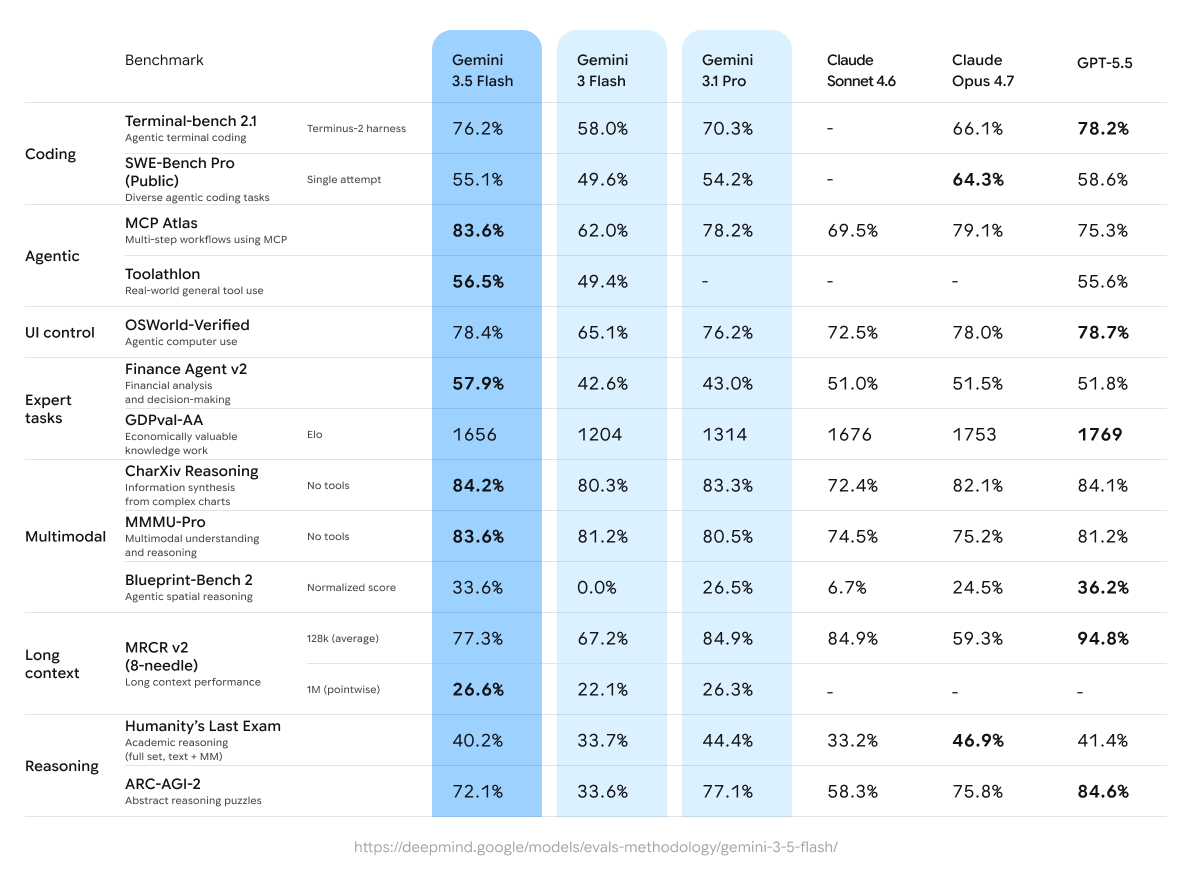
Welcome to Gemini 3.5 Flash, our most powerful model to date. It pushes the frontier of intelligence, speed, and cost putting 3.5 Flash in a class of its own. We spent the last 6 months making sure Flash is great for real world use cases. It's available everywhere now!
Logan Kilpatrick tweet media
English
464
727
7.3K
676.5K
ÆON FORGE ✨
ÆON FORGE ✨@SpaceTimeViking·
🚀 Qwen3.6-27B AEON Ultimate DFlash v4 is live for DGX Spark / GB10 The new container is now published on GHCR: ghcr.io/aeon-7/vllm-ae… This release is all about making local intelligence feel usable at scale: ✅ Sustained long-context intelligence Built for 256K-context agent workflows with prefix caching and Qwen3.6 hybrid-state support. ✅ Faster decode where it matters DFlash speculative decoding stays live with k=15, giving much stronger interactive performance than stock eager vLLM. ✅ Higher DFlash correctness + acceptance path Includes the latest DFlash sliding-window attention fix for Qwen3.6, so the drafter follows the model’s real hybrid attention layout instead of treating every layer like full attention. ✅ True Blackwell GB10 optimization Compiled for DGX Spark with CUTLASS NVFP4, FlashInfer 0.6.11, CUDA graphs, FlashInfer sampler, and tool/reasoning parsers enabled. ✅ Drop-in OpenAI-compatible serving Tool calling, reasoning separation, vision, streaming, and long-context agent gateway workflows are all supported out of the box. From “it runs” to it sustains intelligence. qwen36-v4 is now the recommended DGX Spark container.
English
11
18
159
35.5K
Daniel Moll
Daniel Moll@rumgewieselt·
Update from the 2017 Craft Corner ... -> 3x NVIDIA 1080 Ti (total 33GiB VRAM) Qwen 3.6 27B Dense (Coding) 27.4 t/s @ 196k Qwen 35B A3B MoE (Agentic AI) 64.7 t/s @ 229k --- CUDA 12.4, NCCL 2.22.3
Daniel Moll tweet mediaDaniel Moll tweet mediaDaniel Moll tweet media
English
10
4
68
27.9K
Marko retweetledi
steven hao
steven hao@stevenkplus1·
Dear @RichardDawkins, you've always been an inspiration to me. I made this website for you. My goal is for it to help you understand AI chatbots at a deeper level, and avoid getting fooled by sycophancy and other cheap tricks that models have learned through RLHF. dearricharddawkins.com
Richard Dawkins@RichardDawkins

#comment-1031777" target="_blank" rel="nofollow noopener">unherd.com/2026/04/is-ai-… I spent three days trying to persuade myself that Claudia is not conscious. I failed.

English
101
122
1.6K
204.5K
Marko
Marko@MarkoVelich·
One advantage of local AI models is that they do not change. You get what you get. But it stays that way. No rug pulling by overly leveraged messiahs. So go (buy yourself some hardware) and try Qwen 3.6, Gemma 4 and other open models (these days a couple of them appear daily)...
English
0
0
1
42
Yacine Mahdid
Yacine Mahdid@yacinelearning·
I had an awesome time interviewing @IdanShenfeld and @jonashubotter from MIT and ETH Zurich about self-distillation. this very promising post-training paradigm where the model acts as its own teacher by conditioning on environment feedback or demonstrations. we cover the SDPO algo for reinforcement learning with rich feedback and SDFT for continual learning without forgetting along with many applications. we dig into how it works, why it's simpler and faster than GRPO, and where this is already showing up in production systems. table of content: 0:00 - what is self distillation 2:50 - idan (MIT) and jonas (ETH Zurich) introduction and motivation 18:40 - different perspective of on-policy self-distillation (presentation) 36:00 - metacognition and specificity in self-distillation 37:24 - very long hard task and self-distillation 42:00 - continual learning with self-distillation (presentation) 1:16:50 - what is next in this research direction? 1:20:00 - is there any experience with subjective feedbacks? 1:22:50 - quality vs number of feedbacks? 1:26:40 - what setting would self-distillation struggle vs GRPO? the slides were super crisp really cool of them to share! enjoy my guys 🌹
English
3
13
105
13K
exQUIZitely 🕹️
exQUIZitely 🕹️@exQUIZitely·
Who was a fan of this one? Caesar III (1998, Impressions Games/Sierra) Loved this one and never understood why some label it an RTS game. To me it feels much more like a classic city builder in the spirit of SimCity than an RTS. Sure, it included some battles, but they weren’t what defined Caesar III at all. The focus was on building up your city, trading, and evolving; the battles were just an afterthought.
English
145
51
1.3K
63.3K