David Peterson

5.6K posts

David Peterson banner
David Peterson

David Peterson

@MartinMulliga15

Retired Journalist, failed Rock God

Katılım Mayıs 2018
5.1K Takip Edilen1.5K Takipçiler
David Peterson retweetledi
Josh Hunt
Josh Hunt@iAmJoshHunt·
Pensions. This isn't about fairness. It isn't about entitlement. It isn't about who deserves what. It's about whether the system can keep its promises. The data says the system is under severe strain. £8.9 trillion. That's the official ONS figure for the total value of every pension promise made in Britain. State pension. Public sector schemes. Private final salary pensions. Personal pots. Everything combined. It's also seven years out of date. The ONS last published the figure in 2018 and hasn't refreshed it since. Build it back up from the latest component data. State pension promises around £6 trillion. Public sector pensions £1.4 trillion. The funded local government scheme £550 billion. Private final salary schemes £1.1 trillion. Personal and workplace defined contribution pots £300 to £700 billion and rising fast. The current total sits somewhere between £11 and £13 trillion. This isn't a taxpayer liability. Most of it is your pension. Your neighbour's pension. Your parents' pension. Money savers and employers have built up over decades. But because pensions are wired into the bond market, the tax system, and the Treasury's balance sheet, what happens to them affects everyone. Even people who don't have one. For context. UK national debt is £2.7 trillion. Total UK GDP is £2.85 trillion. The pension promises that underpin every retirement in this country are roughly four times the national debt. Around 420% of GDP. Most of these numbers are not on any official balance sheet you've ever seen. The state pension is classified as welfare, not debt. Public sector pensions sit off the headline national debt figure on a technicality of accounting standards. The biggest financial commitment in British history is hiding in plain sight. Now let's see if it works. The state pension. £146 billion a year. Total spending on pensioners, including pension credit and housing benefit, is £175 billion. There is no fund. National Insurance doesn't go into a pot. It goes straight out the door to today's retirees. This works when you have a growing working population paying in and few pensioners drawing down. We have neither. The official ratio. 3.4 working-age adults per pensioner today. Falling to 2.7 by the 2070s. But that assumes "working age" means "working." It doesn't. 9.1 million people aged 16 to 64 are economically inactive. 2.8 million on long-term sickness. A record. Over half citing mental health. Strip those out and the effective ratio of taxpayers to pensioners is closer to 2 to 1. That's an estimate, not an official statistic. But it makes the demographic picture much sharper than the headline ratio suggests. And that's before AI displaces a single job. The triple lock. The state pension rises every year by the highest of inflation, earnings growth, or 2.5%. Sounds reasonable. It isn't. Since 2011, the triple lock has added 14% on top of what earnings-only uprating would have delivered. By 2029-30 it's costing £15.5 billion a year more than forecast. Three times what was predicted in 2010. By the 2070s, the OBR projects state pension spending will rise by around £80 billion a year in today's money. More than half of that increase is the triple lock alone. State pension spending climbs from 5% of GDP today to 7.7% on the central forecast. Possibly 9.1% in a more volatile economy. In a country with the fourth-worst deficit in Europe, that is a freight train. And the politics is locked. Over-65s vote at 73%. Under-25s at 37%. Over-55s cast half of all votes. Labour committed to the triple lock. Conservatives committed to the triple lock. On 2 April 2026, Reform UK joined them. Despite Farage previously calling it "up for debate," Robert Jenrick committed Reform to the triple lock at a London press conference. The Centre for Policy Studies called the announcement "disappointing for a party that promised radical change." The IEA called the triple lock itself "an electoral bribe with a compound interest rate." Every party that could form a government is now committed to it. There is no obvious political route to removing it. It is a one-way ratchet. Costs only ever go up. Honesty becomes electorally toxic. The triple lock has stopped being a policy. It has become a gravitational force that bends the entire fiscal projection around it. Public sector pensions. The promise to NHS workers, teachers, civil servants, soldiers, police, firefighters. The people who run the country. The official liability is £1.4 trillion. Unfunded. No money set aside. Three years ago the same number was £2.6 trillion. Nothing about the pensions changed. The accounting did. Here's how. To work out what a future pension payment is worth today, you discount it using an assumed return. Higher discount rate, smaller present value. Government bond yields rose. The discount rate rose with them. £1.2 trillion of headline liability vanished from one accounting period to the next. Not a single nurse, teacher or soldier saw their pension reduced. Same people. Same payments. Same dates. The Treasury has a tool that lets it move trillions on and off the implicit balance sheet without changing a single promise. ICAEW and the Public Accounts Committee have flagged this. Nobody in Parliament has built a political argument out of it. Worse. The most recent Whole of Government Accounts received a disclaimed audit opinion from the Comptroller and Auditor General. The second year running. 198 local authorities and a major Northern Ireland scheme failed to submit data. The state cannot reliably report what it owes its own pensioners. In any private-sector context, that would be the lead story. The two-tier system. According to IFS analysis, 47% of public sector workers receive an employer pension contribution of 20% or more of pay. In the private sector, the figure is 2%. Civil service 28.97%. NHS 23.7%. Teachers 28.6%. Police around 35%. Armed forces around 65%. Private sector auto-enrolment minimum employer contribution is 3%. Two countries. One workforce. This isn't commentary on what's right. It's commentary on what's sustainable. Public sector pension promises are growing faster than the tax base that funds them. The political pressure on this gap will become uncontainable. Private final salary pensions. The "gold-plated" schemes most people picture when they think of pensions. Guaranteed retirement income based on your salary and years of service. 74% are now closed to new contributions. They're being wound down. Sold to insurance companies in deals called "buyouts" at the rate of £40 to £50 billion of liabilities a year. This isn't a crisis. It's an extinction. The schemes that built post-war Britain's middle class are being quietly handed to a small number of large insurers, increasingly backed by global private capital. Brookfield. Athora. Blackstone. By 2035, a substantial fraction of British pensions could sit on the balance sheets of six insurers. If one of those insurers fails, the political and systemic shock would raise questions far beyond ordinary pension regulation. The Bank of England is doing exploratory scenarios. The political class is not. Nobody is pricing this risk. Personal pensions. What most workers now have. Your pot is whatever you and your employer save into it, plus growth. The auto-enrolment minimum is 8% of qualifying earnings. The DWP's own analysis. 14.6 million working-age people, 43% of the workforce, are undersaving. On the official adequacy measures, the majority of DC-only savers will fail to hit even a "moderate" retirement standard. A median earner contributing 8% from age 30 will accumulate around £139,000 in today's money by retirement. The Pensions and Lifetime Savings Association says they need £330,000 to £490,000 alongside the full state pension to fund a moderate retirement. The 8% delivers between a quarter and a third of what's needed. Auto-enrolment solved coverage. It did not solve adequacy. The honest contribution rate is 12 to 15%. No major political party is willing to say so. The question was punted to a relaunched Pensions Commission reporting after this Parliament. There's a second timebomb. Pension freedoms, introduced in 2015, let savers access their pots from 55. Most use drawdown rather than annuities. FCA data shows 349,992 drawdown sales last year versus 88,430 annuity sales. Only 30.6% of pots are accessed with regulated advice. The ratio is falling. The first generation to retire entirely under pension freedoms hits its late 70s and 80s around 2035 to 2040. That's when running out of money becomes systemic, not anecdotal. The state will pick up the cost. Exactly when the demographic dependency ratio is at its worst. September 2022. UK pension funds nearly imploded over a weekend. For years, defined benefit schemes had used something called liability-driven investing. Borrowing to buy government bonds to match their pension liabilities. When bond yields rose 170 basis points in five days, those funds faced margin calls they couldn't meet. They started selling bonds to raise cash. Which pushed yields higher. Which triggered more margin calls. A doom loop. The Bank of England's own research attributes around half the gilt price decline during the crisis to forced selling by pension funds. The Bank announced an emergency facility of up to £65 billion. Actual purchases were £19.3 billion. The Treasury indemnified the rest. Bond yields surged. Mortgage pricing moved with them. LDI forced selling amplified the stress. Sterling hit a record low. Every homeowner refinancing that autumn paid more. We came within hours of a pension fund crisis nobody fully understood until it was nearly too late. The post-crisis fixes have helped. The underlying reliance on leveraged hedging has not gone away. The December 2025 Financial Stability Report still flags residual vulnerabilities. The next time bond yields move sharply, we'll find out whether the lessons stuck. April 2027. Pensions enter inheritance tax for the first time. Currently, unused pension pots can pass to beneficiaries free of IHT. From April 2027 they're included in your estate. 10,500 estates pay IHT for the first time. Another 38,500 pay more. Average liability rises £34,000. Combined effective tax rate, including post-75 income tax, can reach 67%. The behavioural response is uncertain. But it is likely to be material. Wealthy retirees may accelerate drawdown. Money may move from pensions into ISAs, investment accounts, and gifts to family. The state spent decades telling people to save into pensions. From April 2027, pensions stop being the most tax-efficient way to do it. The savings architecture of the country is being quietly rewritten. Nobody is fully modelling what comes next. Mandation. The state has spent decades telling you to save into a pension. Now it's reaching for what you've saved. 2023. The Mansion House Compact. 11 providers commit 5% of default funds to unlisted UK equities by 2030. Progress as of October 2025 is 0.6%. Far behind target. 2024. The Mansion House Accord. 17 providers covering 90% of active savers commit to 10% in private assets, 5% UK-specific, by 2030. October 2025. Sterling 20. 20 funds for UK infrastructure. Voluntary, on paper. The Pension Schemes Bill passing through Parliament now contains a clause giving the Treasury statutory power to direct private pension fund investment if the voluntary measures fail. The House of Lords has rejected this clause three times. Most recently on 22 April 2026, by 234 votes to 152. The Commons has reinstated it three times. The Bill is still in ping-pong between the two Houses. Parliament is expected to be suspended before the King's Speech on 13 May. There is a real possibility the entire Bill, including unrelated reforms to small pots, defined benefit superfunds, and local government pooling, falls in the next three weeks because the Treasury will not drop one contested power. The UK is moving closer than comparable pension systems toward an explicit reserve power for ministers to direct private pension investment. The constitutional question. Should the state direct where your retirement savings are invested? The Lords have answered no, three times. The Treasury has answered yes, three times. Whatever happens in the next three weeks, the precedent is being set. Why does this matter if you don't have a private pension? You're paying for it anyway. Through your mortgage. UK pension funds hold around £1 trillion of British government debt. As private final salary schemes wind down, that demand evaporates. The OBR projects pension fund holdings of government bonds falling from 29.5% of GDP today to 10.9% by the 2070s. Yields rise around 0.8 percentage points. £22 billion a year added to debt interest. Mortgage rates and business borrowing both move with bond yields. Every UK homeowner refinancing in the 2030s and 2040s pays more because of pension reforms made now. Through your taxes. 14.6 million people undersaving will fall onto pension credit, housing benefit, and means-tested social care. The OBR projects 1.2 million additional pensioner renters by the 2040s, costing roughly £2 billion a year in housing benefit alone. That bill comes to you. Through your council tax. Adult social care is bankrupting councils. Birmingham. Woking. Thurrock. Nottingham. All effectively insolvent. Local government pension contributions are rising sharply, competing in the same envelope as social care, libraries, roads, bins. The Dilnot cap on social care costs was cancelled in July 2024, pushing more risk back onto households and councils alike. Through systemic risk. The 2022 LDI episode required £19.3 billion of Bank of England intervention with up to £65 billion of Treasury indemnification. That was taxpayer money protecting the pension system from itself. Any future systemic event is paid for the same way. Through political distortion. Spending per pensioner has risen 170% faster than spending per child since 2004-05. The triple lock costs three times what was forecast and is treated as untouchable by every party that could form a government. The pensions system is not a private contract between savers and providers. It is a fiscal, monetary and political infrastructure on which everyone in Britain stands. When it strains, the whole country strains with it. What's likely to happen. Britain doesn't have crashes. It has slow betrayals. The state pension age will keep rising. 67 by 2028. 68 in the late 2030s. 69 by the 2070s. Means-testing will creep in. The triple lock will be quietly diluted, not abolished. Nobody will give a speech. Private final salary pensions will finish their extinction by 2040. The middle-class workplace pension that built post-war Britain will exist only in the public sector. Until that's reformed too. DC savers will start running out of money in their late 70s and 80s, beginning around 2035. The first cohort to retire entirely under pension freedoms reaches that age then. Many will spend faster than is sustainable. The state will pick up the cost. Insurer concentration in the buyout market grows. Six insurers backed by global private equity hold most of British final salary liabilities by 2035. One major failure would raise systemic questions far beyond ordinary regulation. The Treasury continues to reach for private pension capital. Mansion House voluntary becomes mandation. If the current Bill falls, the next one reintroduces it. The principle is established. Mortgage rates and government borrowing costs rise as domestic bond buyers disappear. Debt interest is around £110 billion a year. Up from £39 billion in 2019-20. It crowds out everything else. Defence. NHS. Pensions. Debt service. Four claims on the same shrinking fiscal envelope. The arithmetic does not work. Something gives. The candidate for being squeezed is not defence (geopolitical reality). Not the NHS (electoral reality). Not debt service (market reality). It is pensions. The grinding reform of the British pension settlement that's coming is being driven by a budget arithmetic nobody is willing to articulate publicly. The OBR's central long-term projection has UK government debt above 270% of GDP by the 2070s. Their judgement that the system is "manageable" comes with one condition. That policy changes. Policy isn't changing. The numbers are. The implicit promise was simple. Work. Pay your taxes. Save what you can. Retire with dignity. That promise is being broken in slow motion. The state pension age keeps rising. Personal pots deliver a third of what's needed. Public sector promises grow faster than the tax base. The Treasury is reaching for what's left. Nobody will announce the failure. It will just happen. One year. One rule change. One quiet reform at a time. A 25-year-old today, contributing the auto-enrolment minimum, will retire onto a state pension paid by a smaller working population, plus a private pot worth a third of what they need, in a country whose mortgage rates, council services, and tax base are all bearing the cost of provision their parents and grandparents didn't make. This isn't a question of whether £12 trillion of promises were the right ones to make. It's a question of whether they can be kept by a system running out of ways to fund them. The arithmetic is already in. We just haven't told anyone yet.
English
25
20
78
9.9K
David Peterson retweetledi
First Doctor
First Doctor@FirstDoctor·
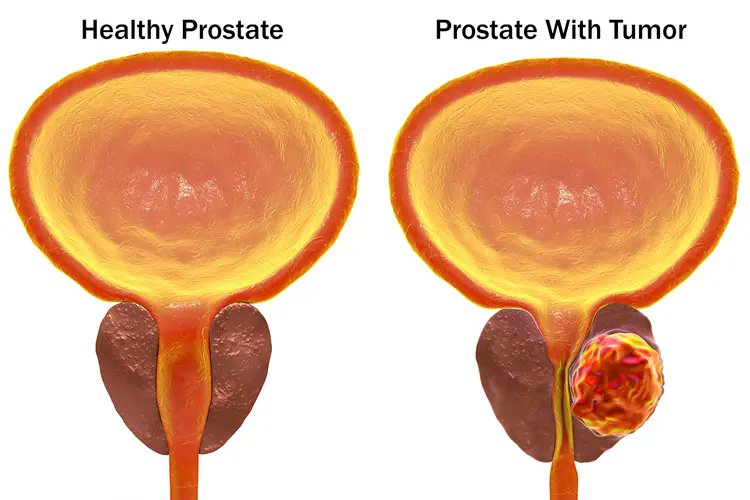
Netanyahu announced he has early-stage prostate cancer, which has a good prognosis if caught early. But the uncomfortable truth is that most men ignore the signs for YEARS before diagnosis. What are these early signs of prostate cancer to watch for? Men, open this.
First Doctor tweet media
English
21
145
382
95.6K
David Peterson retweetledi
Health & Nutrition Tips
Health & Nutrition Tips@healthnutritipz·
STOP these 6 habits or you'll GET CANCER
English
10
165
1.4K
90.2K
David Peterson retweetledi
Chris Gloninger, CCM, CBM
Chris Gloninger, CCM, CBM@ChrisGloninger·
AMOC is weakening. New Potsdam Institute study: once it collapses, it stays collapsed. The point of no return was 350ppm CO₂. We crossed that in 1988. We're at 430 today. Without the Gulf Stream: US East Coast winters get extreme. Europe loses 7°C. Southern Ocean releases 83 gigatonnes of CO₂. The fossil fuel industry knew about AMOC in the 1980s. Same decade we crossed 350. The EPA just stopped regulating the emissions driving it. #AMOC #ClimateChange #GulfStream #Science #Meteorologist
English
79
762
1.6K
155.8K
David Peterson
David Peterson@MartinMulliga15·
RT @david_hollas: I was at South Gare this morning with my dogs watching cranes move across the Tees. Real steel. Real work. Real activity.…
English
0
7
0
0
David Peterson retweetledi
The Receipts UK ♿
The Receipts UK ♿@david_hollas·
1/ A Companies House investigation into the company that donated £200,000 to Reform UK. Interior Architecture Landscape Limited. No accredited architects. No named clients. Unaudited accounts. Two unexplained reclassifications. HMRC winding-up petition. Two strike-off actions. Full piece: theverifiedreceipts.substack.com/p/interior-arc… 2/ The company donated £200,000 to Reform UK across seven payments — June to August 2025. At the time it owed £185,741 in unpaid tax and held £22,000 cash. Source: Electoral Commission. Companies House. 3/ The accounts contain two documented instances where prior year figures don't match previously filed accounts. 2019/2020: £199,000 discrepancy. 2024/2025: £282,066 discrepancy. No explanation provided in either case. 4/ The director's previous co-director Richard Darby went on to work for HP Trust — the Ghandehari family office that funded Farage's Davos pass. During his time as director, a similarly named company was incorporated at the same address and struck off with no accounts filed. 5/ Every fact sourced to Companies House, Electoral Commission, OCCRP, FT, Guardian and Sunday Times. @liambyrneMPs has requested a formal Companies House probe. Read the full investigation: theverifiedreceipts.substack.com/p/interior-arc… @liambyrnemp @OCCRP @DeborahMeaden @reid6peter @SarahLudford @BylineTimes @chris_spencer04 @SarahLudford
English
2
75
122
13.7K
RS Archer
RS Archer@archer_rs·
The Artemas II craft is returning to Earth at a speed of 40,000 kph, coincidentally the same speed my friend Hugo claimed he achieved on his FS1E along the Slough Road in 1978.
English
21
8
193
5.9K
David Peterson retweetledi
The Receipts UK ♿
The Receipts UK ♿@david_hollas·
Let's take a look at George Cottrell. George Cottrell — "Posh George" — has no official role in Reform UK. He's described as an unpaid volunteer. Nigel Farage calls him "like a son to me." He is flanked by Farage at virtually every public and private event. He paid £15,000 for Farage's trip to Florida in 2024. This is what that volunteer looks like on the public record. In 2016, Cottrell was arrested by FBI agents at Chicago O'Hare airport on his way home from the Republican National Convention — where he had been accompanying Farage. He was federally indicted on 21 counts including conspiracy to commit money laundering, wire fraud, blackmail and extortion. He had offered to launder criminal proceeds on a dark web site, meeting undercover federal agents in Las Vegas who he believed to be drug traffickers. He pleaded guilty to a single count of wire fraud and served eight months in a US prison. Since his release he has remained at Farage's side. His mother, Fiona Watson, donated £750,000 to Reform UK in September 2024. Cottrell himself, living in Montenegro, cannot donate directly under electoral law. So in February 2025, he incorporated Geostrategy International Unlimited — a political strategy and polling firm. As an unlimited company it will never have to file financial accounts. But it can make political donations. This is on Companies House. Company number 16233555. Spotlight on Corruption — a leading anti-corruption campaign group — has warned that unlimited companies "can easily be abused" and urged the Electoral Commission to ensure Geostrategy does not become "a backdoor for illegal donations." The Electoral Commission is understood to be aware of the loophole but lacks powers to close it. There is more. The Good Law Project investigated Geostrategy's polling output and found it published only Reform-friendly data — rising support for Farage, immigration concerns, pro-Trump analysis. It does not publish client names. It is not registered with the British Polling Council. When asked for evidence it is a legitimate polling organisation, it read the emails and did not respond. Now the Russia thread. In August 2016, the day after Cottrell appeared in court in Phoenix, Arizona, Leave.EU executive Andy Wigmore forwarded FBI indictment documents relating to Cottrell's arrest to Sergey Fedichkin — a political officer at the Russian embassy in London. Subject line: "Fwd Cottrell docs — Eyes Only." Message: "Have fun with this." When asked by the House of Commons DCMS Select Committee whether he had discussed Cottrell's arrest with the Russian embassy, Wigmore said: "It never came up." The emails proving he had were subsequently published by The Observer. The committee concluded Banks and Wigmore appeared to have misled parliament. Cottrell's online profile at the time showed an interest in Moldindconbank — a Moldovan bank described by US Treasury as a primary money laundering concern linked to Russian crime networks — and FBME, a bank with offices in Cyprus and Russia. He also listed VTB and Alfa Bank, both under FBI investigation for links to the Trump organisation. This is the man Farage chose as his closest aide. This is the family bankrolling Reform. This is the unlimited company that will never show its books. None of this is secret — it's on Companies House, the Electoral Commission, court records and parliamentary committee reports. The receipts exist. They just haven't been read together before. Sources: Companies House 16233555 / Electoral Commission / The Observer / The Guardian / The Daily Beast / CNN / House of Commons DCMS Select Committee Report / openDemocracy / Good Law Project. Every claim is public record.
English
14
308
412
16.2K
David Peterson retweetledi
Grok Got Talent
Grok Got Talent@GrokGotTalent·
People convicted of fraud who received pardons from Trump this year: • Jason Galanis — $200M+ fraud • Joseph Schwartz — $38M scheme • Lawrence Duran — $205M Medicare fraud billing • Carlos Watson — $60M investor scam • Trevor Milton — $20M+ investor losses • Todd & Julie Chrisley — $30M bank fraud • Devon Archer — $60M bond fraud scheme • George Santos — multiple fraud cases ($44K–$1M+) • Michele Fiore — charity fraud • Brian Kelsey — campaign finance fraud • Scott Jenkins — bribery and fraud scheme • Paul Walczak — $10M+ tax fraud • Adriana Camberos — counterfeit/fraud operation
Grok Got Talent tweet media
English
668
9.4K
15.9K
365.4K
Warship Drama
Warship Drama@DramaWarship·
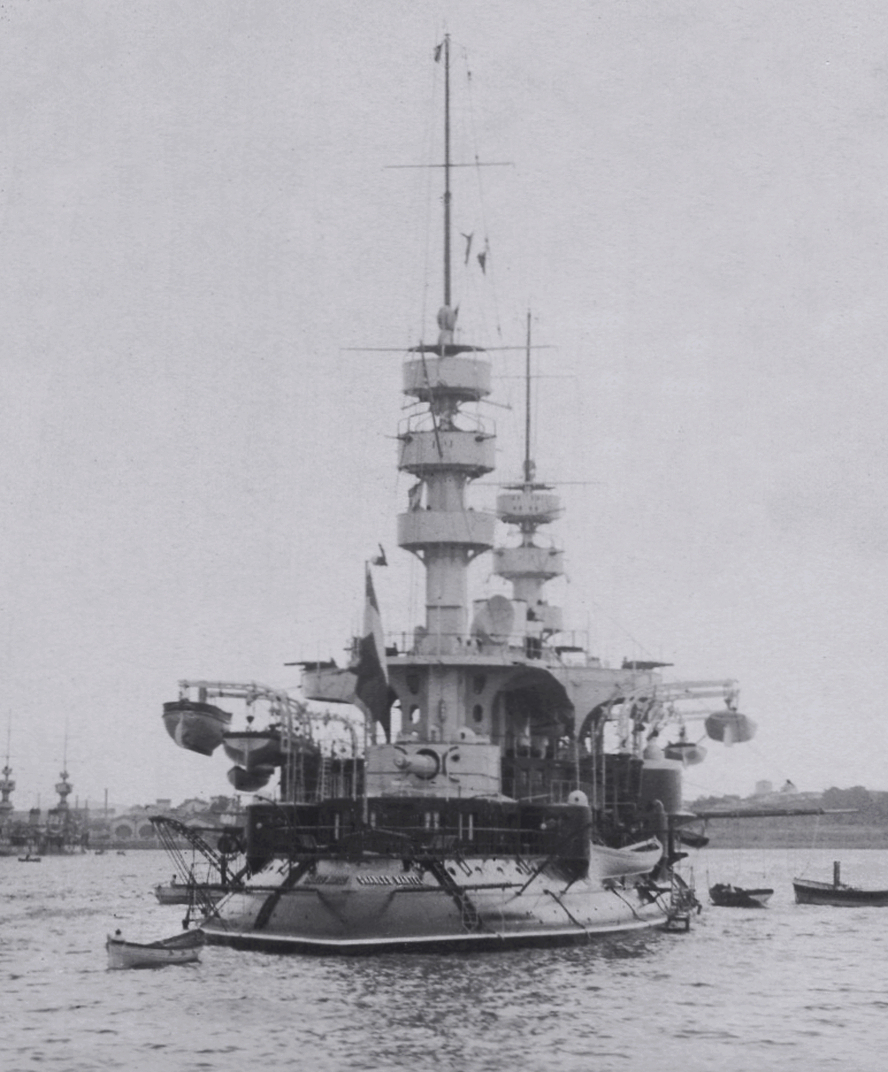
Date: Spring 1901. Location: Toulon, France. Event: Battleship Charles Martel undergoes preparations for the annual exercises by the French Navy's Mediterranean Squadron. Current status: Scrapped in 1921-22, lifespan of 31 years.
Warship Drama tweet media
English
2
13
65
1K
David Peterson retweetledi
Archaeo - Histories
Archaeo - Histories@archeohistories·
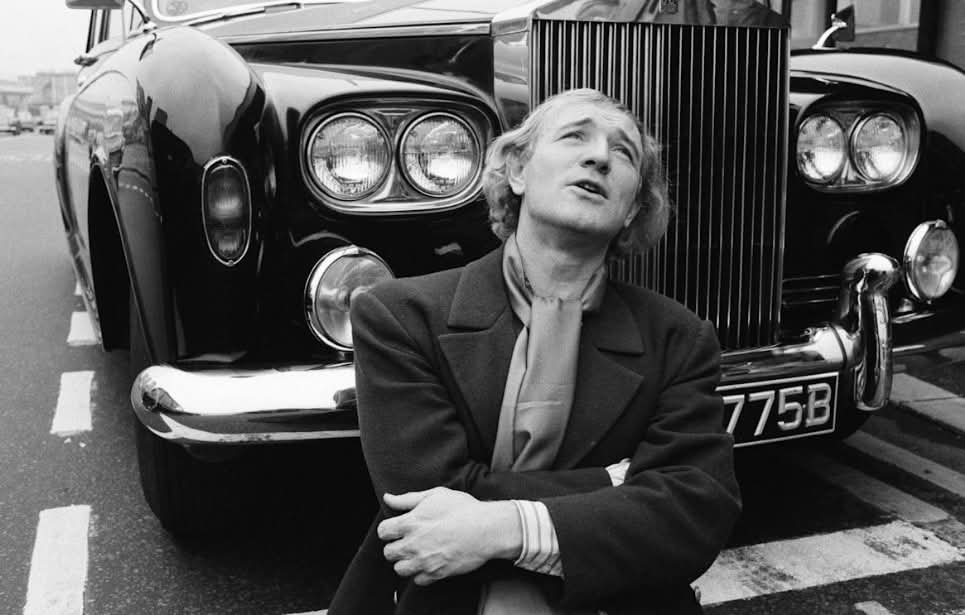
Richard Harris was so drunk through the 1970s that he forgot he owned a Rolls Royce. It sat in a New York garage for 25 years before he found an old photo of himself with it and his accountant confirmed it was still there running up $90k in garage storage costs. Few actors lived as intensely as Richard Harris, and the numbers around his life tell the story. A leading man of the 1960s and ’70s, Harris earned his first Oscar nomination for This Sporting Life (1963) and later another for The Field (1990). In between, he became as famous for his off-screen lifestyle as his work, once reportedly drinking up to two bottles of vodka a day during his heaviest years. It was during this period that a luxury car he owned was effectively forgotten in a New York garage, left untouched for decades while storage fees quietly climbed into the tens of thousands of dollars. By the 1980s, Harris largely gave up drinking and rebuilt his career, culminating in a late resurgence with roles like Marcus Aurelius in Gladiator (2000) and Albus Dumbledore in the first two Harry Potter films. Across a career spanning 40+ years and over 60 films, Harris remained a paradox: wildly undisciplined at times, yet undeniably enduring. His version of MacArthur Park (1968) sold over 1 million copies and earned a Grammy nomination, making him one of the few actors to achieve major chart success as a singer. Harris was nominated for two Academy Awards (for This Sporting Life and The Field) but never won, despite a career that spanned over four decades. © History Pictures #archaeohistories
Archaeo - Histories tweet media
English
40
121
1.2K
136.3K
David Peterson retweetledi
Archaeo - Histories
Archaeo - Histories@archeohistories·
A starving Irish family from Carraroe, County Galway, during the Famine (1845-1852).... Between 1845-1852, Ireland endured one of the most devastating humanitarian crises in modern European history. The Great Famine was triggered by potato blight (Phytophthora infestans), which destroyed the staple crop relied upon by nearly one-third of the population for survival. The consequences were staggering. Around 1 million people died from starvation and disease, while another 1 to 2 million emigrated, many aboard overcrowded “coffin ships” bound for North America. In counties like Galway, entire communities collapsed as food systems failed and relief efforts proved uneven and often insufficient. At the time, Ireland was still part of the United Kingdom, and food continued to be exported from the island even as rural families faced extreme deprivation, a fact that remains central to historical debate about responsibility and response. The famine permanently reshaped Ireland’s population, which fell by over 20% and would not recover to pre-famine levels for more than a century. The Irish diaspora created during the famine years led to cities like New York and Boston developing Irish populations so large that, by the late 19th century, Irish-born residents made up over a quarter of their inhabitants. © National Library of Ireland #archaeohistories
Archaeo - Histories tweet media
English
59
194
596
47.4K
David Peterson retweetledi
Sarahh
Sarahh@Sarahhuniverse·
Kazuhito Yamashita (1961-2026), a renowned Japanese classical guitarist known for his incredible technical skill. He is shown performing his own transcription of Vivaldi's "Winter" from The Four Seasons. © guitarheritage (IG)
English
4
54
190
8.3K
David Peterson retweetledi
The Receipts UK ♿
The Receipts UK ♿@david_hollas·
A lot of people have mentioned Gove so let's take a look. 👇👇👇 🧵 MICHAEL GOVE. A thread. 1/ The government repeatedly told the public: "Ministers had no involvement in procurement decisions." The Covid Inquiry proved that was a lie. And nowhere is that clearer than with Michael Gove. 2/ September 2019. Gove was Cabinet Office minister overseeing Brexit readiness. He held a meeting with Palantir. The company told his department it could provide "capabilities to manage the fast-evolving and unpredictable environment" of Brexit. One year later: £27m Cabinet Office contract. No tender. Source: openDemocracy FOI investigation. 3/ Then the pandemic hit. And Gove got busy. Meller Designs. A fashion company run by David Meller — who had donated nearly £60,000 to the Conservative Party and personally supported Gove's 2016 leadership bid. Gove's office referred Meller Designs to the VIP lane. 4/ Meller Designs won six PPE contracts worth £164m. Three of those six contracts were priced at between 1.2 and 2.2 times the average unit price paid to other suppliers. Source: Good Law Project analysis of government spending data. 5/ Unispace Global. The single biggest winner from the entire VIP lane operation. On 24 March 2020 Unispace emailed Gove thanking him for "your time spent with us on the phone earlier." Twenty days later: a £239m contract. Total Unispace PPE deals: £679m. 6/ When this emerged the Cabinet Office denied Gove was involved. Then the Covid Inquiry published the evidence. A senior civil servant's witness statement confirmed the Unispace offer had "come through" Gove — directly contradicting the government's public position. Source: Byline Times/Covid Inquiry documents, March 2025. 7/ James Dyson. Leading Brexiteer. Keen Gove ally. The Covid Inquiry heard Gove was "INSISTENT that an order be placed" with Dyson's company for 10,000 ventilators. At a meeting on 25 March 2020, Gove "acknowledged he was under political pressure to ensure we have followed up with Dyson." 8/ An independent procurement expert appointed by the Covid Inquiry called the Dyson deal an "affront to procurement rules." The contract was eventually cancelled. Of £277m spent on ventilators by the Cabinet Office, £143m was written off. Source: Professor Dr Albert Sanchez-Graells, Covid Inquiry expert report, March 2025. 9/ There's more. Gove awarded a contract to Public First — a research company whose directors had personal connections to Dominic Cummings. The High Court ruled it unlawful. The judge: "The existence of personal connections between the Defendant, Mr Cummings and the directors of Public First was a relevant circumstance that might be perceived to compromise their impartiality." Source: High Court judgment, June 2021. 10/ Gove also referred six firms to the Test and Trace VIP lane alongside Cabinet Office Minister Lord Agnew. Source: Good Law Project exclusive, confirmed November 2023. 11/ After all of this, David Meller — the Tory donor whose fashion company won £164m in Gove-referred contracts — was elevated to the UK Board of Trade by Kemi Badenoch. No competitive process. No public announcement. Source: Byline Times investigation. 12/ The Cabinet Office said repeatedly: "No evidence ministers were involved in procurement decisions." The High Court disagreed. The Covid Inquiry disagreed. The documents disagreed. Gove is now Baron Gove. A life peer. Editor of The Spectator. Nobody has been charged. 13/ Hancock WhatsApped donors. Gove referred his leadership campaign backer. Johnson texted Dyson personally. Same pattern. Same party. Same public money. The Covid Corruption Commissioner is still investigating. The National Crime Agency is probing possible criminal offences. We are still waiting for accountability. #GoveMustAnswer #CovidContracts
English
24
510
647
9.7K
David Peterson retweetledi
Archaeology & Art
Archaeology & Art@archaeologyart·
Saimaluu-Tash Petroglyphs, Kyrgyzstan. Period: circa 2400-900 BC (Bronze Age). Location: Saimaluu-Tash, Fergana Range, Jalal-Abad Region (Toguz-Toro District), Kyrgyzstan Photo: UNESCO. Military topographer Nikolai Khludov was the first to spot these petroglyphs while mapping the postal route between Naryn and Andijan in 1902. When he heard from locals about stones covered in drawings, Khludov hiked up to the site and reported his findings to the Turkestan Circle of Archaeology Enthusiasts. After that, however, the area was largely forgotten for nearly half a century. B.M. Zima later conducted comprehensive research in 1946, followed by A.N. Bernshtam in 1950. Even though the 25 figures in the panel have varying details, the vast majority share a common look: a human torso topped with a circular, rayed head. (in figure 25, the head is heart-shaped and decorated with internal motifs.) The figures' arms are usually spread out to the sides or raised upward, while some are positioned as if they're holding an object. Sun-headed figures aren't exclusive to Saimaluu-Tash. In neighboring Kazakhstan, the Tamgaly (Tanbaly) petroglyphs feature sun-headed deity (?) figures from the same period with similar iconography. Further east, sun-rayed heads also appear on stone stelae of the Okunev culture (c. 2700-1800 B.C) in Russia's Khakassia region. This wide geographic spread shows us that a shared solar cult existed among the communities sharing the Central Asian steppes and mountains during the Bronze Age. UNESCO added the site to its World Heritage Tentative List in 2001, but it hasn't been officially inscribed yet.
Archaeology & Art tweet media
English
9
295
1.7K
183.6K
David Peterson retweetledi
BUCHANAN: Dublin Time Machine
BUCHANAN: Dublin Time Machine@RobLooseCannon·
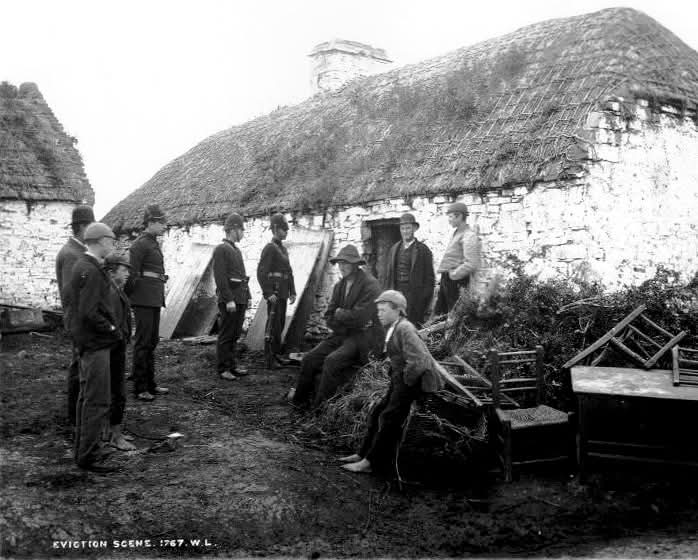
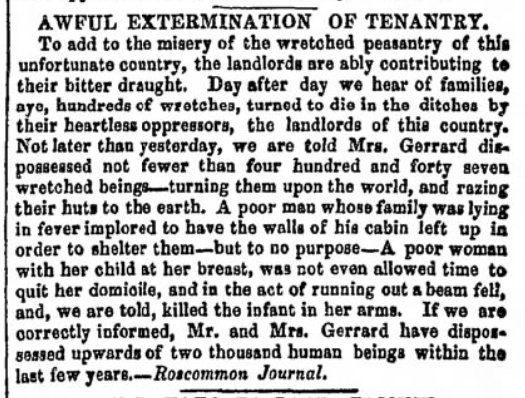
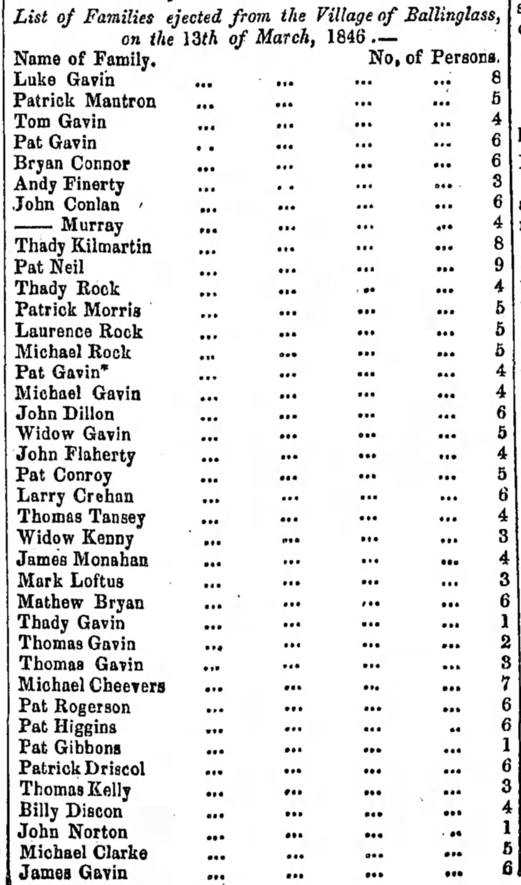
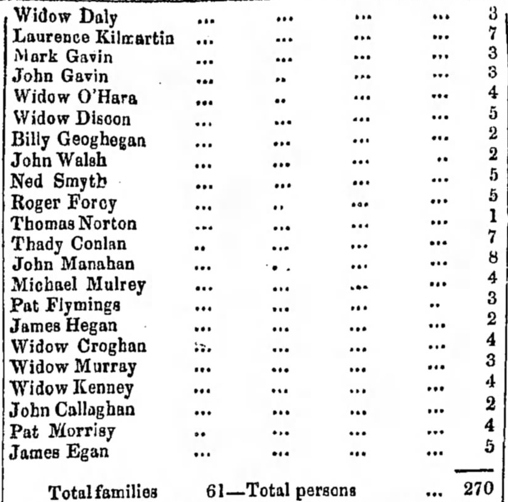
Today in 1846, a village in east Galway vanished. Ballinlass was a small settlement near Mountbellew in County Galway. Its sixy-odd cottages stood along a patch of land reclaimed from bog by the labour of the people who lived there. Many of the tenants were regarded as comparatively prosperous by the standards of rural Ireland. The eviction was ordered by the landlord, Marcella Gerrard, owner of roughly 7,000 acres in the district. The village stood where she wished to establish a grazing farm, as cattle, were more profitable than people. The tenants were not in arrears. Many had their rents ready to pay. That fact meant nothing in the legal world of nineteenth-century landlordism. Ireland in 1846 was part of the United Kingdom, governed from London, and the law of property rested firmly on the side of the landlord. At dawn a sheriff arrived in Ballinlass with a large police force and a detachment of the 49th Regiment under Captain Browne. Soldiers and constables spread through the village. The people protested. They pleaded to pay the rent that had been repeatedly refused. The work of destruction began. One by one the gaffs were dismantled. Their roofs were torn away and walls were knocked down. Gardens were trampled. Families clung to doorposts and dragged away what little property they could carry. Women wailed and children screamed. Men cursed helplessly as their homes collapsed around them. By the end of the day, around seventy-six families, roughly 300 people, had been turned out of Ballinlass. The newly homeless tried to shelter in the ruins of their cottages that night. The next day the police and soldiers returned. Even that miserable refuge was denied them. The tenants were driven from the ditches where they had begun constructing makeshift shelters of sticks and mud. Their neighbours were warned not to harbour them. News of the eviction spread rapidly across Ireland and Britain. The incident was so shocking that it was raised in the House of Lords by Charles Vane, 3rd Marquess of Londonderry. On 30 March he reported what he had discovered after investigating the affair. He told the Lords he was “deeply grieved.” Seventy-six families, he said, had not only been turned from their houses but had been “mercilessly driven from the ditches” where they sought shelter. These unfortunate people, he added, had their rents actually ready. If scenes like this occurred, he asked, was it any wonder that acts of outrage and violence sometimes followed? But sympathy was not universal. Only days later, the formidable lawyer and politician Henry Brougham, 1st Baron Brougham and Vaux insisted, it was perfectly within the landladys rights. If she refrained from eviction she was showing kindness, but if she chose to enforce her property rights the tenants must learn that the law stood firmly behind her. Property would become worthless, he warned, if landlords could not do as they pleased with their estates. Ballinlass happened at the very beginning of the catastrophe we now call the Great Famine. The potato crop had failed in 1845 and would fail again. Hunger was spreading across the country. Yet grain and livestock continued to be exported, rents continued to be demanded, and evictions continued to be carried out. The people of Ballinlass were scattered. Some drifted into neighbouring districts. Many likely emigrated. The village itself disappeared from the landscape, replaced by grazing land. Today, a memorial stands near the site of the destroyed cottages, listing the names of the families who once lived there. Buy the Dublin Time Machine a pint and support the DTM Book ko-fi.com/buchanandublin…
BUCHANAN: Dublin Time Machine tweet mediaBUCHANAN: Dublin Time Machine tweet mediaBUCHANAN: Dublin Time Machine tweet mediaBUCHANAN: Dublin Time Machine tweet media
Dublin City, Ireland 🇮🇪 English
32
198
565
24.5K
David Peterson retweetledi
EuropeanPowell
EuropeanPowell@EuropeanPowell·
I’m so sick and disgusted with this utterly putrid world. Our Governments have been captured by corporations headed by white collar criminals. Our politicians do nothing except toe the line for these despots and oligarchs. Our mainstream media outlets refuse to expose the corruption that’s shoved down our throats 24/7. The people we elect take our trust in them and shit all over it. None of this is sustainable, no one voted for this. We have to reevaluate what our elected officials promise in campaign mode, and then disregard with total contempt when in office.
English
47
577
1.3K
12.9K