Shadreck Masike

2K posts

Shadreck Masike banner
Shadreck Masike

Shadreck Masike

@MasikeShadreck

Lawyer. I subscribe to Dialectical & Historical Materialism. Keen Student of Karl Max.

Harare, Zimbabwe Katılım Şubat 2019
2.2K Takip Edilen840 Takipçiler
Sabitlenmiş Tweet
Shadreck Masike
Shadreck Masike@MasikeShadreck·
I have read Mr Hofisi’s full response to the judgment by Zhou J and I have taken pleasure to respond to the submissions and points that he raises therein. (Note this is not a comprehensive response owing to twitter limitations).
D. Tinashé Hofisi@DavidHofisi

The full judgment by Zhou and others is out. Here is my full response: 5 paragraphs discussing the court's approach to constitutional definitions and human rights enforcement davidhofisi.blogspot.com/2021/05/rights…

English
1
1
6
0
Shadreck Masike retweetledi
NewZimbabwe.com
NewZimbabwe.com@NewZimbabweCom·
The High Court has sentenced three Citizens Coalition for Change (CCC) members to 22 years and nine months in prison each for the murder of a man during a violent political clash with ZANU PF supporters in Harare. newzimbabwe.com/ccc-members-ja…
English
16
7
9
15.4K
Cde Treasure Basopo
Cde Treasure Basopo@TreasureBasopo·
Totally misleading, deliberately malicious, mendacious and vexatious allegations meant to tarnish the image and good standing of @nelsonchamisa ! Mawarire @mawarirej , you have since become another troll assuming a morally high ground attacking Cdes who have been genuinely pushing for democracy and equality in this country whilst you were busy abducting, torturing and murdering innocent Zimbabweans. You should answer to your crimes first before seeking to lecture opposition figures on how the struggle can be prosecuted !
mawarire mbizvo jealousy@mawarirej

Cde, you might be innocently doing your bidding for your guy @nelsonchamisa, which is good, he needs your support, but do so based on accurate information. If he is sending you to attack and besmirch real and perceived political opponents, it is imperative you ask him to give you accurate accounts of some of the things you are using to attack his political foes. I want to correct you on one thing you mentioned in your X post that I have quoted herein for easy of reference. Those who have "reliably informed" you that "Hopewell also has a very close relationship with ED's wife, the First Lady", should have told you the genesis of that relationship. As you put it, "Hopewell ALSO has a close relationship with ED's wife", did you take time to ask who else has the same relationship with ED's wife? If your source was as reliable as you are claiming here, he/she should have told you that your guy, @nelsonchamisa, ALSO "has a close relationship with ED's wife, the First Lady." Chamisa is the one who introduced Hopewell to Auxillia Mnangagwa. I will give you the details and pictures of the meeting which started the purported relationship you are going to town about. Chamisa organized a meeting for him to meet with Benson Muneri, Auxillia Mnangagwa's aide, and requested Hopewell to host the meeting at his house in Chisipite, Harare. At the meeting, your guy, @nelsonchamisa, asked Hopewell to go and meet Auxillia, on his behalf, for a political deal. Anyway, I will not delve into details about the deal but suffice to say your guy is very liquid as we speak. Two months ago, he drove to some farm in Mashonaland West with $1 million cash in his car intending to pay for the farm. The owner was scared of handling such a huge amount of cash. He instructed your guy to deposit the money with his lawyer in Harare. That's where things became interesting. It turned out the seller's lawyer is an old human rights lawyer known to Chamisa through years of interaction in the democratic struggle. Chamisa, fearing that his little secret, that he is keeping millions of dollars in cash, chickened out of the deal the moment he learnt the seller's lawyer was this renowned female human rights lawyer. So, that's your guy, he is keeping millions of dollars in cash like he is one of the Zvigananda. So when you talk about people with "a relationship with ED's wife", remember, your guy has a very strong one with the same First Lady. They call each other brother and sister because they're both of the Moyo totem but the relationship sometimes turns to amaiguru-bamunini when ethnic Karanga politics is invoked. Saka kupotsera dope, rimwe rinosara muruoko my brother.

English
18
21
88
29K
Shadreck Masike retweetledi
Iran Embassy SA
Iran Embassy SA@IraninSA·
Tinotenda Vana VeMuAfrica
Português
423
683
3.4K
211.9K
Dr. Solicitor At Large
Dr. Solicitor At Large@Zvoutete14·
On the highway, uri kuteerera vanhu 4 vapi from the list below?: A Monalisa Madhawu Mundikumbuke Mwari wenyasha Kushungurudzwa B Tsaona Arindine Mai Linda Mwana waMesa Zvibate pamhaka C Zvaitika Jemedza Mavanga Mukwasha Kudakwashe D Mugove Kundiso Sakunatsa Unochemei Hupenyu mutoro E Denda Comma Chautah Pane asipo Haina window F Naye Zakeo Chubvu Handidi navo Zvinoita murudo G Mbereko Rudo imoto Pfimbi yangu Ndibvumbamireiwo Tauraya rudzi rwedu
Dr. Solicitor At Large tweet mediaDr. Solicitor At Large tweet mediaDr. Solicitor At Large tweet mediaDr. Solicitor At Large tweet media
Filipino
202
16
114
16.6K
Shadreck Masike retweetledi
Lewis Uriri
Lewis Uriri@lewisuriri·
Uriri has not been consulted. He will not be consulted. By necessary implication he has not and will not be engaged in accordance with the circumstances that you reference. His personal views on the ongoing processes strictly accords with the law and strict fidelity to the text of the Constitution: in short he refuses to take the bait to publicly express the import of the text of the constitution and give you a basis for assigning him a “faction.”
English
10
9
44
44.7K
Shadreck Masike retweetledi
Siphosami Malunga
Siphosami Malunga@SiphoMalunga·
I'm not even arguing the point whether ED is doing a great job or not.Maybe he is. Maybe he isn't.Who gets to say he does?On what metrics?That's not even the point. Even if we assume he is, he must serve his term & rest. Someone else "must be chosen" in his place to lead. Simple!
English
9
78
252
10.6K
Shadreck Masike
Shadreck Masike@MasikeShadreck·
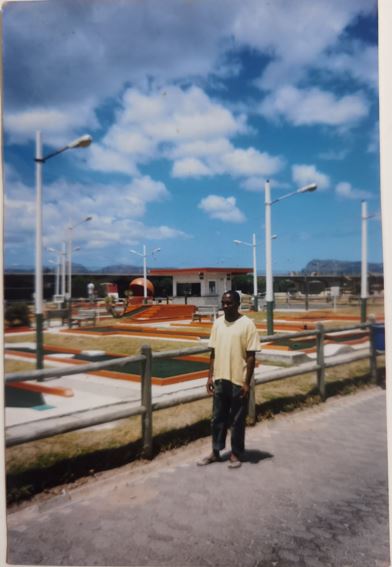
@hbanhire I refuse to recognize the 1st image. Its not you Mkoma, Hazvigoni 😂😂
English
2
1
3
795
Hebert Banhire
Hebert Banhire@hbanhire·
The difference that 20 years makes. First days in Cape Town (Muizenberg Water Slides) (Nov. 2004). 🤣🤣🤣 Vs Last day in Cape Town (16 Aug 2024). My flute runneth over with the finest bubbly at One&Only Cape Town.
Hebert Banhire tweet mediaHebert Banhire tweet media
English
65
29
234
45.6K
Shadreck Masike retweetledi
Freeman
Freeman@freemanchari·
Our goal is not to be crowned champions of insults and expletives. It is to ensure that we provide a platform for all those who felt they needed likeminded people to do something about 2030. Our agreement is to have a culture that diverges from what we have always hated - intolerance. We are focusing on engaging and listening. We are building an army of defenders in a hostile context but we don't want our muscle memory to define what we look like. We are trying to deliberately build a movement that everyone feels comfortable to express themselves without fear of friendly fire or retribution. We don't have all the answers nor strategies but we know some of you here have better ideas. We should be free to interrogate our ideas, heated as it may become but remain free and comfortable in disagreement. The goal is to de-escalate all the time and remain focused on executing on the strategies we are building to resist this attempt to shred the constitution we fought hard to rewrite. Again, if we are not the vehicle you want, ride another bus and keep moving. YOu cannot afford to do nothing right now. DO SOMETHING!!!!!
Freeman tweet media
English
71
166
457
55.5K
Shava Law Chambers
Shava Law Chambers@shava_law·
It’s justice & compassion: A Precedent-Setting Victory! We’re proud of our @obeyshava1 @Zvoutete14 who represented a client who can neither talk nor hear, charged with murder in a tragic family ( love triangle ) dispute. Facing life imprisonment, our lawyers who had argued that
Shava Law Chambers tweet mediaShava Law Chambers tweet media
English
11
16
78
25.1K
Shadreck Masike
Shadreck Masike@MasikeShadreck·
@hbanhire @KingJayZim Is the beer now available in Zim? Ndoda kunohunwira kumusha paMushayanguwo zvikada vangandipe huShe😂😂
Filipino
1
1
1
37
Hebert Banhire
Hebert Banhire@hbanhire·
#AlchemistCraftBrewery successfully Incorporated with The Companies and Intellectual Property Commission (CIPC) in RSA. Company has 3 Directors: Me (in NZ 🇳🇿), one director is in Cape Town (RSA 🇿🇦) and the third director is in Florida (USA 🇺🇸). - We are thinking of entering the market with a Pilsner. - Chatting to contract brewers for the best deal. - Minimum batch is 2000L. #Alchemist #CraftBeer #VuheraPilsner #AlchemistPilsner
Hebert Banhire tweet mediaHebert Banhire tweet mediaHebert Banhire tweet mediaHebert Banhire tweet media
English
25
27
94
5K
Shadreck Masike
Shadreck Masike@MasikeShadreck·
@citezw What is Jonathan really saying? Do the amendments require referendum? Yes or No, and Why?
English
0
0
0
721
Shadreck Masike
Shadreck Masike@MasikeShadreck·
@SANDEJAQ @JonesMusara @Dr_JAMavedzenge Then according to their interpretation of these provisions, the President & Parliament can extend their term by 20 years without going for a referendum? Make it make sense.
English
0
0
0
12
Jones Musara
Jones Musara@JonesMusara·
@Dr_JAMavedzenge With due respect, Point of Correction! The opinions made in the Mupungu case regarding Presidential term limits are of no effect due to 3 reasons. 1. That was obiter dictum. An opinion made in passing which does not amount to binding judicial precedence. 2. The lawfulness or lack thereof the 3rd Amendment was not the issue for determination in that case of Mupungu v Minister of Justice & Ors. One can not therefore copy and paste the judgement to any case to do with the 3rd Amendment. 3. The 3rd amendment is not changing Presidential term-limit. Instead it is changing Presidential and Parliamentary term-length. Of which term-limit and term-length though related are 2 distinct concepts like apples and oranges. Thus if an application arises, it would be totally de novo and the opinions made by the esteemed justice in the Mapungu v Min of Justice & Ors wont bind the Court. The fact s is s328(7) relates to term-limits not term-length. That nuanced distinction makes 3rd Amendment lawfully passable into law without Referendum
Jones Musara tweet media
English
11
0
2
11.3K
Shadreck Masike
Shadreck Masike@MasikeShadreck·
@bla_bidza @ProfJNMoyo What is more disturbing is his attempt to give meaning to provisions of the 2013 Constitution using the 1980 Constitution as amended. 2013 constituted a fundamental and clean break from the past. But again, he is used to propaganda & has no idea of Constitutionalism!
English
0
0
1
148
Bla B
Bla B@bla_bidza·
Your argument @ProfJNMoyo collapses once you distinguish between term length and term limits. That earlier constitutions specified the duration of a presidential or parliamentary term is constitutionally irrelevant to the question of whether the number of terms may be capped. A provision can define how long a term lasts without addressing how many terms a person may serve. The 2013 Constitution did something qualitatively different: it introduced an explicit numerical ceiling on presidential tenure. Invoking historical continuity is therefore a category error. The presence of term-length clauses in prior texts does not dilute, reinterpret, or compete with the later insertion of a clear disqualification rule. Section 91(2) is not merely another drafting variation in a long lineage; it is a substantive democratic constraint, deliberately designed to limit personal incumbency. Reading sections 95(2)(b) and 143(1) as if they somehow neutralise or overshadow that constraint is legally unsustainable. The definitional move under section 328(1) is equally unconvincing. A term-limit provision need not reside exclusively in clauses that mention “limits” by name; it exists wherever the Constitution restricts how long an individual may occupy office. Section 91(2) does exactly that. By contrast, sections 95 and 143 regulate institutional cycles and continuity of governance. They operate in different constitutional domains and cannot logically be set against one another. Politically, your argument risks legitimising indefinite incumbency through semantic gymnastics. Constitutional democracies entrench term limits precisely to prevent the concentration of power, ensure leadership renewal, and reduce the systemic risks of personal rule. Treating structural provisions on election cycles as shields against explicit tenure caps undermines both the spirit and architecture of constitutionalism.

English
4
4
34
2.3K
Prof Jonathan Moyo
Prof Jonathan Moyo@ProfJNMoyo·
EVOLUTION OF SECTION 95(2)(b) SINCE 1980: Claims that sections 95(2)(b) and 143(1) are term limit provisions created or introduced by or under the 2013 Constitution are patently false. Such claims not only distort the historical record but they also undermine the integrity of Zimbabwe's constitutional evolution. In truth, while the 2013 Constitution did indeed pioneer explicit term limits for the presidency in 2013, it faithfully preserved the essence and intent of term length or term of office provisions from the Lancaster House Constitution of 1979—as promulgated in 1980, and amended in 1987 and 2007—without imposing any numerical cap or "term limit" on the duration (period) of office outlined in sections 95(2)(b) and 143(1). These sections, though rephrased over time, have consistently maintained their form and substance, defining term lengths of office of the President and Parliament without limiting the number of permissible terms. Furthermore, it is imperative to note that term limits by definition and their nature are only on designated individual officeholders as public officials, and never on public offices or institutions they serve. Section 143(1) is manifestly not on or about parliamentarians, but on Parliament itself, as a public office or institution. The 2013 Constitution refrained from establishing term limits for Members of Parliament—whose tenure is provided under sections 121, 125 and 129 without any term limits whatsoever besides applicable qualifications and disqualifications—thus introducing for the first time the term limit provision only for the President under section 91(2), which stipulates: 91 Qualifications for election as President and Vice-President (1) …… (2) A person is disqualified for election as President or appointment as Vice-President if he or she has already held office as President under this Constitution for two terms, whether continuous or not, and for the purpose of this subsection three or more years’ service is deemed to be a full term. [Subsection substituted by section 3(b) of Act 2 of 2021] This provision stands as the singular and definitive presidential term-limit provision within the Constitution, aligning seamlessly with the overarching framework outlined in section 328(1), which states: 328 Amendment of Constitution (1) In this section— “Constitutional Bill” means a Bill that seeks to amend this Constitution; “term-limit provision” means a provision of this Constitution which limits the length of time that a person may hold or occupy a public office. By adhering to this precise formulation, the Constitution safeguards democratic principles through targeted term limitations, compelling fidelity to its historical continuity regarding the constitutional import of term length provisions on the Presidency and Parliament, thereby rejecting misguided claims by conflict mongers whose preoccupation is to breed divisions and polarise society at every turn. Below is a self-explanatory history of sections 95(2)(b) and 143(1), which shows beyond any doubt that the two sections are not term limit provisions, but term lengths or periods (as per the Mupungu precedent) or institutional durations of the Presidency and Parliament, which are essentially election cycles: 1980 Version Similar to Section 95(2)(b) of the 2013 Constitution (Term of Office of President): Section 29 Tenure of office of President (1) The term of office of the President shall be a period of six years: Provided that the office of the President shall become vacant— (a) on the expiration of the period for which the President was elected; (b) if the President resigns his office by instrument in writing addressed to the Speaker; (c) if the President dies; (d) if a resolution for the removal of the President from office is passed by not less than two-thirds of the total membership of the Senate and the House of Assembly sitting together. 1980 Version Similar to Section 143(1) of the 2013 Constitution (Term of Office of Parliament): Section 63 (Prorogation or dissolution of Parliament) (1) Parliament shall continue for five years from the date of its first sitting following a general election, unless sooner dissolved. (2) …… (3) …… (4) Parliament, unless sooner dissolved, shall last for five years, which period shall be deemed to commence on the day the person elected as President enters office in terms of section 28(5) after an election referred to in subsection (3)(b) or on the day following the day of such dissolution, as the case may be, and shall then stand dissolved: Provided that, where the period referred to in this subsection is extended under subsection (5) or (6), Parliament shall stand dissolved on the expiration of that extended period. (5) …… (6) …… 1987 Version Similar to Section 95(2)(b) of the 2013 Constitution (Term of Office of President): Section 29 Tenure of office of President (1) The term of office of the President shall be a period of six years: Provided that— (i) the President shall continue in office until the person elected as President at the next election of President assumes office; (ii) [Paragraph repealed by section 9 of Act 15 of 1990] (2) The President may resign his office by lodging his resignation in writing with the Speaker. (3) The President shall cease to hold office if a report prepared by a committee of Parliament, appointed by the Speaker upon the request of not fewer than one-third of the members of Parliament, has recommended the removal of the President on the ground— (a) that he has acted in wilful violation of this Constitution; or (b) that he is incapable of performing the functions of his office by reason of physical or mental incapacity; or (c) of gross misconduct; and the members of Parliament have resolved by the affirmative votes of not less than two-thirds of their total number that the President should be removed from office. 1987 Version Similar to Section 143(1) of the 2013 Constitution (Term of Office of Parliament): Section 63 (Prorogation or dissolution of Parliament) (1) …… (2) …… (3) …… (4) Parliament, unless sooner dissolved, shall continue for five years beginning on the date when Parliament first meets after any general election and shall then stand dissolved: Provided that, where the period referred to in this subsection is extended under subsection (5) or (6), Parliament, unless sooner dissolved, shall stand dissolved on the expiration of that extended period. (5) …… (6) …… (7) ….. 2007 Version Similar to Section 95(2)(b) of the 2013 Constitution (Term of Office of President): Section 29 Term of office of President (1) The term of office of the President shall be a period of five years concurrent with the life of Parliament referred to in section 63(4), or— (a) a lesser period where the President earlier dissolves Parliament in terms of section 63(2), or the President is elected pursuant to section 28(3)(b); or (b) a longer period where the life of Parliament referred to in section 63(4) is extended under section 63(5) or (6); in which event term of office of the President shall terminate on the expiration of such lesser or longer period, as the case may be: Provided that the President shall continue in office until the person elected as President at the next election of President enters office. (2) The President may resign his office by lodging his resignation in writing with the Speaker. (3) The President shall cease to hold office if a report prepared by a joint committee of the Senate and the House of Assembly, appointed by the Speaker in consultation with the President of the Senate upon the request of not fewer than one-third of the members of the House of Assembly, has recommended the removal of the President on the ground— (a) that he has acted in wilful violation of this Constitution; or (b) that he is incapable of performing the functions of his office by reason of physical or mental incapacity; or (c) of gross misconduct; and the Senators and members of the House of Assembly sitting together have resolved by the affirmative votes of not less than two-thirds of their total number that the President should be removed from office. 2007 Version Similar to Section 143(1) of the 2013 Constitution (Term of Office of Parliament): 63 Prorogation or dissolution of Parliament (1) …… (2) …… (3) …… (4) Parliament, unless sooner dissolved, shall last for five years, which period shall be deemed to commence on the day the person elected as President enters office in terms of section 28(5) after an election referred to in section 28(3)(a), and shall then stand dissolved: Provided that, where the period referred to in this subsection is extended under subsection (5) …… (6) …… Current Section 95(2)(b) on the Term of Office of President Similar to Versions of Section 29 promulgated in 1980 and amended in 1987 and 2007: 95 Term of office of President and Vice-Presidents (1) …… (2) The term of office of the President extends until— (a) he or she resigns or is removed from office; or (b) following an election, he or she is declared to be re-elected or a new President is declared to be elected; and, except as otherwise provided in this Constitution, his or her term of office is five years and coterminous with the life of Parliament. Current Section 143(1) on the Term or Life of Parliament Similar to Versions of Section 63(4) promulgated in 1980 and amended in 1987 and 2007: 143 Duration and dissolution of Parliament (1) Parliament is elected for a five-year term which runs from the date on which the President-elect is sworn in and assumes office in terms of section 94(1)(a), and Parliament stands dissolved at midnight on the day before the first polling day in the next general election called in terms of section 144. Let's cut to the chase: sections 95(2)(b) and 143(1) are emphatically not term limit provisions under section 328(1). Their core form and substance stand rock-solid, mirroring equivalents from 1980 and powering through every amendment in 1987, 2007, and 2013—proving their enduring, unyielding nature!


English
100
10
38
31.2K
Shadreck Masike
Shadreck Masike@MasikeShadreck·
They are actually arguing that the President & Parliament, elected for a 5yr mandate, can sit in a room and decide to extend their mandate by whatever period they deem necessary without going back to the people who gave them the original mandate. It is unthinkable. RESIST!
Freeman@freemanchari

If it can be extended to 7yrs, it can be extended to 100yrs. Imagine in 2030 they extend it to 2080, then Mnangagwa dies and the son finishes the 50 yr term.

English
0
0
0
54