MattRusin

3.4K posts

MattRusin banner
MattRusin

MattRusin

@MattRusin

Co-founder & CEO at https://t.co/jznqvC1hCQ | Co-founder at https://t.co/JVpbDAVc6Y | In Crypto since 2013 | Dad | Musician

Austin, TX Katılım Nisan 2009
1.6K Takip Edilen1.3K Takipçiler
MattRusin retweetledi

Startup Archive
Startup Archive@StartupArchive_·
Palmer Luckey on the three companies he considered starting after Oculus After selling Oculus to Facebook for $2 billion when he was 21 years old, Palmer Luckey was fired for his political views. He then said to himself: “Okay, I have to do something that proves they shouldn’t have fired me, that I am smart, and that I am not a one-hit wonder because being a one-hit wonder would be so depressing.” Palmer considered three ideas for his second company: 1. Working in the national security space (this became Anduril). He saw that cost-plus contracting was a broken contract structure that led to massive cost overruns and misaligned incentives. Palmer explains, “I think that I could start a company that does a lot the things companies like Lockheed and Raytheon and Northrop are bad at doing that I’m good at doing.” 2. A non-profit private prison company. “I think private prisons are very bad. I think they lead to terrible outcomes. They’re a lobbying machine where all the money that is generated largely goes back into lobbying government officials for stricter sentences on the people who are the cheapest to incarcerate. So not the terrorists. Not the murderers. It’s the nonviolent offenders… Those are the ones that private prisons want to house because they’re not going to kill people… And that’s how you end up with all these mandatory minimum sentencing laws for crimes that don’t matter in my opinion.” After realizing that lobbying wasn’t going to work to solve this problem because there’s too much money in it, Palmer considered starting a non-profit private prison that doesn’t get paid until released prisoners have been out five years without going back. “If they go back, I don’t get paid. It means I’m taking on the risk, and it means my incentives are going to be very aligned with getting people out of prison and not having them come back, whereas current prisons are the opposite. I decided against that because I realized it was not actually a skill set that I had. I’m a technology guy… The legal issues with doing this state by state are very tough.” 3. Petroleum-based food products. “I think the only way to solve obesity in America is to allow anybody to eat as much as they want of anything with no self control or changes to their physical activity whatsoever. It has to be the Holy Grail or we’re all just going to keep dying of obesity and related problems. And if you’re a food scientist, you generally make things out of foodstuffs, and I think that’s a big mistake. If you’re a chemical or material engineer and you want to make something with a certain texture or property, you start with long-chain hydrocarbons—oil. It’s the perfect building block for everything.. So if you could make synthetic foods out of petroleum derivatives, you could make foods that have largely the same characteristics as real foods but with zero calories because your body’s not going to process them. So I started building paraffin cheese and paraffin cheese totally works. It has no calories. It tastes mostly like cheese. And I think that you could get it to be better than cheese on some time scale because it’s actually easier to adjust it and play with it and iterate on it than with cultured dairy products. Anyway, I decided against that because it turns out the FDA completely bans this idea. It’s completely illegal.” Ultimately Palmer decided on working in the national security space because building Anduril better fit his strengths as a technologist. Video source: @IMA_Network (2021)
English
20
96
1.3K
99.9K
MattRusin retweetledi
PTSD 🍿
PTSD 🍿@ptsdshow·
Episode 3: Infinite Money Glitch
English
134
81
360
130.4K
MattRusin retweetledi
Hattie Zhou
Hattie Zhou@oh_that_hat·
There's a fruit fly walking around right now that was never born. @eonsys just released a video where they took a real fly's connectome — the wiring diagram of its brain — and simulated it. Dropped it into a virtual body. It started walking. Grooming. Feeding. Doing what flies do. Nobody taught it to walk. No training data, no gradient descent toward fly-like behavior. This is the opposite of how AI works. They rebuilt the mind from the inside, neuron by neuron, and behavior just... emerged. It's the first time a biological organism has been recreated not by modeling what it does, but by modeling what it is. A human brain is 6 OOM more neurons. That's a scaling problem, something we've gotten very good at solving. So what happens when we have a working copy of the human mind?
English
719
2.5K
25.6K
9.3M
MattRusin retweetledi
Juan Luis Hortelano
Juan Luis Hortelano@jlhortelano·
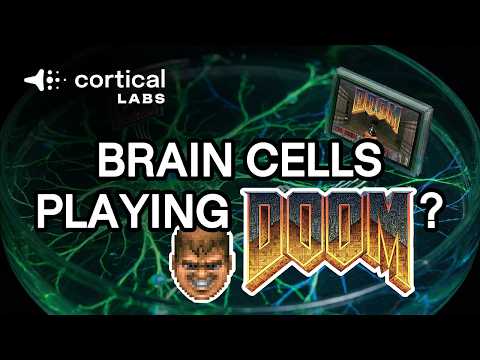
Esta noticia me parece muy importante. 200.000 neuronas humanas cultivadas en laboratorio jugando al Doom de 1993. No una red neuronal artificial. No un LLM. Neuronas de verdad, creadas a partir de células de piel o sangre de donantes adultos, creciendo sobre un chip de silicio dentro de una máquina que cabe en un escritorio. Cortical Labs (@CorticalLabs), una startup australiana, acaba de publicar el vídeo y el código en GitHub (youtube.com/watch?v=yRV8fS…). Su ordenador biológico CL1 (unos 35.000 dólares la unidad) tiene un sistema de soporte vital interno que mantiene las neuronas vivas hasta seis meses. Temperatura, filtración de residuos, mezcla de gases, circulación. Todo dentro de la caja. Un acuario para cerebros en miniatura, si quieres verlo así. La historia viene de lejos. En 2022, con su prototipo DishBrain, ya enseñaron a 800.000 neuronas a jugar al Pong. Las neuronas aprendieron en unos cinco minutos. Un algoritmo estándar de deep reinforcement learning tardaba unos 90 minutos en lo mismo. Eso ya fue un hito. Pero Internet pidió lo que ultimamente siempre pide: "¿Puede correr Doom?" Pues sí. Puede. Ahora la cosa se pone interesante de verdad. Doom es un juego en 3D con laberintos, enemigos, armas, navegación espacial. Varios órdenes de magnitud más complejo que mover una paleta en el Pong. Para conseguirlo, el investigador independiente Sean Cole usó la API de Cortical Labs y lo montó en menos de una semana (cuando el Pong llevó más de un año de desarrollo). El sistema traduce la señal de vídeo del juego en patrones de estimulación eléctrica. Las neuronas "sienten" lo que pasa en la pantalla. Si disparan en un patrón concreto, el marine dispara. Si disparan en otro, se mueve a la derecha. Aprendizaje adaptativo en tiempo real, con latencia por debajo del milisegundo. Esto ya no es Pong. Esto es otra cosa bastante mas seria y compleja. Y aunque el hype con esto puede ser tremendo creo que también es importante leer la letra pequeña. El propio Sean Cole, en la documentación del repositorio de GitHub, reconoce algo que casi nadie está mencionando: su decodificador (el software convencional que traduce los disparos neuronales en acciones del juego) tiende a convertirse en lo que él llama un "policy head". Es decir, el software de PyTorch que rodea a las neuronas puede estar aprendiendo a resolver el juego por su cuenta, esquivando a las propias neuronas. Cole incluso ha incluido modos de ablación en el código para que otros investigadores puedan probar si las células realmente importan o si el silicio está haciendo todo el trabajo en la sombra. Eso es honestidad científica de la buena. Y dice mucho del estado real del proyecto: lo que han resuelto de forma brillante es el problema de interfaz (conectar neuronas vivas con un entorno digital en tiempo real). Lo que todavía no han demostrado es que 200.000 neuronas humanas puedan ser las que realmente toman las decisiones en lugar de ir de pasajeras. Y aquí es donde, en mi opinión, esto se pone más interesante que el vídeo viral. Porque lo que Cortical Labs está construyendo no es un juguete para que Internet se ría. Están creando la primera plataforma comercial de computación biológica. Ya han vendido 115 unidades. Un rack de 30 CL1 consume entre 850 y 1.000 vatios, comparable a un servidor GPU de gama media. Y han abierto una nube (Cortical Cloud) para que cualquier desarrollador pueda desplegar código directamente sobre neuronas vivas sin tener un laboratorio. Las aplicaciones médicas son las que me parecen realmente brutales. Poder modelar enfermedades cerebrales, probar fármacos sobre neuronas humanas reales sin necesidad de modelos animales, estudiar cómo procesan información las neuronas de forma directa... Cortical Labs lo llama "Inteligencia Biológica Sintética" para diferenciarlo de la inteligencia artificial convencional. Y creo que el nombre es acertado. Igual que pasó con Internet a finales de los 90, donde mucha gente miraba las primeras webs y decía "¿para qué quiero yo esto?", puede que estemos viendo los primeros pasos de algo que dentro de unos años nos parezca obvio. Neuronas humanas cultivadas como componente de computación, aprendiendo de datasets minúsculos comparado con lo que necesita cualquier LLM, consumiendo una fracción de la energía. La pregunta es si esto será un complemento de la IA de silicio o algo completamente distinto. Me da que todavía es pronto para saberlo. Pero una cosa tengo clara: cuando la biología y la computación se mezclan a este nivel, las reglas del juego cambian. Y 200.000 neuronas jugando al Doom, por chapucero que sea el resultado hoy, es el tipo de demostración que dentro de 10 años miraremos como miramos ahora aquella primera web de Yahoo.
YouTube video
YouTube
Español
148
1.3K
4.7K
394.9K
Julian Goldie SEO
Julian Goldie SEO@JulianGoldieSEO·
Claude just officially killed OpenClaw. No more buggy, technical setups. No more expensive API token drains. Here’s the Claude Code play 👇 → Scheduled tasks for 24/7 automation → Remote control via iOS/Android apps → Auto-memory across every session → Native connectors for Slack and Gmail → Zero server or Docker config needed Claude now does natively what used to take hours to set up. The era of the non-technical AI agent is finally here. Want the full guide? DM me.
English
55
51
494
57.4K
MattRusin retweetledi
Milk Road AI
Milk Road AI@MilkRoadAI·
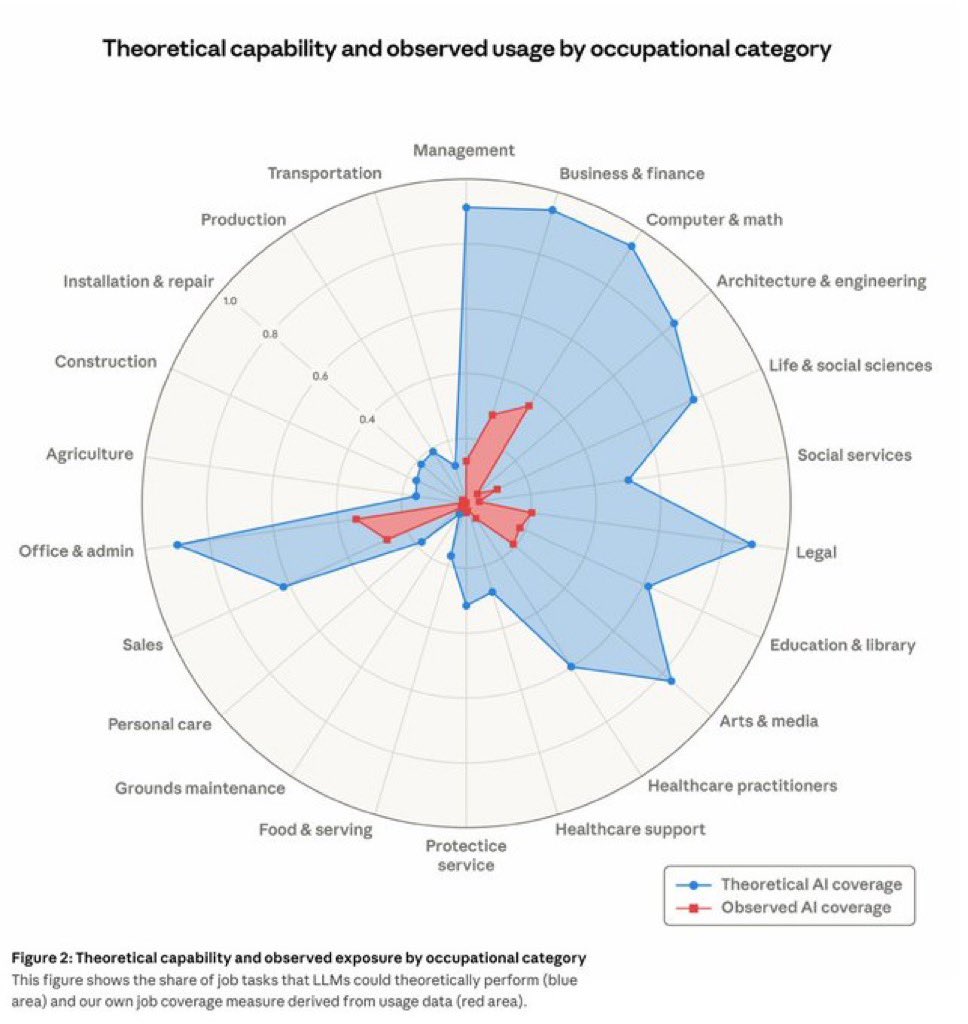
Anthropic just released the most IMPORTANT chart in the AI labor debate. This comes from the company that builds Claude using data from 2 million real conversations. Here’s what it shows. The blue area is every task AI could theoretically do right now. The red area is what people are actually using it for. The gap between them is enormous and that gap is your career runway. Computer programmers are already 75% covered. Customer service reps, data entry workers, financial analysts, they’re next. But here’s what no one is talking about. The mass layoffs haven’t really started. Unemployment for exposed workers hasn’t budged. So what’s actually happening? Companies are closing the front door, hiring for workers aged 22 to 25 in AI exposed jobs has dropped 14%. The most exposed workers aren’t factory workers, they’re college educated, higher earning. 49% of US jobs now have at least a quarter of their tasks inside AI’s reach. That’s up from 36% just one year ago. And the red area on that chart, the real world usage is still a fraction of what’s possible. Every month, it grows a bit. Anthropic built the scoreboard and most people haven’t looked at it yet.
Milk Road AI tweet media
English
272
1.1K
4.3K
654.4K
MattRusin retweetledi
PTSD 🍿
PTSD 🍿@ptsdshow·
Episode 2: SausageDaddy [CENSORED] See if you can spot what was too spicy for public consumption. (According to our very handsome and brilliant platform overlords)
English
56
48
181
67.7K
MattRusin retweetledi
Robin
Robin@xdNiBoR·
Here is the 20 minute talk from @Gwynne_Shotwell and @michaelnicollsx at the MWC26 with added subtitles. This talk includes a lot of new information about the future of Starlink Mobile. I highly recommend watching the full keynote!
English
28
182
1K
199.5K
MattRusin retweetledi
Nav Toor
Nav Toor@heynavtoor·
🚨 Someone just solved the biggest bottleneck in AI agents. And it's a 12MB binary. It's called Pinchtab. It gives any AI agent full browser control through a plain HTTP API. Not locked to a framework. Not tied to an SDK. Any agent, any language, even curl. No config. No setup. No dependencies. Just a single Go binary. Here's why every existing solution is broken: → OpenClaw's browser? Only works inside OpenClaw → Playwright MCP? Framework-locked → Browser Use? Coupled to its own stack Pinchtab is a standalone HTTP server. Your agent sends HTTP requests. That's it. Here's what this thing does: → Launches and manages its own Chrome instances → Exposes an accessibility-first DOM tree with stable element refs → Click, type, scroll, navigate. All via simple HTTP calls → Built-in stealth mode that bypasses bot detection on major sites → Persistent sessions. Log in once, stays logged in across restarts → Multi-instance orchestration with a real-time dashboard → Works headless or headed (human does 2FA, agent takes over) Here's the wildest part: A full page snapshot costs ~800 tokens with Pinchtab's /text endpoint. The same page via screenshots? ~10,000 tokens. That's 13x cheaper. On a 50-page monitoring task, you're paying $0.01 instead of $0.30. It even has smart diff mode. Only returns what changed since the last snapshot. Your agent stops re-reading the entire page every single call. 1.6K GitHub stars. 478 commits. 15 releases. Actively maintained. 100% Open Source. MIT License.
Nav Toor tweet media
English
180
512
5.2K
363.4K
MattRusin retweetledi
Don Winslow
Don Winslow@donwinslow·
There are different ways to deal with problems.
English
584
4.3K
21.7K
1.7M
MattRusin retweetledi
Curtis Houck
Curtis Houck@CurtisHouck·
Incredible images from Los Angeles on the 'CBS Evening News' with Carter Evans speaking to Iranian Americans -- some in tears -- speaking about what it means for the U.S. and Israel to have decapitated the Ayatollah and his regime
English
14
317
1.8K
41K
MattRusin retweetledi
Skywatch Signal
Skywatch Signal@UAPWatchers·
🚨Dr. David Sinclair's, lab reversed biological age in animals by 50 to 75% in six weeks The FDA has just cleared the first human trial for next month. He describes the human body as a computer that can be rebooted.
English
582
2.3K
10.7K
765.7K
MattRusin retweetledi
sim | シム
sim | シム@simscircuit·
Did not expect a question that starts out 'Do you think before you speak?' to go so well. A+ question from Charlotte Harpur A++ response from Eileen Gu.
English
1.4K
22.4K
154.8K
12.6M
MattRusin retweetledi
Brian Roemmele
Brian Roemmele@BrianRoemmele·
This is monumental.
English
191
2.1K
6.5K
745K
MattRusin retweetledi
truthache
truthache@truthache68·
The highest form of intelligence isn't logic, IQ, EQ, or logic—it's your ability to think about your own thinking. Think about it. “This isn’t some kind of mindset wacko wacko fluff.” Do you ever use this on yourself? 🧠🤔
English
183
2.2K
8.1K
170.9K
MattRusin retweetledi
Khilesh Gautam
Khilesh Gautam@KhileshGautam6·
Make sure you follow @KhileshGautam6 so I can DM you the link directly. Comment “invideo” and I’ll send you the link. Here’s how to make money starting from $0 using @invideo.io and YouTube 🚀 No fake promises ❌ — this isn’t a get-rich-quick trick. It requires consistency and smart use of AI tools, but the opportunity is real 💯 Ready? Comment invideo below 👇 #aitools #invideo #aigeneration #socialmediamarketing
English
268
284
1.3K
18.9K
MattRusin retweetledi
Jamie Pine
Jamie Pine@jamiepine·
This is my take on the perfect AI assistant. A Rust-based agentic operating system designed to scale for large Slack and Discord communities. The channel is the ambassador to the human. Branches think. Workers execute. Nothing ever blocks. Meet Spacebot 🟣 The biggest issue with OpenClaw is when it's doing work, it can't talk to you. Spacebot's architecture fixes this by design the conversation layer never touches tools. It delegates thinking to branches and heavy tasks to workers, so it's always responsive even with 100 people talking at once. Dump your memory files, notes, documents and chat histories into a folder — Spacebot turns them into structured memories automatically. Eight typed memory categories, graph associations, hybrid search. Not markdown files. Not vibes in a vector database. Built-in @OpenCode workers for deep coding sessions. Browser automation. Brave web search. Cron jobs. A skill system compatible with your existing OpenClaw skills. And a gorgeous control UI at spacebot.sh. The cortex oversees the whole system — auditing memories, actioning goals and todos. You teach your Spacebot by talking to it. Structure and speed over config files and markdown. Self-hosting is a single Rust binary. Or one-click cloud deploy at spacebot.sh. This is for teams, communities, and personal assistants. It will blow you away. ⭐️ github.com/spacedriveapp/…
English
126
137
1.6K
160.8K
MattRusin retweetledi
The AI Doc
The AI Doc@theaidocfilm·
"The most urgent film of our time." THE AI DOC: OR HOW I BECAME AN APOCALOPTIMIST is only in theaters March 27. Watch the trailer now.
English
419
2.2K
12.5K
6.5M