
Matthew Cooney retweetledi
Matthew Cooney
24.1K posts

Matthew Cooney
@MatthewCooney
Tech Product & Program Pro / #TEDx, #LiveWorx, #INBOUND, and keynote speaker / VRARA Chapter President, @thevraraBOS / Optimist / Tweets=mine / Bacon Number: 2
Boston/Cambridge Katılım Haziran 2009
4.8K Takip Edilen3.8K Takipçiler

Matthew Cooney retweetledi

there’s a classically trained opera baritone currently working at a Chrysler dealership in Cocoa, Florida and he makes advertisements for the cars in the style of different arias and I just had to share that with everybody because he’s my favorite person in the world rn
English
Matthew Cooney retweetledi

That fresh smell after rain is called petrichor.
When raindrops hit dry soil, they release plant oils and geosmin from bacteria, creating that rich, earthy scent.
English
Matthew Cooney retweetledi

This teacher had her 3rd grade students play the 1992 version of Oregon Trail. Do you remember playing that video game?
English
I can’t imagine how many other people find this riveting as well
Testify, @SugarJones
Knight World@KnightWorld
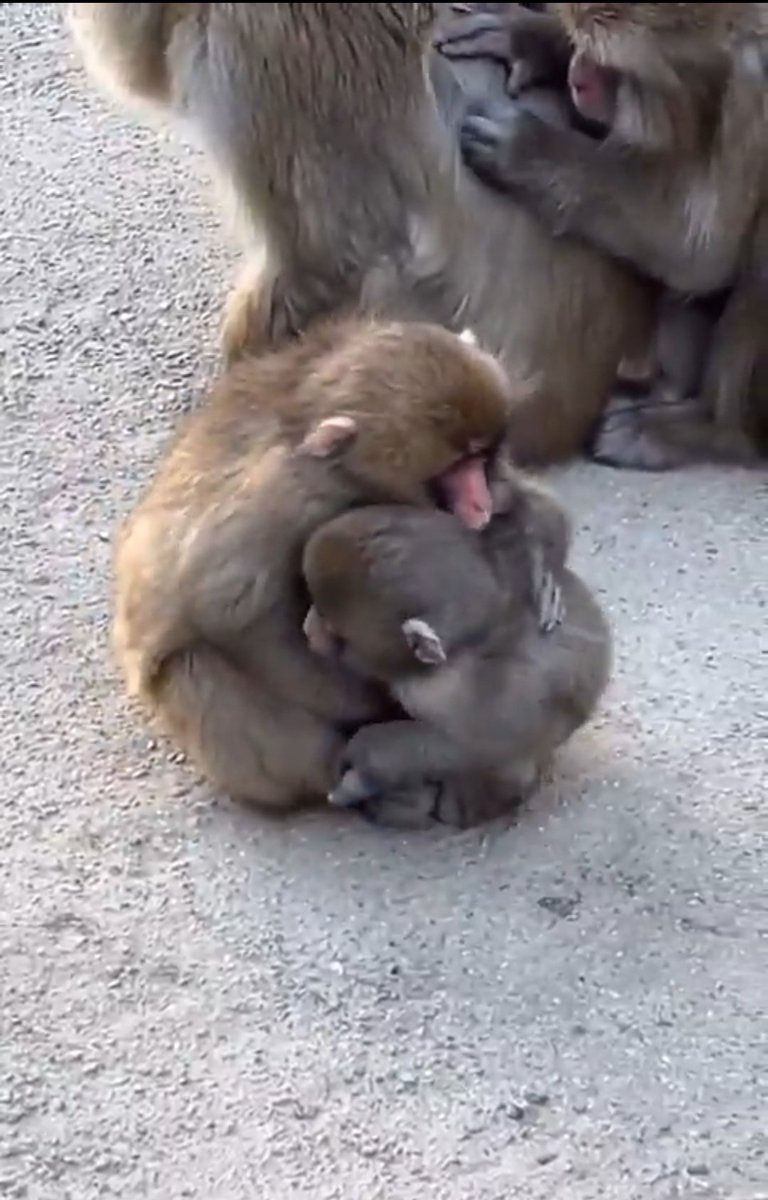
The big monkey did what we all wanted to do and gave Punch a huge hug.
English
Matthew Cooney retweetledi

Schrödinger’s color theory finally completed after 100 years sciencedaily.com/releases/2026/…
English
Matthew Cooney retweetledi

BREAKING NEWS
Little Punch stood up for himself against the monkey that had been bullying him.
English
Matthew Cooney retweetledi

BREAKING –
Today was a great day for little Punch
Punch found some new friends and got along with them at the zoo. He looked very happy

English
Matthew Cooney retweetledi
Matthew Cooney retweetledi

The math on this project should mass-humble every AI lab on the planet.
1 cubic millimeter. One-millionth of a human brain. Harvard and Google spent 10 years mapping it. The imaging alone took 326 days. They sliced the tissue into 5,000 wafers each 30 nanometers thick, ran them through a $6 million electron microscope, then needed Google’s ML models to stitch the 3D reconstruction because no human team could process the output.
The result: 57,000 cells, 150 million synapses, 230 millimeters of blood vessels, compressed into 1.4 petabytes of raw data. For context, 1.4 petabytes is roughly 1.4 million gigabytes. From a speck smaller than a grain of rice.
Now scale that. The full human brain is one million times larger. Mapping the whole thing at this resolution would produce approximately 1.4 zettabytes of data. That’s roughly equal to all the data generated on Earth in a single year. The storage alone would cost an estimated $50 billion and require a 140-acre data center, which would make it the largest on the planet.
And they found things textbooks don’t contain. One neuron had over 5,000 connection points. Some axons had coiled themselves into tight whorls for completely unknown reasons. Pairs of cell clusters grew in mirror images of each other. Jeff Lichtman, the Harvard lead, said there’s “a chasm between what we already know and what we need to know.”
This is why the next step isn’t a human brain. It’s a mouse hippocampus, 10 cubic millimeters, over the next five years. Because even a mouse brain is 1,000x larger than what they just mapped, and the full mouse connectome is the proof of concept before anyone attempts the human one.
We’re building AI systems that loosely mimic neural networks while still unable to fully read the wiring diagram of a single cubic millimeter of the thing we’re trying to imitate. The original is 1.4 petabytes per millionth of its volume. Every AI model on Earth fits in a fraction of that.
The brain runs on 20 watts and fits in your skull. The data center required to merely describe one-millionth of it would span 140 acres.
All day Astronomy@forallcurious
🚨: Scientists mapped 1 mm³ of a human brain ─ less than a grain of rice ─ and a microscopic cosmos appeared.
English
Matthew Cooney retweetledi
That fresh smell after rain is called petrichor.
When raindrops hit dry soil, they release plant oils and geosmin from bacteria, creating that rich, earthy scent.
English
#USAhockey Never forget what they did to Doug Dorsey
Hunter Brody@Brodes81
The Captain 🫡 #USAHockey
English
Matthew Cooney retweetledi

This one actually made me pause.
Scientists built a robot made of liquid.
Not flexible.
Liquid.
It can split, merge, squeeze through tiny spaces, and then re-form.
When it breaks, it heals itself.
No motors.
No joints.
No rigid body.
I’ve spent years thinking about AI as the brain of machines.
This feels like the first glimpse of something else.
A body that does not have a fixed shape.
Today it’s millimeter-scale.
Tomorrow, it’s medicine moving through the body, or machines exploring places nothing solid can reach.
That thought excites me.
And honestly, it unsettles me too.
So here’s the question.
When machines no longer have a stable form, what does “control” even mean?
#AI #Robotics #SoftRobotics #Innovation #Technology #FutureOfWork
English
@BostonSatire With the collapse of Maye, Campbell, and the Offensive Line, Patriots fans can finally make amends for the franchise’s failures
English
Matthew Cooney retweetledi
The signal strength hitting Earth from Voyager 1 is less than one trillionth of a watt.
To put that in perspective, your phone’s WiFi signal is roughly 100 billion times stronger, and it drops a connection walking between rooms.
NASA picks up Voyager’s whisper using arrays of 70-meter antennas, then reconstructs coherent data from it at 160 bits per second. That’s slower than a 1990s modem. Downloading a single photograph at that rate would take weeks.
The spacecraft itself runs on 8.8 kg of decaying plutonium-238 that generated 470 watts at launch in 1977. Today it produces roughly 200 watts, losing about 4 watts per year. NASA has been shutting down instruments one by one since the 1980s to keep the math working. They turned off the cosmic ray sensor just this year.
And here’s the part nobody’s talking about: there is exactly one antenna on Earth that can send commands to Voyager. Deep Space Station 43 in Canberra. It went offline for major upgrades from May 2025 through early 2026. During that window, if Voyager had a critical fault, the team would have had to wait months to respond.
A 48-year-old spacecraft built on 1970s computing, running on a plutonium battery that’s lost 60% of its output, transmitting at a power level that barely qualifies as existing, from a distance where light itself takes 23 hours to arrive. And a German observatory just casually picked up its carrier signal on a live stream.
The engineering margin NASA built into this mission was designed for 4 years to Saturn. Everything after that is borrowed time the engineers keep extending by doing math with 200 watts.
Curiosity@CuriosityonX
🚨: Voyager 1 just said Hello from interstellar space. That's 15.8 billion miles away
English
Matthew Cooney retweetledi

Japan has unveiled grocery bags made from potato starch that disappear safely in water instead of lingering like plastic.
These bags are sturdy enough for everyday shopping, yet they dissolve naturally without leaving harmful residue behind.
Unlike conventional plastic, they don’t survive for centuries in the ocean or threaten marine ecosystems.
Even in cold water, the material breaks down completely, and if swallowed by fish or turtles, it dissolves without causing damage.
With millions of tons of plastic entering the seas each year, this kind of innovation could significantly cut pollution.
Japan’s solution shows how simple, practical design can make sustainable habits part of daily life.
#environment #plasticfree #sustainability #innovation

English