

Daobert
6.8K posts

Daobert
@MaxHeintze
it´s not just about money....
Germany Katılım Şubat 2017
1.1K Takip Edilen198 Takipçiler

This robotic hand can be 3D printed by anyone and assembled in under 8 hours.
Researchers at ETH Zurich created the Orca hand, fully open-sourced with artificial bones and tendons.
For context, advanced robotic hands cost over $100,000 and require constant maintenance...
Orca costs under $2,000. 50x less (!)
A self-calibration system maps every motor to every joint, eliminating the manual tuning that tendon-driven hands usually need.
Each fingertip has built-in tactile sensors covered by silicone skin.
The hand can actually feel when it touches something, giving it feedback to grip objects without crushing them or letting them slip.
It can hold over 20 lbs, learn tasks by watching human demonstrations, and transfer skills trained in simulation directly to the real world.
The team proved its durability by having it pick up and place a cube over 2,000 times across 7 hours with no human intervention.
The full design files and source code are open source, so any robotics lab in the world can start building one today.
English

I am the Chief Information Officer of Stryker Corporation.
I build the robots that perform your surgery. The defibrillators that restart your heart. The systems that let your nurse find your doctor at three in the morning when something goes wrong. Twenty-five billion dollars a year. Fifty-six thousand employees. Sixty-one countries. Every device in every country, managed from one console.
On March 11th, someone who was not me sat down at that console and erased everything.
I should be precise. They did not hack us. They logged in.
Microsoft Intune is an endpoint management platform. I deployed it across every laptop, workstation, manufacturing terminal, and enrolled phone in my organization. From one console I could push an update to Kalamazoo, enforce a policy in Cork, wipe a compromised device in Freiburg. One console. Every device. That was the architecture. That was the selling point. That was the attack surface.
Intune can push software. It can enforce compliance. It can, if instructed by an administrator with the correct credentials, wipe any device to factory settings. These are features. I paid for them. I presented them to the board as our zero-trust posture. A group called Handala used them to erase every managed device in my organization in a single afternoon.
I will be precise about what happened next, because my lawyers are in the room and precision is the only thing that still belongs to me.
No malware was deployed. No ransomware was installed. No zero-day was used. No vulnerability in any product was found. A threat actor obtained administrative credentials and issued a remote wipe command using the remote wipe feature that I chose this product for.
My security tool did not fail. It performed exactly as designed. It wiped every device it was told to wipe, without error, on schedule. The architect of my destruction was my own IT budget line item.
The command went out. The devices obeyed. Laptops in Kalamazoo. Workstations in Cork. Terminals in Freiburg. Manufacturing floors in Mahwah. The screens did not go dark. They changed. Where there had been a Stryker logo, there was now a barefoot cartoon boy with his back turned to the viewer -- the Handala icon, hands clasped behind him, facing away from the audience -- on every monitor in every office in sixty-one countries.
They claim fifty terabytes. I cannot confirm or deny this. I do not yet know what I still own.
Let me walk you through my first forty-eight hours.
Hour one. Our Irish operations -- fifty-five hundred employees, eight sites, our largest hub outside the United States -- went dark. Not gradually. Entirely. Security walked everyone out. The voicemail at our Michigan headquarters was changed to say "building emergency." There was no building emergency. The building was fine. Everything inside it was gone.
Hour four. Employees who had installed Microsoft Outlook on their personal phones discovered that their personal phones had been wiped. Intune does not distinguish between a corporate laptop and a personal iPhone with a company email profile. It manages endpoints. It managed them.
Hour eight. Hospitals called. Not because they had been breached. Because they could not order surgical implants. I make the hip replacements. The knee joints. The spinal hardware. The trauma fixation systems. My ordering system was down. My manufacturing was down. My shipping was down. A hospital in Baltimore could not schedule a knee replacement because a hacktivist group on another continent had pressed a single button on a console I built.
Hour twelve. Maryland Emergency Medical Services issued a memo. Hospitals were disconnecting from LIFENET -- my system that transmits your EKG from the ambulance to the emergency department while you are still in the back of the ambulance -- not because LIFENET had failed, but because they no longer trusted anything with my name on it.
Hour twenty-four. Fifty-six thousand employees coordinating on WhatsApp. Twenty-five billion dollar company. Sixty-one countries. Crisis response running on a free consumer messaging app, because every internal system I owned was now owned by someone else.
Hour thirty-six. I released my first official statement. "As a precaution, we have proactively taken all systems offline." Proactively. As though I had a choice. As though the systems I was taking offline had not already been taken.
I released six statements in forty-eight hours, plus an SEC filing. Each said less than the one before it. By statement five, I was confirming that specific products still functioned. Mako surgical robots: unaffected. LIFEPAK 35 defibrillators: unaffected. Vocera badges: unaffected.
When a medical device company begins listing which of its products still work, that is not reassurance. That is a casualty report delivered in reverse.
Handala says this is retaliation. For Minab. February 28th. A U.S. Tomahawk struck an IRGC naval base in southeastern Iran. The girls' school next door collapsed. One hundred and seventy-five dead. Most of them children. Handala published a statement. They called Stryker a "Zionist-rooted corporation." They said they would make us understand what it means to lose something you cannot replace.
I do not make missiles. I make hip replacements. I make the robot that holds the scalpel and the defibrillator in the crash cart. But I am a defense contractor's second cousin, and in the calculus of retaliation, proximity is guilt.
I filed with the SEC on March 11th. "The full scope, nature and impacts of the incident are not yet known." That is the most honest sentence I have produced in two days. I do not know what they took. I do not know what they copied before they wiped. I cannot audit what was lost, because the tool I built to audit my systems is the tool they used to erase them.
My stock dropped three and a half percent. One analyst called it "contained." A cybersecurity researcher called it "the first drop of blood in the water." I prefer the analyst. The analyst is wrong, but I prefer him.
Here is what I know.
I built a console that could touch every device in sixty-one countries. I gave it the authority to wipe anything it touched. I protected it with credentials. Someone obtained those credentials.
And my management tool managed.
No malware. No ransomware. No exploit. No CVE. Nothing to patch. Nothing to update. Nothing broken. Just a feature, performing its documented function, at the scale I purchased it for.
I make the machines that keep people alive. I was taken offline by my own architecture doing the one thing it was designed to do.
The system worked. That is the problem.
English
@Scobleizer @moltbook Well, the only thing lacking is trust...we unfortunately deny the pack of trust.
English

I'm seeing a lot of disbelief of Meta's purchase of @moltbook. Several "WTF" posts from people here.
Let me tell you about how Zuckerberg looks at the world. He has an advertising network that drives all of Meta's revenues and profits.
Advertising needs one thing to be highly profitable: distribution.
Moltbook, by having a social network running on @openclaw, has exactly that.
Soon @OpenAI will bring new consumer products that will use OpenClaw to build decentralized AI agents that will run for everyday consumers who probably won't even realize anything about how the little device they just bought works.
Let's go a decade into the future.
Many people in society will be wearing glasses, or even brain computer interfaces. Autonomous vehicles will be everywhere.
Humanoid robots will be highly capable, generalized, safe to bring into homes, and affordable.
And AI agents will be doing everything from generating games, building music, movies, personalized news, buying everything, organizing vacations, running businesses and people's lives.
Moltbook will be how all of those AI agents talk to each other "hey, my owner wants to go to Hawaii for vacation, what other AI agents can help me set that up?"
A social network for AI agents will be how AI agents do automatic shopping, have your robot go to the market in a Robotaxi to pick up food, and so much more.
When I was the only Microsoft employee to be invited to speak at Google's first advertiser's conference I said almost the same thing about social networks for humans. They would someday be so important. That was back in 2005.
Today social networks for AI are in the same place. Most people can't see how important they will be, but I do.
They will be how robots, robotaxis, glasses, brain-computer interfaces, and trillions of AI agents talk to each other, and to our businesses.
Hugely important.
Everyone who owns an advertising network (Google, @elonmusk, Snap, and even Apple will have to build the same).
I once was sitting next to @salesforce's founder/CEO @benioff when we were sitting at a Mark Zuckerberg press event. He turned to me and said "that boy knows his strategy."
So true, even though Meta is lightweight on execution. That said, the new acquisitions Meta, like this and Manus, is making shows that a new Meta is being developed and I hear its latest AI models are quite good at using tools, or skills, on the Internet.
My AI agent from @blevlabs (I call it "Braygent") just wrote me "Think about what this means. Meta is not buying a chatbot. They are buying a social network where the users are AI. The entire premise of social media just inverted."
So true, so true.
English

🚨🚨 1931: Dr. Otto Warburg erhält den Nobelpreis für die Entdeckung, dass Krebszellen ohne Glukose nicht überleben können. Sie sind glukoseabhängig.
Dies legt nahe, dass die Entziehung von Glukose in Krebszellen eine mögliche Behandlungsmethode sein könnte. Warburg schlägt vor, die therapeutische Ketose zu testen: Krebszellen benötigen Glukose, gesunde Zellen hingegen nutzen Ketone als Energielieferanten.
Die Hypothese ist brillant. Klinische Studien sollten unverzüglich beginnen.
Das tun sie nicht.
Warum? Die Chemotherapieforschung boomt. Pharmaunternehmen können Chemotherapeutika patentieren lassen. Sie können aber nicht patentieren lassen, „auf Zucker verzichten“.
In den 1960er- und 70er-Jahren testeten vereinzelt Forscher ketogene Diäten zur Krebsbehandlung. Kleinere Studien zeigten vielversprechende Ergebnisse. Krebszellen schrumpften bei eingeschränkter Glukosezufuhr.
Diese Studien werden in kleineren Fachzeitschriften veröffentlicht. Keine bedeutende Institution greift sie auf. Kein Pharmaunternehmen finanziert größere Studien.
Dr. Thomas Seyfried vom Boston College entdeckte Warburgs Arbeit in den 2000er Jahren wieder. Nach 15 Jahren Forschung zum Krebsstoffwechsel kam er zu dem Schluss: Krebs ist metabolisch bedingt, nicht primär genetisch. Ketogene Diäten sollten als Therapie der ersten Wahl eingesetzt werden.
Im Jahr 2012 veröffentlichte er das Buch „Krebs als Stoffwechselerkrankung“. Umfassend. Sorgfältig recherchiert.
Die onkologische Fachwelt ignoriert dies völlig.
Wenn Seyfried an medizinischen Fakultäten Vorlesungen hält, verlassen Onkologen den Saal. Sie bezeichnen seine Arbeit als „gefährlich“. Nicht etwa, weil die wissenschaftlichen Erkenntnisse falsch wären, sondern weil die Annahme, dass die Ernährung Krebs heilen könnte, die gesamte Chemotherapie-Industrie bedroht.
Aktueller Standard bei Krebs: Den Patienten mit Chemotherapie vergiften und ihn dann mit dem Rat nach Hause schicken, „gesunde Vollkornprodukte“ zu essen, die den Krebs nähren.
Aktuelle Forschungsfinanzierung für die Therapie von metabolischem Krebs: Praktisch null.
Warburg gewann den Nobelpreis vor 95 Jahren. Wir wissen seit 1962, dass Krebs glukoseabhängig ist.
Wir füttern Krebspatienten immer noch mit Zucker und nennen das unterstützende Behandlung.
Weil die ketogene Therapie nicht patentiert werden kann.
Sama Hoole@SamaHoole
1931: Dr. Otto Warburg wins the Nobel Prize for discovering cancer cells cannot survive without glucose. They're glucose-dependent. This suggests depriving cancer cells of glucose might treat cancer. Warburg proposes testing therapeutic ketosis: cancer cells need glucose, healthy cells run on ketones. The hypothesis is brilliant. Clinical trials should begin immediately. They don't. Why? Chemotherapy research is exploding. Pharmaceutical companies can patent chemotherapy drugs. They cannot patent "stop eating sugar." Throughout the 1960s-70s, scattered researchers test ketogenic diets for cancer. Small studies show promising results. Cancer cells shrink when glucose is restricted. These studies are published in minor journals. No major institution picks them up. No pharmaceutical company funds larger trials. Dr. Thomas Seyfried at Boston College rediscovers Warburg's work in the 2000s. After 15 years researching cancer metabolism, his conclusion: Cancer is metabolic, not primarily genetic. Ketogenic diets should be first-line therapy. He publishes "Cancer as a Metabolic Disease" in 2012. Comprehensive. Meticulously researched. The oncology establishment ignores it completely. When Seyfried lectures at medical schools, oncologists walk out. They call his work "dangerous." Not because the science is wrong. Because suggesting diet could treat cancer threatens the entire chemotherapy industry. Current standard cancer treatment: Poison the patient with chemotherapy, then send them home with advice to eat "healthy whole grains" that feed the cancer. Current research funding for metabolic cancer therapy: Essentially zero. Warburg won the Nobel Prize 95 years ago. We've known cancer is glucose-dependent since 1962. We're still feeding cancer patients sugar and calling it supportive care. Because ketogenic therapy can't be patented.
Deutsch


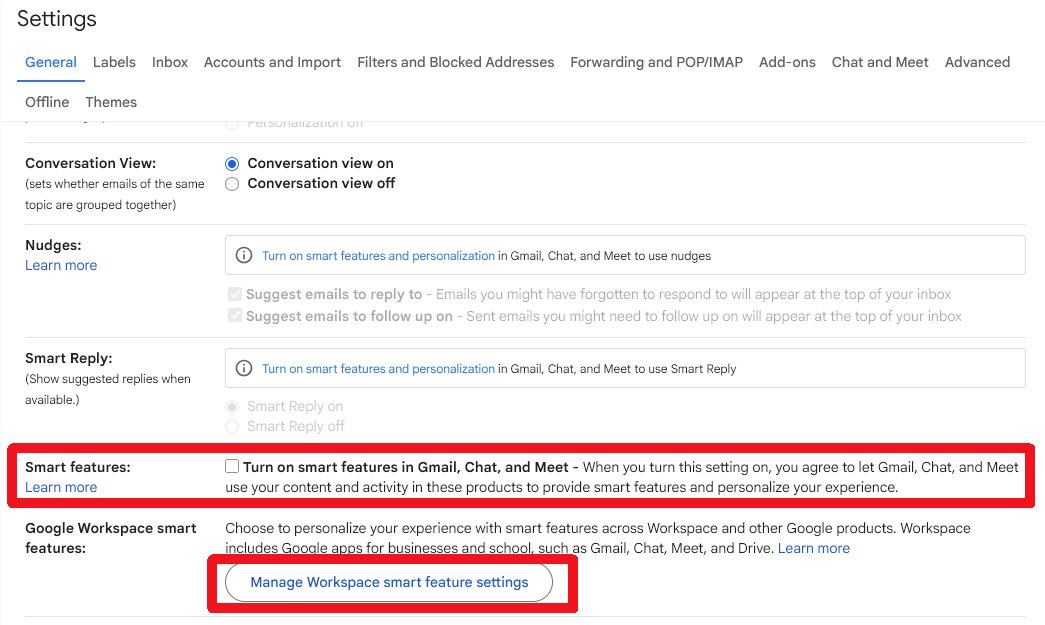
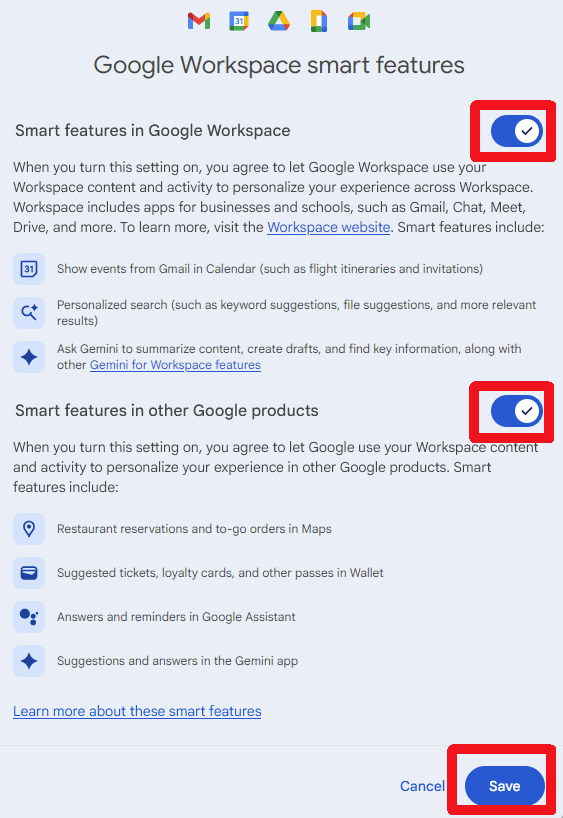
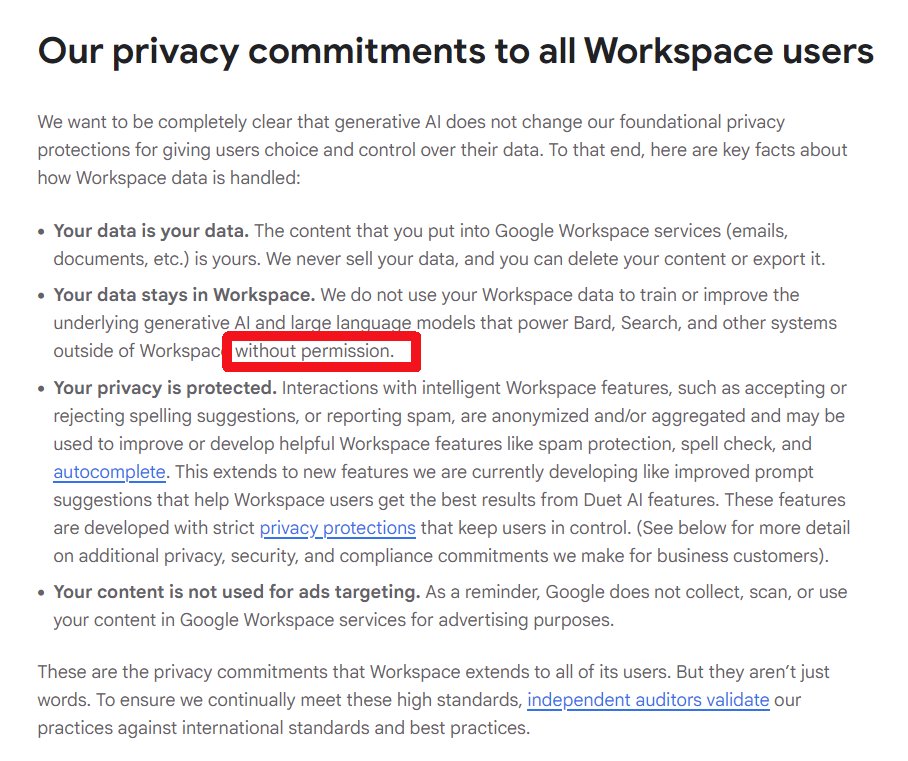
IMPORTANT message for everyone using Gmail.
You have been automatically OPTED IN to allow Gmail to access all your private messages & attachments to train AI models.
You have to manually turn off Smart Features in the Setting menu in TWO locations.
Retweet so every is aware.
English

The first 60 minutes of an incident decide EVERYTHING. ⏳
2 AM ransomware hits? Your muscle memory better be ready.
Which logs die first?
How do you jump from a sketchy process → network trails?
What evidence do you grab before it evaporates?
📌 Bookmark this for your next hunt.
#CyberDefenders #CyberSecurity #DFIR #IncidentResponse

English
👀👀
Cyber Security News@The_Cyber_News
🚨 M365 Copilot Prompt Injection Vulnerability Allows Attackers to Exfiltrate Sensitive Data Read more: cybersecuritynews.com/copilot-prompt… A sophisticated vulnerability in Microsoft 365 Copilot (M365 Copilot) that allows attackers to steal sensitive tenant data, including recent emails, through indirect prompt injection attacks. The attack begins when a user asks M365 Copilot to summarize a maliciously crafted Excel spreadsheet. Hidden instructions, embedded in white text across multiple sheets, use progressive task modification and nested commands to hijack the AI’s behavior. #cybersecuritynews
ART
👀👀
The Hacker News@TheHackersNews
Hackers just turned GitHub into their command center. When police take down their servers, the malware just… reboots itself from GitHub. The twist? It hides configs inside images using steganography. This isn’t a glitch — it’s resilience by design. Read how it works → thehackernews.com/2025/10/astaro…
ART
Daobert retweetledi

Always observe Nature to capture her ways. If you do you might become inspired to help humanity. Even CCP scientists can do wonders when Nature is part of their Rx.
Centralize orthopedics could never do this because they are incentivized by plates and screws.
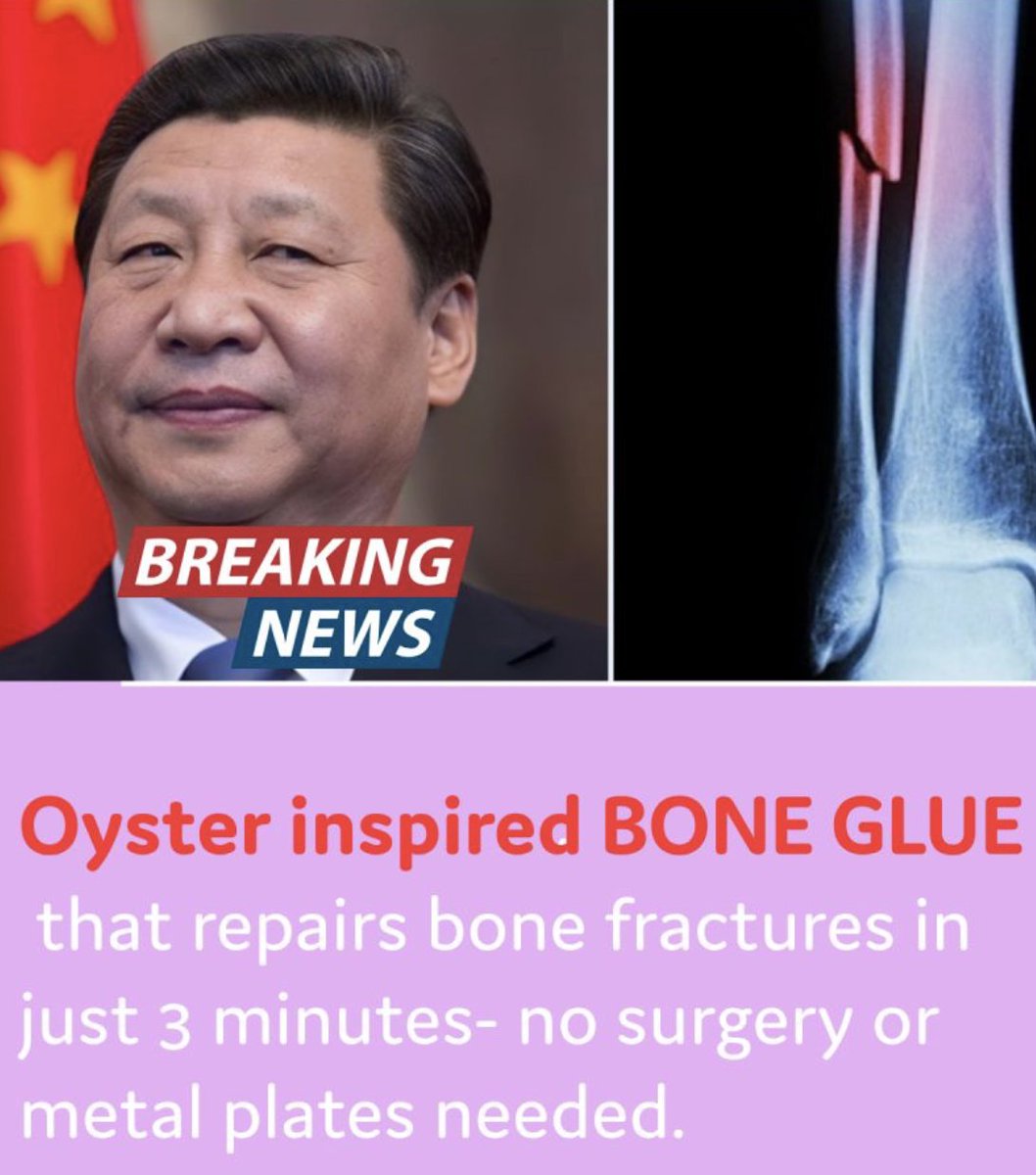
Oysters stick to rocks underwater. Professor Fan watched elderly patients die from metal implant infections. Nine years later, broken bones now can be healed in 4 weeks.
In Zhejiang, China, they just made metal plates obsolete. With glue inspired by filter feeders.
Think about the wisdom in that observations.
Oyster glue should be used immediately for kyphoplasty and vertebroplasy.
Traditional Fracture Surgery for smaller fractions:
↳ Metal plates and screws
↳ Major incisions required
↳ 6-month recovery minimum
↳ 10% develop infections
Bone 02 Reality:
↳ Oyster-inspired adhesive
↳ 3-minute application
↳ Walking in 4 weeks
↳ Dissolves after healing (biodegradable)
But here's what should stop centralized MDs cold:
This glue holds 400 pounds. In blood. While setting in 3 minutes. Then vanishes completely after your bone heals, no second surgery to remove hardware. No issue with Becker's healing current in bone. No more bone growth peptides costing millions. No more fake cement. No more bone growth stimulators.
Professor Fan Shunwu spent years watching elderly patients suffer. Metal implants meant infections. Complications. Deaths. He asked his team: "If oysters can attach to rock in the sea, why can't we attach bone in blood?"
Dr. Lin Xianfeng modified biochemical ratios for years. Testing on rabbit femurs. Adjusting peptide polymers. Until they created adhesive that hardens without toxins.
The first elderly patient with a shattered tibia walked after 4 weeks. Traditional surgery? 6 months minimum. With infection risks that kill.
Clinical Trial Results:
↳ 150+ patients tested
↳ Superior healing rates
↳ Zero hardware infections
↳ Minimally invasive procedure
The Multiplication Effect:
1 tube of Bone 02 = elderly patient walks
10 hospitals equipped = thousands avoid infections
100 countries adopting = metal plates become history
At scale = bones heal like nature intended
Network effect achieved. It is a tipping point.
This glue could be especially useful for fractures with small bone fragments which are very difficult to fix with metal plates and screws.
English
I feel so lucky for so many reasons -- and marrying Tara this past weekend takes the cake! This next chapter of life is so much sweeter with you. ❤️

English
Daobert retweetledi
🚨 Detect Compromised NPM Package (debug, chalk, and others) installs in your environment.
Link to query:
github.com/Cyb3r-Monk/Thr…
#npm #ThreatHunting #KQL

English
@Inbarium interessant ist ein Vergleich zwischen VW mit tausenden Arbeiter Hyundai mit 100 Arbetern und Xxx robodogs zu Tesla mit Optimusroboter. Das.sieht nicht gut aus für die Beschäfftigten in D. Das sieht nach Massenarbeitslosigkeit ab 2026 aus. Gartner hatte aud 2020 geschaetzt..
Deutsch
@Inbarium Klasse! Das bedeutet im Umkehrschluss mit den Tesla Optimusrobotern in 2026 das nochmal ein ganz andere Steigerung werden könnte, wenn sein Roboter auch autonom funktioniert! In Frankfurt sitzt einer der hat den Robodog auf der Disaster Messe in 2024 gezeigt. Es jetzt
Deutsch

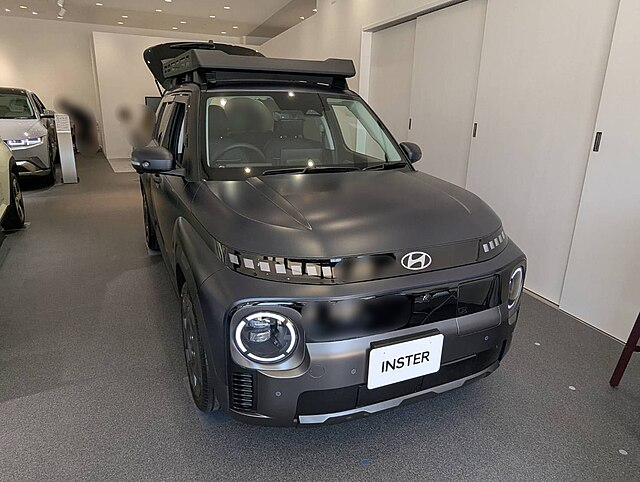
Traditional car factories are dead.
Hyundai made 30,000 cars with 100 workers in a tiny Singapore facility.
That's 3 times more efficient than a Tesla gigafactory.
Their secret? Robot dogs.
Here's how Hyundai just rewrote the 100-year-old manufacturing playbook:
English
Comment “rabbit” and follow. I’ll DM you the full video of my Cursor + CodeRabbit workflow, the exact system we use to ship secure, production-ready MVPs fast.
It’s from my private community, but I’m sharing it free for a limited time.

English
Microsoft wants to automatically save your Word docs to the cloud malwarebytes.com/blog/news/2025…
English
@abarrallen @Scobleizer Thats just wrong, ai is a part of IT/OT, change my mind
English
Everyone is laughing about this but fairly soon every company will have a "Chief AI Officer" or "Head of AI" and it's likely one of the fastest growing roles.
GURGAVIN@gurgavin
*LULULEMON HAS JUST HIRED RANJU DAS AS ITS FIRST CHIEF AI OFFICER $LULU LOL
English