Sabitlenmiş Tweet
Maxim.Thor
1.2K posts

Maxim.Thor retweetledi

Use swap.thorchain.org for memoless swaps
THORChain@THORChain
DID YOU KNOW? THORChain's memoless swaps let you use hardware wallets without connecting them to any interface. 🧠 Send native $BTC directly from your Ledger. Receive native $ETH back. Your device stays cold the entire time. No browser connection, no hot wallet exposure, complete self custody throughout. Security without compromise. 🔐 @Ledger @Trezor @unruggable_io @Tangem
English
Maxim.Thor retweetledi

RT @THORChain: This is exactly the kind of nuanced analysis the industry needs @sealaunch .
Missing from the comparison: @THORChain
📈$1.…
English

@sealaunch_ @Dune Please add @THORChain
Why you don’t pay attention to this monster in DeFi? I don’t get it
English

There’s been a lot of discussion lately around how top-line metrics are used to characterise chain usage and, more broadly, to define “who is leading.”
From a DEX activity perspective, the most common comparisons rely on trading volume, active addresses, or number of trades. The problem is that most of these metrics are relatively easy to inflate or game, especially once the industry treats them as benchmark for “real” activity.
A more robust approach is to add context to these metrics and understand what they represent as a share of total activity. That additional layer helps distinguish between different types of usage rather than collapsing everything into a single leaderboard.
Below is an example of how top-line DEX metrics can be categorised once context is added.
From a pure top-line perspective, most DEX volume occurs on Solana, followed by BNB Chain, Ethereum, Base and Arbitrum. But this view alone hides important structural differences.
Let’s break it down using a few simple, interpretable dimensions.
Source: dune.com/sealaunch/dex-…
HFT (High Frequency Trading) Volume as a % of Total Volume
This metric measures how much volume is attributable to addresses executing a very high number of transactions (high frequency), defined here as more than 1k transactions per day (roughly one transaction per minute during waking hours).
Among the top chains by volume, Solana stands out: ~85% of its DEX volume comes from HFT-style activity. On most L2s, this figure is closer to ~50%.
What does this mean? It depends. A high share of HFT activity typically indicates non-human, automated trading rather than "normal" user activity. Market makers and other professional trading strategies naturally fall into this category. However, it also signals a fundamentally different usage profile compared to chains where volume is more broadly distributed across lower-frequency traders.
Blue-Chip Volume Share
Blue-chip volume is defined as the USD volume of trades where both the bought and sold assets belong to a predefined blue-chip set (e.g. WETH, USDC, USDT, and major wrapped assets), divided by total chain DEX volume.
Under this lens, Arbitrum and Base rank substantially higher than BNB Chain and Solana, indicating a larger share of volume concentrated in core, highly liquid assets rather than long-tail tokens.
Volume Concentration Among Top Addresses
Volume concentration measures how dominant the largest traders are. Addresses are ranked by 30-day DEX volume per chain. The volume of the top 100 traders is summed and divided by total chain volume.
Ethereum shows the highest concentration, with roughly 70% of volume coming from the top 100 addresses. Base and Solana, by contrast, show similar concentration levels around ~38%.
This highlights how top-line volume can reflect very different market structures depending on how concentrated activity is among a small set of participants.
Low-Value Transactions
Low-value transactions measure the share of trades below $0.10 in size, divided by total trades on the chain.
Among the top chains, Base has the highest share at around 14%, while the others remain below 10%. Historically, we have observed cases where chains report a high number of transacting addresses while the value transacted remains very low, a pattern that can suggest some degree of metric inflation rather than meaningful economic activity.
Why This Matters
The goal of this type of analysis is not to declare winners, but to better categorise usage and identify when a specific pattern falls outside normal parameters. In some cases, this may point to metric inflation via bots. In others, it may reflect market-maker activity or the emergence of new use cases.
The crypto industry is highly tribal and neutral analysis is often replaced by headline-driven narratives.
Adding context around metrics would help move the space away from a “single-metric, winner-takes-all” mindset.
As long as one metric defines leadership, the incentive will always be to optimise for inflating that metric rather than understanding what it actually represents.
While the metrics outlined above are intentionally simple and easy to interpret, significantly more contextual layers will be needed to properly characterise industry activity over time.

English

Let’s make it happen Chads
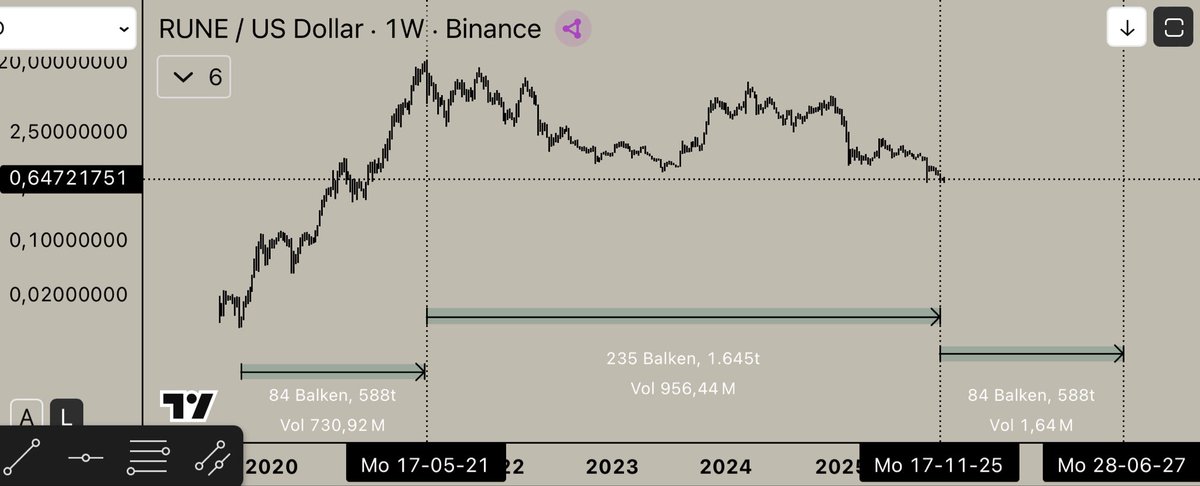
Let’s pump $Rune 🌊🌊
Lucky@LLuciano_BTC
In my view, $RUNE will be the lead runner in the coming quarter.
English
Maxim.Thor retweetledi
Trade swaps are affiliate free for @THORChain and @Maya_Protocol !
Christmas came early 🎅
⬇️ Download at asgardex.com and enjoy
English
Maxim.Thor retweetledi

France's BPCE
$BTC, $ETH, $USDC trading with bank custody
THORChain
$BTC 🔁 $ETH 🔁 $USDC swaps with self-custody
One word can change a lot. 🧠
Swap permissionlessly and without KYC
👉 swap.thorchain.org
Watcher.Guru@WatcherGuru
JUST IN: 🇫🇷 France's third-largest bank 'BPCE' to allow customers to buy and sell Bitcoin, ETH, SOL, and USDC.
English

🚨 WHALE ROTATION ACCELERATES
A large whale just swapped:
🔹 502.8 $BTC → 14,500 $ETH
🔹 ~$45.24M
This wasn’t a one-off.
The same wallet has now converted:
🔹 1,969 $BTC
🔹 into 58,149 $ETH
That’s not panic selling.
That’s capital rotation.
When whales rotate,
they’re positioning for relative outperformance.
Watch $ETH 👀

English
Maxim.Thor retweetledi

No points programs.
No unsustainable incentives.
No fake volume.
THORChain doesn’t need any of that. We build and let the product speak. Real income from real usage. ⚡️
Data source: @DefiLlama

English

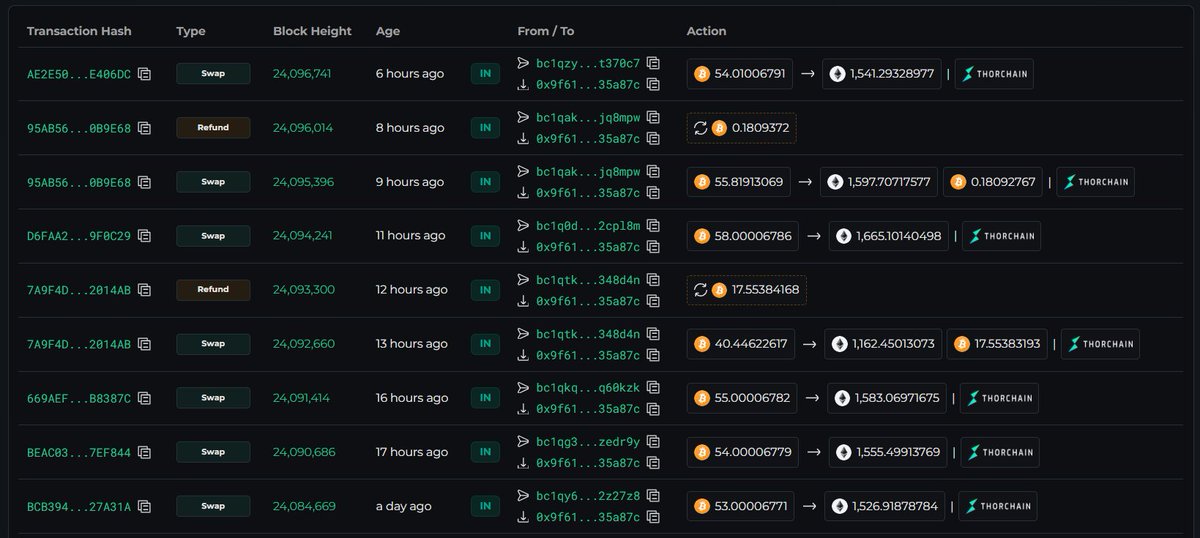
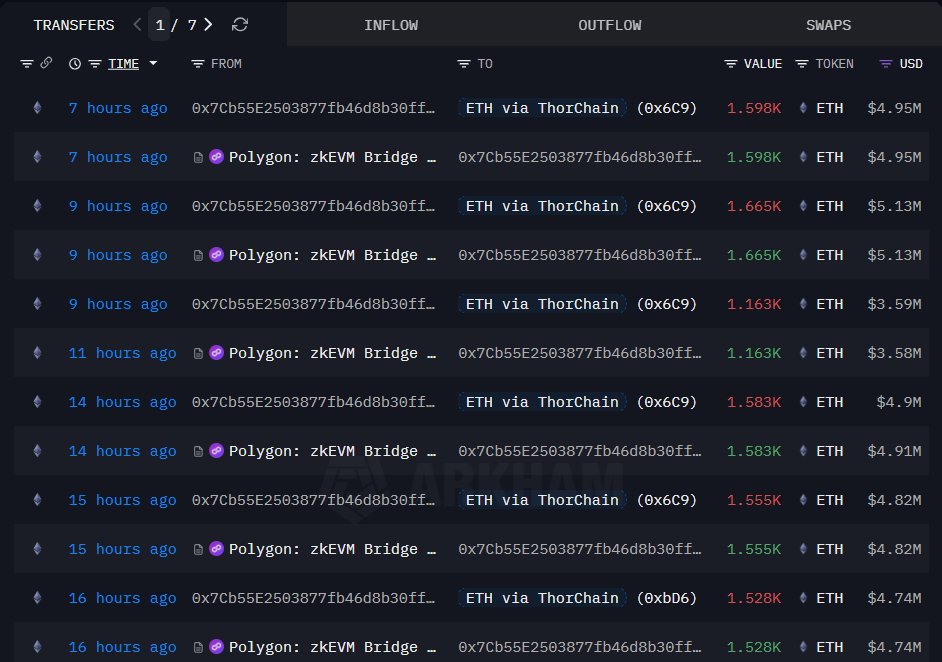
A whale has swapped 2,289 $BTC, worth $204.35M, to buy 67,254 $ETH over the past 20 days through #ThorChain.
thorchain.net/address/0x9F61…


English

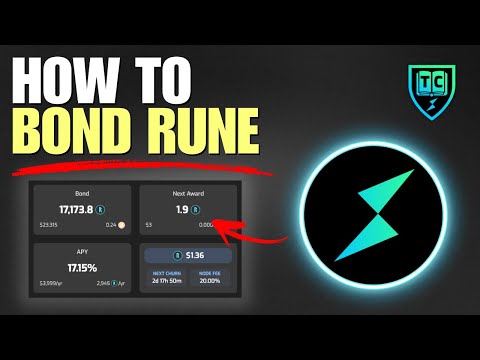
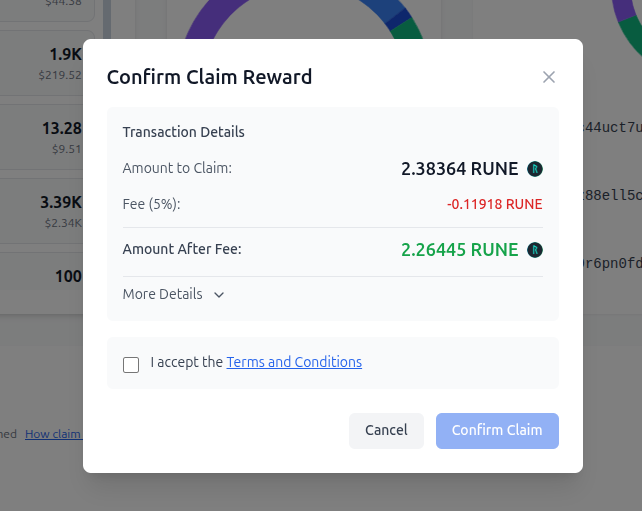
Here is the link how to bond your $Rune
youtu.be/5Koif0WdK3A?si…
If you have any questions write @RUNEBondApp

YouTube
English

200M Volume day for @THORChain in a “bear market” phase is amazing. There is no second best. BPs are printing $Rune.
By bonding 10,000 Rune, you earn about $150–$200 worth of Rune per month for doing nothing.
Swap with swap.thorchain.org
Bond with @RUNEBondApp

English


Guys 73% APY for bonding $Rune on a Saturday 🔥
This is real and pure natural swap fees through @THORChain
There is no second best
Bond your $Rune with @RUNEBondApp 🌊🌊
English
Maxim.Thor retweetledi