Sabitlenmiş Tweet
Michael Ferrari
16.9K posts
Michael Ferrari
@MichaelRFerrari
Applied Sciences
New York Katılım Haziran 2008
908 Takip Edilen1.3K Takipçiler

Great postdoc opportunity in the lab of @sherwang - AI for hyper-local Wx forecasting. @mitidss
academicjobsonline.org/ajo/jobs/31956

English


#Space on the minds of investors today.
@SpaceX🚀🛰️📈
Just Look Up. #SpaceTech #DualUse michaelferrari.substack.com/p/just-look-up

English

Information Ontogeny as Infrastructure.
Updated working paper, incorporating a section on acoustics. #SoundSignals #SpatialSignals open.substack.com/pub/michaelfer…
English

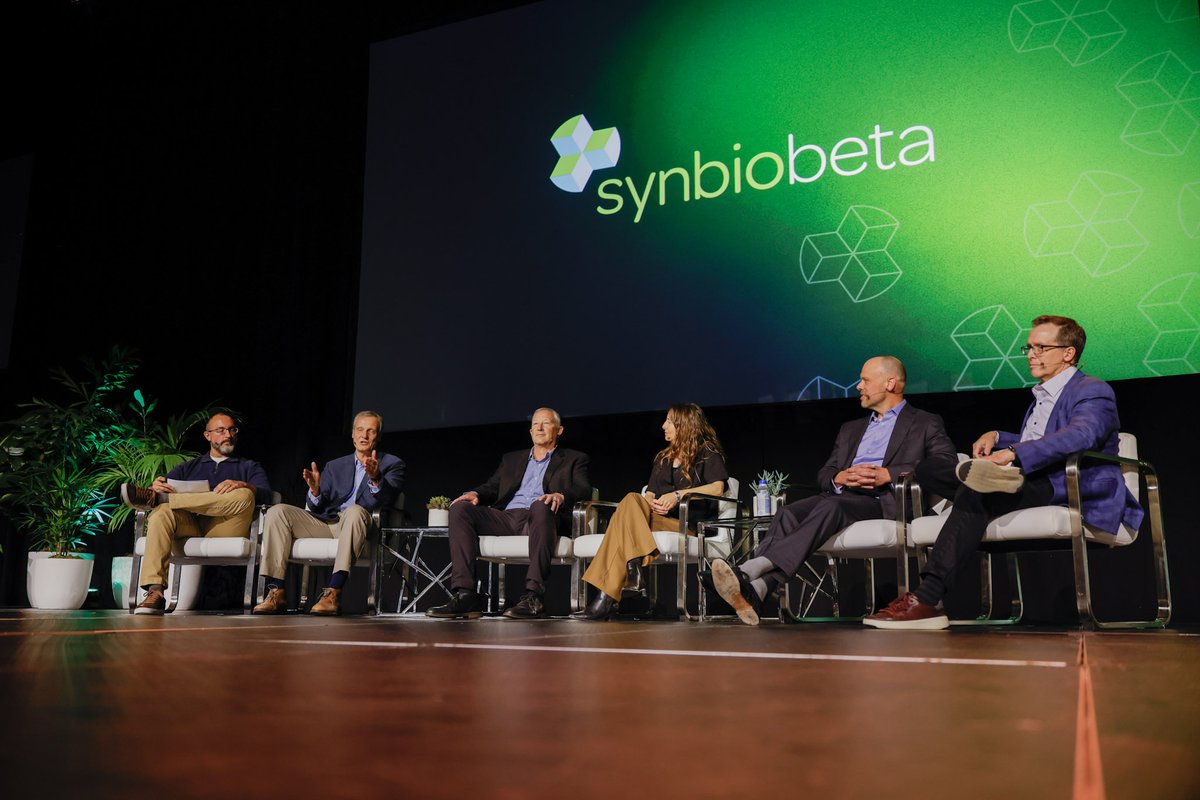
@SynBioBeta @Bayer4Crops @corteva @Revive_Restore @pivotbio recap here: substack.com/home/post/p-19…

English

Climate volatility is expanding farmers’ error bars. At SynBioBeta, @Bayer4Crops, @corteva, @Revive_Restore, @pivotbio, Moby, and Rhiza Bio framed plant resilience as a data, microbe, trait-development, and deployment problem. #SynBioBeta #Biotech


English

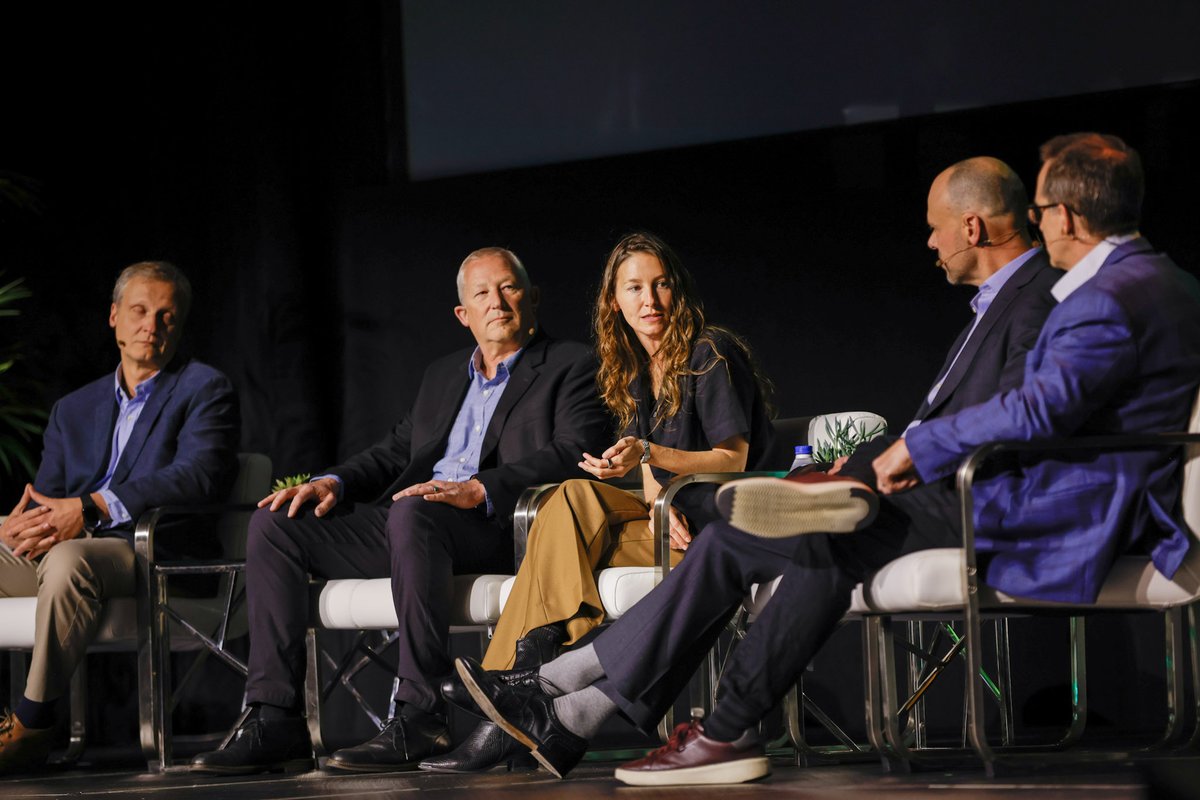
@FutureJurvetson @jendionne @FutureSaenko Jennifer delivered a fascinating talk at the @SynBioBeta Summit last week.
English

🐠 Everything we know about biology has been built on an incomplete picture. DNA tells us what a cell might do. Proteins tell us what it’s actually doing.
Pumpkinseed announced their $20M Series A today (led by Future Ventures and NfX) to build the platform that reads proteins directly—for the first time.
Proteomics has always faced a fundamental constraint: you can only measure what you already know to look for.
The current workhorse, mass spectrometry, requires matching protein fragments against reference databases. If a protein isn't in the database, or doesn't ionize reliably, it's invisible. Other approaches rely on fluorescent labels or antibody-based affinity methods, which introduce their own biases and blind spots.
The result is a field that has spent decades generating an increasingly detailed map of a small, well-lit corner of the proteome, while biology’s most important data layer remains hidden.
This isn't a sensitivity problem. It's a category problem. Existing tools were never designed to read proteins directly de novo. They were designed to find what researchers already suspected was there.
Pumpkinseed is built to find everything else. And proteomics is harder than most people outside the field appreciate. When we account for post-translational modifications, non-canonical amino acids, and glycan decorations, there are roughly a thousand distinct chemical monomers in the proteomic alphabet, compared to the four bases of DNA.
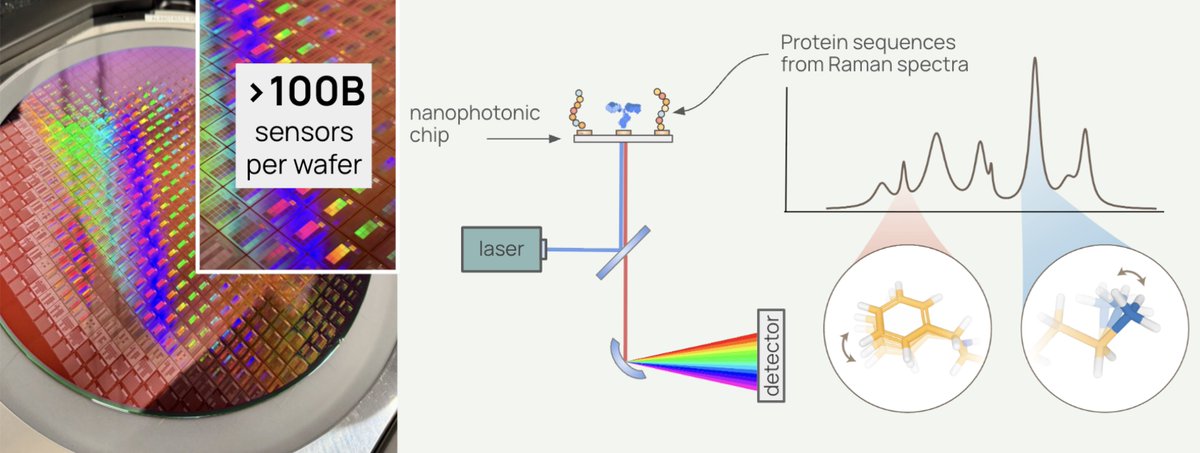
deSIPHR (de novo Sequencing and Identification of Proteins with High-throughput Raman spectroscopy) is Pumpkinseed's proprietary nanophotonic chip platform, fabricated with semiconducting manufacturing.
With over 100 million sensors per square centimeter, it reads proteins, known or unknown, letter by letter — amino acid by amino acid — without a reference catalog of proteins, and at high-throughput. The result is direct, high-resolution proteomic data, including post-translational modifications, non-canonical amino acids, and single-cell detail, that mass spectrometry-based approaches cannot match.
What is Raman spectroscopy? Rather than tagging or fragmenting proteins, Raman spectroscopy reads the molecular vibrations of individual molecules. Each amino acid vibrates at a characteristic frequency, producing a unique physical signature that deSIPHR detects directly. This is physics reading biology in the most literal sense.
With conventional Raman spectroscopy, only about one in ten million photons interacts with a molecule usefully, far too weak for single-molecule work. Pumpkinseed's answer is a silicon photonic chip patterned with a billion sensors per wafer. Those sensors concentrate light into volumes smaller than a single protein, amplifying Raman scattering efficiency by over 10 million-fold.
And their future ventures?
“The longer-term ambition is the virtual cell, a computational model that simulates not just how proteins fold but how they interact, respond to drugs, and behave under perturbation inside a living system. AlphaFold demonstrated what structural AI can do once a sequence is known. The gap that cannot be closed is determining the sequence itself from biological samples, particularly for proteins carrying modifications absent from existing databases. Pumpkinseed is designed to supply that input layer.
"If the Human Genome Project was the data infrastructure that enabled genomic medicine, we believe the high-resolution proteomic dataset Pumpkinseed is building could be the analogous foundation for AI-driven biological discovery," co-founder Dr. Jen Dionne says. "In our vision, the molecular signatures driving disease, aging, and ecosystem health become fully legible. Medicine shifts from reactive to proactive. Optimal healthspan moves from aspiration to achievable reality." —synbiobeta.com/read/pumpkinse…
• The biology mining company: Pumpkinseed.Bio
• Today’s News: pumpkinseed.bio/news/pumpkinse…

English

The Industrialization of Low-Earth Orbit michaelferrari.substack.com/p/the-industri… #SpaceTech #Geospatial #Networks

English

Space is having its internet moment. Investors should act accordingly. spacenews.com/space-is-havin… via @SpaceNews_Inc
English

Stanford merges AI and data science efforts under single institute news.stanford.edu/stories/2026/0…
English

Keep an eye on Dr. Najat Khan & @RecursionPharma - bringing the company back down to Earth, and with a sensible path to AI-driven product deployment. fiercebiotech.com/biotech/after-…
English

The Food Tech Salon at #SynBioBeta2026 was a great session today.
Practical and achievable goals were discussed - this is not always the case.
@SynBioBeta


English
Michael Ferrari retweetledi

Anthropic Says Life Sciences Is Its Biggest Bet After Code.
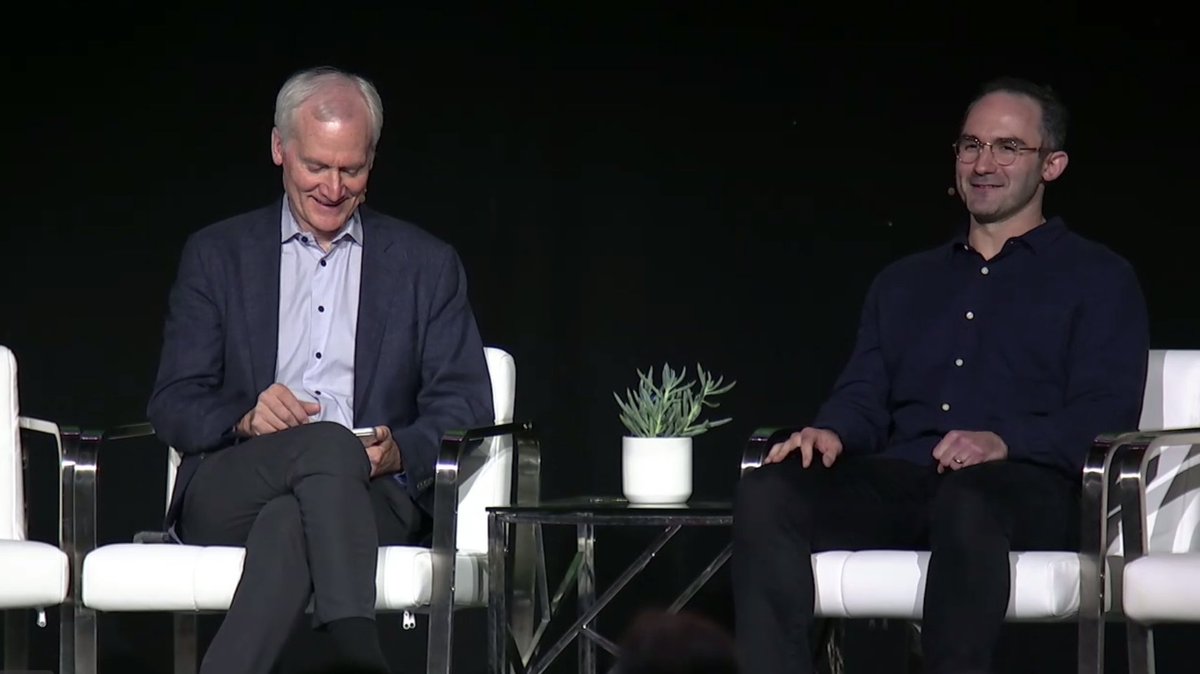
Eric Kauderer-Abrams started @AnthropicAI 's life sciences division ten months ago. He took on the stage at @SynBioBeta with Marc Tessier-Lavigne from @Xaira_Thera , and what caught my attention was how plainly Eric stated the following:
"The greatest opportunity to have a beneficial, scaled impact with everything that's happening in frontier AI is in the life sciences."
After coding, it's their biggest investment area. They've been training Claude on bioinformatics, chemistry, molecule design, structural biology, clinical regulatory. Their models went from mediocre in life sciences to roughly PhD level across most domains in under a year. That's a steep curve.
But what I found more telling than the benchmarks was the infrastructure they're building around it. Wet labs for basic research so their own scientists hit the walls firsthand. An acquisition of Coefficient Bio (acquired by Anthropic) to teach @claudeai how to think like a biotech program manager, not just a bench scientist. The gap between "Claude can answer a biology question" and "Claude can help you run a drug program" is enormous, and they're clearly aware of it.
Marc mentioned that 90% of drugs fail in the clinic. Two-thirds of those failures aren't bad science, but patient matching. You have a good target, a good drug, and you can't find who will respond. That's the problem both of them kept circling back to, and it's where causal AI models trained on real perturbation data might actually move the needle.
Marc said nobody's pushing a button for a development candidate anytime soon. But Anthropic went from $1B to $30B in revenue in sixteen months. That kind of resource behind this kind of focus is new. It's fun to think of what R&D can look like in the next few months!
#SynBioBeta2026 #SyntheticBiology #Biotech #AIxBio

English

Important issue for the #SpaceTech & #Data communities.
Do AI tools undermine trust in geospatial imagery? spacenews.com/do-ai-tools-un… via @SpaceNews_Inc
English
Michael Ferrari retweetledi

There is a big transformation story underway at $LUMN
Morning Call@CNBCMorningCall
Kate Johnson, Chief Executive Officer of Lumen Technologies, says AI demand is transforming enterprise networks, driving major growth opportunities and positioning Lumen at the center of the AI economy. $LUMN $MSFT $AMZN $GOOGL $NVDA $ANET cnbc.com/video/2026/05/…
English

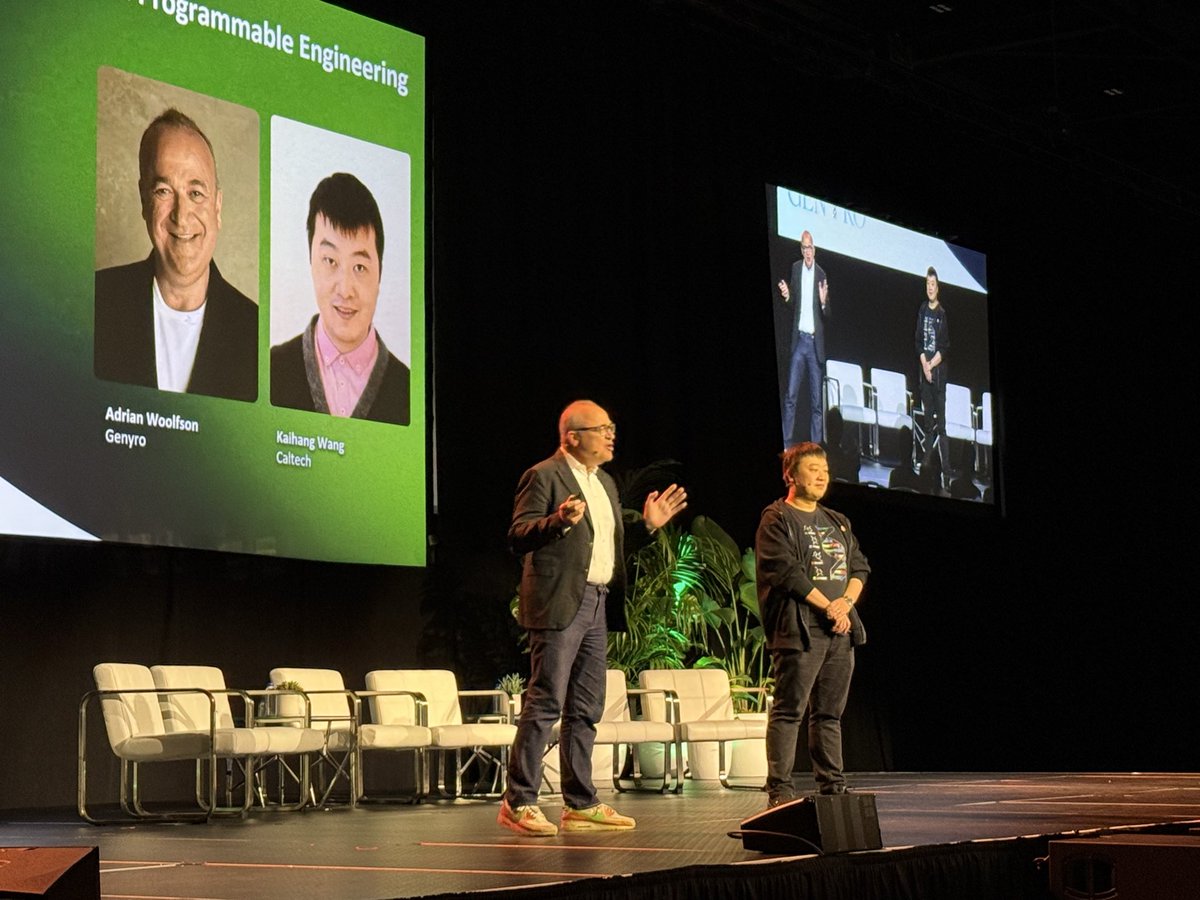
‘Biology will be bigger than Steel’
-Adrian Woolfson, on stage with Kaihang Wang at #Synbiobeta2026 day 2.

English