
Recursion

3.5K posts

Recursion banner
Recursion

Recursion

@RecursionPharma

Decoding biology to radically improve lives. The industrial revolution of drug discovery is here.

SLC, London, NYC, Montreal Katılım Temmuz 2014
770 Takip Edilen16.9K Takipçiler
Recursion
Recursion@RecursionPharma·
A new story in @biospace from Annalee Armstrong captures the inspiring presentation from FAP advocate Jenny Jones, who recently visited Recursion with her father, Timothy. They “offered a powerful reminder of why they were all there,” the story notes. Familial adenomatous polyposis is a rare disease that requires a lifetime of surgeries and has affected the Jones family for generations. It often begins in childhood, and results in hundreds to thousands of polyps developing in the colon and rectum that will turn cancerous if not removed. Jenny’s own FAP journey began with chronic abdominal pain at age 7. “She remembers a doctor telling her she was ‘whiny’ — despite the verified family history of FAP,” the story notes (both her mother and grandfather died from FAP complications). Jenny was diagnosed at age 8 and had her colon removed at 9. She would have eight surgeries throughout her life, including her gallbladder removed at age 36, when doctors found a polyp. The story highlights Jenny’s resilience in the face of not only physical but mental battles brought on by her disease and its complications. She has devoted her life to improving education and outcomes for other people living with FAP through her nonprofit, Life’s a Polyp Foundation, and she called on the assembled Recursionauts to continue to work toward non-surgical treatment options. 👉 Read the story in Biospace: biospace.com/drug-developme… 👉 For full information about our program, see the press release here: ir.recursion.com/news-releases/…
Recursion tweet media
English
0
3
21
1.3K
Recursion
Recursion@RecursionPharma·
🧬 Closing the translation gap between cells and patients. 😷 @NatureBiotech just published a new paper from Recursion on TxPert – a deep learning framework that accurately simulates the transcriptomic shift in unseen biological contexts. TxPert represents an important step in our ongoing work to accurately model transcriptomics and bridge the gap between in vitro discovery and clinical reality – which is critical for improving and scaling AI drug discovery. 🔹 TxPert address this translational gap through: ▪️ Graph Neural Networks (GNNs): Rather than treating genes as isolated lines of code, TxPert uses an advanced Exphormer-MG architecture to map genetic perturbations across multiple, massive knowledge graphs, forcing the model to understand both the physical (phenomic) and molecular (transcriptomic) realities of a cell simultaneously. ▪️ Simulating the "latent shift": By mathematically applying a "perturbation embedding" to a cell's baseline state, TxPert can accurately predict the entire post-perturbation transcriptomic profile—without anyone ever having to touch a pipette. ▪️ Predicting unseen biology: TxPert successfully predicts the transcriptomic outcomes of completely unseen single perturbations, complex combinatorial therapies (Double Perturbations), and even how known drugs will act in entirely new, unseen cell lines. TxPert is one of several models at Recursion to model transcriptomics and close the translation gap between cell responses and patients in the clinic. 🎉 Congrats to the team! Frederik Wenkel, Wilson Tu, Cassandra Masschelein, Hamed Shirzad, Liam Hodgson, Ihab Bendidi, Cian Eastwood, Shawn Whitfield, Craig T. Russell, Yassir El Mesbahi, Marta Fay, @bertonearnshaw, @ENoutahi, and @AlisandraDenton. 👉 Read the full publication in Nature Biotech here: nature.com/articles/s4158…
English
3
10
48
9.5K
Recursion
Recursion@RecursionPharma·
We had a fantastic time with @valence_ai at @iclr_conf in Rio sharing our latest machine learning breakthroughs, including presentations on TxFM, our state-of-the-art transcriptomics model that outperforms models up to 100x larger in terms of data size, and MarS-FM, our new class of generative models for molecular dynamics simulations. And there were lots of great community conversations happening at the rooftop TechBio Social, co-hosted with ICLR’s Learning Meaningful Representations of Life (LMRL) Workshop. Coming soon: we’re looking forward to sharing more of our ML breakthroughs at @icmlconf! 👉 TxFM paper here: openreview.net/pdf?id=NqZqClq… 👉 MarS-FM paper here: arxiv.org/html/2509.2477…
English
2
5
26
5K
Recursion
Recursion@RecursionPharma·
Join our first quarter Earnings Call on May 6, 2026 at 8:00 am ET / 6:00 am MT / 1:00 pm BST. Tune in here on X or on our LinkedIn or YouTube. 👉 Investors, analysts, and the public may submit questions here: forms.gle/TQ4vgUTLKsFmik…. x.com/i/broadcasts/1…
Recursion tweet media
English
6
4
28
3.4K
Recursion
Recursion@RecursionPharma·
⏩ Momentum is building across the TechBio ecosystem. Annalee Armstrong’s recent story in @biospace captures the momentum happening across biotech – and across our thriving local Salt Lake City biotech hub. She toured Recursion-supported incubator @AltitudeLab and visited Recursion headquarters. There, she writes: “I sat in on an all-hands meeting where staff got to hear about the true impacts on a family of the incredibly difficult disease called familial adenomatous polyposis. The inherited disorder causes noncancerous polyps to grow in the colon and rectum as early as the teenage years. While patients can live with the disorder, they often face early cancers and immense, life-altering complications.” The experience was a reminder, she wrote, that “after a year of keeping its head down and riding out the bumps, biotech is doing what it’s best at again. Innovating. Making things better.” We couldn’t agree more. 👉 Read the story: biospace.com/drug-developme…
Recursion tweet media
English
0
2
26
3K
Recursion
Recursion@RecursionPharma·
Last Wednesday at our company All Hands, we welcomed two very special guests from Oklahoma City to share their stories: Jenny Jones and her father, Timothy Jones. Jenny has familial adenomatous polyposis (FAP), a progressive rare disease that involves hundreds to thousands of polyps developing in the colon and rectum that have a nearly 100% likelihood of developing into cancer if not removed. Jenny was first diagnosed when she was 8. After her stomach pains as a child turned out to be precancerous polyps from FAP, she had her colon removed at the age of 9. She would continue to have complications from the disease throughout her life – including having her gallbladder removed at the age of 36. Now, she’s on a mission to provide support for FAP sufferers – to raise awareness, encourage regular surveillance, and to provide encouragement to others who are dealing with FAP, a disease that often strikes very young. She started the Life’s a Polyp Foundation where she shares research, education and events, and even wrote a children’s book – Life’s a Polyp with Zeke and Katie – to help reduce anxiety in young patients. Jenny and her dad talked about how they have navigated this disease as a family. Her grandfather died of FAP-related cancers and her mother, who also had FAP, spent 28 days in the hospital not long after Jenny was born when doctors discovered cancer. Her mother had her colon and rectum removed at age 34 and required a permanent ileostomy, rerouting waste to an external bag. She would later develop polyps in her bile duct and undergo a Whipple procedure – the removal of the gallbladder, part of the bile duct, part of the stomach and other organs. Her mom lived to be 73, Jenny said, a fighter until the end with an unbelievable “zest for life.” “She did not want to go,” Jenny said during the presentation, “which was the heartbreak that I had to tell her, ‘You're going to have to go, Mom’.” A consistent message from their talk was the critical role of awareness and monitoring – and community. “Community is life changing,” Jenny said, “especially with a rare disease. So we want to connect people to resources, to support, and then research.” She said the foundation is dedicated to helping fund new treatment options for FAP patients where surgery is currently the only option. “I want to go from we're delaying it to we're preventing it,” she said. 👉Check out Life’s a Polyp Foundation and learn more about FAP and supporting research initiatives: lifesapolyp.org
English
1
3
21
3.7K
Recursion
Recursion@RecursionPharma·
We had fantastic turnout at our panel and poster session at @AACR. AI is no longer a side discussion at the conference – it’s integrated into every aspect of cancer research, discovery and care. At Recursion, we’re finding new ways to connect our proprietary datasets with real-world patient data to improve causal insights and ensure that we are advancing the cancer drugs most likely to succeed in trials. Teeru Bihani, VP of Translational Strategy at Recursion, spoke about how we’re applying AI to better align preclinical findings with patient outcomes and ultimately close the translational gap in oncology R&D. And we presented a poster on one of those strategies – CellNeighbor – a transcriptional atlas that brings together cell line models and real-world patient cohorts into one embedding space and helps to ensure that our preclinical decisions are rooted in actual patient biology. 👉 Check out CellNeighbor here: researchgate.net/publication/40…
English
3
5
28
4.3K
Recursion
Recursion@RecursionPharma·
☀️See you in Rio! Recursion and our AI research engine, @valence_ai, will be at @ICLR April 23-27 in Rio to share some of our latest breakthroughs in generative modeling for AI drug discovery. 🔹 Check out our poster presentations on: ▪️ TxFM: Effective Biological Representation Learning by Masking Gene Expression. A state-of-the-art transcriptomics foundation model that combines Recursion’s proprietary dataset with a highly customized Masked Autoencoder (MAE) architecture to represent genes as they appear in nature (i.e., unordered). It provides a much more accurate representation of how genes interact as a system, connects experimental results directly to patient biology, and outperforms models up to 100x larger in terms of data size. 👉 Paper here: openreview.net/pdf?id=NqZqClq… 👉 Workshop here: Foundation Models for Science - fm-science.github.io/index.html ▪️ MarS-FM: Generative Modeling of Molecular Dynamics via Markov State Models. We introduce a new class of generative models – MarS-FM (Markov Space Flow Matching) – which offers a a 100x+ speedup compared to traditional MD simulations, without sacrificing structural accuracy. 👉 Code here: github.com/valence-labs/m… 👉 Paper here: arxiv.org/html/2509.2477… 🎉 And join us for a TechBio Social on April 26, 6-9pm, co-hosted with ICLR’s Learning Meaningful Representations of Life (LMRL) Workshop, featuring a rooftop bar, waterfront views and engaging conversations about how we can advance the frontier of AI-powered drug discovery. 👉 RSVP here: luma.com/9pyf9k90 #ICLR #ICLR26
Recursion tweet mediaRecursion tweet mediaRecursion tweet mediaRecursion tweet media
English
1
6
33
5.2K
Recursion
Recursion@RecursionPharma·
Recursion at #AACR: Transcriptional Atlas of Patient Tumors for Preclinical Model Selection On April 20, 9am-12pm, we’re presenting a poster on CellNeighbor – a novel computational framework designed to contextualize cell line expression profiles within the landscape of real-world patient transcriptomic data, ensuring our preclinical decisions are rooted in actual patient biology. 🔹 Highlights include: 🧬 Mapping the Landscape: CellNeighbor integrates bulk RNA-seq across cell line models and massive real-world patient cohorts into a single, harmonized transcriptional embedding space. 🧹 Filtering the Noise: Combining lab cells with patient tumors is notoriously difficult due to Tumor Microenvironment (TME) variations. Building on Celligner's framework, we use contrastive PCA to successfully isolate and remove TME-related gene expression (like immune activity), allowing for true apples-to-apples comparisons. 🚫 Identifying Poor Translators: We developed a novel “homogeneity score” to rank how closely a cell line resembles its tissue of origin. Our analysis revealed, for instance, that some widely used breast cancer cell lines transcriptionally resemble lung or gynecological cancers more than breast cancer. CellNeighbor allows us to filter these out and prioritize the most translatable models. 🎯 Accelerating Biomarker Discovery: By layering in vitro drug sensitivity data directly onto these harmonized patient-cell neighborhoods, we can map responses to real-world patient mutations. By adding layers of real-world clinical covariates to in vitro models, we are validating our drug hypotheses in more clinically relevant contexts. Authors include: Caitlin Simopoulos, Gabrielle Persad, Otto Morris, Carlos Origel Marmolejo, Laura M. Richards, Kelly M. Biette 👉 Learn more: aacr.org/meeting/aacr-a… #TechBio #AACR26 #DrugDiscovery #Oncology #Recursion #Cancer #AI #ClinicalTrials
Recursion tweet media
English
4
5
26
4.9K
Recursion
Recursion@RecursionPharma·
Recursion executives will present at two upcoming investor conferences: ▪️ Monday, April 13: the 25th Annual Needham Virtual Healthcare Conference ▪️ Tuesday, May 12: @BankofAmerica Health Care Conference 2026 👉 Check out the webcasts in the events section of the Recursion Investor Relations website at ir.recursion.com
Recursion tweet media
English
1
3
29
3.2K
Recursion
Recursion@RecursionPharma·
Recursion at #AACR:  AI in Biomarker Discovery and Drug Development On April 18, 12:30pm Teeru Bihani, VP of Translational Strategy at Recursion, will present an educational session with Jorge Reis-Filho, Chief of AI for Science Innovation at @AstraZeneca. The session will be chaired by Jakob Nikolas Kather of the Dresden International Graduate School for Interdisciplinary Life Sciences. Teeru will share how we’re applying AI in practice to improve decision-making across the drug development lifecycle — from early biological insight through clinical strategy. Drawing on real examples from across our portfolio, she’ll highlight how these approaches better align preclinical findings with patient outcomes and ultimately close the translational gap in oncology R&D. 👉 Learn more: abstractsonline.com/pp8/#!/21436/s…
Recursion tweet media
English
1
4
20
3.9K
Recursion
Recursion@RecursionPharma·
💊 The data differentiator in AI drug discovery. A new article in @GENbio looks at the critical role of data infrastructure in AI drug discovery to address three interconnected challenges: “capturing molecular complexity in machine-readable formats, implementing FAIR (Findable, Accessible, Interoperable, and Reusable) data principles at scale, and preparing datasets through collaboration-centric platforms.” Referencing @xiaofei_lin’s interview with Najat Khan, the story notes that Recursion is focused on delivering clinical value via “superior preclinical execution” and an AI-enabled platform that supports the “Design-Make-Test-Analyze (DMTA) cycle—the fundamental, iterative four-stage workflow in pharmaceutical R&D to progress therapeutic intellectual property into drugs.” High-quality, fit-for-purpose data is critical. “Machine learning models learn from data, and their effectiveness depends entirely on the quality of that input,” the story notes. “Feed them clean, well-structured data, and they can identify subtle SAR patterns that complement human intuition.” 👉 Read more: genengnews.com/topics/artific…
Recursion tweet media
English
0
7
25
3.4K
Recursion
Recursion@RecursionPharma·
🧬Solving the scale mismatch in AI drug discovery. TechBio is very good at measuring and simulating biology at the single-cell level, from predicting protein structures, to mapping transcriptomic shifts, to modelling cellular responses. But it’s much more challenging to connect those insights to the full complexity of patients, and design drugs more likely to succeed in the clinic. At the upcoming @SynBioBeta Synthetic Biology Summit, May 4-7 in San Jose, leading experts in pharma and TechBio will tackle the translation gap in modern drug development in a panel called “From Cells to Patients: Solving the Scale Mismatch in Virtual Biology” happening on the mainstage May 5, 11am. 🔹 Speakers include:  ▪️ Dave Hallett - CSO, Recursion ▪️ Marc Tessier-Lavigne - CEO, @Xaira_Thera ▪️ Kim Branson, SVP Global Head, AI & ML, @GSK ▪️ @Ronalfa, Cofounder & CEO, @NOETIK_ai 🔹 They’ll address:  ▪️ How to connect single-cell dynamics to organ-level physiology and actual patient outcomes. ▪️ How to leverage spatial and high-dimensional phenotypic data to preserve biological context. ▪️ How to build integrated computational-experimental loops that turn cellular signals into clinically meaningful biomarkers. 👉 Learn more and register at: syntheticbiologysummit.com
Recursion tweet media
English
3
6
39
4.8K
Recursion
Recursion@RecursionPharma·
💊 Where AI is delivering in drug discovery today. A recent story by Peter Sullivan in @axios looked at how AI-led drug discovery and design is changing everything from pharma to federal policies. He notes that its being applied to “shorten development times, lower costs and predict chemical properties that humans don't have time to examine.” Recursion CEO and President Najat Khan shared that drug discovery is actively moving from an artisanal “to a much more systematic approach." The story notes that Recursion “reported positive data in December from a trial of its drug candidate to treat a rare genetic condition that can lead to colon cancer” – the first clinical validation of our AI platform. And it’s only the beginning, as the @US_FDA adjusts its guidelines to meet the AI moment, and companies like Recursion continue to integrate new data layers and uncover new biology using AI and machine learning. As Najat said: "There's going to be some skeptics, but they will come around once they see data.” 👉 Read more: axios.com/newsletters/ax…
Recursion tweet media
English
4
7
28
4.1K
Recursion
Recursion@RecursionPharma·
Expanding our ClinTech platform with real-world data and evidence. We’re announcing an expanded partnership with @Citeline to further integrate real-world data and evidence capabilities into our AI-enabled ClinTech platform within the Recursion OS. This integration will enable more precise trial design, improved site selection, and faster, more informed development decisions. Citeline’s data and evidence capabilities are already supporting our pipeline, including the contextualization of single-arm data from our REC-4881 Phase 1b/2 study in FAP. More broadly, we’re seeing investment in our ClinTech platform yield results across our portfolio, including 30–60% improvements in enrollment. This expanded partnership further accelerates our AI-informed clinical development process. Together, we’re building a more predictive, connected, and patient-centered approach to accelerate the path from pipeline to patient. 👉 Read the full announcement here: citeline.com/en/resources/r…
Recursion tweet media
English
3
6
31
6.9K
Recursion
Recursion@RecursionPharma·
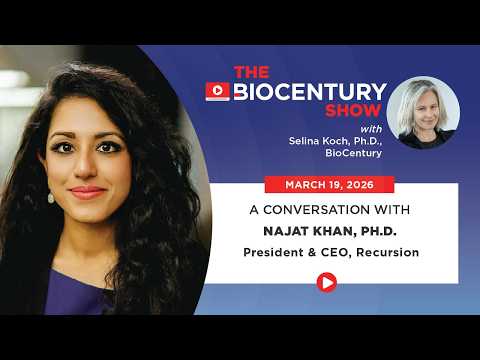
🚀AI’s current proof points in drug discovery – and the next frontier In an interview with The @BioCentury Show, Recursion CEO and President Najat Khan, PhD talked to executive editor @SelinaMKoch about the differentiators to look for as the TechBio industry matures. “The bar and the standard is evolving around ‘what is the endgame?’” Najat says. “And the endgame is to make differentiated medicines that matter…no matter what dataset you have, what model you have, or what approaches you’re using.” She points out that while many early stage companies are focused on building models, Recursion is in the next stage of its evolution: delivering proof points. That requires an end-to-end approach, she says. “It's not enough to be better in just biology, chemistry, or the clinic. You have to use AI across the entire vertical tech stack.” Najat shares how she sees AI’s most measurable early advantages emerging in chemistry and clinical trial execution. In ClinTech, Najat notes that Recursion is applying AI to improve patient stratification, drive smarter trial design, and accelerate enrollment. The next frontier, she says, is “out-of-domain” prediction — the ability for models to make useful inferences in less-charted biological terrain. 👉 Listen to the full podcast here: lnkd.in/eeDsbAZB
English
3
10
20
5.9K
Recursion
Recursion@RecursionPharma·
We’re excited to announce that industry veteran Vicki Goodman, M.D., will join Recursion as Chief Medical Officer effective April 6, 2026. Vicki is an accomplished physician-executive with 20+ years in oncology drug development, beginning as a Medical Officer at the U.S. FDA and later serving in senior roles at @Merck (contributing to programs such as KEYTRUDA), @bmsnews (OPDIVO, YERVOY), @GSK (leading dabrafenib through approval), and as CMO at Exelixis and @MuralOncology. She brings deep, practical regulatory strategy and development experience from start to finish with a clear regulatory vision to help Recursion translate scientific insight into disciplined, high-quality clinical programs as we advance our pipeline. We’re thrilled to have Vicki join the team and look forward to accelerating our progress to deliver medicines to patients. Read more: ir.recursion.com/news-releases/…
Recursion tweet media
English
2
5
33
6.8K
Recursion
Recursion@RecursionPharma·
Recursion is headed to #AACR26 - April 17-22 in San Diego - to share our breakthroughs in leveraging data and AI to drive new cancer discoveries and treatments. 🔹 On April 18, 12:30pm, Teeru Bihani, VP of Translational Strategy at Recursion, will present as part of an educational session on "AI in Biomarker Discovery and Translational Drug Development" along with Jorge Reis-Filho, Chief of AI for Science Innovation at @AstraZeneca. She’ll share details of Recursion’s AI-enabled cancer programs, including REC-1245, in which we used Recursion’s AI platform to discover the relationship between RBM39 and DNA damage response, and to design a potentially first-in-class degrader which is being developed for the treatment of biomarker-enriched solid tumor indications and lymphoma. The session will be moderated by Jakob N. Kather of Dresden Graduate School for Interdisciplinary Life Sciences. 🔹 On April 20, 9am-12pm, we’ll present a poster on CellNeighbor, a transcriptional atlas of patient tumors and cell line models to inform preclinical model selection. CellNeighor addresses the translational gap between cell line models selected for compound activity assays based on molecular profiles and the in vitro cell culturing that can influence genetic changes in these models. We built CellNeighbor by integrating transcriptomic profiles from DepMap with patient tumor data from The Cancer Genome Atlas and deidentified patient tumor data from @TempusAI, creating a unified transcriptomic map of cell lines and tumors.
Recursion tweet media
English
1
3
21
4.3K