100 points. Zero fees. Full GOAT power.
Ready to crush the @okutrade task in One Piece S3? Follow your step-by-step guide:
🔸 Visit oku.trade/landing or access via onepiece.goat.network/home
🔸 Connect your wallet
🔸 Switch to #GOATNetwork
For swapping on GOAT:
🔸 Click “Pro” in the top-left corner to open the GOAT Swap page
🔸 Choose your trading pair (e.g., BTC/BTCB)
🔸 Click “Review Swap” then “Confirm” to complete the trade
For liquidity steps:
🔸 Add/remove LP with this guide: docs.oku.trade/home/pool
🔸 Manage your positions here: docs.oku.trade/home/features/…@okutrade , CEX feel, DEX freedom. Zero Fees. 37 chains. No bullshit.
Welcome to Dreamathon🌤️
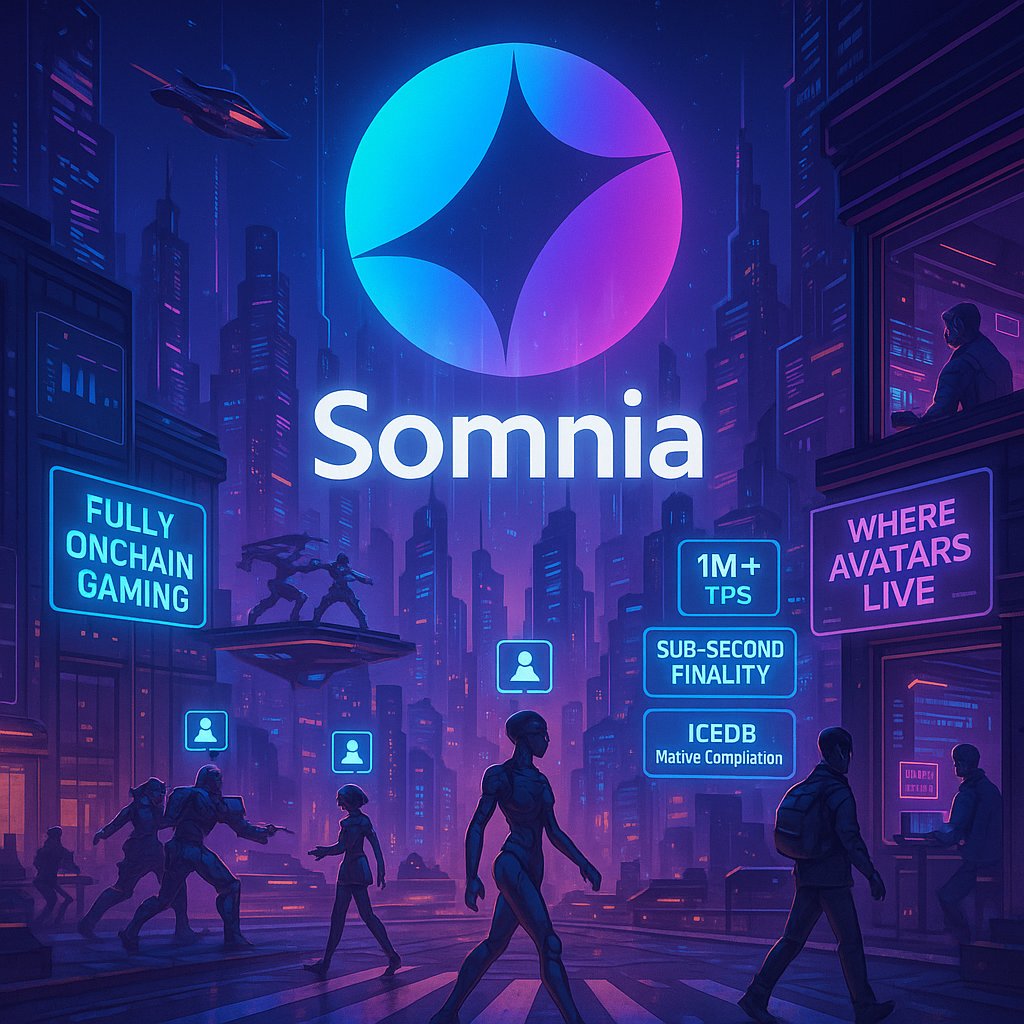
The 8-week pilot incubator for teams creating real-time, reactive apps on @Somnia_Network
20 teams selected
10 finalists receive $20k grants + investor exposure
Applications are OPEN: dreamathon.xyz
In collab with @cracked_labs x @supafundxyz
Somnia is building a bridge between creativity and infrastructure.
Artists, developers, gamers — all can thrive in an open metaverse.
It’s time to build together.
#Somnia#BuildTheFuture
@0xKoSxbt@Polkadot@blockchain Moonbeam’s EVM compatibility really boosts Polkadot’s integration with Ethereum DeFi
Are there plans to add more bridges beyond ETH and BTC?
How Polkadot implements the concept of "shared security" to improve network reliability
The problem of security in multi-chain systems
In most @blockchain ecosystems, each chain is responsible for its own security. This creates an unequal playing field: large networks can afford security, while small ones become vulnerable. @Polkadot offers a different solution - shared security
What is shared security at Polkadot?
In Polkadot, all parachains are connected to a common central chain - the Relay Chain. It is responsible for ensuring the security of the entire system, including all connected parachains
How it works technically
Relay Chain validators protect not only the Relay Chain itself but also all parachains, allocating their resources to check the blocks of each of them. This means that even a new or small parachain gets the same security as the larger players
Benefits of shared security:
- A level playing field for all projects in the ecosystem
- Reduced costs for individual security
- General trust in parachains backed by Relay Chain validators
- Instant security continuity when connecting to Polkadot
Conclusion: a fundamental advantage of Polkadot
Shared security is not just a feature, but a strategic advantage of Polkadot, allowing you to build a scalable, reliable and truly decentralized Web3 ecosystem
Polkadot investment risks compared to other L1s
Introduction
Polkadot is one of the leading Layer 1 platforms offering a unique multi-chain architecture. However, like any project in the crypto space, investing in Polkadot comes with certain risks. In this article, we will compare the main investment risks of Polkadot with other popular L1 networks
Main section
Technical risks:
Polkadot uses a complex architecture with a Relay Chain and parachains, which requires a high level of technical support. Failures or vulnerabilities in the interaction between chains can affect the stability of the network. In comparison, Ethereum has a simpler structure but faces scalability issues
Regulatory risks:
Like other blockchains, @Polkadot is subject to changes in crypto asset legislation. As Polkadot is actively developing cross-chain solutions, this may attract the attention of regulators, creating additional uncertainty
Competitive risks:
@Polkadot competes with L1s such as Ethereum, Solana, and Avalanche, which have their own strengths and a broad user base. The risk of losing market share due to rapid technological upgrades by competitors is real
Economic risks:
The price of the DOT token depends on many factors: demand for parachain slots, ecosystem development, and the overall state of the crypto market. Volatility and fluctuations can affect investments
Conclusion
Investing in Polkadot involves technical, regulatory, competitive, and economic risks that should be considered in comparison with other Layer 1 platforms. Assessing these factors will help investors make more informed decisions
How Polkadot supports developers through Polkadot SDK and Substrate
@Polkadot creates a favorable environment for developers with powerful tools - Polkadot SDK and Substrate. Substrate is a modular framework that allows you to quickly create custom blockchains with unique rules and functionality that can be easily integrated into the Polkadot ecosystem as parachains
The Polkadot SDK complements Substrate by offering a set of libraries and APIs for developing decentralized applications (dApps), making it easier to work with the Polkadot network and its protocols. This allows developers to quickly launch and scale projects.
Both tools are open source and have extensive documentation, which helps engage the community and facilitate rapid learning. In addition, Polkadot actively supports developers through grants, hackathons, and educational programs
Thanks to these resources, developers can focus on innovation, creating new solutions that expand the capabilities of Web3 and strengthen the Polkadot ecosystem
Polkadot's role in the development of Web3: from infrastructure to decentralized applications
Polkadot is not just a blockchain, but a modular Web3 network
Polkadot is built as a next-generation infrastructure that allows you to create specialized @blockchain - parachains - with different logic, purpose, and functionality. While traditional L1 networks limit developers to a single chain framework, Polkadot opens up space for innovation in Web3, where each project can have its own architecture
Quick launch of decentralized applications via Substrate
Thanks to the Substrate framework, developers can quickly create their own blockchains that integrate into @Polkadot as parachains. This means that Web3 applications are built not just as smart contracts on L1, but as full-fledged independent networks with high performance, autonomy, and security
Shared security as the foundation for scaling
Instead of each network being secured separately, parachains in Polkadot use shared security provided by the Relay Chain. This allows new Web3 projects to be launched without the need to assemble their own network of validators, while maintaining a high level of security
Interoperability - the foundation of the open internet of value
Thanks to the XCMP protocol, parachains can securely and natively transfer data to each other. This creates the conditions for the formation of a true Web3 - not fragmented into isolated blockchains, but an interconnected internet where DeFi, NFT, DAO, and dApps can integrate with each other at a fundamental level
OpenGov - a new era of Web3 governance
Polkadot promotes the concept of fully on-chain governance through the OpenGov system. $DOT holders can initiate and vote on any changes to the network, and decisions are implemented automatically. This is democracy without intermediaries, paving the way for self-governing ecosystems.
Parachains as specialized Web3 services
Each parachain in Polkadot is like a separate Web3 infrastructure: one is responsible for privacy (e.g., Manta), another for identity (Litentry), and yet another for machine economy (peaq). Together, they form a modular, flexible, and scalable ecosystem where each element has a clear task
Conclusion: Polkadot doesn't just support Web3 - it implements it as an architecture where decentralization, modularity, interoperability, and governance aren't just declared, but built into the protocol. That's why this ecosystem is one of the most promising platforms for the long-term development of decentralized technologies.
@Kosmozilla_eth@billions_ntwk Billions Network’s disruptive approach could shift the scalability game for $BILL and Web3 ecosystems
What partnerships are planned to accelerate adoption?
@arlenxbt@HanaNetwork Flexible jurisdictional design paired with DAO legal frameworks can unlock institutional trust
Are there plans to partner with regulatory bodies directly?
Analytics of attracting institutional investors to @TheoriqAI
Institutional investors are increasingly paying attention to projects that combine blockchain and artificial intelligence.
TheoriqAI has several important arguments that make it attractive for this segment.
1. Innovative business model
TheoriqAI offers a unique mechanism of knowledge tokenization and decentralized validation, which creates a new asset class. This attracts investors looking for projects with the potential for scaling and long-term value.
2. Growing AI+Web3 market
The demand for generative AI in the Web3 ecosystem is growing rapidly. TheoriqAI, having a ready-made infrastructure and a $THQ token, is advantageously positioned in this niche, which increases investment attractiveness.
3. Partnerships and Ecosystem
Active integrations with other Hana Network projects and support from technology partners add confidence to investors in the stability and prospects of the platform.
4. Risks and Challenges
Institutions are carefully assessing regulatory risks, scalability and the competitive environment. TheoriqAI should work on increasing transparency, compliance and demonstrating real-world use cases.
Conclusion:
TheoriqAI is gradually attracting institutional investors thanks to its innovation and strong position in the AI-blockchain segment.
For more active involvement, it is important to strengthen communication, develop the ecosystem and reduce risks. This is the path to large-scale funding and long-term growth.
Want to join on us? For a chance to win a pair of free tickets:
🎾 Follow us @linera_io
🏓 RT this thread's first post
🎷 Reply with your favorite jazz song
Let’s build the agentic future together. The winner of the two tickets will be announced 7/29!
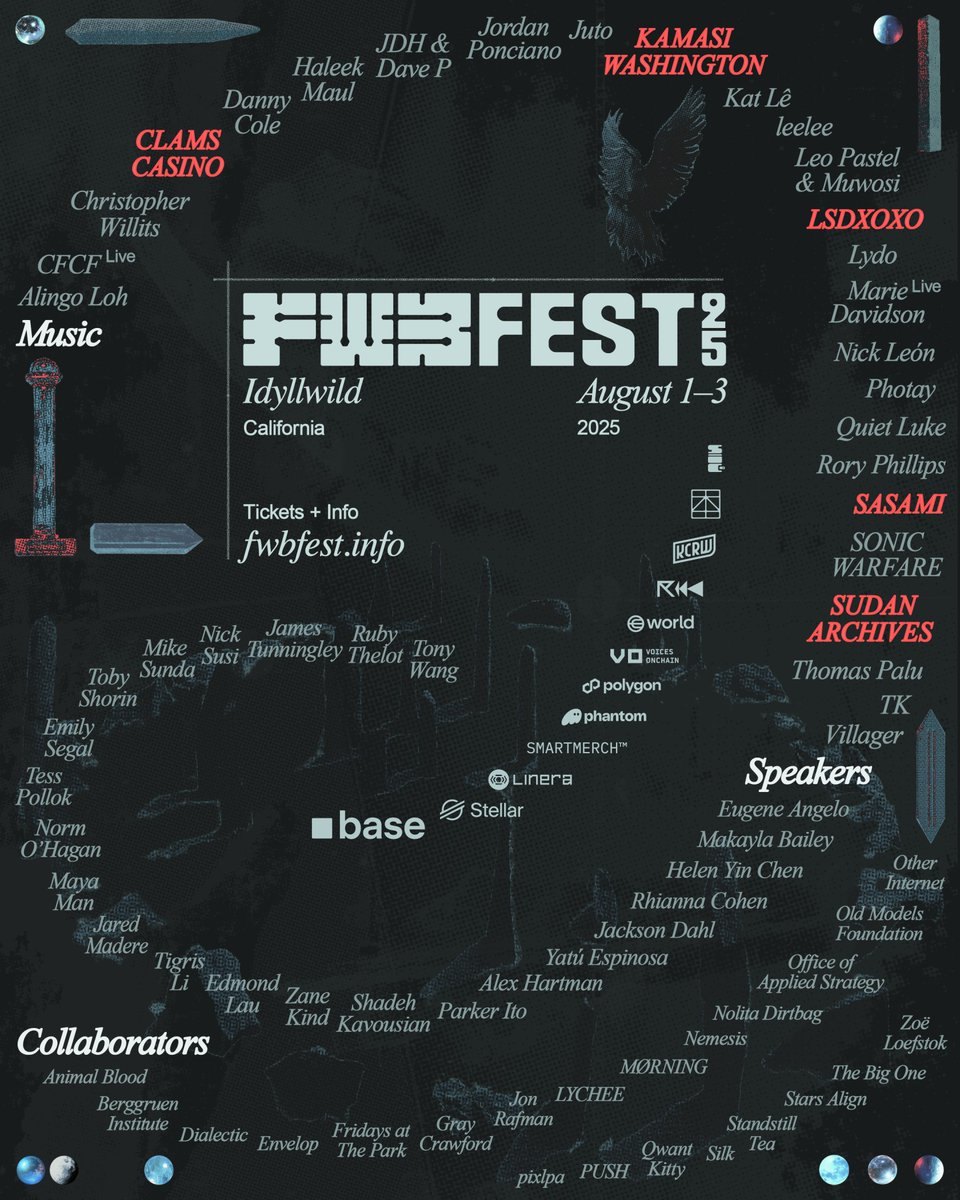
Linera is headed to the mountains! We’re a proud main sponsor of @FWBtweets in Idyllwild, CA, Aug 1–3.
Music, tech, microchains—and maybe a free ticket?
Follow this thread + read to the end for a shot at joining us under the pines. 👇🌲
#FWBFEST25