Mooni Insight Global

88 posts

Mooni Insight Global banner
Mooni Insight Global

Mooni Insight Global

@Mooni_Global

Semiconductor small cap investors.

방구석 Katılım Ekim 2025
52 Takip Edilen6.3K Takipçiler
Sabitlenmiş Tweet
Mooni Insight Global
Mooni Insight Global@Mooni_Global·
@semicon_player (Mooni Insight Global) Sharing strategic insights where semiconductors, AI, and capital converge. I analyze the global chip ecosystem — from foundries and packaging to photonics and compute architecture — helping investors and engineers see what’s next. Founder of Mooni Insight, a research brand followed by thousands across Korea, Japan, and the U.S., delivering clear, data-driven perspectives on the technologies powering the AI era. Follow for global semiconductor trends, AI hardware narratives, and the stories behind the silicon. ⚡️
English
1
2
68
78K
Photon Capital
Photon Capital@PhotonCap·
Give this account a follow. Thanks to the owner of this account, I’ve gained a tremendous amount of insight into the fields of semiconductors, technology, and investing.
Mooni Insight Global@Mooni_Global

@semicon_player (Mooni Insight Global) Sharing strategic insights where semiconductors, AI, and capital converge. I analyze the global chip ecosystem — from foundries and packaging to photonics and compute architecture — helping investors and engineers see what’s next. Founder of Mooni Insight, a research brand followed by thousands across Korea, Japan, and the U.S., delivering clear, data-driven perspectives on the technologies powering the AI era. Follow for global semiconductor trends, AI hardware narratives, and the stories behind the silicon. ⚡️

English
3
1
37
18K
Mooni Insight Global
Mooni Insight Global@Mooni_Global·
HBM still represents a relatively small portion of the overall market today. However, as system complexity increases—especially in post-Rubin architectures—these challenges are expected to become significantly more pronounced. From a market share and financial perspective, this is not yet reflected in the numbers.
English
1
0
6
563
Lucas Fernández
Lucas Fernández@LucasFdez87·
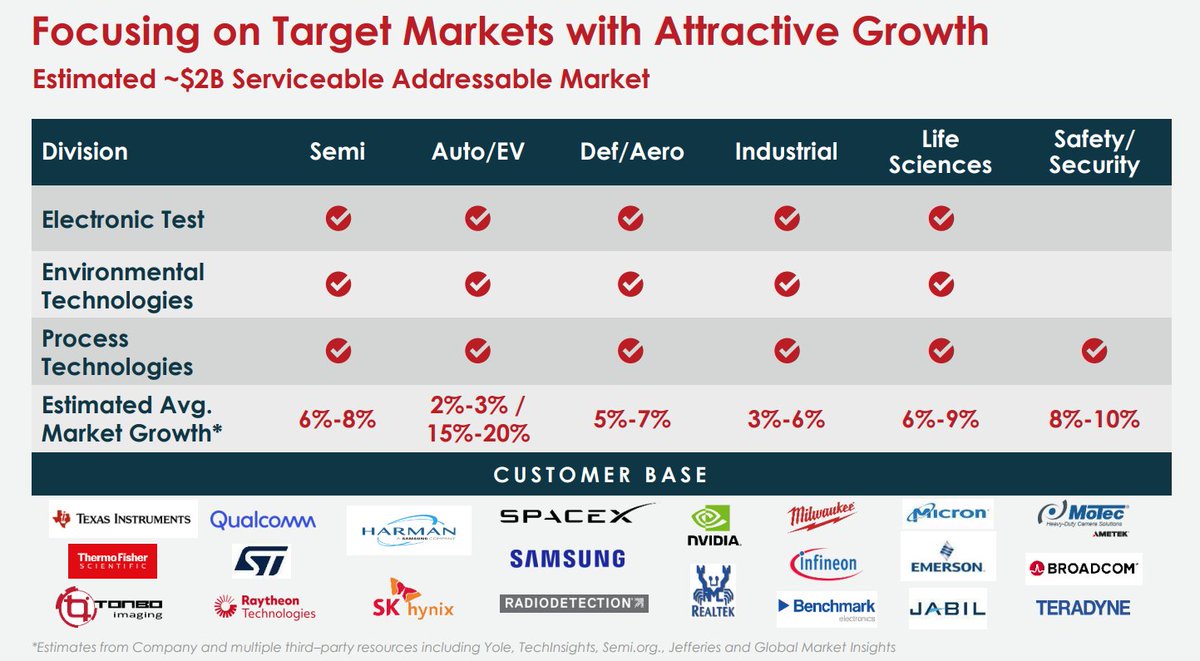
@Mooni_Global Thank you for pointing us to this company. One question, they are guiding for an increase in their SAM for semiconductors between 6 and 8% YoY. Doesn't look very promising, does it? Are they sandbagging? Or am I missing something here?
Lucas Fernández tweet media
English
1
0
2
773
Mooni Insight Global
Mooni Insight Global@Mooni_Global·
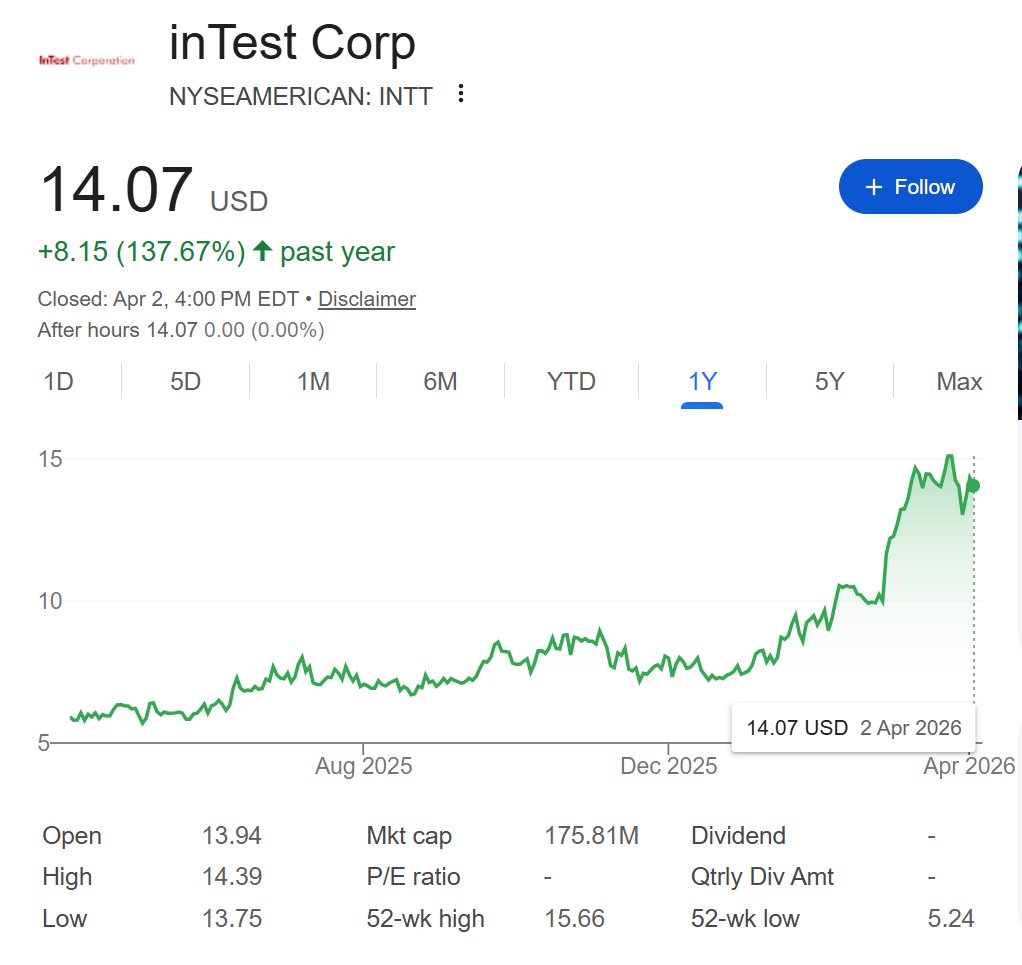
InTest Corporation (NYSE: INTT) – A Quiet Enabler of the AI & Semiconductor Thermal Bottleneck In a market dominated by front-end narratives—GPUs, foundries, and AI accelerators—one critical constraint continues to be underappreciated: thermal management. As power densities surge across advanced packaging architectures (CoWoS, chiplets, 2.5D/3D integration), the ability to precisely control temperature is no longer a supporting function—it is a gating factor for yield, reliability, and ultimately system performance. This is where inTest Corporation quietly positions itself. Investment Thesis: Thermal is the Hidden Bottleneck The semiconductor industry is entering a phase where heat—not compute—is the primary limiter. AI accelerators such as those from NVIDIA are pushing rack-level power consumption toward 100kW+ Advanced packaging (e.g., TSMC’s CoWoS) increases thermal density at the interposer level Memory subsystems like HBM further exacerbate localized heat concentration In this context, thermal testing and conditioning are becoming mission-critical steps in both development and production. inTest operates precisely at this intersection. What inTest Actually Does (And Why It Matters) inTest provides thermal management solutions, test systems, and process technologies that ensure semiconductor devices perform reliably under extreme temperature conditions. Key capabilities: Precision temperature control systems (heating/cooling) Semiconductor test interfaces and docking hardware Process technologies for electronics manufacturing environments These are not glamorous products—but they are non-negotiable in high-performance chip validation. Why Now: Structural Tailwinds 1. AI Infrastructure Explosion → Thermal Complexity As AI data centers scale, thermal validation cycles become longer and more complex Failure rates increase non-linearly with power density 2. Advanced Packaging → New Failure Modes Chiplet architectures introduce thermal gradients across dies Requires more sophisticated and localized thermal testing 3. Shift from Lab to Production Thermal conditioning is moving from R&D into high-volume manufacturing (HVM) workflows Financial Profile: Small Cap, High Leverage to a Big Theme Market cap: Sub-$1B (underfollowed, low institutional saturation) Revenue mix increasingly aligned with semi + industrial tech Operating leverage potential as utilization scales This is not a hyper-growth story yet—it is a picks-and-shovels play on a constraint that is getting tighter. Strategic Positioning inTest is not competing with the likes of Applied Materials or ASML. Instead, it operates in a niche where: Switching costs are meaningful Qualification cycles are long Reliability is everything This creates stickiness once embedded into a customer’s workflow. Key Insight (Investor Takeaway) The market is still pricing semiconductors as a compute scaling story. But the next leg of the cycle is increasingly about constraint resolution: Power Cooling Packaging yield inTest sits directly in one of those constraints. Not a headline name. Not widely discussed. But in a system where heat becomes the bottleneck, thermal becomes alpha.
Mooni Insight Global tweet media
English
5
28
230
43.2K
Mooni Insight Global
Mooni Insight Global@Mooni_Global·
Photonics stocks Strategy for New beginners 1) Structure the space first (this is key) Think of photonics in 3 layers: Layer 1 — Hyperscaler / system demand (low beta) •NVIDIA •Broadcom •Marvell Technology These are not “photonics pure plays” — but they control the demand curve (AI clusters, networking, switches). 👉 If AI capex holds → these win first. ⸻ Layer 2 — Optical component leaders (core exposure) •Lumentum Holdings •Coherent Corp. •MACOM Technology Solutions •Fabrinet 👉 These are your real photonics beta •lasers •transceivers •optical engines Lumentum specifically has been exploding due to AI optical demand (datacenter optics scaling aggressively toward ~$90B TAM by 2030) ⸻ Layer 3 — high asymmetry / small caps (optional) •POET Technologies •Lightwave Logic •Aeva Technologies 👉 These are story + execution bets High upside, but: •customer concentration risk •commercialization timing risk ⸻ 2) What actually matters right now (2026 lens) This is the real driver: 👉 AI data center bottleneck = interconnect •copper is hitting limits •optics moving closer to chip (CPO / LPO / optical IO) That’s why: •Lumentum / Coherent → ripping •NVIDIA investing directly in optics supply chain ⸻ 3) How I would structure a portfolio Simple framework: Core (50–60%) •Lumentum / Coherent / Marvell 👉 direct exposure to optical scaling ⸻ Platform leverage (20–30%) •NVIDIA / Broadcom 👉 you’re betting on AI spend → optics follows ⸻ Optional asymmetry (10–20%) •POET / smaller names 👉 only if you understand the tech + timelines ⸻ 4) Current price point view (important) Right now: •Lumentum → strong momentum, but extended •Coherent → better relative valuation •MACOM → clean exposure, less crowded 👉 The trade is not “cheap vs expensive” 👉 It’s: “who captures the architecture shift?” ⸻ 5) One line takeaway Photonics is not a theme. 👉 It’s the next bottleneck layer of AI infrastructure And the winners will be: •the ones closest to the data path •not the ones just “in optics”
English
2
4
38
2.7K
Mooni Insight Global
Mooni Insight Global@Mooni_Global·
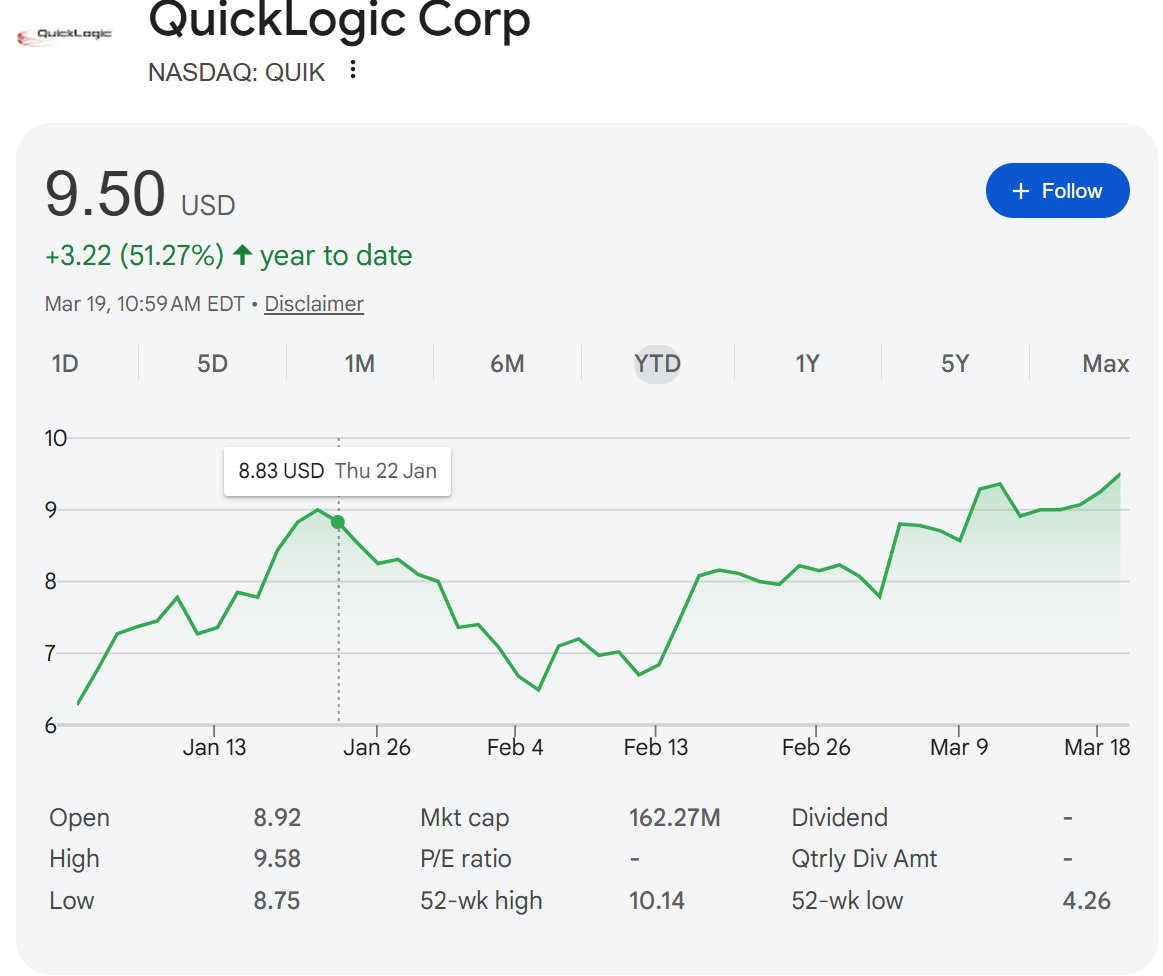
UIK (QuickLogic) right now is best understood through one lens: chiplets + eFPGA + Intel 18A ecosystem integration. Here’s the clean, investor-grade breakdown 👇 🔥 QUIK – Recent Bullish Catalysts 1) Intel 18A + Chiplet Positioning QuickLogic is aligning its eFPGA IP with Intel 18A + chiplet architecture Highlighted across GOMACTech / Chiplet Summit 👉 Interpretation → Transitioning from “FPGA vendor” → to core chiplet IP supplier in heterogeneous integration 2) eFPGA Becoming Mandatory in ASIC Design ASICs lack flexibility → eFPGA solves this Adoption rising across: AI chips defense systems edge computing 👉 Structural shift Old: FPGA vs ASIC New: ASIC + eFPGA (complementary layer) 👉 QUIK positioning → Becoming a design-layer necessity, not optional 3) U.S. Defense Contracts Expanding Total program ceiling ~ $89M Recent awards ~ $13M 👉 Why it matters Recurring funding visibility Strong validation (defense = high trust barrier) 4) Aggressive 2026 Growth Guidance Revenue growth guidance: +50% to +100% 👉 Interpretation Small base, but entering operating leverage phase IP licensing + chiplet model → high scalability 5) AI Infrastructure Tailwind (Critical) Current macro structure: NVIDIA → GPU scale-up / scale-out Broadcom → custom ASIC Hyperscalers → in-house silicon 👉 Shared bottleneck → Lack of programmability 👉 Solution → Embedded eFPGA layer 👉 QUIK’s role → Programmable logic inside AI ASICs 6) Rising Short Interest (Fuel) Short interest ~ 6–7%, trending up 👉 Meaning Bear case: small revenue base Bull case: potential squeeze catalyst 🧠 One-Line Thesis 👉 QUIK is being repriced from “small FPGA company” → “critical IP layer in AI chiplet architecture”
Mooni Insight Global tweet media
English
0
0
13
2.1K
Mooni Insight Global
Mooni Insight Global@Mooni_Global·
$INFQ — GTC 2026 Takeaway Infleqtion is positioning itself at the intersection of quantum simulation and AI acceleration, leveraging NVIDIA GPUs to bridge classical–quantum workflows. At GTC 2026, the key narrative is clear: quantum is not replacing GPUs — it is stacking on top of them. INFQ’s quantum platform is being integrated into GPU-driven pipelines to simulate complex biological systems, particularly in biomarker discovery where combinatorial complexity explodes beyond classical limits. This hybrid architecture (GPU + quantum simulation) enables: Faster molecular interaction modeling Higher-dimensional biomarker identification Reduced time-to-insight in drug discovery The real signal here is not near-term revenue, but workflow insertion. Once quantum simulation becomes embedded inside NVIDIA’s AI stack, switching costs rise and INFQ effectively becomes part of the next-gen compute layer for life sciences. Bottom line: This is early-stage infrastructure for computational biology — if adoption sticks, INFQ is not a tool, but a layer.
English
0
3
38
5.3K
Photon Capital
Photon Capital@PhotonCap·
fit 안 맞아서 탈락했습니다. (라고 하고, 실력없어서 떨어짐 ㅠ) 자세한 이야기는 공개적으로 하면 안 될 것 같아, 흥미로운 경험이었다는 이야기만 할 수 있을 것 같네요.
Photon Capital@PhotonCap

Apple, 실리콘포토닉스로 뭘 하려는 지 궁금했는데, 지원해보라고 Apple Recruiter로부터 연락이 왔네요 마침. 그런데, 알 수 없는 login 이슈로 며칠간 접수 못 하고 방금 겨우 완료.

한국어
10
2
99
8.4K
Mooni Insight Global
Mooni Insight Global@Mooni_Global·
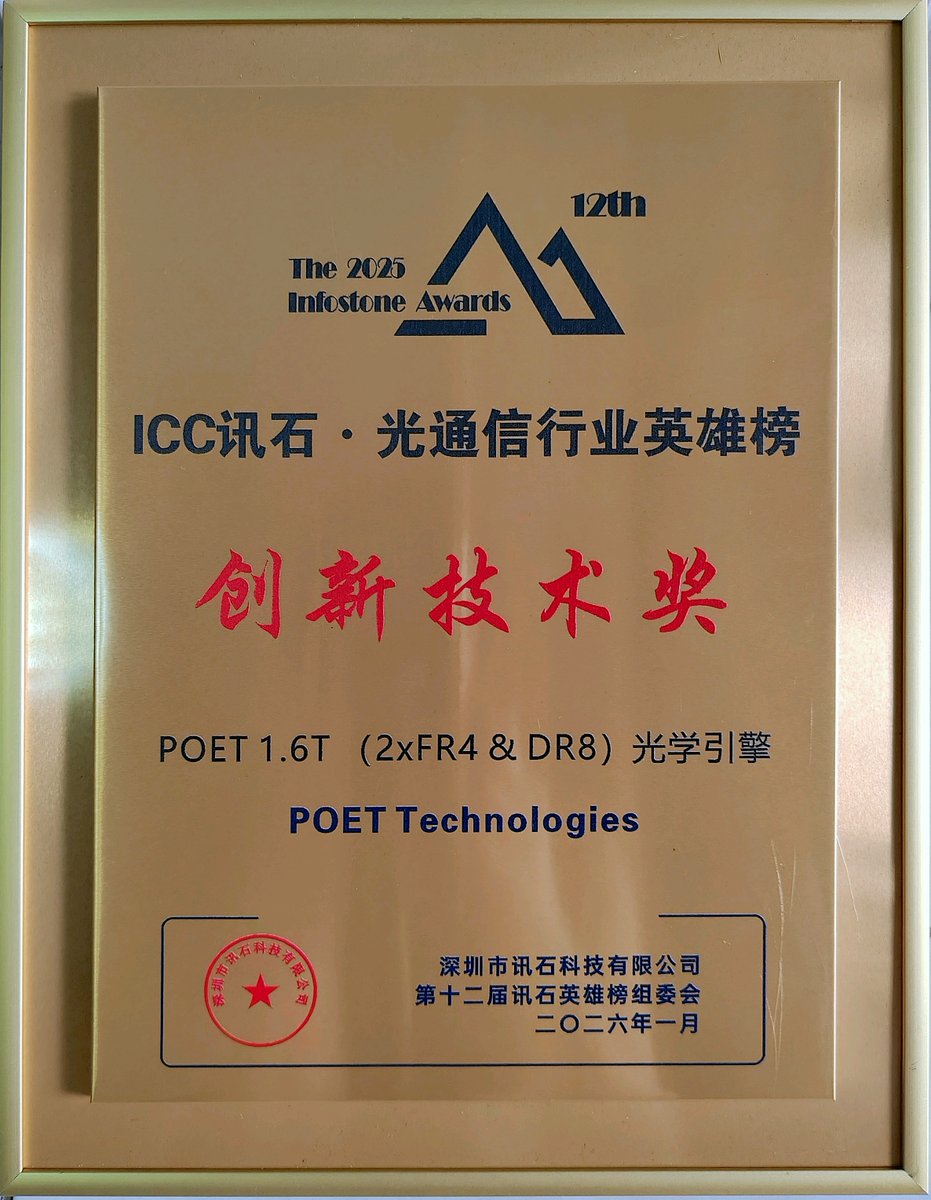
Key Point – POET Technologies Comment (Short) Mass production timeline: 3–4 quarters ramp guidance aligns with the 800G → 1.6T transition window. Sivers alignment: Sivers Semiconductors laser supply timeline appears synchronized, supporting the external-laser + Optical Interposer model. Implication: Moving from sampling phase toward real shipment and revenue recognition. Guess who? A global Tier-1 optical engine / module player. Conclusion: This is no longer about the narrative — it is about delivery, yield, and execution. If execution is validated, re-rating becomes the next logical step.
POET Technologies@POETtech

VIDEO: POET Ready for ‘Strong Revenue Ramp’ as Product Orders Arrive Chief Revenue Officer Raju Kankipati provides a robust update on customer engagements, industry landscape and production. youtu.be/S-8DGE___Pc #POETpowersAI

English
2
5
51
8.2K
심프
심프@simplspark·
되게 좋아하는 계정이 있는데 점점 되게 오만함 넘치는 글을 쏟아 내는게 좀 거시기하네유 ㅎㅎ
한국어
20
1
172
35.6K
Mooni Insight Global
Mooni Insight Global@Mooni_Global·
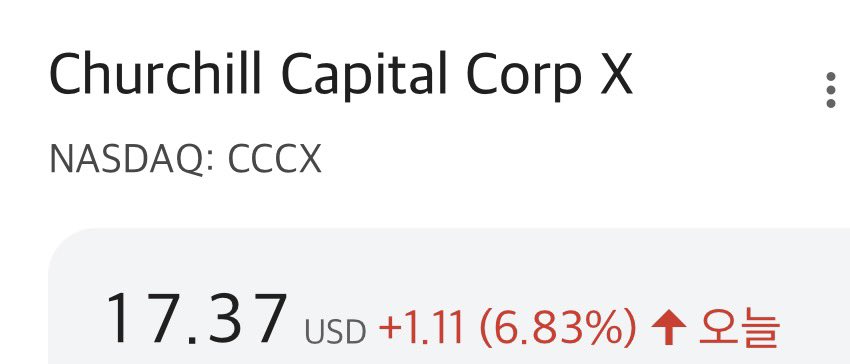
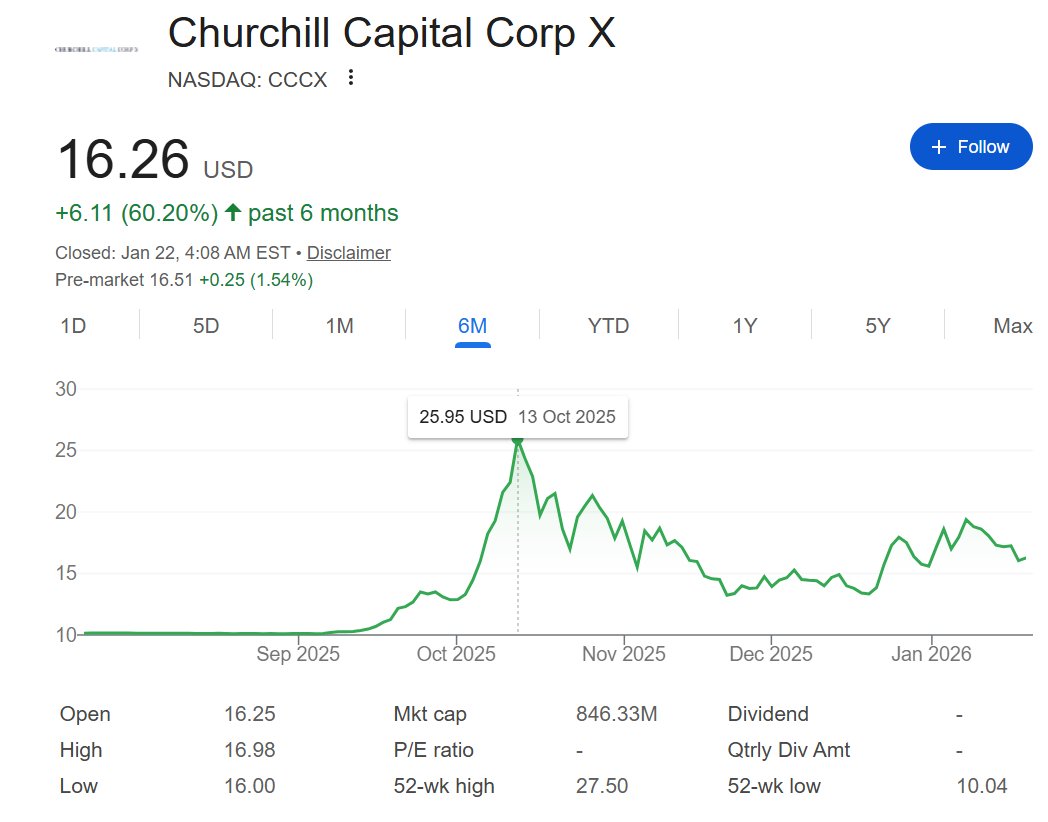
$CCCX offers a rare, early-stage way to gain exposure to the CUDA-Q–driven quantum computing narrative. As the SPAC vehicle for Infleqtion, it represents a leveraged play on NVIDIA’s strategy of integrating quantum systems with GPU-accelerated computing—not at the hardware replacement level, but at the software, control, and hybrid-compute layer where real adoption is likely to emerge first. This is not a near-term fundamentals story. It is a positioning trade on where NVIDIA is building the quantum ecosystem—and which platforms are most compatible with that roadmap. High volatility, high uncertainty, but asymmetric optionality if CUDA-Q becomes the dominant standard. Volatility WarningThis investment is subject to extreme volatility. Price movements may be sharp, unpredictable, and disconnected from fundamentals, particularly due to SPAC structure, early-stage technology risk, and sentiment-driven trading.This is suitable only for investors who can tolerate high risk and potential capital loss.
Mooni Insight Global tweet media
English
2
7
44
10.8K
Mooni Insight Global
Mooni Insight Global@Mooni_Global·
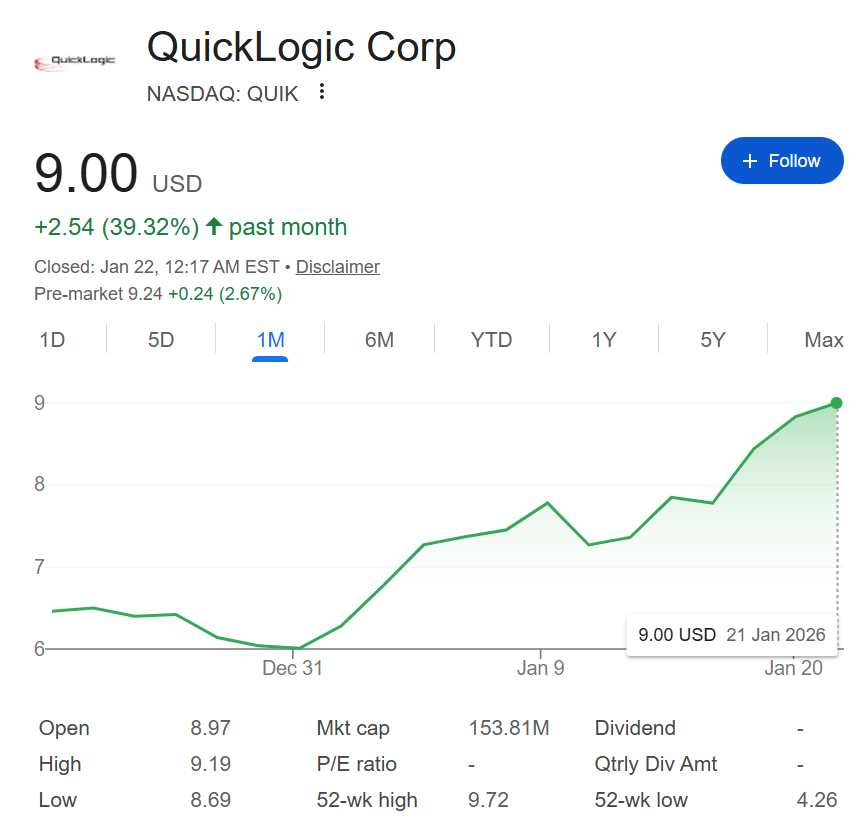
$QUIK As the defense market increasingly adopts eFPGA architectures to meet requirements for reconfigurability, security, and long product lifecycles, QuickLogic’s advantages become more pronounced. Its embedded FPGA (eFPGA) technology enables on-chip adaptability without the power, size, and security penalties of discrete FPGAs—an especially critical factor for defense and aerospace systems, where anti-tamper protection, low SWaP, and long-term supply assurance are mandatory. As defense programs prioritize mission-specific customization and post-deployment flexibility, QuickLogic is structurally well-positioned to benefit from the expanding eFPGA adoption curve.
Mooni Insight Global tweet media
English
1
2
22
3.3K
GUTE_RachelHan
GUTE_RachelHan@GuteslaX·
가끔은 온갖 정보들로 뇌가 절여지는 느낌이다. 역시 하루정도는 비우는게 좋다. 🗑️
한국어
25
13
141
7.9K